How to Read a Mississippi Fishing Forecast Report
It's incredibly frustrating, isn't it? You wake up early, load up the truck, drive to your favorite spot on Ross Barnett Reservoir or one of the coastal bays, and then spend hours without a single bite. Sometimes it feels like fishing is just a roll of the dice, completely unpredictable. But what if I told you there's a way to significantly improve your odds, to turn those "slow days" into more productive outings? This guide is all about demystifying Mississippi fishing forecast reports, helping you understand what all those numbers and charts mean so you can plan your next fishing adventure with confidence.
Why Fishing Forecast Reports Are Your Secret Weapon (Even When They Seem Complicated)
For many anglers, the idea of checking a fishing forecast report feels like extra homework. You might glance at the weather app and see a "fishing good" rating and think you're covered. But these specialized reports offer a treasure trove of information that goes far beyond a simple thumbs-up or thumbs-down. They provide insights into the subtle environmental factors that dictate fish behavior, helping you make more informed decisions before you even leave the house.
The Frustration of Unpredictable Days
We've all been there: the sun is shining, the air feels perfect, and you just know it's going to be a banner day. You cast, you retrieve, you switch lures, you move spots – nothing. It's easy to feel defeated when the fish aren't cooperating, and it often leads to a nagging question: "What am I doing wrong?" The truth is, sometimes you're doing everything right, but the fish just aren't in a biting mood due to factors beyond your control, like an unexpected pressure drop or a sudden change in water temperature that isn't immediately obvious. Going out blind, without understanding these unseen influences, can indeed lead to those frustrating, unproductive trips where you wonder why you even bothered.
That's where a detailed fishing forecast report steps in. It’s not about guaranteeing a fish every cast, but about providing a proactive approach. Instead of reacting to an empty livewell, you can anticipate conditions and adjust your strategy accordingly. Knowing that the barometric pressure is plummeting, for instance, might encourage you to target deeper, less active fish, or even reconsider your trip for a more favorable day. It transforms your approach from hopeful guesswork to strategic planning, turning potential failures into learning experiences or even successful adaptations.
Beyond Just "Good" or "Bad"
Many popular weather apps or general fishing apps offer a quick "fishing rating" for the day, often expressed as "Fair," "Good," or "Excellent." While these can be a decent starting point, they rarely provide the why behind the rating. Think of it like a restaurant review that just says "good food" – it doesn't tell you what kind of food, what the ambiance is like, or if it's kid-friendly. These simple ratings are usually a blend of basic weather conditions and generalized solunar data, which, while helpful, doesn't paint the full picture.
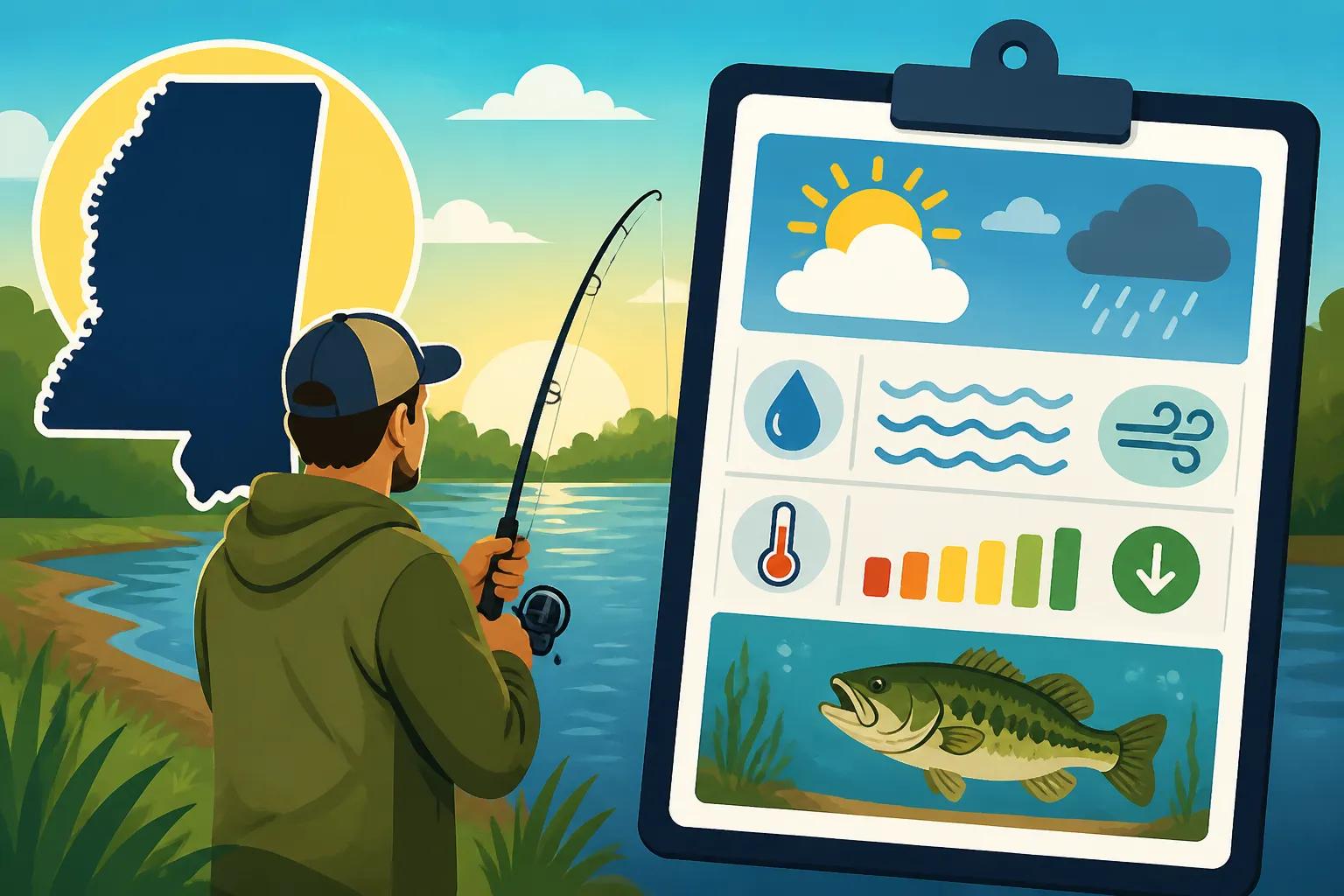
A comprehensive fishing forecast report, on the other hand, breaks down the individual components that contribute to fish activity. It delves into specific metrics like air temperature, water temperature, wind speed and direction, barometric pressure trends, and precise moon phase data, often presented in solunar tables. This level of detail allows you to understand why a particular day might be rated "good" or "bad" and, more importantly, how to use that information. For example, a report might indicate that while the overall fishing is "fair," the major feeding window is in the late afternoon due to a specific moon event. This empowers you to plan your outing around that peak time, rather than just hoping for the best all day long.
Deciphering the Key Components of a Mississippi Fishing Forecast
To truly leverage a fishing forecast, you need to understand the individual elements it presents. Each piece of data tells a story about what the fish might be doing, where they might be holding, and how aggressively they might be feeding. Learning to read these reports is like gaining a new language, unlocking deeper insights into the aquatic world around us.
Understanding Weather Conditions and Their Impact
Weather isn't just about your comfort; it profoundly affects fish and their environment. Mississippi's weather can be quite dynamic, swinging from warm and sunny to stormy in a short period, and these changes are prime drivers of fish behavior.
Temperature: Air and Water Temperature
Air temperature is the most obvious factor, but for fish, water temperature is paramount. Fish are cold-blooded creatures, meaning their body temperature mirrors the water around them. This directly impacts their metabolism, activity levels, and even where they choose to hold.
- Impact on Metabolism: When water temperatures are ideal for a species – say, in the 70s for largemouth bass – their metabolism is high, and they need to feed more frequently. When it's too cold (winter) or too hot (summer), their metabolism slows down, and they become less active, often seeking thermal refuge in deeper water or shaded areas. A sharp drop in water temperature can make fish lethargic, while a warming trend can stir them into action.
- Comfort Zones: Every fish species has a preferred temperature range. Crappie, for example, often become more active and start moving towards shallower spawning grounds when water temperatures hit the mid-60s in spring. Bass, on the other hand, might tolerate a wider range but will still seek specific thermal stratification in reservoirs during extreme heat. Understanding the forecasted water temperature helps you predict the general depth and activity level of your target species. Pay close attention to trends: is the water warming up or cooling down? This trend can be more important than the absolute number.
Wind: Direction and Speed
Wind is often overlooked by novice anglers, but it's a huge factor in Mississippi fishing, both in freshwater and saltwater. It does more than just make casting a challenge; it can entirely restructure the feeding grounds.
- Water Clarity: Light winds can sometimes improve water clarity by mixing the water column slightly. Strong winds, especially across large bodies of water like Sardis Lake or Ross Barnett Reservoir, can muddy up shallow areas by stirring sediment, pushing baitfish, and creating current. This means you might need to switch from clear-water finesse tactics to reaction baits that create more vibration.
- Baitfish Movement: Wind pushes the surface water, creating a current that can stack baitfish against wind-blown banks, points, or submerged structures. Where the bait goes, the predators often follow. If you see a forecast of sustained wind from the north, for instance, you might focus your efforts on northern banks or points where baitfish are congregating.
- Casting Challenges: Of course, strong winds make casting difficult, especially with light tackle. Knowing this ahead of time helps you prepare with heavier lures or adjust your approach, perhaps opting for a more sheltered area or fishing from a different side of the boat. A forecast with significant wind might also make navigating certain areas, like the open waters of the Mississippi Sound, unsafe or impractical for smaller boats.
Rain/Precipitation
Rain isn't always a bad thing for fishing; in fact, it can sometimes trigger a feeding frenzy. The key is understanding the type and duration of the rain, and what comes after it.
- During Rain: A light, steady rain can often be excellent for fishing. The decreased light penetration makes fish feel bolder, moving into shallower water, and the natural "washing" effect can bring insects and other food into the water. Heavy downpours, however, can quickly muddy up the water, lower water temperatures, and create strong currents, making fishing tougher.
- Post-Rain Effects: After a significant rain, especially in rivers like the Pearl River Fishing Guide, water levels might rise and clarity can decrease dramatically. This can disperse fish or push them into eddies and slack water. In reservoirs, fresh rainwater running into creeks and coves can create "freshwater plumes" that attract baitfish and, subsequently, game fish seeking new feeding opportunities. A prolonged dry spell followed by rain can be particularly good, as fish respond to the new influx of water and food.
Cloud Cover
Cloud cover plays a crucial role in light conditions, which directly influences fish behavior and your lure choices.
- Low Light Conditions: Cloudy days mimic dawn and dusk conditions, often encouraging fish to be more active and move into shallower water throughout the day. This is because the reduced light makes them feel less exposed to predators (including humans) and can also help them ambush prey more effectively. On these days, brighter or more reflective lures can stand out better in the diffused light.
- Bright Sun vs. Clouds: On a bright, sunny day, fish often retreat to deeper, cooler water or seek cover under docks, brush piles, or submerged vegetation. During such conditions, a more subtle, natural presentation with natural colors might be effective. However, a passing cloud can sometimes be enough to trigger a quick bite as fish briefly feel more secure. Forecasts will often specify cloud cover percentages or indicate "partly cloudy" versus "overcast."
Barometric Pressure – The Unseen Player
If there's one factor that often confuses anglers, it's barometric pressure. Yet, it's one of the most critical elements in a fishing forecast. Barometric pressure refers to the weight of the air pressing down on the earth (and the water). Fish, like all living creatures, are sensitive to these changes.
- Understanding the Concept: Imagine a large, invisible column of air pushing down on the lake. Fish have a swim bladder, an air-filled organ that helps them maintain buoyancy. When the barometric pressure changes, the pressure on their swim bladder changes, which can cause discomfort or make them feel more or less energetic.
- Rising Pressure (Post-Front): A rising barometer usually indicates stable, clear weather moving in after a storm. During this period, fish tend to feel more comfortable and active. It's often associated with a strong bite as fish become more aggressive and feed readily. This is often an excellent time to be on the water.
- Falling Pressure (Pre-Front): A falling barometer often signals approaching bad weather – storms, cold fronts, or significant changes in conditions. Many anglers report that fish can become incredibly active just before a significant drop in pressure, almost as if they're trying to feed up before the difficult conditions arrive. However, once the pressure starts its rapid descent or hits its lowest point, fish can become lethargic and move to deeper water, making them harder to catch.
- Stable Pressure: Long periods of stable, moderate barometric pressure often mean consistent fishing. Fish are generally in a routine, and if you know their patterns, you can often find them. However, extremely high or extremely low stable pressure can still lead to less activity than a rising or falling trend.
A good fishing report will not just give you the current pressure, but also the trend – is it rising, falling, or stable? This trend is often more valuable than the absolute number. It helps you anticipate the mood of the fish.
Moon Phases and Solunar Tables
For centuries, anglers and hunters have observed the influence of the moon on animal behavior. Solunar tables, often included in detailed fishing forecasts, are an attempt to quantify this influence, predicting peak activity times based on the moon's position and gravitational pull.
- The Theory: The basic premise is that the gravitational forces of the moon and sun affect not only tides but also all living organisms, including fish. During specific periods – known as major and minor solunar periods – fish are theoretically more active and more likely to feed.
- Major Periods: These typically occur during a new moon and a full moon when the gravitational pull is strongest, and when the moon is directly overhead or directly underfoot. These periods are predicted to be the most active feeding times.
- Minor Periods: These occur when the moon is halfway between overhead and underfoot. While less intense than major periods, they can still offer windows of increased activity.
- Practical Application: While not foolproof, many anglers swear by solunar tables. They're often used to pinpoint the best times within a given day. If a report indicates a "fair" day overall but highlights a major solunar period from, say, 10:00 AM to 12:00 PM, you'd want to ensure your line is in the water during that window. It's a way to optimize your time on the water. Remember, these are predictions, and local conditions (like a sudden thunderstorm or a Fishing After a Cold Front scenario) can override them.
Water Clarity and Levels (Reservoirs vs. Rivers)
The condition of the water itself is a massive indicator of where and how to fish. A forecast that details water clarity and levels provides invaluable tactical information.
- Water Clarity:
- Clear Water: In clear water, fish rely heavily on their eyesight, so stealth and natural-looking baits become crucial. You might need lighter line, longer leaders, and more subtle presentations. Colors like green pumpkin, watermelon, or natural baitfish patterns often excel. Fish might be more skittish and deeper.
- Stained Water: This is often considered ideal. Fish feel more secure with a little color in the water but can still see your bait. Bright colors or those with a lot of contrast (chartreuse, orange, black and blue) can work well, as can baits that create vibration.
- Muddy Water: In very muddy conditions, fish's visibility is severely limited. They rely more on their lateral line (sensing vibrations) and smell. Large, noisy, high-vibration baits (like spinnerbaits or chatterbaits) in dark colors (black, blue) or bright, contrasting colors become effective. Scented baits are also highly recommended. Understanding if the water is clear, stained, or muddy helps you choose your tackle before you even get to the water.
- Water Levels:
- Reservoirs: Lakes like Grenada Lake or Enid Lake often experience drawdowns in the fall and winter, and rising levels in spring. High water can push fish into newly flooded cover, while low water concentrates them around remaining structure. A forecast mentioning specific lake levels (e.g., feet above or below pool) can tell you whether to target shallow timber or deep creek channels. Pay attention to how low water levels affect Mississippi Fishing Season Opening Dates by Species too.
- Rivers: Rivers like the Mississippi River or Pascagoula River are constantly fluctuating. High water usually means strong currents and fish retreating to slack water, eddies, and backwaters. Low water can concentrate fish in main channels or deep holes. The forecast might indicate river gauge readings, which are vital for safety and finding fish. Extreme high water can even make certain areas unfishable.
Putting the Pieces Together: Actionable Steps for Using Your Forecast
Now that you understand the individual components, let's talk about how to synthesize all this information into a cohesive fishing plan. It’s about more than just looking at each data point in isolation; it’s about seeing the complete picture and making intelligent adjustments.
Identifying Prime Fishing Windows
The real magic of a fishing forecast report lies in its ability to help you pinpoint the most opportune times to cast a line. It's about combining multiple favorable factors to stack the odds in your favor.
- Combining Favorable Conditions: A truly prime fishing window often occurs when several positive factors align. For example, imagine a forecast showing stable, rising barometric pressure after a few days of bad weather, coupled with a major solunar feeding period, and partly cloudy skies with moderate winds pushing baitfish into a particular area. That's a day you want to be on the water! Conversely, a day with plummeting pressure, strong winds, and heavy rain might be better spent sharpening hooks or organizing your tackle box.
- Flexibility is Key: While identifying these "perfect" windows is great, it’s important to remember that fishing, especially in a diverse state like Mississippi, requires flexibility. You might not always be able to hit the exact prime window. The forecast still provides valuable information for the days you can go. If the overall conditions are fair but not spectacular, you can use the solunar tables to pick the best couple of hours to concentrate your efforts, rather than just randomly fishing all day. Sometimes, even an hour of concentrated fishing during a minor solunar period with stable pressure can be more productive than a full day during unfavorable conditions.
Tailoring Your Approach to the Conditions
Once you understand the forecast, the next step is to translate that information into a concrete fishing strategy. This means adjusting your bait choices, your presentation, and even where you decide to drop a line.
Bait & Lure Selection
The conditions detailed in your forecast should directly influence what you tie onto your line.
- Water Clarity: In clear water, think finesse: natural colors, smaller baits, lighter line. Soft plastics in greens, browns, and natural baitfish patterns often excel. If the water is stained or muddy, opt for brighter, more vibrant colors like chartreuse, orange, or black/blue. Baits that produce a lot of vibration, like spinnerbaits, crankbaits, or chatterbaits, become highly effective in lower visibility. For Best Bait for Crappie in Mississippi, minnows are often great in all conditions, but jig colors will vary with clarity.
- Light Conditions: On bright, sunny days, fish often shy away from intense light, making them more receptive to subtle presentations in deeper water or heavy cover. Darker, more natural lure colors or those with less flash can be effective. On cloudy days, fish are generally bolder, and brighter, flashier lures (like chrome or white) or those with strong contrasts can really stand out and draw strikes, especially with species like Largemouth Bass Fishing in Mississippi. If it’s windy and cloudy, a topwater lure could be deadly for bass.
- Fish Activity: If the forecast suggests highly active fish (e.g., rising pressure, major solunar period), aggressive baits like fast-moving crankbaits, spinnerbaits, or swimbaits can provoke reaction strikes. If fish are predicted to be more lethargic (e.g., falling pressure, cold front), slow presentations, jigs, or live bait become more effective, allowing fish to examine and commit without expending too much energy. Understanding Best Lures for Largemouth Bass in various conditions is key.
Location Strategy
The forecast can also guide your choice of fishing spots. Certain areas will simply be more productive given the predicted conditions.
- Wind: A steady wind creates current and pushes bait. If the forecast calls for a strong southerly wind, consider fishing the north-facing banks or points of a lake, where baitfish might be concentrated. Wind-blown points can also be excellent ambush points for predator fish. Conversely, on very windy days, you might seek out more sheltered coves or creek arms to escape the chop and find calmer water.
- Temperature & Water Levels: If water temperatures are soaring in summer, the forecast might suggest targeting deeper thermoclines or areas with significant shade, like under docks or dense vegetation. For winter fishing, look for deeper holes or areas with structure that holds heat, like rock piles. In fluctuating river systems, pay attention to the forecasted water levels. Rising water might push fish into newly flooded areas, while falling water could concentrate them in main river channels or deep holes. For example, How Deep Do Crappie Go in Summer often depends heavily on water temperature and oxygen levels.
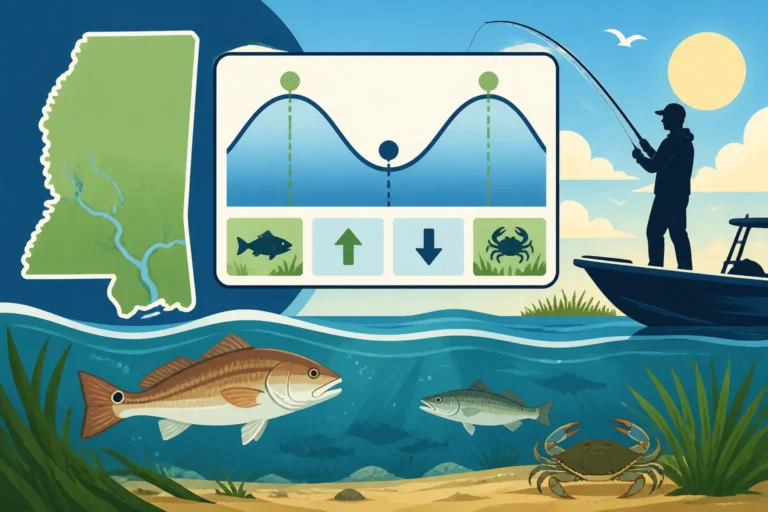
- Specific Spots: For saltwater anglers along the Mississippi Gulf Coast, understanding tidal forecasts (which often accompany fishing reports) is paramount. Incoming or outgoing tides can create feeding lanes around jetties, passes, or oyster reefs, concentrating species like Redfish Fishing on the Mississippi Coast or Speckled Trout Fishing on the Mississippi Coast.
Time of Day
While solunar tables give specific windows, general time-of-day knowledge combined with the forecast can further refine your approach.
- Dawn and Dusk: These are almost universally good times to fish, regardless of other factors, due to lower light and cooler temperatures. However, a forecast showing a strong solunar major period coinciding with dawn or dusk makes it an even stronger bet.
- Midday: On bright, sunny days, midday can be tough. But if the forecast calls for heavy cloud cover and a rising barometer, midday might be surprisingly productive, especially for species that prefer low light. Combining this with Best Time of Day to Catch Bass information can be a game-changer.
- Seasonal Adjustments: In Mississippi, spring mornings and evenings can be fantastic, but summer heat often makes early mornings the most comfortable and productive, with fish retreating deep by midday. Fall can see extended feeding windows as fish feed up for winter. Mississippi Winter Fishing Guide reports will often point to midday as prime, as water temps warm slightly.
Where to Find Reliable Mississippi Forecasts
Knowing what to look for is one thing; knowing where to find it is another. Luckily, there are several reliable sources for fishing forecast reports relevant to Mississippi.
- State Wildlife Agencies: The Mississippi Department of Wildlife, Fisheries, and Parks (MDWFP) is an excellent resource. While they may not provide daily real-time forecasts, they often publish seasonal outlooks, weekly lake reports, or stock information that complements general weather forecasts. They might even publish When MDWFP Publishes Its Yearly Fishing Forecast.
- Reputable Fishing Apps & Websites: Numerous third-party apps and websites specialize in fishing forecasts. These often integrate weather data, solunar tables, and sometimes even user-submitted reports for specific bodies of water. Look for those that allow you to customize settings for your specific location or target species.
- Regional Weather Channels/Websites: Standard weather reports are crucial for basic air temperature, wind speed, and precipitation. Many also include marine forecasts for coastal areas, which are vital for saltwater fishing.
- Local Bait and Tackle Shops: These often have the most up-to-date, hyper-local information because they talk to anglers returning from the water daily. They can offer insights that no digital report can, such as specific hot spots or recent water clarity changes.
- Cross-Reference for Accuracy: It’s always a good idea to cross-reference information from a couple of different sources. No single forecast is infallible, and sometimes combining data from two or three reputable places gives you the most accurate picture.
And speaking of preparation, once you have your forecast, you might realize you need some new gear. For example, if the forecast is calling for sustained winds, you might need some heavier weights or more aerodynamic lures. If rain is on the horizon, a good quality rain suit is essential. Many anglers find a vast selection of these items, from specialized fishing line to waterproof binoculars, on Amazon, allowing them to gear up quickly and efficiently for whatever the report indicates.
Common Pitfalls and Advanced Tips for Report Interpretation
Even with a good grasp of the basics, reading fishing forecasts can be an ongoing learning process. There are nuances and external factors that can always come into play, making it important to blend reported data with real-world observation and experience.
The "Don't Believe Everything You Read" Caveat
It's tempting to treat a fishing forecast as gospel, especially when it predicts a fantastic day. However, it's crucial to remember that these are predictions, not guarantees. Weather patterns can shift unexpectedly, local microclimates can differ from regional forecasts, and fish themselves don't always read the same reports we do!
- Local Variations: A forecast for "north Mississippi" might not perfectly reflect conditions on a specific cove in Pickwick Lake. Topography, tree cover, and water body size can all create localized weather effects that differ slightly from the broader prediction. Always take the forecast as a guide, not a definitive rule.
- On-the-Water Observation: The most experienced anglers are masters of adaptation. They use the forecast to plan, but once they're on the water, they actively observe. Is the water clearer or muddier than predicted? Is the wind stronger or calmer? Are there baitfish flicking on the surface even if the solunar tables say fish should be inactive? Let your eyes and instincts guide you as much as the report. If a spot isn't producing according to the forecast, don't be afraid to move and try something else, even if it goes against your initial plan. The fish will tell you what's really happening.
Combining Forecasts with Local Knowledge
While detailed reports are powerful, they are exponentially more effective when combined with real-world, local insights. This blend of scientific prediction and firsthand experience is the hallmark of a truly successful angler.
- Talk to the Locals: Never underestimate the value of talking to bait shop owners, marina staff, or other anglers at the boat ramp. They often have real-time information about recent catches, water conditions, and specific patterns that are working. They can tell you if the crappie bite on Grenada Lake has suddenly moved to deeper brush piles or if the redfish are schooling up in Biloxi Bay Fishing Guide. These conversations add a layer of specificity that no generic report can provide.
- Keep a Fishing Log: This is an invaluable, long-term strategy. Record the conditions from the forecast (air temp, water temp, pressure, moon phase, wind) alongside your actual results (what you caught, where, on what bait, and what the actual water conditions were). Over time, you'll start to see patterns specific to your favorite fishing spots and target species. For example, you might discover that largemouth bass on Ross Barnett Reservoir consistently bite best for you two days after a cold front, regardless of what the general forecast says. This personal data is incredibly powerful for refining your interpretation skills.
- Online Forums and Social Media: Many Mississippi fishing communities exist online. These can be great places to get recent reports, see photos of catches, and ask questions. Just remember to take all online information with a grain of salt and cross-reference if possible.
Gear Up for Success
Understanding the forecast isn't just about strategy; it's about preparedness. Knowing what conditions you'll face allows you to bring the right gear, making your trip more comfortable and more productive.
- Weather-Specific Apparel: If the forecast predicts rain, a good quality rain suit isn't just for comfort; it can prevent you from cutting your trip short. For sunny days, polarized sunglasses are essential not only for eye protection but also for seeing into the water, while a wide-brimmed hat and UPF clothing protect against intense Mississippi sun. You can find excellent options for all-weather fishing apparel on Amazon, ensuring you're ready for anything the forecast throws at you.
- Tackle Adjustments: Anticipating conditions helps you pack the right tackle. If high winds are forecasted, you might bring heavier sinkers or jigs to maintain bottom contact, or choose lures that are easier to cast into the wind. If the water is expected to be muddy, you might pre-rig some dark or noisy baits. For those planning a trip specifically for crappie, knowing the Best Bait for Crappie at Grenada Lake based on current conditions, like water temperature and clarity, means you can stock up on the right minnows or jigs beforehand.
- Safety Equipment: Extreme weather forecasts, especially for heavy thunderstorms or high winds, should prompt a check of your safety equipment, like life jackets (which are always mandatory, of course), boat lights, and communication devices. A waterproof bag for your phone or a portable weather radio, readily available on Amazon, can be a lifesaver when conditions unexpectedly worsen offshore or in remote areas. Even something as simple as a reliable headlamp from Amazon can be crucial if a strong solunar bite extends into the twilight hours, ensuring you can tie knots and navigate safely.
| Forecasted Condition | Likely Fish Behavior (General) | Recommended Angler Action | Relevant Internal Link Example |
|---|---|---|---|
| Rising Pressure | More active, feeding aggressively | Use reaction baits, cover water | Best Time of Day to Catch Bass |
| Falling Pressure | Pre-front frenzy, then lethargic/deep | Fast action then slow/deep presentation | Fishing After a Cold Front |
| Stable Pressure | Consistent patterns, predictable | Stick to known patterns, refine approach | Mississippi Fishing Seasons Calendar |
| Warm Water (Spring) | Shallow movement, spawning behavior | Target beds, shallow cover | Mississippi Spring Fishing Guide |
| Cold Water (Winter) | Deep, lethargic, schooling tight | Slow presentations, vertical jigging | Winter Crappie Fishing in Mississippi |
| Clear Water | Visually oriented, skittish | Finesse, natural colors, light line | How to Fish Clear Water for Bass |
| Muddy Water | Vibration/scent oriented, less visible | Noisy baits, dark/bright colors, scent | Does Muddy Water Ruin Bass Fishing? |
| Strong Wind | Pushes bait, creates current | Fish wind-blown banks, current breaks | How Wind Direction Affects Bass Fishing |
| Heavy Cloud Cover | Bolder, active longer | Brighter/flashier lures, shallow retrieve | Best Time of Day to Catch Crappie |
| Major Solunar Period | Peak feeding activity predicted | Be on the water, focus effort | Does a Full Moon Affect Fishing? |
Learning how to read a Mississippi fishing forecast report is an ongoing process of observation, adaptation, and combining various pieces of information. It's a skill that will undoubtedly lead to more successful and enjoyable days on the water, helping you understand the complex world beneath the surface of Mississippi's beautiful lakes, rivers, and coastal waters.
Disclaimer
This article is for general informational purposes only and does not constitute professional advice. Laws, prices and regulations vary by location and change over time. Consult a qualified professional for guidance on your specific situation.