Best Bait for Crappie in Mississippi
It's a familiar scenario for any crappie angler in Mississippi: you hit your favorite spot, gear all prepped, and you're ready to catch some slabs. But then, nothing. The fish are there, you see them on the sonar, but they just aren't biting what you're throwing. The frustration is real, and it often boils down to one critical factor: bait. Knowing the best bait for crappie in Mississippi, and more importantly, when and how to use it, can be the difference between a frustrating skunk and a cooler full of delicious fillets. This comprehensive guide will pull back the curtain on the most effective crappie baits, from classic live options to modern artificial marvels, helping you crack the code on Mississippi's crappie and bring home more fish.
The Timeless Appeal of Live Bait for Crappie
When it comes to crappie fishing, live bait often holds a special place in the hearts of seasoned anglers, and for good reason. Nothing quite matches the natural movement, scent, and lifelike appeal of a living meal to entice finicky crappie, especially when they're not aggressively feeding.
Minnows: The Uncontested King
If there's one bait that consistently produces crappie, regardless of the season or location in Mississippi, it's the humble minnow. Crappie are natural predators, and a struggling minnow is an irresistible target. Fathead minnows are widely available and extremely popular, but shiners or even small goldfish can also be effective. The key is to keep them lively. A vibrant, swimming minnow sends out vibrations and visual cues that crappie can't ignore.
Anglers often fish minnows under a bobber, allowing them to suspend at a specific depth where crappie are holding, such as around submerged brush piles or timber. Another effective method is slow-trolling minnows, especially when you're trying to cover a lot of water on expansive lakes like Grenada Lake or Sardis Lake. You can rig them through the lips for a natural presentation, or through the back just behind the dorsal fin to give them a more erratic, injured swim. Using light wire hooks, typically size 2 or 4, ensures the minnow stays active and presents naturally. Many anglers swear by keeping a dozen or two minnows on hand, even when primarily using artificials, as they can be a lifesaver when the bite gets tough.
Worms and Critters: More Than Just Bass Bait
While minnows might be king, other live baits certainly have their place, especially when crappie are feeding on different natural forage. Small redworms or mealworms, often overlooked by crappie anglers, can be surprisingly effective. These smaller invertebrates mimic various aquatic insects and larvae that crappie feed on, particularly in areas with muddy bottoms or when the fish are concentrated in shallower, grassy areas during the spring spawn. They offer a more subtle presentation and can be irresistible to crappie that are less interested in chasing a larger minnow.
Grass shrimp, if you can find them, are another excellent choice, especially in brackish waters or tidal creeks along the Mississippi Gulf Coast where crappie might coexist with other species that feed on shrimp. While not as common for crappie as they are for speckled trout, the natural smell and movement of a small shrimp can trigger a bite. Fishing these smaller baits usually involves a very light setup, often with a tiny split shot or no weight at all, allowing the bait to drift naturally into cover. The key is to think like a crappie and present what they might already be feeding on.
The Art of Presenting Live Bait
Getting the most out of your live bait isn't just about putting it on a hook; it's about presentation. One of the most common mistakes anglers make is using too much weight or too large a hook, which can hinder the minnow's movement and make it look unnatural. A simple bobber rig with a small split shot above the hook is often all you need. The depth at which you set your bobber is crucial; remember that crappie are often suspended at a specific depth. Adjust your bobber stop frequently until you start getting bites. This is a tactic covered in more detail in our article on Jig Fishing for Crappie, but it applies equally to live bait.
When fishing around heavy cover like submerged timber or brush piles, a tight-line approach without a bobber can be more effective. Drop your minnow straight down into the cover, slowly lifting and dropping it slightly to create movement. This method allows you to feel the slightest tap from a crappie. For those days when crappie are scattered, slow trolling with multiple rods, known as "spider rigging," is incredibly effective. This technique involves spreading several rods out from your boat, each presenting a live minnow at a different depth or distance from the boat, covering a wide swath of water to find where the crappie are concentrated. Understanding Trolling for Crappie on Mississippi Reservoirs can significantly boost your success with live bait.
Dominating with Artificial Lures
While live bait certainly has its place, artificial lures offer incredible versatility, convenience, and the ability to cover vast amounts of water efficiently. Modern artificial baits are designed with incredible realism, mimicking everything from minnows to insects, and can be deadly effective for crappie.
Jigs: Versatility in a Small Package
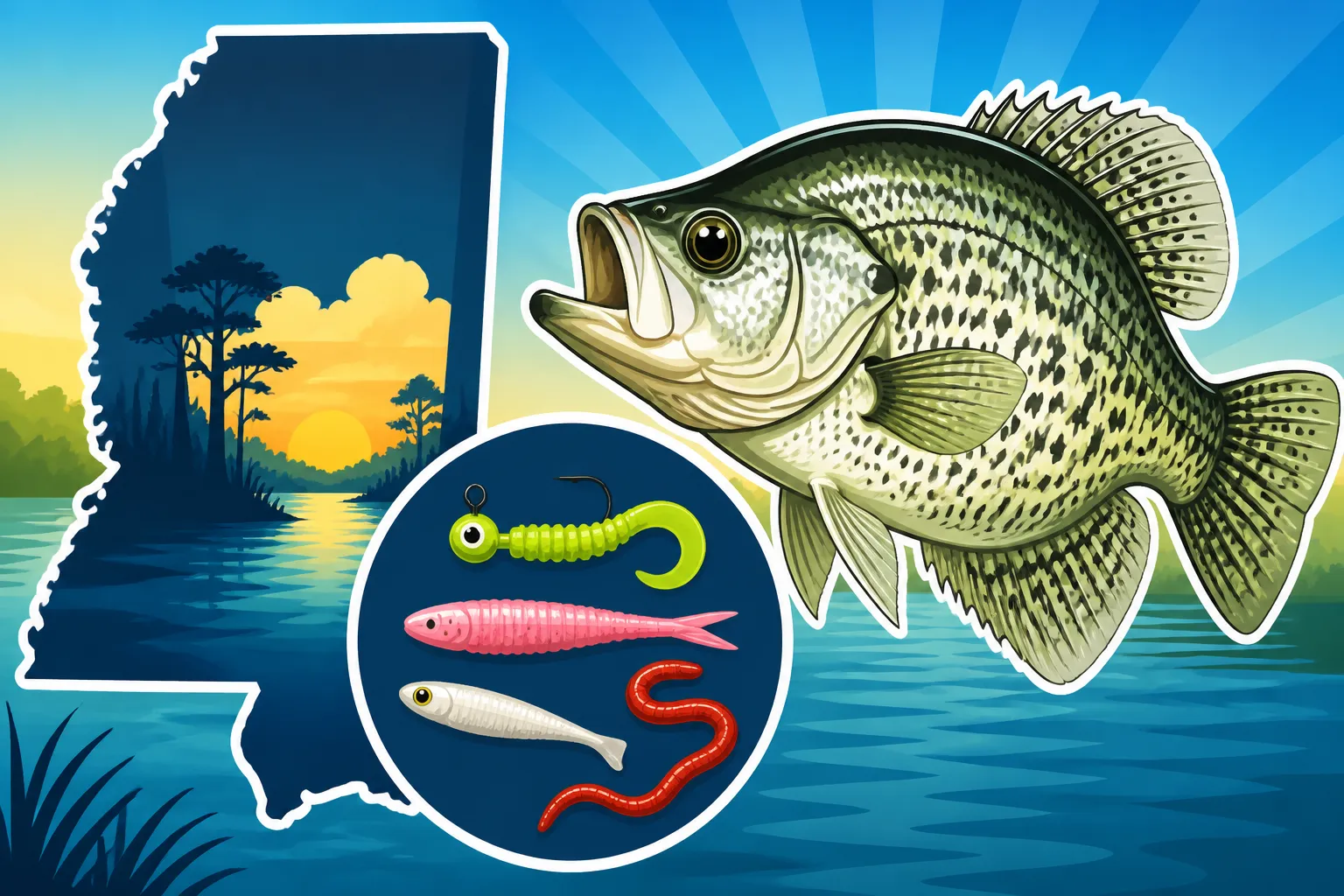
If you talk to any serious crappie angler in Mississippi, jigs will undoubtedly be high on their list of go-to baits. Jigs are incredibly versatile, mimicking a variety of forage and effective in almost any condition. They come in countless shapes, sizes, and colors, often consisting of a lead head molded onto a hook, paired with a soft plastic body or a feathery dressing. The most common sizes for crappie range from 1/32 to 1/8 ounce, though heavier jigs are used in deeper water or strong currents.
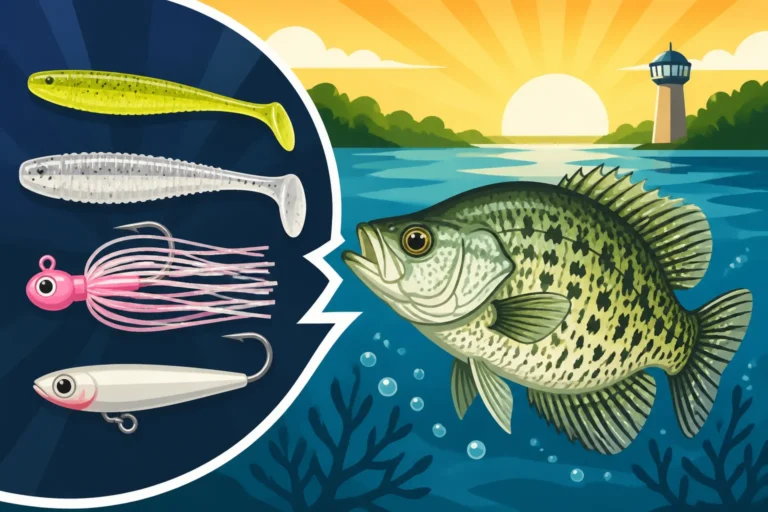
The beauty of a jig lies in its simplicity and effectiveness. You can cast them, retrieve them slowly, vertical jig them, or even troll them. Popular choices include tube jigs, curly tail grubs, and shad darts. When crappie are in shallow cover during the spring, casting a small tube jig near structure and slowly retrieving it with subtle twitches can be deadly. In deeper water, vertical jigging a Bobby Garland Baby Shad or a Johnson Crappie Buster Shad Grub straight down into brush piles is a phenomenal technique. Experiment with different jig head weights and body styles to find what the crappie prefer on any given day. Many anglers even pre-rig a variety of jigs to quickly switch out colors and profiles, especially when browsing options on retailers like Amazon.
Spinnerbaits and Crankbaits: Covering Water
While often associated with bass fishing, smaller spinnerbaits and crankbaits can be incredibly effective for crappie, especially when they are actively feeding or scattered across open water. Tiny in-line spinnerbaits, like those from Johnson or Beetle Spin, create a flash and vibration that can draw crappie from a distance. These are particularly useful when crappie are chasing baitfish in the upper water column or when you need to cover areas quickly, such as shallow flats or along weed lines in lakes like Ross Barnett Reservoir. The spinning blade acts as an attractor, while the small body provides a compact profile that crappie readily engulf.
Miniature crankbaits, often referred to as "micro-cranks," are another excellent option for aggressive crappie. These lures dive to specific depths, allowing you to target fish holding at various levels, and their wobbling action perfectly imitates a fleeing baitfish. Brands like Strike King and Bandit offer fantastic crappie-sized crankbaits in a variety of colors and dive depths. Trolling these small crankbaits can be exceptionally productive, especially in larger open water sections of Mississippi's major reservoirs, allowing you to present a fast-moving, enticing target to active crappie. Just like with jigs, having a diverse selection from a major retailer like Amazon can prepare you for any situation.
Soft Plastics: Mimicking Natural Prey
Soft plastic lures are a cornerstone of modern crappie fishing, offering incredible realism, action, and affordability. They come in an astonishing array of shapes, sizes, and colors, allowing anglers to perfectly imitate minnows, insects, and other aquatic prey. Curly-tail grubs, paddle-tail shads, and tiny worms are among the most popular. Companies like Crappie Magnet, Bobby Garland, and Arkie Lures dominate this space, offering plastics specifically designed for crappie.
The key to success with soft plastics is to match the action to the crappie's mood. When crappie are aggressive, a fast-retrieved curly-tail grub can elicit strikes. For more finicky fish, a subtle paddletail worked slowly or a tiny straight-tail worm jigged vertically can be irresistible. Many anglers tip their soft plastics with a dab of scent to add an extra layer of attraction. The versatility of soft plastics means they can be fished on a standard jig head, under a bobber, or even on a drop shot rig for ultra-finesse presentations. They are also incredibly easy to swap out, allowing you to quickly change colors or profiles as conditions demand.
Matching Bait to Conditions and Seasons
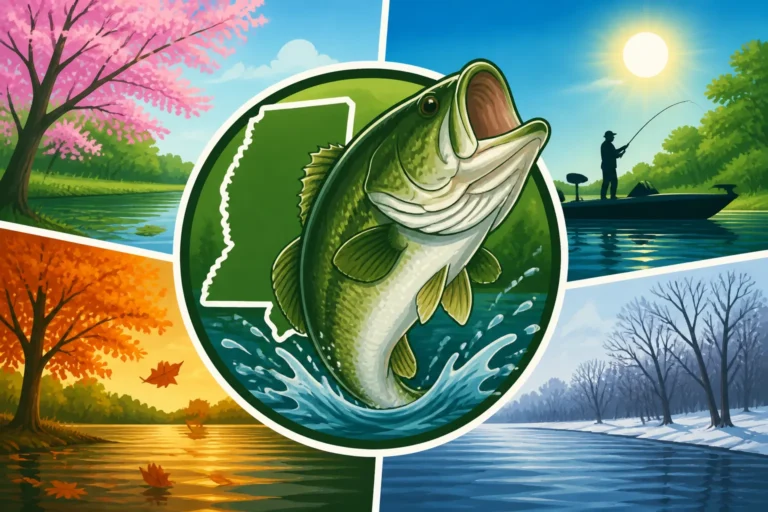
Understanding crappie behavior throughout the year is paramount to selecting the best bait. What works wonders in spring might be ignored in summer, and vice-versa. Mississippi's distinct seasons play a huge role in crappie location and feeding patterns, and adapting your bait choice is crucial for consistent success. You can dive deeper into these seasonal patterns with our guide on the Mississippi Fishing Seasons Calendar.
Spring Spawn: Shallow Water Strategies
Spring in Mississippi is synonymous with the crappie spawn, a magical time when these fish move into shallower waters to reproduce. This makes them more accessible, but also more sensitive to presentation. During the pre-spawn, crappie are often actively feeding to build energy for spawning. Small, lively minnows under a slip bobber set at 2-5 feet can be deadly around emerging vegetation, submerged logs, and shallow brush piles. As the water warms and the spawn peaks, crappie become highly territorial.
This is when small jigs excel. A 1/32 or 1/16 ounce jig, rigged with a tube or curly tail grub in chartreuse, white, or black-and-chartreuse, pitched into visible cover is a prime tactic. Light line, typically 4-6 lb test, is crucial for a natural fall. Crappie will often hit the bait on the initial drop. Many anglers will cover areas like creek channels, protected coves, and transition banks, using a gentle retrieve or simply letting the jig sit in the cover with subtle twitches. You can find more specific advice on this period in our article on What Month Do Crappie Spawn in Mississippi?.
Summer Heat: Going Deep
When the scorching Mississippi summer arrives, crappie generally retreat from the shallow banks and move to deeper, cooler waters where oxygen levels are stable and baitfish congregate. They'll often suspend over creek channels, along deep ledges, or bury themselves in the thickest, deepest brush piles and timber they can find. This requires a shift in bait choice and presentation.
Live minnows remain a top choice, but they need to be presented deep. Vertical jigging or spider rigging with minnows in 15-30 feet of water is a common and effective technique. The use of a fish finder to locate these deep-water structures and the fish holding on them is almost essential, as detailed in our guide on Reading a Fish Finder for Crappie. When using artificials, heavier jigs (1/8 to 1/4 ounce) are necessary to get down quickly. Soft plastics like paddle-tail grubs in natural colors (e.g., shad or bluegill patterns) can be very productive. Small crankbaits that dive to specific depths are also excellent for trolling open water areas where crappie might be chasing schools of baitfish. Knowing How Deep Do Crappie Go in Summer is vital for success during these warmer months.
Fall Transition: Following the Baitfish
Fall is a fantastic time for crappie fishing in Mississippi as cooling temperatures trigger a feeding frenzy. Crappie often move out of their deep summer haunts and begin to follow baitfish into shallower and mid-depth ranges as they fatten up for winter. This transition means crappie can be found in a wider variety of depths and locations.
During the early fall, crappie might still be suspended over deeper structure, but as the water cools, they'll often move closer to creek channels, main lake points, and brush piles that are a bit shallower than their summer retreats. Small spinnerbaits and crankbaits can be very effective for locating active schools of fish. Once found, live minnows or jigs in chartreuse, white, or orange-and-black patterns can produce consistent bites. The key is to be mobile and look for concentrations of baitfish, as crappie will not be far behind. This time of year offers some of the most consistent action, as crappie are usually quite aggressive.
Winter Chill: Slow and Subtle
Mississippi winters can be unpredictable, but when the cold sets in, crappie generally become lethargic and congregate in large schools in deep water. They prefer stable water temperatures and will often stack up in the deepest creek channels, river bends, or around large, sunken timber and standing timber. This is not the time for fast retrieves or aggressive presentations.
Slow and subtle is the name of the game. Live minnows, fished vertically directly over deep-water schools, are often the most productive. Use just enough weight to get your minnow down to the desired depth. Small jigs (1/32 to 1/16 ounce) with minimal action, like a hair jig or a tiny tube jig, are also excellent choices. Fish these baits with very slow lifts and drops, barely moving them at all. Pay close attention to your line for the slightest twitch, as winter crappie bites can be incredibly light. Targeting large schools with precision is key, and this often means using electronics. If you're wondering How to Catch Crappie in Cold Winter Water, precision and patience with small baits are your best friends.
Essential Bait Selection Tips and Tricks
Choosing the right bait is an art form, not an exact science. Even with all the knowledge in the world, crappie can be unpredictable. However, understanding some fundamental principles of bait selection can significantly increase your odds of success on any Mississippi lake.
Color Psychology: What Crappie See
Crappie have good eyesight, and color plays a significant role in their attraction to a bait. The "best" color can change daily, hourly, and even minute by minute based on water clarity, light conditions, and depth. As a general rule, in clear water, natural colors like greens, browns, and pearl (white) tend to be more effective, mimicking the natural forage. In stained or muddy water, brighter, more contrasting colors like chartreuse, orange, pink, or black-and-chartreuse often stand out better. These colors create a stronger silhouette and are more easily detected by crappie in low visibility.
Overcast days or low-light conditions often call for darker colors, as they provide a better silhouette against the lighter sky. On bright, sunny days, lighter, translucent colors can be very effective. It's a great idea to carry a variety of colors in your tackle box, whether you're using jigs, soft plastics, or even dyed minnows. Don't be afraid to experiment, and if one color isn't working after 15-20 minutes, try another. Sometimes, the slightest shade difference can make all the difference, and having a good selection from a fishing tackle vendor like Amazon is always a smart move.
Size Matters: Matching the Hatch
Just like color, the size of your bait is incredibly important. Crappie, particularly larger slabs, can eat surprisingly large baits, but often they prefer something that closely mimics the size of the baitfish or insects they are currently feeding on – a concept known as "matching the hatch." If crappie are feeding on tiny shad or insect larvae, a large minnow or a 2-inch grub might be ignored. Conversely, if they are chasing larger baitfish, a tiny jig might not be substantial enough to attract their attention.
For most crappie fishing in Mississippi, baits ranging from 1 to 2.5 inches in length are a good starting point. Live minnows are usually in this range, and most crappie jigs and soft plastics are designed to fit these dimensions. Pay attention to your fish finder or observe any baitfish activity on the surface; this can give you clues about the prevalent size of their prey. When the bite is tough, downsizing your bait to something smaller, like a 1/32-ounce jig or a tiny beetle spin, can often coax a strike from finicky crappie.
Experimentation is Key: Don't Be Afraid to Change
Perhaps the most crucial tip for crappie bait selection is to be flexible and willing to experiment. What worked yesterday, or even an hour ago, might not work now. Crappie are influenced by countless factors: water temperature, barometric pressure, light levels, current, boat traffic, and even their own mood. A confident angler is one who is constantly adapting. If you're not getting bites on your go-to bait, change something. Change your color. Change your size. Change your retrieve speed. Change your depth. Switch from artificial to live bait, or vice versa.
Keep a mental log (or even a physical one) of what worked, where, and under what conditions. This helps you build a knowledge base for future trips. Don't get stuck in a rut with one particular bait or technique, even if it's caught you fish before. The crappie that frequent Best Crappie Lakes in Mississippi are always changing their minds, and the more adaptable you are, the more successful you'll be. Often, the difference between a successful outing and a slow one is simply finding the right combination through trial and error.
Where to Get Your Crappie Bait in Mississippi
Having the right bait means knowing where to acquire it, whether you prefer the freshest live bait or a diverse selection of artificials. Luckily, Mississippi anglers have plenty of options, from local mom-and-pop shops to major retail chains.
Local Bait Shops: The Angler's Hub
For many Mississippi anglers, the local bait shop is more than just a place to buy minnows; it's a community hub, a source of local wisdom, and often the best place to get fresh, lively bait. These shops usually carry a wide selection of live minnows, worms, and sometimes even unique local live baits. The real value, however, comes from the people working there. They are often local anglers themselves, or at least very well-connected to the local fishing scene.
Don't be shy about asking for advice. "What's working today?" is a standard question, and they can often tell you about recent crappie patterns, water conditions, and even specific colors or techniques that are producing fish on nearby lakes like Grenada or Sardis. They can guide you toward the best live bait for crappie at Grenada Lake. They'll also often carry specialized local artificial baits that you might not find in larger chain stores, making them indispensable resources.
Big Box Stores and Online Retailers
For artificial baits and general tackle, big box stores like Bass Pro Shops, Cabela's, and Walmart are convenient options found across Mississippi. These stores offer a vast selection of crappie jigs, soft plastics, spinnerbaits, and crankbaits from all the major brands. Their pricing is often competitive, and they frequently have sales. While they might not offer the hyper-local advice of a bait shop, they are excellent for stocking up on essentials and trying out new lures.
Beyond brick-and-mortar stores, online retailers like Amazon have revolutionized access to fishing tackle. You can find virtually any crappie bait imaginable on Amazon, often with user reviews to help guide your choice. This is particularly useful for finding niche items, specific colors that might be out of stock locally, or simply for convenience. Many anglers purchase their bulk soft plastics or jig heads online to save money and ensure they always have a good supply.
Catching Your Own Bait
For the truly self-reliant angler, or for those who simply enjoy the process, catching your own bait can be a rewarding experience. While it requires some effort, it ensures you have the freshest bait possible and can save you money. Small minnows can be caught using minnow traps or small seine nets in shallow ditches, creeks, or the edges of ponds. Ensure you are aware of any local regulations regarding bait collection, as rules can vary.
Another option is to catch small sunfish or bream, which can be cut into strips for crappie bait. Again, always check Mississippi Fishing Regulations Explained to ensure that using game fish as bait is legal in your specific fishing area, and be mindful of size and creel limits for any fish you catch. Catching your own bait also connects you more deeply to the local ecosystem and helps you understand the natural forage available to the crappie in your fishing grounds.
| Bait Type | Best Conditions | Pros | Cons | Mississippi Examples |
|---|---|---|---|---|
| Live Minnows | All seasons, especially cold/tough bite, deep water | Natural scent & action, highly effective | Can be fragile, requires aeration/care | Grenada, Sardis, Ross Barnett |
| Tube Jigs | All seasons, varied depths, around structure | Versatile, mimics minnows, various colors | Can get snagged easily, lighter bites | Any major reservoir, oxbow lake |
| Curly Tail Grubs | Moderate to aggressive bite, shallow to mid-depth | Strong tail action, good for searching, affordable | Less effective for finicky fish | Pearl River, local ponds |
| Paddle Tail Shads | Aggressive bite, clear to stained water, deeper | Realistic minnow imitation, good vibration | Can be less effective on slow days | Pickwick, Mississippi River |
| Small Crankbaits | Active fish, covering open water, specific depths | Covers water fast, strong vibration/wobble | Requires specific retrieve, can be expensive | Ross Barnett, Okhissa Lake |
| Hair Jigs | Cold water, finicky fish, clear water, subtle bite | Very subtle action, natural look | Very light bait, harder to feel bites | Winter fishing in deep channels |
Disclaimer
The information provided in this guide is for general informational purposes only and is subject to change. Fishing regulations, license requirements, and local conditions in Mississippi can vary. Always consult the latest regulations from the Mississippi Department of Wildlife, Fisheries, and Parks (MDWFP) before heading out to fish. Adherence to all local, state, and federal laws is the responsibility of the angler.