Best Season to Target Trophy Bass in Mississippi
Every angler dreams of landing that true monster – the bass of a lifetime that makes your arms ache and your heart pound. But let's be real, finding a trophy bass in Mississippi isn't just about showing up with a rod and reel. It's about timing, understanding their behavior, and knowing when those big girls are most vulnerable. This guide is going to break down the best seasons to dramatically increase your odds of hooking into a truly memorable largemouth here in the Magnolia State.
Understanding What Makes a Bass a "Trophy" in Mississippi
Before we dive into the calendar, let's talk about what we mean by "trophy bass" in Mississippi. While we all fantasize about double-digit giants, a true trophy often depends on the specific lake and region you're fishing. In some of our phenomenal reservoirs, a 7-8 pound largemouth is a legitimate brag-worthy fish, while in a smaller, well-managed private pond, a 5-pounder might be considered exceptional. Generally, when anglers talk about trophy bass, they're looking for fish that are significantly larger than the average catch in their chosen waters – often over 5 pounds, and ideally much more. These are the fish that require patience, dedication, and often, a bit of luck.
It's easy to get frustrated when you hear stories of monster bass and feel like you're only catching smaller ones. Trust me, we've all been there! The key is to adjust your expectations based on where you're casting your line and to understand that consistently landing these bigger fish often means fishing differently. It means going after fewer bites, but potentially bigger ones. Remember, these larger bass didn't get big by being easy to catch; they're smart, they're seasoned, and they require a more strategic approach.
Defining "Trophy" by Location
The concept of a trophy bass can be quite fluid, shifting significantly depending on whether you're fishing a vast public reservoir, a smaller state lake, or a private pond. What's considered a monster in one location might just be a respectable fish in another. For instance, in renowned trophy fisheries like Ross Barnett Reservoir or some of the Delta oxbows, anglers often set their sights on bass exceeding 7 or even 8 pounds to qualify as a "trophy." These waters have the genetics, forage, and habitat to consistently produce such giants. If you're heading to one of these spots, you'll want to gear up for a serious fight.
On the other hand, if you're exploring some of our smaller state lakes or county reservoirs, a 5-pound largemouth is often a phenomenal catch, and anything over 6 pounds could easily be the biggest bass caught there all year. These lakes, while productive, might not have the same conditions to grow bass to the extreme sizes found in the premier big-bass waters. It's important to do a little research on your chosen fishing hole. What are the local records? What's the average size reported? Knowing this helps set realistic expectations and prevents that feeling of disappointment if you don't land a double-digit fish on your first outing. The thrill of the catch is always there, but knowing what you're up against helps you appreciate every heavy tug on your line.
Characteristics of a Trophy Bass Angler
Beyond just the fish, landing a trophy bass often requires a specific mindset and approach from the angler themselves. It's not always about quantity; it's about quality. Trophy bass anglers are typically highly patient. They understand that casting for giants often means fewer bites, so they might spend hours without a strike, only to have it all pay off with one explosive hit. This isn't for the faint of heart or those looking for non-stop action; it's for those who relish the hunt.
Furthermore, these anglers often use larger baits, heavier lines, and more robust tackle than someone simply looking to catch a limit of average-sized fish. They're willing to throw big swimbaits, large jigs, or oversized crankbaits, knowing that while these might deter smaller bass, they're exactly what a predatory trophy fish is looking for. They also pay meticulous attention to detail: water temperature, forage patterns, weather fronts, and subtle changes in structure. It's a commitment to the craft, constantly learning and adapting. Think of it as a chess match where the opponent is the biggest, smartest fish in the lake. Bass Fishing Techniques for Mississippi Anglers often involve specialized approaches designed to entice these more elusive giants.
The Prime Seasons: Spring and Fall for Mississippi Trophy Bass
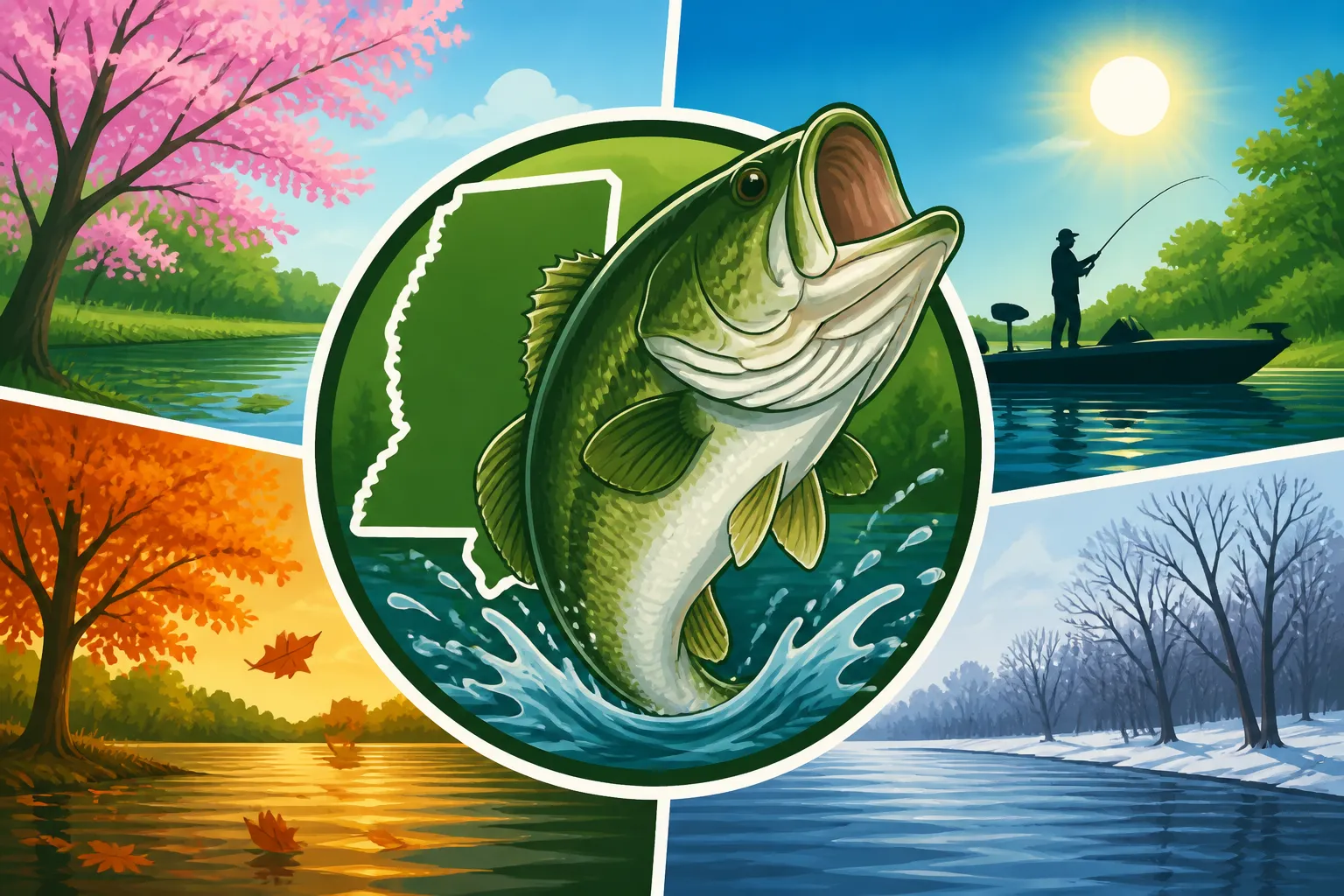
If you ask most dedicated trophy bass anglers in Mississippi, they'll likely point to two distinct seasons as their absolute favorites for landing a true lunker: spring and fall. These seasons offer unique conditions that consistently draw out the biggest fish, making them more accessible and aggressive. It's not a coincidence; it's biology and environmental factors working in our favor.
The changing water temperatures and biological imperatives during these times create windows of opportunity that just don't exist with the same intensity in the heat of summer or the chill of winter. It's when the big females are either preparing to spawn or aggressively feeding to bulk up for the colder months, making them less cautious and more willing to strike a well-presented bait. This is when you want to make sure your gear is dialed in and your biggest baits are ready to go.
Spring: The Pre-Spawn and Spawn Bonanza
Ah, spring! There's simply nothing quite like it for trophy bass fishing in Mississippi. As water temperatures begin to climb from the winter lows, usually starting in late February and extending through April or early May, the biggest females in the lake start to get restless. They move from their deep wintering holes into shallower staging areas, driven by the instinct to spawn. This pre-spawn period is arguably the absolute best time to catch a true trophy. These fish are at their heaviest, full of eggs, and they are hungry. They need to pack on calories for the strenuous act of spawning, making them more willing to chase and ambush larger prey.
During the actual spawn, when water temperatures hit that sweet spot (often in the mid-60s Fahrenheit), the big females will move onto beds in very shallow water. While some anglers avoid targeting bedding bass, others consider it the ultimate challenge to entice these protective fish. They become hyper-focused on guarding their nests, which can make them aggressive towards anything that comes too close. This is a visual game, often involving slow presentations of jigs or soft plastics right into the bed. After the spawn, there's a post-spawn lull, but many big females will recover quickly and resume feeding, albeit sometimes in slightly deeper, cooler water. Mississippi Spring Fishing Guide details how to make the most of this exciting time.
Pre-Spawn Power Fishing
The pre-spawn period is characterized by big bass making their move from deep winter haunts to shallower staging areas, often congregating near points, creek channels, and submerged timber that offer a quick route to prime spawning flats. During this time, these fish are feeding aggressively to fuel the upcoming spawn, meaning they are often less picky and more likely to hit larger, more attention-grabbing baits. This is when power fishing shines. Think big lipless crankbaits, heavy spinnerbaits, and colossal swimbaits. These baits mimic the larger forage that trophy bass prefer and can cover a lot of water quickly, helping you locate those concentrated groups of hungry giants.
Focus your efforts on transition areas where bass can easily move between deep and shallow water. Creek channels that cut across spawning flats, main lake points, and secondary points leading into coves are all prime targets. Look for any kind of cover – brush piles, stumps, or rock formations – that offers an ambush point. The weather can be a bit volatile in early spring, with cold fronts pushing fish back to deeper water, but the general trend is upward movement. Being flexible and observing the daily conditions is key. Remember, these are some of the fattest fish of the year, carrying their full load of eggs, so every one of those tugs could be a new personal best.
Spawning Season Sight Fishing and Bed Fishing
When water temperatures stabilize and hit the magic zone for spawning (typically mid-60s, but varies by region and specific lake), those big females will move onto shallow flats, often near hard bottom or submerged cover like stumps, lily pad stems, or even fallen trees, to build their nests. This is where sight fishing comes into play. If you have clear water, polarized sunglasses are your best friend. Cruising quietly with your trolling motor, scanning for circular cleared areas on the bottom and the dark shapes of bass guarding them, can be incredibly exciting.
Bed fishing is a meticulous game of patience and presentation. You’ll often need to make repeated casts with a jig or soft plastic bait, dropping it right into the bed. The goal isn't always to make the bass eat it out of hunger, but to provoke a strike out of aggression or to make them move the perceived intruder. Color choice can be crucial – often white, chartreuse, or natural crawfish patterns work well. It's not always easy, as these fish can be finicky and stubborn, but when a massive female finally inhales your bait out of pure territorial fury, it's an unforgettable experience. Just remember to handle these fish with extreme care and release them quickly to ensure successful spawning. Where Largemouth Bass Spawn will give you an idea of the types of areas to look for.
Fall: The Feeding Frenzy Before Winter
Just as spring sees bass gorging before the spawn, fall presents another incredible opportunity for trophy hunters in Mississippi. As the scorching summer heat gives way to cooler temperatures, usually from late September through November, the entire ecosystem shifts. The cooler water revitalizes the bass, making them more active and aggressive. More importantly, the shad and other baitfish that have been scattered throughout the summer start to school up and move into shallower coves and creek arms, creating massive feeding opportunities. This is often referred to as the "fall shad run," and it triggers an intense feeding frenzy among the bass.
Big bass will follow these baitfish schools, herding them against banks or into pockets to ambush them. They are trying to pack on as much weight as possible to survive the leaner winter months, so they become less wary and more focused on finding a meal. This is a fantastic time for throwing reaction baits like crankbaits, spinnerbaits, and topwater lures that mimic panicked baitfish. It's an action-packed season, and those cooler mornings on the water are just a bonus. Mississippi Fall Fishing Guide can help you plan your autumn outings.
Tracking the Fall Baitfish Migration
The key to fall trophy bass fishing in Mississippi is understanding and tracking the baitfish, primarily shad. As water temperatures drop, these schooling baitfish will move from the main lake basin into the backs of creeks and coves, seeking warmer water and shallower forage. Where the baitfish go, the bass will follow – and the biggest bass are often right in the thick of them, ambushing smaller schools from ambush points. You'll often see them busting on the surface, a clear sign of a feeding frenzy.
Using your electronics to locate large schools of baitfish is paramount during this time. Once you find the bait, you're halfway to finding the bass. Focus on areas where creek channels meet the main lake, secondary points, and even long, tapering flats that offer easy access for bass to push bait against. Reaction baits that imitate shad are incredibly effective. Think chrome or white lipless crankbaits, silver spinnerbaits, and walking topwater baits. Don't be afraid to throw larger versions of these baits to appeal specifically to those trophy-sized fish. On some days, if the shad are truly schooled up and the bass are active, it can be some of the most exhilarating fishing of the year.
Cooler Water, Aggressive Bites
Beyond the baitfish, the simple fact that the water is cooling down in the fall plays a huge role in waking up those sluggish summer bass. Warm water can make bass lethargic, limiting their activity and forcing them into deeper, cooler havens. But as the surface temperatures drop into the 70s and then 60s, bass metabolism speeds up, and they become much more active and willing to chase. This increased activity translates directly into more aggressive bites, which is exactly what you want when targeting a trophy.
This aggression allows for a wider range of techniques. You can effectively fish faster-moving baits, which means you can cover more water and potentially encounter more fish. Unlike the delicate presentations sometimes required in summer, fall often allows for power fishing with confidence. Big swimbaits, deep-diving crankbaits, and even large jigs fished around submerged timber can be deadly. Keep an eye on the weather; stable periods after a cold front can be excellent, as fish settle into predictable patterns. And don't forget those early morning and late evening topwater bites – some of the most thrilling strikes come when a giant bass explodes on a surface lure.
Other Seasons: Summer and Winter Trophy Bass Challenges
While spring and fall hold the prime spots for trophy bass in Mississippi, that doesn't mean you can't catch a giant in the middle of summer or the dead of winter. It just means the approach changes dramatically. These seasons present their own unique challenges and opportunities, requiring different strategies, baits, and levels of patience.
Many anglers shy away from summer and winter, resigning themselves to smaller fish or no fish at all. But for the dedicated trophy hunter, these seasons can be incredibly rewarding, precisely because fewer people are out there fishing for giants. You'll often have the water to yourself, and with the right approach, you might just find that one special fish that others missed. It's about adapting to the conditions and understanding how bass behave when the mercury either soars or plummets.
Summer: Deep Water and Low Light Tactics
Summer bass fishing in Mississippi can be brutal, not just on the anglers but on the fish too. As water temperatures soar, especially in shallow areas, bass become less active and seek refuge in deeper, cooler, more oxygenated water. They'll often school up on offshore structure, suspended over creek channels, or tucked under thick canopy cover that provides shade. Catching a trophy bass in summer usually means a significant shift in strategy from the spring and fall.
Forget the shallow water power fishing during midday. This is a time for patience, precision, and fishing slower, deeper presentations. Early mornings, late evenings, and even night fishing become prime windows of opportunity when the sun isn't directly overhead and water temperatures are at their lowest. You might be targeting fewer fish, but the ones you do find are often quality. How to Catch Bass in Hot Summer Weather offers more insights into these challenging conditions.
Targeting Offshore Structure
In the brutal Mississippi summer heat, those trophy bass aren't going to be cruising the shallow banks in the middle of the day. Instead, they retreat to the cooler, more stable temperatures found in deeper offshore structures. Think ledges, humps, submerged roadbeds, deep creek channel bends, and brush piles that are in 15-30 feet of water or more. This is where your electronics become invaluable. Learning to read your fish finder to locate these subtle changes in depth and cover, as well as finding schools of baitfish congregated around them, is paramount.
Once you've identified potential offshore haunts, slow, deliberate presentations are key. Large deep-diving crankbaits that can reach the desired depths, heavy football jigs, and big Texas-rigged or Carolina-rigged worms are excellent choices. Bass in deep water often aren't actively chasing; they're ambushing. You need to put the bait right in front of them and keep it there. Experiment with retrieve speeds and pauses. Sometimes a dead-sticking approach, letting the bait sit on the bottom, is what it takes to tempt a lethargic giant into biting. This style of fishing requires patience, but when you connect with a big fish far from the bank, it's incredibly satisfying.
Low Light and Night Fishing Advantages
While midday summer fishing can be tough, the bookends of the day – early morning and late evening – offer a fantastic reprieve. As the sun rises or sets, surface temperatures cool slightly, and the bass feel more comfortable moving into shallower water to feed. This is when topwater lures can shine, creating exhilarating blow-ups from aggressive fish. Buzzbaits, walking baits, and poppers can be incredibly effective around dawn and dusk, particularly over grass beds or around docks.
For the truly dedicated, summer night fishing can be a game-changer for trophy bass. Under the cover of darkness, those big, wary bass that are typically shy during the day become bolder. They'll move onto shallow flats and secondary points, often keying in on baitfish and crawfish. Large dark-colored jigs, big worms, and even certain types of topwater lures designed for night use (like large buzzbaits or clackers) can entice explosive strikes. Without the sun's glare, bass rely more on their lateral line and scent, so baits with good vibration or strong scent can be highly effective. Just make sure you have proper lighting and are familiar with your surroundings before venturing out after dark. How to Catch Bass at Night delves deeper into this strategy.
Winter: The Cold Water Grind for Giants
Winter bass fishing in Mississippi is often overlooked, and admittedly, it can be a true grind. The cold water slows down bass metabolism significantly, making them less active and often congregating in deep, sheltered areas. But here's the secret: for those who brave the cold, winter can produce some of the biggest, fattest bass of the year. Why? Because the fish are lean, mean, and consolidated. When you find them, they're often grouped up, and the biggest fish are still looking for a substantial meal to maintain their energy.
The key to winter trophy bass is extreme patience and precise, slow presentations. You won't be power fishing, but rather coaxing bites out of often sluggish fish. Look for stable weather patterns, as sudden cold fronts can shut down the bite completely. Focus on main lake deep structure, submerged timber, and deep points where bass can easily move to different depths. This is often a game of finesse, subtle movements, and knowing exactly what those big bass want when they're cold and lethargic.
Slow and Deep Presentations
When the water temperatures plummet into the 40s or low 50s, a bass's metabolism slows way down. They aren't going to chase a fast-moving bait very far. Instead, they'll hold tight to structure in deep water, conserving energy. This means your approach needs to be incredibly slow and deliberate. Vertical presentations are often best, allowing you to keep your bait in the strike zone for as long as possible. Heavy jigs, blade baits, and spoons dropped directly into schools of fish or tight to cover can be deadly.
Another highly effective technique is fishing a shaky head or a drop shot with small, subtle soft plastics. These rigs allow you to present a bait almost perfectly still or with very minimal movement, which can be just enough to entice a cold, finicky bass. Look for areas with a significant depth change, such as bluff walls, main lake points, or creek channel swings, particularly those with deep timber or rock piles. These spots offer cover and proximity to deeper water where bass can escape extreme cold. You might only get a few bites all day, but when you do, it's often a hefty fish that has conserved its energy for the right meal.
Locating Winter Schools
Winter bass, especially trophy-sized ones, tend to school up much more tightly than in other seasons. They'll often gang up on specific pieces of deep structure, like a solitary hump in the middle of a creek channel, a deep rock pile, or a significant brush pile near a deep ledge. The challenge, of course, is finding these exact locations. This is where your boat's electronics, particularly side imaging and down imaging, become absolutely critical. You'll spend a lot of time scanning, looking for those tell-tale blobs or arches that indicate a congregation of fish.
Once you find a school, it's crucial to fish it thoroughly and methodically. Make multiple casts from different angles. If one type of bait isn't working, switch it up – a jig might work when a spoon doesn't, or vice-versa. And remember, these fish are often lethargic, so you might not feel a violent strike. Instead, it could be a subtle "thump" or just a feeling of added weight on your line. Paying close attention to every twitch and bump is essential. Winter fishing demands patience and a keen eye, but the reward of hooking into a winter-fattened trophy bass is unparalleled.
Here's a quick reference for trophy bass seasons in Mississippi:
| Season | Prime Months | Key Bass Behavior | Preferred Techniques | Top Baits (Examples) | Typical Locations |
|---|---|---|---|---|---|
| Spring | Late Feb – May | Pre-spawn feeding, spawning, post-spawn recovery | Power fishing, sight fishing, slow presentations | Lipless cranks, spinnerbaits, jigs, soft plastics, swimbaits | Shallow flats, points, creek channels, spawning beds |
| Fall | Sep – Nov | Aggressive feeding (shad run), post-spawn recovery | Reaction baits, power fishing | Deep-diving crankbaits, topwater, spinnerbaits, jigs, swimbaits | Backs of creeks, main lake points, schooling baitfish |
| Summer | June – Aug | Deep water seeking, low light feeding | Deep presentations, slow pitches, night fishing | Deep cranks, jigs, Texas/Carolina rigs, large worms, topwater (low light) | Offshore ledges, humps, brush piles, shaded cover, docks |
| Winter | Dec – Feb | Deep water holding, lethargic, schooling | Vertical jigging, slow finesse, subtle presentations | Jigs, blade baits, spoons, shaky heads, drop shot | Main lake deep structure, timber, bluff walls, creek channels |
Beyond the Calendar: Other Factors for Trophy Bass Success
While understanding the seasonal patterns is undeniably crucial for targeting trophy bass in Mississippi, it's far from the only piece of the puzzle. There are countless other variables that can make or break your trophy hunt, often influencing the fish's mood and location more than the calendar alone. Dedicated anglers know that success comes from meticulously considering all these factors and adapting their approach on the fly.
From the specific body of water you choose to the type of lure you present, and even your own mental game, these elements combine to increase or decrease your chances of landing that fish of a lifetime. It’s about becoming a student of the game, constantly learning, observing, and refining your tactics. Even the best season can be unproductive if you ignore these critical details.
Water Temperature and Clarity
These two factors are absolute game-changers, often dictating where bass will be, how active they are, and what they're willing to bite. Water temperature directly affects a bass's metabolism. In spring, gradually rising temperatures trigger the pre-spawn migration and the spawn itself. Too cold, and they'll be lethargic and deep; too hot, and they'll seek cooler, deeper oxygenated water. Knowing the optimal temperature ranges for feeding and spawning can make all the difference. Many anglers use a thermometer to check the water throughout the day, looking for those key temperature breaks.
Water clarity also plays a massive role in lure selection and presentation. In clear water, bass rely heavily on sight, meaning more natural colors, subtle presentations, and longer casts are often necessary to avoid spooking them. You might find yourself reaching for a green pumpkin jig or a natural-colored swimbait you picked up on Amazon. In stained or muddy water, however, bass rely more on their lateral line (vibration) and scent. This is when brighter colors, bigger profiles, and baits with rattles become highly effective. A chartreuse crankbait or a black and blue jig can shine in these conditions. Understanding how these factors influence bass behavior is key to adapting your strategy throughout the year.
Forage and Bait Selection
Trophy bass are apex predators. Their entire existence revolves around finding and consuming larger meals to sustain their growth. This means understanding their primary forage in a particular lake is paramount to success. Are they feeding predominantly on shad, crawfish, bream, or even other smaller bass? Matching your bait to the prevalent forage can dramatically increase your strike odds. For instance, if you're fishing a lake known for a strong gizzard shad population, throwing a large, shad-colored swimbait or a crankbait that mimics a dying shad will often outproduce other lures. Best Bait to Catch Trophy Bass is a topic that all serious anglers endlessly debate.
Similarly, during certain times of the year, crawfish are a major food source, especially in rocky areas or around hard bottom. In these situations, a brown or green pumpkin jig, slowly crawled along the bottom, can be irresistible. Don't be afraid to go big with your bait selection. While smaller bass might shy away, trophy bass are looking for a substantial meal that provides maximum energy return for minimal effort. Experiment with different sizes and profiles. Sometimes, throwing something a little larger than average is exactly what it takes to tempt that cautious giant.
Location, Structure, and Cover
Even during the prime seasons, you won't catch trophy bass just anywhere. They are creatures of habit and prefer specific types of locations, structure, and cover that offer them both protection and ambush points. Structure refers to changes in the bottom contour, like ledges, humps, points, creek channels, and roadbeds. These topographical features act as highways and holding areas for bass. Understanding how bass use these structures at different depths is critical.
Cover, on the other hand, refers to objects on the structure or bottom, such as submerged timber, brush piles, rock formations, docks, or grass beds. These provide critical ambush points, shade, and safety from predators (though a trophy bass has few natural predators). A prime trophy spot often combines both – a deep creek channel swing with a brush pile on the edge, or a main lake point with a rock pile. Learning to identify these key areas, whether by studying maps, using your electronics, or simply observing the water, is a skill that comes with experience and is indispensable for finding those truly big fish. Best Structure to Fish for Bass in a Reservoir is a great place to start learning.
Patience and Persistence
Perhaps the most underrated, yet absolutely essential, factors for landing a trophy bass are patience and persistence. Let's be honest, fishing for giants isn't about numbers. You're not going to get a bite every five minutes. In fact, you might go hours, or even an entire day, without a single strike from a trophy-class fish. This can be incredibly frustrating, and it's where many anglers give up and switch back to tactics for smaller, more numerous bass.
But the trophy hunter pushes through. They understand that it's a game of quality over quantity. They're willing to make hundreds of casts with a big, heavy swimbait or slowly crawl a jig for what feels like an eternity, knowing that one single, explosive bite is all it takes to make the entire day worthwhile. Persistence means trying different presentations, subtle variations in retrieve, and moving to new spots even when the bite is tough. It means believing that the next cast could be the cast. Without these two qualities, the pursuit of a true trophy bass in Mississippi will likely remain just a dream.
Disclaimer
This article is for general informational purposes only and does not constitute professional advice. Laws, prices and regulations vary by location and change over time. Consult a qualified professional for guidance on your specific situation.