Spinning Reel vs Baitcasting Reel for Beginners
It's a common dilemma for anyone stepping into the wonderful world of fishing in Mississippi: you walk into a tackle shop or browse online, and suddenly you're faced with an overwhelming array of rods and reels. Two types, in particular, stand out and often cause the most confusion for beginners: spinning reels and baitcasting reels. Choosing between them can feel like trying to pick a favorite child, especially when you're just trying to figure out how to cast without creating a bird's nest. This guide is here to break down the key differences between these two popular reel types, explain their strengths and weaknesses, and ultimately help you decide which one is the best starting point for your angling adventures across our beautiful Mississippi waters.
Understanding the Basics: Spinning Reels for Beginners
When most people picture a fishing reel, they're probably imagining a spinning reel. These are arguably the most ubiquitous and beginner-friendly reels on the market, and for good reason. They are forgiving, versatile, and let you focus on the joy of fishing rather than battling your gear.
How a Spinning Reel Works
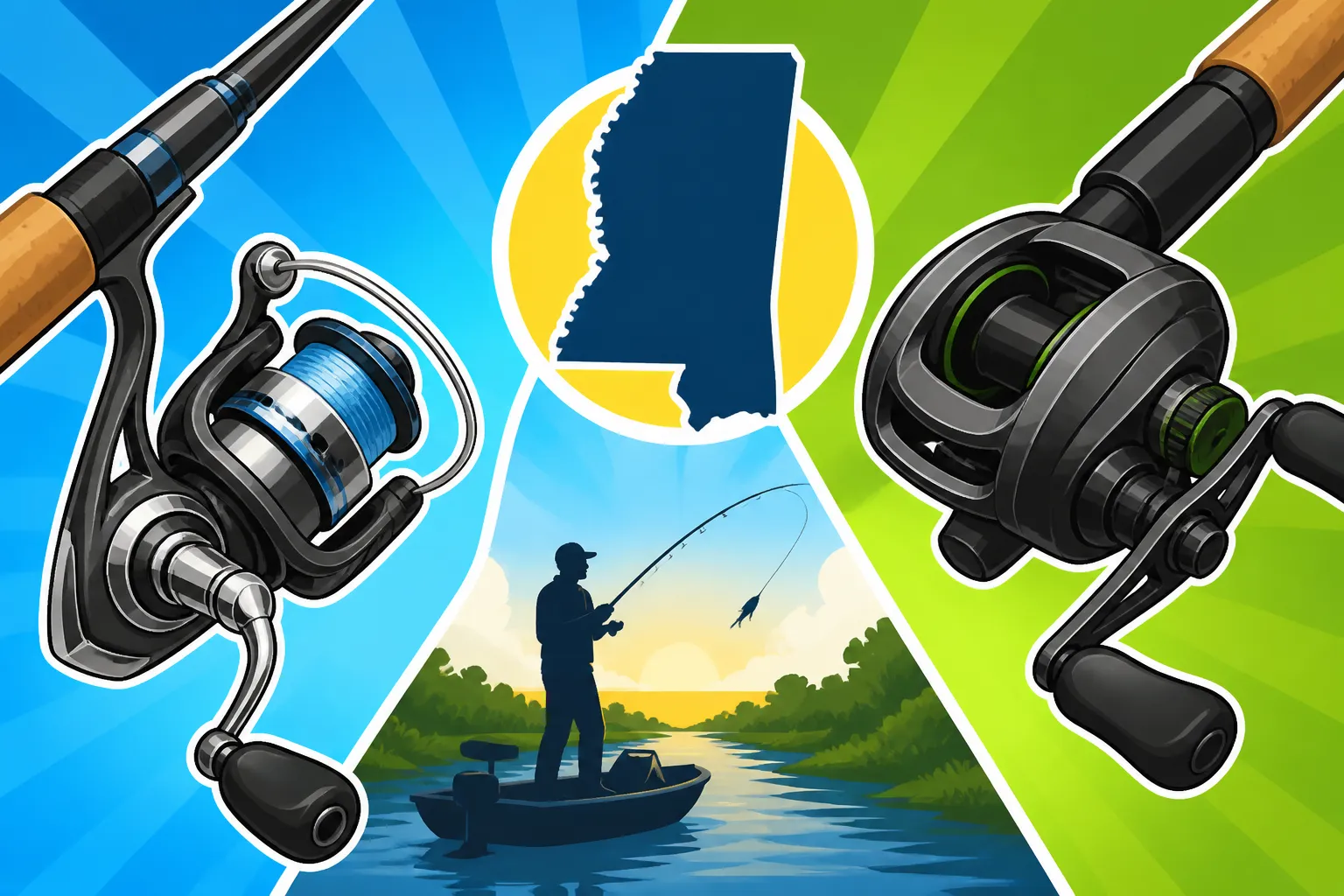
A spinning reel is an open-faced reel where the spool remains fixed and parallel to the rod. When you cast, the line simply peels off the end of the spool. To retrieve your line, you crank a handle, which rotates a bail arm around the fixed spool, winding the line back on. This design is fundamentally different from a baitcaster, where the spool itself rotates during casting and retrieval.
Because the spool doesn't spin, the mechanics of a spinning reel are inherently simpler for a new angler to grasp. You open the bail, make your cast, and then close the bail to begin your retrieve. The line flows smoothly off the stationary spool, which greatly reduces the chance of line tangles and frustrating "bird's nests" that are the bane of many a beginner's existence. The drag system, typically located at the front or rear of the spool, allows the line to slip when a fish pulls hard, preventing your line from breaking. It’s a very intuitive system, which means less time fiddling with settings and more time actually fishing.
Advantages of Spinning Reels for Novice Anglers
The primary advantage of spinning reels, especially for those new to fishing, is their unparalleled ease of use. You don't need a finely tuned thumb to manage line flow during a cast, which is a huge relief when you're just learning the motions. This makes the casting process much less intimidating and far more enjoyable. They are also incredibly versatile, capable of handling a wide range of line weights and lure sizes, though they truly shine with lighter lines and baits. This means you can use one spinning reel setup for everything from tiny crickets for bream to small crankbaits for bass.
Spinning reels are also known for their impressive casting distance, particularly with lighter lures, thanks to the way the line peels off the spool. You can make long, effortless casts, which is a real plus when trying to reach that lily pad patch from the bank or when fishing from a pier. They are generally more resistant to wind knots and tangles when handled correctly, making them a reliable companion for a relaxing day on the water. Many affordable yet high-quality spinning reel options are readily available, including numerous choices you can explore on Amazon, making them an accessible entry point into fishing without a huge upfront investment. For more details on choosing a setup, check out our guide on Best Beginner Fishing Rod and Reel Combo.
When a Spinning Reel Shines in Mississippi Waters
In Mississippi, a spinning reel is your go-to for a vast array of common fishing scenarios, particularly if you're targeting smaller to medium-sized fish or practicing light tackle techniques. If you're heading out to a local lake or pond to catch bream (our beloved bluegill and other sunfish) or crappie, a spinning reel loaded with light monofilament or fluorocarbon line is absolutely perfect. You can cast small jigs, live minnows, or worms with ease, and feel even the subtlest nibbles.
Spinning reels are also excellent for bank fishing, which is how many Mississippians start their fishing journey. Whether you're casting into Ross Barnett Reservoir from a public access point or exploring the numerous state park lakes, a spinning rod and reel combo will serve you well. It's fantastic for throwing lighter lures like small spinnerbaits, soft plastics, or topwater baits for smaller largemouth bass. Many anglers, even seasoned ones, keep a spinning setup rigged for specific finesse techniques because of its sensitivity and ability to handle light presentations. If you're just getting started and wondering Do You Need a License to Fish in Mississippi?, it's always best to check, but having the right, user-friendly gear like a spinning reel makes the experience much more pleasant once you're legal.
Diving Deeper: Baitcasting Reels and Their Appeal
While spinning reels are the friendly handshake of fishing, baitcasting reels represent a step up in skill and offer distinct advantages for certain types of fishing. They might have a steeper learning curve, but they reward dedication with precision and power.
How a Baitcasting Reel Operates
Unlike a spinning reel where the spool stays put, a baitcasting reel's spool rotates on an axle during both casting and retrieval. When you cast, the weight of your lure pulls the line off the spool, causing the spool to spin. To prevent the spool from over-spinning and creating a dreaded "bird's nest" (a tangle of loose line), the angler must use their thumb to apply controlled pressure to the spool. This critical "thumbing" technique is what makes baitcasters challenging for beginners but incredibly precise for experienced anglers.
During retrieval, the line winds directly onto the rotating spool. This direct line path from the rod tip to the spool, combined with the reel's internal gearing, often results in a more powerful retrieve and a more direct feel for what your lure is doing and what's happening at the end of your line. Baitcasting reels typically sit on top of the rod, with the guides facing upwards, a subtle but important difference from spinning reels which hang below the rod. Mastering a baitcaster truly involves learning the feel of the rod, the weight of the lure, and the mechanics of spool control, which takes practice but can be incredibly rewarding.
Why Experienced Anglers Prefer Baitcasters
Seasoned anglers often gravitate towards baitcasting reels for their superior accuracy, power, and ability to handle heavier lines and lures. The ability to control the spool with your thumb gives you incredible precision for casting. You can literally "feather" your cast to drop a lure into a tight spot, like under a low-hanging tree branch or right next to a submerged log. This pinpoint accuracy is invaluable when targeting wary fish in specific cover, like a big largemouth bass lurking in the shadows.
Baitcasters are also built for power. Their gearing and robust construction allow them to handle heavier lines, larger lures, and the brute force of bigger fish. If you're throwing big swimbaits, heavy jigs, or cranking deep-diving crankbaits all day, a baitcaster will make the job much easier and less fatiguing. The direct contact with the line also translates into increased sensitivity, allowing you to feel subtle bites or the texture of the bottom more acutely. This can be a game-changer when fishing murky waters or when bites are light. When you're ready to explore these more advanced options, many top brands and specific models can be found and researched on platforms like Amazon, offering a wide selection to match any budget or specific fishing need.
Ideal Scenarios for Baitcasting in Mississippi
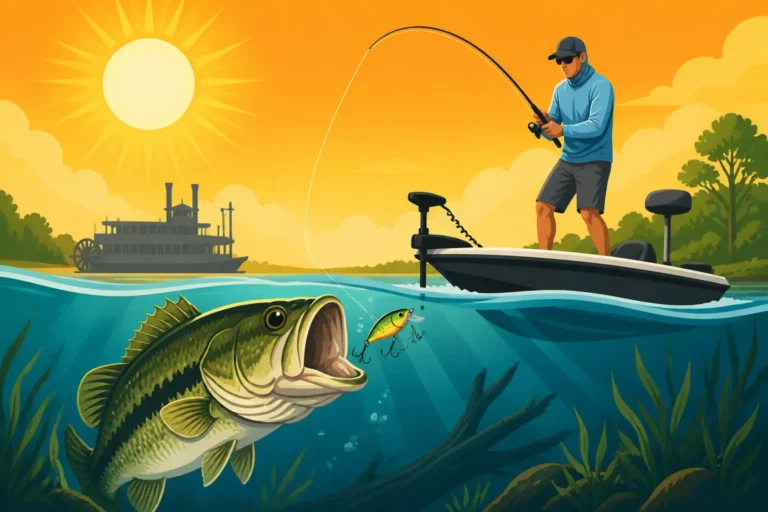
In the rich fishing landscape of Mississippi, baitcasting reels truly come into their own when you're targeting larger, harder-fighting fish, or when you need to deploy heavier tackle and techniques. They are the undisputed champions for serious Largemouth Bass Fishing in Mississippi, especially when you're flipping or pitching jigs and soft plastics into dense cover like lily pads, hydrilla beds, or submerged timber. The power and accuracy allow you to place your lure exactly where you want it and then muscle a big bass out of the thick stuff.
Baitcasters are also highly favored for Catfish Fishing in Mississippi, particularly when using heavy-duty rigs for big blue or flathead catfish in strong currents, such as those found in the mighty Mississippi River or its larger tributaries. The increased line capacity, durability, and robust drag systems make them ideal for handling powerful runs from these big bottom dwellers. If you're trolling heavy crankbaits for bass on a large reservoir or casting large swimbaits, a baitcaster will provide the necessary torque and control. Basically, if your fishing involves heavier lines, bigger baits, precision placement, or a significant fight from a strong fish, a baitcaster is likely the reel you'll want in your hands.
The Great Showdown: Key Differences and When to Choose Which
Deciding between a spinning reel and a baitcasting reel really comes down to understanding their fundamental differences and matching them to your skill level and fishing goals. There isn't a single "best" option; rather, it's about finding the best fit for you and your angling ambitions in Mississippi.
Casting & Backlash: The Biggest Hurdle for Baitcasters
The most significant difference, and often the biggest deterrent for beginners considering a baitcaster, is the casting mechanism and the potential for backlash. With a spinning reel, the line simply unwinds off the fixed spool; it’s a very natural and forgiving process. As a result, serious backlash is rare, making it an excellent choice for learning the very fundamentals of casting. You'll still get a few knots here and there, especially with lighter lines in windy conditions, but they're usually easy to untangle. This makes spinning reels perfect for honing your skills, perhaps starting with some Bank Fishing Tips for Beginners.
Baitcasting, on the other hand, demands active thumb control to manage the spool's rotation during a cast. If you don't apply enough thumb pressure, the spool will spin faster than the line is leaving, causing a catastrophic tangle known as a "bird's nest" or "professional overrun." It's incredibly frustrating and can eat up valuable fishing time trying to pick out the mess. Conversely, too much thumb pressure will severely limit your casting distance. Mastering this balance takes practice, patience, and a delicate touch. Modern baitcasters have made strides with magnetic and centrifugal braking systems to help reduce backlash, but the angler's thumb remains the ultimate control.
Line Management, Drag, and Retrieval
Beyond casting, how these reels manage line and retrieve fish varies considerably. Spinning reels are prone to line twist, especially with heavier, stiffer lines, because the bail arm wraps the line onto the stationary spool. This twist can lead to tangles and knots, although proper line management and periodic line changes can mitigate this. The drag system on a spinning reel typically involves washers and a knob to apply pressure to the spool, allowing line to pay out under tension. While effective, the drag might not feel as consistently smooth under extreme pressure as some high-end baitcasters.
Baitcasting reels, by design, spool line directly onto a rotating drum, virtually eliminating line twist. This direct winding also often allows for greater line capacity, which is crucial when fishing for species that make long, powerful runs. The drag systems on baitcasters are generally larger and can be built to handle more intense pressure, providing a smoother, more powerful drag that's essential for fighting big fish. Baitcasters also offer a wider range of gear ratios, meaning how many times the spool rotates per crank of the handle. Higher ratios mean faster retrieves, which are great for quickly working lures or getting fish to the boat, while lower ratios provide more torque for deep-diving baits or battling stubborn fish. Consider what type of line you'll be using, for instance, for Best Fishing Line for Crappie you'll want something light and sensitive for spinning reels.
Matching the Reel to Your Mississippi Fishing Style
Ultimately, the best reel for you depends on your specific fishing goals and preferred techniques in Mississippi.
- For the Casual Angler or Complete Beginner: If you're looking for an easy, no-fuss way to enjoy a day on the water, catch some panfish or small bass, or teach a child to fish, a spinning reel is hands down the way to go. Its simplicity allows you to focus on learning the basics of casting and reeling without the added stress of managing spool rotation. It’s also incredibly versatile for different types of fishing and perfect for exploring new techniques.
- For the Aspiring Bass Tournament Angler or Heavy Tackle Enthusiast: If your passion lies in targeting trophy largemouth bass, wrestling with monster catfish in the river, or employing specialized techniques that demand precision and power, then a baitcasting reel will be your eventual goal. The learning curve is real, but the rewards in terms of accuracy, control, and fighting power are significant. You'll likely start with a spinning reel, but as your skills develop, a baitcaster will open up new dimensions of fishing.
Think about the species you want to target, the environment you'll be fishing in (e.g., open water vs. heavy cover), and the types of lures you'll be using. This will guide your decision on which reel type will serve you best. For a broader overview of the state's fishing opportunities, our Mississippi Fishing Seasons Calendar can provide a good starting point.
Here's a quick comparison to help solidify your understanding:
| Feature | Spinning Reel | Baitcasting Reel |
|---|---|---|
| Ease of Use | Excellent for beginners, very forgiving | Steeper learning curve, requires thumb control |
| Backlash | Rare, minimal | Common for beginners, requires skill to prevent |
| Line Weight | Best with lighter lines (4-12 lb) | Excels with heavier lines (10-30+ lb) |
| Lure Weight | Best with lighter lures (1/16 oz to 1/2 oz) | Best with heavier lures (1/4 oz and up) |
| Accuracy | Good, but less precise for pinpoint casts | Excellent for pinpoint casting and targeting |
| Power/Torque | Adequate for most freshwater species | Superior power for battling large fish and heavy lures |
| Common MS Target Species | Crappie, Bream, Smaller Bass, Trout | Largemouth Bass, Catfish, Striped Bass, Heavy Tackle |
| Cost (General Shape) | Wide range, many affordable beginner options | Generally higher entry cost for quality models |
My Recommendation for New Anglers in Mississippi
Alright, if you're standing at the crossroads, wondering which path to take first on your Mississippi fishing journey, let me offer some straightforward advice based on years of watching folks learn to love this sport.
Starting with a Spinning Reel: The Smart Move
For almost every single beginner stepping out onto the banks or into a boat for the first time, starting with a spinning reel is, without a doubt, the smartest move you can make. It takes away so much of the initial frustration that can often turn people away from fishing. Imagine trying to learn how to drive a stick shift when you're still figuring out how to steer straight – that's often what learning a baitcaster feels like for a true novice! A spinning reel allows you to master the basics: how to hold the rod, how to cast smoothly, how to feel a bite, and how to properly fight a fish, all without constantly battling a tangled mess of line.
You'll gain confidence quickly, which is paramount to sticking with any new hobby. You'll be able to enjoy success catching bluegill and crappie in Mississippi's abundant waters, or even smaller bass in local ponds. It’s a versatile tool that will let you experiment with different baits and techniques. There are so many excellent and affordable spinning reel combos out there, and you can easily find a great starter kit on Amazon that will get you fishing quickly. A reliable spinning setup is definitely part of any Best Rod and Reel Setup for Beginners. Learn to love the sport first, then worry about the specialized gear later.
When to Consider Upgrading to a Baitcaster
Once you've spent some quality time with your spinning reel, you'll naturally start to feel more comfortable and confident on the water. You'll be able to cast accurately, understand how to set the hook, and land fish without too much trouble. You might even find yourself looking for new challenges or wanting to try specific techniques you've seen more experienced anglers use. This is when you should absolutely consider introducing a baitcasting reel into your arsenal.
Think of it as progressing from an automatic transmission to a manual. You've got the basics down, and now you want more control, more power, and more precision. When you start wanting to cast heavy jigs into dense cover for trophy bass at Lake Washington, or when you feel the pull of a giant catfish on the Mississippi River, that's when a baitcaster truly becomes indispensable. You'll appreciate the direct feel, the accuracy, and the sheer power it offers. It's not about replacing your spinning reel, but rather adding a specialized tool to your fishing toolbox. Many seasoned anglers carry both, choosing the right tool for the job. Just like with spinning reels, Amazon is a fantastic place to start researching and finding the right baitcaster when you're ready for that next step, perhaps even looking into a specific Choosing the Right Rod and Reel for Mississippi Fishing that complements your new baitcasting skills. Don't rush it; enjoy the learning process, and when the time is right, the baitcaster will be a natural and exciting progression.
Disclaimer
This article is for general informational purposes only and does not constitute professional advice. Laws, prices and regulations vary by location and change over time. Consult a qualified professional for guidance on your specific situation.