Deep Water Crappie Fishing Techniques
There's nothing quite as frustrating as heading out to your favorite crappie spot, only to find the shallow brush piles empty and the bites non-existent. You know they're somewhere, but when the water gets hot, or a cold front rolls through, those papermouths can seem to vanish into thin air. That's because they often head for deeper, more stable waters. This comprehensive guide is all about equipping you with the knowledge and techniques to confidently pursue and catch crappie when they retreat to the depths of Mississippi's lakes and reservoirs.
Understanding Deep Water Crappie Behavior
When the conditions shift, crappie don't just disappear; they relocate to where they feel most comfortable and where their food sources are. Knowing why they go deep and how to predict their movements is half the battle.
Why Crappie Go Deep
Crappie are ectothermic creatures, meaning their body temperature is regulated by their environment. In Mississippi, this often means seeking thermal refuge. During the scorching summer months, surface waters can become too warm, causing oxygen levels to drop. Crappie will then descend to cooler, deeper water where oxygen is more stable and temperatures are more tolerable. Conversely, during bitter winter cold fronts, crappie often seek deeper water because it acts as a thermal blanket. Deep water maintains a more consistent temperature than the rapidly cooling or heating surface layers, offering a stable environment. They're also often following baitfish, like shad, which themselves seek deeper, more comfortable zones. Understanding these basic motivations is crucial.
It’s not just about temperature, though. Deeper water also provides a greater sense of security from predators, both avian and aquatic. Think about it: a crappie suspended 20 feet down is much harder for an eagle or an osprey to spot than one lurking near a shallow stump. This instinctive desire for safety pushes them into denser cover or open water where they can still ambush prey effectively without feeling exposed. This is why you'll often find them schooling tightly around submerged timber, ledges, or humps in deeper sections of the lake. It's their safe haven where they can relax and feed.
Another major reason crappie migrate to deeper water is directly tied to their food source. Baitfish, primarily shad, also exhibit seasonal and environmental migrations. When surface water conditions become unfavorable – too hot, too cold, or too clear with heavy predator presence – shad will move to deeper, more protected areas. Since crappie are opportunistic predators and shad are a primary component of their diet, the crappie simply follow the buffet. Finding large schools of shad on your sonar is often a sure sign that crappie aren't far behind, even if they aren't directly mixed in. They'll be nearby, waiting for an easy meal.
Seasonal Deep Water Patterns
Crappie exhibit distinct patterns in deep water throughout the year. In summer, as mentioned, the heat drives them deep. You'll find them suspended over creek channels, along sharp ledges, or buried deep within submerged timber and brush piles. They might be anywhere from 15 to 30 feet down, depending on the lake's thermocline and oxygen levels. It’s a game of finding those deep, cool pockets. Moving into fall, as water temperatures begin to cool, crappie might still be deep, but they'll often become more active, feeding heavily in preparation for winter. They often follow shad into deeper creek channels or main lake basins where large schools of baitfish congregate.
During the winter months, deep water fishing truly shines in Mississippi. Crappie move to the deepest parts of the lake or reservoir, often suspending in dense schools over main river channels, deep humps, or under bluff walls. The water temperature below 20 feet or so remains remarkably stable, making these areas their consistent winter homes. This is when patience and precision are key, as their metabolism slows, and they might be less inclined to chase a bait. Finally, as spring approaches, while many crappie move shallow for the spawn, a significant number, especially larger females, will stage in deeper water adjacent to spawning flats before moving up. This transition period can offer some fantastic deep water opportunities for bigger fish. Learning to identify these patterns can dramatically improve your success, and this guide on Mississippi Fishing Seasons Calendar can help you align your efforts.
Locating Deep Water Structure and Cover
Finding crappie in deep water isn't about aimlessly drifting; it's about systematically locating the specific features that attract them. Crappie are structure-oriented fish, meaning they gravitate towards changes in the lake bottom or submerged objects. Think of ledges, creek channel edges, humps, old roadbeds, submerged timber, and artificial brush piles as their apartments. These features provide ambush points, cover from predators, and often hold baitfish. A good depth finder, especially one with side imaging, is your best friend here. You're not just looking for fish; you're looking for the habitat that holds the fish.
Once you identify promising structure like a deep drop-off or a standing timber line, the next step is to pinpoint the exact cover within that structure. This could be a dense submerged brush pile, a cluster of stumps, or even a subtle contour change. Crappie will often position themselves tightly to this cover, sometimes almost inside it. This is where high-definition sonar really pays off, allowing you to discriminate individual fish tucked into a brush pile. Many anglers will even deploy their own artificial brush piles in strategic deep water locations, creating hotspots that they can return to year after year.
Remember, deep water is vast, and crappie can be anywhere within it. That's why breaking it down into manageable search patterns is vital. Start by identifying major deep water highways like creek channels that snake through the lake. Then, look for intersections, bends, or irregularities along those channels. Humps or points that extend into deep water are also excellent places to check, as they provide an easy transition for crappie moving between depths. Don't overlook old bridge pilings or submerged foundations from previous homesteads; these man-made structures are crappie magnets. The key is to be methodical in your search, covering water efficiently until you mark fish.
Essential Gear for Deep Water Crappie
To conquer deep water crappie, you need the right tools. This isn't your grandpa's cane pole fishing in a shallow pond; this is precision fishing that demands specific equipment.
Rods, Reels, and Line Choices
For deep water crappie, your rod and reel setup needs to offer sensitivity, control, and the ability to handle potentially heavier weights. Generally, a longer, light to medium-light action spinning rod, typically 8 to 12 feet in length, is preferred for vertical jigging or spider rigging. The extra length helps with bait control, especially when fishing multiple rods, and provides leverage for fighting fish or working baits far from the boat. Look for rods with a fast to moderate-fast tip that can detect subtle bites from crappie in deep water, where the bite might feel more like a slight pressure or a "mushy" sensation rather than a distinct tap. Brands like BnM Poles or ACC Crappie Stix are popular among serious crappie anglers for their specialized deep water offerings. You can find a fantastic selection of these specialized crappie rods on Amazon, often with reviews from other dedicated anglers.
Matching your rod with a lightweight spinning reel in a 1000 to 2000 size range is ideal. The reel should have a smooth drag system, as crappie have soft mouths, and a good drag prevents pulling the hook. Line choice is critical. Many anglers opt for 4-6 pound test monofilament or fluorocarbon line. Monofilament offers a bit of stretch, which can be forgiving for soft-mouthed crappie, while fluorocarbon offers excellent sensitivity and less stretch, allowing you to feel even the lightest bites. Some anglers also use braided line with a fluorocarbon leader for ultimate sensitivity, though the lack of stretch in braid can sometimes lead to pulled hooks if you're not careful with your hookset. The key is to find a line that balances sensitivity, strength, and knot reliability, especially when fishing around abrasive cover. This guide on Choosing the Right Rod and Reel for Mississippi Fishing goes into more detail.
When fishing very deep, or with heavier weights, some anglers might even consider a baitcasting reel designed for finesse applications, particularly for precise vertical presentations. These reels offer excellent control over line deployment and retrieval. However, for most deep water crappie scenarios, the versatility and ease of use of a spinning setup make it the go-to choice. Regardless of your choice, ensure your line is fresh and regularly inspected for nicks and abrasions, as a small flaw can mean losing a trophy crappie from 25 feet down.
The Importance of Electronics Fish Finders
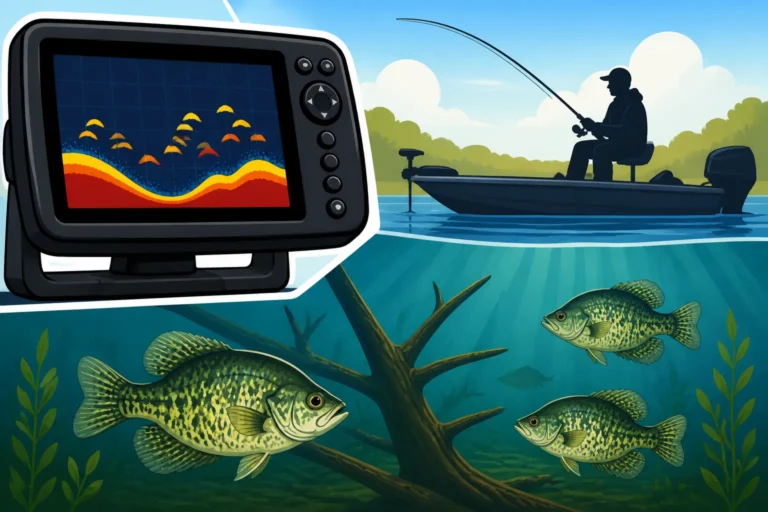
If there's one piece of gear that has revolutionized deep water crappie fishing, it's advanced electronics. A quality fish finder isn't just a luxury; it's an absolute necessity. Modern units from companies like Humminbird, Garmin, or Lowrance offer incredibly detailed sonar displays, including 2D sonar, Down Imaging, and especially Side Imaging. 2D sonar helps you see fish directly below your boat and identify bait balls and structure. Down Imaging provides a photo-like view directly beneath your transducer, making it easier to discern whether those marks are fish, brush, or submerged trees.
However, Side Imaging is where the real magic happens for deep water crappie. It allows you to scan wide swaths of water on either side of your boat, revealing brush piles, creek channels, and schools of crappie that you might otherwise drive right over without your 2D sonar picking them up. Imagine being able to see a brush pile 50 feet to your left with a dozen crappie suspended around it, all without having to drive directly over it and spook the fish. This capability significantly cuts down your search time and dramatically increases your efficiency in locating fish. You can find excellent deals on high-quality fish finders suitable for crappie fishing on Amazon. A detailed guide on Reading a Fish Finder for Crappie can help you get the most out of your unit.
Beyond just finding fish, your electronics help you stay on them. GPS mapping allows you to mark waypoints on productive spots, ensuring you can return to them even on different days. Many units also have a "history" mode, letting you scroll back and see what you've passed over. Crucially, a good fish finder also helps you monitor depth, water temperature, and even the presence of a thermocline, providing vital environmental information that influences crappie behavior. Learning to interpret all the data your unit provides is an ongoing process, but it’s an investment that pays dividends in crappie catches.
Deep Water Jigging and Trolling Baits
When crappie are deep, your bait presentation needs to match their mood and location. For deep water jigging, heavier jigs are often necessary to get down quickly and stay vertical in wind or current. Jigs weighing 1/8 to 1/4 ounce are common, but sometimes even 3/8 or 1/2 ounce jigs are needed in very deep water or strong currents. Pairing these with small soft plastic grubs, tubes, or creature baits in natural colors (like shad, white, or chartreuse) is a go-to. Live bait, particularly minnows, is also incredibly effective. Rigging a minnow on a single hook or a jig head and slowly lowering it to the depth where fish are marked is a classic deep water technique.
For trolling or "pushing" baits in deep water, you'll often use multiple rods, each presenting a different bait at varying depths. Small crankbaits specifically designed for crappie, such as those from Bandit or Strike King, that dive to specific depths can be very effective. Alternatively, you can use jig heads or plain hooks tipped with minnows, suspending them under floats set at precise depths or using heavy weights to get them down. The choice of bait often depends on whether the crappie are active and willing to chase (crankbaits) or lethargic and requiring a slower, more subtle presentation (minnows or slow-falled jigs). Experimentation is key, and having a variety of jigs and live bait options on hand is always a good idea. For a deeper dive into bait selection, check out Best Bait for Crappie in Mississippi.
Consider the profile and action of your bait. In deeper, often darker water, vibrations and visual contrast can be more important than intricate color patterns. Jigs with a paddle tail or curly tail that create a lot of movement, even with minimal rod action, can be highly effective. Glow-in-the-dark baits or those with UV enhancers can also sometimes make a difference in dimly lit deep water. Don't be afraid to change up colors and retrieve speeds until you find what the crappie are responding to on any given day. Remember, crappie in deep water can be very finicky, so subtle adjustments to your offering can mean the difference between an empty livewell and a full stringer.
Advanced Deep Water Techniques
Once you have your gear sorted and a basic understanding of crappie behavior, it's time to dive into the techniques that truly unlock deep water success. These methods are designed for precision and efficiency in specific deep water scenarios.
Vertical Jigging and Dropping
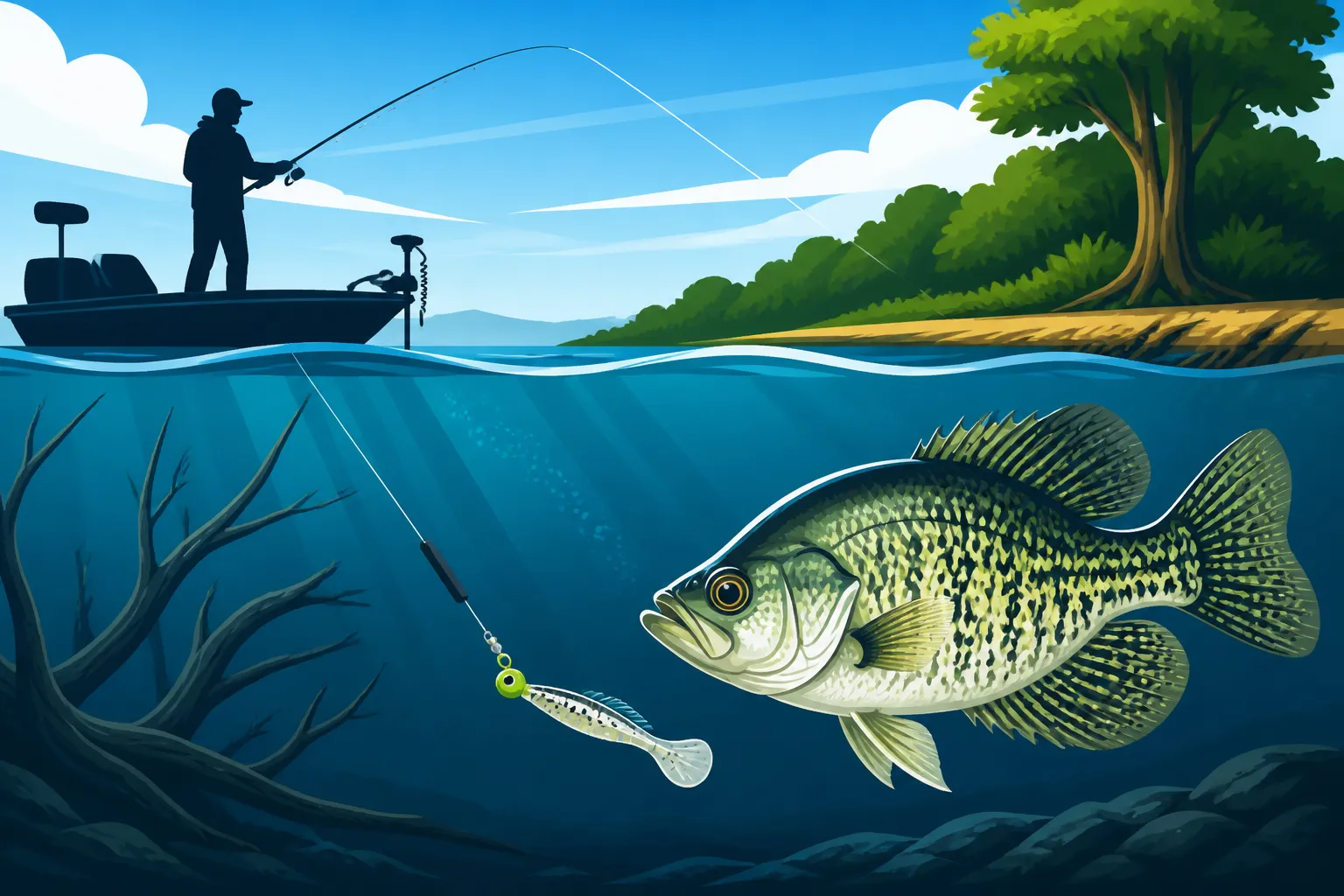
Vertical jigging is one of the most direct and effective ways to target crappie suspended over deep structure or in open water. The idea is simple: position your boat directly over the fish you've marked on your sonar, then lower your bait straight down to their depth. This technique requires excellent boat control, often using a trolling motor with GPS Spot-Lock, to keep you directly on top of the school or brush pile. The advantage is that your bait is precisely where the fish are, and you can work it through the strike zone repeatedly.
When vertical jigging, the presentation is key. Many anglers use a small jig (1/8 to 1/4 ounce) tipped with a minnow or a soft plastic. The action is usually subtle: a slight lift of the rod tip, followed by a slow drop, allowing the jig to flutter naturally. Sometimes, simply holding the bait perfectly still at the crappie's eye level is all it takes, especially when they are finicky. Other times, a more aggressive "pop-and-fall" can trigger a reaction strike. Pay close attention to your line; a crappie bite in deep water can be incredibly light, sometimes just a slight slackening of the line or a faint tick. This technique is particularly effective when crappie are tightly schooled around specific pieces of cover, and you can watch your jig on your electronics as it descends into the fish.
Another variation is "dropping," which might involve using a heavier weight and a bare hook or a small jig, again, tipped with a live minnow. The weight gets your bait down quickly, and the minnow does the work. Some anglers use a slip bobber set at a precise depth, but most prefer a tight-line approach for maximum sensitivity. The beauty of vertical jigging and dropping is its precision. You're not just casting and hoping; you're actively engaging with the fish you're seeing on your screen. This focused approach makes it highly productive, especially during colder months when crappie are often schooled up tight and holding deep.
Spider Rigging and Slow Trolling
Spider rigging is a multi-rod deep water technique that allows you to cover a wider area and present multiple baits at various depths simultaneously. Imagine a boat with 6 to 8 (or even more, depending on local regulations) long rods, often 10 to 16 feet, fanned out around the bow, resembling a spider's legs. Each rod typically presents a jig or a minnow rig at a different depth or distance from the boat. This method is incredibly effective for targeting scattered crappie or when you're trying to determine the optimal depth and bait preference. If you're looking to explore more about this setup, our Spider Rigging Techniques guide offers a deep dive.
The boat is typically moved very slowly, often with an electric trolling motor, at speeds ranging from 0.2 to 1.0 mph. This slow forward motion allows the baits to cover water naturally, mimicking foraging baitfish. Anglers will often rig their rods with different color jigs, plastic styles, or minnow sizes, essentially running a "tackle shop" behind the boat. When a rod gets a bite, it gives you immediate feedback on what depth, color, and presentation the crappie are preferring on that particular day. You can then adjust your other rods accordingly.
Spider rigging is particularly potent over vast, relatively featureless deep flats, large creek channels, or when crappie are suspended in open water following baitfish. It's a fantastic search tool, but it also requires a good amount of attention to detail – managing multiple lines, avoiding tangles, and constantly monitoring your electronics. Brands like Ozark Rods or Driftmaster rod holders are popular choices for setting up a robust spider rig system. This method allows you to efficiently dissect a deep water column and is a staple for many serious crappie tournament anglers in Mississippi.
Pushing Jigs and Live Bait
"Pushing" is a technique closely related to spider rigging, often used in conjunction or as a slight variation. Instead of just letting lines trail behind the boat, pushing involves using forward-mounted rods to push jigs or live bait out in front of the boat as you slowly move forward. This technique is designed to present baits to undisturbed crappie before the boat passes directly over them. Many crappie, especially larger ones, can be boat shy, and pushing baits out ahead can entice strikes from fish that might otherwise spook.
When pushing, anglers typically use 1/16 to 1/4 ounce jigs, often sweetened with a minnow. The weight of the jig, combined with the slow forward motion of the boat, dictates the depth the bait runs. By varying jig weight, line length, and boat speed, you can precisely control your presentation. This technique is especially effective when crappie are suspended at consistent depths over a long stretch of structure, like a deep creek channel or along a submerged tree line. The baits are slowly "pushed" into the crappie's face, giving them ample time to react without the immediate presence of the boat.
Pushing can be done with fewer rods than traditional spider rigging, making it a bit more manageable for individual anglers or smaller boats. It's an excellent method for covering water methodically and systematically, particularly when fishing deeper points, humps, or channel edges where crappie might be holding just off the main structure. It's all about a controlled, slow approach that gives the crappie every opportunity to inspect and inhale your offering. For those interested in exploring this method further, our Trolling for Crappie on Mississippi Reservoirs article covers similar principles.
Reading the Water and Adapting Your Approach
Mastering deep water crappie fishing isn't just about techniques; it's about observation, interpretation, and constant adaptation. The water is a dynamic environment, and crappie patterns can shift hourly.
Interpreting Sonar and Side Imaging
Your fish finder is your eyes below the surface, but it's only as good as your ability to interpret what it's showing you. On 2D sonar, crappie often appear as distinct arches or sometimes as dense blobs when they're tightly schooled. Pay attention to the size and shape of these marks. Larger, more elongated arches often indicate bigger fish. Baitfish schools will appear as large, cloudy masses. The key is to distinguish between bait and gamefish. Look for crappie marks around or beneath the baitfish, indicating they are feeding or staging. If you see a large, distinct arch right on the edge of a bait ball, that's often a crappie looking for a meal.
Side Imaging takes this interpretation to another level. You'll see submerged timber, brush piles, ledges, and even individual fish lying on the bottom or suspended around cover in incredible detail. The beauty here is being able to identify these structures and fish without driving directly over them. Look for the "shadows" cast by objects on the bottom – these often tell you more about the size and shape of the cover than the object itself. When you mark crappie on Side Imaging, pay attention to their relation to the structure. Are they tight to it? Suspended above it? Clumped together? This information helps you decide on the best angle of approach and bait presentation. Sometimes you'll mark a "ghost tree" which is actually a large school of crappie so tightly packed they appear as solid structure. Knowing what you're looking for, and what different returns mean, takes practice, but it's an essential skill for deep water success.
Furthermore, use your sonar to identify the thermocline. This is the layer of water where the temperature changes rapidly. During warmer months, crappie will often be found just above or in the thermocline, as this zone typically offers the ideal combination of temperature and oxygen. Your fish finder can help you visualize this layer, giving you a target depth range. Understanding these nuances of your electronics, from distinguishing between a school of white bass and crappie to precisely identifying cover, will dramatically enhance your ability to find and catch deep water crappie.
Factors Affecting Deep Water Bites Weather, Current
Deep water crappie are influenced by various environmental factors, just like their shallow water counterparts. Weather patterns, especially significant changes, can impact their mood. A strong cold front that causes surface temperatures to plummet might drive crappie even deeper or make them more lethargic, requiring an even slower, more subtle presentation. Conversely, stable weather for a few days often leads to more consistent deep water bites. Barometric pressure also plays a role; a rising barometer after a low-pressure system can sometimes trigger a feeding frenzy, while a falling barometer might shut them down.
Current is another major factor, especially in reservoir systems with power generation or in natural river systems. Crappie will often position themselves facing into the current, using it to ambush baitfish that are swept past them. However, too strong a current can make them seek refuge behind larger structures. When fishing in current, consider using slightly heavier jigs to maintain contact with the bottom or to stay in the strike zone. The current will also give your baits a natural action, so sometimes less artificial movement from your rod is better.
Wind, while not directly affecting deep water crappie, can significantly impact your boat control. A strong wind can make vertical jigging nearly impossible without a powerful trolling motor and GPS lock. In such conditions, drifting or controlled trolling might be a more effective strategy, using the wind to your advantage to cover long stretches of deep water. Always consider how these external factors are influencing not just the fish, but also your ability to present your bait effectively. Adapting your technique to account for wind, current, and weather is a mark of a truly successful deep water crappie angler.
Adjusting Depth and Presentation
One of the most common mistakes in deep water crappie fishing is sticking to a single depth or presentation when the fish aren't biting. Crappie can be incredibly finicky, and their preferred depth can change by just a few feet throughout the day. If you're marking fish at 25 feet but not getting bites, try adjusting your bait to 23 feet, or perhaps 27 feet. Use your electronics to guide you; if you see fish consistently at a certain depth, make sure your bait is exactly there, or just above them, as crappie often feed upwards.
Presentation also needs constant adjustment. Sometimes, a slow, subtle twitch and pause is all it takes. Other times, a more aggressive jigging motion will trigger a reaction strike, especially when fish are slightly more active. Don't be afraid to experiment with different jig colors, plastic shapes, or even minnow sizes. A shift from a chartreuse jig to a natural shad pattern, or from a curly tail grub to a tube jig, can sometimes unlock the bite. Consider the mood of the fish: are they lethargic and requiring a slow, tempting meal, or are they actively chasing and needing a faster, more erratic retrieve?
Even slight changes in boat speed during trolling or pushing can make a huge difference. Sometimes, slowing down by just 0.1 mph can put your bait in the strike zone longer or give a finicky crappie the extra second it needs to commit. Conversely, speeding up slightly might trigger a chase response from more active fish. Always pay attention to what the fish are telling you (or not telling you). Keep a mental log or even a physical one of what worked and what didn't. This constant process of testing, observing, and adapting is the hallmark of truly successful deep water crappie fishing. The knowledge you gain from each trip will build your intuition and make you a more effective angler.
| Technique | Primary Application | Typical Depth Range | Rods Needed | Key Advantage | Ideal Conditions |
|---|---|---|---|---|---|
| Vertical Jigging | Tightly schooled fish over specific cover/structure | 15-40+ feet | 1-2 | Precision, direct bait presentation, immediate feedback | Calm water, precise boat positioning |
| Spider Rigging | Scattered fish, covering wider areas, determining depth/bait | 10-30 feet | 6-12 (or more) | Wide coverage, multiple presentations, efficient search | Moderate wind/current, larger areas to cover |
| Pushing Jigs/Bait | Targeting boat-shy fish ahead of the boat, channel edges | 10-25 feet | 4-8 | Subtle presentation to undisturbed fish, methodical | Stable conditions, long structural runs |
Deep Water Hotspots in Mississippi
Mississippi is blessed with numerous lakes and reservoirs that offer incredible deep water crappie fishing opportunities. Knowing where to start your search can save you a lot of time.
Mississippi's Premier Deep Crappie Lakes
When it comes to deep water crappie fishing in Mississippi, a few names always rise to the top. Grenada Lake is arguably the most famous, renowned for its giant crappie and excellent deep water fishing. Anglers here often target crappie in the main lake basin, deep creek channels, and around numerous submerged brush piles and standing timber. The deep water here can hold crappie year-round, making it a prime destination for winter and summer techniques. Our guide on Grenada Lake Fishing Guide provides more detailed insights into this crappie haven.
Sardis Lake and Enid Lake are two other North Mississippi reservoirs that consistently produce big numbers of deep water crappie. Similar to Grenada, these lakes feature extensive creek channels, humps, and areas of submerged timber where crappie congregate. Anglers frequently find success spider rigging or pushing jigs over these deep structures, particularly during the colder months or when the summer heat drives fish down. The large expanses of open water also lend themselves well to slow trolling techniques. You can learn more about Sardis Lake Fishing Guide to help plan your next trip.
Further south, Ross Barnett Reservoir also offers excellent deep water opportunities, particularly in its main river channel and around deeper points and ledges in the main lake. While known for its bass, Barnett consistently produces quality crappie from its deeper sections, especially during the fall and winter. The spillway area can also be productive when current is present, drawing crappie and baitfish into predictable patterns. Remember, each lake has its unique characteristics, so understanding the specific contours and submerged features of your chosen lake is crucial for consistent deep water success. For a broader look at prime locations, check out our Best Crappie Lakes in Mississippi article.
Seasonal Depth Changes in Specific Lakes
While the general principles of deep water crappie fishing apply across Mississippi, the specific depths and locations can vary greatly from lake to lake, and even within the same lake throughout the year. For instance, on Grenada Lake, during the absolute peak of summer, crappie might hold in 25-35 feet of water, often suspended over the old Yalobusha River channel. However, in winter, they might be tighter to the bottom in similar depths, congregating in massive schools.
On Sardis Lake, a popular strategy in winter involves targeting crappie suspended around standing timber in the lake's deeper arms, often in 20-30 feet. During the spring prespawn, some of the biggest crappie might stage on deep ledges adjacent to spawning flats before moving shallow, offering a fantastic deep water opportunity for trophy fish. Understanding these nuances for each body of water you fish is crucial. Keeping an eye on local fishing reports and water temperature data can give you an edge in predicting these shifts.
Even the presence of baitfish will influence depth. If the shad are holding at 18 feet in a particular creek channel on Enid Lake, you can bet the crappie won't be far, even if the "typical" crappie depth for that time of year is 25 feet. Always let your electronics and current conditions be your primary guide. The mantra for deep water crappie fishing should always be: find the bait, find the cover, and most importantly, find the right depth. The Mississippi Department of Wildlife, Fisheries, and Parks (MDWFP) often provides detailed reports that can help pinpoint these seasonal movements.
Responsible Deep Water Crappie Practices
As passionate anglers, it's our responsibility to ensure the health of Mississippi's fisheries for future generations. This includes understanding regulations and practicing ethical fishing.
Understanding Creel Limits and Size Restrictions
Mississippi has specific regulations designed to protect its crappie populations and ensure sustainable fishing. For many of the major reservoirs like Grenada, Sardis, Enid, and Arkabutla, there are specific creel limits (the number of fish you can keep per day) and size restrictions (minimum length). For example, a common daily creel limit for crappie in many Mississippi waters is 30 per person, but some lakes might have a more restrictive minimum size limit of 10 or 11 inches. It is absolutely vital to know the specific regulations for the body of water you are fishing before you head out. Breaking these rules can result in significant fines and penalties.
These regulations are not arbitrary; they are based on scientific studies of crappie populations, growth rates, and reproductive success. Size limits, in particular, often aim to allow crappie to reach reproductive age and spawn at least once before being harvested, ensuring the continuation of the species. Keeping undersized fish or exceeding the daily limit can quickly deplete local populations and negatively impact the fishing experience for everyone. Always carry a measuring device with you and know how to properly measure a fish from the tip of its snout to the end of its tail. For specific details on your favorite lake, consult our guides such as Grenada Lake Crappie Daily Limit or Sardis Lake Crappie Size Limit.
It’s also important to consider the health of the fish you catch and release, especially when fishing in deep water. Crappie brought up from significant depths (often 25 feet or more) can suffer from barotrauma, where the rapid change in pressure causes their swim bladder to expand. While many crappie can recover, some might not. If you're planning to release fish from deep water, consider using a descending device to help them return to depth, or limit your catch to only what you intend to keep. Being a responsible angler means understanding and respecting these biological realities.
Proper Release Techniques for Deep Water Fish
When fishing deep, especially if you're targeting larger crappie or practicing catch and release, proper handling is paramount. As mentioned, fish brought up from depths can experience barotrauma. Signs include a distended belly, bulging eyes, or the stomach protruding from the mouth. While these symptoms can be alarming, many fish can still survive if handled correctly.
The best practice for releasing fish from deep water is to minimize their time out of water. Use a de-hooking tool if necessary to quickly and cleanly remove the hook. Avoid excessive handling, especially touching the gills or eyes. If a fish shows signs of severe barotrauma and you intend to release it, using a descending device can greatly improve its chances of survival. These devices quickly transport the fish back to its capture depth, allowing its swim bladder to recompress naturally. Several types are available, from simple weighted clamps to more advanced setups, and can be purchased from fishing retailers like Amazon.
Another important aspect is to avoid "venting" or puncturing the swim bladder, unless you are properly trained to do so. Improper venting can do more harm than good and is often unnecessary if a descending device is used. The goal is to get the fish back down to its comfortable pressure zone as quickly and gently as possible. By being mindful of these techniques, we can all contribute to healthier crappie populations and ensure that Mississippi remains a fantastic crappie fishing destination for years to come.
Disclaimer
Fishing can be an inherently dangerous activity. Always prioritize safety by wearing a life jacket, understanding weather conditions, and adhering to all local, state, and federal regulations. The information provided in this guide is for educational and informational purposes only and should not be considered a substitute for professional advice or your own due diligence. Always check the latest regulations from the Mississippi Department of Wildlife, Fisheries, and Parks (MDWFP) before heading out.