Best Bait for Sheepshead Near Jetties
There’s nothing quite like the thrill of fishing the jetties along the Mississippi Gulf Coast, but if you’ve ever targeted sheepshead, you know they can be incredibly frustrating. Their nickname, "convict fish," isn't just because of their stripes; it's also for their uncanny ability to steal your bait without you even feeling a nibble! This guide is going to dive deep into the absolute best baits to use when you're after those wily sheepshead near jetties, helping you finally outsmart these notorious bait thieves and bring home a delicious catch.
Understanding Sheepshead Behavior Near Jetties
Before we even talk about what bait to use, it's crucial to understand why sheepshead hang out around jetties and how they feed. This knowledge is your first line of defense against empty hooks and wasted bait. Jetties aren't just random structures; they're bustling underwater cities for these fish.
Why Sheepshead Love Jetties
Jetties are basically prime real estate for sheepshead, offering everything a fish could want. Think of them as underwater apartment complexes with an all-you-can-eat buffet. These rock formations, pilings, and concrete structures provide abundant food sources. Barnacles, oysters, mussels, and various types of crabs cling to these surfaces, forming a natural larder that sheepshead can easily access. They spend their days grazing these structures, using their unique teeth to scrape and crush shells.
Beyond the food, jetties also offer crucial protection. The complex structure provides countless hiding spots from predators and a refuge from strong currents. This means sheepshead don't have to venture far to find a meal or safety, making the jetties a reliable spot for them throughout much of the year. If you're looking for Sheepshead Fishing on the Mississippi Coast, jetties are often your best bet.
Sheepshead Feeding Habits and Mouth Structure
This is where the "bait thief" reputation truly comes from. Sheepshead have a mouth full of human-like incisors and molars – yes, you read that right, teeth that look shockingly similar to ours! These aren't for tearing or gulping; they're perfectly designed for crushing. They can effortlessly crack open oyster shells, grind up barnacles, and crunch through a crab's carapace.
What does this mean for your bait? It means they don't suck bait in like a redfish or gulp it like a speckled trout. Instead, they nibble, crush, and shear off pieces with incredible precision. A soft bait, or one that's poorly secured, will be gone in a flash, leaving your hook untouched. Their bite is often described as extremely subtle – sometimes just a slight tap or a feeling of added weight, rather than an aggressive strike. Mastering sheepshead fishing techniques on the Mississippi Coast truly requires understanding this unique feeding style.
Top Natural Baits for Jetty Sheepshead
When it comes to sheepshead, natural bait almost always outperforms artificial lures, especially around the jetties. The key is to present something they're already accustomed to eating and something that stands up to their powerful, crushing bite.
Fiddler Crabs and Other Crabs
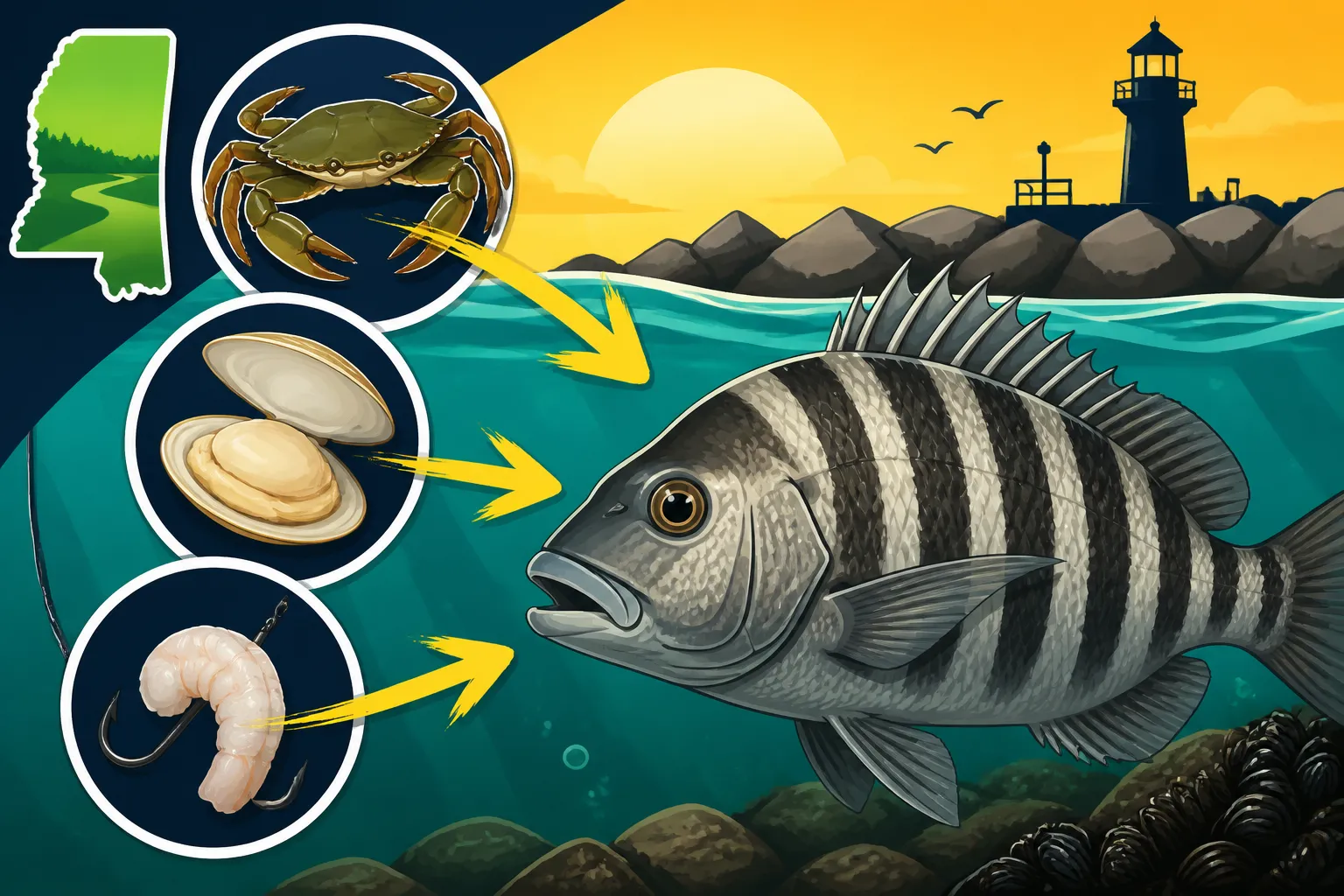
If there's one bait that consistently ranks at the top for sheepshead, it's the humble fiddler crab. These small crustaceans are an absolute sheepshead magnet. Sheepshead actively forage for crabs along the jetty structures, so presenting a fiddler crab is like ringing the dinner bell. Their hard shell provides enough resistance that a sheepshead has to work a little to crush it, giving you a precious extra second to feel the bite.
To rig a fiddler crab, you typically want a small, sharp hook (size 1 or 1/0 is often good). Thread the hook through the bottom of the crab, pushing it out through the top of the shell. You want the hook point exposed but nestled close to the shell. This keeps the crab secure and allows for a solid hookset when the sheepshead finally commits. Besides fiddlers, small blue crabs (cut into pieces), stone crab claws (cracked open), or even sand fleas (mole crabs) can be incredibly effective. Sometimes, you can find a variety of fishing gear and bait-holding equipment for these critters on sites like Amazon.
Barnacles and Oysters
What could be more natural than the sheepshead's primary food source directly off the jetty? Barnacles and oysters are fantastic bait options, though they require a bit more effort to collect and prepare. If you see sheepshead actively feeding on a jetty, they're likely scraping these off the rocks.
To use barnacles, you'll need to carefully chip a cluster off the jetty or an old piling. Once you have a cluster, you can break it apart and use individual barnacles. The trick is to find a way to secure the soft, fleshy part of the barnacle onto a small hook. Some anglers will mash a few onto the hook, while others might try to tie them on with a bit of elastic thread. It's fiddly, but the results can be outstanding. For oysters, you'll shuck them and use small, tough pieces of the oyster meat. The natural scent and taste are irresistible. This takes dedication, but often the freshest, most local bait is the most effective.
Shrimp (Live and Peeled)
Shrimp, whether live or peeled, is a classic saltwater bait that sheepshead will readily take. While not as hard-shelled as crabs or barnacles, the strong scent and natural appeal of shrimp make it a formidable choice. The challenge with shrimp is their softness, which makes them very susceptible to being stolen by sheepshead (and every other fish in the water!).
For live shrimp, hook them just under the horn on the head, or through the tail, ensuring the hook point is exposed. The movement of a live shrimp can entice a sheepshead that might be hesitant. When using peeled shrimp, cut it into small, manageable pieces. The key is to use enough shrimp to cover the hook, but not so much that it's easy for the sheepshead to snip off a piece without getting hooked. You might even consider "toughing" up your peeled shrimp by letting it sit in the sun for a bit or soaking it in a brine solution to give it a firmer texture. For more general tips on Saltwater Fishing Techniques for the Mississippi Gulf Coast, shrimp is almost always a reliable choice for various species.
Artificial Alternatives and Techniques
While natural baits are generally superior for sheepshead, there are times when artificial lures might be considered, or certain techniques can enhance your natural bait presentation. It’s important to manage expectations here; sheepshead are notoriously picky.
Soft Plastics and Jigs (with Caution)
Let's be real: catching sheepshead consistently on artificial baits alone is tough, really tough. Their feeding habits are geared towards crushing sessile organisms off structure. However, soft plastics can have some limited success, particularly when they're tipped with a small piece of natural bait. Think of it as a scent trail rather than the primary attraction. Small jig heads, perhaps 1/8 to 1/4 ounce, dressed with a small piece of shrimp, clam, or a sliver of crab, can sometimes fool a sheepshead. The jig provides the weight to get down to the structure, and the natural bait provides the irresistible scent and texture.
The presentation needs to be slow and subtle, mimicking a piece of food drifting near the bottom or clinging to a piling. Bounce it gently, or let it sit almost motionless, relying on the current to give it a lifelike shimmer. It’s a game of patience and finesse, and often best attempted when you've already exhausted your supply of live bait or are just experimenting. If you're looking for Redfish Fishing Techniques on the Gulf Coast or Speckled Trout Fishing Techniques, artificials are much more prominent, but for sheepshead, they're usually a backup.
Rigging for Success Near Jetties
Proper rigging is paramount when targeting sheepshead. It’s not just about the bait; it’s about how that bait is presented and how you're prepared for their unique bite.
- Hooks: Small, strong, and sharp hooks are essential. Circle hooks in sizes 1 or 1/0 are often favored because they tend to hook the fish in the corner of the mouth, reducing gut hooks and making release easier if you're not keeping your catch. The small size is crucial to fit into their tiny mouths.
- Sinkers: You need enough weight to get your bait down to the bottom and keep it near the structure. A Carolina rig or a knocker rig are popular choices. For a Carolina rig, use an egg sinker (1/2 to 1 ounce, depending on current) above a swivel, then a fluorocarbon leader (12-20 lb test) tied to your hook. A knocker rig involves sliding a barrel sinker directly onto your main line, followed by the hook, allowing the sinker to rest right on top of the hook eye. This keeps your bait tight to the bottom.
- Leaders: Fluorocarbon leader material is highly recommended. Not only is it nearly invisible underwater, but its abrasion resistance is key when fishing around sharp barnacles and jagged rocks on the jetties. Sheepshead have a habit of rubbing your line against structure during a fight, so a tough leader can be the difference between landing a fish and losing it. You can find excellent quality fluorocarbon leader on Amazon if your local tackle shop has a limited selection.
Tips for Maximizing Your Sheepshead Catch
Beyond the right bait and rigging, there are several key factors that can dramatically improve your chances of success when sheepshead fishing the jetties. These fish require a specific approach, and slight adjustments can make all the difference.
Presentation and Bite Detection
This is arguably the most challenging aspect of sheepshead fishing. Their bite is incredibly subtle, often described as a soft "tap-tap" or even just a feeling of your line getting heavy. It takes practice and focus to distinguish a sheepshead bite from the current or the bait merely sitting on the bottom.
To maximize your chances:
- Light Tackle: Using lighter tackle (medium-light to medium action rods, 10-15 lb braided main line) helps transmit those subtle bites to your hand.
- Rod Tip: Keep your rod tip pointed slightly down or directly at the water. This allows for a more direct line to the bait, reducing slack and increasing sensitivity.
- Constant Contact: Always try to maintain some level of contact with your bait, feeling for any anomalies. When you feel that slight tap or pressure, don't set the hook aggressively like you would a bass. Instead, lift steadily and smoothly, or make a very quick, short snap of the wrist. Many experienced sheepshead anglers simply lift into the fish, letting the circle hook do its job. It's often said you have to "lean into them" rather than "jerk them."
- Watch Your Line: Sometimes, the only indication of a bite is a slight twitch or movement in your fishing line where it enters the water. These "line watchers" are often the most successful sheepshead anglers.
Tides and Time of Day
Tidal movement is a huge factor for sheepshead, especially around jetties. Moving water helps dislodge food from the rocks and concentrates baitfish, creating a feeding frenzy for sheepshead. The incoming and outgoing tides, particularly during the middle stages of the tide (not slack high or slack low), are often the most productive. This is when the current is strong enough to move food but not so strong that it makes fishing impossible.
As for the time of day, sheepshead are primarily sight feeders, but they also rely heavily on scent. Early mornings and late afternoons, when the sun isn't at its harshest, can be excellent, especially on clear water days. However, if the current is right, sheepshead will bite throughout the day. Pay attention to the tide charts for your specific location on the Mississippi Coast. Knowing How to Read Tide Charts for Gulf Coast Fishing will be a game changer for your sheepshead success.
Essential Gear for Jetty Fishing
Beyond your rod, reel, and specific sheepshead baits, a few other pieces of gear will make your jetty fishing experience much more enjoyable and productive:
- Bait Knife/Shears: Essential for cutting up larger baits like shrimp or blue crabs, and for cleaning your catch efficiently.
- Pliers/Hook Remover: Sheepshead have tough mouths and small hooks, so a good set of pliers or a dedicated hook remover will save your fingers and make de-hooking much easier.
- Cooler with Ice: For keeping your bait fresh and your catch chilled, especially on those warm Mississippi days.
- Sturdy Footwear: Jetties can be slippery and uneven. Wear shoes with good grip to prevent slips and falls.
- Sun Protection: Hat, sunglasses, and sunscreen are non-negotiable when spending hours on the exposed jetties.
Here's a quick comparison of the top sheepshead baits:
| Bait Type | Pros | Cons | Best Rigging |
|---|---|---|---|
| Fiddler Crabs | Highly effective, natural food source, harder shell resists bait stealing | Can be difficult to find/collect, smaller size for limited hook choices | Small, sharp circle hook (1/0 or 1), hooked through bottom and out top of shell |
| Peeled Shrimp | Strong scent, readily available, natural appeal to many fish | Very soft, easily stolen, attracts other species | Small hook (1 or 1/0), piece just big enough to cover hook, fished on bottom |
| Live Shrimp | Natural movement, good scent trail, attracts aggressive bites | More expensive, requires aerated bait bucket, still somewhat soft | Small hook (1 or 1/0), hooked under horn or through tail |
| Barnacles | Ultimate natural bait, what they eat directly off jetties | Extremely difficult to collect and secure to hook, very fiddly | Small, sharp hook, meat mashed or tied on |
| Oyster Meat | Strong natural scent, very appealing to sheepshead | Soft, easily stolen, requires shucking, can be costly | Small, strong hook, small piece of tough meat secured firmly |
Catching sheepshead is a rewarding challenge, but by understanding their habits, choosing the right bait, and using proper techniques, you'll be well on your way to success. So next time you're heading to the jetties, grab your crabs and get ready to do battle with the convict fish! For more information on what to expect when fishing the coast, check out our guide on Mississippi Gulf Coast Fishing Guide. Happy fishing!
Disclaimer
This article is for general informational purposes only and does not constitute professional advice. Laws, prices and regulations vary by location and change over time. Consult a qualified professional for guidance on your specific situation.