How to Find Crappie on a New Lake Fast
There's nothing quite like the excitement of fishing a brand-new lake in Mississippi, but that excitement can quickly turn into frustration when you're specifically targeting crappie and have no idea where to start. It feels like you're searching for a needle in a haystack, especially when these popular panfish can be so particular. This comprehensive guide is here to cut through that confusion, giving you actionable strategies to quickly locate crappie on any unfamiliar body of water, making your next trip a success.
Pre-Trip Planning and Research – Your Secret Weapon
Before you even load up your boat or tackle box, some essential groundwork can drastically cut down on your "searching" time on the water. Think of it as scouting from your living room.
Digital Reconnaissance: Mapping and Apps
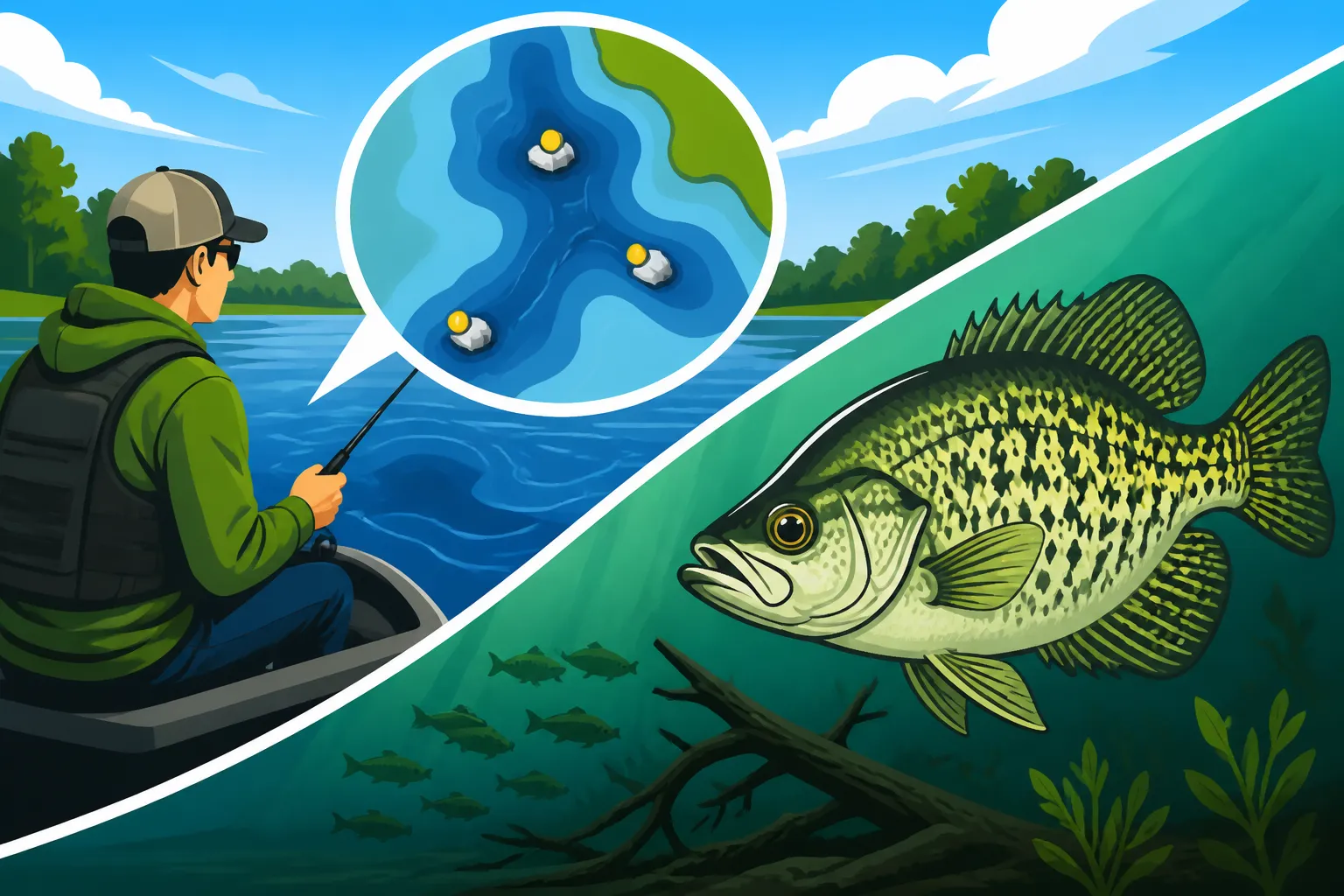
Showing up blind to a new lake is a recipe for a long, unproductive day. Modern technology has truly revolutionized the way we approach a new fishing spot. Instead of just hoping for the best, you can conduct thorough digital reconnaissance. Start by pulling up detailed maps, either through a dedicated fishing app like Navionics or C-MAP Genesis, or even free tools like Google Maps. These platforms allow you to zoom in and identify crucial underwater structures long before you ever launch your boat. Look for old creek channels that wind through the lakebed, especially where they intersect with major points or deep water. Submerged timber, old roadbeds, foundations of former homesteads, and even man-made brush piles can often be spotted on these maps, appearing as darker, denser areas or distinct contour changes.
Pay close attention to depth contours. Crappie are notorious for relating to sudden changes in depth, such as drop-offs, humps, and points extending into deeper water. These areas act like highways and feeding zones for baitfish, and where the baitfish go, the crappie follow. Mark these promising areas as potential waypoints on your phone or your boat's GPS unit. Don't forget to look for standing timber, especially in the upper arms of reservoirs or older, flooded impoundments. This vertical cover is a prime crappie hangout.
Local Intel: Forums and Bait Shops
While digital mapping is incredibly powerful, there's absolutely no substitute for genuine local knowledge. People who fish a lake day in and day out possess insights that no satellite image can provide. Tapping into this wisdom is a critical step in quickly finding crappie on a new lake.
One excellent way to gather this intel is through online fishing forums and social media groups dedicated to Mississippi fishing. Join these communities and introduce yourself, explaining you're new to the lake and looking for general patterns, not specific honey holes. Ask questions about typical depths for the current season, preferred forage, or common productive areas. Be respectful and avoid asking for exact GPS coordinates – anglers are often protective of their favorite spots, and rightfully so. A simple "Are crappie holding on deep timber or shallow brush right now?" can yield invaluable clues.
Even better, a visit to a local bait and tackle shop near the lake can be a goldmine. These establishments are the pulse of the local fishing scene. The folks working there often know exactly what's being caught, what baits are flying off the shelves, and which general areas are producing. Engage them in conversation; ask about recent weather trends, current water temperatures, and what depths crappie are generally being found. They might even offer tips on specific lures or colors that have been hot. Many of these shops also carry a wide range of gear, from live minnows to specialized crappie jigs, and you might even find some hard-to-find items on Amazon that complement their stock. Don't forget to check if the Mississippi Department of Wildlife, Fisheries, and Parks (MDWFP) publishes any recent fishing reports for the lake, as these can also offer excellent starting points.
On-the-Water Strategies for Quick Discovery
Once you've done your homework and launched your boat, it's time to put those reconnaissance efforts to the test. Your on-the-water strategies are all about efficiency and utilizing your tools to quickly pinpoint crappie.
The Power of Electronics: Sonar and Side Imaging
Modern boat electronics are not just fancy gadgets; they are absolutely indispensable tools for quickly finding crappie on a new lake. Your 2D sonar, often called down-looking sonar, will show you the depth of the water column directly beneath your boat and will highlight fish arches or schools of baitfish. Learning to interpret these signals is key. Tightly packed arches often indicate a school of crappie or baitfish, while scattered arches might be individual fish.
However, the real game-changer for new water is often Side Imaging or Down Imaging technology. This feature allows you to "see" out to the sides of your boat, scanning large swaths of water quickly and efficiently. Instead of having to drive directly over every piece of structure, you can cruise along, and your Side Imaging will reveal brush piles, standing timber, rock formations, ledges, and creek channels that are off to your port or starboard. You can even identify schools of crappie holding tight to that structure, often looking like little white "rice grains" clustered around the cover. This capability allows you to cover vast areas in a fraction of the time it would take with traditional sonar, making it perfect for an unfamiliar lake. When you find something promising, whether it's a brush pile or a school of fish, immediately mark a waypoint on your GPS. Even if the fish aren't biting at that exact moment, that spot clearly holds potential for future trips or later in the day.
Covering Water Effectively: Trolling and Scouting
You can have the best bait and the fanciest electronics, but if you're not putting your lure in front of the fish, you won't catch anything. On a new lake, the name of the game is covering water effectively to locate those active crappie. One of the most productive methods for this is trolling, especially with multiple baits at varying depths.
Many crappie anglers employ Spider Rigging Techniques to present several jigs or live minnows simultaneously, covering a wide swath both horizontally and vertically. By using different rod lengths and varying the amount of line out, you can explore various depths along a contour or over a creek channel. Pay close attention to your boat speed; crappie often prefer a slow, consistent presentation. When you get a bite, don't just celebrate – note the exact depth, your speed, and the specific location on your GPS. That single bite is a clue, telling you that crappie are likely holding at that depth and on that type of structure in that general area.
Beyond trolling, simple scouting by slowly cruising and intently watching your fish finder is essential. Don't be afraid to experiment with different areas you marked during your pre-trip planning. Look for visible signs of baitfish activity on your sonar, as crappie are usually not far behind. Observe changes in water temperature, clarity, and any visible surface structure. The goal is to quickly identify a pattern, whether it's a particular depth, structure type, or area of the lake, that consistently holds fish. This active searching will help you narrow down the vastness of a new lake into manageable, productive zones.
Understanding Crappie Behavior and Habitat
To truly find crappie quickly on a new lake, you need to think like a crappie. Understanding their fundamental preferences for habitat and how these preferences shift with the seasons will give you a significant advantage.
Crappie's Preferred Habitat and Structure
Crappie are undeniably structure-oriented fish. They don't just swim around aimlessly in open water; they actively seek out cover and structure for several crucial reasons. Firstly, structure provides excellent ambush points for feeding. Crappie are visual predators, and a brush pile or a submerged tree allows them to hide and dart out quickly when a unsuspecting baitfish swims by. Secondly, it offers protection from larger predators, giving them a sense of security. And finally, structure often attracts and holds baitfish, providing a convenient food source.
On a new lake, your primary mission is to identify these crappie magnets. These can include both natural and man-made features. Look for dense brush piles, whether they've been strategically placed by anglers or naturally accumulated over time. Standing timber, especially trees with submerged limbs, are perennial favorites. Submerged logs and fallen trees along creek channels or shorelines are also prime real estate. Don't overlook man-made structures like boat docks, bridge pilings, and culverts, as these can provide excellent vertical cover. Even rock piles or old foundations can hold crappie, especially if they offer sharp breaks in depth. Always remember that crappie will often position themselves vertically in the water column based on light penetration, water temperature, and where the baitfish are holding, so searching multiple depths around prime structure is key.
Seasonal Patterns and Water Temperature Cues
Crappie behavior is profoundly influenced by the time of year and, more specifically, by water temperature. Knowing the general seasonal patterns will immediately help you narrow down your search on any new lake.
In Spring, as water temperatures begin to rise, crappie move from their deep wintering holes toward shallower waters for the spawn. During the pre-spawn, they often stage in creek channels or on points near spawning flats, relating to the warmest available water and submerged brush. As the spawn approaches, they'll push into very shallow cover, often around vegetation, flooded timber, or even under docks. This is often considered the easiest time of year to locate crappie, as they are concentrated and aggressive.
During the hot Summer months, crappie generally retreat to deeper, cooler water. They'll often suspend over creek channels, along sharp ledges, or hold tight to deep standing timber and brush piles. Locating the thermocline (the layer where water temperature changes rapidly) can be crucial, as crappie often hold just above or within this zone where oxygen levels are optimal and baitfish congregate.
As Fall arrives and water temperatures start to drop, crappie become highly active again, following baitfish that are migrating into creek channels and shallower embayments. They might be found at various depths throughout the day, often moving shallower in the mornings and evenings, and deeper during midday. This period, sometimes referred to as the "fall shad run," offers fantastic fishing opportunities as crappie feed heavily in preparation for winter.
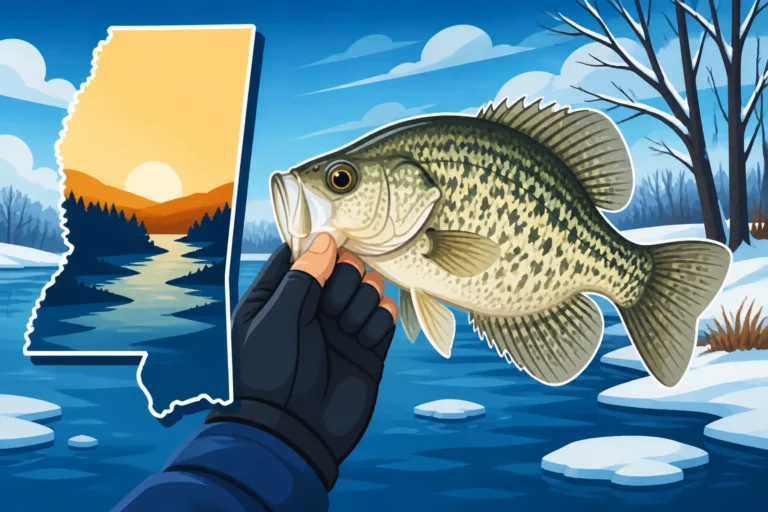
Finally, in Winter, crappie once again settle into deep water, often suspending over major creek channels or hugging tightly to dense, deep cover like large brush piles or standing timber. Their metabolism slows, and they become less active, requiring a slower, more deliberate presentation. Understanding these general movements will drastically reduce your search area on a new body of water, allowing you to focus on the most likely depths and structures for the given season. For more detailed information, check out a Mississippi Fishing Seasons Calendar to align your trip with peak activity.
Bait Selection and Presentation for Discovery
When you're trying to find crappie on a new lake, you don't want to overcomplicate your bait selection initially. The goal is to cover water and entice a bite, so versatile and proven options are your best bet.
Versatile Baits for Testing the Waters
Starting with baits that have a broad appeal and are easy to present effectively is crucial for discovery. You want options that will draw attention and elicit a strike from curious or hungry crappie.
Live minnows are, without a doubt, one of the most consistently effective crappie baits. Their natural movement and scent are irresistible. You can rig them in various ways: under a bobber in shallower water, tight-lining them vertically over deep structure, or even on a small jig head. Always carry a variety of sizes, as crappie can be particular about their meal size. You can easily find excellent minnow buckets with built-in aerators on Amazon to keep your bait lively throughout the day.
Small jigs are another staple for crappie anglers. Carry a selection of different body styles, such as tube jigs, curly tail grubs, and paddle tail plastics, in various sizes (typically 1/32 to 1/8 ounce). Start with classic crappie colors like chartreuse, white, black and chartreuse, or pink, and then be prepared to experiment. The action of a jig, especially when slowly retrieved or jigged vertically, mimics many of the crappie's natural forage. For specific options, look for a guide on the Best Bait for Crappie in Mississippi.
Lastly, small crankbaits or spybaits can be incredibly effective for trolling and covering water, particularly when crappie are active and scattered. These lures offer a different profile and vibration that can trigger aggressive strikes. Experiment with different diving depths to match where you're seeing crappie on your electronics.
Experimentation and Observation
The absolute worst thing you can do on a new lake is get stuck in a rut. If what you're doing isn't producing, change it up! Constant experimentation and keen observation are your best friends in quickly locating crappie.
Don't be afraid to vary your depths. If your electronics show fish at 15 feet, try presenting baits at 12 feet, 15 feet, and 18 feet. Sometimes crappie will suspend just above or below the primary school. Change up your jig colors and styles. What works on one lake or on one day might not work on another. Perhaps they want a faster retrieve, or maybe a slow, subtle twitch is the ticket. When you get a bite, take meticulous notes, either mentally or on paper. What depth was it? What bait and color? What kind of structure were you near? Was it a bright sun or overcast? These details help you build a pattern.
Once you catch one crappie, don't leave that spot immediately! Crappie are schooling fish, and where there's one, there are almost certainly more. Fan-cast around the area, drop your bait back down to the exact depth where you got the bite, and thoroughly work the entire piece of structure. The first bite is just the beginning of unlocking the pattern on a new lake, paving the way for a memorable day of Crappie Fishing Techniques for Mississippi Lakes.
Here's a quick guide to help you get started on a new lake:
| Season | Typical Depth Range | Preferred Structure | Recommended Technique for Finding |
|---|---|---|---|
| Spring (Pre-Spawn) | 5-15 feet | Creek channels, points, submerged brush, hard bottom | Slow troll jigs/minnows, cast jigs to points |
| Spring (Spawn) | 1-8 feet | Shallow cover (wood, docks, vegetation), warmest coves | Pitching jigs/minnows, sight fishing (if clear) |
| Summer | 15-30+ feet | Deep creek channels, standing timber, humps, ledges | Vertical jigging, spider rigging deep |
| Fall | 10-25 feet | Creek channel bends, shad schools, brush piles | Trolling jigs/minnows, casting jigs to bait balls |
| Winter | 20-40+ feet (or suspended) | Deep channels, major river bends, dense cover | Vertical jigging very slowly, tight-lining minnows |
Remember, every lake is unique, but these strategies provide a solid foundation for quickly finding crappie, no matter where you cast your line in Mississippi. For more specific insights on popular crappie destinations, you might want to look into Mississippi Crappie Regulations by Lake. Happy fishing!
Disclaimer
This article is for general informational purposes only and does not constitute professional advice. Laws, prices and regulations vary by location and change over time. Consult a qualified professional for guidance on your specific situation.