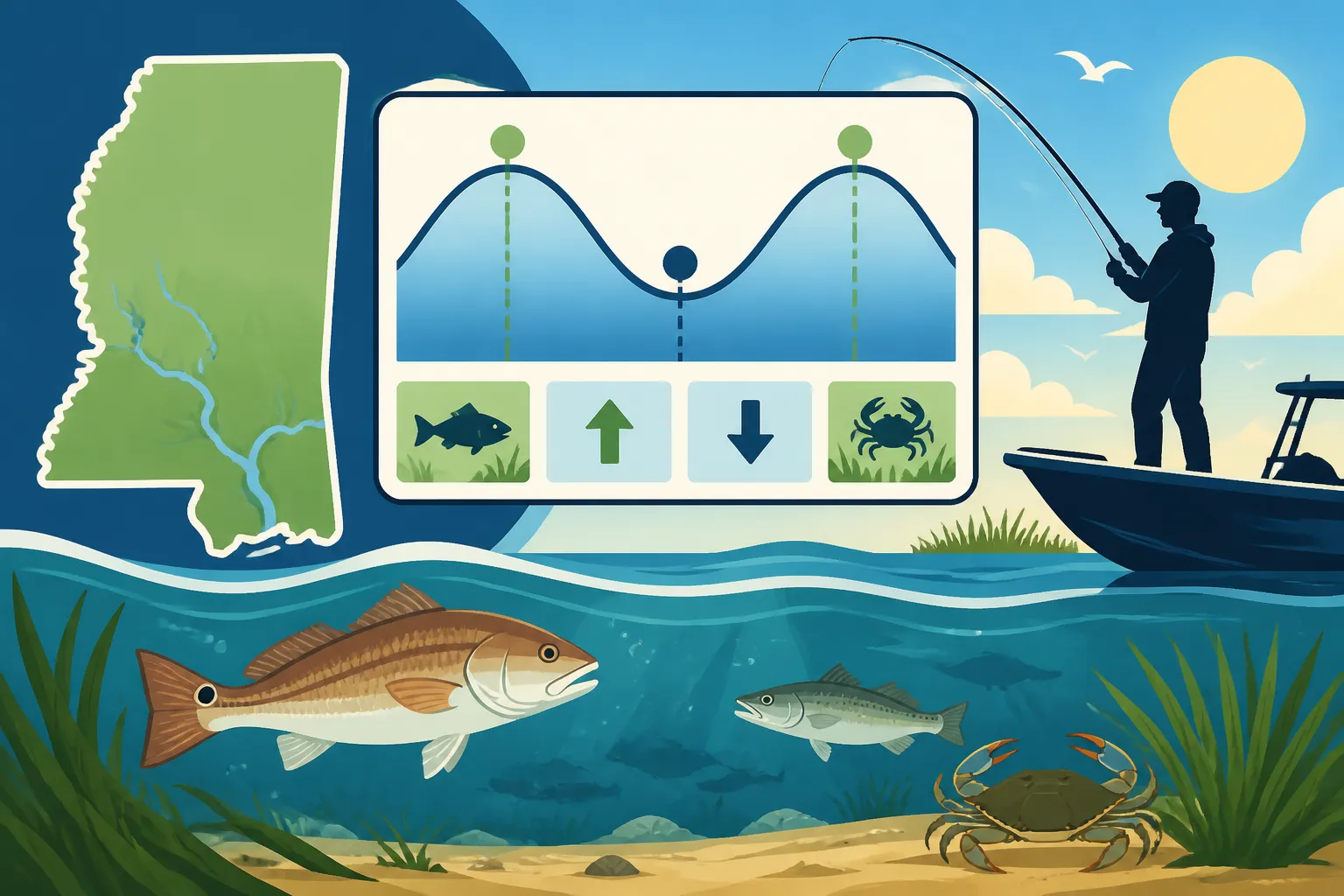
How to Read Tide Charts for Gulf Coast Fishing
Trying to hit the Mississippi Gulf Coast for a day of fishing, only to find the water flat as a pancake or ripping like a river, can be incredibly frustrating. It often feels like you're missing something crucial, a secret code that unlocks the best bite. This guide is here to demystify one of the most vital pieces of that code: how to read tide charts for Gulf Coast fishing, transforming your hit-or-miss trips into consistently productive angling adventures.
Why Tide Charts Are Your Best Friend on the Mississippi Gulf Coast
If you've spent any time casting a line along our beautiful Mississippi Gulf Coast, you've probably noticed that some days the fish are practically jumping into your boat, and other days it feels like the ocean is completely empty. More often than not, the tides play a huge role in this phenomenon. It's not just about the water level; it's about the movement, the currents, and how these forces orchestrate the underwater world. Understanding tide charts isn't just a nice-to-have; it's absolutely essential for anyone serious about saltwater fishing here.
Understanding the Rhythm of the Tides
At its core, the tide is the rise and fall of sea levels caused by the combined gravitational forces exerted by the Moon and Sun, and the rotation of the Earth. On the Mississippi Gulf Coast, we typically experience what's called a diurnal tide cycle, meaning we usually get one high tide and one low tide per lunar day. However, due to our unique geography and the dynamics of the Gulf of Mexico, we can sometimes see mixed diurnal tides, where there might be two highs and two lows, but one pair is significantly more pronounced than the other. This subtle difference is important because it impacts the strength and duration of the tidal currents.
Think of the massive pull of the Moon, acting like an invisible hand, tugging at the Earth's oceans. As the Moon orbits, it creates a bulge of water on the side of the Earth closest to it, and another bulge on the opposite side. The areas between these bulges experience lower water levels. As the Earth rotates through these bulges and depressions, we observe the predictable rhythm of high and low tides. The Sun also plays a part, either reinforcing or counteracting the Moon's pull, leading to stronger "spring" tides (around new and full moons) and weaker "neap" tides (around quarter moons). Knowing this celestial dance helps you predict when the most significant water movement, and often the best fishing, will occur.
How Tides Influence Fish Behavior
Fish, especially predatory species, are opportunistic creatures. They're constantly looking for an easy meal, and tidal movement is like a giant conveyor belt delivering food right to their mouths. When the tide is moving, baitfish, shrimp, and crabs are dislodged from their hiding spots and carried along by the current. This creates a feeding frenzy opportunity for species like Redfish and Speckled Trout, which position themselves strategically to ambush unsuspecting prey.
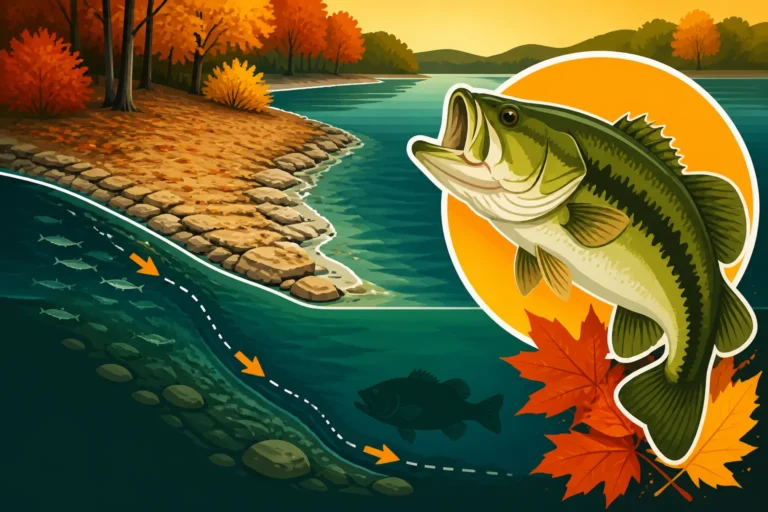
Consider a common scenario: a falling tide in a marshy area. As the water recedes, it pulls baitfish and shrimp out of the shallow grass flats and into deeper channels or towards points and oyster bars. Smart anglers know to target these pinch points where the current concentrates the bait. Conversely, a rising tide pushes water into those same grass flats, allowing predators to move into shallower areas to hunt for crabs and other crustaceans that were previously inaccessible. The key takeaway is that moving water generally equals active fish. Slack tide, while sometimes offering a brief window, often means a slowdown in feeding activity because the current isn't doing the work of concentrating food for them.
Deciphering the Jargon: Key Terms on a Tide Chart
Looking at a tide chart for the first time can feel like reading a foreign language. There are times, heights, and cryptic abbreviations. But once you understand a few key terms, it becomes incredibly intuitive and will empower you to make much better decisions on the water. Don't let the numbers intimidate you; they're your roadmap to finding hungry fish.
High Tide and Low Tide
These are the most basic and fundamental points on any tide chart. High tide marks the peak water level, the moment the water has risen as much as it's going to before it starts to fall. Conversely, low tide is the lowest point the water will reach before it begins to rise again. On a tide chart, you'll see a specific time listed for each, often alongside a height measurement.
The height measurement is crucial. It tells you how high the high tide will be or how low the low tide will get, usually measured in feet or meters relative to a local reference datum. A high tide of, say, 1.5 feet versus 0.5 feet makes a significant difference in how much water covers the oyster beds or grass flats. Similarly, a low tide of -0.5 feet means the water will be exceptionally low, possibly exposing mud flats and making some areas impassable for boats. For example, if you're planning on navigating shallow marsh areas, you'll want to avoid extremely low tides, especially if your boat has a deeper draft. Conversely, those super low tides can be excellent for spotting oyster beds and drop-offs that are usually submerged, giving you valuable intel for future trips.
Slack Tide and Tidal Currents
Beyond just high and low, the periods around these extremes are incredibly important. Slack tide refers to the short period of time when the water is neither rising nor falling, essentially "slack" or still. It occurs briefly at the peak of high tide and the trough of low tide. While some anglers find a specific bite during slack water, generally, it's during the moving tide, when currents are strongest, that fish are most active.
Tidal currents, or tidal flow, are the horizontal movement of water associated with the rising and falling tides. The tide chart doesn't usually list current speeds directly, but you can infer them. The period between slack high and slack low is when the water is moving, and the currents are at their strongest roughly midway between high and low tide. This is often when bait is most active and fish are feeding heavily. If the tide chart shows a significant difference between the high and low tide heights (a large tidal range), you can expect stronger currents. These currents are the lifeblood of many coastal ecosystems, carrying nutrients, oxygen, and baitfish to waiting predators. For anglers, knowing when these currents will be at their peak helps in planning where to cast and what techniques to use.
Tidal Range
The tidal range is simply the vertical difference between the high tide and the subsequent low tide. A large tidal range means a significant amount of water moves in or out, resulting in strong currents. A small tidal range, often seen during neap tides, means less water movement and generally weaker currents.
Why does this matter? Stronger tidal ranges typically mean more active feeding periods. Imagine the powerful flush of water scouring the bottom and marsh edges – this is a prime opportunity for fish to feed. Conversely, during a small tidal range, the water movement is minimal, and fish might be less inclined to chase bait aggressively. For someone fishing the Mississippi Sound or specific bay systems, understanding whether you're in a period of strong spring tides or weaker neap tides, just by looking at the forecasted tidal range, can drastically alter your strategy. You might opt for faster-moving lures during strong tides or slower presentations during weaker ones.
Solunar Tables and Minor/Major Feeding Times
While not strictly part of a tide chart, many modern fishing apps and dedicated fishing almanacs integrate solunar tables, which predict periods of increased fish activity based on the positions of the Moon and Sun. These tables often list "major" and "minor" feeding times.
- Major feeding times typically coincide with the New Moon and Full Moon, when the gravitational pull is strongest, aligning with peak tidal movements. They also occur when the Moon is directly overhead or directly underfoot.
- Minor feeding times occur when the Moon is halfway between these overhead/underfoot positions, essentially when the moon is rising or setting.
While not scientifically proven to affect all species universally, many experienced anglers swear by solunar tables as a supplementary tool. It makes sense, too, when you consider that fish, like many creatures, often react to subtle changes in light and gravitational pull. If your tide chart shows strong moving water during a predicted major feeding time, you've likely hit a jackpot scenario for active fish. Several online resources and fishing apps, including some you can download for free or purchase through platforms like Amazon, integrate these solunar predictions alongside traditional tide data.
Practical Steps to Reading a Mississippi Gulf Coast Tide Chart
Now that you're familiar with the key terms, let's walk through the practical steps of actually reading and applying a tide chart. It's a straightforward process once you know where to look and what to focus on.
Finding Reliable Tide Chart Sources
The first step is always finding accurate and up-to-date tide information. You have several excellent options:
- NOAA (National Oceanic and Atmospheric Administration) Website: This is the gold standard for tide data. NOAA provides official tide predictions for thousands of locations across the U.S. Their website allows you to select specific coastal stations, like those in Biloxi, Gulfport, or Bay St. Louis, and view daily or monthly tide tables. It's precise, reliable, and free.
- Dedicated Fishing Apps: Many popular fishing apps, such as Fishbrain, Navionics, or the free apps provided by reputable fishing tackle companies, include integrated tide charts. These often overlay tide data with map features, making it incredibly convenient to see how tides will affect your specific fishing spot. Some of these are available on platforms like Amazon's Appstore, offering a range of free and premium options.
- Local Bait and Tackle Shops: Never underestimate the wisdom of local experts! Bait shops often have printed tide charts available, sometimes even personalized with local quirks that official charts might miss. Plus, the folks working there can offer invaluable insight into current fishing conditions related to the tides.
- Physical Tide Books: For those who prefer a tangible guide, annual tide books are published and can be a great resource, especially if you're spending an extended period on the coast without consistent internet access. You can often find these at local coastal stores or even order them through retailers like Amazon.
When choosing a source, always prioritize accuracy and ensure the data is current. Tides are predictable, but unforeseen events like strong winds or atmospheric pressure changes can slightly alter actual water levels, so cross-referencing is a good habit.
Locating Your Specific Fishing Spot
Tides are hyper-local. A tide chart for Biloxi might be slightly different from one for Bay St. Louis, or even a few miles down the coast within the same bay. This is due to factors like water depth, shoreline contour, and proximity to major inlets.
When you're looking at a tide chart, pay close attention to the specific tide station it refers to. If you're fishing near Ocean Springs, you should ideally be looking at a chart for Ocean Springs, not just a general "Mississippi Gulf Coast" chart. If your exact spot isn't listed, choose the closest available station. You'll learn to make mental adjustments as you gain experience. For instance, tides in a bay's interior might lag slightly behind those at the mouth of the bay. Understanding your specific fishing grounds – whether it's a deep channel near Gulfport, a shallow flat in the Biloxi Bay, or a pier near Pascagoula – will help you refine your interpretation of the chart and predict localized water movement. Remember, the general rule is that the further you get from the open Gulf and into shallower, more restricted waters, the more the tide times can vary from the main coastal stations.
Interpreting the Data for Optimal Fishing Windows
Once you have your chart for your chosen location, here's how to interpret it to find those prime fishing windows:
- Identify High and Low Tide Times: Circle or note the times for both high and low tides for your planned fishing day.
- Look at the Heights: Pay attention to the heights associated with these tides. A big difference between high and low tide (large tidal range) usually means strong currents. A small difference (small tidal range) means weaker currents.
- Calculate the Moving Water Periods: The most active fishing usually occurs when the tide is moving, especially the first few hours of a rising or falling tide, and then again as it approaches its peak current strength (roughly halfway between high and low). Avoid fishing exactly at slack tide if you're looking for aggressive feeders, as the bite often slows considerably. For instance, if high tide is at 10 AM and low tide is at 4 PM, the outgoing tide will be strongest between 11:30 AM and 2:30 PM – a prime window!
- Consider Sunrise/Sunset: While not directly tied to tides, overlapping strong moving water with prime feeding times like sunrise and sunset can create incredibly productive fishing. Fish are often more active during these lower light periods, and combine that with good current, and you’re in business. Many anglers will plan their trip around the time the tide starts moving and one of these low-light periods overlaps. You can find detailed information on this by checking a Best Time of Day to Catch Speckled Trout guide.
By integrating these data points, you'll start to see patterns. You might learn that the Redfish in a particular marsh prefer a strong falling tide to pull bait out of the grass, while Speckled Trout in a bay tend to feed aggressively on a rising tide pushing water over an oyster reef.
Applying Tide Chart Knowledge to Your Fishing Strategy
Reading a tide chart is one thing; actually using that information to improve your fishing is another. This is where your newfound knowledge truly translates into more hook-ups and memorable days on the water.
Targeting Different Species with Tides
Each species has its own preferences when it comes to tidal conditions. Knowing these can help you fine-tune your approach.
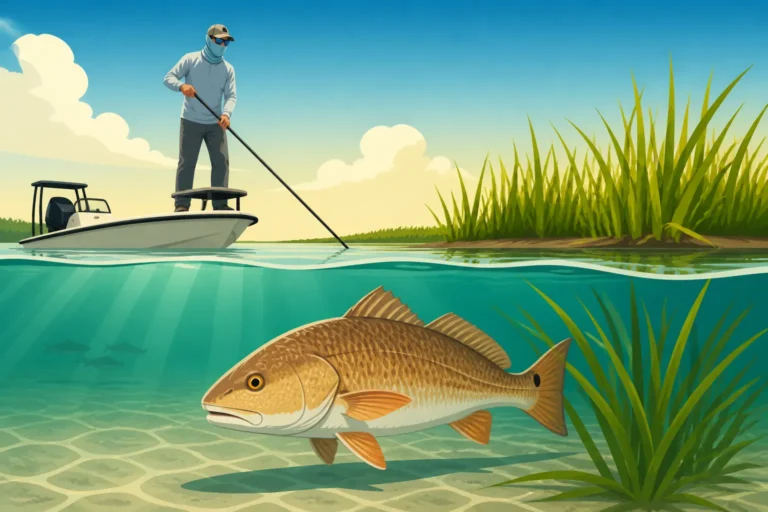
- Redfish: These powerful predators often thrive on moving water. During a rising tide, they'll push into shallow grass flats, oyster beds, and mangrove edges to hunt for crabs, shrimp, and small fish. You'll want to target these areas, perhaps casting weedless spoons or soft plastics. As the tide falls, Redfish will congregate around the mouths of bayous, drainages, and deeper channels, ambushing bait as it's flushed out. This is a fantastic time for targeting them with live or cut bait, or even topwater lures if they're actively feeding on the surface. For more in-depth advice, check out our guide on Redfish Fishing Techniques on the Mississippi Coast.
- Speckled Trout: While they also appreciate moving water, Speckled Trout often prefer slightly less turbulent conditions than redfish. A slowly moving tide, especially a rising one, can be excellent for them, as it pushes bait into their ambush points like oyster reefs, jetties, and dock pilings. They're often found suspended in the water column, waiting for bait to drift by. On a falling tide, they might retreat to deeper holes or channel edges. Understanding their preference means you can adjust your lure depth and retrieval speed accordingly. Our Best Spots to Catch Speckled Trout on the Mississippi Coast article offers excellent location-specific tips that you can combine with your tide knowledge.
- Other Species: Flounder will often bury themselves in sandy or muddy bottoms, waiting for an outgoing tide to wash bait over them. Sheepshead, known for their powerful crushing jaws, will pick barnacles and crustaceans off pilings and rocks, often more aggressively during moderate tidal flows. Even species like Black Drum will scour the bottom for shellfish during moving water. Your tide chart helps you anticipate when and where these opportunities will arise. If you’re interested in other coastal species, our Mississippi Saltwater Fish Species Guide has you covered.
Adjusting Techniques Based on Tidal Flow
The strength and direction of the tidal current should directly influence your fishing techniques.
- Strong Currents: When the water is really moving, you'll need to use heavier weights or jig heads to get your bait down to the strike zone. If you're using artificial lures, consider those designed for current, like heavier jigs, spoons, or crankbaits that can be worked against the flow without washing out too quickly. You might need to cast further upstream of your target structure to allow your bait to drift naturally into the strike zone. This is also a good time for using live bait, as their natural movement in the current can be irresistible to predators. Remember, fish will often face into the current, waiting for food, so approach from "downstream" if possible.
- Weak/Moderate Currents: During slower tidal movements, lighter tackle and subtler presentations often work best. Soft plastics, slower retrieved topwater lures, or live shrimp under a popping cork (a classic for Best Bait for Speckled Trout) can be incredibly effective. You don't need to fight the current as much, allowing for more finesse in your presentations. This might also be a good time to target shallower areas where fish might be less concerned with strong currents and more focused on picking off individual baitfish or crustaceans.
- Slack Tide: While often challenging, slack tide isn't always a bust. Sometimes, a short, intense bite can happen as the current briefly pauses before reversing. During this time, fish might be less wary and more willing to hit slower-moving or even stationary baits. This is often a good time to try soaking cut bait on the bottom for species like drum or catfish, which might be less affected by the lack of current than active predators.
Think about how baitfish react to different currents, and try to mimic that with your lure. If the tide is ripping, a struggling baitfish would be fighting to stay in place, so a twitchy, darting retrieve might be best. If it's calm, a lazily swimming presentation could be more natural.
Safety Considerations with Strong Tides
Beyond just catching fish, understanding tides is crucial for safety, especially when navigating our shallow coastal waters.
- Navigation: Extreme low tides can expose oyster bars, mud flats, and submerged hazards that are usually covered. Running aground can ruin a trip and damage your boat. Always consult your tide chart and nautical charts (like those found on apps or physical charts available via retailers like Amazon) before heading out, especially if you plan to explore new areas. If you're unfamiliar with a channel, stick to rising tides which offer more water depth.
- Anchoring: Strong tidal currents can put immense strain on your anchor and anchor line. Ensure you have adequate scope (the ratio of anchor line to water depth) and a properly sized anchor for the conditions. If you're fishing near a structure with a strong current, like a bridge or a pass, be mindful of your boat swinging with the tide and potentially hitting other boats or the structure itself. It's not uncommon for boats to drag anchor in strong currents if not properly set.
- Wading: For anglers who enjoy wading the flats, a strong incoming or outgoing tide can make wading difficult and even dangerous. Currents can be surprisingly powerful, especially in channels, and can quickly sweep you off your feet. Always know your surroundings, wear appropriate footwear, and be aware of how quickly the water can change depth with the tide. Wading out too far on a falling tide can leave you stranded or facing a long, difficult slog back to shore through deep mud. Always let someone know your plans if you're wading alone.
By taking these safety precautions, you ensure that your focus remains on the thrill of the catch, not on potential hazards. A little planning with your tide chart goes a long way in ensuring a safe and enjoyable outing on the Mississippi Gulf Coast.
Mississippi Gulf Coast Tide Chart Cheat Sheet
| Tidal Condition | Description | Optimal Fishing Strategy | Target Species (Examples) |
|---|---|---|---|
| Early Rising Tide | Water slowly pushing into shallow areas, moderate current increasing. | Target creek mouths, bayou entrances. Fish edges of flats, oyster bars as they become submerged. Use lighter tackle, live bait, soft plastics. | Speckled Trout, Redfish, Flounder |
| Mid-Rising Tide | Strongest incoming current, water levels rising rapidly. | Fish current breaks, structure (pilings, jetties), deep holes adjacent to flats. Heavier jigs, spoons, cut bait. Predators are actively hunting. | Redfish, Speckled Trout, Sheepshead, Black Drum, Tripletail |
| High Slack Tide | Brief period of no current movement at peak high water. | Often slow. Can be good for soaking bait in deeper holes or sight-fishing less wary fish in calm pockets. | Catfish, larger Redfish (sometimes), Drum, Sheepshead |
| Early Falling Tide | Water slowly receding from shallow areas, moderate current increasing. | Target drainages from flats, edges of marsh, points. Predators wait to ambush bait being pulled out. Light to medium tackle, topwater lures. | Redfish, Speckled Trout, Flounder |
| Mid-Falling Tide | Strongest outgoing current, water levels dropping rapidly. | Focus on channels, deeper cuts, pinch points, jetties. Heavier baits, spoons, or live/cut bait. Aggressive feeding often occurs. | Redfish, Speckled Trout, Flounder, Black Drum, Shark |
| Low Slack Tide | Brief period of no current movement at lowest water level. | Can be slow. Good for mapping exposed structure, fishing deeper channels with cut bait. Occasionally good for sight fishing very wary fish. | Catfish, smaller Redfish, Drum. Also good for scouting for future high tide spots. |
| Large Tidal Range | Significant difference between high and low tide heights. | Expect strong currents, active feeding. Use heavier tackle, target current breaks. | Redfish, Speckled Trout, predatory species in general. |
| Small Tidal Range | Minimal difference between high and low tide heights. | Expect weaker currents, less aggressive feeding. Finesse techniques, slow presentations, lighter tackle. | Speckled Trout, smaller Redfish, Bream. Can be good for sight fishing in calm water. |
Disclaimer
The information provided in this guide is for general informational purposes only and is based on typical conditions and practices. Fishing regulations, conditions, and fish behavior can vary greatly. Always consult the latest regulations from the Mississippi Department of Wildlife, Fisheries, and Parks (MDWFP) and NOAA for current tide charts and marine weather forecasts before any fishing trip. Fishing inherently carries risks, and safety should always be your top priority.