How to Fish Points for Bass in Fall
That moment when the leaves start turning those glorious shades of red and gold, and there's a crispness in the Mississippi air, it signals prime time for fall bass fishing. But if you've ever found yourself scratching your head, wondering where the bass went after the summer heat, you're not alone. It's a common frustration when those predictable patterns shift, and the fish seem to vanish. This comprehensive guide is here to help you unlock the secrets of fishing points for bass in Mississippi during the fall, offering actionable strategies to turn those frustrating moments into triumphant catches.
Understanding Fall Bass Behavior on Points
Fall bass fishing is a whole different ballgame compared to the dog days of summer or the frenetic spring spawn. As water temperatures begin to drop, bass shift their behavior dramatically, and understanding these changes is paramount to finding them. Points, those fingers of land extending into the water, become absolute magnets during this transitional period.
The Autumnal Transition and Bass Movement
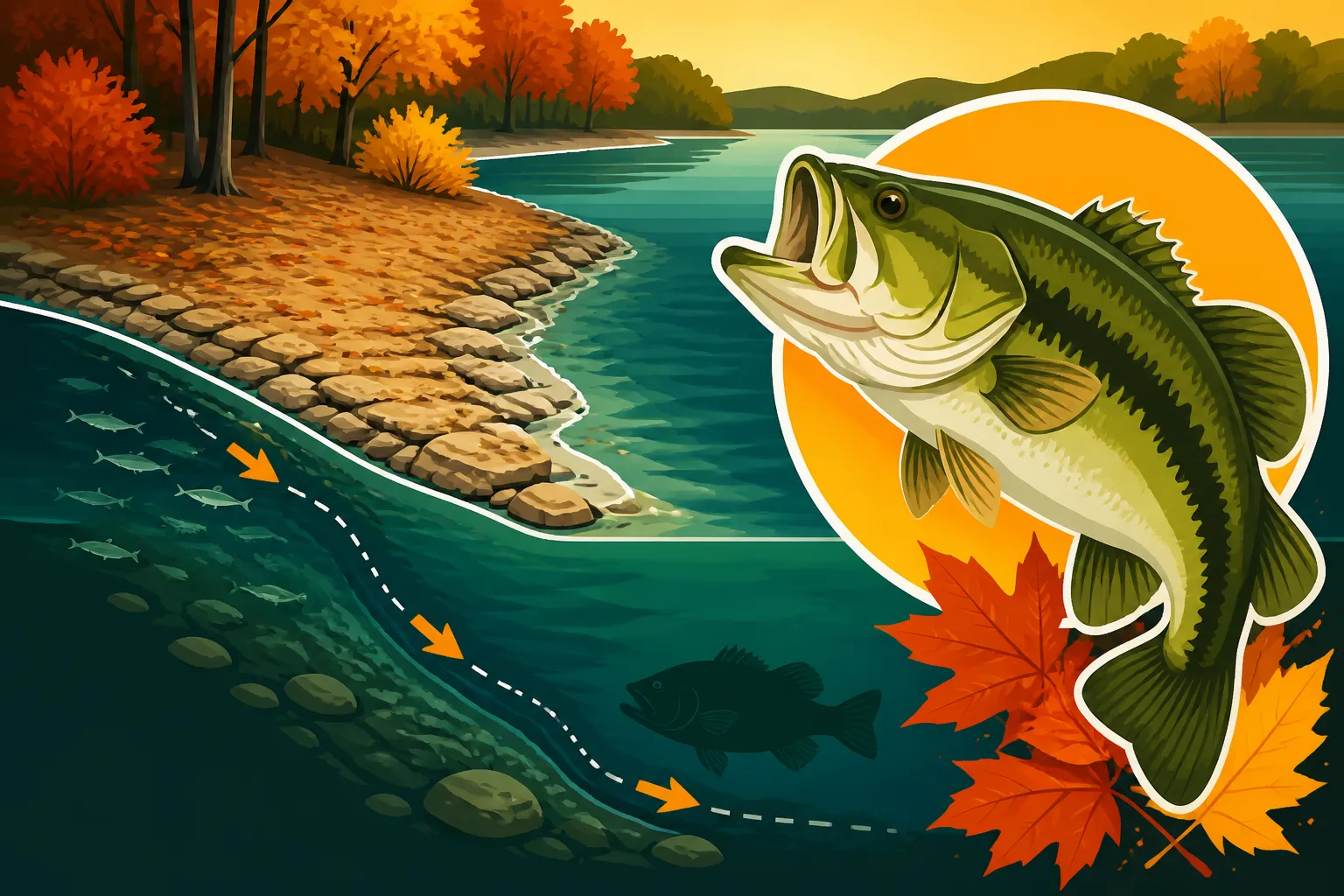
When the cool fronts start pushing through Mississippi, the lake water temperatures gradually begin to fall. This isn't just a minor inconvenience for bass; it's a profound signal that triggers significant changes in their metabolism and feeding habits. During the summer, bass might be spread out, seeking refuge in deep, oxygenated water or dense cover. But as autumn progresses, their primary directive becomes finding food and bulking up for the colder months ahead.
This drive for sustenance makes them incredibly active. One of the biggest factors influencing their movement is the migration of baitfish, particularly shad. Shad, the primary food source for many bass in our Mississippi reservoirs like Ross Barnett Reservoir or Sardis Lake, are temperature-sensitive. As the main lake cools, they start to move shallower and into creek arms, seeking more stable temperatures and concentrating in tighter schools. Bass, being opportunistic predators, are never far behind. They follow these baitfish schools relentlessly, and guess where these baitfish often congregate or funnel? That's right, points. Points act like underwater highways or choke points, concentrating both baitfish and the bass that feed on them. It’s a classic ambush scenario, and bass are wired for it. This makes understanding Best Time of Year to Fish in Mississippi crucial.
Types of Points and Their Appeal
Not all points are created equal when it comes to fall bass fishing. Identifying the most productive types requires a bit of detective work and understanding how bass utilize different structures. You'll encounter several variations of points across Mississippi's diverse waterways, each with its own unique appeal depending on the specific conditions.
Firstly, you have main lake points. These are typically large, prominent land features that extend directly from the main body of the reservoir. They often have access to deep water on one or both sides, making them ideal for larger, more transient bass that move between open water and shallower feeding grounds. The appeal of main lake points in the fall is their direct connection to the main lake's vast baitfish populations. Bass can push schools of shad against these points, making them easy targets. These points are especially effective when there's a bit of wind blowing across them, creating current and oxygenating the water, which further concentrates baitfish.
Then there are secondary points, often found inside creek arms or major coves. These points might not stick out as far, but they're incredibly important for bass that have followed baitfish migrations into these tributaries. Secondary points serve as pit stops or staging areas for bass as they move further back into the creeks. They often have slightly shallower water access, making them prime targets for bass actively feeding on smaller, more concentrated schools of shad. These areas can be absolute goldmines, especially on lakes like Grenada Lake, where crappie and bass often share similar forage and cover. When considering Bass Fishing Techniques for Mississippi Anglers, remember that patience and observation are key for these spots.
Finally, consider the composition and slope of a point. Rocky points offer excellent cover and hold heat longer, attracting crawfish and other forage that bass might target. Sandy or gravel points are often preferred by baitfish for spawning, even into the early fall, which keeps bass lingering. Gradual sloping points allow bass to move up and down the water column easily, following bait. Sharp-dropping points provide quick access to deep water, allowing bass to ambush prey from below or retreat quickly if threatened. Often, the best points combine several of these features, offering diverse habitat that appeals to bass throughout the fall transition. Utilizing a good mapping system on your boat's electronics (or even a reliable fishing app on your phone, available on Amazon) can really help you distinguish these subtle but important differences.
Essential Techniques for Fall Point Fishing
Once you've identified a promising point, the next step is knowing how to effectively present your lures to trigger strikes from hungry fall bass. It's not just about throwing a lure out there; it's about matching the hatch and understanding how bass want to feed during this particular season.
Lure Selection for Active Fall Bass
Fall bass are generally active, aggressive, and focused on consuming as much protein as possible. This means your lure selection should primarily mimic the abundant baitfish, especially shad. The goal is to imitate a fleeing or injured baitfish that represents an easy meal.
Crankbaits are absolute powerhouses for fall point fishing. You'll want a variety of depths. For shallower water or the top of gradual points, a medium-diving crankbait that runs 6-10 feet deep is perfect. Brands like Strike King or Rapala offer fantastic options that dive quickly and have a tight wiggle, perfect for imitating shad. As the bass push deeper, or if you're fishing points with steeper drops, a deep-diving crankbait that gets down to 15-20 feet becomes essential. These lures allow you to "contact" the bottom and structure, deflecting off rocks or wood, which often triggers an instinctive reaction strike from a bass. Look for colors that mimic natural baitfish like chrome and blue, shad patterns, or even chartreuse if the water has a bit of stain. Many anglers swear by specific shad patterns they've found on Amazon, often buying several at once.
Jerkbaits come into their own when the water starts to get a bit clearer and cooler, typically mid-to-late fall. These suspend in the water column when paused, mimicking a dying baitfish perfectly. A long, slender jerkbait, fished with a "twitch, twitch, pause" retrieve, can be incredibly deadly. The pause is crucial, as bass often strike the lure when it's sitting still. Vary the length of your pauses; sometimes they want a short pause, other times a long, tantalizing hang.
Don't overlook spinnerbaits and chatterbaits, especially when there's some wind or cloud cover. The flash and vibration can call bass from a distance. A 3/8 or 1/2-ounce spinnerbait with tandem willow leaf blades (for maximum flash) in white or chartreuse/white combinations can be highly effective. Chatterbaits, with their erratic hunting action, are also fantastic choices, especially when bass are schooling up and chasing shad. They offer a unique vibration that bass seem to love. Finally, swimbaits, both hard-bodied and soft plastic paddle tail versions, are excellent for presenting a very realistic baitfish profile. Slow rolling a swimbait over the top of a point or letting it fall down a slope can entice even wary bass. When building your tackle box for Largemouth Bass Fishing in Mississippi, ensure you have a good selection of these.
Presentation and Retrieval Strategies
Having the right lure is only half the battle; knowing how to present it around a point is where skill truly shines. Bass on points are often looking for an easy meal, so your presentation needs to trigger that predatory instinct.
One of the most effective strategies is fan casting. Instead of just casting straight out, make casts that cover the entire face of the point, from one side to the other, like the spokes of a fan. This ensures you're covering different depths and angles, increasing your chances of hitting a bass's strike zone. Start by casting to the shallowest part of the point and gradually work your way deeper, or vice-versa, depending on where the baitfish are located. This systematic approach is a core element of Bass Fishing Techniques for Mississippi Anglers.
Varying your retrieve speed and adding pauses is absolutely critical, especially with crankbaits and jerkbaits. With crankbaits, try a fast retrieve to get it down, then slow it down, or try a "stop-and-go" retrieve. The sudden change in speed often triggers a chase and strike. With jerkbaits, as mentioned, the pauses are paramount. Experiment with different lengths of pauses until you find what the bass are reacting to. Sometimes they want a quick twitch-twitch-pause, other times a longer, more deliberate hang.
Many successful fall point anglers employ "contact" fishing. This means allowing your crankbait to actually hit and deflect off the bottom, rocks, or submerged timber on the point. The erratic deflection often mimics a baitfish trying to escape, or one that's injured, and can provoke vicious reaction strikes. If you're fishing a deep-diving crankbait, you'll feel it ticking the bottom – that's what you want. Similarly, with spinnerbaits or chatterbaits, bumping them off logs or rocks can often be the trigger. Remember to adjust your retrieve based on the water clarity and current. In clearer water, a more natural, subtle retrieve might be best, while in stained water, a more aggressive, erratic presentation with more vibration can help bass locate your lure. This attention to detail will help you catch fish when navigating diverse waters, which is a great skill to develop before tackling challenges like Mississippi River Fishing Guide.
Navigating and Locating Productive Points
Finding the right points and understanding when they're most active is crucial for consistent success. Modern technology and a keen eye for nature's cues can give you a significant advantage.
Reading the Water and Topography
In today's fishing world, electronics are not just a luxury; they're an essential tool for unlocking the secrets of a lake's underwater topography. Your depth finder and side imaging units are your best friends when targeting points. Before you even make your first cast, use your electronics to scan the point. Look for subtle changes in depth – a small hump, a submerged creek channel running alongside, or a hard-to-see rock pile. These small irregularities can hold concentrated schools of baitfish and, consequently, bass. Mapping technology, whether built into your unit or accessed via apps, is invaluable. Detailed contour maps can show you exactly how a point drops off, revealing ledges, humps, and sudden deep-water access that are invisible from the surface. A good example is using these tools to explore Ross Barnett Reservoir Fishing Guide.
Don't just rely on technology, though. Your eyes are powerful tools too. Look for visual cues on the water. Birds, especially herons or diving birds, feeding around a point can be a huge indicator of schooling baitfish. Surface activity, like shad flicking or bass busting the surface, is an obvious sign to cast immediately. Wind can also play a significant role; a consistent breeze blowing across a point can push baitfish into that area, creating a feeding frenzy. Also, pay attention to the water clarity. If a point is muddier than the surrounding water, it might indicate recent heavy rains or a less productive area at that moment.
Seasonal Adjustments and Timing
The "fall" isn't a single, static period; it's a dynamic season with distinct phases, and bass behavior on points will evolve throughout. Tailoring your approach to these sub-seasons is a critical component of successful fishing.
In early fall, when water temperatures are still relatively warm (say, in the 70s), bass might still be exhibiting some summer patterns. They might be deeper on points, preferring structures with close access to cooler, oxygenated water. Deep-diving crankbaits or even slower presentations with Texas-rigged worms might still be effective. This period often coincides with the latter part of the Mississippi Fishing Seasons Calendar.
As we move into mid-fall, and water temperatures drop into the 60s, this is often the peak of the fall feeding frenzy. Bass are highly active, aggressively chasing baitfish. This is when jerkbaits, faster crankbait retrieves, and spinnerbaits truly shine. You'll find bass at various depths on points – sometimes schooling near the surface, other times holding on the deeper ledges. This is arguably the most exciting time for fall bass fishing, offering explosive strikes and opportunities for big numbers.
By late fall, when temperatures dip into the low 50s and even into the 40s, bass start to slow down their metabolism in preparation for winter. They'll often move to deeper, more subtle points with access to very deep water. Your presentations should slow down considerably. Jerkbaits with extended pauses, football jigs dragged slowly, or even Alabama Rigs (if legal and appropriate for the area) can be effective. Bass will still feed, but they're less likely to chase a fast-moving bait. The best times of day can also vary; early fall might see active bass all day, while later in the season, the warmest part of the afternoon might be most productive as the sun warms the shallower parts of the points. Understanding Best Time of Day to Catch Bass will be key.
Gear and Best Practices for Fall Bass
Having the right tools and adopting responsible angling practices are paramount for an enjoyable and sustainable fishing experience.
Rod, Reel, and Line for Point Fishing
For fall point fishing, especially with reaction baits like crankbaits and spinnerbaits, having the right tackle setup makes a huge difference. You'll want gear that can handle aggressive strikes, strong fish, and occasional snags on submerged structure.
For crankbaits, particularly the deep-diving variety, a medium-heavy or heavy power rod that's around 7 to 7.5 feet long with a moderate to moderate-fast action is ideal. The moderate action allows the rod to load up better on the cast, absorb the shock of a strike, and keep the fish pinned without tearing the hooks out. Pair this with a baitcasting reel with a gear ratio in the 6.1:1 to 7.1:1 range. This allows you to retrieve your crankbait effectively and quickly, yet still offers enough power to fight a strong bass. For line, fluorocarbon in 12-17 lb test is a great choice. It has low stretch for good feel, is abrasion resistant (important when banging off rocks), and is nearly invisible underwater. Brands like Seaguar or Berkley offer excellent fluorocarbon lines that you can find at most tackle shops or on Amazon.
When fishing jerkbaits, a slightly lighter setup is often preferred. A medium power, fast action casting rod around 6'8" to 7'2" is perfect for imparting the twitching action. A lower gear ratio reel (around 6.1:1) can also be beneficial, as it helps you slow down your retrieve. Fluorocarbon line in 10-15 lb test is usually the go-to for jerkbaits, offering that crucial sensitivity and stealth.
For spinnerbaits and chatterbaits, a medium-heavy, fast action rod between 7 and 7.5 feet works well. This setup provides the power to cast these heavier lures and pull fish out of cover. Depending on the density of cover, you might opt for braided line in 30-50 lb test, especially if you're fishing around thick brush or timber on the point. Braided line's lack of stretch and incredible strength are a huge advantage. If you prefer a bit of stealth, you can add a fluorocarbon leader. Remember, selecting the right gear is a key aspect of Choosing the Right Rod and Reel for Mississippi Fishing.
Safety and Ethics on the Water
Fishing in Mississippi's beautiful waters is a privilege, and it comes with the responsibility of ensuring safety and practicing ethical angling. Always prioritize safety, both for yourself and others.
Wear your life jacket, especially when operating your boat or when conditions are rough. Accidents can happen quickly, and a life jacket is your best defense. Also, be aware of other boaters and anglers. Give them plenty of space, especially if they're already fishing a point you were eyeing. There are plenty of fish for everyone, and respecting other anglers' space contributes to a positive experience for all. Familiarize yourself with all Mississippi Freshwater Fishing Rules before heading out.
When it comes to the fish themselves, consider practicing catch and release, particularly for larger bass, if you're not planning to eat them. These larger fish are the prime spawners and contribute significantly to the health of the fishery. If you do keep fish, only keep what you'll reasonably consume, adhering to all Mississippi Fishing Creel and Size Limits. Handle fish gently, minimize their time out of water, and use proper de-hooking tools to reduce stress. A good pair of fish grippers can be found on Amazon for safe handling. Dispose of all your trash responsibly, and never leave fishing line or lures behind. By adhering to these practices, you're helping ensure that future generations can enjoy the incredible fall bass fishing that Mississippi has to offer.
Fall Point Lure Guide for Bass
| Lure Type | Best Conditions | Depth Range (Approx.) | Key Retrieval/Presentation | Target |
|---|---|---|---|---|
| Deep-Diving Crankbait | Mid-to-late fall, cooler water, deep points | 10-20+ feet | Fast retrieve to depth, "contact" bottom, stop-and-go | Bass on deep ledges, offshore humps, steep breaks |
| Medium-Diving Crankbait | Early-to-mid fall, warmer water, gradual points | 6-12 feet | Erratic retrieve, vary speed, deflection off cover | Actively feeding bass on shallow-to-medium depth points |
| Jerkbait | Mid-to-late fall, clearer water | 3-10 feet (suspending) | Twitch, twitch, long pause; vary pause length | Suspended bass, those wary of fast retrieves, clear water points |
| Spinnerbait | Early-to-mid fall, windy, cloudy, stained water | 2-10 feet | Slow roll, burning, bumping cover | Aggressive bass chasing shad, points with brush or grass |
| Chatterbait | All fall, especially stained water, wind | 2-15 feet | Steady retrieve, occasional twitch, jigging | Active bass, especially around emergent grass or wood on points |
| Soft Plastic Swimbait | All fall, versatility | All depths | Slow roll, jigging, vertical presentation | Bass targeting larger baitfish, can be worked shallow or deep |
Disclaimer
Fishing conditions and regulations can change rapidly. Always consult the official Mississippi Department of Wildlife, Fisheries, and Parks (MDWFP) website or their latest publications for the most current rules and regulations before heading out. The information provided in this guide is for general informational purposes only and should not be considered legal advice. Stay safe and have fun out there!