How to Set Up a Trotline for Catfish
For many Mississippians, the idea of setting a trotline for catfish isn't just about catching dinner; it's a time-honored tradition, a way to connect with the rivers and reservoirs that define our landscape. But if you’re new to it, or just want to make sure you’re doing it right and staying on the right side of the law, the process can seem a bit daunting. This comprehensive guide will walk you through everything you need to know, from understanding the specific regulations to setting up your line for the best possible catfish haul.
Understanding Mississippi's Trotline Regulations
Before you even think about buying rope and hooks, the absolute first thing you need to do is get familiar with Mississippi's fishing regulations. Many folks, especially those from out of state, assume that all fishing methods are treated equally, but that’s simply not the case with trotlines. The Mississippi Department of Wildlife, Fisheries, and Parks (MDWFP) has very specific rules to ensure fair chase, manage fish populations, and prevent waterways from becoming cluttered with abandoned gear. Ignoring these rules isn't just a minor oversight; it can lead to fines and penalties, and nobody wants their peaceful fishing trip to end that way.
The key here is that trotlines fall under "nongame commercial fishing" rules in certain contexts, even for recreational anglers, and they have distinct guidelines from standard rod-and-reel fishing. For example, there are limits on the number of hooks, the length of the line, and where you can legally deploy them. You can't just throw a trotline in any body of water you fancy. Some public lakes, like the Mississippi State Fishing Lakes, often have restrictions or outright prohibitions on trotlines to manage recreational use. It's always best to check the latest "Mississippi Fishing Regulations Explained" document or the MDWFP website for the specific lake or river you plan to fish. You'll find different rules for Mississippi Freshwater Fishing Rules, for instance, compared to tidal areas, though trotlining is primarily a freshwater pursuit in Mississippi.
Another crucial point is proper identification. Any legal trotline in Mississippi must have a tag or float clearly marked with the owner's name and address or MDWFP customer ID number. This isn't just bureaucracy; it helps game wardens identify responsible anglers and allows them to address any issues if a line is improperly set or abandoned. It’s also a good idea to refresh your knowledge on Mississippi Fishing License Guide requirements, as even for trotlining, you need a valid fishing license. Don't let your excitement about catching big cats lead you to overlook these foundational steps.
Essential Gear for a Successful Trotline Setup
Alright, once you're squared away on the regulations, it's time to talk gear! You might think a trotline is just a rope with hooks, but there's a bit more to it if you want it to be effective, durable, and safe. Investing in the right components from the start will save you a lot of headaches and lost fish in the long run. You can find most of these items at your local sporting goods store or even easily on a platform like Amazon.
Choosing the Right Line and Snells
The backbone of your trotline is, well, the line itself. You'll want something strong and durable enough to withstand the pull of a large catfish, the current, and repeated exposure to water and sun. Many anglers opt for braided nylon or polypropylene rope, typically between 1/8 and 1/4 inch in diameter. Nylon is strong and resistant to abrasion, while polypropylene floats, which can be advantageous for certain setups. Avoid cheap twine or cordage that will degrade quickly or snap under pressure. For the snells – the shorter lines that attach the hooks to the main line – heavy-duty nylon string or monofilament leaders are common. You want the snells to be strong enough to hold a fish but sometimes a little lighter than the mainline so if a fish really twists, the snell might break before the main trotline is compromised.
| Component | Description | Key Considerations |
|---|---|---|
| Main Line | Strong, durable rope for the length of the trotline. | Braided nylon (strong, abrasion-resistant) or polypropylene (floats). 1/8 to 1/4 inch diameter. Avoid cheap materials. |
| Snells | Shorter lines connecting hooks to the main line. | Heavy-duty nylon string or monofilament leader. Often slightly lighter breaking strength than the main line. |
| Hooks | Barbless or barbed, appropriate size for target species (catfish). | Circle hooks (size 5/0 to 9/0) are popular for catfishing due to higher hook-up rates and reduced gut-hooking. |
| Swivels | Prevent snells from twisting, connecting snells to main line. | Ball-bearing or barrel swivels. Size appropriate for snell line strength. |
| Weights | Keep the trotline submerged or anchored to the bottom. | Lead weights, bricks, rebar, or heavy rocks. Securely attach to ends or along the line. |
| Anchors | Secure the ends of the trotline to the bank or bottom. | Small concrete blocks, heavy rebar stakes, or robust natural objects. |
| Floats/Markers | Indicate trotline location and owner identification. | Brightly colored jugs or buoys. Must display owner's name/ID according to MDWFP regulations. |
| Bait | Attracts catfish to your hooks. | Cut bait (shad, skipjack), chicken livers, nightcrawlers, stink baits. |
Choosing the Right Hooks and Hardware
When it comes to hooks, size matters. For catfish, especially the larger blues and flatheads found in Mississippi's bigger waters, you'll want sturdy, sharp hooks in sizes ranging from 5/0 to 9/0. Many experienced trotliners swear by circle hooks. They're designed to hook in the corner of the fish's mouth, which means fewer gut-hooked fish and better release rates if you decide to let some go. Plus, they often result in more secure hook-ups, which is crucial when dealing with powerful catfish. You can find a wide variety of these hooks on Amazon or at any good tackle shop.
Don't forget swivels! Good quality barrel or ball-bearing swivels are essential for connecting your snells to the main line. These little pieces of hardware prevent your snells from twisting up, which can happen when a fish fights or the current is strong. Without them, your trotline can quickly become a tangled mess, reducing its effectiveness and making it a pain to clear.
Anchoring and Marking Your Trotline
Every trotline needs to be securely anchored at both ends. This prevents it from drifting, which could get it tangled with other lines, impede navigation, or move it out of your target fishing area. Small concrete blocks, heavy rocks, or rebar stakes driven into the bank work well. The type of anchor will depend on the bottom composition and current of your fishing spot.
As mentioned earlier, proper marking is not optional; it's a legal requirement. You'll need at least one float or jug, brightly colored for visibility, attached to one or both ends of your trotline. This float must have your name and address or MDWFP customer ID clearly visible. This simple step can prevent a lot of headaches with game wardens and other anglers. Make sure these floats are robust enough to handle the elements and accidental bumps from passing boats. You can find sturdy foam or plastic jugs for this purpose online or at hardware stores.
Step-by-Step Guide to Setting Up Your Trotline
Now that you've got all your gear, let's talk about getting that trotline in the water. This isn't just about throwing it out there; a thoughtful setup will increase your chances of success and make the entire process much smoother.
Preparation and Pre-Rigging
Before you even leave the bank, do as much pre-rigging as possible. This means tying all your snells with hooks and swivels onto your main trotline. Space your hooks appropriately, usually 3 to 6 feet apart, depending on the regulations and your target species. Wider spacing can prevent fish from getting tangled with each other, while closer spacing allows more opportunities to catch. Make sure all knots are secure – a good fisherman knows that a weak knot means a lost fish. Using a strong knot like a Palomar knot or improved clinch knot for hooks is crucial. You might also want to lay out your trotline in an organized manner, perhaps in a large bucket or tub, to prevent tangles when deploying it from a boat.
Choosing Your Spot
Selecting the right spot is paramount for trotlining success. Catfish love structure and current. Look for deep holes, channel drop-offs, submerged timber, creek mouths, and bends in the river. Areas where smaller tributaries flow into a larger body of water are often hotspots, as they concentrate baitfish and create current breaks where catfish lie in wait. On larger reservoirs like Ross Barnett or Grenada Lake, look for old creek channels or timbered areas. River systems like the Pearl River or Mississippi River offer excellent opportunities for blue and flathead catfish in their deeper channels and eddy lines. Consider the depth as well; catfish often prefer deeper, cooler water during the day, especially in Mississippi's hot summers.
Deploying the Trotline
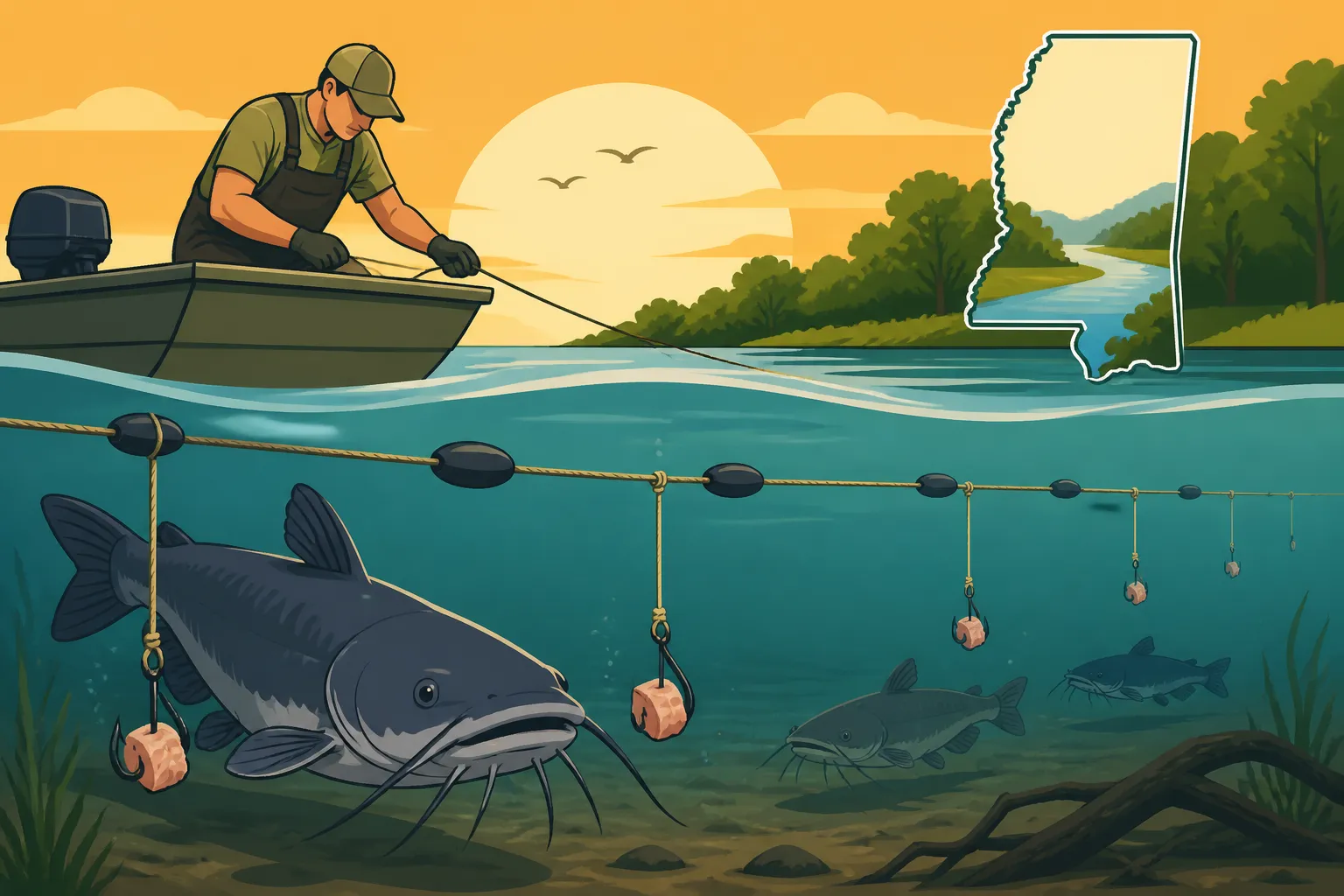
This is typically a two-person job, especially on larger lines. One person should operate the boat, slowly moving into position, while the other steadily feeds out the line.
- Anchor the first end: Start by securely anchoring one end of your trotline to the bank or a heavy bottom anchor. Ensure it’s set firmly so it won’t move. Attach your identification float here.
- Move slowly across your chosen spot: As the boat moves, carefully pay out the main line. It's best to deploy the line against the current, allowing the current to help straighten the line as it goes.
- Attach bait as you go: As each snell comes off the line, attach your chosen bait. This prevents the bait from being chewed off by smaller fish or falling off during deployment. Check out our guide on Best Bait for Catfish in Mississippi for some excellent suggestions.
- Anchor the second end: Once the entire line is deployed and baited, securely anchor the second end. Again, attach an identification float. Ensure the line is taut enough to prevent excessive slack, but not so tight that it can't move slightly with the current.
Remember to deploy your trotline in a way that doesn't impede navigation for other boats. This is not only common courtesy but often a legal requirement.
Baiting and Maintaining Your Trotline for Best Results
Having a trotline in the water is only half the battle. What you put on the hooks and how often you check your line can make all the difference between a feast and a famine.
Choosing the Best Bait
Catfish are opportunistic feeders, but certain baits consistently outperform others. Fresh cut bait is often king, especially for blue and flathead catfish. Shad, skipjack herring, or even smaller sunfish (where legal) cut into chunks are irresistible to big cats. The oil and scent trail they leave in the water are powerful attractants. Chicken livers are another classic, widely available and very effective, though they can be soft and difficult to keep on the hook. Prepared stink baits are also popular, particularly for channel catfish. Experimentation is key; what works wonders on Grenada Lake for crappie might not be as effective for catfish in the Mississippi River. Our article on Best Bait for Catfish in the Mississippi River dives deeper into specific options for different regions.
Checking Your Trotline Regularly
This is vital for several reasons:
- Fish freshness: You want to retrieve your catch while it's still fresh. Leaving fish on a trotline for too long, especially in warm Mississippi weather, can compromise their quality.
- Preventing loss: Fish can escape if left on the line too long, or worse, they might become prey for turtles or other predators.
- Re-baiting: Bait often gets eaten by smaller fish or washes off. Regular checks allow you to re-bait empty hooks and keep your line actively fishing.
- Legal compliance: Some regulations specify how often a trotline must be checked. Neglecting your line could lead to penalties.
Ideally, you should check your trotline at least once, but preferably twice, every 24 hours. Early morning and late evening are often prime times. When checking, approach cautiously, unhooking any fish and re-baiting as needed. Be mindful of hooks and wear appropriate gloves.
Troubleshooting Common Trotline Issues
Even the most seasoned trotliners encounter problems. Understanding what can go wrong helps you address issues quickly.
- Tangles: If snells are twisting, ensure your swivels are functioning correctly or consider slightly wider spacing between hooks.
- Lost bait: If bait is consistently gone without a fish, smaller baitfish or turtles might be the culprits. Try tougher baits or larger chunks.
- No bites: If your line is unproductive, reconsider your location. Catfish move, and what was a hotspot last week might be barren today. Also, review the Best Time of Year for Catfish Fishing in Mississippi as their activity can vary seasonally.
- Line dragging/moving: Your anchors might not be heavy enough or properly secured. Adjust them for the current conditions.
- Gear wear and tear: Regularly inspect your rope, snells, and hooks for fraying, rust, or damage. Replace worn components promptly. You can stock up on replacement parts from Amazon or your local tackle store to be prepared.
Safety and Responsible Trotlining Practices
Trotlining, while incredibly rewarding, carries its own set of responsibilities and safety considerations. Being a good steward of our natural resources and ensuring your own safety should always be top priority.
Personal Safety on the Water
Working with trotlines, especially from a boat, presents inherent risks. Always wear a life jacket, even if you’re a strong swimmer. Hooks are sharp, and large catfish can be powerful and unpredictable when brought to the surface. Heavy-duty gloves are essential to protect your hands from hooks, fish fins, and the abrasive line. A pair of pliers or a hook remover can be incredibly useful for safely dislodging hooks. Be mindful of boat traffic, particularly in busy waterways. The more you understand Mississippi Boat Fishing Regulations, the safer your experience will be.
Environmental Stewardship
Responsible trotlining means minimizing your impact on the environment. Always retrieve all your gear, especially if you decide to move your trotline or discontinue using it. Abandoned lines become hazards to wildlife, boaters, and other anglers. Properly dispose of any waste, including old bait, packaging, and damaged lines. Consider using barbless hooks or circle hooks, as they generally reduce harm to fish you intend to release, contributing to better fish populations.
Respecting Other Anglers and Regulations
Trotlines are legal, but that doesn't mean they're always universally loved by all anglers, particularly those who prefer rod-and-reel. Be respectful. Set your lines in areas where they won't interfere with casting anglers or popular boating lanes. Ensure your identification floats are clearly visible. Adhere to all Mississippi Fishing Creel and Size Limits for catfish and any other species you might incidentally catch. Knowing the full Mississippi Fishing Regulations Explained can help you avoid conflicts and ensure everyone can enjoy our beautiful waters. Understanding Mississippi Fishing License Penalties and Fines can also serve as a strong reminder to always comply with the law. After all, we all share these precious fishing grounds.
Disclaimer
The information provided in this guide is for general informational purposes only and does not constitute legal advice. Fishing regulations, laws, and policies in Mississippi are subject to change. Always consult the official Mississippi Department of Wildlife, Fisheries, and Parks (MDWFP) regulations or website for the most current and accurate information before engaging in any fishing activities. Compliance with all local, state, and federal laws is the responsibility of the individual angler.