Mississippi Fishing License Penalties and Fines
It's easy to get caught up in the excitement of heading out on the water, whether it's for a peaceful day on a quiet lake or an adrenaline-fueled trip to the Gulf Coast. But that excitement can quickly turn to dread if you're approached by a conservation officer and realize you've forgotten a crucial piece of gear: your fishing license. Many anglers underestimate the seriousness of fishing without a proper license in Mississippi, and the truth is, the penalties can be far more than just a slap on the wrist. This guide will meticulously break down the potential fines, legal repercussions, and all the "what-ifs" associated with license violations, ensuring you're fully informed and prepared.
The Foundation of Fishing Licenses: Why They Matter
Before we dive into the nitty-gritty of fines, let's talk about why we even have fishing licenses in the first place. It's not just some bureaucratic hurdle to frustrate anglers. Fishing licenses are absolutely essential for managing Mississippi's precious aquatic resources and supporting the very habitats that make our fishing so incredible. Without the funds generated from license sales, the Mississippi Department of Wildlife, Fisheries, and Parks (MDWFP) wouldn't be able to do nearly as much good work.
Think about it: who stocks the lakes, conducts crucial research on fish populations, enforces regulations against illegal poaching, and maintains access points to your favorite fishing spots? It's the MDWFP, largely funded by license fees. When someone fishes without a license, they're not just breaking a rule; they're essentially free-riding on the contributions of thousands of other ethical anglers and undermining the conservation efforts that benefit everyone. It's a system designed to ensure sustainable fishing for generations to come, and participating means you're doing your part. For a broader understanding of why these rules exist, check out our guide on Mississippi Fishing Regulations Explained.
Funding Conservation Efforts Directly
Every dollar spent on a fishing license in Mississippi goes directly back into managing and improving the state's fisheries. This includes everything from fish stocking programs in public waters to habitat restoration projects that ensure healthy ecosystems. For instance, the MDWFP regularly stocks popular species like bass and crappie in various lakes and reservoirs, providing ample opportunities for anglers. Without consistent funding from licenses, these vital programs would either shrink dramatically or cease to exist, leading to a decline in fish populations and overall fishing quality.
Beyond stocking, funds also support scientific research to monitor fish health, assess population sizes, and identify potential threats like invasive species or disease. This data-driven approach helps the MDWFP make informed decisions about creel limits, size restrictions, and season dates, all designed to protect the long-term health of our fish. So, when you buy a license, you're not just getting permission to fish; you're actively investing in the future of Mississippi fishing.
Ensuring Fair Play and Resource Protection
Licenses also play a critical role in enforcing fair play and protecting resources from over-exploitation. The regulations associated with licenses, such as bag limits and season closures, are put in place to prevent certain species from being harvested unsustainably. Without a licensing system, it would be nearly impossible to track who is fishing and to what extent, making enforcement a nightmare. This opens the door for individuals to take more than their fair share, depleting fish stocks and ruining the experience for everyone else.
Conservation officers rely on the licensing system to ensure that all anglers are aware of and adhere to the rules. They conduct patrols on lakes, rivers, and coastal waters, checking licenses and educating fishermen on current regulations. This presence acts as a deterrent against illegal activities, helping to safeguard vulnerable fish populations and maintain a healthy, balanced ecosystem for all recreational activities, not just fishing. It’s a collective agreement that keeps our fishing spots vibrant.
Understanding the Specific Penalties for License Violations
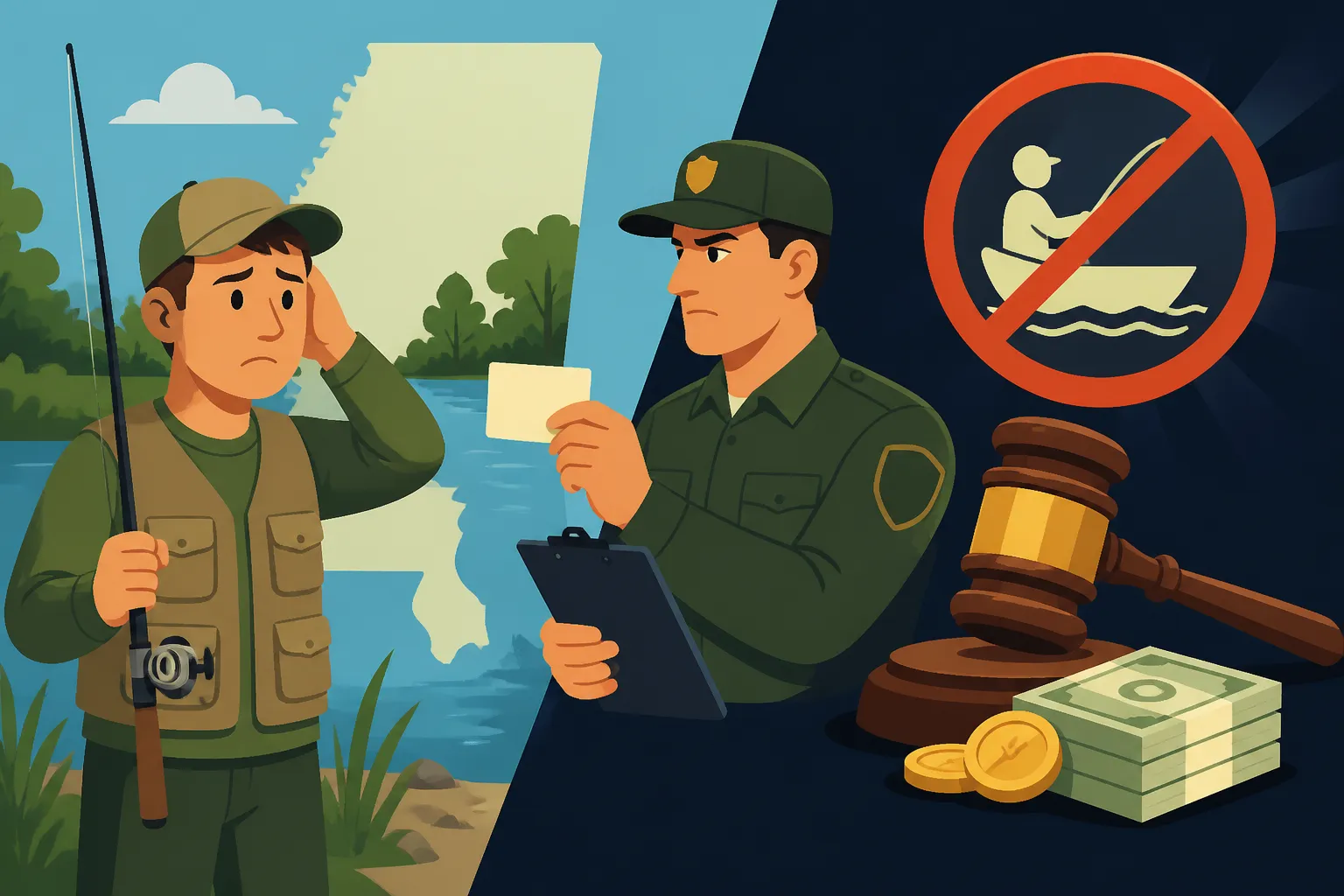
Alright, let's get down to brass tacks: what actually happens if you're caught fishing without a valid Mississippi fishing license? The answer isn't always a simple number, but it's important to understand the typical range and potential severity. Generally, fishing without a license in Mississippi is considered a misdemeanor offense. This means it's not a minor infraction like a parking ticket; it's a criminal charge that can carry significant consequences.
The fines themselves can vary depending on the judge, the specific circumstances of your violation, and whether it's a first offense or a repeat offense. However, you should expect to pay a base fine, plus court costs and potential administrative fees. It's an expense that far outweighs the cost of a proper license. For details on what a license actually costs, see our article on Mississippi Fishing License Costs.
First Offense: What to Expect
For a first-time offense of fishing without a license, you're typically looking at a fine that can range from approximately $100 to $500, sometimes even more, depending on the county and the discretion of the court. On top of that, you'll almost certainly incur additional court costs. These aren't negligible; they can often add another $50 to $100 or more to the total amount you have to pay.
Imagine you're out on Ross Barnett Reservoir, enjoying a quiet morning, and a MDWFP officer checks your license. You realize with a sinking feeling that it expired last month, or you simply never got one. The officer will issue you a citation, much like a traffic ticket, requiring you to appear in court or pay the fine by a certain date. This process itself is a hassle, consuming your time and creating unnecessary stress. It’s far simpler and less expensive to ensure you have a valid license beforehand. Our guide on What Happens If You Fish Without a License in Mississippi? goes into further detail.
Here's a quick look at potential costs for common license violations:
| Violation Type | Typical Fine Range (First Offense) | Additional Court Costs (Estimated) | Total Estimated Cost |
|---|---|---|---|
| Fishing without a Resident License | $100 – $350 | $50 – $100 | $150 – $450 |
| Fishing without a Nonresident License | $150 – $500 | $50 – $100 | $200 – $600 |
| Fishing without a Saltwater License | $100 – $300 | $50 – $100 | $150 – $400 |
| Exceeding Creel Limit (minor) | $150 – $400 | $50 – $100 | $200 – $500 |
| Fishing Out of Season (minor) | $200 – $500 | $50 – $100 | $250 – $600 |
Note: These are estimated ranges and can vary based on specific circumstances, county, and judicial discretion.
Repeat Offenses and Enhanced Penalties
If you're caught fishing without a license more than once, the consequences become significantly more severe. Judges are far less lenient with repeat offenders, and the legal system views these actions as a willful disregard for conservation laws. For a second or subsequent offense, you can expect higher fines, potentially reaching the $500 to $1,000 range, plus substantial court costs.
Beyond just financial penalties, repeat offenders might face additional repercussions. This could include the suspension or revocation of your fishing privileges for an extended period. Imagine being an avid angler and being told you can't fish legally in Mississippi for a year or more. That's a harsh reality that some face. In rare, egregious cases, especially if combined with other serious violations like commercial poaching, repeat offenses could even lead to jail time. It's a stark reminder that these laws are taken seriously, and the MDWFP is committed to protecting our natural resources. Making sure you understand options like Mississippi Resident Fishing License Options or Mississippi Nonresident Fishing License Options is key to staying legal.
Beyond the Fine: Other Consequences of Violations
It's easy to focus solely on the financial hit of a fine, but the repercussions of fishing without a license can extend far beyond your wallet. These additional consequences can be just as impactful, affecting your ability to enjoy fishing in the future and even having a ripple effect on your legal record. It's crucial to understand the full spectrum of potential downsides to truly appreciate the importance of compliance.
Consider the time and stress involved. A citation means a mandatory court appearance in many cases, especially for repeat offenses. This means taking time off work, traveling to the courthouse, and navigating the legal system, which can be an intimidating and frustrating experience. All of this can be avoided by simply purchasing a license, which can often be done quickly online or at a local retailer.
Gear Confiscation and Loss of Property
One of the most immediate and painful consequences, beyond the fine itself, can be the confiscation of your fishing gear. Yes, that's right. Conservation officers have the authority to seize your rods, reels, tackle boxes, and even your boat or other equipment used in the commission of the offense. This is especially true if there's suspicion of commercial activity, extreme poaching, or repeated offenses.
Imagine the scenario: you're fishing with your favorite custom rod and reel, perhaps a sentimental item or an expensive piece of equipment you saved up for. If you're caught in violation, that gear could be taken away on the spot. Getting it back can be a long, arduous, and sometimes impossible process, often requiring court orders and further legal fees. The cost of replacing confiscated gear can easily dwarf the original fine, turning an already bad situation into a financially devastating one. Many anglers turn to platforms like Amazon to replace lost or confiscated equipment, which just adds to the overall burden. It's a powerful incentive to always fish legally.
Legal Record and Future Implications
Since fishing without a license is a misdemeanor, a conviction will go on your criminal record. While it's not the same as a felony, having a misdemeanor on your record can still have unforeseen negative impacts down the road. It might show up on background checks for employment, housing, or even certain professional licenses. Although it might seem minor, any criminal record can be a disadvantage in competitive situations.
Furthermore, a conviction can lead to the suspension or revocation of your hunting and fishing privileges not just in Mississippi, but potentially in other states as well, through interstate compacts. States share information on wildlife violations, meaning a misdemeanor in Mississippi could prevent you from purchasing a license in Alabama, Louisiana, or other states you might plan to visit for a fishing trip. This means your passion for fishing could be severely curtailed for months or even years, extending far beyond the borders of Mississippi. This is why understanding your Mississippi Fishing License Guide is so crucial.
Specific Scenarios and Exemptions
While the general rule is "always have a license," Mississippi's fishing regulations do have some nuances and exemptions that can sometimes cause confusion. It's important to be clear about these specific situations to avoid unintended violations. Many anglers assume certain conditions mean they don't need a license, only to find out the hard way that they were mistaken. This section aims to clear up some of those common misunderstandings.
From fishing in private waters to specific age groups, knowing these details can save you a lot of headache and potential fines. Don't rely on hearsay or assumptions; always verify the current regulations with official MDWFP sources.
Fishing on Private Ponds or Land
This is one of the most common areas of confusion. Many people assume that if they're fishing on private land, especially their own property, they don't need a license. While there is an exemption, it's specific. You do NOT need a Mississippi fishing license to fish on a private pond that is wholly enclosed and located entirely on your own property. This means the pond cannot have any natural inlets or outlets connecting to public waters, and it must be entirely within your property lines, not shared with a neighbor.
However, if you're fishing on a private pond that does connect to public waters, or if you're fishing on someone else's private pond (even with their permission), you generally do need a valid Mississippi fishing license. The landowner exemption typically applies to the landowner themselves and immediate family residing on the property. So, if your friend invites you to fish their private lake that has a stream running into a public river, you still need that license. It's always best to err on the side of caution and carry one if there's any doubt, or consult the MDWFP directly. Our post on Do I Need a License to Fish on Private Ponds in Mississippi? details this further.
Border Waters and Reciprocity Agreements
Mississippi shares borders with several other states, and fishing in these "border waters" can sometimes involve special rules and reciprocity agreements. For example, along the Mississippi River, there are often agreements with neighboring states like Arkansas and Louisiana that might allow you to fish in certain areas with either state's license, provided you stay within specific boundaries and abide by the regulations of the state whose license you hold.
However, these agreements are highly specific and do NOT apply to all border waters. For instance, fishing along the Mississippi-Alabama state line or the Gulf Coast does not necessarily mean your Alabama or Louisiana license is valid in Mississippi waters, or vice-versa. Always confirm the current reciprocity agreements for the exact body of water you plan to fish. Misunderstanding these rules is a common reason for violations, especially for non-resident anglers. If you're planning a trip, be sure to check our guides like Fishing Rules on the Mississippi-Louisiana Border Waters to ensure you're covered.
Age-Related Exemptions
Mississippi has clear rules regarding age and fishing licenses, and these are crucial to understand, especially for families introducing kids to fishing.
- Youth Exemption: Generally, children under the age of 16 are exempt from needing a fishing license in Mississippi. This is fantastic news for families, as it encourages young people to get outdoors and learn the joys of fishing without an extra hurdle. However, this exemption typically only applies to the license itself, not necessarily to adhering to creel limits or other regulations. Kids still need to follow the rules of the water. For more on this, see Do Kids Need a Fishing License in Mississippi?
- Senior Exemption: Mississippi also offers exemptions for resident seniors. Residents aged 65 and older can obtain a Senior Exempt License at no charge. While it's free, it's still a "license" and must be obtained. You can't just assume your age makes you exempt; you need to officially register for this license with the MDWFP. This allows the state to track participation and ensure proper management, even for exempt groups. Our article on Mississippi Resident Senior Exempt License Explained provides all the necessary details.
It's important to carry proof of age (like a driver's license or state ID) for both youth and senior exemptions, as conservation officers will ask for identification to verify your status.
How to Avoid Penalties: Being a Responsible Angler
Avoiding fishing license penalties and fines is actually quite simple: understand the rules and follow them. It sounds obvious, but many violations stem from ignorance or simple oversight. Being a responsible angler means more than just catching fish; it means respecting the resources, the regulations, and the efforts of those who work to preserve our fishing heritage.
The MDWFP provides a wealth of information to help anglers stay compliant. Taking a few proactive steps can save you a world of trouble and ensure your time on the water is enjoyable and worry-free.
Getting Your License: The First Step
The most critical step to avoid penalties is, of course, obtaining the correct fishing license before you cast a line. Mississippi makes this process incredibly convenient. You have several options:
- Online: The easiest and quickest way is often through the MDWFP's official website. You can purchase and print your license from the comfort of your home. You can also save it digitally on your phone, though carrying a physical copy or screenshot is always a good backup. If you're wondering How to Buy a Mississippi Fishing License Online, we have a guide for that.
- Authorized Vendors: Many sporting goods stores, bait shops, and even major retailers like Walmart or Bass Pro Shops in Mississippi are authorized to sell fishing licenses. This is a great option if you need to pick up some last-minute bait or tackle anyway.
- MDWFP Offices: You can also purchase licenses directly from MDWFP regional offices.
Remember to choose the right license for your needs: resident or non-resident, freshwater or saltwater, and the appropriate duration (annual, 3-day, etc.). Don't forget that a separate Mississippi Saltwater Fishing License Guide is typically required for fishing in the Gulf of Mexico and coastal bays, in addition to or instead of a freshwater license, depending on where you plan to fish. Always verify your license is current before heading out; an expired license is just as invalid as no license at all!
Staying Informed About Regulations
Having a license is just one piece of the puzzle. You also need to stay informed about the ever-changing Mississippi Fishing Regulations Explained. Regulations can change annually, and sometimes even within a season, for specific species or bodies of water. These changes are put in place to protect fish populations and ensure sustainable fishing.
Key areas to stay updated on include:
- Creel and Size Limits: How many fish of a particular species can you keep, and what is the minimum/maximum size? These often vary by lake or region. For example, Mississippi Fishing Creel and Size Limits can be very specific for crappie on different reservoirs.
- Season Dates: Are there specific times of the year when certain species are off-limits for harvest?
- Gear Restrictions: Are there limits on the number of rods you can use, or prohibitions on certain types of bait or tackle?
- Specific Lake Rules: Some lakes have unique regulations that differ from statewide rules. Always check local signs or the MDWFP website before fishing a new spot.
The MDWFP website is your best friend here. They publish an annual outdoor guide that details all current regulations, often available as a free download or in print at license vendors. If you prefer physical books, you might even find copies or relevant guides about Mississippi's wildlife on Amazon. Make it a habit to quickly review the regulations for your target species and location before each trip.
Best Practices for Anglers
Beyond just buying a license and reading regulations, there are some best practices that can help you avoid any issues and ensure a smooth, enjoyable fishing experience:
- Carry Your License (or proof of it): Even if you bought it online and have it on your phone, a physical copy is ideal. Phones run out of battery, get wet, or get dropped. A laminated copy in your tackle box or wallet is a reliable backup.
- Know Your Location: Be aware of whether you're in freshwater or saltwater, and if you're near border waters that might have specific rules.
- Educate Yourself and Others: If you're fishing with friends or family, especially those new to the sport, take a moment to brief them on the rules. A shared understanding helps everyone stay compliant.
- When in Doubt, Ask: If you're unsure about a specific rule, don't guess. Contact the MDWFP directly or ask a local bait shop owner. It's much better to ask a question than to receive a citation.
By taking these proactive steps, you contribute to a thriving fishing environment and protect yourself from unnecessary fines and legal headaches.
What to Do If You Receive a Citation
Even the most careful anglers can sometimes make mistakes or find themselves in an unexpected situation. If you receive a citation for a fishing license violation in Mississippi, it's natural to feel frustrated, embarrassed, or even angry. However, how you respond in that moment and afterward can significantly impact the outcome. It's crucial to handle the situation calmly and correctly.
Remember, a conservation officer is doing their job to protect our natural resources. Being respectful and cooperative will always lead to a better interaction than being confrontational.
During the Interaction with a Conservation Officer
If you are approached by a MDWFP conservation officer, the first and most important thing to do is remain calm and be polite. They have the authority to ask for your license, identification, and to inspect your catch and gear.
- Cooperate: Provide your identification and any requested licenses promptly. If you realize you don't have a license or it's expired, acknowledge it calmly. Do not argue or attempt to hide anything.
- Be Truthful: If asked questions, answer honestly. Trying to deceive an officer can lead to more serious charges.
- Don't Admit Guilt Unnecessarily: While being truthful, you don't need to volunteer extra information or admit guilt explicitly. Simply state the facts. For example, "My license must have expired, I thought I renewed it."
- Understand the Citation: Ask for clarification if you don't understand why you're receiving a citation or what the next steps are. Make sure you understand the charges, the court date (if applicable), and the payment instructions.
- Document Everything: If possible, make a mental note of the officer's name/badge number, the exact time and location, and any specific details of the interaction. This information can be helpful if you decide to dispute the citation later.
Remember, the officer is documenting the interaction as well. Maintaining a respectful demeanor ensures a professional encounter, regardless of the outcome.
After Receiving the Citation
Once you have the citation in hand, the real work begins. Don't just stuff it in your tackle box and forget about it. There are specific actions you need to take:
- Read the Citation Carefully: It will contain critical information about the charge, the amount of the fine, and instructions on how to pay or how to appear in court. Pay close attention to deadlines.
- Determine Your Course of Action: You generally have two choices:
- Pay the Fine: If you agree with the violation and the fine, you can typically pay it before the court date. This often means you're pleading guilty and accepting the consequences, including the misdemeanor on your record. The citation will usually provide instructions for payment (online, mail, or in person).
- Contest the Citation: If you believe you were wrongly cited, or if there were extenuating circumstances, you have the right to appear in court and present your case to a judge. This might involve legal counsel and can be a more involved process. Gather any evidence you have (e.g., proof of purchase for a license you claim to have had, or documentation of an exemption).
- Seek Legal Advice (if necessary): For serious violations, repeat offenses, or if you plan to contest the citation, it might be wise to consult with an attorney who specializes in wildlife or misdemeanor law. They can advise you on your rights and the best course of action.
- Learn from the Experience: Regardless of the outcome, use the experience as a learning opportunity. Double-check your license status before every trip, review regulations, and make sure you're fully compliant to avoid future issues.
Receiving a citation is never pleasant, but by handling it responsibly, you can minimize the negative impact and quickly get back to enjoying all the amazing fishing opportunities Mississippi has to offer.
Disclaimer
The information provided in this guide is for general informational purposes only and does not constitute legal advice. Fishing regulations and associated penalties in Mississippi are subject to change. Always refer to the official Mississippi Department of Wildlife, Fisheries, and Parks (MDWFP) website or contact them directly for the most current and accurate information. If you receive a citation, consulting with a legal professional is recommended.