Fishing Rules on the Mississippi-Louisiana Border Waters
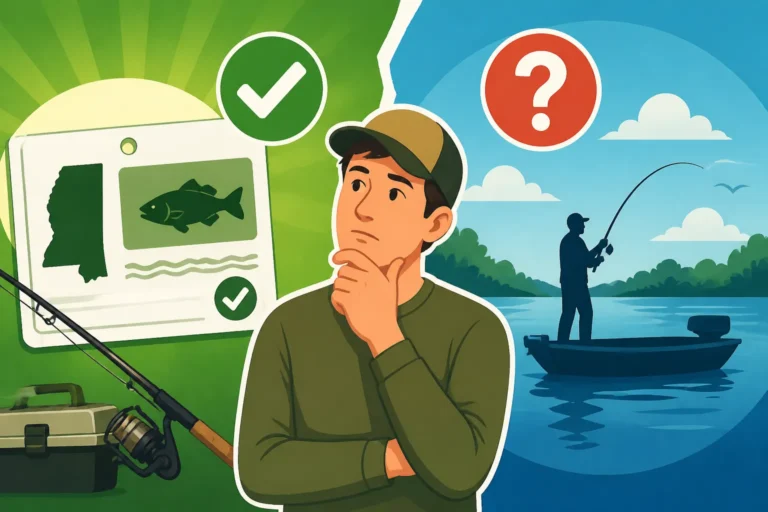
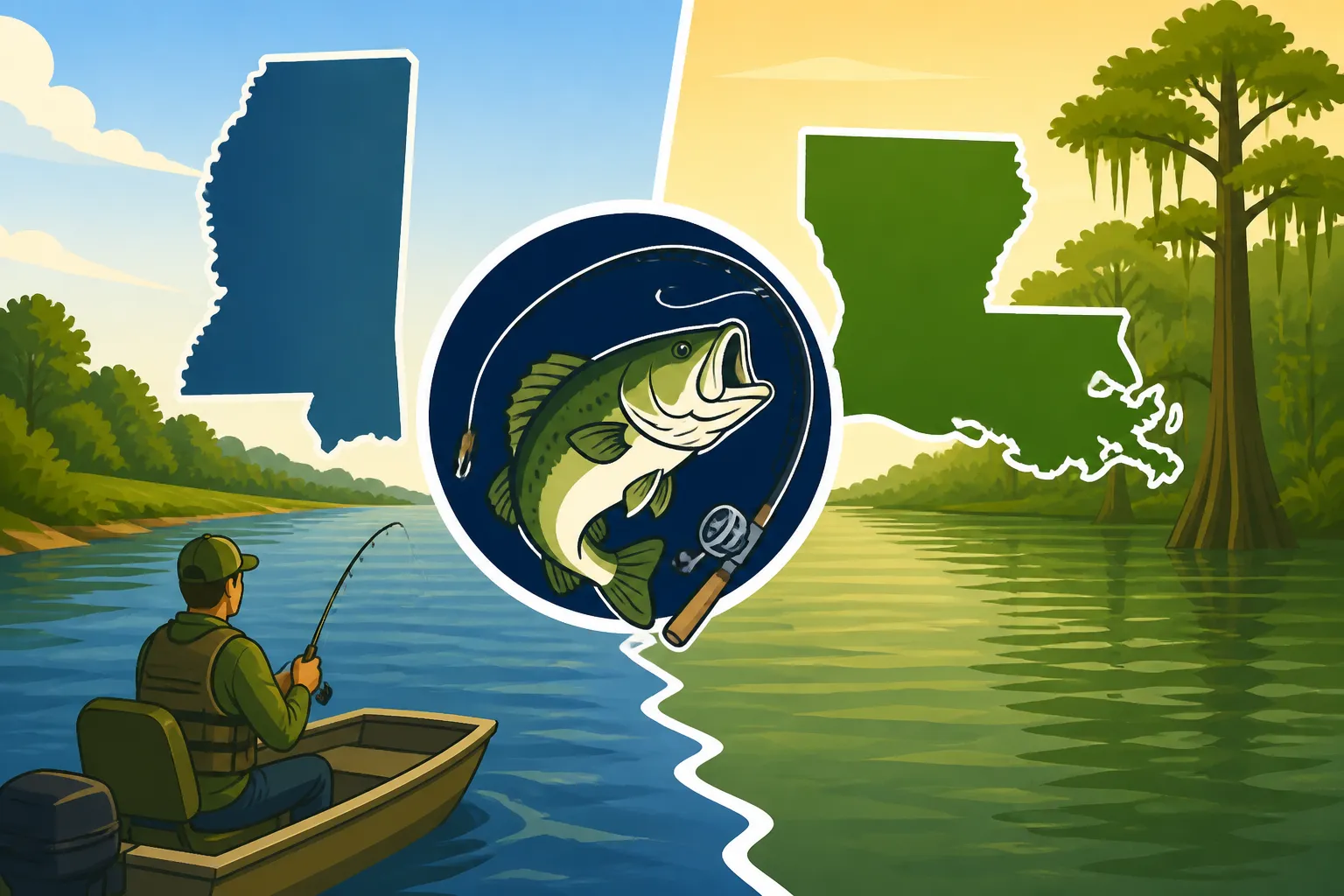
Fishing along the Mississippi River, especially where it forms the border between Mississippi and Louisiana, can feel like navigating a legal minefield. Many anglers find themselves scratching their heads, wondering if their Mississippi license covers them when they're casting near the Louisiana bank, or vice-versa. This guide aims to untangle those complex regulations, offering clarity so you can focus on what truly matters: catching fish, worry-free.
Understanding the Intricacies of Border Water Agreements
Fishing isn't just about rods, reels, and bait; it's also about understanding the rules of the road, or in this case, the water. When you're fishing on a body of water that separates two states, like the mighty Mississippi River between Mississippi and Louisiana, the licensing requirements can be a source of real confusion. It's not always as simple as just having a license from one side.
What Constitutes a Reciprocal Agreement?
A reciprocal agreement between states for fishing licenses is essentially a handshake deal where each state agrees to honor the other's fishing licenses within specific, agreed-upon border waters. This means that if you possess a valid resident or nonresident fishing license from either Mississippi or Louisiana, you could, in theory, fish in designated shared waters without needing to purchase a second license. The goal is to simplify things for anglers and encourage recreational activity without bureaucratic hurdles. Without such an agreement, if you were to drift even a few feet into the other state's recognized territory, you could technically be cited for fishing without a license, which is a headache no one wants. These agreements are typically put in place to prevent such scenarios and make the experience more enjoyable and less stressful for everyone involved.
The Specifics for Mississippi and Louisiana
Now, here's where it gets a little tricky and often frustrates anglers who assume border waters automatically mean reciprocity. As of my last check and consistent with the Mississippi Department of Wildlife, Fisheries, and Parks (MDWFP) and Louisiana Department of Wildlife and Fisheries (LDWF) regulations, there is generally NO statewide reciprocal agreement for all common border waters between Mississippi and Louisiana. This means that if you're fishing the main channel of the Mississippi River, or any oxbow lakes or tributaries that straddle or directly border both states, you typically need a valid fishing license from the state whose waters you are actively fishing in. For example, if you're anchored closer to the Louisiana bank, you'd better have a Louisiana license, regardless of where your boat launched from. This is a common pitfall for many, who might think their Mississippi Fishing License Guide covers them everywhere. This lack of broad reciprocity is a key difference compared to some other state borders, like sections of the Mississippi River bordering Arkansas and Tennessee, which do have more extensive agreements. It’s crucial for every angler to understand this fundamental difference to avoid any unexpected fines or legal issues.
Specific Waters and Their Licensing Nuances
The Mississippi River is a colossal waterway, and its adjacent waters are just as vast and varied. Understanding where one state's jurisdiction ends and another begins, especially for fishing purposes, requires a bit of local knowledge and a close eye on the regulations. It's not always a clear line, and sometimes, the interpretation can be subjective, making it all the more important to be prepared.
Fishing the Mississippi River Main Channel
When it comes to the vast expanse of the Mississippi River itself, the main channel is often where most of the confusion arises. If you're physically within the main navigational channel of the Mississippi River, whether it's near Vicksburg, Natchez, or any other point along the border, you generally need a valid fishing license for the state whose side you are closest to or whose designated waters you are in. This means if you launch from a Mississippi boat ramp and spend your day fishing the deepest part of the channel but drift towards the Louisiana side, you are technically in Louisiana waters. The MDWFP and LDWF usually define their borders in the middle of the river's main channel, or sometimes along historical boundaries that predate the river's shifting course.
So, if you plan to cover a lot of ground or fish different areas, the safest bet is to purchase a nonresident fishing license from the other state. For example, a Mississippian wanting to fish near the Louisiana side would need a Louisiana Nonresident Fishing License. Conversely, a Louisianan fishing the Mississippi side would need a Mississippi Nonresident Fishing License Guide. This ensures you're covered no matter where your lure drops. Keep in mind that "main channel" refers to the primary navigation route, not necessarily the exact geographical center of the entire flood plain, which can be much wider.
Oxbow Lakes, Backwaters, and Tributaries
Away from the swift currents of the main channel, the Mississippi River basin is dotted with countless oxbow lakes, bayous, and smaller tributaries that connect to the main river. These are often prime fishing grounds, holding fantastic populations of bass, crappie, and catfish. However, their border status can be even more complicated. Many of these waters are entirely within one state's boundary, even if they were historically part of the river that once formed the border.
For example, an oxbow lake that was created when the river cut a new channel might now be completely landlocked within Mississippi, even if the main channel is only a mile away and still forms the border. In such a scenario, you would unequivocally need a Mississippi license. If an oxbow or bayou genuinely straddles the state line, similar rules to the main channel apply: you need a license for the state whose portion you are fishing. It's not uncommon for an angler to launch in Mississippi, travel up a tributary, and suddenly find themselves in waters legally defined as Louisiana's, especially with the ever-changing river landscape. A good navigation app or even a paper map from a sporting goods store, perhaps purchased on Amazon, that clearly delineates state lines can be an invaluable tool to prevent accidental violations. Always verify the specific status of the smaller, interconnected waterways you plan to explore, as general river rules may not always apply.
Gulf Coast Border Waters
While the primary focus of Mississippi-Louisiana border fishing often centers on the freshwater reaches of the Mississippi River, it’s worth addressing the Gulf Coast. The marine boundary between Mississippi and Louisiana is also a point of interest for many saltwater anglers. However, for saltwater fishing, the concept of widespread reciprocity is generally not in play.
If you are fishing in Mississippi's territorial waters along the Gulf Coast, including Mississippi Sound, Biloxi Bay, or near the barrier islands, you need a valid Mississippi Saltwater Fishing License Guide. Similarly, if you venture into Louisiana's coastal waters, such as the Chandeleur Islands or the extensive marsh systems, you will need a valid Louisiana saltwater fishing license. There are no blanket agreements that allow a single license to cover both states' coastal marine waters. This is particularly true for offshore fishing, where federal waters begin, but access to those waters from either state still requires compliance with the state's licensing and regulations for transit and landing your catch. Always know your GPS coordinates and consult state marine boundary charts if you plan to fish anywhere near the state line in the Gulf. This dual licensing approach helps both states manage their respective fisheries resources and ensures that local regulations, which can differ significantly, are upheld.
Navigating Common Angler Dilemmas
Even the most experienced anglers can find themselves in a bind when fishing border waters. The dynamic nature of rivers and the subtle shifts in territorial lines can lead to unintentional violations, turning a relaxing day into a stressful encounter with law enforcement. Understanding these potential pitfalls and how to proactively address them is key.
Accidental Crossings and Enforcement
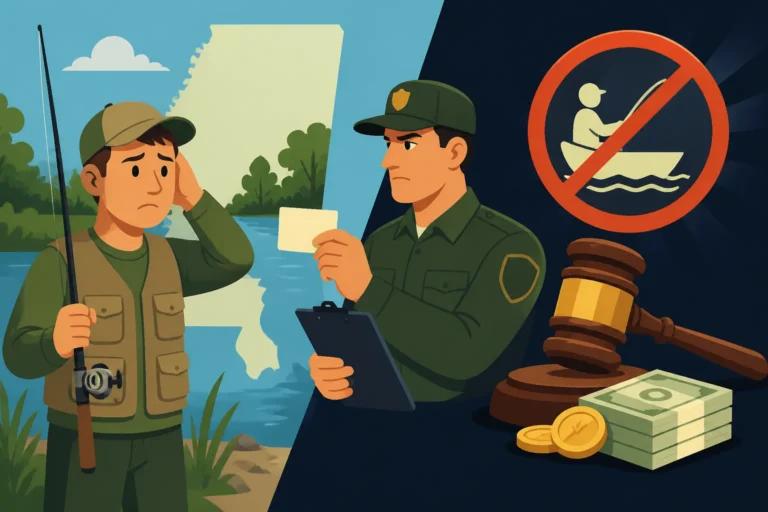
It's happened to the best of us: you're focused on a biting school of fish, the current shifts, or you simply get engrossed in the moment, and suddenly you realize you've drifted across an invisible line into another state's waters. While game wardens and wildlife enforcement officers are often understanding, ignorance is rarely an excuse for breaking the law. If you're caught fishing in Louisiana waters with only a Mississippi license, or vice-versa, you could face penalties.
The severity of these penalties can vary, ranging from a warning to significant fines, and in some cases, even confiscation of gear or your catch. It's usually considered a misdemeanor offense. To avoid this, especially when fishing areas known for ambiguous borders, it is highly recommended to obtain a nonresident license for the adjacent state. Think of it as an insurance policy for your fishing trip. Carrying a GPS device that shows state boundaries can also be a lifesaver. Being polite and cooperative if approached by an officer, and explaining your situation, can sometimes lead to a warning, but relying on that isn't a strategy. Always err on the side of caution. Details on what could happen can be found in a guide on Mississippi Fishing License Penalties and Fines.
Boat Registration and Safety Requirements
While fishing licenses are state-specific, boat registration generally follows the state where the boat is principally used or registered. If your boat is registered in Mississippi, you're fine operating it in Louisiana waters, and vice-versa, as long as it adheres to the safety regulations of the state you are in. However, this is another area where cross-border knowledge is crucial. Both states have specific requirements for safety equipment, such as life jackets, fire extinguishers, navigation lights, and sounding devices.
For example, while Mississippi might have certain requirements for boats under a certain length, Louisiana might have slightly different rules. When operating in border waters, you should always adhere to the stricter of the two states' safety regulations to ensure compliance. This includes making sure you have enough life jackets for everyone on board, and that they are easily accessible and appropriately sized. These safety standards are in place for a reason—to protect you and your passengers—so it's not an area to cut corners. Before heading out, a quick check of both the Mississippi Boat Fishing Regulations and Louisiana's equivalent is a wise move, especially if you routinely fish both sides. Many resources, including detailed safety guides, can be found online or even purchased as waterproof manuals on platforms like Amazon.
Creel Limits and Size Restrictions
Even if you have valid fishing licenses for both Mississippi and Louisiana (which, as we've established, is often the safest approach for border waters), there's still another layer of regulations to consider: creel limits and size restrictions. These are the rules that dictate how many fish of a certain species you can keep and what their minimum (or sometimes maximum) legal size must be. And guess what? They can, and often do, differ between states.
When you're fishing in border waters, the general rule of thumb is that you must abide by the creel and size limits of the state whose waters you are currently fishing in. This can be incredibly challenging if you're drifting between jurisdictions. For instance, Louisiana might have a 25-crappie limit with a 10-inch minimum size, while Mississippi might have a 30-crappie limit with no minimum size on a particular lake. If you catch your limit in Mississippi waters and then drift into Louisiana waters, your catch might suddenly become illegal by Louisiana standards. The best practice here is to consult both states' fishing regulations and operate under the most restrictive limits if you plan to traverse both sides. This "lowest common denominator" approach ensures you stay within the law, regardless of which side of the invisible line you're on. Always review the Mississippi Statewide Creel Limits and compare them with Louisiana's, specifically for the species you intend to target.
Practical Tips for Border Water Fishing
Successfully navigating Mississippi-Louisiana border waters requires more than just knowing the regulations; it demands a proactive approach and a commitment to being thoroughly prepared. The goal is to maximize your time on the water, minimize legal risks, and ensure a safe, enjoyable experience.
Best Practices for Dual-State Angling
Given the complexities, the best practice for fishing the Mississippi River and its border-adjacent oxbows and tributaries is often to possess licenses for both states. While it's an added expense, it provides peace of mind and complete legal coverage, no matter which side of the river you find yourself fishing on.
- Purchase Both Licenses: If you anticipate fishing both sides regularly, invest in a nonresident Mississippi license and a nonresident Louisiana license (or resident licenses if you qualify for one). This removes any ambiguity.
- Know Your Location: Utilize a reliable GPS unit or a fishing app on your smartphone that displays state boundaries. Many modern marine electronics also have this capability. This allows you to visually confirm which state's waters you are in.
- Observe Posted Markers: Some state boundaries along shared waterways might have physical markers or buoys. Pay attention to these if they are present.
- Adhere to Stricter Rules: When it comes to creel limits and size restrictions, if there's any doubt about which state's rules apply, always default to the more restrictive regulation. This ensures you're compliant no matter what.
- Keep Regulations Handy: Download copies of both state's fishing regulations to your phone or print them out and keep them in a waterproof bag on your boat. If questioned, you can refer directly to the rules.
Where to Get Licenses for Both States
Acquiring your fishing licenses for both Mississippi and Louisiana is thankfully quite straightforward these days, thanks to online services. You don't necessarily have to visit a physical office in each state.
- Mississippi Licenses: You can purchase your Mississippi fishing license directly through the MDWFP website. They offer various options, including annual resident, annual nonresident, and short-term licenses like the Cost of a 3-Day Nonresident Mississippi Fishing License or a 7-day option, which might be ideal for a quick trip. Many sporting goods stores like Walmart, Bass Pro Shops, or even local bait shops also sell them in person.
- Louisiana Licenses: Similarly, Louisiana's Department of Wildlife and Fisheries (LDWF) offers online license purchases through their website. They also have a network of licensed vendors throughout the state. Just like Mississippi, you'll find options for resident and nonresident annual licenses, as well as temporary options.
- Identification: Remember that you'll need valid identification for both purchases. For residents, this usually means a driver's license or state ID. Nonresidents will need their home state's ID. Ensure all your personal information is accurate, as this is tied to your legal right to fish. You can find more general information about various options in a comprehensive guide like Mississippi Fishing License Costs.
Essential Gear and Preparedness
Being prepared goes beyond just licenses and regulations; it extends to your equipment and general readiness for the unexpected. Fishing border waters, especially a large river like the Mississippi, can present unique challenges.
- Navigation Tools: As mentioned, a reliable GPS with detailed mapping (preferably showing state lines) is invaluable. Modern fish finders often include GPS functionality, or you can use a dedicated handheld unit. Smartphone apps like Navionics or Gaia GPS can also be incredibly helpful.
- Communication Devices: Cell service can be spotty in remote stretches of the river. Carry a fully charged cell phone, but also consider a VHF marine radio for emergencies, especially if you're on a larger boat. A satellite messenger device, like those from Garmin InReach, can be a lifesaver in truly remote areas where no cell service exists.
- Safety Gear: Beyond mandatory life jackets, always have a first-aid kit, a whistle or air horn, spare boat keys, a paddle, anchor with sufficient rope, and plenty of water and snacks.
- Weather Awareness: River conditions can change rapidly. Always check the weather forecast before you go and be prepared to cut your trip short if storms roll in. High winds can make navigation dangerous, and sudden downpours can swell the river.
- Physical Maps: While digital maps are great, having a waterproof paper map of the area from a reputable source, perhaps found on Amazon, is a fantastic backup. Batteries die, and electronics fail, but a paper map will always show you where you are (if you know how to read it!).
- Gear for Different Techniques: The Mississippi River system offers diverse fishing. Bring a variety of rods, reels, baits, and tackle suitable for the species you're targeting, whether it's heavy gear for massive catfish or lighter tackle for crappie in backwater sloughs. Guides on Catfish Fishing Techniques or Crappie Fishing Techniques for Mississippi Lakes can help you decide what to pack.
By following these practical tips, you can ensure your fishing trip on the Mississippi-Louisiana border waters is not only successful but also safe and legally sound.
Summary of Mississippi-Louisiana Border Water Licensing
To help clarify the often-confusing regulations for fishing along the Mississippi-Louisiana border, here's a quick reference guide. Remember, this is a general overview, and specific local rules or temporary regulations can always apply. Always consult the official MDWFP and LDWF websites for the most current information.
| Scenario | Location | Recommended License(s) | Notes |
|---|---|---|---|
| Primary Fishing Area | Mississippi waters (e.g., closer to MS bank, or entirely within MS oxbows/tributaries) | Valid Mississippi Fishing License | Required for residents and nonresidents. Can be purchased online or at vendors. |
| Primary Fishing Area | Louisiana waters (e.g., closer to LA bank, or entirely within LA oxbows/tributaries) | Valid Louisiana Fishing License | Required for residents and nonresidents. Can be purchased online or at vendors. |
| Drifting/Covering Both Sides | Main channel of Mississippi River; oxbows/tributaries that clearly straddle the state line. | Valid Mississippi Fishing License AND Valid Louisiana Fishing License | Highly recommended to avoid accidental violations, as there is generally no statewide reciprocity. This is the safest approach for mobile anglers. |
| Accidental Crossing | Briefly entered other state's waters without intent | License for the current state (if available). If not, could result in warning or fine. | Carry both licenses to prevent issues. Use GPS to monitor location. |
| Boat Registration | Operating vessel on border waters | Registered in state of principal use (MS or LA) | Boat registration from one state is generally honored by the other. Adhere to the stricter state's safety equipment rules. |
| Creel & Size Limits | Catching fish in border waters | Adhere to the regulations of the state you are currently fishing in. | If unsure, or actively moving between state lines, default to the most restrictive limits for all species. |
| Saltwater Border Waters | Gulf Coast areas (e.g., Mississippi Sound, Chandeleur Islands) | Separate Mississippi Saltwater Fishing License AND Louisiana Saltwater Fishing License | No reciprocity for saltwater fishing. You need the license for the specific state's coastal waters you are in. |
Always remember that regulations can change, so a quick check with the relevant state agencies before your trip is always the smartest move.
Disclaimer
The information provided in this guide is for general informational purposes only and does not constitute legal advice. Fishing regulations, license requirements, and border water agreements are subject to change. Always consult the official websites of the Mississippi Department of Wildlife, Fisheries, and Parks (MDWFP) and the Louisiana Department of Wildlife and Fisheries (LDWF) for the most current and accurate information before planning your fishing trip. Failure to comply with state fishing laws can result in fines and penalties.