How to Catch Catfish in a Farm Pond
Many folks assume that catching catfish in a farm pond is as simple as dropping a line in, but often, it's not quite that straightforward. While farm ponds can be incredible hotspots for whiskered fighters, these smaller, often shallower bodies of water present their own unique challenges and opportunities. This guide is here to cut through the guesswork, offering practical, no-nonsense advice on how to consistently reel in those delicious catfish from your local Mississippi farm pond.
Understanding the Farm Pond Catfish Environment
Farm ponds are vastly different from the sprawling reservoirs and powerful rivers that dot the Mississippi landscape. These smaller, more intimate settings demand a slightly different approach if you want to be successful in your catfish pursuit. It’s not just about what bait you use, but understanding the whole ecosystem.
Why Farm Ponds Are Unique Fishing Havens
Unlike large, complex river systems or massive lakes, farm ponds are typically self-contained environments. This means they often have less current, can be prone to quicker temperature changes, and may have a more limited natural food base. The catfish in these ponds might not see the same variety of prey that their river-dwelling cousins encounter, which can make them quite particular about what they'll bite. You'll often find that clarity can vary wildly too – some ponds are crystal clear, while others are perpetually muddy, and each requires a different strategy.
Another key difference is the pressure. Some farm ponds are rarely fished, leading to a population of less wary catfish eager to snatch up an easy meal. Others, especially those accessible to many anglers, can see significant fishing pressure, making the catfish much more finicky. Understanding this dynamic is crucial for success. These fish also tend to be less migratory than river cats, often sticking to specific areas where food and cover are readily available.
Common Catfish Species in Mississippi Farm Ponds
When you're fishing a Mississippi farm pond, you'll most commonly encounter two main species: channel catfish and, less frequently, bullheads. Sometimes, if the pond is connected to a larger waterway or has been specifically stocked, you might find blue catfish, but this is rarer in smaller, isolated ponds.
Channel catfish are the superstars of pond fishing. They're generally abundant, grow to a decent size, and put up a respectable fight. They're also delicious to eat, making them a favorite target for many anglers. These fish are opportunistic feeders, meaning they'll eat just about anything, from insects and small fish to decaying organic matter. Their keen sense of smell, aided by those prominent whiskers, helps them locate food even in murky water or low light conditions.
Bullheads, on the other hand, are smaller and tend to be a bit more sluggish. While still good eating, they rarely grow large enough to be considered trophy fish. They are incredibly hardy, however, and can tolerate lower oxygen levels than channel cats, often thriving in ponds where other species might struggle. Identifying the species you're catching can help you understand their habits better and refine your approach. For a broader look at whiskered species, check out our guide on Catfish Fishing in Mississippi.
Essential Gear for Productive Pond Catfishing
You don't need a boatload of expensive equipment to catch catfish in a farm pond, but having the right tools for the job can make all the difference. Matching your gear to the environment and the size of the fish you expect to encounter will increase your chances of success and enjoyment.
Rods, Reels, and Line for Pond Adventures
For farm pond catfish, you generally don't need the heavy-duty gear you'd use for big blue cats in the Mississippi River. A medium to medium-heavy spinning rod or baitcasting setup, around 6 to 7 feet long, is usually perfect. This offers enough backbone to handle a good-sized channel cat but is sensitive enough to detect lighter bites often common in pond settings.
Pair your rod with a reel that has a smooth drag system. Catfish, even pond dwellers, can make strong runs, and a good drag prevents broken lines. For line, 10 to 15-pound monofilament or fluorocarbon is a solid choice. If the pond has a lot of submerged brush or stumps, consider bumping up to 20-pound test for added abrasion resistance. Braided line in the 20-30 pound range also works well, offering incredible sensitivity and strength, though it's less forgiving for beginners due to its lack of stretch. For more on choosing the right line, you might find our article on Best Fishing Line for Catfish helpful.
Hooks, Sinkers, and Floats
When it comes to terminal tackle, simplicity is key in farm ponds. For hooks, a wide-gap circle hook in sizes 1/0 to 3/0 is often ideal. Circle hooks are fantastic for catfish because they typically hook the fish in the corner of the mouth, making for easier release if desired and reducing gut-hooking. If you prefer J-hooks, sizes 1/0 to 4/0 work well.
Sinkers should be just heavy enough to keep your bait on the bottom, or to allow for a gentle cast without tangling. Split shots, egg sinkers, or even small bullet weights in 1/4 to 1/2 ounce are usually sufficient. If you're fishing in a pond with a soft, muddy bottom, a flat-sided sinker might prevent your bait from sinking too deep into the muck.
Floats, or bobbers, are excellent for presenting bait off the bottom, especially if the pond floor is very silty or weedy. A simple slip bobber setup allows you to adjust your bait depth easily, which can be critical for fishing over submerged structure or suspended fish. These are widely available, and you can often find good beginner kits for hooks, sinkers, and bobbers on Amazon.
Baits That Drive Pond Catfish Wild
Catfish are known for not being particularly picky eaters, but in a farm pond, some baits definitely outperform others. The key is often smell and visibility, as these fish rely heavily on their olfactory senses.
Natural Baits: The Tried and True
Nothing beats natural baits for pond catfish. Good old earthworms are a universal catfish magnet. A big wad of nightcrawlers on a hook is almost irresistible to channel cats and bullheads alike. Crickets can also be surprisingly effective, especially for smaller catfish and panfish, which often share pond habitats.
For a more substantial offering, live or cut baitfish, such as shiners or small bream (if legal to use as bait and caught from the same body of water), are excellent. Catfish are predators, and a struggling baitfish or a piece of freshly cut, bloody fish can send irresistible scent signals through the water. Just make sure to check local regulations regarding the use of live baitfish. For other natural options, consider things like shrimp from the grocery store – they have a strong scent that catfish love.
Prepared and Scented Baits: Easy and Effective
If you're looking for convenience and consistency, prepared baits are your friend. Chicken livers are legendary for catfish. Their soft texture and strong scent bleed into the water, creating an enticing chum trail. The only downside is they can be messy and prone to falling off the hook, so many anglers use a small piece of nylon stocking or a bait holder hook to keep them on.
Dough balls, made from cornmeal, flour, and various smelly additives, are also very effective. You can buy pre-made "stink baits" or "punch baits" at most tackle shops, or even on Amazon, that are specifically formulated to attract catfish. These often come in tubs and are designed to stick to treble hooks or special bait holders. Hot dogs, cut into bite-sized pieces and soaked in garlic juice or Kool-Aid, are another popular homemade option that often yields great results in farm ponds. The softer texture allows the scent to leach out more readily, drawing in curious cats.
Strategies for Locating and Landing Pond Cats
Finding catfish in a farm pond might seem simple, but their habits can vary based on the pond's features, the time of day, and the season. Understanding these nuances will help you put your bait where the fish are.
Reading the Pond: Where Catfish Hide
Catfish, like most fish, are creatures of comfort and opportunity. In farm ponds, they gravitate towards areas that offer food, cover, and favorable water conditions. Look for any kind of structure – fallen trees, brush piles, rock formations, or even old tires if the pond is man-made. These provide ambush points and protection. For example, our guide on How to Find Bass Around Submerged Timber has some transferable advice for finding any fish near cover.
Depth changes are also critical. Catfish will often patrol the edges of drop-offs, moving between shallower feeding grounds and deeper, cooler water. If the pond has an aerator, the oxygenated water around it can be a hotspot, especially during hot summer months. Shaded areas, like those under overhanging trees or docks, offer relief from the sun and can hold fish during bright conditions. In muddy ponds, catfish often stick to slightly clearer water if it exists, or they'll be more spread out, relying purely on scent to find food.
Casting, Presentation, and Fighting Techniques
Once you've identified a likely spot, your presentation matters. For bottom fishing, a simple Carolina rig or a slip sinker rig is effective. This involves a weight sliding freely on the main line, tied to a swivel, then a leader (12-24 inches) to your hook. This setup allows the fish to pick up the bait without feeling the resistance of the sinker immediately. Cast it out and let it settle, then keep a slight slack in your line to avoid spooking tentative bites.
If you're using a bobber, set your depth so the bait is suspended just above the bottom, or at the depth where you're seeing signs of fish. Watch your bobber closely – catfish bites can range from a slow, steady pull to a quick dive. When you get a bite, wait for the fish to commit before setting the hook. With circle hooks, a gentle, steady pull is usually all that's needed.
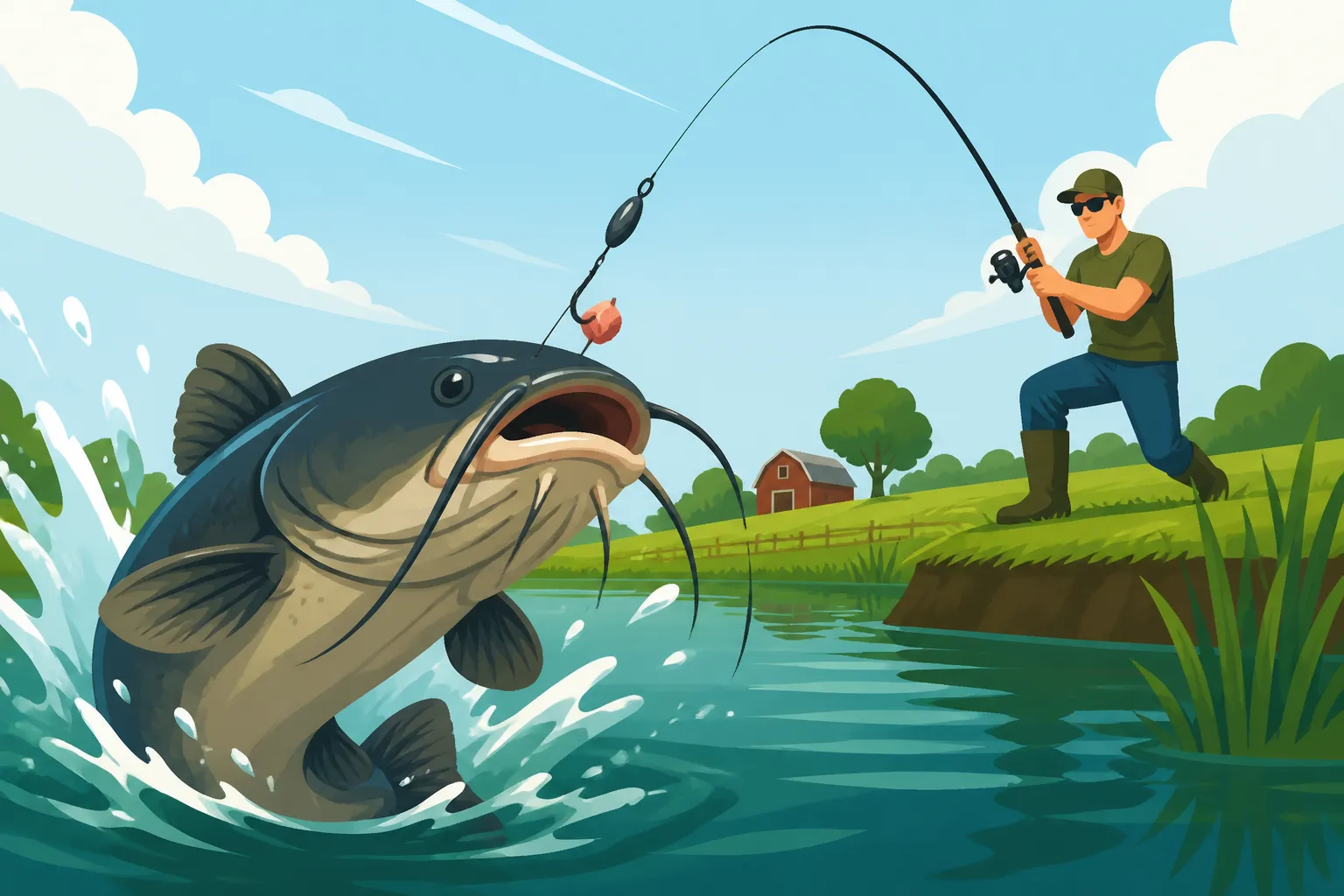
When you hook a catfish, remember they're powerful fighters. Keep steady pressure on the fish, using your rod's flex and the reel's drag to tire it out. Avoid horsing the fish in, as this can lead to pulled hooks or broken lines, especially if you’re fishing near snags. Bring the fish to the bank or a net smoothly. For a more detailed look at effective catfish fishing methods, consider reading up on general Catfish Fishing Techniques.
Timing Your Farm Pond Catfishing Trip
The best time to fish for catfish in a farm pond largely depends on the season and time of day. Generally, early morning and late evening, or even night, are prime times. Catfish are primarily nocturnal feeders, and the reduced light offers them an advantage. During these cooler periods, they often move into shallower water to feed.
In the heat of summer, night fishing for catfish can be incredibly productive, as the water temperatures are more comfortable for them, and they are more active. During the day, they'll often retreat to deeper, cooler water or dense cover. In spring and fall, when water temperatures are more moderate, they might be active throughout the day. Paying attention to the weather and water conditions can significantly impact your success. For broader seasonal insights, check out our Best Time of Year for Catfish Fishing in Mississippi guide.
Troubleshooting and Advanced Tips
Even with the best preparation, some days the fish just aren't biting. Learning to adapt and having a few extra tricks up your sleeve can turn a slow day into a successful one.
When the Bite Is Slow: Adapting Your Approach
If you've been casting in a good spot with your go-to bait and haven't had a nibble, it's time to change things up. First, consider moving. Catfish in a pond can be localized, so moving just 20-30 feet down the bank might put you right on top of them. Don't be afraid to try different depths too – if bottom fishing isn't working, try suspending your bait under a bobber a few feet off the bottom, or even shallower.
Experiment with different baits. If chicken livers aren't working, try worms, or switch to a prepared bait. Sometimes the fish develop a preference. If the water is unusually clear, try a smaller hook and lighter line to be more subtle. Conversely, in murky water, ramp up the scent factor with stronger-smelling baits. A little chumming with corn or soaked dog food can also draw fish into your area, but be mindful not to overfeed them.
Maximizing Your Catch and Experience
To truly maximize your farm pond catfishing experience, consider bringing a small bucket of moistened chicken feed or cracked corn. Tossing a handful into your desired fishing spot every 15-30 minutes can create a continuous chum line, attracting catfish to your area without filling them up. Just be responsible and don't over-chum.
Always carry a pair of pliers or a hook remover. Catfish have small, sandpaper-like teeth that can make getting a hook out tricky, and a good tool prevents injury to both you and the fish. A small cooler with ice is also essential if you plan to keep your catch fresh for the dinner table. And remember, keep an eye on regulations like Is There a Daily Limit on Catfish in Mississippi? to ensure you're fishing legally and sustainably.
Practical Considerations for Pond Fishing
Before you head out, a few practical considerations can make your farm pond catfishing trip more enjoyable and successful.
Access and Permissions
The most important step for farm pond fishing is gaining permission. Most farm ponds are on private property, and fishing without permission is trespassing. Always ask the landowner before casting a line. A friendly conversation can often secure you a great fishing spot, and sometimes even a long-term invitation. Respecting their property, taking out all your trash, and sharing a portion of your catch can go a long way in maintaining a good relationship.
Some state fishing lakes or public parks may have smaller ponds open to public fishing, but these typically require a state fishing license. Always check the rules and regulations for these specific locations, as they might have unique permits or restrictions, such as those covered in Mississippi State Park Lake Fishing Permits.
Safety and Comfort on the Bank
Farm pond fishing is often a peaceful, relaxing experience, but it's important to prioritize safety and comfort. Bring a chair, especially if you plan to spend a few hours waiting for bites. Sunscreen, a hat, and insect repellent are your best friends, especially during Mississippi's warmer months.
Be mindful of your surroundings. Ponds can have uneven banks, hidden obstacles, or even resident wildlife. If you're fishing at night, a headlamp or flashlight is indispensable for baiting hooks, seeing bites, and navigating safely. Always tell someone where you're going and when you expect to return, especially if you're fishing alone in a remote location. A well-prepared angler is a happy angler!
When planning a trip, remember that convenience stores and outdoor retailers like those found through Amazon often carry all the small essentials you might forget, from extra hooks to bug spray, making it easy to stock up before you go.
| Bait Type | Effectiveness for Pond Catfish | Pros | Cons | Best Use |
|---|---|---|---|---|
| Chicken Livers | Very High | Strong scent, highly attractive | Messy, falls off hook easily | Any time, especially good in murky water |
| Earthworms | High | Universal appeal, easy to find | Smaller bites, may attract panfish | General purpose, good for beginners |
| Cut Bait (Fish) | High | Strong blood trail, good for larger cats | Requires baitfish, can be messy | Targeting larger channel cats |
| Prepared Baits | High | Easy to use, persistent scent | Can be expensive, some are very stinky | Convenient option, good for active feeding fish |
| Hot Dogs | Medium to High | Easy to acquire, cost-effective | Less durable on hook, might attract smaller fish | Casual fishing, kids' trips |
| Shrimp (Raw) | High | Strong scent, readily available | Can be soft, attracts other species | Good alternative when other baits are scarce |
This article is for general informational purposes only and does not constitute professional advice. Laws, prices and regulations vary by location and change over time. Consult a qualified professional for guidance on your specific situation.