Mississippi Saltwater Fish Species Guide
One of the biggest joys, and sometimes the biggest headaches, of fishing in Mississippi is knowing what fish you're actually targeting when you hit the Gulf Coast waters. You might have heard whispers of "specs" and "reds," but what exactly are they, where do they hang out, and what's the best way to get them to bite? It can feel like you need a marine biology degree just to cast a line! This comprehensive guide is here to untangle the mystery, giving you a crystal-clear picture of the incredible diversity of saltwater fish species you can encounter along the beautiful Mississippi Gulf Coast.
Understanding Mississippi's Saltwater Environment
Before we dive into the specific species, it's really helpful to understand the diverse habitats that make the Mississippi Gulf Coast such a vibrant fishing destination. From the shallow, brackish estuaries to the deep blue offshore waters, each area offers a unique ecosystem that attracts different kinds of fish. Knowing these zones will instantly boost your understanding of where to find your target species and why they choose to be there.
The Mississippi Sound and Barrier Islands
The Mississippi Sound is a relatively shallow body of water protected by a string of barrier islands like Cat Island, Ship Island, Horn Island, and Petit Bois Island. These islands act as a natural buffer, shielding the mainland from the full force of the open Gulf. This protected environment creates a calmer, more brackish (a mix of fresh and saltwater) ecosystem, making it a nursery ground for many species. Think of it as a huge, sprawling playground for juvenile fish, and a prime hunting ground for predators. The grass beds, oyster reefs, and sandy bottoms within the Sound provide ideal foraging and hiding spots. Fishing around the passes between these islands or along their surf-side beaches can be incredibly productive, especially during tidal changes.
Estuaries, Bays, and Marshes
Moving further inland, you'll find an intricate network of estuaries, bays, and marsh systems fed by rivers and bayous. Places like Biloxi Bay, Bay St. Louis, and the vast marshlands around the Pascagoula River are teeming with life. These areas are characterized by nutrient-rich waters, vast expanses of marsh grass, and muddy or sandy bottoms. The mix of fresh and saltwater here is often dynamic, changing with rainfall and tide cycles, which influences the fish species present. This complex environment is a true melting pot where many sought-after game fish spend significant portions of their lives, feasting on shrimp, crabs, and smaller baitfish that thrive in these protected waters.
Nearshore and Offshore Waters
Beyond the barrier islands and into the open Gulf, the waters deepen and the salinity increases significantly. This is where the game changes, both in terms of the species you'll encounter and the techniques you'll use. "Nearshore" typically refers to areas within a few miles of the coast, including artificial reefs, wrecks, and natural bottom structures that hold fish. "Offshore" goes even further out, sometimes 20 to 100 miles or more, to deeper waters where pelagic (open ocean) species roam and large bottom-dwelling fish gather around distant reefs, oil rigs, and ledges. This transition from shallow, murky bays to deep, clear Gulf waters is what makes Mississippi's saltwater fishing so incredibly diverse and exciting. You can find out more about exploring these areas in our Deep Sea Fishing Charters in Mississippi guide.
The Big Three: Redfish, Speckled Trout, and Flounder
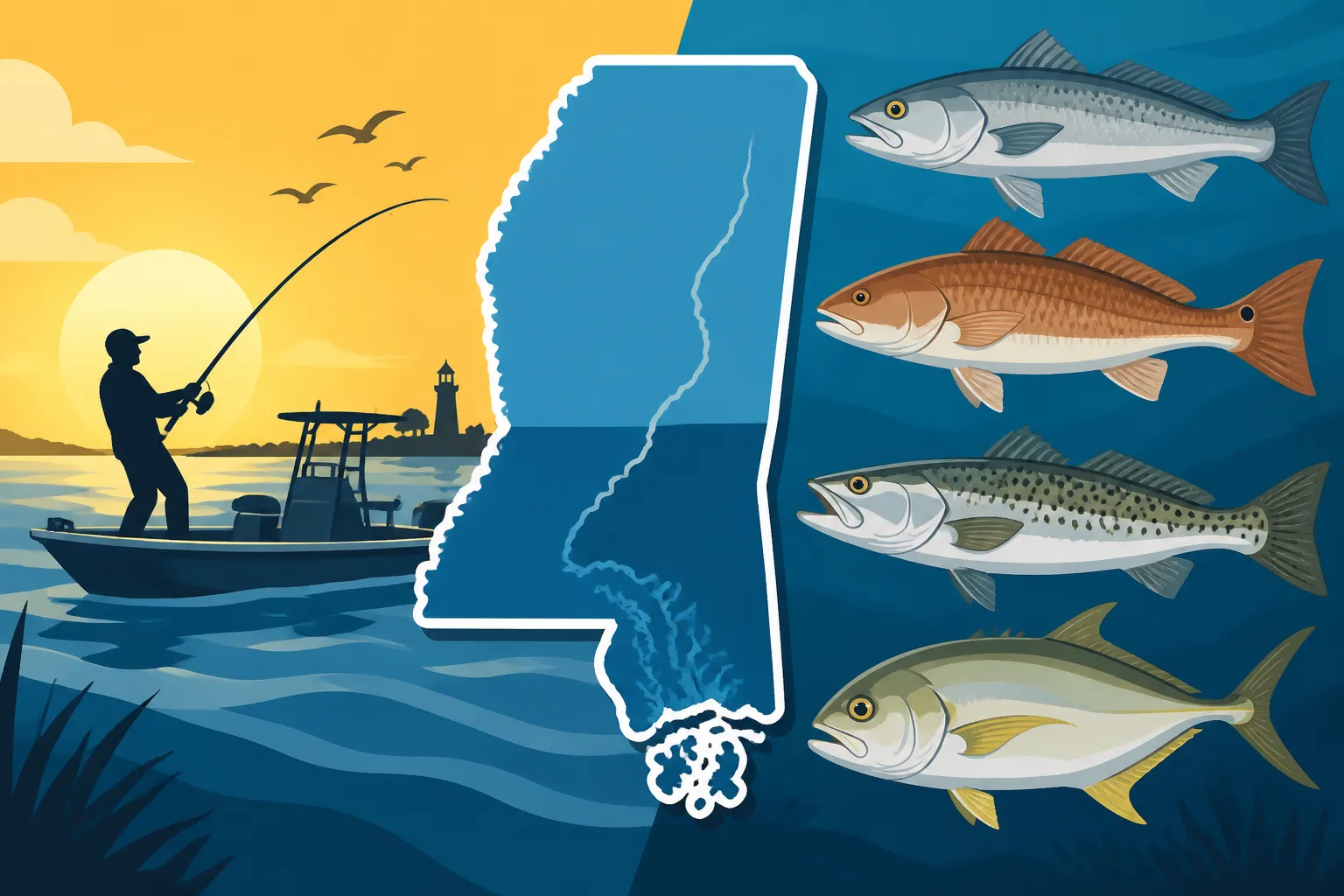
If you talk to any angler on the Mississippi Gulf Coast, these three species are almost always at the top of their list. They're often referred to as the "inshore slam" for a good reason – they're abundant, challenging to catch, and absolutely delicious. Mastering the art of targeting redfish, speckled trout, and flounder is a rite of passage for any saltwater fisherman in our state.
Redfish (Red Drum)
Redfish, or red drum, are truly iconic to the Mississippi Gulf Coast. These powerful fish are characterized by their coppery-red bodies and the tell-tale black "eye spot" usually found on their tail, though some can have multiple spots. They are built for fighting, with broad shoulders and a strong tail, making them a thrill on the line. They range dramatically in size, from "puppy drum" in the sub-20-inch range to massive "bull reds" that can easily exceed 40 pounds, often found in deeper passes or out in the open Gulf.
Redfish are ambush predators that love to prowl the shallow flats, oyster reefs, and marshy shorelines of the Mississippi Sound and its bays. They'll often "tail" in shallow water, exposing their tails as they root around for crabs and shrimp in the mud. For targeting these beauties, live shrimp, mud minnows, and finger mullet are irresistible. Artificial lures like gold spoons, soft plastic jigs (especially those mimicking shrimp or baitfish), and topwater plugs are also incredibly effective, particularly during low light conditions. If you're looking for more detailed information, check out our Redfish Fishing on the Mississippi Coast article. Just remember to check the Redfish Slot Limit on the Mississippi Gulf Coast before you go!
Speckled Trout (Spotted Seatrout)
Ah, the speckled trout – or "specs" as locals lovingly call them – a true favorite among inshore anglers. These beautiful fish have a silvery body adorned with distinctive dark spots, giving them their common name. They possess sharp teeth and a relatively soft mouth, so a gentle hand is often required when fighting them. Speckled trout are prolific spawners and can be found in impressive numbers throughout the Mississippi Sound, especially in areas with good grass beds, shell bottoms, and structure. They are highly sought after not only for their sporting fight but also for their delicate, flaky white meat, making them a top choice for the dinner table.
Speckled trout are voracious feeders, often schooling in ambush positions. They're particularly active during tidal movements, waiting for baitfish and shrimp to be swept past them. Live shrimp under a popping cork is arguably the most classic and effective method for catching specs. However, they also readily strike artificial lures, including soft plastic "swimbaits" or "grub" tails fished on a jig head, MirrOlures, and topwater plugs. Early mornings and late evenings are prime times for topwater action, providing some of the most exciting bites you'll experience. You can learn all about their preferences in Best Bait for Speckled Trout and understand the rules in How Many Speckled Trout Can You Keep in Mississippi?.
Southern Flounder
The southern flounder is a master of camouflage and a true bottom dweller. These flatfish have both eyes on one side of their head, allowing them to lie perfectly camouflaged on the seafloor, waiting for an unsuspecting meal to swim by. They are delicious, offering firm, white fillets, but they can be a bit more elusive to consistently catch than reds or specs. Flounder prefer sandy or muddy bottoms, often near structure like oyster reefs, jetties, or channel edges, where they can ambush prey.
To catch flounder, patience and a good understanding of their ambush tactics are key. Live bait such as mud minnows, finger mullet, or live shrimp fished on a Carolina rig or a three-way swivel rig that keeps the bait near the bottom is incredibly effective. Many anglers also have success "gigging" flounder at night, using bright lights to spot them lying on the bottom in shallow water. When fishing with rod and reel, a slow retrieve with occasional pauses is often best, mimicking a wounded baitfish. When you feel that distinctive "thump," let the flounder mouth the bait for a moment before setting the hook firmly. Our Flounder Fishing on the Mississippi Coast guide has more insights.
Other Popular Inshore and Nearshore Catches
While the "Big Three" often get the most attention, the Mississippi Gulf Coast is home to a host of other fantastic saltwater species that provide excellent sport and table fare. Don't overlook these incredible fish when you're out on the water!
Sheepshead
Sheepshead are truly unique fish, instantly recognizable by their human-like teeth, which they use to crush the shells of their prey. They have distinct black and white vertical bars on their silvery bodies, earning them the nickname "convict fish." Sheepshead are structure-oriented, meaning you'll almost always find them around barnacle-encrusted pilings, oyster reefs, rock jetties, and bridge supports. Their diet consists primarily of crustaceans and mollusks, making them a challenging but rewarding target.
To catch sheepshead, you'll need stealth and finesse. Small hooks (often a #1 or #2 kahle hook) concealed within a piece of fiddler crab, small shrimp, or even a piece of oyster are your best bet. A light leader and sensitive rod are crucial because their bite is notoriously subtle – often described as a slight "tap" or a slowing of your line. Many anglers use a tactic called "tightlining," where they keep just enough tension on the line to feel the slightest movement. It's a game of patience and quick reflexes, but the delicious, flaky white meat of a sheepshead makes the effort entirely worthwhile. For those wanting to learn more about targeting these clever fish, we have a detailed guide on Sheepshead Fishing on the Mississippi Coast.
Black Drum
The black drum is a large, hearty bottom feeder that is often confused with its cousin, the red drum, especially when smaller. However, black drum typically have a more sloped head, a higher dorsal fin, and usually lack the prominent tail spot of a redfish. They can also grow significantly larger, with some specimens reaching over 100 pounds! You'll find them in the same estuarine and nearshore environments as redfish, often around oyster reefs, mud flats, and deeper channels.
Black drum are not generally picky eaters, which is good news for anglers. They'll readily take dead or live shrimp, cracked crabs, and cut bait fished on the bottom with a stout rod and reel setup. A heavy sinker is often needed to keep your bait in place, especially in areas with current. While the larger "bull drum" can be quite coarse-fleshed, the smaller black drum (often under 10 pounds) offer excellent table fare. Their powerful, head-shaking fight makes them a popular target for anglers looking for a strong pull on the line.
Tripletail
Tripletail are one of the most distinctive and highly prized game fish in Mississippi's nearshore waters. Named for their three rounded fins (dorsal, anal, and caudal) that give the appearance of having three tails, these fish are ambush predators known for their unique habit of "laying up" or floating motionless on their side near floating debris, crab trap buoys, or channel markers. Their mottled brown and black coloration provides perfect camouflage, allowing them to blend seamlessly with their surroundings.
Spotting a tripletail is half the battle; the other half is getting them to bite! They can be incredibly wary. Live shrimp is usually the bait of choice, either free-lined or lightly weighted and presented subtly to the floating fish. A soft plastic shrimp imitation can also work wonders if presented naturally. When you find a tripletail, approach cautiously, cast well beyond it, and slowly retrieve your bait to drift naturally past its nose. These fish are known for strong, acrobatic fights, and their meat is considered a delicacy. If you're on a Inshore Fishing Charters on the Mississippi Coast trip, asking your captain to look for tripletail is always a good idea.
Croaker and Whiting
While not typically considered "glamour" species, croaker and whiting are incredibly abundant, easy to catch, and provide excellent eating, especially for those looking for a fun day of action or targeting panfish-sized saltwater fare. Atlantic croaker are known for the distinct "croaking" sound they make (hence the name), while Gulf kingfish (a type of whiting) are slender, silvery fish with a small barbel on their chin. Both species are typically found over sandy or muddy bottoms in the Sound and nearshore Gulf.
These fish are perfect for a relaxed day of bottom fishing, making them a great target for families or beginners. A simple bottom rig with a small hook and a piece of fresh dead shrimp, squid, or even Fishbites is usually all it takes. Cast out from a pier, beach, or anchored boat, and wait for the tell-tale taps. You can often catch them in good numbers, providing continuous action and plenty of fillets for a fresh seafood fry. You can easily find the right gear for this type of fishing on Amazon – a simple spinning combo with a light action rod works perfectly.
Beyond the Horizon: Offshore Game Fish
For those with a bigger boat and a thirst for adventure, Mississippi's offshore waters offer a completely different array of powerful, often pelagic, game fish. These trips require more planning, specialized gear, and a keen eye on the weather, but the rewards can be truly spectacular. Deep Sea Fishing Charters in Mississippi are a fantastic option if you're looking to explore these waters.
Red Snapper
Perhaps the most famous and highly sought-after offshore species in the Gulf of Mexico, the red snapper is a true prize. These vibrant red fish are known for their delicious, firm white meat and their incredible fighting ability when hooked. They are structure-oriented, meaning you'll find them congregated around natural reefs, artificial reefs, wrecks, and the numerous oil and gas rigs that dot the Gulf floor.
Targeting red snapper typically involves dropping heavy-duty bottom fishing rigs baited with cut squid, whole menhaden, or live pinfish down to the structure where they reside. The bite of a large snapper is unmistakable – a powerful tug that quickly turns into a fierce battle to pull them away from the structure before they can cut your line. Because of their popularity and historical overfishing, red snapper seasons are strictly regulated, often limited to specific windows during the summer. Always check current regulations before planning a trip, and consider booking a charter during the open season to maximize your chances. Our Red Snapper Fishing on the Mississippi Coast guide provides essential information.
Cobia (Ling)
Cobia, often called "ling" by Gulf Coast anglers, are truly unique and powerful fish that migrate through Mississippi waters, particularly in the spring and early summer. They are easily identifiable by their long, cylindrical bodies, flattened heads, and a distinct dark stripe running down their sides. Cobia are opportunistic predators that often cruise near the surface, especially around floating debris, buoys, or even large rays and sharks.
Sight fishing for cobia is a common and thrilling method. Anglers will often cruise slowly, looking for the tell-tale dark shape of a cobia swimming near the surface. Once spotted, a live eel, pinfish, or large artificial lure (like a bucktail jig or a large soft plastic) is cast ahead of the fish, hoping to entice a strike. When hooked, cobia are known for their explosive runs and powerful head shakes, making them an incredible sport fish. Their firm, white meat is also highly prized. You can get more details in our Cobia Fishing on the Mississippi Coast article.
King and Spanish Mackerel
King mackerel ("kings") and Spanish mackerel are sleek, fast, and aggressive members of the tuna family, known for their blistering runs and sharp teeth. Spanish mackerel are smaller, typically ranging from 1 to 5 pounds, and are found closer to shore, often in the Mississippi Sound and near passes. King mackerel are much larger, routinely exceeding 20 pounds, and prefer the open Gulf waters further offshore. Both are excellent game fish, providing thrilling strikes and fast-paced action.
Both species are primarily targeted by trolling, using dusters, spoons, or rigged baits like cigar minnows. For Spanish mackerel, casting small spoons or Gotcha plugs into schooling fish or around bait balls can be incredibly effective. For kings, slow-trolling live bait such as menhaden, cigar minnows, or blue runners is a proven method. Due to their razor-sharp teeth, a wire leader is absolutely essential to prevent cut-offs. King mackerel offer powerful, drag-screaming fights, while Spanish mackerel provide rapid, acrobatic action, making both excellent targets for anglers seeking fast-paced excitement.
Mahi-Mahi (Dolphin) and Tuna
For the truly adventurous offshore angler, Mississippi's deeper Gulf waters can also yield spectacular catches of pelagic species like mahi-mahi (often called dolphin fish, but unrelated to marine mammals) and various tuna species (yellowfin, blackfin). These fish are highly migratory, following baitfish and warm water currents, and represent the pinnacle of offshore sportfishing.
Mahi-mahi are instantly recognizable by their vibrant, iridescent colors – electric blues, greens, and yellows – that often fade shortly after being caught. They are incredibly fast-growing and voracious predators, often found schooling around weed lines, sargassum mats, or any floating structure that attracts baitfish. Trolling colorful lures or live bait is the primary method for catching mahi-mahi. Tuna species, especially yellowfin, are powerful, deep-water fighters, often found far offshore around deep-water rigs or seamounts. They require specialized gear, heavy lines, and often involve chunking or live baiting. Landing a large yellowfin tuna is considered a monumental angling achievement, demanding endurance and strength from the fisherman.
Less Common but Exciting Catches
Beyond the well-known species, the Mississippi Gulf Coast surprises anglers with a variety of other exciting fish, some of which are seasonal visitors or inhabit specific niches. These can add an element of surprise and challenge to any fishing trip.
Sharks in Mississippi Waters
Yes, sharks! The Mississippi Sound and Gulf waters are home to a diverse population of shark species, offering an incredible challenge for those prepared to target them. While not typically thought of as a primary game fish for recreational anglers, many people seek them out for the sheer thrill of the fight. Common species include blacktip, spinner, bull, and hammerhead sharks, among others. Most are caught in the nearshore and offshore waters, though smaller sharks can sometimes be found in bays and estuaries.
Shark fishing usually involves heavy tackle – stout rods, large reels, and heavy braided line – with wire leaders to prevent cut-offs. Fresh cut bait, such as mullet, menhaden, or bonito, is typically deployed on the bottom or suspended under a float. It's crucial to remember that shark fishing requires significant preparation, respect for these powerful creatures, and an understanding of release tactics to ensure their survival. Many anglers practice catch and release for sharks, and strict regulations often dictate which species can be harvested and their size limits.
Tarpon (Seasonal Visitors)
The "Silver King" – the mighty tarpon – makes migratory appearances along the Mississippi Gulf Coast, particularly during the warmer months of summer and early fall. These magnificent fish are renowned for their incredible size (often exceeding 100 pounds), their spectacular acrobatic leaps when hooked, and their challenging nature. Tarpon are primarily found in nearshore Gulf waters, around passes, and sometimes venturing into larger bays.
Targeting tarpon is often considered the pinnacle of sportfishing for many anglers. It requires patience, keen observation, and specific techniques. Live bait, such as mullet or pogies, free-lined or slowly trolled, is often the most effective. Large artificial lures, particularly those mimicking baitfish, can also draw strikes. The key to successful tarpon fishing is often finding the schools of fish, which can be seen rolling on the surface or detected by experienced guides. Hooking a tarpon is one thing; landing one is another, as their hard, bony mouths make hook sets difficult, and their aerial displays can throw hooks with ease.
Pompano
If you're looking for a delicious and respectable fighting fish right off the beach, look no further than the pompano. These silvery, high-bodied fish are a favorite among surf anglers and those fishing from piers. They prefer clean, sandy bottom environments with good surf action, where they can feed on sand fleas, small crustaceans, and tiny baitfish. Pompano are often found in schools, making for fast and furious action when you locate them.
The most popular and effective bait for pompano is undoubtedly the sand flea (mole crab). Small pieces of fresh dead shrimp or Fishbites also work well. Pompano rigs, which consist of two small dropper loops with small hooks and a pyramid sinker, are commonly used to present bait near the bottom in the surf. Light to medium tackle is appropriate, and a sensitive rod tip will help you detect their sometimes subtle bite in the waves. The fight of a pompano is surprisingly strong for its size, and its firm, delicate white meat is considered among the best eating fish in the Gulf. Look for specialized pompano rigs on Amazon to get started!
Essential Gear and Techniques for Saltwater Success
Having the right tools for the job can make all the difference when you're saltwater fishing in Mississippi. From the rods and reels to the baits and lures, understanding what works best for different species and situations will greatly enhance your success and enjoyment.
Rods, Reels, and Line for Saltwater
Choosing your setup depends heavily on what you're targeting. For inshore species like speckled trout, redfish, and flounder, a medium-light to medium action spinning rod, around 7 feet long, paired with a 2500-3000 size spinning reel is a versatile choice. This setup allows for accurate casting of lighter lures and baits while still having enough backbone to handle a decent redfish. Spool your reel with 10-20 lb braided line, which offers superior casting distance and sensitivity, and use a fluorocarbon leader of 20-30 lb test for abrasion resistance and invisibility.
When moving to heavier inshore targets like bull reds, black drum, or even smaller sharks, you'll want to step up to a medium-heavy spinning or baitcasting combo, perhaps an 8-foot rod with a 4000-5000 size reel. For true offshore heavyweights like large red snapper, cobia, or tuna, conventional (casting) reels spooled with heavy braided line (50-100+ lb) on short, powerful boat rods are often preferred. Always rinse your gear thoroughly with fresh water after every saltwater outing to prevent corrosion, and you can find excellent maintenance kits on Amazon.
Baits and Lures Specific to Saltwater Species
The diversity of saltwater species means a diverse tackle box is your best friend.
- Live Bait: This is often king for many species. Live shrimp are universal bait for nearly everything that swims inshore, from speckled trout to redfish and flounder. Mud minnows, croaker, and finger mullet are excellent live baits for larger predatory fish. Eels are a top choice for cobia.
- Cut Bait: For bottom feeders like black drum, catfish, and sharks, fresh cut pieces of mullet, menhaden, or squid are highly effective. The scent trail they put out is a powerful attractant.
- Artificial Lures: Soft plastic jigs, often mimicking shrimp or baitfish, are incredibly versatile and come in countless colors and shapes. Popular brands offer options like scented Gulp! baits, which can be almost as effective as live bait. Spoons, especially gold or silver, are fantastic for redfish and Spanish mackerel. Topwater plugs create exciting surface strikes for speckled trout and bass. Hard plastic "twitchbaits" or "sinking lures" are very effective for trout. Always match your lure size and color to the local baitfish and water clarity. You can explore a vast selection of these on Amazon.
Navigating Regulations and Seasons
Mississippi, like all coastal states, has specific regulations governing saltwater fishing. These rules are in place to ensure the sustainability of our fisheries for future generations. It's not just a good idea to know them; it's the law! Regulations often include:
- Minimum and Maximum Size Limits: Many species, like redfish and speckled trout, have a "slot limit," meaning you can only keep fish within a certain size range. This protects both juveniles and large breeding adults.
- Creel Limits (Bag Limits): This is the maximum number of fish of a particular species you can keep per person per day.
- Seasonal Closures: Some species, most notably red snapper, have very specific and often short seasons when they can be harvested. These are critical to follow.
- Gear Restrictions: Certain gear types might be prohibited or restricted for specific species or in certain areas.
It is your responsibility as an angler to be aware of and abide by these rules. Always consult the latest Mississippi Department of Marine Resources (MDMR) regulations before you head out. You can often find a current Mississippi Fishing License Guide online or at bait and tackle shops. Also, be mindful of Mississippi Saltwater Fishing License Guide requirements, as these are crucial for all anglers.
Conservation and Sustainable Fishing Practices
As stewards of our natural resources, anglers play a vital role in ensuring the health and abundance of Mississippi's saltwater fisheries. Practicing responsible fishing not only benefits the environment but also guarantees that future generations can enjoy the thrill of fishing these incredible waters.
Catch and Release Best Practices
Many anglers choose to release fish, either because they've reached their limit, are targeting trophy-sized fish, or simply want to conserve the resource. If you're going to release a fish, it's critical to do it correctly to maximize its chances of survival.
- Minimize Handling: Touch the fish as little as possible, and always wet your hands first to protect its slime coat.
- Support the Fish: If possible, support the fish horizontally, especially larger ones, to avoid damaging its internal organs.
- Remove Hook Quickly: Use dehooking tools or pliers to remove hooks gently and quickly. If a fish is deeply hooked, cut the line as close to the hook as possible rather than trying to tear the hook out. Circle hooks are highly recommended for bait fishing as they often hook in the corner of the mouth, making release easier.
- Revive If Necessary: For exhausted fish, gently hold them in the water, facing into the current, until they are strong enough to swim away on their own.
Understanding Creel and Size Limits
We briefly touched on this, but it bears repeating: understanding and respecting creel and size limits is non-negotiable. These regulations are scientifically determined to protect fish populations from overfishing. Ignoring them doesn't just put you at risk of fines and penalties; it directly harms the fish stocks that we all love to pursue. Carry a tape measure and be honest with yourself about the size of your catch. If there's any doubt, release the fish. It's always better to err on the side of caution. Details on specific species like Redfish Slot Limit on the Mississippi Gulf Coast and How Many Speckled Trout Can You Keep in Mississippi? are vital knowledge.
Protecting Mississippi's Marine Habitats
Our fish need healthy places to live, grow, and reproduce. As anglers, we can contribute to habitat protection in several ways:
- Trash No More: Always pack out everything you pack in, and if you see trash, pick it up. Plastic bags, fishing line, and other debris are incredibly harmful to marine life.
- Respect Sensitive Areas: Be mindful when navigating shallow grass flats or oyster reefs. Prop scar damage from boat propellers can take years to heal.
- Report Violations: If you witness illegal fishing activity or environmental damage, report it to the proper authorities. This could include poaching, pollution, or habitat destruction.
By embracing these conservation principles, we ensure that the Mississippi Gulf Coast remains a premier fishing destination, rich with diverse and abundant saltwater species, for generations of anglers to come.
Disclaimer
This article is for general informational purposes only and does not constitute professional advice. Laws, prices and regulations vary by location and change over time. Consult a qualified professional for guidance on your specific situation.