How Many Speckled Trout Can You Keep in Mississippi?
It can be incredibly frustrating to head out for a fantastic day of fishing on the Mississippi Gulf Coast, reel in some beautiful speckled trout, and then suddenly second-guess whether you're even allowed to keep them. The rules and regulations around creel limits and size restrictions can feel like a moving target, leaving many anglers scratching their heads and worried about inadvertently breaking the law. This guide is here to clear up all that confusion, giving you a crystal-clear understanding of exactly how many speckled trout you can keep in Mississippi, what size they need to be, and why these rules are so vital for the future of our beloved fishery.
Understanding Mississippi's Speckled Trout Regulations
When you're out chasing those elusive speckled trout, also known as spotted seatrout, on the Mississippi Gulf Coast, it's not just about the thrill of the catch; it's also about knowing and respecting the rules that govern our valuable fishery. These regulations aren't just arbitrary numbers dreamed up by some committee; they're carefully crafted by marine biologists and fishery managers to ensure that speckled trout populations remain healthy and abundant for generations of anglers to come. Ignoring them isn't just a risk for your wallet, it's a disservice to the entire ecosystem and fellow fishermen.
Daily Creel Limits
The most crucial regulation you need to be aware of is the daily creel limit. This limit dictates the maximum number of speckled trout an individual angler can legally possess in a single day, regardless of how long you've been fishing or how many different spots you've hit. For Mississippi waters, including all sounds, bays, and bayous, the daily creel limit for speckled trout is currently 10 fish per person. This means that once you've boated your tenth legal speckled trout, you're done catching and keeping them for the day. You can continue to fish for other species, but any additional speckled trout you catch must be immediately released unharmed.
Imagine you're out with a couple of buddies near the Biloxi Bay Fishing Pier. Each of you has your own license and is actively fishing. If you're all reeling in speckled trout, each person is individually allowed to keep up to 10 fish. So, if there are three of you, the boat's total could be 30 speckled trout. However, if one person hits their limit of 10, they can't then contribute to someone else's limit or keep fishing for trout just to help fill another cooler. It's strictly 10 per person, per day. These limits are a cornerstone of conservation, preventing overfishing and ensuring that enough fish remain in the water to reproduce and sustain the population. It's a balance – allowing anglers to enjoy their sport while protecting the resource. For a broader overview of all fishing rules, make sure to check out our comprehensive guide on Mississippi Fishing Regulations Explained.
Minimum Size Requirements
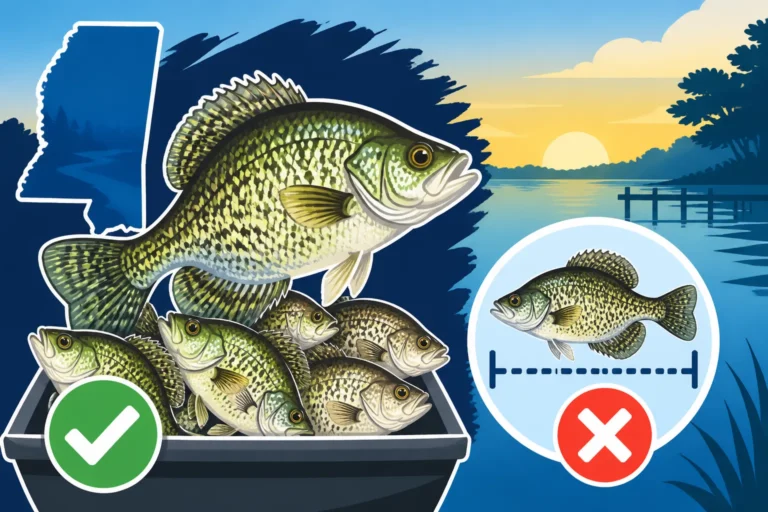
Beyond the number of fish, the size of your catch is equally important. It's not enough to simply count them; you have to measure them too. Mississippi enforces a minimum size requirement for speckled trout to protect juvenile fish and allow them a chance to mature and spawn at least once, contributing to the next generation. The current minimum size for speckled trout in Mississippi waters is 15 inches total length.
Total length means measuring the fish from the tip of its snout to the very end of its tail, with the tail compressed. This is critical because some anglers mistakenly measure to the fork of the tail or without compressing the tail, which can lead to keeping an undersized fish. Always carry a reliable measuring device with you. You can find excellent, durable fish rulers at most sporting goods stores or even on platforms like Amazon. When you catch a speckled trout, lay it flat on your measuring board. If it doesn't quite reach that 15-inch mark, you must release it immediately, even if it looks like it's "almost" there. There's no wiggle room on this rule. It’s also important to be gentle when handling undersized fish to increase their chances of survival after release. Getting a good grasp on the Speckled Trout Size Limit in Mississippi can save you a lot of hassle.
Catch and Release Considerations
Even if a speckled trout meets both the daily creel limit and the minimum size requirement, you always have the option to release it. Many anglers choose to practice catch and release, especially for larger "trophy" fish, or simply when they've caught enough for a meal and want to ensure more fish remain for future trips. This is a commendable practice that further aids conservation efforts.
When practicing catch and release, the goal is to maximize the fish's survival rate. This means handling the fish as little as possible, using wet hands if you must touch it, and avoiding putting fingers in its gills. If the hook is easy to remove, use a dehooking tool or needle-nose pliers to get it out quickly while the fish is still in the water. If the fish has swallowed the hook deeply, it's often better to cut the line as close to the hook as possible rather than trying to rip it out, which can cause severe internal damage. Gently revive the fish by holding it upright in the water, facing into any current, until it swims away under its own power. These mindful actions ensure that your released fish has the best chance to thrive.
Navigating the Nuances of Speckled Trout Rules
The world of fishing regulations isn't always black and white, and understanding some of the finer points can make all the difference between a compliant day on the water and a potentially costly mistake. It's not just about the numbers; it's about context, too.
Special Zones and Exceptions
While the 10-fish, 15-inch rule generally applies statewide for speckled trout in Mississippi's marine waters, it's crucial to be aware that specific areas can sometimes have emergency closures or temporary adjustments. These are rare but can happen due to environmental factors, unusual weather events, or sudden population changes. For instance, after a severe storm or a major red tide event, the Mississippi Department of Marine Resources (MDMR) might implement temporary closures or modify limits in specific bays or estuaries to protect stressed fish populations.
Currently, there are no widespread, permanent special zones with different speckled trout limits in Mississippi's state waters. The general rule holds true whether you're fishing in the Mississippi Sound, Back Bay of Biloxi, or Bay St. Louis. However, it's always wise to check the latest MDMR publications or their official website before you head out, especially if you haven't been fishing the coast recently. You wouldn't want to get caught off guard by a temporary regulation change. This continuous vigilance is part of being a responsible angler and helps ensure you always follow the most current Mississippi Saltwater Fishing License Guide and associated regulations.
The Role of the Mississippi Department of Marine Resources (MDMR)
The Mississippi Department of Marine Resources (MDMR) is the state agency primarily responsible for managing and conserving Mississippi's marine resources, including all saltwater fish species like speckled trout. They are the folks who conduct scientific research, monitor fish populations, and ultimately set these vital regulations. Their decisions are based on scientific data, public input, and a deep understanding of the coastal ecosystem.
Because fish populations and environmental conditions are dynamic, the MDMR periodically reviews and may adjust regulations to ensure sustainability. This is why it's so important for anglers to stay informed. The MDMR publishes annual regulation booklets, updates its website, and often issues press releases or social media updates about any significant changes. Think of them as the stewards of the Gulf Coast's living resources. They're working to protect the very fish you love to catch. Knowing their role helps you appreciate why certain rules exist and encourages you to seek out their official channels for the most accurate, up-to-date information on species like Redfish and Speckled Trout Limits.
Group Limits and Charter Boats
When you're fishing with a group, especially on a charter boat, the question of limits can get a little tricky. The fundamental principle is that each individual angler is responsible for their own creel limit. This means if you're on a charter boat with three other paying customers, and the captain is also fishing, there are potentially five individual limits in play. Each person can keep up to 10 speckled trout, provided they meet the minimum size.
What's not allowed is for the group to pool their limits into a single "boat limit" that exceeds the sum of individual limits. For example, if you have four anglers (each with a 10-fish limit) and one angler catches 15 fish while another catches only 5, that first angler is still over their individual limit, even if the total boat count (20 fish) is below the theoretical combined limit of 40.
Reputable charter captains are well-versed in these rules and will help ensure their clients stay compliant. They often have measuring devices readily available and will instruct you on how to handle your catch correctly. Always communicate with your captain about limits and when you're approaching your personal quota. It's a shared responsibility to adhere to these rules, even when someone else is guiding the trip. Information on Mississippi Charter Boat Fishing License Rules can provide more specific details on what captains and anglers need to know.
Why These Regulations Matter for the Future of Fishing
It’s easy to look at fishing regulations as just another hurdle or a set of annoying restrictions. But in reality, they are the bedrock upon which our entire fishing culture and the health of our aquatic ecosystems are built. Adhering to these rules isn't just about avoiding a fine; it's about being a participant in a much larger, vital effort.
Conservation and Sustainable Fishing Practices
The daily creel limits and minimum size requirements for speckled trout are direct tools for conservation. Without them, it would be far too easy for anglers to decimate local populations, especially during prime fishing times or in popular areas. By limiting the number of fish an individual can take and ensuring that fish have the chance to reproduce at least once before being harvested, the MDMR helps maintain a healthy breeding stock. This ensures that there will be enough speckled trout in the future for our children and grandchildren to enjoy catching, just as we do today.
Sustainable fishing practices go beyond just following the letter of the law. They involve thoughtful consideration for the resource. This includes using appropriate tackle to minimize harm, handling fish gently whether keeping or releasing, avoiding wasteful practices, and even becoming educated about the lifecycle and habitat needs of the fish you target. For those interested in improving their technique while staying ethical, resources like Speckled Trout Fishing Techniques offer great advice. Every angler who respects and follows these guidelines contributes directly to the long-term health and abundance of Mississippi’s incredible fishing opportunities.
Avoiding Penalties and Fines
Let's be realistic: nobody wants to get a ticket while they're out enjoying a relaxing day on the water. However, violating Mississippi's fishing regulations, whether intentionally or accidentally, can lead to significant penalties. These aren't just minor inconveniences; they can include substantial fines, forfeiture of your catch and gear, and even the suspension of your fishing privileges.
For instance, being caught with undersized speckled trout or exceeding your daily limit could result in a misdemeanor charge. Fines can range from hundreds to thousands of dollars, depending on the severity and frequency of the offense. Imagine having to pay a hefty fine and then losing your gear, all because you didn't bother to measure that "close enough" trout or stopped counting at nine when you really had eleven. The financial cost alone is a powerful incentive to understand and adhere to the rules. It's always a good idea to refresh your knowledge on Mississippi Fishing License Penalties and Fines to truly understand the repercussions. It's a lot cheaper and less stressful to simply follow the rules from the start.
The Ethical Angler's Responsibility
Beyond the legal and financial aspects, there's an ethical component to fishing regulations. As anglers, we are entrusted with the stewardship of a public resource. Our actions on the water reflect not only on us individually but on the entire angling community. An ethical angler understands that the privilege of fishing comes with a responsibility to protect the resource. This means knowing the rules, following them diligently, and even gently educating fellow anglers who might be unaware.
It's about having respect for the fish, the environment, and other fishermen. When you consciously adhere to the 10-fish, 15-inch limit, you're not just complying with the law; you're actively participating in the conservation effort. You're setting an example and contributing to a culture of responsible outdoor recreation. This commitment ensures that the vibrant fishing traditions of the Mississippi Gulf Coast, a truly special place to fish, will continue to thrive for years to come. If you're planning a trip, exploring a Mississippi Gulf Coast Fishing Guide can help you prepare for a responsible and enjoyable experience.
| Regulation Category | Specific Rule for Speckled Trout in Mississippi |
|---|---|
| Daily Creel Limit | 10 fish per person per day |
| Minimum Size Limit | 15 inches total length |
| Legal to Harvest | Fish must meet both criteria |
Disclaimer
The information provided in this guide is for general informational purposes only and is based on current Mississippi Department of Marine Resources (MDMR) regulations at the time of writing. Fishing regulations, including creel limits and size restrictions, can change. It is always the angler's responsibility to verify the most up-to-date rules and regulations directly with the MDMR or consult the latest official Mississippi fishing guide before heading out on the water.