Topwater Bass Fishing Tips
There's nothing quite like the explosive thrill of a bass blowing up on a topwater lure. It's a heart-stopping moment that every angler lives for, but let's be honest, it doesn't always happen, and sometimes it feels like you're just casting expensive plastic out there for a swim. If you've been struggling to entice those surface strikes or simply want to elevate your topwater game on Mississippi's beautiful waters, this comprehensive guide is for you. We're going to dive deep into the strategies, lures, and conditions that make topwater bass fishing not just a possibility, but a consistent reality.
Understanding Topwater Bass Behavior
Topwater fishing isn't just about throwing a lure out and reeling it in; it's about understanding why a bass chooses to attack the surface. It's an aggressive, instinctual strike, and knowing what triggers it can dramatically improve your success rate. Bass are predators, and they react to movement, vibration, and silhouette above them, especially when they feel confident enough to leave their comfort zone below the surface.
The Allure of the Surface Strike
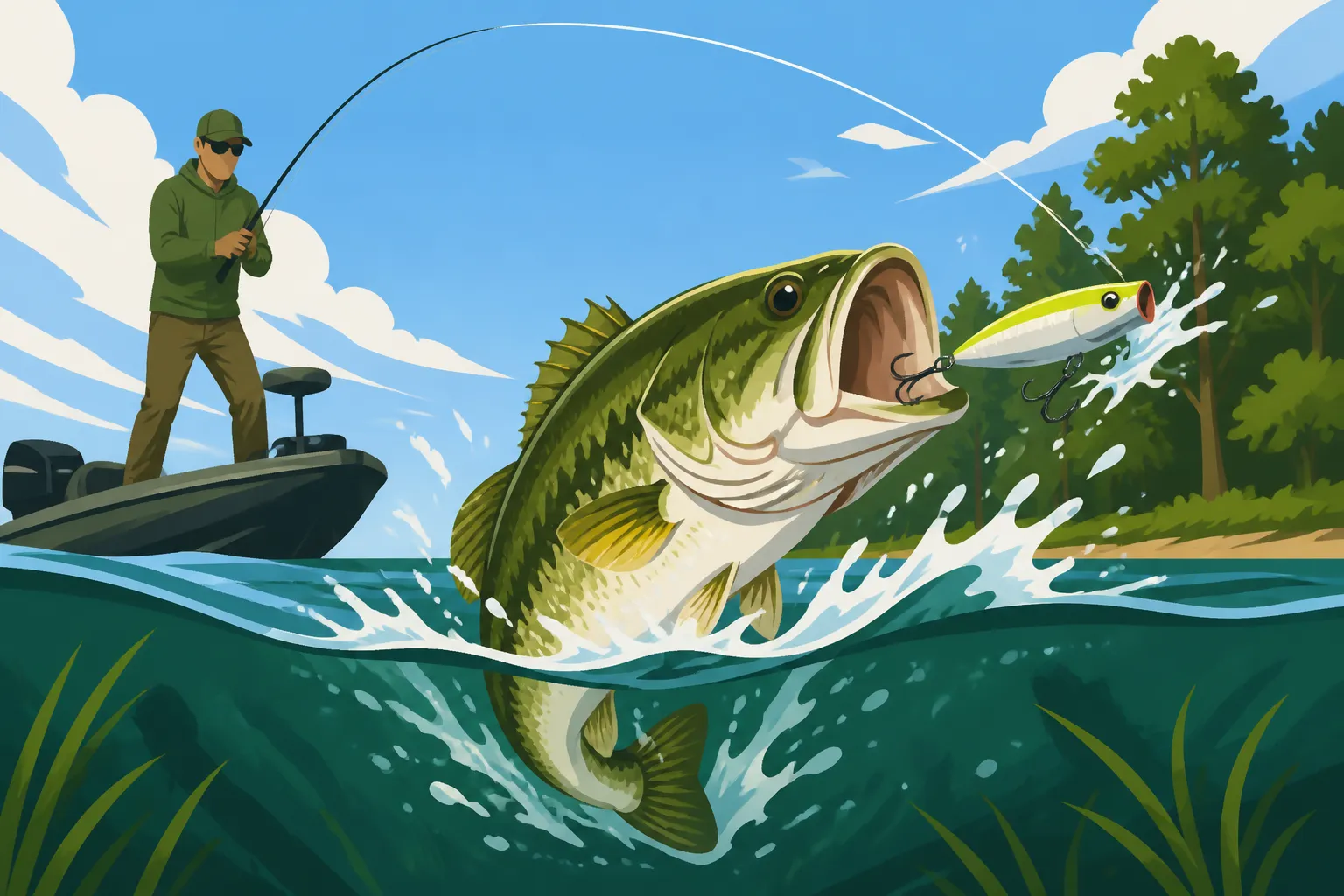
Bass are ambush predators, and a topwater lure, especially one mimicking an injured baitfish, a frog, or a struggling insect, triggers a primal response. That sudden commotion on the water's surface often looks like an easy meal or an intruder. What often gets overlooked is that bass have excellent upward vision, particularly in low light conditions. The silhouette of a topwater lure against the sky can be incredibly enticing. They're not just feeding; they're often defending their territory or reacting to a sudden, enticing disturbance. It’s an opportunistic strike, pure and simple.
Think about it from a bass's perspective: a frog just plopped down, or a baitfish is struggling. That splash, the ripples, the distinct sound – it all spells "dinner" or "threat" in their world. They commit to the strike with an intensity that you don't always see with subsurface lures. This is why when you get a topwater bite, it's usually not a tentative tap; it's an explosion that gets your adrenaline pumping. Understanding this aggressive, opportunistic nature is key to becoming a more effective topwater angler.
Seasonal Considerations for Topwater
While topwater can work in various seasons, certain times of the year in Mississippi truly shine for this technique. The spring spawn, for instance, sees bass becoming highly aggressive and territorial, making them more likely to smash anything invading their space, including a topwater lure. Post-spawn, as bass recover and become more active feeders, topwater becomes incredibly effective, especially around shallow cover.
As we move into summer, particularly during those scorching Mississippi days, the early mornings and late evenings become prime windows. The cooler water temperatures near dawn and dusk, combined with lower light, draw bass shallower to feed. This is when a topwater plug can really dominate. In the fall, as baitfish school up and bass actively feed to prepare for winter, a walking bait or prop bait can mimic those fleeing schools, drawing explosive strikes. Check out our Mississippi Fishing Seasons Calendar for a broader understanding of annual patterns.
Reading the Water for Topwater Opportunities
Being able to "read the water" is a skill that separates good anglers from great ones. For topwater fishing, this means identifying areas where bass are likely to feel comfortable enough to come to the surface. Look for shallow flats adjacent to deeper water, weed lines, lily pad fields, cypress trees, submerged timber, and brush piles. These are all prime ambush points where bass can quickly dart out and strike.
Current breaks, points, and even shaded areas under docks or overhanging trees can also hold hungry bass waiting for an easy meal to drift by. Pay attention to signs of baitfish activity—nervous baitfish skipping on the surface often means a predator is lurking below. If you see active schooling or splashing, that's your cue. In places like the Ross Barnett Reservoir or Grenada Lake, understanding these nuances can really pay off. This kind of situational awareness allows you to make precise casts and maximize your chances.
Choosing the Right Topwater Lures
The world of topwater lures is vast and exciting, each designed to create a different disturbance and mimic various prey. Knowing which one to tie on can feel overwhelming, but a few key categories will cover most Mississippi fishing scenarios. Having a diverse selection in your tackle box, maybe picked up from a place like Amazon or your local tackle shop, is always a good idea.
Poppers and Chuggers: Creating Commotion
Poppers and chuggers are arguably the most iconic topwater lures, known for their distinct "pop" or "chug" sound created by their concave faces. Lures like the Heddon Zara Spook (though more a walking bait, the Pop-R is its chugging cousin) or the Rebel Pop-R are classics for a reason. This sound mimics a struggling baitfish, a frog jumping into the water, or even a large insect, and it sends out vibrations that bass can detect from a distance.
These lures are fantastic for situations where you want to draw attention to your bait, especially in choppy water or when bass are holding tight to cover. The retrieve typically involves a series of twitches and pauses, letting the ripples dissipate before the next pop. Experiment with the length of your pauses; sometimes a longer pause is what it takes to provoke a hesitant bass into striking. They are incredibly versatile and a must-have for any angler, especially when targeting Largemouth Bass Fishing in Mississippi.
Walk-the-Dog Baits: The Classic Zigzag
Walk-the-dog baits are a staple for many seasoned bass anglers, famous for their unique side-to-side sashaying action. Lures like the original Heddon Zara Spook, Strike King Sexy Dog, or even smaller versions for more finesse presentations create a mesmerizing, erratic movement that screams "wounded baitfish." This action, when done correctly, is incredibly lifelike and often irresistible to bass.
Mastering the "walk-the-dog" retrieve takes a bit of practice but is well worth the effort. It typically involves a rhythm of slack-line twitches of the rod tip, alternating left and right, to make the lure glide across the surface. These baits excel in open water, along weed lines, or over submerged grass where bass have room to track and commit to the lure. When bass are actively chasing bait, this can be an absolute killer. For more options on specific lures, see our guide on Best Lures for Largemouth Bass.
Prop Baits and Buzzbaits: Max Vibration and Noise
When you need to cover water quickly or really call fish up from a distance, prop baits and buzzbaits are your go-to. Prop baits, like the Bagley Bang-O-Lure, have small propellers on the front, back, or both, that churn water and create a noisy, splashing commotion. They can be retrieved steadily or with a stop-and-go action to maximize the splash and gurgle.
Buzzbaits, on the other hand, are designed for a continuous retrieve. Their large, single or double blade creates a distinct squealing and gurgling sound as it spins, dragging the lure across the surface. Both are excellent choices for targeting aggressive, active bass, especially during low-light conditions or when fishing larger areas. The continuous movement makes them perfect for exciting reaction strikes. Just remember, these baits are about drawing attention, so use them when you want to make some noise!
Soft Plastic Frogs and Toads: For Heavy Cover
When you're fishing in the thick stuff—lily pads, matted grass, dense hydrilla—traditional hard topwater lures often get snagged. That's where soft plastic frogs and toads truly shine. These weedless wonders, like the Stanley Ribbit or Livetarget Frog, are designed to glide over and through heavy cover without hanging up. They mimic frogs, small rodents, or even struggling birds that might fall into the water, making them incredibly effective for bass lurking in dense vegetation.
Their hollow body or paddle feet create a tempting commotion on the surface. The key is to present them where other lures can't go, directly into the bass's sanctuary. The retrieve can vary from a steady swim to a series of short hops and pauses right in the pockets of open water within the vegetation. When you're fishing these types of spots, particularly in backwater areas or heavily vegetated coves, a soft plastic frog is often your best bet for coaxing out those monster bass.
Mastering Topwater Techniques
Getting the right lure is only half the battle. How you work that lure, where you cast it, and how you react to a strike can make all the difference between a frustrating morning and a memorable one. Topwater fishing is as much an art as it is a science, requiring patience, precision, and a bit of nerve.
Varying Your Retrieve
The biggest mistake many anglers make with topwater is using a monotonous retrieve. Bass are intelligent, and sometimes they need a little convincing. Start with a standard retrieve for your chosen lure, but don't be afraid to experiment. If you're walking a dog, try speeding it up, slowing it down, or adding a sudden pause. For poppers, alternate between a single loud pop and a series of soft chugs.
The retrieve should often tell a story—an injured baitfish struggling, a frog frantically trying to escape. The bass are watching, and a change in pace or action can often be the trigger. Sometimes, a long, dead pause after a series of aggressive twitches is what finally convinces a hesitant bass to strike. Always pay attention to how the bass are reacting, and adjust your retrieve accordingly. There's no single "right" way; the best retrieve is the one that gets bites.
Casting Accuracy and Presentation
With topwater, it's not just about distance; it's about precision. Bass holding in cover won't always chase a lure that lands yards away. You need to put that lure right on their nose, or just past their likely ambush point. Whether it's skipping a frog under an overhanging tree or landing a popper exactly in that small pocket in the lily pads, accurate casting is paramount.
Often, the way the lure lands on the water is also a critical part of the presentation. A gentle "plop" can sometimes be more effective than a loud splash, especially in calm, clear water or when bass are skittish. Consider the angle of your cast to allow the lure to work naturally back to you, presenting its best profile to the fish. Practice makes perfect here, and dedicating time to improve your casting will pay dividends when you're trying to land your lure in tight spots.
Setting the Hook on a Topwater Strike
This is where many anglers lose fish and their minds! The explosive nature of a topwater strike often causes us to react too quickly. When a bass blows up on your lure, it's a natural instinct to set the hook immediately. However, the bass often misses the lure entirely on the initial splash, or it's still engulfing the bait. Setting the hook too soon often rips the lure away from the fish before it has a chance to fully take it.
The golden rule for topwater hooksets is often "wait until you feel the fish." It can feel counterintuitive, but after the initial splash, wait a beat or two until you actually feel the weight of the fish pulling on your line. Then, set the hook with a strong, sweeping motion. This allows the bass to fully commit to the lure and significantly increases your hook-up ratio. It requires discipline, but it’s a game-changer for topwater fishing. For more guidance on this critical skill, check out Bass Fishing Techniques for Mississippi Anglers.
Prime Conditions for Topwater Success
While topwater can surprise you on occasion, certain environmental conditions dramatically increase your odds of success. Understanding these factors will help you plan your trips and optimize your time on the water.
Optimal Times of Day
Without a doubt, low light conditions are the undisputed champions for topwater fishing. Early mornings, just as the sun peeks over the horizon, and late evenings, as it dips below, are often the most productive times. During these periods, bass are more likely to move into shallower water to feed, feeling more secure under the dim light. The reduced light also makes it harder for them to inspect your lure too closely, leading to more aggressive, reaction strikes.
Cloudy days can also extend the topwater bite throughout the day, as the overcast skies mimic those low light conditions. Even at night, especially around full moons, topwater can be incredibly effective, particularly for larger bass that feed more confidently under the cover of darkness. Don't be afraid to experiment outside these windows, but always prioritize the low-light hours for your best chances. Our guide on the Best Time of Day to Catch Bass offers even more insights.
Weather and Water Clarity
Ideal topwater conditions often involve calm to lightly choppy water and stable weather patterns. A slight ripple on the water's surface can actually be beneficial, breaking up the clear outline of your lure and making it harder for bass to scrutinize it. However, excessively windy conditions can make it difficult to work your lure effectively and detect strikes.
When it comes to water clarity, moderately stained to clear water generally offers the best results. In extremely clear water, bass can be very wary and might shy away from a topwater presentation unless it's perfectly executed or in very low light. In overly muddy water, bass rely more on their lateral line sense than sight, making subsurface baits generally more effective. Find that sweet spot where bass can see and react, but not overthink, your lure.
Targeting Specific Structures
Topwater lures are fantastic for fishing specific types of structure and cover where bass like to ambush their prey. Focus on visible cover like fallen trees, stumps, docks, bridge pilings, and especially vegetation. Weed lines, lily pad fields, and grass beds offer excellent ambush points for bass, and the weedless nature of soft plastic frogs and toads makes them perfect for these areas. Explore our tips on How to Fish Grass Beds for Bass.
Points and shallow flats that drop off into deeper water are also prime locations, particularly during those peak morning and evening hours when bass move up to feed. Look for irregularities in these areas—a small patch of deeper grass, a lone stump, or a subtle depth change. These are often the sweet spots where a hungry bass will be waiting. Understanding the Best Structure to Fish for Bass in a Reservoir can further refine your targeting.
Essential Gear for Topwater Fishing
Having the right equipment won't just make topwater fishing easier; it will significantly increase your success rate, especially when it comes to setting the hook and fighting an aggressive bass.
Rod and Reel Setup
For most topwater applications, a medium-heavy to heavy power casting rod, around 6'10" to 7'6" in length, is ideal. The longer rod provides better casting distance and leverage for working the lure, especially with walking baits. A fast to extra-fast action tip allows for precise lure manipulation and quick hooksets, while the backbone of a medium-heavy or heavy rod is crucial for driving those hooks home through tough mouth tissue and pulling fish out of cover.
Pair this with a baitcasting reel with a moderate to high gear ratio (6.1:1 to 7.1:1). The higher gear ratio helps you pick up slack quickly after a strike and keeps pace with a running bass, while still offering enough power to crank in a strong fish. Many anglers find a 7.1:1 reel to be a good all-around choice for various topwater presentations. To explore more about selecting the right gear, check out Choosing the Right Rod and Reel for Mississippi Fishing.
Line Choice
When it comes to topwater, line choice is critical. While some anglers prefer fluorocarbon for its stealth, its sinking nature can hinder the action of some topwater lures. Monofilament (mono) or braided line are generally the preferred choices for topwater.
- Monofilament: Mono's floating nature helps keep your topwater lures riding high on the surface, and its stretch can be forgiving on aggressive strikes, preventing hooks from tearing out. A good quality 12-20lb test monofilament is an excellent choice for most hard topwater baits.
- Braided Line: Braid offers superior casting distance, incredible strength, and virtually no stretch, which provides direct contact with your lure and powerful hooksets. Its floating property is also excellent for topwater. However, its high visibility can be an issue in clear water, so many anglers will tie a short (12-24 inch) monofilament or fluorocarbon leader to their braid. For soft plastic frogs in heavy cover, 30-65lb test braided line is often preferred for its ability to cut through vegetation and power fish out. You can find robust braided lines on Amazon to handle those heavy cover situations.
Accessorizing for Success
Beyond the main rod, reel, and line setup, a few accessories can make your topwater experience even better.
- Pliers/Forceps: Essential for safely removing hooks, especially from an actively thrashing bass.
- Sun Protection: Topwater fishing often happens during prime sun exposure times. A good hat, polarized sunglasses, and sunscreen are non-negotiable.
- Landing Net: Especially for those trophy bass, a landing net can prevent heartbreak at the boat or bank. It minimizes stress on the fish and ensures a safe release.
- Line Clippers: Quick and easy for changing lures.
- Lure Box: Keep your topwater lures organized and protected. A specific box for your buzzbaits, poppers, and walking baits will make your day on the water much smoother.
Having these small but important items readily available will improve efficiency and safety, allowing you to focus on the thrill of the strike.
Mississippi-Specific Topwater Considerations
Mississippi offers an incredible array of fishing opportunities, and understanding the local nuances can give you a significant edge when it comes to topwater bass fishing. From vast reservoirs to intimate farm ponds, each body of water presents unique challenges and rewards.
Topwater on Mississippi's Major Reservoirs
Mississippi's major reservoirs, like the Ross Barnett Reservoir, Sardis Lake, Grenada Lake, and Pickwick Lake, are legendary bass fisheries, and topwater lures can be incredibly productive here. On these larger bodies of water, focus your efforts on prominent points, coves with standing timber, creek channel swings, and extensive grass flats. Early mornings and late evenings, especially during the warmer months, are prime times.
Consider using walking baits and buzzbaits to cover water efficiently and locate active fish, particularly in areas like the Pelahatchie Bay on Ross Barnett. As the sun gets higher, switch to poppers or soft plastic frogs fished around denser cover. These reservoirs are known for their healthy populations of largemouth bass, and a well-presented topwater can draw some truly explosive strikes. For a deeper dive into one of the state's premier bass fisheries, check out our Ross Barnett Reservoir Bass Fishing guide.
Small Water and Farm Pond Topwater
Don't overlook the incredible potential of Mississippi's countless small lakes, oxbows, and farm ponds for topwater action. These smaller, often less pressured waters can be fantastic, especially for anglers who prefer bank fishing or kayaks. In these environments, bass often don't have as much cover or deep water to retreat to, making them more susceptible to a well-placed topwater lure.
Poppers and smaller walking baits are often incredibly effective here, mimicking the natural prey available in these ponds, such as small frogs or insects. Focus on any visible structure like fallen trees, brush, or even just changes in bank contour. These spots often hold hungry bass. The key is to be stealthy, make accurate casts, and pay close attention to any subtle signs of bass activity. Even simple, weedless soft plastic frogs can be devastating in these intimate settings.
Fishing Around Vegetation and Cover
Mississippi's waters are rich with various types of vegetation, from hydrilla and coontail to lily pads and button bushes. This vegetation provides crucial cover and ambush points for bass, making it a prime target for topwater fishing, especially with weedless options. When fishing around dense mats of grass or lily pads, soft plastic frogs and toads are indispensable. They can be walked right over the top of the vegetation, dropping into any small open pockets to entice a strike.
For less dense weed lines or scattered cover, walking baits, poppers, or even prop baits can be effective. The key is to present your lure close to the edge of the cover, or in any breaks or holes within it. Bass will often be hiding just beneath, waiting to ambush anything that appears on the surface. Don't be afraid to make multiple casts to the same piece of cover; sometimes it takes a few presentations to annoy a bass enough to strike. Understanding how to approach these vegetated areas is crucial for topwater success across the state.
| Lure Type | Best Conditions | Typical Retrieve | Best For | Key Characteristics |
|---|---|---|---|---|
| Poppers/Chuggers | Calm to choppy water, low light, around cover | Twitch, pause, pop; vary rhythm | Drawing attention, triggering reaction strikes | Concave face, creates splash and gurgle |
| Walk-the-Dog Baits | Open water, weed lines, flats, calmer conditions | Slack-line twitch-twitch-pause; side-to-side glide | Mimicking wounded baitfish, covering water | Cigar-shaped body, no external features |
| Prop Baits | Choppy water, wind, low light, active fish | Steady retrieve with pauses, or stop-and-go | Max vibration/noise, calling fish from distance | Propellers on front/back, creates splash/gurgle |
| Buzzbaits | Low light, covering water, active fish | Steady, continuous retrieve; keep it on surface | Covering large areas, exciting reaction strikes | Single/double spinning blade, constant gurgle/squeal |
| Soft Plastic Frogs | Heavy matted vegetation, lily pads, thick cover | Hopping, swimming, pausing; weedless presentation | Fishing inaccessible cover, mimicking frogs/toads | Hollow body or paddle feet, weedless hook placement |
Disclaimer
Fishing conditions and regulations in Mississippi can change. Always consult the latest rules and regulations from the Mississippi Department of Wildlife, Fisheries, and Parks (MDWFP) before heading out. This guide is for informational purposes only and does not constitute professional advice.