Fly Fishing for Bream in Mississippi
There's a common misconception that fly fishing is exclusively for trout in pristine mountain streams, or that it's an overly complicated, expensive hobby reserved for a select few. Many passionate anglers in Mississippi overlook the sheer joy and accessibility of fly fishing for bream, often dismissing these feisty panfish as mere bait stealers. But I'm here to tell you, my friend, that you're missing out on some of the most consistent, exciting, and truly rewarding light-tackle action our beautiful state has to offer. This guide is dedicated to revealing the magic of chasing bluegill, redear sunfish, and other panfish with a fly rod, transforming your understanding of what a truly fun day on the water can be.
Why Fly Fishing for Bream is a Mississippi Hidden Gem
Let's be honest, when you think "fly fishing," your mind probably conjures images of majestic trout leaping out of cold rivers, right? But here in Mississippi, where the waters are warm and teeming with life, bream truly shine as an unsung hero of the fly rod. They're not just abundant; they're aggressive, eager to bite, and put up a surprisingly strong fight on ultralight gear. It's an experience that can humble the most seasoned bass angler and ignite a lifelong passion in a newcomer.
The Unexpected Thrill of a Bluegill on a Fly Rod
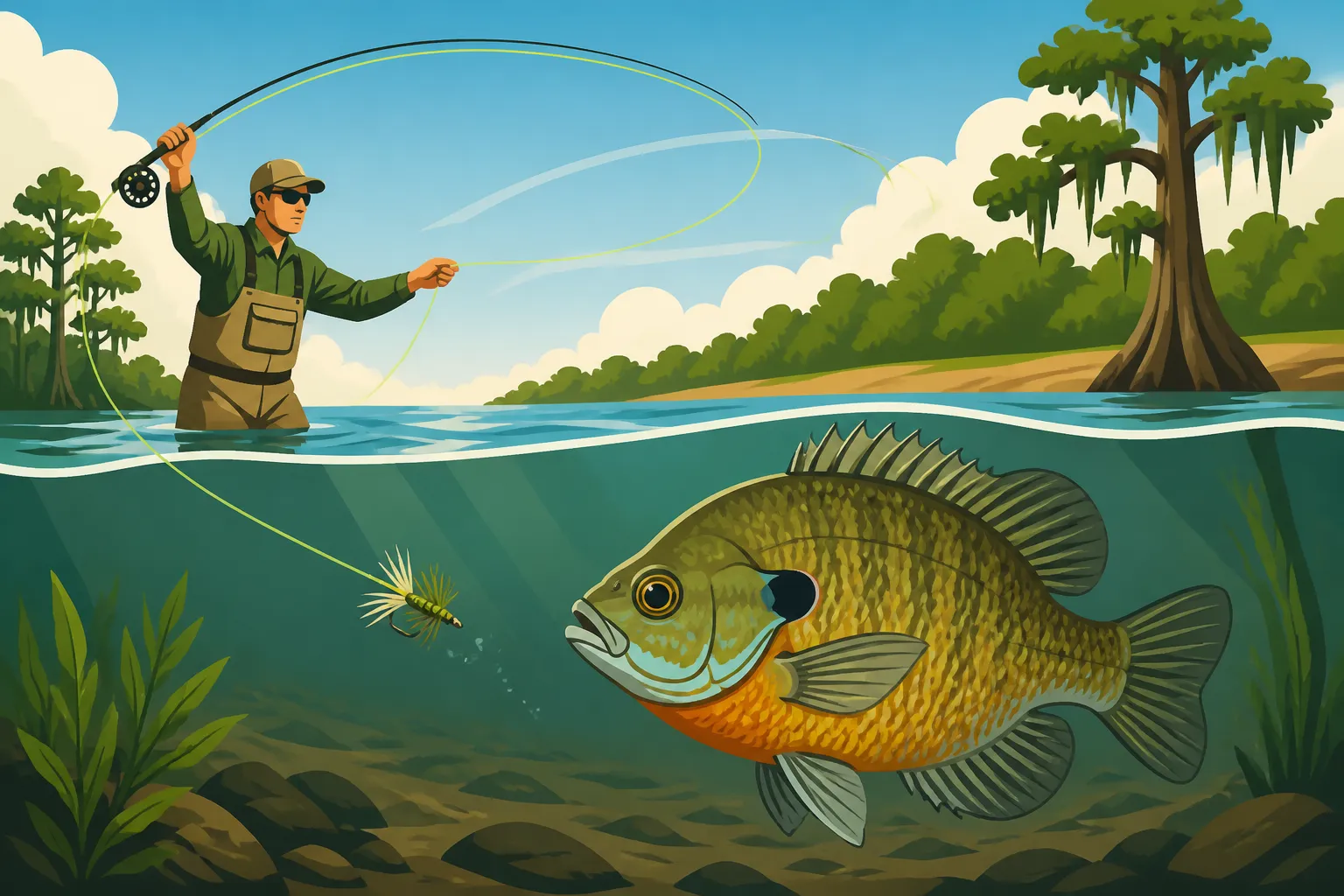
You might think a bluegill is just a small fish, hardly worth the effort of specialized tackle. But hook a chunky bluegill, or a hand-sized shellcracker, on a light 2-weight or 3-weight fly rod, and prepare for a genuine surprise. These fish are pound-for-pound fighters, often darting, diving, and pulling with a vigor that belies their size. The thrill comes not from the brute strength, but from the elegant dance between angler and fish, feeling every head shake and tail kick through the sensitive rod. It’s an incredibly interactive and engaging way to fish, far removed from the passive bobber watching many associate with bream. It's pure, unadulterated fun, proving that bigger isn't always better when it comes to a good fight. It's an ideal way to introduce kids to the sport, too, as the action is often fast and furious, keeping their attention much better than waiting for a slow bite.
Bream as the Perfect Fly-Fishing Target
The beauty of bream – a collective term that includes bluegill, redear sunfish, warmouth, and even green sunfish – is their widespread availability and consistent willingness to bite. They're found in almost every body of freshwater across Mississippi, from tiny farm ponds to massive reservoirs like the Ross Barnett Reservoir Fishing Guide, and even slower-moving sections of rivers. Unlike some more finicky species, bream are rarely hard to find or convince to strike. They're opportunistic feeders, constantly on the prowl for insects, larvae, and small crustaceans, making them ideal candidates for a wide variety of fly patterns. Their sheer numbers mean that even on a tough day for other species, you can usually count on bream to keep the rod bent. Plus, they're delicious! A fresh mess of pan-fried bream after a successful outing is one of life's simple pleasures, truly connecting you to the natural bounty of our state.
Essential Gear for Mississippi Bream Fly Fishing
Getting into fly fishing for bream doesn't require a second mortgage or a trip to a specialty store in Montana. Much of the gear is quite affordable and readily available, especially if you know what to look for. The key is to think light and sensitive, matching your tackle to the size and fighting spirit of these smaller fish.
Rod, Reel, and Line Selection
For bream, you want a fly rod that's light enough to make even a modest fish feel like a trophy, but robust enough to handle the occasional accidental bass or crappie. A 3-weight or 4-weight fly rod is absolutely perfect, offering a fantastic balance of sensitivity and casting power for small flies. If you want to go even lighter for maximum sport, a 2-weight can be exhilarating, especially on smaller waters. Conversely, if you're targeting bigger bream or foresee encountering more bass, a 5-weight will do the trick, though it might make the smaller bluegill feel a little less exciting.
As for the reel, don't overthink it. For bream, the reel primarily serves as a line holder. A simple, lightweight click-and-pawl reel or a basic disc-drag model will be more than sufficient. You'll rarely be "fighting" a bream on the reel; most of the work will be done by hand-lining. What is crucial, however, is your fly line. A weight-forward (WF) floating line is the standard choice. It casts easily and keeps your flies on the surface or just below, which is exactly where bream often feed. Look for lines in bright colors like chartreuse or orange, as these are easier to see on the water, helping you detect subtle takes. You'll also need some backing line, typically 20-pound dacron, to spool onto your reel before the fly line. This isn't just for capacity; it helps prevent your expensive fly line from developing "memory" coils if stored tightly. You can often find great deals on these components on Amazon or at your local sporting goods store.
Leaders, Tippet, and Terminal Tackle
Once you have your rod, reel, and line, you'll need to connect your fly line to your fly. This is where leaders and tippet come into play. A tapered leader, typically 7.5 to 9 feet long, is designed to gradually transfer casting energy from the thick fly line down to the thin tippet, allowing for delicate presentations. For bream, a leader with a 4X, 5X, or even 6X tippet section is ideal. The "X" rating refers to the diameter, with higher numbers indicating finer line. A 5X leader is a great all-around choice.
The tippet is the final, thinnest section of line that you tie your fly onto. You'll often buy spools of tippet material separately. This allows you to replace just the last foot or two of your leader as it gets shorter from changing flies or breaking off. Carrying spools of 4X, 5X, and 6X tippet is smart. Fluorocarbon tippet offers excellent abrasion resistance and invisibility underwater, while monofilament is more budget-friendly and floats better for dry flies. Beyond line, a few other small tools are indispensable: a pair of nippers for cutting line, forceps or hemostats for de-hooking fish, and a small landing net to safely handle your catch, especially if you're planning on catch and release.
Top Flies for Mississippi Bream
The world of fly tying is vast, but you don't need a massive, intricate collection to catch bream. These fish are remarkably eager, and a handful of proven patterns will keep your rod bent all season long. The key is presentation and understanding what imitates their natural food sources.
Poppers and Surface Bugs
There's nothing quite like the explosive strike of a bream on a topwater fly. Poppers and surface bugs are designed to float and create a commotion on the water's surface, mimicking struggling insects, small frogs, or even tiny baitfish. Foam and cork poppers are durable and float exceptionally well, while deer hair bugs offer a softer landing and a more lifelike appearance.
Popular colors include chartreuse, black, white, and yellow. Sizes typically range from #8 to #12. The retrieve is crucial: cast near cover, let the ripples dissipate, then give a short, gentle strip that makes the popper "pop" or gurgle. Follow this with a long pause – sometimes several seconds – before twitching it again. Many strikes occur during the pause, so resist the urge to retrieve too quickly. This technique is particularly effective in warmer months when bream are actively feeding near the surface, often around lily pads, submerged timber, or shaded banks.
Subsurface Nymphs and Wet Flies
When bream aren't looking up, they're almost certainly looking down. Subsurface flies, including nymphs and wet flies, imitate aquatic insects, larvae, and other small critters that make up a large portion of a bream's diet. Patterns like the Woolly Bugger (in black, olive, or brown, sizes #10-#14), Prince Nymph, Hare's Ear Nymph, and Pheasant Tail Nymph (sizes #12-#16) are deadly effective.
These flies can be fished under a small strike indicator (like a tiny bobber for fly fishing) to suspend them at a specific depth, or retrieved slowly with short twitches. Try letting them sink near structure and then imparting subtle action with your rod tip. The key is to mimic the natural movement of an insect drifting in the current or slowly swimming. This approach is fantastic during cooler periods or when bream are holding deeper, such as during midday lulls in summer or during the cooler months. You might even find that these flies tempt a curious crappie or small bass, adding a multi-species bonus to your outing, especially in our many Mississippi State Fishing Lakes Overview.
Streamers and Terrestrials
While poppers and nymphs cover most of your bases, having a few streamers and terrestrials can round out your fly box. Smaller streamers, like a tiny Clouser Minnow or a Micro Zonker, can imitate very small baitfish and will often entice larger bream or aggressive green sunfish. Fish these with a strip-retrieve, making them dart and flash. These can be particularly effective when you see bream chasing bait or when you're specifically targeting the biggest bull bream in the area.
Terrestrials, on the other hand, imitate land-based insects that have fallen into the water. Think ants, beetles, crickets, and grasshoppers. During the summer and early fall, when these bugs are abundant near the water's edge, fishing terrestrial patterns can be incredibly productive. A black foam beetle or a tiny ant pattern, drifted naturally along a shaded bank or under overhanging branches, can lead to explosive topwater strikes from eager bream.
Where and When to Find Bream on the Fly
One of the great joys of fly fishing for bream in Mississippi is their widespread availability. You don't need to travel far or find obscure, secret spots. Chances are, there's excellent bream fishing closer than you think.
Prime Habitats Across Mississippi Waters
Bream are habitat generalists, meaning they can thrive in a variety of environments, but they do have preferences. Look for them in:
- Farm Ponds and Small Lakes: These are often the easiest and most accessible spots. Look for areas with lily pads, cattails, fallen trees, or brush piles. Shaded banks are always a good bet, especially during the heat of the day. Many private ponds offer phenomenal bream fishing.
- Larger Reservoirs: Lakes like Ross Barnett, Grenada, Sardis, and Enid all hold healthy populations of bream. Focus your efforts on coves, shallow flats with submerged vegetation, boat docks, and around riprap. The calm, protected waters of a bay can be particularly productive.
- Rivers and Creeks: While not as common for fly fishing as stillwaters, slower sections of rivers, oxbow lakes, and quiet creeks can be fantastic. Look for eddies, logjams, and areas where the current is slack. The Pearl River Fishing Guide can offer insights into these types of habitats.
Always prioritize areas with some form of cover – whether it's submerged timber, dense weed lines, or shady banks. Bream feel secure near structure and use it for ambush points for food. A key tip is to always wear polarized sunglasses to help you spot underwater structure and even cruising fish.
Best Seasons and Times of Day for Bream
Bream fishing in Mississippi is fantastic almost year-round, but some periods offer truly exceptional action for fly anglers.
- Spring (March – May): This is prime time, especially during the spawn. As water temperatures rise into the 70s, bream move into shallow waters to build nests, often in large "beds" that look like collections of dinner plate-sized depressions on the bottom. Males aggressively guard these nests, making them incredibly easy targets for poppers and nymphs. Check out our Mississippi Spring Fishing Guide for more insights into this exciting season. This is when you can often catch multiple fish from the same bed, though ethical angling means not overharvesting from a single spot.
- Summer (June – August): Bream are still very active in summer, but they'll often move to deeper, cooler water during the hottest parts of the day. Early mornings and late evenings are prime surface fishing times. During midday, focus on shaded areas, deep weed lines, or structure in slightly deeper water, fishing nymphs or small streamers.
- Fall (September – November): As temperatures cool, bream remain active. They'll often feed aggressively in shallower water during the milder parts of the day, fattening up for winter. This can be a fantastic time for both subsurface and topwater flies, particularly on sunny afternoons.
- Winter (December – February): While less active, bream can still be caught on mild winter days. They'll typically hold in deeper water near structure. Slow-fished nymphs and small jigs will be your best bet. While not a bustling season, it can offer a peaceful day on the water and still yield a surprising catch. For a comprehensive overview of when to target various species, our guide on the Best Time of Year to Fish in Mississippi is an excellent resource.
Techniques for Success on the Water
Fly fishing for bream is less about intricate casts and more about subtle presentation and understanding how your fly interacts with the water. These techniques are surprisingly easy to pick up, making it a perfect starting point for new fly anglers.
Casting and Presentation Fundamentals
For bream, accuracy often trumps distance. A simple overhead cast is usually all you need, allowing you to deliver your fly gently to a target. Don't try to power cast across an entire lake. Instead, focus on shorter, more controlled casts to specific pieces of cover. If you're fishing in tight quarters with overhanging branches, a roll cast can be invaluable. This cast eliminates the backcast, allowing you to launch your fly forward with minimal space.
The most critical aspect of casting for bream is presentation. These fish are not typically spooked by a fly line landing, but a delicate splash of your fly will always be more effective than a clumsy "splat." Aim to have your fly land gently, like a natural insect falling onto the surface. Once your fly is on the water, let it sit for a few seconds, allowing any ripples to dissipate before beginning your retrieve. This "dead drift" can often be when the most aggressive strikes occur, as the fish sees an easy, unhurried meal.
Reading the Water and Approaching Bream
Success in bream fishing, like all fishing, starts with understanding the water. Look for visual cues:
- Rises: If you see rings on the water's surface, that's a sure sign of fish feeding on insects. Cast your dry flies or poppers to these rises.
- Beds: During the spring spawn, look for circular depressions on shallow flats. These are bream beds, and the fish will be actively guarding them.
- Structure: Any object in the water—lily pads, logs, docks, brush piles, submerged grass—is a potential holding spot for bream. They love cover for protection and ambush.
Approach quietly and cautiously, especially in clear, shallow water. Bream are not as spooky as trout, but unnecessary noise or movement can put them down. Wading slowly or using a trolling motor on low speed in a boat allows you to get close without alarming the fish. Fan-casting, where you cast to multiple points in a fan-like pattern around your position, helps you cover water effectively and find where the fish are holding.
Hook Set, Fight, and Release
When a bream takes your fly, especially a topwater, the strike can be exhilarating. Unlike spin fishing where you set the hook by raising the rod, in fly fishing, you typically perform a "strip set." Instead of lifting the rod, you pull the fly line sharply downstream with your non-rod hand. This ensures a solid hookup, especially important with softer-mouthed fish like bream. Then, gently raise your rod tip to maintain tension.
Fighting a bream on a light fly rod is pure joy. Let the rod do the work, absorbing the runs and headshakes. Keep a light but firm grip on the fly line with your non-rod hand, taking in line as the fish comes toward you and letting it slip if it makes a strong run. Avoid horsing the fish in; enjoy the process!
If you're planning on releasing fish, handle them gently. Wet your hands before touching them to protect their protective slime coat. Remove the hook quickly with forceps and support the fish in the water until it swims away strongly. For those looking to take some home for dinner, ensure you're aware of the Mississippi Fishing Creel and Size Limits for bream and other panfish.
Beyond the Basics: Advanced Tips and Enjoyment
Once you've got the hang of the fundamentals, fly fishing for bream can open up even more avenues for exploration and enjoyment. It's a sport with endless nuances, and these tips can help you deepen your understanding and success.
Understanding Bream Behavior and Spawning
To consistently catch bream, it helps to understand their life cycle and behavior. Bream are warm-water fish that typically spawn when water temperatures reach the upper 60s to low 70s. This usually happens in late spring and early summer, and they can often spawn multiple times throughout the warmer months. The male bream will fan out circular nests on shallow, hard bottoms, often in clusters. They aggressively guard these nests, making them highly susceptible to any fly that enters their territory.
Observing these behaviors can be a game-changer. During the spawn, you can literally sight-fish to individual bream on their beds, presenting a fly right in front of them and watching them inhale it. Outside of the spawn, understanding that bream are ambush predators means focusing on cover. Knowing when and why they move from shallow to deep water (e.g., to escape midday heat or predation) allows you to adapt your techniques and find them wherever they may be. This deep dive into their habits is similar to understanding Crappie Spawning and Egg Production, even if the species are different, the principles of how fish react to their reproductive cycle remain valuable across the board.
Fly Fishing for Other Panfish and Multi-Species Fun
The beauty of bream fishing with a fly rod is that your tackle and techniques are often perfect for a host of other species found in Mississippi waters. Small bass, white perch, and even hungry crappie will readily take bream flies. A small Woolly Bugger or a surface popper can be irresistible to a juvenile largemouth bass, providing an unexpected bonus fight.
This multi-species potential makes every cast exciting. You might be targeting bluegill and suddenly find yourself fighting a chunky crappie or a feisty spotted bass. This versatility allows you to expand your angling horizons without needing completely different gear. Exploring the full range of Panfish Species Found in Mississippi with your bream setup will undoubtedly lead to many memorable days on the water, proving that fly fishing is a dynamic and rewarding way to explore the diverse fisheries of our great state. Just remember to always have your Mississippi Fishing License Guide handy, no matter what you're targeting!
Mississippi Bream Species and Best Fly Choices
To help you target specific bream species, here's a quick guide to some of the most common panfish you'll encounter in Mississippi, along with the fly types they favor.
| Bream Species | Preferred Habitat | Avg. Size (Inches) | Best Fly Types | Notes |
|---|---|---|---|---|
| Bluegill | Ponds, lakes, slow rivers; near vegetation & structure | 6-10 | Poppers, Dry Flies (ants, beetles), Small Nymphs, Wet Flies | Most common, aggressive, excellent table fare. |
| Redear Sunfish (Shellcracker) | Clearer water, harder bottoms; near mussels & snails | 8-12 | Small Nymphs, Wet Flies (especially dark patterns), Poppers (less common) | Known for eating snails, often found deeper. |
| Warmouth | Murky, slow water; heavy cover like logs & lily pads | 5-8 | Small Poppers, Streamers, Wet Flies (dark, bushy) | More aggressive, often found in less clear water than bluegill. |
| Green Sunfish | Small streams, ponds, ditches; adaptable to poor conditions | 4-7 | Small Poppers, Dry Flies, Nymphs, Micro Streamers | Aggressive, often found with bluegill, distinct large mouth. |
This table provides a simple overview, but remember that many of these species will readily hit a wide variety of flies depending on their mood and what's available. Don't be afraid to experiment!
Disclaimer
The information provided in this guide is for general informational purposes only. Fishing regulations, seasons, and licensing requirements can change. Always consult the latest regulations from the Mississippi Department of Wildlife, Fisheries, and Parks (MDWFP) before heading out on the water.