How to Adjust Techniques for High Water After Rain
There's nothing quite like the excitement of a fishing trip planned for days, only to wake up to a heavy rain shower or see the river rising rapidly. It’s a common frustration for anglers across Mississippi when you find your favorite fishing holes looking like a chocolate milk shake, the current ripping, and all your usual spots and tactics seemingly useless. But don't despair! High water after a good rain can actually turn into some fantastic fishing if you know how to adjust your approach. This guide is all about helping you understand how these changing conditions impact our Mississippi waters and how to tweak your techniques to put fish in the boat, or from the bank, even when Mother Nature throws a curveball.
Understanding How Rain Affects Mississippi Waters
When a significant amount of rain falls, especially after a dry spell, it drastically changes the aquatic environment. It's not just about the water level going up; it's a whole cascade of effects that impact fish behavior and where they decide to hang out. For a lot of us, the first instinct is to pack up and go home, but with a little understanding, you can learn to read these new conditions and find the fish.
The Impact of Increased Water Flow and Turbidity
One of the most noticeable changes after heavy rain is the increase in water flow and turbidity, or muddiness. Rivers swell, pushing more water downstream, and even lakes and reservoirs see significant runoff from surrounding land. This surge in water can disorient fish, but it also brings new opportunities. The current becomes stronger, especially in river systems or areas near spillways, and this changes how fish position themselves to conserve energy.
Along with the increased flow comes the dreaded muddy water. Runoff carries silt, sediment, leaves, and other debris from the land, turning clear water into a murky mess. This reduced visibility can make it harder for fish to see your bait, and it definitely makes it harder for you to see them! However, many fish species, particularly catfish and some types of bass, thrive in or adapt well to these conditions. It's a prime time for species that rely more on scent and vibration than sight. We've talked a lot about How Rain Affects Crappie Fishing and Does Muddy Water Ruin Bass Fishing?, and the answer is usually not if you know how to adapt!
Temperature and Oxygen Level Fluctuations
Rainfall, especially cold rain, can also cause noticeable shifts in water temperature. Cooler rain falling into warmer lake water can create temperature inversions or thermal layers, which can impact fish comfort levels. While fish are generally pretty resilient to temperature changes, sudden drastic shifts can make them a bit sluggish or push them to seek out more stable temperature zones.
On the flip side, heavy rain and the accompanying runoff can actually infuse new oxygen into the water, especially in stagnant areas. While this might seem like a good thing, extremely muddy water can sometimes lead to localized drops in oxygen as organic material decomposes. Fish need oxygen to survive, so they will naturally move to areas where oxygen levels are more stable and comfortable. Often, this means moving closer to areas where fresh, oxygenated water is entering the main body, or towards the surface in some cases. Understanding these subtle changes is crucial for pinpointing where fish might be holding.
Locating Fish in High Water Conditions
The golden rule of fishing is "find the fish," and that becomes even more critical when water levels are high and conditions are murky. Your usual spots might be under feet of new water, or the current might be too strong for fish to hold comfortably. This is where your ability to adapt and think like a fish really comes into play.
Targeting New Current Breaks and Cover
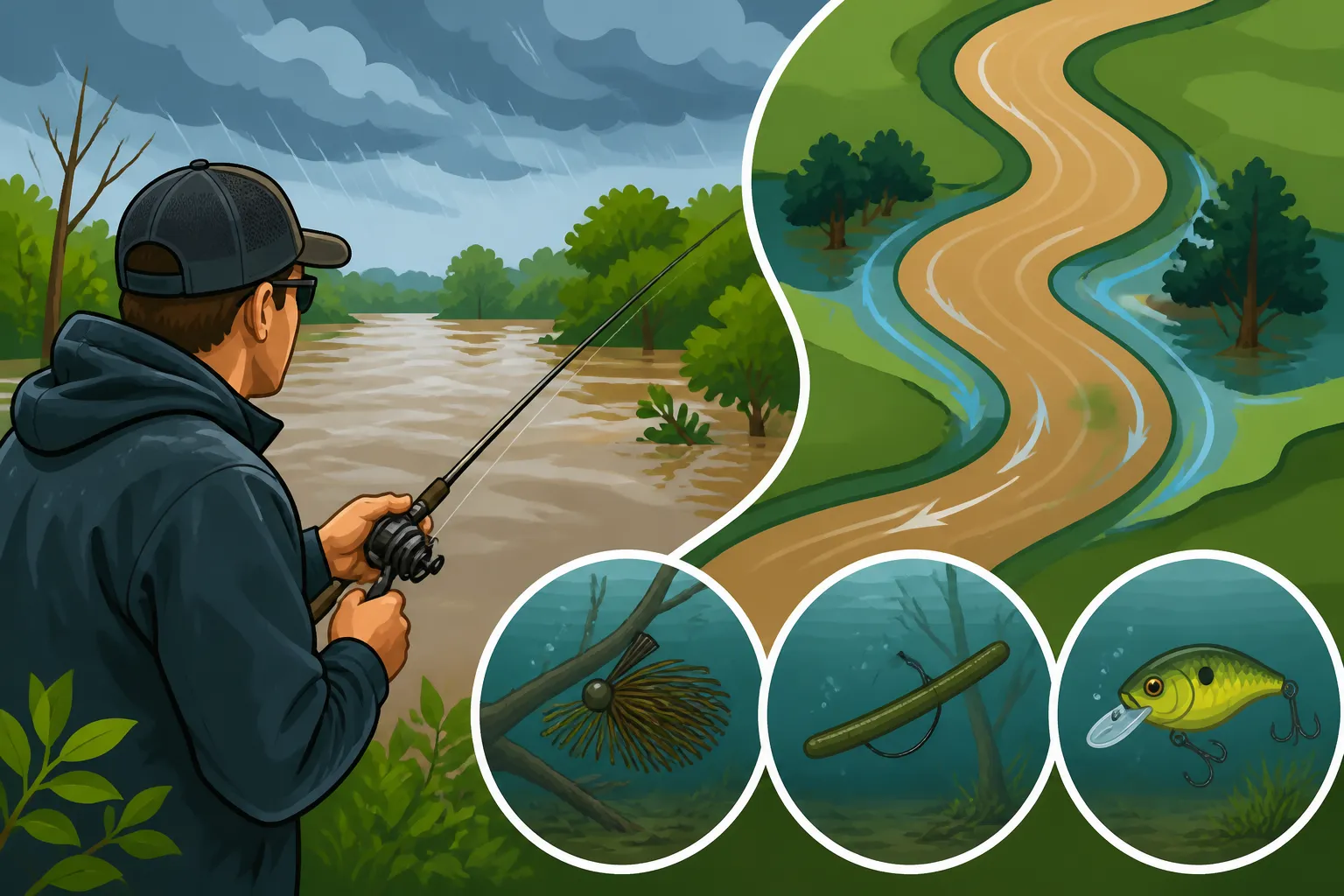
Fish are smart; they're always looking for the path of least resistance when currents pick up. This means they’ll gravitate towards current breaks – any object or structure that disrupts the flow and creates a calm spot behind it. Think about fallen trees, rock piles, bridge pilings, or even subtle changes in bottom contour. These are prime locations where fish can rest out of the main current while still being close enough to ambush any food washing by.
Beyond obvious current breaks, high water often creates new opportunities with submerged cover. Areas that were previously dry land or very shallow might now be flooded, creating fresh cover like brush, grass, or even inundated timber. Fish, especially bass and crappie, love to move into this newly flooded cover. It offers them protection from predators, a place to hide, and often a smorgasbord of new food sources that have been washed in. Don't be afraid to cast into areas that look completely different from your last trip; those new pockets of cover can be goldmines. Look for areas where the main current is being diverted, creating calmer pockets of water. These "eddies" or "slack water" areas are often overlooked but can hold a surprising number of fish.
Focusing on Transition Zones and Inflows
Transition zones are your best friend in high water. These are areas where one type of condition meets another—like where muddy water meets clearer water, or where a strong current slows down. Fish will often stage on the edges of these transitions, waiting for food to be swept to them. Think about the mouth of a creek or ditch that's pouring muddy water into a larger, slightly clearer lake. The fish might not be right in the muddy inflow, but rather just outside it, where the visibility improves slightly, and food is concentrating.
Inflows are also key areas to target. Any spot where fresh water is entering the main body of water – be it a feeder creek, a drainage ditch, or even a culvert – is worth investigating. This incoming water often carries worms, insects, and other food items, turning these areas into a buffet for hungry fish. Plus, as we discussed, these inflows often bring in new oxygen, making them more attractive. However, the exact spot can be tricky. Sometimes fish are right in the deluge, other times they're just on the edges, a little out of the direct blast. Experiment with casting both into the inflow and along its margins. For instance, Best Structure to Fish for Bass in a Reservoir is often around these kinds of features.
Effective Baits and Lures for Murky Conditions
When the water turns murky, sight feeders struggle, and so do anglers using visually appealing baits. This is when you need to switch gears and rely on other senses to attract fish. It's all about making your presence known without relying on crystal-clear visibility.
Harnessing Scent and Vibration
In muddy water, fish rely heavily on their lateral line system to detect vibrations and their sense of smell to locate food. This means choosing baits and lures that excel in these departments.
Scented Baits: Live bait is almost always a winner in murky water. Think about good old earthworms, minnows, or even cut bait like shad or chicken livers for catfish. These natural offerings have an irresistible scent trail that fish can follow even when they can't see a thing. For artificial lures, look for options that are specifically designed to absorb and hold scent. Many soft plastics come pre-scented, or you can add your own fish attractant gels or sprays. Brands like Berkley PowerBait or Gulp! are popular for this reason. You can find a huge variety of these on Amazon, often in convenient multi-packs.
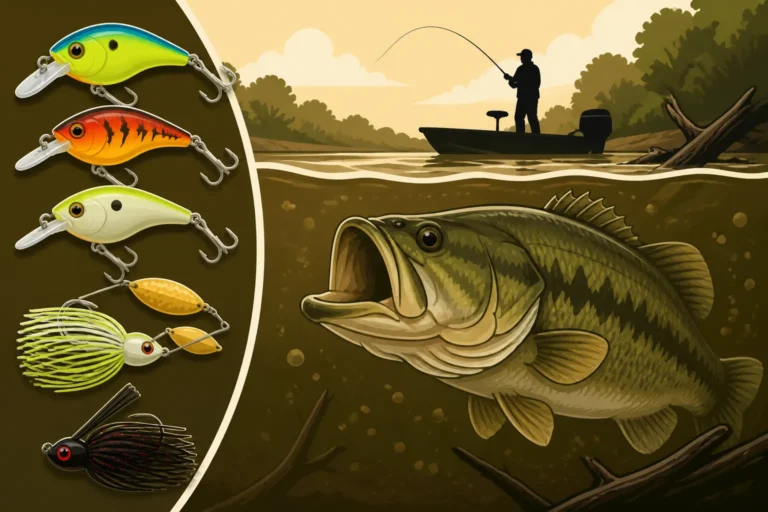
Vibrating Lures: Lures that create a strong vibration in the water are also incredibly effective. Spinnerbaits, chatterbaits, and crankbaits with a wide wobble are fantastic choices. The blade on a spinnerbait, the unique head design of a chatterbait, or the aggressive movement of a crankbait sends out pulsations that fish can feel from a distance. Experiment with different blade sizes and shapes on spinnerbaits – a larger, thumping Colorado blade often works better than a flashier willow leaf in stained water.
Choosing Colors and Presentations
While scent and vibration are paramount, color still plays a role, albeit a different one, in murky water. Instead of subtle, natural hues, you often want something that stands out, or conversely, something that offers a strong silhouette.
High-Contrast Colors: Bright, fluorescent colors like chartreuse, orange, or hot pink can be surprisingly effective. These colors create a stronger silhouette against the murky background and are more visible in low light conditions, which essentially mimic what muddy water does. Darker colors like black or blue can also create a strong silhouette, especially when fished against a lighter sky, making them easier for fish to pick out. The key is contrast, not necessarily realism.
Slower, Deliberate Presentations: When fish can't see well, they need more time to locate your bait. This means slowing down your retrieve and presentation. Instead of ripping a crankbait quickly, try a slower, more methodical retrieve with pauses. For soft plastics, use a jig head with a slower fall, or rig them to drift naturally with the current. This gives fish more opportunity to home in on the scent and vibration. Think about jigging for crappie; a slower jigging motion with a Best Bait for Crappie in Mississippi like a minnow or a scented soft plastic can make all the difference. Sometimes, simply letting a bait sit in a current break for an extended period is all it takes.
| Condition | Typical Approach (Clear Water) | High Water Adjustment | Recommended Bait/Lure |
|---|---|---|---|
| Water Clarity | Clear to lightly stained | Muddy, turbid | Scented plastics, loud crankbaits, jigs |
| Current | Moderate to still | Strong, swift | Heavier weights, slower retrieve |
| Fish Location | Open water, submerged structure | Current breaks, flooded cover, inflows | Anywhere fish can escape current |
| Visibility | High | Low | Colors with high contrast (chartreuse, dark) |
| Fish Activity | Active, sight-feeding | Often disoriented, relies on other senses | Baits with strong scent/vibration |
Adapting Your Gear and Techniques
High water often demands adjustments to your gear setup and the way you present your baits. Stronger currents, more debris, and less visibility all factor into how you should rig up and fish. Don't be afraid to experiment!
Heavier Tackle for Stronger Currents and Debris
When the current is ripping, your lighter tackle might struggle to keep your bait in the strike zone. This is a time to beef up your setup. Using heavier fishing line, especially fluorocarbon which sinks better, can help your bait cut through the current more effectively. You might also need to increase the weight of your sinkers or jig heads to get your bait down to where the fish are holding without it being swept away too quickly.
Furthermore, with increased runoff, there’s often a lot of debris floating in the water – leaves, sticks, even entire logs. Heavier tackle can help you muscle your lure free from snags more easily and gives you better control if you hook a fish near heavy cover. Consider a slightly stiffer rod action, which provides more power for casting heavier baits and fighting fish in strong current. You can find robust fishing line and a variety of heavy sinkers on Amazon to upgrade your tackle box for these situations.
Using Slip Floats and Bottom Rigs
Sometimes, the best way to present a bait in high water is to let the current do some of the work, but with control. Slip floats are excellent for this, especially when targeting fish in current breaks or along seams. A slip float allows you to adjust your depth easily, presenting your bait at the perfect level above the bottom or suspended in the water column without being directly on the bottom where it might snag. You can let your bait drift naturally into cover or along a current line, giving fish a very natural presentation.
Bottom rigs are also highly effective, particularly for species like catfish or even crappie and bass holding tight to the bottom in deep current breaks. A Carolina rig or a three-way swivel rig with a heavy sinker can keep your bait firmly on the bottom, preventing it from being washed away. These rigs allow your bait to move freely a short distance off the bottom, making it appear natural, even while your weight holds it in place. This technique is often a game-changer when Catfish Fishing Techniques are needed in fast-moving water.
Focusing on Bank Access and Safety
High water can significantly change bank access. What was once a clear shoreline might now be submerged or extremely muddy and slippery. Always prioritize safety! Wear appropriate footwear with good grip, and be aware of your surroundings. The edges of swollen rivers or lakes can be unstable.
From the bank, you'll want to look for accessible current breaks or areas where the water depth drops off quickly near the shore. Docks, piers, and bridge abutments can be excellent bank fishing spots in high water, as they offer structure and current breaks. Casting into flooded vegetation along the bank can also be productive. Remember, even a small, calm eddy behind a single piece of submerged structure can hold a surprising number of fish. For more tips on fishing without a boat, check out Best Spots for Bank Fishing Without a Boat in Mississippi. Always check Mississippi Freshwater Fishing Rules before you head out, as conditions can impact local regulations or access.
Final Thoughts on High Water Fishing
Fishing in high water after a rain can be daunting, but it also offers a unique challenge and the potential for some of the most rewarding catches. It’s all about adjusting your mindset and your methods. Instead of thinking of it as a ruined day, view it as an opportunity to learn something new about fish behavior and how to adapt.
Remember these key takeaways: fish will seek refuge from strong currents and improved visibility. They’ll congregate in current breaks, newly flooded cover, and transition zones where clearer water meets muddier inflows. Prioritize baits and lures that offer strong scent and vibration, and don't shy away from high-contrast colors. Finally, be prepared to use heavier tackle and slower, more deliberate presentations to get your bait in front of them effectively. With a little patience and these adjusted techniques, you'll be well on your way to turning those rainy day frustrations into successful fishing adventures in Mississippi.
Disclaimer
This article is for general informational purposes only and does not constitute professional advice. Laws, prices and regulations vary by location and change over time. Consult a qualified professional for guidance on your specific situation.