How Deep Do Crappie Go in Summer
Ah, summer in Mississippi! The sun is blazing, the sweet tea is flowing, and for many crappie anglers, frustration is often boiling right alongside the thermometer. It's a common complaint: the crappie that were so cooperative in spring seem to vanish, leaving us wondering where on earth they've gone. If you've ever found yourself scratching your head, casting into empty water, and wishing you knew the secret to locating those elusive summer slabs, you've come to the right place. This guide is dedicated to unraveling the mystery of how deep crappie go in summer, helping you understand their seasonal movements and giving you the strategies to find them.
The Summer Crappie Conundrum: Why They Go Deep
The transition from the vibrant spring spawn to the dog days of summer marks a dramatic shift in crappie behavior. Those shallow flats and brush piles that were so productive just weeks earlier become ghost towns as the water temperatures soar. It's not that the crappie disappear entirely; they simply move to find more comfortable and sustainable environments. Understanding why they go deep is the first step to consistently putting them in the livewell.
Escaping the Heat: Water Temperature Stratification
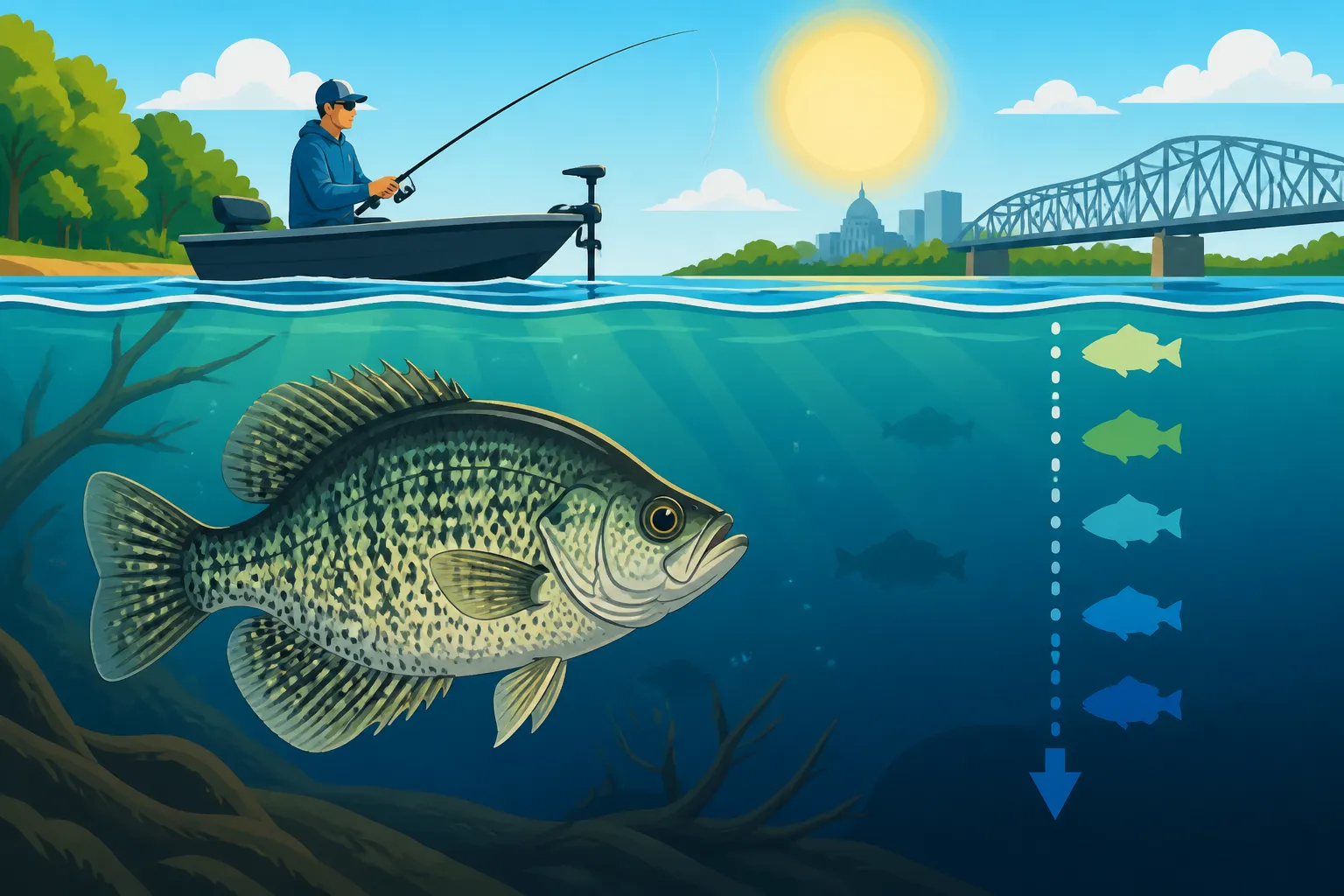
The most significant factor driving crappie deeper in summer is undoubtedly water temperature. As the sun beats down relentlessly on Mississippi's lakes and reservoirs, the surface water heats up considerably. Crappie, like most fish, are cold-blooded and prefer a specific temperature range to thrive, typically in the high 60s to low 70s Fahrenheit. When the surface reaches the 80s or even 90s, it becomes far too warm for their comfort and metabolic needs.
This intense surface heating leads to a phenomenon called thermal stratification. Essentially, the lake layers itself, much like an onion. The warm, lighter water stays on top (the epilimnion), while cooler, denser water settles below (the hypolimnion). In between these layers is the thermocline, a distinct zone where the water temperature changes rapidly with depth. Crappie will seek out this thermocline or just below it, as it offers a refuge of cooler, more stable temperatures. Identifying the depth of this thermocline is often key to finding where crappie are holding.
It's not just about comfort; it's about survival. Extremely warm water holds less dissolved oxygen, which we'll discuss more in a moment. But even before oxygen levels become critical, the sheer physiological stress of high temperatures makes crappie lethargic and less inclined to feed actively. Moving deeper allows them to conserve energy and maintain optimal bodily functions, making them more likely to respond to your baits.
Following the Baitfish Migration
You know what they say: "Find the bait, find the fish." This old adage rings especially true for summer crappie. Just as crappie seek cooler, more stable water, so do their primary food sources – shad and other small baitfish. When the surface water becomes uncomfortably warm or lacks sufficient oxygen, these schools of baitfish will also migrate to deeper, more favorable conditions.
Crappie are ambush predators, and they're not going to expend unnecessary energy chasing bait through unfavorable water. Instead, they'll position themselves strategically along the edges of schools of baitfish, often holding slightly below them or on the outskirts, ready to strike when the opportunity arises. This means if you can locate large concentrations of shad on your fish finder, you're very likely to find crappie nearby. Sometimes, they'll even suspend just below the bait ball, waiting for an easy meal to drop down.
This baitfish movement can vary significantly from lake to lake and even day to day. A good fish finder, perhaps one you picked up from a reliable source like Amazon, can reveal these patterns, showing you not just individual crappie but also the vast clouds of baitfish they are shadowing. Pay close attention to how the bait is positioned relative to structure and the thermocline, and you'll get a clearer picture of where the crappie are likely hiding.
Seeking Oxygen and Stability
Beyond just temperature, dissolved oxygen (DO) levels play a critical role in determining how deep crappie will go. Warm water, especially in stagnant areas, tends to hold less oxygen than cooler water. As organic matter decomposes on the lake bottom, it consumes oxygen, creating areas of anoxia (no oxygen) or hypoxia (low oxygen). Crappie, like us, need oxygen to breathe, and they will avoid areas where DO levels are too low.
This means there's a delicate balance. While crappie will go deep to escape the heat, they won't go too deep if the bottom waters are devoid of oxygen. Often, they'll suspend just above this oxygen-depleted zone, seeking that "sweet spot" where temperatures are tolerable and oxygen levels are sufficient. This zone is typically found near or just above the thermocline.
Furthermore, deeper water offers more stability from environmental fluctuations. Surface water is more susceptible to wind, heavy rains, and rapid temperature changes. Deeper water remains more consistent, providing a predictable environment for crappie to conserve energy and reduce stress. This stability is another reason why deep structures and submerged features become so appealing to crappie during the Mississippi summer. You can learn more about how different factors affect fish behavior in our comprehensive guide on Mississippi Fishing Seasons Calendar.
Typical Depths for Summer Crappie in Mississippi Waters
So, with the "why" out of the way, let's talk about the "how deep." It's not a one-size-fits-all answer, as various factors like lake size, depth, clarity, and even recent weather patterns can influence crappie depth. However, we can establish some general ranges and typical scenarios for different types of Mississippi fishing environments.
Reservoir Crappie: Depths in Large Lakes (e.g., Ross Barnett, Grenada, Sardis)
Mississippi is blessed with several large, sprawling reservoirs that are prime crappie territory. Lakes like the Ross Barnett Reservoir, Grenada Lake, and Sardis Lake are well-known for their incredible crappie populations. In these larger, deeper bodies of water, summer crappie will typically descend to depths ranging from 15 to 30 feet, and sometimes even deeper, depending on the lake's specific thermocline and the availability of structure.
On Grenada Lake, for example, which is famous for its crappie, you might find fish suspended over old creek channels or holding tightly to submerged timber in 20-25 feet of water. Their actual depth could be 15 feet if they're suspending over a 25-foot channel. Similarly, on Sardis Lake, crappie will often relate to the old river runs and deep ledges, seeking out pockets of cooler water, often 18-28 feet down. The sheer volume of water in these reservoirs allows for more pronounced stratification, pushing crappie to greater depths. For more specific insights on these hotspots, check out our dedicated guides like the Ross Barnett Reservoir Fishing Guide or the Grenada Lake Fishing Guide.
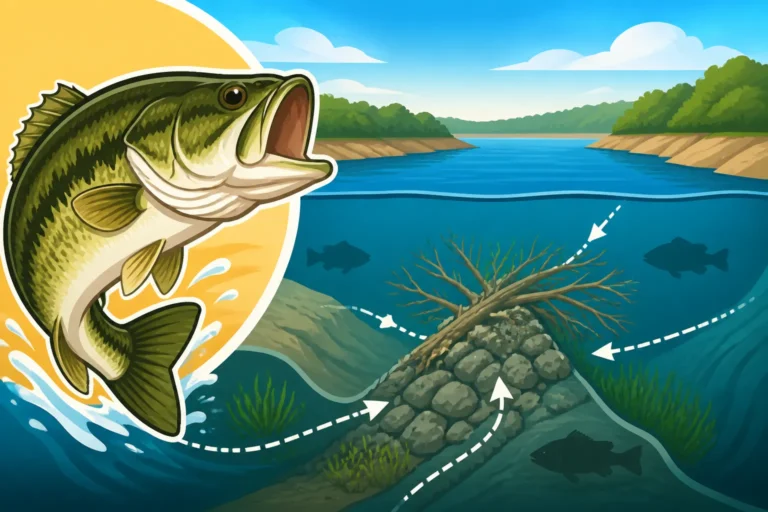
The key here is finding structure in these deeper zones. Crappie aren't just randomly suspended; they're almost always associated with something, be it a sunken brush pile, a sharp drop-off, a rock pile, or a submerged timber line. These features provide cover, ambush points, and often concentrate baitfish. Anglers often employ techniques like spider rigging or slow trolling with multiple poles to cover these deeper areas effectively.
River and Oxbow Crappie: Understanding Current and Structure
While reservoirs are a major draw, many anglers also target crappie in Mississippi's expansive river systems and their associated oxbow lakes. The Mississippi River and its tributaries, including the Pearl River and Pascagoula River, present a different set of challenges and patterns for summer crappie. Here, current is a significant factor, and oxbow lakes, being cut off from the main river flow, often develop their own unique characteristics.
In the main river channels, crappie will often seek out slack water areas or eddies where the current is minimized, even if these areas are relatively deep. They might be found in old river bends, deep scour holes, or behind large submerged log jams, often in depths of 10 to 25 feet. The constant flow of the river helps maintain oxygen levels, so the thermocline effect might not be as pronounced as in a reservoir, but crappie still seek out cooler, more stable depths and protective cover.
Oxbow lakes, which are essentially old river meanders that have been cut off, can behave more like smaller reservoirs in terms of thermal stratification. However, they often have shallower overall depths and dense submerged timber. In these waters, crappie might still be found deep, perhaps 12 to 20 feet, but they will be even more tightly associated with vertical structure like cypress trees, old stumps, or brush piles, using them for shade and cover from predators. Always be mindful of local Mississippi Freshwater Fishing Rules when fishing in these diverse water bodies.
State Lake and Pond Crappie: Smaller Water Bodies, Different Rules
Mississippi also has numerous state-managed fishing lakes and countless private ponds. These smaller, often shallower water bodies will exhibit slightly different summer crappie patterns. While the principle of seeking cooler, oxygenated water remains, the maximum available depth is usually less.
In a typical Mississippi State Fishing Lake, with a maximum depth of perhaps 20-30 feet, crappie might be found in the deepest available pockets, often around 8 to 18 feet. They will gravitate towards any deep-water structure, such as submerged brush piles placed by wildlife agencies, old roadbeds, or the deepest parts of creek channels. Due to the smaller volume of water, these lakes can heat up faster and have a less defined thermocline, or one that is closer to the bottom.
Private ponds are even more variable. A very shallow pond (under 10-12 feet deep) might not offer sufficient deep, cool, oxygenated water for crappie to thrive in the peak of summer, leading to fish becoming stressed or lethargic. However, deeper ponds (15+ feet) will see crappie retreating to the deepest areas, often around structure like dock pilings, aeration systems (which provide oxygen), or natural depressions, typically holding in the 6 to 15-foot range. It's crucial to understand the specific characteristics of the water body you're fishing to accurately predict crappie depth.
Finding Summer Crappie at Their Deepest
Knowing that crappie go deep is one thing; actually finding them is another. Modern fishing technology and refined techniques have made locating these elusive summer slabs more accessible than ever. It requires a combination of good gear, a keen eye for structure, and a willingness to adapt.
Using Electronics: Fish Finders and Side Imaging
In the summer months, your fish finder is not just a tool; it's practically a necessity for consistent crappie success. Traditional 2D sonar will show you depth, bottom contour, and often baitfish schools or individual fish arches. Learning to interpret these signals, especially discerning crappie from bait, is crucial. Look for distinct arches or groups of fish suspended at specific depths.
Even more powerful are modern technologies like Down Imaging and Side Imaging. Down Imaging provides a photographic-like view directly beneath your boat, making it easier to identify submerged brush piles, timber, and even individual crappie holding tight to them. Side Imaging, on the other hand, allows you to scan wide areas to either side of your boat, revealing hidden brush piles, ledges, and channels that you might otherwise motor right over. This is invaluable for efficiently covering large sections of a lake.
When using these electronics, pay attention to the thermocline, which often appears as a distinct band on your sonar screen. Crappie will usually be found at or just above this line. Don't just look for fish; look for the features that attract fish. Mark promising spots with your GPS so you can return to them. Understanding Reading a Fish Finder for Crappie is a skill that will significantly improve your summer fishing. Many excellent models from brands like Humminbird or Lowrance are readily available on Amazon, offering features from basic sonar to advanced imaging.
Locating Key Structures: Brush Piles, Ledges, and Channels
Once you understand that crappie go deep, the next step is to realize they don't just suspend randomly in open water. They relate to structure. In summer, the most productive deep-water structures include:
- Brush Piles and Submerged Timber: These are perennial crappie magnets, offering shade, cover, and a substrate for baitfish to hide. Crappie will often position themselves within or just above the densest parts of the brush. You might even want to consult a specialized guide on Deep Water Crappie Fishing Techniques for best results.
- Ledges and Drop-offs: Where a flat area abruptly drops into deeper water, you'll often find crappie. They use these depth changes as travel corridors and ambush points. Fishing the "lip" of a ledge or just over the edge can be highly effective.
- Old Creek and River Channels: These are essentially highways for fish and bait. Crappie will suspend along the channel edges or in depressions within the channel itself, especially where there's some form of cover like stumps or brush.
- Humps and Ridges: Submerged humps or ridges that top out in 15-25 feet of water, surrounded by even deeper water, can be excellent spots. Crappie will school up on the sides or top of these features.
- Bridge Pilings and Marina Docks: Vertical structures that extend deep into the water can attract crappie, offering shade and cover.
Systematically searching these types of structures with your electronics is the most effective way to pinpoint summer crappie. Don't be afraid to explore new areas and mark any promising finds.
Essential Deepwater Techniques and Baits
Once you've located the fish and structure, it's time to present your bait effectively. Deepwater crappie fishing often requires different tactics than the shallow-water spring bite.
- Spider Rigging: This popular technique involves using multiple long rods (often 8-16 feet) extended from the bow of the boat, presenting multiple jigs or live baits at various depths simultaneously. You slowly troll or drift over deep structure, allowing you to cover a wide area and pinpoint the exact depth the fish are holding. This is highly effective on large reservoirs. Learn more about Trolling for Crappie on Mississippi Reservoirs.
- Vertical Jigging/Dropping: If you've pinpointed a specific brush pile or piece of structure with your electronics, vertical jigging is deadly. Position your boat directly over the fish and drop a jig or a live minnow straight down. This allows for precise bait presentation and keeps your lure in the strike zone longer. This technique often involves using specialized jigs, which you can easily find on Amazon, along with quality fishing line.
- Live Bait: Minnows are almost always a top choice for crappie, especially in deep water. Hooked through the lips or dorsal fin, a lively minnow suspended at the right depth can be irresistible. Consider using a small, sensitive bobber or simply tight-lining to feel subtle bites.
- Artificial Lures: Small hair jigs, soft plastic tubes, or grub bodies rigged on jig heads (1/16 to 1/4 ounce, sometimes heavier for deep water or current) are excellent choices. Experiment with colors – natural shad patterns, chartreuse, and white are often reliable. Don't forget to explore our guide on the Best Bait for Crappie in Mississippi for more ideas.
Remember that crappie in deep, cool water may not be as aggressive as their shallow-water spring counterparts. Work your baits slowly and deliberately, paying close attention to any subtle taps or changes in line tension.
Common Mistakes and How to Avoid Them
Even with the right knowledge and gear, it's easy to fall into traps that lead to empty stringers. Avoiding these common mistakes will significantly increase your odds of success when targeting deep summer crappie.
Fishing Too Shallow: The Biggest Summer Crappie Error
This might seem obvious after reading the above, but it's genuinely the most common mistake anglers make. We all have those fond memories of catching crappie in just a few feet of water during the spawn, and it's hard to break that habit. However, stubbornly fishing shallow brush piles or docks when the water is scalding hot is a recipe for disappointment.
Remember, crappie must go deep to survive and thrive during the summer. If you're consistently not finding fish in less than 10-12 feet of water during the peak heat, it's a clear signal to move deeper. Don't waste precious fishing time on unproductive shallow water. Trust your electronics and the patterns you observe; if the fish are deep, that's where you need to be. Embrace the change in season and adapt your approach, much like the crappie themselves do.
Ignoring Water Conditions: Temperature, Oxygen, and Clarity
Just because crappie go deep doesn't mean any deep spot will hold them. Ignoring the nuances of water conditions is another pitfall. A deep pocket might look perfect on your map, but if it's anoxic (lacking oxygen) from decomposition, crappie won't be there. Similarly, if a sudden cold front brings cooler air temperatures, it might temporarily push some fish a bit shallower, or a sudden influx of muddy water might change their preferences.
Ideally, you're looking for that "Goldilocks zone" – deep enough to be cool, but not so deep that oxygen levels drop. Water clarity also plays a role; in very clear lakes, crappie might go even deeper to avoid light penetration, while in stained or muddy water, they might not need to descend quite as far for comfort. Some higher-end fish finders can even measure water temperature at different depths, giving you valuable intel. Always try to understand the current conditions of the lake you're fishing. For example, a severe summer drought affecting water levels might require a different strategy.
Not Adapting Your Approach: Flexibility is Key
Finally, a common mistake is getting stuck on one technique or bait, even when it's not producing. Summer crappie fishing often demands a flexible and experimental approach. If spider rigging isn't working, try vertical jigging that specific brush pile. If minnows aren't getting bites, switch to a small jig and experiment with different colors and retrieve speeds.
The exact depth crappie hold can change throughout the day, depending on sun angle, cloud cover, and even boat traffic. Start by targeting the typical depths, but be prepared to go a few feet shallower or deeper if your initial presentations aren't getting hits. Sometimes, crappie will suspend a few feet above structure, while other times they'll be buried deep within it. Let the fish tell you what they want and where they are. Don't be afraid to change things up – it's the sign of a truly seasoned angler. Many specific techniques are covered in detail in our article on Crappie Fishing Techniques for Mississippi Lakes.
| Water Body Type | Typical Summer Crappie Depth Range (Feet) | Key Factors Influencing Depth | Common Structure Types to Target |
|---|---|---|---|
| Large Reservoirs | 15 – 30+ | Thermocline, Baitfish Depth, Oxygen Levels | Old Creek Channels, Ledges, Deep Brush Piles, Submerged Timber |
| River Channels | 10 – 25 | Current Breaks, Deep Scour Holes, Oxygen Levels | Log Jams, Eddies, Deep Bends, Rock Piles |
| Oxbow Lakes | 12 – 20 | Shade, Submerged Timber, Thermocline (less defined) | Cypress Trees, Stumps, Deep Pockets, Brush Piles |
| State Fishing Lakes | 8 – 18 | Deepest Available Water, Stocked Brush Piles | Man-made Brush Piles, Deep Depressions, Old Roadbeds |
| Private Ponds (Deep) | 6 – 15 | Depth Availability, Aeration, Shade from Docks | Dock Pilings, Pond Aerators, Deepest Basins, Submerged Cover |
Disclaimer
Fishing conditions and regulations in Mississippi can change. Always consult the latest rules and guidelines from the Mississippi Department of Wildlife, Fisheries, and Parks (MDWFP) before heading out. This guide provides general information and recommendations, but local conditions, weather patterns, and specific lake characteristics should always be taken into account for a safe and successful fishing trip.