Best Time of Day to Catch Crappie
It's a frustrating scenario many crappie anglers in Mississippi know all too well: you’ve carved out time for a fishing trip, got all your gear ready, but once you hit the water, the crappie just aren't biting. You start wondering if you picked the wrong time of day, if the fish have simply vanished, or if you’re missing some crucial piece of information. This comprehensive guide is designed to unravel the mysteries of crappie behavior throughout a typical 24-hour cycle, helping you understand their preferences and pinpoint the prime windows to catch these beloved panfish in Mississippi’s diverse waters.
Understanding Crappie Daily Behavior: More Than Just Sun Up, Sun Down
Crappie are incredibly sensitive fish, and their activity levels aren't consistent throughout the day. They're heavily influenced by key environmental factors like light intensity, water temperature, and their fundamental instincts to feed and avoid becoming prey themselves. Just showing up at the lake and hoping for the best is a common approach, but it often leads to less-than-stellar results. The real secret to consistent crappie success in Mississippi lies in understanding their daily rhythm – where they move, when they hide, and most importantly, when they're most likely to feed.
The Impact of Light Levels on Crappie Activity
Crappie, especially the beautiful black crappie, have eyes that are particularly well-adapted to low light conditions. This means they are quite sensitive to bright, direct sunlight. When the sun is high and intense, they often feel vulnerable to overhead predators like ospreys, bald eagles, and even larger fish. To counter this, they'll typically seek refuge in dense cover, deeper water, or shaded areas. This light sensitivity is a cornerstone of understanding the best time of day to catch crappie.
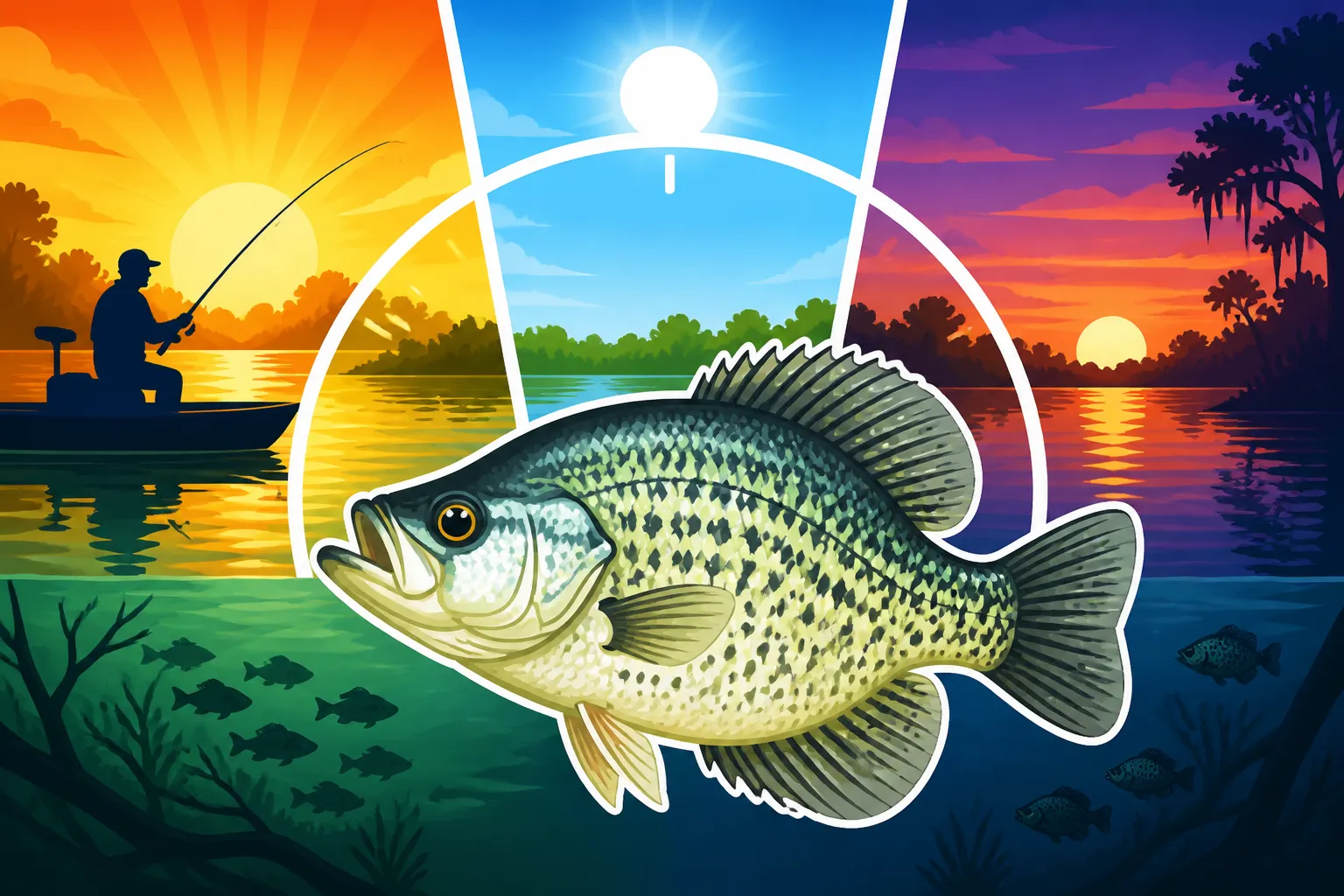
Conversely, periods of reduced light—dawn, dusk, and nighttime—often trigger peak feeding activity. The diminished light provides a sense of security, making them more comfortable moving into shallower, baitfish-rich areas where they can actively hunt. Cloudy days can also extend these feeding windows, as the clouds act like a natural diffuser, reducing the intensity of the sun and allowing crappie to remain active in shallower depths for longer.
The Role of Temperature in Crappie Movements
While light is a major driver, water temperature also plays an often-underestimated role in a crappie's daily routine, particularly as the seasons progress in Mississippi. Crappie are cold-blooded creatures, meaning their body temperature, metabolism, and activity levels are directly tied to the temperature of the water around them. In colder months, like the heart of winter, crappie's metabolism slows significantly. They become less active and seek out the most stable water temperatures, often in deeper parts of the lake.
During the scorching Mississippi summers, crappie will retreat to cooler, deeper waters during the peak heat of the day. It's not uncommon to find them suspended 20 to 30 feet down in 40 feet of water when the surface temperature is pushing 90 degrees Fahrenheit. As the sun begins to set and the surface layers cool, they might migrate shallower to feed, or they may remain deep, feeding on schools of baitfish that also seek the cooler depths. The intricate dance between light and temperature dictates their feeding windows and preferred depths, making a careful study of both essential for any serious crappie angler.
Early Morning Crappie Fishing: The Dawn Patrol Advantage
For many experienced crappie anglers, the hours just before and after sunrise are considered "prime time." There's a peaceful stillness on the water, often a slight crispness in the air, and a profound sense of anticipation that’s simply unmatched. More importantly, this is a top-tier feeding window for crappie, who are frequently emboldened by the low light and the cooler, more comfortable water temperatures.
Pre-Dawn Preparations and First Light Bite
To truly capitalize on the early morning bite, preparation is key. This means having your boat loaded, your rods rigged, and your livewell or bait bucket full the night before. When you arrive at the boat ramp, take advantage of the fading darkness to quietly motor to your desired fishing spot. Crappie, at this hour, are often positioned in shallower water, actively searching for a meal. The initial blush of light at dawn triggers a significant feeding response as they sense the day beginning and the protective darkness receding.
During this first light period, crappie tend to be quite aggressive. They'll readily strike a variety of offerings, from small jigs to lively minnows. Focus your efforts around shallow cover – think submerged brush piles, scattered lily pads, or even just shallow points and flats that drop off into deeper water. This is when you can really put some fish in the livewell before the sun gets too high and boat traffic picks up. Techniques like casting small jigs (e.g., a 1/16 oz jig head with a chartreuse grub) or slow-trolling live minnows just above the cover can be incredibly effective. Don't be afraid to experiment with different depths and retrieves in these initial moments; active fish will usually show you what they want quickly.
Post-Sunrise Slowdown and Adjustments
As the sun climbs higher in the sky and daylight intensifies, crappie often begin to pull back from the very shallowest areas. This is a common point where many anglers might decide to call it a day, mistakenly believing the bite is over. However, the crappie haven't vanished; they've simply shifted their location and their mood. The bite isn't over; it's merely transitioning.
This transition period demands a flexible approach. Instead of exclusively targeting shallow cover, you'll need to start looking for deeper structure and shade. This could involve probing the shady side of a bridge pillar, searching for a deep brush pile that drops into a creek channel, or locating schools of crappie suspended in deeper water over open areas. Your ability to effectively use Reading a Fish Finder for Crappie, will become an invaluable asset here, helping you pinpoint those submerged sanctuaries. You might also need to switch to heavier jigs (e.g., 1/8 oz or 1/4 oz) to get your bait down to the desired depth more efficiently, or perhaps employ a slip-cork rig to present a live minnow precisely where the fish are holding. The bite might not be as explosive as at first light, but with patience and the right adjustments, you can continue to find success.
Midday Crappie Fishing: The Art of the Deep Dive
The midday hours, especially on clear, sunny days, are notoriously challenging for crappie fishing. The bright sun drives them deep or into dense, protective cover, making them harder to locate and convince to bite. However, for those anglers who understand crappie patterns and are willing to adapt their strategies, midday can actually be surprisingly productive. It’s a game of precision, patience, and knowing where to look.
Locating Crappie in Deep Structure
When the sun is high and bright, crappie don't vanish; they simply seek refuge. This almost always means retreating to deeper water or dense cover where they feel safe and comfortable. Think about those hidden sunken brush piles, the sharp ledges of creek channels, standing timber, or even the shaded undersides of bridge pilings that offer crucial vertical structure. This is where your boat's electronics truly earn their keep. A reliable fish finder with good side-imaging or down-imaging capabilities can pinpoint these structures and display exactly where the crappie are holding, often in tight, dense schools.
Many anglers might overlook these deeper spots, but they hold the key to midday success. It's quite common to find crappie suspended 15 to 25 feet down in 30 to 40 feet of water, often directly over or nestled within a brush pile. They might be lethargic, but they are absolutely catchable. Your challenge is to present your bait right on their nose. Understanding How Deep Do Crappie Go in Summer, for example, is critical for this type of fishing, as they'll often move to the thermocline if one is present, seeking cooler, oxygenated water.
Bait and Lure Adjustments for Deeper Fish
Standard shallow-water tactics simply won't cut it during the midday slump. You need to get your offering down to the fish efficiently and keep it in their strike zone. Live minnows remain one of the most effective baits for deep, hesitant crappie. Hook them lightly through the lips and present them on a drop shot rig, a simple slip-sinker rig, or even slow-troll them. For artificials, small jigs (1/16 to 1/8 ounce, sometimes heavier with a jig head) in natural colors like shad, white, or chartreuse can be incredibly effective. Make sure your jig heads are heavy enough to reach the desired depth without excessive drifting.
A slow, deliberate presentation is absolutely crucial. Many successful midday anglers employ techniques like "vertical jigging," where you drop your bait directly onto the fish you see on your sonar, then barely move it, letting the crappie investigate. Sometimes, just a tiny quiver of the rod tip is enough to trigger a strike. Spider rigging, which involves slow trolling multiple rods with various baits and at different depths, is another excellent method for covering water and finding those deep-holding fish. You can find specialized crappie rods and reels for this technique on platforms like Amazon, offering great sensitivity for light bites.
The Patience Game: Slow Presentations and Finesse
Midday crappie are often in a neutral or even negative feeding mood. They aren’t actively chasing down prey; they're waiting for an easy, effortless meal to pass by. This means your presentation needs to be incredibly slow, subtle, and enticing. Forget fast retrieves or aggressive jigging motions. Think finesse. Let your minnow swim naturally, or slowly lift and drop your jig, often holding it perfectly still for several seconds. Sometimes, that prolonged stillness is exactly what it takes to coax a bite.
This is where many anglers lose patience, but those who persevere and maintain a calm, methodical approach are often generously rewarded. Pay meticulous attention to subtle bites – it might be a barely perceptible tap, a feeling of "mushiness" on the line, or simply your line going slack when it shouldn't. These are all common crappie "takes." Using light line (4-6 lb test monofilament or fluorocarbon) greatly enhances sensitivity, allowing you to detect those faint, hesitant bites. Remember, you’re not trying to provoke a chase; you’re offering an irresistible, easy snack directly in their comfort zone.
Evening Crappie Fishing: The Golden Hour Rebound
Just like the early morning, the evening hours—particularly the period leading up to and immediately after sunset—offer another fantastic opportunity for crappie anglers. As the sun dips lower, casting long shadows across the water and softening the overall light intensity, crappie often reactivate, moving from their deep-water sanctuaries back into shallower, more accessible feeding grounds.
The Dusk Frenzy
As dusk approaches, several factors align to create ideal crappie conditions. The water temperature typically begins to cool, and the light levels diminish, collectively creating a more comfortable and secure environment for crappie. This is often when you'll observe a significant increase in activity, often mirroring the intensity of the early morning bite. Crappie move shallower, becoming more aggressive and much more willing to chase bait. This "golden hour" can be incredibly productive, as they endeavor to get one last substantial meal before the full darkness of night completely takes over.
During this prime time, focus your efforts on the same types of shallow cover you'd target in the early morning: brush piles, healthy weed lines, and submerged timber located near drop-offs or creek channels. Techniques like casting small jigs or slow-trolling live minnows are exceptionally effective. Don't be surprised if the bite is fast and furious, especially if there's a good population of baitfish congregating in the area. This is an excellent time to experiment with brighter jig colors, or even a small spinnerbait, to attract those more aggressive, actively feeding fish. For even more detailed strategies on this period, our guide on Crappie Fishing Techniques for Mississippi Lakes, offers valuable insights.
Transition to Low-Light Opportunities
Once the sun has fully set and true darkness begins to settle in, the crappie don't necessarily stop biting. In fact, many dedicated anglers find that the bite can continue well into the night, albeit often with a slight shift in preferred locations or presentation styles. Crappie retain their inherent light sensitivity, meaning the consistent low-light conditions of true night are still highly favorable for them to feed without the constant threat of aerial predators.
The key during this transition is to recognize that while they might remain relatively shallow, they may also move to areas that offer slightly more depth or to distinct transition zones where they can easily retreat if spooked by boat noise or light. Using quiet approaches and subtle presentations becomes even more critical once darkness fully descends. Often, a very slow retrieve with a dark-colored jig (e.g., black, dark blue, or purple) or a live minnow suspended under a slip bobber, positioned just above submerged cover, can be incredibly deadly. Think about where the baitfish might be congregating in the deepening gloom, and you can be sure the crappie won't be far behind.
Night Crappie Fishing: Unlocking the Midnight Bite
For many recreational anglers, fishing automatically stops when the sun dips below the horizon. However, for the truly dedicated crappie angler in Mississippi, night fishing literally opens up a whole new world of opportunity, particularly during the warm summer months. Crappie, given their heightened light sensitivity, often become incredibly active, bold, and less wary under the protective cloak of darkness.
Attracting Crappie with Lights
One of the most effective and popular strategies for night crappie fishing is the strategic use of submersible fishing lights. These specialized lights, typically emitting a green or white glow, are lowered into the water directly from your boat or a pier. The light immediately begins to attract microscopic plankton, which in turn draws in small baitfish (like shad and minnows). As this food chain establishes itself, the crappie – keen predators that they are – move in to feed on the concentrated baitfish. It effectively creates a vibrant, localized ecosystem right where you want to fish.
Typically, you'll deploy your lights and then exercise patience, waiting about 30 to 60 minutes for the full food chain to properly establish itself beneath your boat. Crappie will often position themselves just outside the brightest halo of light, strategically darting in to snatch unsuspecting baitfish. Your best approach is to fish live minnows or very small jigs (1/32 to 1/16 ounce) at various depths around the light. Sometimes, they'll be right at the very edge of the light's glow, other times a bit deeper, so constant experimentation until you find their preferred depth is key. The serene absence of surface disturbance and significantly reduced boat traffic can truly contribute to some incredibly peaceful and remarkably productive night fishing sessions. You can find a wide selection of reliable submersible fishing lights on Amazon, perfectly suited for setting up your nighttime crappie hot spot.
Shallow Water Nighttime Opportunities
While submersible lights can undoubtedly be a game-changer, you don't always need them to successfully catch crappie at night. During specific conditions, such as under a bright full moon, or on calm, heavily overcast nights, crappie will often venture into surprisingly shallow areas to feed. They might be lurking around docks, piers, or shallow brush piles and lily pads that they would unequivocally avoid during the harsh light of daytime hours.
This phenomenon is particularly true for larger, more mature crappie, which can exhibit more pronounced nocturnal feeding habits. Stealth is paramount when you're targeting shallow crappie at night. Use a quiet electric trolling motor, avoid pointing bright headlamps directly at the water, and cast your baits with utmost gentleness to avoid spooking fish. A straightforward slip bobber rig with a live minnow, or a dark-colored jig retrieved at an incredibly slow pace, can be exceptionally effective in these low-light, shallow-water scenarios. Remain observant for any subtle disturbances on the water's surface, as these could easily be crappie actively busting baitfish.
Safety Considerations for Night Anglers
Night fishing, while incredibly rewarding, comes with its own distinct set of safety considerations that must never be overlooked. Always, without exception, inform someone of your plans – including your intended fishing location and your expected return time. Ensure that all of your boat's navigation lights are fully functional, correctly positioned, and clearly visible to other potential boaters. Crucially, always wear a U.S. Coast Guard-approved life jacket, especially if you are fishing alone. The water can become incredibly disorienting in the dark, and unseen obstacles like submerged logs or sandbars pose significant hazards.
Bring a powerful flashlight or a dedicated spotlight for navigating back to the boat ramp and for intricate tasks like tying knots or re-baiting hooks. A well-stocked first-aid kit, extra batteries for your electronics and lights, and a fully charged cell phone are also absolutely essential items. Exercise extreme caution around any known submerged hazards, as they are significantly harder, if not impossible, to spot at night. If possible, consider fishing with a trusted buddy for enhanced safety. The unique peace and potential productivity of night crappie fishing are well worth the effort, but only if you rigorously prioritize your well-being.
Seasonal Shifts and Their Impact on Daily Crappie Patterns
It's common to think of the "best time of day" as a fixed concept, but crappie are remarkably adaptable creatures. Their daily routines are profoundly influenced by the broader seasonal movements and significant temperature fluctuations that occur throughout the year in Mississippi. What proves incredibly effective in the spring might be utterly useless in the intense heat of summer or the biting chill of winter.
Spring: The Spawn and Post-Spawn Shifts
Spring is widely regarded as the "glory days" for crappie fishing across Mississippi, primarily due to the annual spawning ritual. As water temperatures steadily climb into the comfortable 50s and 60s Fahrenheit, crappie migrate into surprisingly shallow water to spawn. During this critical period, the "best time of day" can often feel like whenever you can manage to get out on the water, as they are actively guarding nests and feeding aggressively. To perfectly time your trips, you can find detailed information about What Month Do Crappie Spawn in Mississippi? in our comprehensive guide.
However, even during the frantic spawn, the low-light periods of early morning and late evening typically remain peak feeding times. Fish are generally less skittish and more willing to chase and strike baits. After the spawn concludes, crappie usually transition slightly deeper but often remain relatively shallow, focusing on recuperating and continuing to feed heavily. This is when they might hold on secondary points, along creek channel bends, or on the outer edges of submerged grass beds. Their daily pattern might involve them pushing into the shallows at dawn and dusk, then retreating to slightly deeper, more secure cover during the intense midday sun.
Summer: Deep Water Retreats and Nighttime Feasts
Summer in Mississippi brings with it intense heat, and with that heat, dramatic shifts in crappie behavior. As surface water temperatures soar, crappie largely abandon the very shallowest areas during the daytime hours. They diligently seek out the cooler, more stable temperatures found in deeper water, often suspending over prominent creek channels, near distinct thermoclines (layers of rapid temperature change), or holding tightly to deep, dense brush piles.
During these hot months, the "best time of day" often shifts dramatically. The early morning bite can still be quite strong, but it's typically short-lived before the fish retreat to the depths. The evening bite can also be productive as air and water temperatures begin to cool. However, it is night fishing that truly shines in the summer. With the intense sun safely gone, crappie become much more comfortable moving, roaming, and actively feeding. The strategy of using submersible lights to draw them in, as discussed earlier, becomes a primary and incredibly effective tactic. This is when a thorough understanding of the Mississippi Summer Fishing Guide, which emphasizes adaptability to extreme heat, becomes absolutely critical for success.
Fall: The Feeding Frenzy and Migration
Fall presents another fantastic window for crappie fishing in Mississippi, as water temperatures gradually begin to cool, and crappie enter a significant feeding frenzy in preparation for the upcoming winter. During this prolific period, baitfish populations are also incredibly active, often schooling up in large numbers. Crappie will diligently follow these baitfish, making them more migratory but also more predictable once you successfully locate the schools.
The "best time of day" in the fall tends to revert to strong, consistent morning and evening bites. Crappie will frequently move onto shallow flats or prominent points to feed on abundant shad at dawn and dusk, subsequently retreating to creek channels or other deeper structure during the midday hours. Trolling, particularly with multiple rods spread out, can be an exceptionally effective method during the fall to cover expansive areas of water and locate these actively feeding schools. The tactics described in our guide on Trolling for Crappie on Mississippi Reservoirs, can prove to be exceptionally useful during this season. The fish are often more aggressive, making for some truly memorable and productive days on the water.
Winter: Sluggishness and Stable Depths
Winter fishing for crappie in Mississippi can be challenging due to the cold, but it can also be incredibly rewarding for those anglers brave enough to face the chill. Crappie metabolism slows down dramatically in cold water, rendering them less active and typically causing them to hold in very specific, stable locations. They typically seek out the deepest parts of lakes and reservoirs where water temperatures are most consistent and less prone to rapid fluctuations.
In winter, the "best time of day" is often around midday or during the early afternoon, especially on bright, sunny days. Even a slight increase in ambient air temperature or a bit of direct solar radiation can warm the surface layers just enough to activate crappie for a short, but often intense, feeding window. You'll generally find them suspended in deep channels or hugging tight to structure in 20 to 40 feet of water. Vertical jigging or incredibly slow-trolling very small jigs or tiny live minnows are the tried-and-true techniques. It's a game of patience and precision, but perseverance often pays off with some of the biggest crappie of the entire year. For specific cold-water tips, make sure to see How to Catch Crappie in Cold Winter Water.
Beyond the Clock: Other Factors Influencing Crappie Bite Times
While understanding the daily and seasonal patterns of crappie behavior is absolutely paramount, crappie fishing is rarely a simple "time-of-day" equation. There are several other crucial environmental factors that can significantly influence when and how crappie decide to bite, often overriding what might typically be considered the prime hours. Paying close attention to these subtle cues can often be the difference between a slow, frustrating day and a truly stellar one on the water.
Water Temperature's Overarching Influence
We've touched on it previously, but it bears repeating with emphasis: water temperature is arguably the most critical factor influencing crappie activity. Since crappie are cold-blooded, their metabolic rate is directly correlated with the surrounding water temperature. When the water is either too cold (generally below 45°F) or excessively hot (typically above 85°F), their activity levels decrease dramatically, and their feeding windows become significantly shorter and more specific. The ideal range for crappie metabolism and active feeding is generally between a comfortable 60-75°F.
During periods of stable, comfortable temperatures, crappie might adhere to more predictable daily patterns. However, a sudden, sharp cold front can immediately shut them down, pushing them deep and making them lethargic, irrespective of the time of day. Conversely, a sustained warming trend during the winter months can sometimes spark a brief but intense feeding window during midday. Always make it a practice to consult a reliable water temperature gauge and adjust your expectations and fishing tactics accordingly. Knowing the Best Water Temperature for Crappie Fishing, provides a significant advantage in these situations.
Barometric Pressure and Weather Changes
Few environmental factors influence fish behavior more dramatically than changes in barometric pressure. A stable, high-pressure system typically signals consistent fishing, and crappie might adhere closely to their typical dawn and dusk feeding patterns. However, a falling barometer, which often precedes a significant storm front, can frequently trigger an intense feeding frenzy as fish sense the impending weather change and feed aggressively in anticipation.
Conversely, a rapidly rising barometer, which usually occurs after a front has passed and clear, bluebird skies prevail, often results in notably tough fishing conditions. Crappie tend to become tight-lipped, seeking deep cover and becoming very sluggish. On these challenging post-front days, the midday bite might actually be the only bite, as the fish slowly acclimate to the new pressure. Overcast days with light rain, even during midday, can often extend feeding windows because the reduced light intensity makes crappie more comfortable remaining active in shallower water. To further understand these weather influences, consider exploring our full Mississippi Fishing Seasons Calendar.
Moon Phase and Tidal Influences (for Gulf Coast)
While typically discussed more extensively in saltwater fishing circles, moon phases can also subtly influence freshwater crappie, particularly around the major full and new moon periods. Many experienced anglers report that crappie can be noticeably more active around these major and minor moon phases, potentially due to increased nocturnal feeding opportunities provided by a brighter moon. While this observation is largely anecdotal for many, some anglers absolutely swear by consulting a solunar calendar before heading out on their crappie expeditions.
For crappie fishing specifically near the Mississippi Gulf Coast in brackish estuarine waters, tidal influences can indeed become a significant factor. Moving water (whether an incoming or outgoing tide) often concentrates baitfish into predictable areas and reliably triggers feeding activity in crappie. On the calmer, landlocked inland lakes and reservoirs of Mississippi, however, tidal effects are generally negligible, and any influence from the moon phase is typically considered secondary to the more dominant factors of light, temperature, and barometric pressure.
Gear and Techniques for All Day Crappie Success
Having the right gear and possessing the knowledge of how to effectively adapt your fishing techniques throughout the day is just as crucial as knowing when to fish. Crappie fishing in Mississippi is incredibly diverse, ranging from shallow, tangled brush piles to expansive, deep open water, meaning your tackle box needs to be well-prepared for whatever challenges the day may present.
Essential Rods, Reels, and Lines
For crappie fishing, light tackle is overwhelmingly preferred due to the fish's delicate bite and relatively small mouth. A versatile setup typically consists of a 6 to 7-foot light action spinning rod paired with a small spinning reel (ideally a size 1000-2000). This reel should be spooled with high-quality 4-6 lb monofilament or fluorocarbon line. This combination allows for exceptional sensitivity in detecting those incredibly light crappie pecks, which are often barely perceptible. For even greater sensitivity, particularly when fishing deep or in windy conditions, many anglers opt for 6-10 lb braided line with a short fluorocarbon leader (4-6 lb test). Many affordable yet high-quality options for these crappie setups can be conveniently found and purchased on Amazon.
For specialized techniques like spider rigging, longer crappie rods (ranging from 10 to 16 feet) are commonly employed to effectively spread multiple lines and present baits at varying depths simultaneously. When "dock shooting" or precisely pitching small jigs into tight, confined cover (such as under docks or overhanging trees), a shorter, fast-action rod (typically 4.5-5.5 feet) provides the necessary precision and control. While no single rod can perfectly do it all, a couple of versatile light-action spinning setups will adequately cover the vast majority of crappie fishing situations you'll encounter.
Baits, Lures, and Presentation Strategies
When it comes to enticing crappie, both live bait and a wide array of artificial lures have their specific time and optimal place. Live minnows, particularly common fathead minnows, are considered a universal crappie magnet and are often unbeatable when the fish are finicky, lethargic, or holding in deep water. They can be effectively presented under a traditional bobber, on a tight line, or using a simple slip-sinker rig. Learning How to Rig Live Shiners for Crappie, is a foundational technique that consistently works wonders across Mississippi.
For artificials, small jigs unequivocally reign supreme. Sizes ranging from 1/32 to 1/8 ounce are the most common, and they are typically tipped with various soft plastic bodies like tubes, grubs, or small paddletails. The color palette for jigs can vary widely, from natural shades (such as white, gray, or clear) to vibrant, attention-grabbing hues (like chartreuse, pink, or orange), depending heavily on the water clarity and the current mood of the fish. It's often beneficial to consider experimenting with the best jig color for stained water crappie fishing when conditions are murky or discolored. Other effective artificial lures include diminutive spinnerbaits, tiny crankbaits, and for the fly-fishing enthusiast, small nymphs or streamers. The overarching key is to effectively "match the hatch" (i.e., imitate local baitfish) and to consistently present your chosen lure precisely at the crappie's current depth.
Using Electronics to Your Advantage
In the realm of modern crappie fishing, advanced electronics are no longer merely a luxury but have become an undeniable necessity, especially when you're diligently trying to decipher the "best time of day" puzzle. A high-quality fish finder or sophisticated sonar unit can rapidly display depth contours, pinpoint crucial submerged structures like brush piles and timber, and – perhaps most importantly – reveal schools of crappie and their forage baitfish. This capability is particularly vital during the challenging midday hours or in the cold winter months when crappie are predominantly holding in deeper water.
Modern side imaging and down imaging technologies take this a step further, allowing you to visually "see" structure away from or directly beneath your boat with incredible clarity. This enables you to approach target areas stealthily and position your casts or trolling lines with pinpoint precision. Knowing how to accurately interpret what you observe on your screen, as meticulously detailed in our comprehensive guide on Reading a Fish Finder for Crappie, will dramatically enhance your efficiency and help you consistently pinpoint those highly productive zones, regardless of the actual time on the clock. Ultimately, it’s about successfully finding the fish first, and then strategically determining the most effective method to entice them into biting.
| Time of Day | Typical Crappie Behavior | Recommended Tactics | Prime Seasons |
|---|---|---|---|
| Pre-Dawn | Moving to shallow cover, actively feeding. | Cast small jigs, slow-troll minnows in shallow (2-8 ft) cover. | Spring, Fall, Summer (briefly) |
| Sunrise | Aggressive shallow bite, major feeding window. | Casting jigs, small spinnerbaits, minnows under bobbers near cover. | All seasons, especially Spring/Fall |
| Mid-Morning | Retreating from intense light, seeking deeper cover or suspending. | Vertical jigging, spider rigging minnows/jigs over deep structure (8-20+ ft). | All seasons, especially Summer, Winter |
| Midday | Often lethargic, holding tight to deep structure, shade. | Finesse presentations, slow drops, live minnows, small jigs directly on fish. | All seasons, often toughest bite, but productive with precision |
| Late Afternoon | Starting to move shallower from deep cover, moderate activity. | Similar to mid-morning, gradually transitioning to shallower approaches. | All seasons |
| Dusk/Sunset | Reactivating, moving to shallow feeding grounds, strong bite. | Casting jigs, small crankbaits, minnows near cover and transition areas. | All seasons, especially Spring/Fall |
| Night | Highly active, less wary, attracted by lights, or in very shallow cover. | Submersible lights, vertical jigging, slip bobbers with minnows/dark jigs. | Summer, late Spring, early Fall |
Disclaimer
Fishing involves inherent risks. Always prioritize your safety, wear appropriate personal flotation devices, and remain acutely aware of prevailing weather and water conditions. Before heading out, always consult and strictly adhere to the latest Mississippi fishing regulations, which include specific licensing requirements, creel limits, and size restrictions. This comprehensive guide is provided solely for informational purposes and does not in any way guarantee fishing success.