Smallmouth Bass Fishing in Mississippi
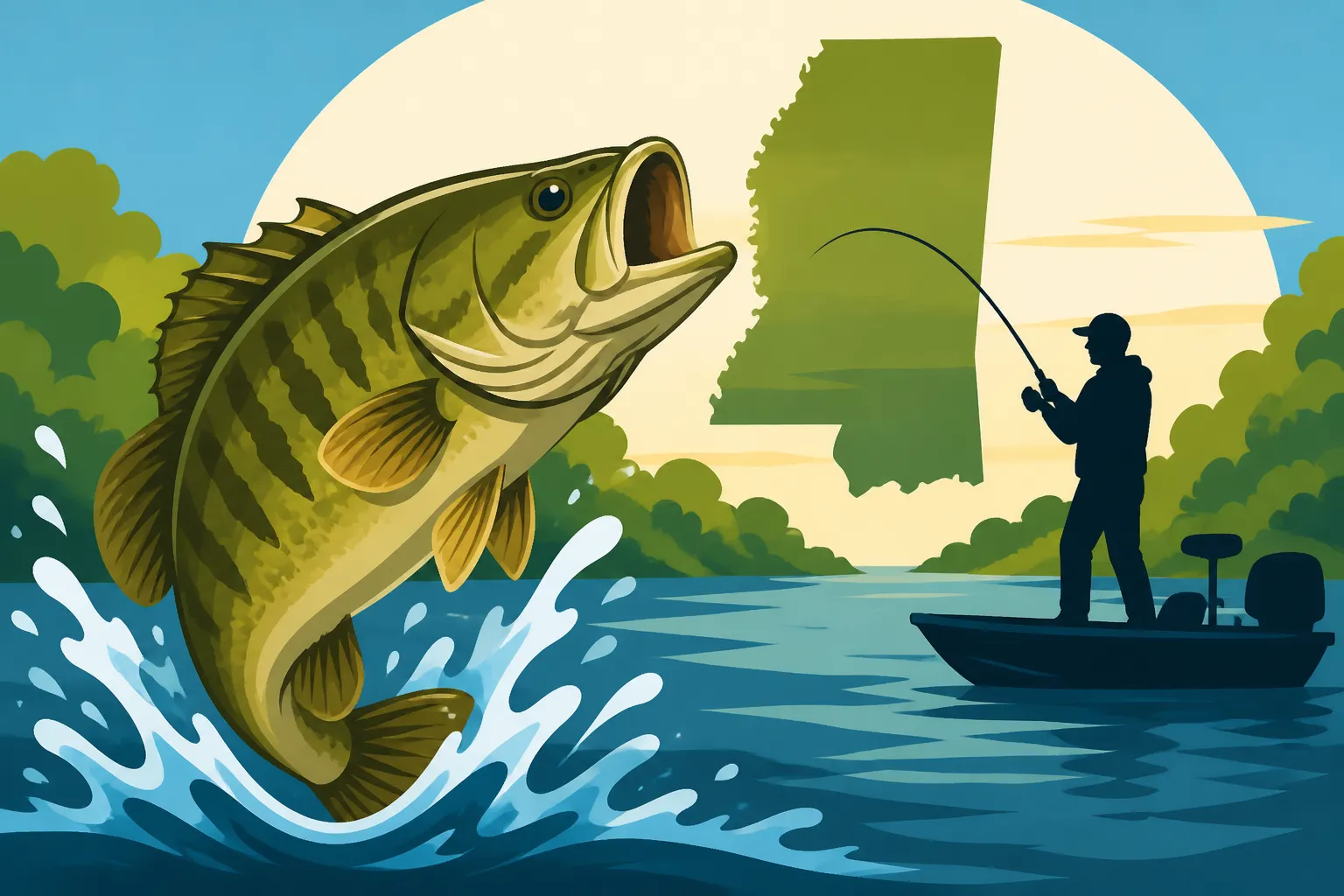
It's a common dream for many anglers, especially those who've fished in other states, to experience the thrill of smallmouth bass fishing. That bronze bullet, with its aggressive fight and acrobatic jumps, is truly a prize. However, if you've been poring over maps of Mississippi's waters, hoping to pinpoint a smallmouth hotspot, you might be feeling a bit of frustration or confusion. The reality is, finding smallmouth bass in Mississippi is a significant challenge, as they are not a native or widespread species here. This guide will clarify why that is, where you might have the slimmest chance of encountering one, and most importantly, introduce you to the fantastic fighting bass species that do thrive in our beautiful Mississippi waters, offering an equally exhilarating angling experience.
The Elusive Smallmouth: Are They Even in Mississippi?
Let's address the elephant in the boat right away. The quest for smallmouth bass in Mississippi is, for the most part, a pursuit of a ghost. Unlike states to our north, where rivers and lakes teem with these bronze beauties, Mississippi's environment simply isn't their natural home. It's a tough truth to swallow when you're dreaming of that signature fight, but understanding why they're so rare here is the first step to successful fishing in our state.
The General Reality: Not a Native Species
Smallmouth bass, Micropterus dolomieu, are primarily a species of cooler, clearer waters, often associated with rocky bottoms and flowing rivers or deep, structured lakes. Think of the mountainous streams and large, ancient lakes of the Midwest, Northeast, and parts of the Appalachian region. Mississippi, with its generally warmer climate, slower-moving rivers, and extensive network of often-turbid lowland reservoirs and oxbow lakes, doesn't fit this profile well. Our waters are, by nature, far more suited to their cousins, the largemouth and spotted bass, which have evolved to thrive in these conditions. This fundamental ecological difference means that smallmouth bass have never established a strong, self-sustaining population across most of the state.
Dispelling Common Misconceptions and Hopes
It's easy to get excited by a fleeting rumor or a single, unverified report of a smallmouth caught somewhere in Mississippi. Perhaps you saw a photo on social media or heard a story at the bait shop. While a single smallmouth might occasionally be caught, these instances are typically isolated and not indicative of a thriving population. One common misconception is that a bass with a small mouth must be a smallmouth bass. This isn't always true, as juvenile largemouth can sometimes have smaller mouths in proportion to their bodies, and spotted bass, which are very common here, also have mouths that don't extend past the eye, similar to smallmouths. Anglers sometimes confuse these species, particularly spotted bass, with smallmouths due to their similar appearance and feisty nature. It's a natural mistake, especially when you're hoping for a specific catch!
The Geographical Challenge
Mississippi's geography presents a significant barrier to smallmouth bass proliferation. The majority of our state is characterized by lower elevations, warmer water temperatures for much of the year, and extensive floodplains. While we have incredible fishing, it's generally for species adapted to these conditions. The few areas where one might theoretically find smallmouth are very specific—typically in the extreme northern reaches of the state, particularly in waters bordering Tennessee, or within certain impoundments that have historically received stocking efforts. Even in these limited zones, the numbers are usually very low, and finding them requires immense dedication and often a stroke of pure luck. It's truly a needle-in-a-haystack scenario for most of the state.
Why Smallmouth Bass Aren't a Primary Target Here
Given their rarity, it makes sense that smallmouth bass aren't on the radar for most Mississippi anglers. There are several key ecological and management reasons why this is the case, beyond just their non-native status. Understanding these factors can help you appreciate the incredible fishing opportunities that do exist for our abundant native bass species.
Preferred Habitat: Cold, Clear, Rocky Waters
Smallmouth bass are particular about their living arrangements. They thrive in environments that offer cooler, highly oxygenated water, often with significant current and rocky substrates like gravel, boulders, and ledges. These conditions provide the perfect ambush points and foraging grounds for their diet of crayfish and smaller baitfish. Think of the deep, clear lakes of the Ozarks or the swift, rocky rivers of the upper Midwest. In Mississippi, while we have some clear waters and rocky areas, particularly in the extreme northeast, these spots are typically limited in scope and don't maintain the consistent cool temperatures and specific current profiles that smallmouths require to truly flourish and reproduce naturally on a widespread basis. Our major reservoirs, while fantastic for Largemouth Bass Fishing in Mississippi and Crappie Fishing in Mississippi, generally have warmer, often more turbid water and softer, muddier bottoms which are less hospitable to smallmouth.
Competition with Native Bass Species
Even if a few smallmouth bass found their way into Mississippi waters, they would face fierce competition from the state's dominant bass species: largemouth and spotted bass. These native fish are perfectly adapted to Mississippi's climate and aquatic environments. Largemouth bass excel in warmer, weedier, and more varied habitats, from shallow flats to deep timber. Spotted bass, often mistaken for smallmouth, thrive in riverine systems and reservoir main lakes, often preferring areas with some current and structure. These species are incredibly prolific and efficient predators, occupying the same ecological niche (or a very similar one) that smallmouth might attempt to fill. When an introduced species faces such established and successful competitors, it's incredibly difficult for them to gain a foothold and develop a self-sustaining population. This competitive pressure means that any smallmouth present would likely be outcompeted for food, spawning grounds, and prime habitat.
Limited Stocking Efforts and Survival Rates
While some states engage in extensive stocking programs to introduce or bolster smallmouth bass populations, Mississippi has historically not focused significant resources on this endeavor. The Mississippi Department of Wildlife, Fisheries, and Parks (MDWFP) wisely concentrates its efforts on managing and enhancing the populations of species that naturally thrive here, like largemouth bass, Crappie Fishing in Mississippi, and Catfish Fishing in Mississippi, and the highly sought-after Speckled Trout Fishing on the Mississippi Coast. Even when experimental stockings of smallmouth have occurred in very limited, specific locations in the past (often in collaboration with neighboring states on border waters), the long-term survival and reproductive success rates have generally been low. The waters simply don't provide the sustained, ideal conditions for smallmouth to truly "take off." It's a testament to good fishery management, focusing on what works best for the local environment and angler success.
Where You Might Encounter Smallmouth Bass (The Rare Exceptions)
While the general rule is that smallmouth bass are exceedingly rare in Mississippi, there are a few very specific and limited scenarios where an angler might, against incredible odds, encounter one. These are not guaranteed hotbeds, but rather the slimmest of chances, often linked to geographical proximity to other states where smallmouth are common.
Border Waters and Upstream Influence
The most plausible, albeit still highly improbable, place to encounter a smallmouth bass in Mississippi would be in waters directly bordering states where smallmouth are well-established. The prime example here is the extreme northeastern corner of Mississippi, particularly the waters around Pickwick Lake Fishing Guide on the Tennessee River. Pickwick Lake itself extends into Alabama and Tennessee, and these upstream areas are known for smallmouth populations. Occasionally, a smallmouth might migrate downstream or be caught near the Mississippi state line in this very specific region. This isn't a common occurrence, and it wouldn't be a targeted fishery within Mississippi, but rather a rare straggler from upstream populations. Anglers fishing the Tennessee-Tombigbee Waterway or connecting systems in the very far northeast might have the slightest chance, but it's still a long shot, and most "smallmouth" catches are likely to be spotted bass. For more on the rules in this area, check out Mississippi Border Water Fishing Rules.
Historic or Isolated Stocking Programs
Historically, there might have been very isolated or experimental stocking efforts in certain reservoirs, perhaps many decades ago, to see if smallmouth could take hold. However, these attempts have largely been unsuccessful in establishing self-sustaining populations for the reasons we've already discussed: habitat unsuitability and competition. Any lingering fish from such programs would be exceedingly old and rare. It's not a current management strategy, and you won't find specific lakes being actively stocked with smallmouth bass today by MDWFP for public fishing. The focus remains on species that thrive in our specific ecosystem. Therefore, don't plan a trip hoping to fish a smallmouth-stocked lake; it simply isn't a current reality for Mississippi anglers.
Accidental Introductions
In rare instances, smallmouth bass might be accidentally introduced into a private pond or a small, isolated body of water. This could happen if someone transports baitfish or fingerlings from an area where smallmouth are present and releases them locally. However, even in these scenarios, without the proper habitat and a large enough gene pool, these populations rarely thrive or expand beyond their initial limited introduction. They certainly wouldn't contribute to a widespread public fishery. Furthermore, moving fish between water bodies without proper permits can introduce diseases or invasive species, which is why it's generally discouraged and often illegal. It's far better to appreciate the fantastic native species that are already abundant and well-managed in Mississippi.
Identifying Your Catch: Smallmouth vs. Spotted vs. Largemouth Bass
One of the biggest reasons for the confusion surrounding smallmouth bass in Mississippi is misidentification. Many anglers, excited by a hard-fighting fish, might quickly label a catch as a "smallmouth" when it's actually one of its close relatives that are abundant here. Knowing the key differences can help you correctly identify your catch and better understand the species you're truly targeting in our waters.
Key Visual Differences
While all three are members of the Micropterus genus (the black bass family), they have distinct features. Let's break down the most common visual cues:
-
Smallmouth Bass:
- Coloration: Typically bronze, brown, or goldish-brown, often with vertical bars or blotches on their sides.
- Mouth: Upper jaw does not extend beyond the rear of the eye when closed.
- Dorsal Fin: Connected, but with a noticeable dip between the spiny and soft-rayed sections.
- Eyes: Often reddish.
- Scales: Smaller, giving them a smoother appearance than largemouth.
-
Largemouth Bass:
- Coloration: Greenish back fading to lighter green or white belly, usually with a prominent, irregular dark lateral line down its side.
- Mouth: Upper jaw extends well beyond the rear of the eye when closed. This is the most defining characteristic.
- Dorsal Fin: Deep notch, almost appearing as two separate fins.
- Eyes: Typically brown or gold.
-
Spotted Bass (also known as Kentucky Bass):
- Coloration: Similar to largemouth, but often with more distinct dark spots below the lateral line, forming rows. There's usually a rough patch of teeth on the tongue.
- Mouth: Upper jaw does not extend beyond the rear of the eye, similar to a smallmouth, but their body shape is generally more slender than a smallmouth.
- Dorsal Fin: Similar to a largemouth, with a deep notch.
- Patch on Tongue: This is a crucial identifier! Run your finger over their tongue; if it feels like sandpaper, it's almost certainly a spotted bass.
Here's a quick comparison table:
| Feature | Smallmouth Bass | Largemouth Bass | Spotted Bass |
|---|---|---|---|
| Mouth Size | Upper jaw ends before or at eye | Upper jaw extends past eye | Upper jaw ends before or at eye |
| Coloration | Bronze/brown with vertical bars/blotches | Greenish with distinct dark lateral stripe | Greenish with spots below lateral line |
| Dorsal Fin | Connected, but with a noticeable dip | Deep notch, almost separated | Deep notch, almost separated |
| Tongue Patch | Smooth | Smooth | Rough, sandpaper-like patch (key ID!) |
| Body Shape | More muscular, streamlined, bronze-colored | Stockier, often deeper body | Slender, torpedo-shaped |
For an even deeper dive into how to tell these species apart, especially for those new to our waters, check out Bass Identification Guide for Mississippi Anglers.
Habitat Clues for Identification
Beyond visual cues, the location where you catch a bass can provide strong clues about its species:
- Smallmouth Bass (Rare Exception): If by some chance you caught one, it would likely be in very clear, cooler, rocky areas, possibly with strong current, especially in the extreme northern part of the state, such as areas influenced by the Tennessee River system.
- Largemouth Bass: These are the kings of Mississippi's diverse waters. You'll find them in almost every type of freshwater habitat: weedy coves, lily pads, submerged timber, stump fields, boat docks, shallow flats, and brush piles in reservoirs like Ross Barnett or Grenada Lake. If you're fishing a typical Mississippi lake or slower river section with plenty of cover, chances are high it's a largemouth.
- Spotted Bass: Often found in similar waters to largemouth, but they tend to prefer areas with more current, deeper rock structure, and clearer water. They thrive in river systems like the Pearl River and Tennessee-Tombigbee Waterway, and in the main lake basins of many of our larger reservoirs. They often suspend over deeper channels or relate to bluff walls and rocky points. Many anglers fishing these types of spots are convinced they've found smallmouth due to the spotted bass's aggressive bite and tendency to fight hard in open water.
Bass Identification Guide for Mississippi Anglers
This internal guide offers a comprehensive look at how to differentiate between the various black bass species found in Mississippi. It delves into more subtle features and provides practical tips to ensure you can confidently identify your catch. Correct identification is not just about bragging rights; it's also important for adhering to specific Mississippi Fishing Regulations Explained for each species, which can vary in terms of Mississippi Fishing Creel and Size Limits. Understanding what you're catching helps you become a more informed and responsible angler, contributing to the health of our fisheries. If you ever have a doubt, a quick photo and consultation with experienced local anglers or resources from the MDWFP can clarify things in a snap.
Targeting Similar Fights: What Mississippi Offers Instead
So, if smallmouth bass are largely a no-go, does that mean you can't find a hard-fighting, exciting bass experience in Mississippi? Absolutely not! Our state is a true angler's paradise, brimming with opportunities to hook into powerful, acrobatic bass that will put your gear and skills to the test. If you love the fight of a smallmouth, you'll be thrilled with what our native species deliver.
The Mighty Spotted Bass Experience
If you're after a fight that closely mimics the smallmouth, look no further than the spotted bass, Micropterus punctulatus. These fish are often called "Kentucky bass" and for good reason: they are incredibly feisty for their size, pulling hard and making strong runs. Many anglers who swear they've caught a smallmouth in Mississippi have actually landed a big spotted bass, and it's easy to see why they get confused! Spotted bass are abundant in many of our river systems, like the Pearl and Pascagoula, and in the clear, deeper sections of major reservoirs such as Bay Springs Lake Fishing Guide and Columbus Lake Fishing Guide. They love current and rocky structure, much like smallmouth, and they'll readily strike a variety of lures, from crankbaits to jigs to finesse worms.
Fishing for spotted bass often involves targeting points, bluff walls, ledges, and creek channels, especially where there's some flow. They school up, so when you find one, you're likely to find more. The thrill of a spotted bass hitting your lure in current and fighting like a fish twice its size is a genuine Mississippi angling highlight. Their aggressive nature and tendency to smash baits make them an absolute blast to catch. For anglers transitioning from smallmouth, the spotted bass offers a truly comparable and satisfying experience right here at home.
Chasing Feisty Largemouth in Rivers and Reservoirs
While the smallmouth is famed for its fight, let's not forget the largemouth bass, Micropterus salmoides. Our Mississippi largemouth are not just bigger; they are incredibly powerful and provide thrilling battles. A chunky 4-pound largemouth from a healthy Mississippi lake will pull like a freight train, often making explosive jumps and burrowing deep into cover. Rivers like the Pearl and Tombigbee, and colossal reservoirs such as Ross Barnett Reservoir Fishing Guide, Grenada Lake Fishing Guide, and Sardis Lake Fishing Guide, are prime hunting grounds for trophy largemouth. These fish are absolute predators, and their willingness to attack a wide array of presentations, from topwater frogs over lily pads to deep-diving crankbaits in submerged timber, makes them a fantastic target.
The diversity of habitat in Mississippi allows for a myriad of Bass Fishing Techniques for Mississippi Anglers specifically designed for largemouth. You can pitch jigs into heavy cover, flip creature baits into dense weeds, or burn spinnerbaits across open water. Each technique offers its own unique adrenaline rush when a big largemouth engulfs your offering. Don't underestimate the sheer power and excitement of a Mississippi largemouth – they are a worthy adversary for any angler looking for an aggressive fight.
White Bass: A River Fighter with Similarities
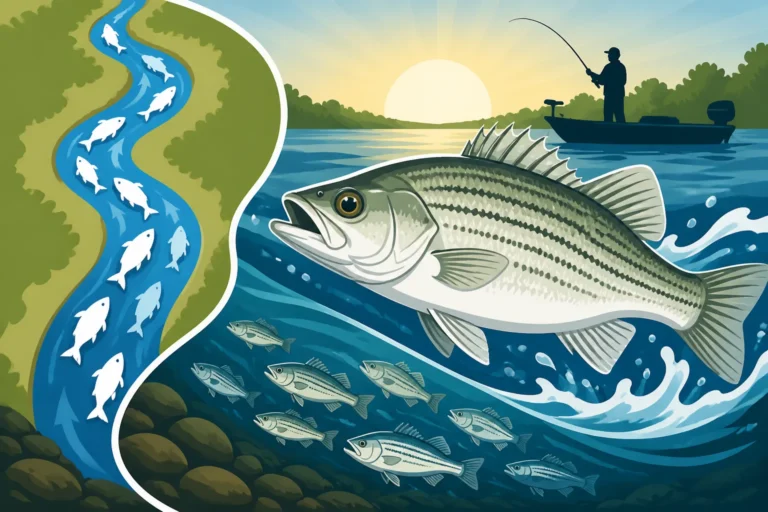
For anglers seeking an abundance of hard-fighting, schooling fish in a riverine environment, the white bass, Morone chrysops, is an excellent alternative. While not a "true" bass (they're actually part of the temperate bass family, along with stripers and hybrid stripers), they offer an exhilarating experience that shares some characteristics with smallmouth fishing – especially their schooling behavior and aggressive strikes. White bass thrive in many of Mississippi's larger river systems and the tailwaters below our major dams. Their spring runs are legendary, with massive schools pushing upstream, creating feeding frenzies.
When hooked, white bass are tenacious fighters, making strong, head-shaking runs. They respond well to small crankbaits, spoons, and inline spinners. If you enjoy the fast action and consistent bites often associated with smallmouth schooling, then chasing white bass during their runs or finding them schooling in open water will provide an unforgettable day. They're also excellent table fare! For more on these energetic fighters, check out White Bass Fishing in Mississippi. While they might not be bronze, their fight and sheer numbers can make for an action-packed day on the water.
Gear and Techniques for Mississippi Bass (That Could Apply to Smallmouth)
Even though smallmouth bass are rare, the techniques and gear you might use to target them in other states are often perfectly suited for catching the hard-fighting spotted and largemouth bass that are abundant in Mississippi. It's all about adapting your approach to the local conditions and understanding what our native fish prefer.
Recommended Lures and Baits for Rocky Areas
If you were trying to find that elusive smallmouth in rocky, current-laden areas, your tackle box would likely be full of certain go-to lures. Guess what? These same lures are incredibly effective for spotted bass and largemouth bass that frequent similar habitats in Mississippi!
- Crankbaits: Small to medium-sized crankbaits, particularly those with a tight wobble and crawfish patterns, are deadly. Spotted bass absolutely crush these when they're feeding on crawfish around rocks and ledges. Lipless crankbaits can also be effective when burned over rocky points.
- Jigs: Finesse jigs (1/4 to 3/8 oz) with a brush guard, tipped with a small plastic craw or chunk, are fantastic for probing rocky bottoms and ledges. These mimic crayfish, a staple diet for spotted bass. Amazon offers a wide selection of these versatile lures.
- Spinnerbaits and Chatterbaits: When bass are active in rocky transitions or around submerged brush near rock, a spinnerbait or Chatterbait can be incredibly effective. The flash and vibration can draw strikes from aggressive fish.
- Soft Plastics: Weightless wacky-rigged worms or shaky heads with finesse worms are excellent for enticing wary bass around rock piles and current seams. Drop shot rigs are also fantastic for vertically presenting a bait to fish holding tight to structure.
- Tube Baits: While not as commonly used for largemouth, tubes are classic smallmouth baits that spotted bass will readily hit. Rigged on an internal jig head, they're perfect for hopping along rocky bottoms.
Remember, the key is to present your lure naturally and be prepared for an aggressive strike. Understanding the water column and current is crucial for getting your bait into the strike zone.
Rod and Reel Setups for Aggressive Fighters
Matching your gear to the fight is essential, and the kind of setup ideal for smallmouth bass is also perfectly suited for our powerful spotted and largemouth bass. You want sensitivity to feel the subtle bites, but also enough backbone to handle strong runs and aggressive head shakes.
- Spinning Gear: For lighter lures and finesse techniques, a medium-light to medium power spinning rod (6'6" to 7'2" length) with a fast action tip is ideal. Pair this with a 2500 or 3000 series spinning reel spooled with 8-12 lb fluorocarbon or braided line with a fluorocarbon leader. This setup offers excellent casting distance for lighter baits and the sensitivity to detect those faint bites. It's a great all-around choice for targeting spotted bass in clearer water.
- Casting Gear: For heavier lures like crankbaits, larger jigs, or spinnerbaits, a medium to medium-heavy power baitcasting rod (6'8" to 7'6" length) with a fast or moderate-fast action is preferred. A good quality baitcasting reel with a moderate gear ratio (around 6.X:1) is versatile for many techniques. Spool it with 12-17 lb fluorocarbon or 30-50 lb braid. This setup provides more power for setting hooks and pulling bigger fish out of cover, which is often necessary for those strong Mississippi largemouth. Finding reliable brands like Daiwa or Shimano on Amazon can get you started with quality gear. For more advice on choosing the right gear, check out Choosing the Right Rod and Reel for Mississippi Fishing.
Seasonal Approaches for "Smallmouth-like" Habitat
While true smallmouth seasons aren't a concept in Mississippi, adapting your approach based on the time of year and targeting habitats preferred by spotted and largemouth bass that resemble smallmouth areas can lead to great success.
- Spring (Pre-Spawn/Spawn): As water temperatures rise, spotted bass will move shallower onto rocky points, bluff walls, and gravelly flats to spawn. Largemouth will do the same in their preferred shallower, weedy areas. Focus on transitional zones where deep water meets shallow. Jigs, crankbaits, and soft plastics can be deadly. This is a prime time for aggressive bites.
- Summer: During the heat of summer, spotted bass will often retreat to deeper, cooler water, suspending over channels or holding tight to deep rock ledges and timber. Largemouth might move into deeper grass lines, brush piles, or relate to offshore structure. Early mornings, late evenings, and night fishing can be productive. Drop shots, deep crankbaits, and Carolina rigs excel here.
- Fall: As water temperatures cool and baitfish school up, bass become very active, feeding heavily in preparation for winter. This is a fantastic time for chasing spotted and largemouth bass. Look for them feeding on shad around points, creek mouths, and humps. Spinnerbaits, crankbaits, and topwater lures can produce explosive strikes.
- Winter: During the colder months, bass will slow down but still feed. They'll often congregate in deeper, stable areas like main lake points, deep creek channels, and bluff ends. Slow-rolling jigs, blade baits, and suspending jerkbaits can be highly effective for tempting sluggish fish. Understanding Mississippi Fishing Seasons Calendar can help refine your approach even further for all species.
By embracing the excellent bass fishing opportunities that Mississippi does offer, and adapting your smallmouth-oriented mindset and tactics, you're sure to have a rewarding and exciting time on our waters.
Disclaimer
This article is for general informational purposes only and does not constitute professional advice. Laws, prices and regulations vary by location and change over time. Consult a qualified professional for guidance on your specific situation.