Crappie Fishing in Mississippi
There's nothing quite like the thrill of a crappie bite in the waters of Mississippi, but for many anglers, especially those new to the state or just getting started, consistently finding and catching these elusive panfish can feel like cracking a secret code. From navigating the confusing regulations to understanding seasonal movements and choosing the right gear, it's easy to get overwhelmed. This comprehensive guide is here to unravel the mysteries of crappie fishing in Mississippi, offering proven strategies and local insights to help you fill your livewell and make every trip a memorable one.
The Allure of Crappie Fishing in Mississippi
Ah, crappie! For so many of us who wet a line in Mississippi, the thought of these speckled beauties brings a smile to our faces. They're not just a fish; they're a tradition, a challenge, and a delicious reward all rolled into one. There’s a good reason why crappie fishing is practically a religion in our state, drawing folks to lakes and rivers year-round.
Why Crappie are So Popular
The popularity of crappie is hardly a mystery once you experience it. First off, they're abundant! Whether you're fishing a sprawling reservoir like Grenada or a quiet oxbow lake, there's a good chance you'll find crappie. This abundance means more opportunities for bites, which is fantastic for beginners and seasoned anglers alike. It’s hard to beat the excitement of finding a slab crappie school and reeling in fish after fish.
Beyond their numbers, crappie offer a surprising fight for their size. Pound-for-pound, they can pull like little freight trains, especially the bigger "slabs" that Mississippi is famous for producing. This feisty nature makes the hookset and retrieve incredibly engaging, a constant challenge to keep them on the line. And let's not forget the best part: crappie are absolutely delicious. Their flaky, white meat is a culinary delight, making them a highly sought-after species for the dinner table. There's nothing quite like fresh-fried crappie after a successful day on the water, a true taste of Mississippi.
Identifying Mississippi's Crappie Species
Before you can catch them, it helps to know who you're looking for! Mississippi is home to two main species of crappie: the black crappie and the white crappie. While they share many similarities, understanding their subtle differences can help you target them more effectively, as they often prefer slightly different habitats.
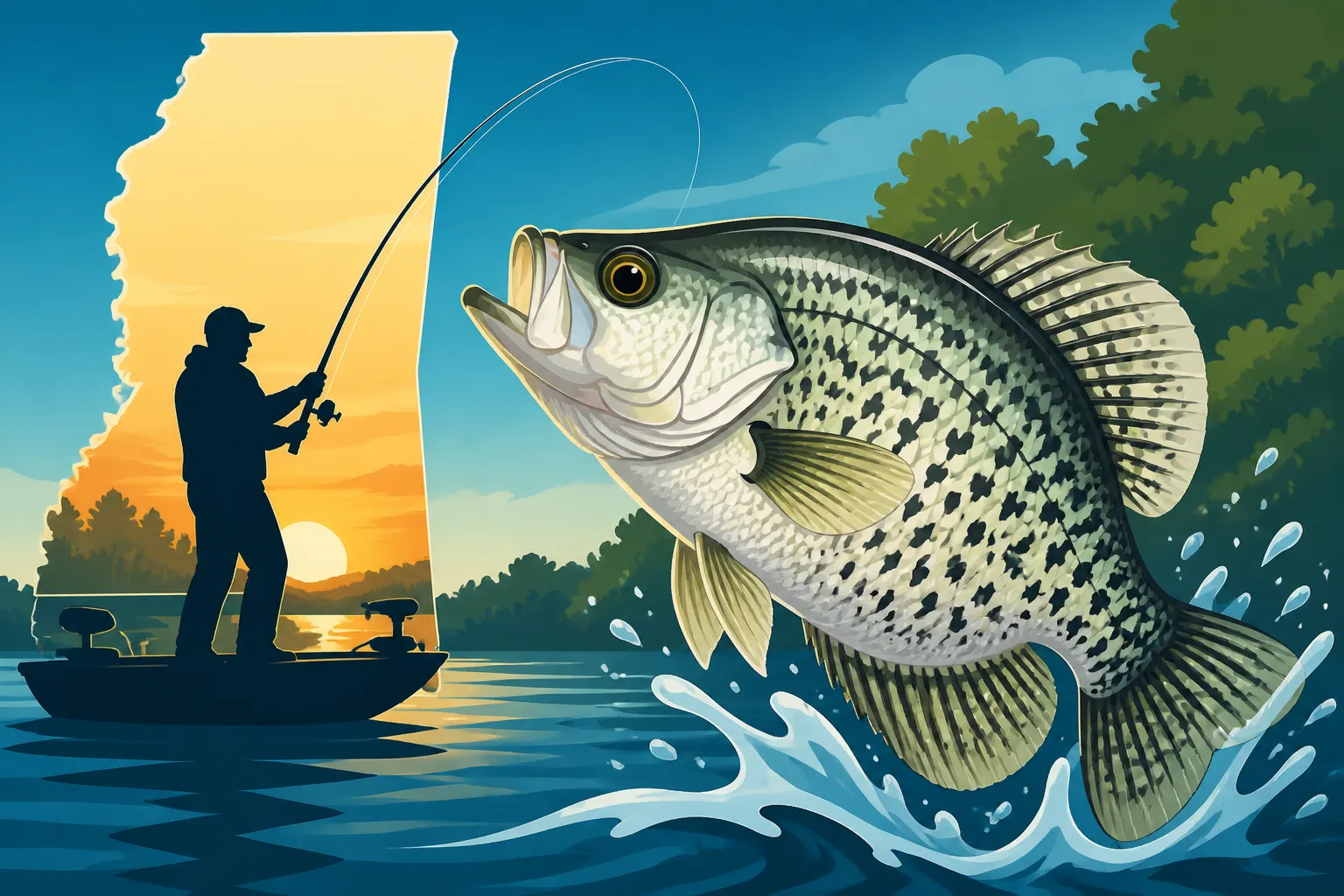
Black crappie are typically found in clearer, cooler water with more vegetation. They have a deeper, more compressed body shape and are easily identified by the irregular, scattered black spots all over their sides. A key distinguishing feature is their dorsal fin, which has seven or eight spines. If you're fishing in a crystal-clear lake or a secluded backwater with plenty of lily pads and submerged grass, you're likely to encounter black crappie. They tend to be a bit more finicky but are highly prized for their robust fight.
White crappie, on the other hand, are more tolerant of turbid (murky) water and often thrive in larger rivers and reservoirs. They have a more elongated body compared to their black-spotted cousins and are characterized by vertical bars or rows of spots on their sides, rather than scattered spots. Their dorsal fin usually has five or six spines, which is another reliable way to tell them apart. White crappie are often more aggressive feeders, making them a favorite target for many anglers, especially in vast impoundments where clarity can vary. Knowing which species you're likely to encounter can influence your choice of bait, presentation, and even fishing location.
Crappie Throughout the Magnolia State
From its northern hills down to the Gulf Coast, Mississippi offers incredible crappie fishing opportunities. Our state is blessed with an abundance of diverse waterways, each holding its own potential for these fantastic panfish. You don't have to travel far to find a spot teeming with crappie.
The northern reservoirs are perhaps the most famous, with names like Grenada Lake, Sardis Lake, and Enid Lake often whispered among anglers as "crappie capitals." These massive flood control reservoirs consistently produce both high numbers of fish and true trophy-sized slabs. But don't overlook the central and southern regions either. Ross Barnett Reservoir, just outside of Jackson, is another crappie hotspot, offering a vast array of habitats from open water to cypress-lined shores. Further south, you'll find excellent crappie fishing in oxbow lakes along the Mississippi River, as well as numerous smaller state fishing lakes and private ponds that are often overlooked. Even the backwaters and tributaries of rivers like the Pearl and Pascagoula can hold hidden populations of crappie, especially during certain times of the year. The sheer ubiquity of crappie across Mississippi means there's always an adventure waiting, no matter where you are.
Understanding Crappie Behavior and Habitat
To consistently catch crappie, you really have to think like a crappie. It's not enough to just cast a line; you need to understand their daily routines, where they like to hang out, and what makes them tick. This knowledge is your biggest weapon in the pursuit of these delicious fish.
Seasonal Movements and Patterns
Crappie are creatures of habit, and their movements are largely dictated by the changing seasons and, most importantly, water temperature. As the year progresses, you'll see a distinct migration from deeper wintering holes to shallow spawning grounds and back again.
In winter, when water temperatures dip, crappie often school up tightly in deeper areas. They might be found suspended over old creek channels, nestled in the deepest parts of brush piles, or congregating around submerged structure in 20 to 40 feet of water. They become less active, feeding sporadically, so a slow, subtle presentation is key. As spring approaches and the water begins to warm (think late February into March in Mississippi), crappie start their move towards shallower spawning areas. They'll stage in transitional zones, like points leading into coves or along creek channels near the banks, before pushing into inches-deep water to lay eggs when temperatures hit the sweet spot (typically 60-70 degrees Fahrenheit). After the spawn, they'll gradually move back to slightly deeper, but still relatively shallow, post-spawn haunts like submerged brush near drop-offs or shaded areas. Come summer, they often retreat to deeper, cooler water, suspending over structure or finding refuge in thick cover, typically 10-25 feet deep, and often feeding actively in early mornings and late evenings. The fall sees them become very active again, chasing baitfish in preparation for winter, often found in a variety of depths from shallow flats to deeper channels. Understanding these movements is critical for knowing where to even begin looking.
Preferred Structures and Cover
Crappie are masters of ambush, and they absolutely love structure and cover. Think of it like their personal apartment buildings and grocery stores combined. If you can find the right kind of cover, you're well on your way to finding crappie.
Their go-to spots often include brush piles, whether naturally occurring fallen trees or man-made attractors. These provide both shelter from predators and a place to ambush smaller baitfish. Submerged timber, especially old stumps and logs in creek channels or along old riverbeds, are also prime real estate. Look for these features using your electronics. Docks and piers, particularly those with good depth and shade underneath, can be magnets for crappie, especially in brighter conditions. The pilings and shadowy areas offer protection and a food source. Bridge pilings and rip-rap are another excellent option, as the rough surfaces provide habitat for baitfish and offer crappie a current break and ambush point. Even subtle changes in bottom contour, like humps, ledges, and creek channel bends, can concentrate crappie. The key is that they rarely just hang out in open, featureless water; they're almost always associated with some form of cover that offers protection and feeding opportunities.
The Impact of Water Temperature and Clarity
Water temperature and clarity are two of the most critical environmental factors influencing crappie behavior, and skilled anglers pay close attention to both. Even a slight change can dramatically affect how and where crappie feed.
Crappie are cold-blooded, so their metabolism and activity levels are directly tied to water temperature. Their ideal feeding range is generally between 60 and 75 degrees Fahrenheit, which aligns perfectly with spring and fall in Mississippi. Below 50 degrees, they become sluggish, feeding less frequently. Above 80 degrees, they seek cooler, deeper water and often become lethargic during the day. During the spawn, precise temperature ranges are what trigger their reproductive activity, making a few degrees difference between a successful trip and a slow one. Using a reliable thermometer to check water temps in different areas can give you a huge advantage in locating active fish.
Water clarity also plays a significant role in your crappie fishing strategy. In clear water, crappie can be very skittish and easily spooked. They'll often hold deeper or tighter to cover, and you might need lighter line, smaller baits, and more subtle presentations. Natural bait colors like white, clear, or light green often work well in clear conditions. In stained or murky water, crappie tend to be less wary and might hold shallower. Here, bolder colors like chartreuse, orange, or black, or baits that create more vibration, can be more effective as they help the fish find your offering by sight and lateral line feel. Always adapt your bait size and color based on the water conditions you encounter.
Essential Gear for Mississippi Crappie Anglers
Let's talk tackle! While crappie fishing doesn't require an arsenal of expensive equipment, having the right rods, reels, baits, and accessories can make a world of difference. It allows you to present your bait effectively, feel those subtle bites, and land those slabs.
Rods, Reels, and Line Selection
The foundation of any good crappie setup starts with your rod, reel, and line. Given their delicate bites and often light tackle presentations, precision and sensitivity are key. For most crappie fishing in Mississippi, you're going to want to lean towards lighter action gear.
A good ultralight or light-action spinning rod, typically between 5 to 7 feet in length, is a fantastic all-around choice. These rods have a soft tip that allows you to detect even the faintest tap from a crappie, yet enough backbone to handle a decent fight. If you're spider rigging or tight-lining with multiple rods, longer rods (8-14 feet or even longer) are often used to spread out lines and cover more water. Pair your rod with a small, lightweight spinning reel, usually in the 1000 or 2000 size range. This setup is balanced, comfortable to hold all day, and provides smooth drag for those sudden runs. For line, 4 to 6-pound test monofilament is a classic choice, offering good knot strength and enough stretch to absorb shocks. However, many anglers are now opting for fluorocarbon in similar weights due to its low visibility underwater and increased sensitivity, which can be a game-changer when bites are subtle. Braided line, while super sensitive, can be overkill and too visible for crappie, so it's often best reserved for a leader material if used at all. Choosing the Right Rod and Reel for Mississippi Fishing can give you even more details on matching your gear to your style.
Baits and Lures That Get Bites
Crappie can be a bit finicky, so having a variety of baits and lures on hand is crucial. What works one day might not work the next, and conditions can change rapidly. But there are a few tried-and-true favorites that consistently put fish in the boat across Mississippi.
Live minnows are, without a doubt, the king of crappie baits. There's just something about a struggling live minnow that crappie can't resist. They're especially effective when crappie are less aggressive or when fishing in cold water. You can rig them under a slip bobber, tight-line them, or even slow troll them. Next up are jigs, and the variety here is endless! Small soft plastic jigs (1/16 oz to 1/8 oz are common, sometimes smaller) in colors like chartreuse, white, black, or combinations thereof, are incredibly versatile. Try grub tails, tube jigs, or small minnow profiles. Jig size and color often depend on water clarity and depth. For instance, brighter colors for murky water, more natural tones for clear. Small spinnerbaits with a single blade can also be deadly, especially when crappie are active and chasing bait. Don't forget tiny crankbaits, particularly those designed to dive to specific depths, which can be excellent for covering water and triggering strikes when crappie are feeding aggressively. Make sure to check out Best Bait for Crappie in Mississippi for more in-depth bait strategies. You can find a huge selection of these jigs, minnow buckets, and even specialized crappie rods on Amazon, often with quick delivery right to your door before your next fishing trip.
Must-Have Accessories and Electronics
Beyond your basic rod and reel, a few key accessories and modern electronics can significantly enhance your crappie fishing success. These items can help you find fish, keep them alive, and manage your day on the water more efficiently.
A quality fish finder is almost indispensable for modern crappie fishing, especially on large reservoirs. Units with side-imaging or down-imaging capabilities can literally show you submerged brush piles, creek channels, and even schools of crappie that would otherwise remain hidden. Learning to read your fish finder takes practice, but the investment in time and money is well worth it. Beyond electronics, a good landing net with a soft, fish-friendly mesh is crucial for safely bringing in those slab crappie, especially if you're practicing catch and release. A well-organized tackle box or bag will keep your jigs, weights, hooks, and tools neatly arranged. And of course, a sturdy cooler filled with ice is essential for keeping your catch fresh, and a livewell or minnow bucket with an aerator is vital for keeping those live minnows lively throughout the day. Investing in durable, specialized gear, which you can often find readily available on Amazon, can save you headaches and improve your overall experience.
Top Crappie Fishing Techniques for Mississippi Waters
Now that you've got your gear and an understanding of crappie habits, it's time to put it all into practice. There are several effective techniques tailored for crappie fishing in Mississippi, each best suited for different conditions and angler preferences.
Spider Rigging and Trolling
If you've ever seen a boat out on Grenada Lake or Ross Barnett Reservoir with a dozen poles sticking out like spokes on a wheel, you've witnessed spider rigging in action. This technique is wildly popular and highly effective for crappie, especially in open water or over large flats.
Spider rigging involves using multiple long rods (often 8 to 16 feet) spread out from the bow or stern of the boat. Each rod is typically rigged with a jig or a live minnow, often with a small weight to keep it at a specific depth. The boat then moves very slowly, either with a trolling motor or by drifting with the wind, allowing the baits to cover a wide area. The idea is to present multiple baits at different depths and locations simultaneously, increasing your chances of intercepting a school of fish. It's a fantastic method for locating scattered crappie or for working large submerged structure. Once you find a productive depth or area, you can then concentrate your efforts. For an in-depth look at this popular method, check out Trolling for Crappie on Mississippi Reservoirs.
Jigging and Vertical Presentation
Sometimes, the most effective approach is a direct one. Jigging and vertical presentations are incredibly versatile and can be used in almost any crappie fishing scenario, from deep brush piles to shallow docks.
Single pole jigging is exactly what it sounds like: using one rod to present a jig or live minnow directly to the fish. This is often done when targeting specific pieces of cover, like a brush pile you've identified on your fish finder, or when fishing docks. You simply drop your bait straight down to the desired depth and gently twitch, lift, and drop it to entice a bite. The beauty of this technique is its precision. "Dock shooting" is a specialized form of jigging where you literally 'shoot' a small jig under docks and other overhead cover, allowing it to skip across the water's surface to reach fish holding in shaded, inaccessible areas. For deeper water, particularly in winter or summer, a heavier jig head or a drop-shot rig can be used for a vertical presentation, ensuring your bait gets down to the crappie holding tight to structure at greater depths.
Live Bait Rigs and Presentations
While artificial lures certainly have their place, sometimes nothing beats the real thing. Live minnows, in particular, are a staple for crappie anglers across Mississippi, often outperforming jigs when fish are less aggressive or when the bite is tough.
The most common live bait presentation is a simple slip bobber rig. This setup allows you to easily adjust the depth of your minnow, making it ideal for targeting crappie suspended at specific depths or just above structure. The bobber signals a bite with a dip or sideways movement, and the crappie typically have time to mouth the minnow before feeling resistance. Another highly effective method is tight-lining, where you fish a live minnow directly beneath the boat without a bobber, relying solely on the feel of the bite through your rod. This is particularly good for vertical jigging or when crappie are holding very tight to cover. Whatever your rig, always use fresh, lively minnows. Crappie are finicky, and a sluggish minnow is far less appealing. Keeping your minnows healthy in a well-aerated bucket is crucial for success.
| Feature | Black Crappie | White Crappie |
|---|---|---|
| Body Shape | Deeper, more compressed | More elongated |
| Spotting | Irregular, scattered black spots | Vertical bars or rows of spots |
| Dorsal Fin Spines | 7 to 8 | 5 to 6 |
| Preferred Water | Clearer, cooler, more vegetation | More tolerant of turbid/murky water |
| Typical Habitat | Vegetated lakes, clear backwaters | Large reservoirs, rivers, oxbows |
| Feeding Tendency | Can be more finicky | Often more aggressive |
Prime Crappie Fishing Destinations in Mississippi
Mississippi is truly a crappie angler's paradise, boasting an impressive list of lakes, reservoirs, and rivers renowned for their abundant populations and trophy-sized fish. Knowing where to go is half the battle, and some spots consistently stand out year after year.
North Mississippi's Crappie Powerhouses
When you talk about crappie in Mississippi, the conversation almost always starts with the "Big Three" northern reservoirs. These massive flood control lakes have earned their reputation as crappie factories, drawing anglers from across the country.
Grenada Lake is often touted as the "Crappie Capital of the World," and for good reason. It consistently produces some of the biggest crappie in the state, with numerous fish exceeding the two-pound mark. The lake's vast size and diverse structure, including numerous brush piles, standing timber, and creek channels, provide ideal habitat. Springtime is legendary here, as crappie move shallow to spawn, but anglers find success year-round using spider rigging, jigging, and minnow techniques. If you're chasing trophy crappie, Grenada should be at the top of your list. Learn more in our Grenada Lake Fishing Guide.
Sardis Lake is another northern gem, famous for its abundant crappie and picturesque scenery. While Grenada might be known for size, Sardis often shines for sheer numbers, though it still produces plenty of slabs. Its shallower, stump-filled bays and numerous creek arms are crappie magnets, especially during the spring spawn. Anglers here often employ spider rigging, tight-lining live minnows, and casting small jigs near cover. The lake's tailwater below the dam also offers unique fishing opportunities. For more details, check out our Sardis Lake Fishing Guide.
Enid Lake rounds out the Big Three, offering yet another exceptional crappie fishing experience. Enid is known for its consistent productivity and healthy crappie population. Like its sister lakes, it features extensive submerged timber and brush, making it a perfect home for crappie. Many anglers find success here by vertical jigging around structure, slow trolling, or fishing live minnows under bobbers. Each of these lakes offers a slightly different character, but all promise outstanding crappie action. Our Enid Lake Fishing Guide provides specific tactics for this fantastic body of water.
Central and Southern Mississippi Hotspots
While the northern reservoirs often grab the headlines, the central and southern parts of Mississippi also hold their own incredible crappie fishing destinations, offering diverse environments and fantastic angling opportunities.
Ross Barnett Reservoir, a massive 33,000-acre lake just minutes from Jackson, is a prime crappie fishing location. "The Rez," as it's affectionately known, offers a mix of open water, extensive shallow flats, cypress trees, and numerous creek channels. Crappie here are abundant and can be caught using a variety of techniques, from spider rigging the main lake to single-pole jigging around the cypress trees and docks. Its accessibility and consistent action make it a favorite for many local anglers. Find out more in our Ross Barnett Reservoir Fishing Guide.
Further west, near the Mississippi River, you'll discover Eagle Lake and Lake Washington. These historic oxbow lakes are renowned for their incredible crappie populations. These lakes are typically shallower and rich in natural cover like cypress trees, lily pads, and submerged logs, creating ideal ambush points for crappie. Springtime in particular sees fantastic shallow-water crappie fishing in these beautiful, tranquil settings. Anglers often excel here with small jigs and live minnows worked around the abundant natural structure.
Smaller Lakes and River Systems
Don't make the mistake of thinking only the big lakes hold big crappie. Mississippi is dotted with numerous smaller state fishing lakes and private ponds that can offer incredible, often less crowded, crappie fishing, as well as productive river systems.
Mississippi's State Fishing Lakes, managed by the Department of Wildlife, Fisheries, and Parks (MDWFP), are specifically designed and managed for public fishing access and healthy fish populations. Many of these smaller impoundments, like Lake Columbia, Lake Mary Crawford, or Lake Perry, are consistently stocked and offer excellent opportunities for crappie, especially for bank anglers or those with smaller boats. They often have well-maintained boat ramps and fishing piers, making them very family-friendly.
Additionally, don't overlook the potential of Mississippi's river systems. The backwaters, oxbows, and slower-moving sections of rivers like the Pearl River, Pascagoula River, and Tombigbee Waterway can hold surprisingly strong populations of crappie, particularly during periods of stable water levels. These river crappie often provide a unique challenge and can be less pressured than those in larger lakes. Exploring these lesser-known spots can lead to some truly memorable fishing adventures and a sense of discovery that's hard to beat.
Navigating Mississippi Crappie Regulations and Conservation
As much as we love to fish, we also have a responsibility to protect our resources. Understanding and adhering to Mississippi's fishing regulations is not just about avoiding a ticket; it's about ensuring healthy crappie populations for generations to come.
Understanding Creel and Size Limits
Mississippi, like many states, implements specific regulations to manage its fish populations, and crappie are no exception. These rules are put in place by the MDWFP to prevent overfishing and maintain a sustainable fishery.
Generally, Mississippi has a statewide daily creel limit for crappie (both black and white combined). This limit dictates the maximum number of fish you can legally keep in a single day. There are also usually statewide size limits, meaning any crappie you catch below a certain length must be immediately released unharmed. However, and this is crucial, many individual lakes and reservoirs have their own specific crappie regulations that can differ significantly from the statewide rules. For instance, a lake known for producing trophy crappie might have a higher minimum size limit or a slot limit, which allows anglers to keep fish within a certain size range but requires releasing those above or below it. It is imperative that you check the specific regulations for the body of water you plan to fish before you go. Ignorance of the law is not an excuse. You can usually find these details on the MDWFP website or in their annual Outdoor Digest. Familiarize yourself with Mississippi Fishing Creel and Size Limits to stay informed.
Licensing Requirements for Crappie Fishing
Before you even think about casting a line for crappie in Mississippi, you need to ensure you have the proper fishing license. It's a non-negotiable requirement for most anglers, and the fees collected go directly back into conservation efforts.
Any resident or non-resident over a certain age (typically 16) who plans to fish in Mississippi's public waters must possess a valid fishing license. There are various types of licenses available, including annual resident licenses, non-resident annual licenses, and short-term non-resident options (like 1-day or 3-day licenses) that are perfect for visitors. There are also specific exemptions for certain groups, such as children, seniors, and disabled veterans, though even these groups may need to obtain an exempt license. Always carry your license with you while fishing, as game wardens frequently check. Purchasing a license is easy and can often be done online, at local retailers like Walmart or sporting goods stores, or through MDWFP offices. For a full breakdown of requirements and options, be sure to read our Mississippi Fishing License Guide and How to Get a Mississippi Fishing License.
Practicing Responsible Catch and Release
While crappie are delicious, there are times when practicing catch and release is important, whether due to regulations, personal choice, or a desire to preserve the fishery for future enjoyment. Responsible handling is key to a fish's survival.
If you plan to release crappie, minimize their time out of the water. Handle them gently with wet hands, supporting their body, especially if they are large. Avoid touching their gills or eyes. If a fish is deeply hooked, it's often better to cut the line as close to the hook as possible rather than trying to remove the hook, which can cause more damage. A barbless hook can also make unhooking much easier. For fish caught in deep water, especially in summer, they may suffer from barotrauma (swim bladder issues). While some specialized tools exist, often the best approach is to release them quickly and carefully. By practicing responsible catch and release, we all contribute to the health and abundance of Mississippi's incredible crappie fishery, ensuring there are plenty of slabs for everyone for years to come.
Advanced Tips for Consistently Catching More Crappie
You've got the basics down, but consistently putting crappie in the boat often comes down to mastering the nuances. These advanced tips will help you fine-tune your approach and increase your success rate, even on tough days.
Reading the Water and Weather Patterns
Crappie are highly sensitive to environmental changes, so learning to "read the water" and understand how weather patterns influence their behavior is a game-changer. It's about being observant and adaptable.
Pay attention to water color and clarity. As we discussed, clear water calls for different tactics than muddy water. Look for current breaks, subtle eddies, or areas where two different water colors meet; these can be prime feeding zones. Wind direction and strength also play a huge role. A consistent breeze can push baitfish into certain coves or against specific banks, and crappie will often follow. Strong winds can make boat control difficult, but they can also create a "chop" on the water that makes crappie feel more secure and active.
Perhaps most importantly, understanding how crappie react to weather fronts can make or break a trip. Before a cold front, crappie often go on a feeding frenzy, making for fantastic fishing. But after a cold front passes, with clear skies and high pressure, crappie can become incredibly lethargic and difficult to catch, often retreating to deeper, tighter cover. This is where patience and subtle presentations become paramount. Don't be afraid to slow down your retrieve or downsize your bait. For more detailed insights, take a look at our guide on Fishing After a Cold Front.
Locating Hidden Crappie Cover
Crappie love cover, and the most productive spots are often those that aren't obvious to the naked eye. Mastering the art of finding hidden brush piles, submerged timber, and subtle bottom contours will give you a significant advantage.
Your electronics are your best friend here. Utilize your fish finder's side-imaging and down-imaging capabilities to scan large areas for anomalies on the bottom. Look for clumps of trees, rock piles, or irregular shapes that could indicate man-made brush piles. Once you identify potential cover, use your traditional 2D sonar to pinpoint its exact location and depth, and to see if there are any fish holding on or around it. Don't just rely on your electronics; old topographic maps, lake contour maps, and even online satellite imagery can reveal old creek beds, submerged roadbeds, and historical land features that now lie beneath the water's surface, all of which can be crappie magnets. Sometimes, talking to local anglers or bait shop owners can also provide invaluable insights into popular, or even secret, crappie hot spots where local brush piles have been planted.
The Art of the Crappie Spawn
The crappie spawn is legendary in Mississippi, offering some of the most exciting and productive fishing of the year. But successfully navigating it is an art form that requires precise timing and careful observation.
The spawn typically kicks off when water temperatures consistently reach the 60-70 degree Fahrenheit range, usually in late March, April, and sometimes into early May in Mississippi, depending on the region and specific lake. Crappie move from their deeper staging areas into very shallow water, often just a few feet deep, to fan out nests and lay eggs. Look for them in protected coves, along sunny banks, around lily pads, submerged grass, and flooded timber. These shallow areas warm up first and offer protection for their eggs.
During the spawn, crappie can be very aggressive, protecting their nests, which makes them easier to catch. Small jigs, particularly tube jigs or grub tails, and live minnows presented under a bobber or pitched directly into cover, are incredibly effective. Patience is key, as you might need to try several shallow areas before locating an active spawning bed. Remember that the spawn doesn't happen all at once; it can be a rolling event, with different fish spawning at different times and in different areas of the lake. Keep an eye on water temperatures and listen to local reports. To really dial in your timing, dive into What Month Do Crappie Spawn in Mississippi? for more specific details.
Disclaimer
This article is for general informational purposes only and does not constitute professional advice. Laws, prices and regulations vary by location and change over time. Consult a qualified professional for guidance on your specific situation.