Mississippi Border Water Fishing Rules
One of the biggest headaches for anglers in Mississippi, especially those who love exploring the vast and diverse waterways, is navigating the confusing maze of fishing rules when you're literally on the border between states. It’s not always a clear-cut "this side is Mississippi, that side is Louisiana" situation, and unknowingly crossing an invisible line can lead to fines and frustration. This guide will meticulously break down the intricacies of Mississippi's border water fishing rules, helping you stay legal and enjoy your time on the water.
Understanding Mississippi's Border Water Agreements
Fishing near a state line might seem straightforward on a map, but the reality on the water is often anything but. You're out there, enjoying a peaceful day, and suddenly you realize you're straddling a boundary that might have entirely different sets of regulations for licenses, creel limits, and even approved fishing methods. This is a common source of anxiety for many anglers, myself included, who just want to fish without constantly worrying about legal technicalities.
Why Border Waters Are Different
The reason border waters present such a unique challenge stems from the shared jurisdiction. Rivers like the mighty Mississippi don't just stop and start at a state line; they flow continuously, often creating oxbows, backwaters, and shifting sandbars that can blur the precise boundary. The same goes for the intricate bayous and coastal waters shared with neighboring states. Each state has its own Department of Wildlife, Fisheries, and Parks (or similar agency) with its own set of laws, designed to manage their specific resources and angler populations.
Without special agreements, an angler fishing a river that forms a state border would technically need a license for both states, or at least be very careful to always stay on one side of the invisible line. Imagine trying to manage that in a boat moving with the current or when chasing a school of fish! It’s simply impractical and would deter many from enjoying these prime fishing grounds. These unique geographical and legal challenges are precisely why specific border water agreements are so crucial for anglers.
The Importance of Reciprocity
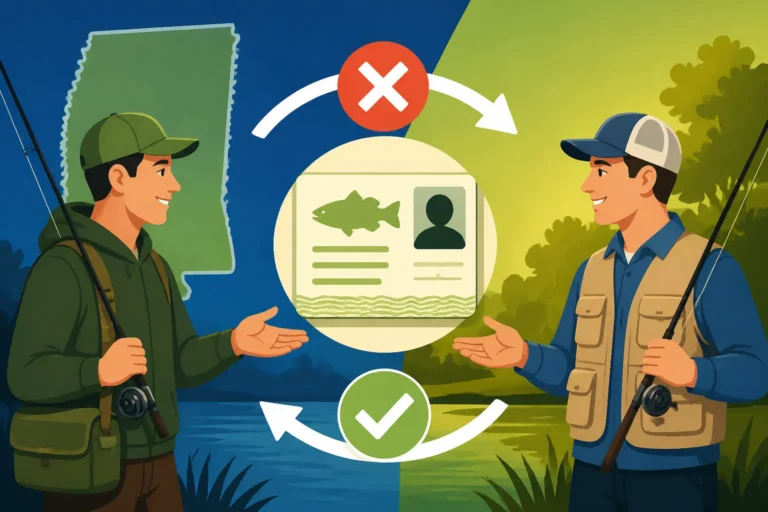
Reciprocity in fishing licenses is essentially a handshake agreement between states, allowing a valid fishing license from one state to be recognized as valid in certain defined border waters of the neighboring state. It's a fantastic system that cuts down on bureaucracy and makes fishing much more accessible. Instead of buying a Mississippi Fishing License Guide and then trying to figure out if you also need a Louisiana license for the Pearl River, reciprocity simplifies things significantly.
These agreements are born out of necessity and a spirit of cooperation, recognizing that fish don't carry state IDs and neither should anglers have to jump through excessive hoops. They ensure that common resources, like a shared river, can be enjoyed by residents of both states without undue financial burden or legal confusion. For instance, if you're fishing a specific stretch of the Mississippi River, a reciprocal agreement means your Mississippi license might cover you even if you drift slightly into what would otherwise be Louisiana waters, as long as you adhere to the general stipulations of the agreement.
Fishing Rules on the Mississippi-Louisiana Border Waters
The border between Mississippi and Louisiana is one of the most dynamic and frequently crossed by anglers. From the expansive Mississippi River to the winding Pearl River and the intricate coastal marshes, understanding where your Mississippi license holds up and where it doesn't is paramount. It can feel like you need a legal degree just to cast a line, but once you get the hang of it, it becomes second nature.
Specific Reciprocal Agreements with Louisiana
Mississippi and Louisiana have specific agreements in place to cover their shared waterways, primarily the Mississippi River and the Pearl River. Generally, if you possess a valid resident or nonresident fishing license from either state, it will be honored on the waters of the Mississippi River shared by both states, as long as you're in the defined reciprocal zone. This includes the main channel and most of the navigable waters directly adjacent to it, which often encompasses oxbow lakes and bayous that are clearly part of the river system.
However, it’s not a blank check. These agreements usually come with caveats. For example, if you launch your boat from a Louisiana ramp, you'll likely need a Louisiana boat registration. More importantly, while your license might be valid, the creel and size limits for specific species, like Mississippi Black Bass Regulations or Mississippi Redfish and Speckled Trout Limits, can sometimes differ. In these cases, it's generally best practice to adhere to the most restrictive regulation of either state to ensure you're always compliant, regardless of which side you're technically on. Always consult the most current regulations from the Mississippi Department of Wildlife, Fisheries, and & Parks (MDWFP) and its Louisiana counterpart before your trip.
Navigating the Mississippi River's Main Channel
The Mississippi River itself presents a unique challenge. The actual state line can be notoriously difficult to pinpoint on the water, often meandering with the ever-changing course of the river. Historically, state lines often followed the deepest channel (the thalweg), but river dynamics mean this isn't always stable. For anglers, this means focusing less on an imaginary line and more on the overall spirit of the reciprocal agreement.
If you have a valid Mississippi fishing license, you are generally permitted to fish the shared waters of the Mississippi River that border Louisiana. This covers a significant portion of the river from the northern border down to the Gulf. However, moving into clear, non-riverine tributaries or established bayous that are entirely within Louisiana's land boundaries might require a Louisiana license. Always keep your Mississippi Fishing License Guide handy, along with a photo ID. Devices found on platforms like Amazon, such as advanced GPS units with detailed mapping, can sometimes show approximate state lines, which can be helpful but should not be solely relied upon as the definitive legal boundary.
Pearl River Boundary Considerations
The Pearl River, which forms a significant portion of the Mississippi-Louisiana border, also operates under reciprocal agreements. Anglers with a valid Mississippi license can fish the shared portions of the Pearl River, often extending from its upper reaches down to the brackish waters near the Gulf. This means you can cast for bass, crappie, or catfish without needing a separate Louisiana license, as long as you are actively fishing the designated border waters.
However, similar to the Mississippi River, anglers need to be mindful of entering tributaries or oxbows that peel off the main channel and are clearly situated within Louisiana territory. These areas might not be covered by the reciprocal agreement. It's crucial to understand the spirit of the agreement: it’s designed for the shared boundary, not for fishing deep within the neighboring state's interior. Pay attention to signs, local boat ramps, and always err on the side of caution. If in doubt, a quick check of the latest Mississippi Fishing Regulations Explained or a call to MDWFP can save you a lot of trouble.
Fishing Rules on the Mississippi-Alabama State Line
Moving to the eastern side of the state, Mississippi shares waters with Alabama, primarily along the Gulf Coast and associated bay systems. This region is a rich angling paradise, but again, the state line can be a phantom presence that you only notice when a game warden pulls up. Understanding the nuances here is key to a worry-free fishing trip, especially for those targeting saltwater species.
Reciprocity on the Eastern Border
Mississippi and Alabama also maintain reciprocal fishing license agreements for their shared border waters, largely encompassing the Gulf of Mexico and associated bays. This is particularly relevant for those venturing out from coastal towns like Pascagoula or venturing into the expanse of the Mississippi Sound. A valid saltwater fishing license from either state is generally recognized in the shared marine boundary waters. This is excellent news for anglers who want to explore diverse fishing grounds without having to purchase multiple licenses.
These reciprocal agreements typically cover the vast open waters where the states meet. For example, if you launch from a Mississippi marina and head east into coastal waters that are technically shared or overlap with Alabama's jurisdiction, your Mississippi Saltwater Fishing License Guide will often suffice. However, it's vital to remember that just because your license is valid doesn't mean the local regulations for specific species are identical. Mississippi Redfish and Speckled Trout Limits might differ slightly from Alabama's, and you are always obligated to follow the rules of the state in which you are physically fishing, or, to be safest, the most restrictive of the two.
Mobile Bay and Coastal Inlets
The complexity deepens as you approach significant geographic features like Mobile Bay and the numerous coastal inlets and bayous that characterize the Mississippi-Alabama border. While much of the Gulf waters are covered by reciprocity, once you start venturing into the inner reaches of Mobile Bay or other distinct Alabama inlets, your Mississippi license may no longer be valid. The state line often carves through these areas, and it can be incredibly challenging for an angler to know their exact position relative to the boundary.
This is where local knowledge, up-to-date charts, and even modern marine electronics become invaluable. Some boaters invest in marine GPS systems available on platforms like Amazon that can overlay state boundaries on nautical charts, offering a visual cue. However, these are often general and should not replace an official understanding of the law. If you're planning a trip that might take you deep into what is clearly an Alabama-centric bay or river system, the safest bet is to check their regulations and consider a nonresident license for that state. It's far better to be prepared than to face a citation for fishing without the proper credentials.
Fishing Rules on the Mississippi-Arkansas Border Waters
To the west, Mississippi shares a long and often fluid border with Arkansas, dominated almost entirely by the majestic Mississippi River. For those who love to fish the mighty river's main stem and its numerous oxbows and backwaters, understanding the reciprocal agreements here is crucial. The river can be a confusing place for boundaries, with shifting sands and ever-changing channels.
Shared Waters with Arkansas
Similar to Louisiana, Mississippi has a reciprocal agreement with Arkansas regarding fishing licenses on the shared waters of the Mississippi River. This means that if you hold a valid resident or nonresident fishing license from either Mississippi or Arkansas, you are generally authorized to fish the portions of the Mississippi River that form the common boundary between the two states. This agreement greatly simplifies things for anglers who frequent the river, allowing them to focus on the fishing rather than constantly monitoring their exact geographical position.
This reciprocal zone typically includes the main channel of the Mississippi River and many of its immediately adjacent waters, such as the numerous oxbow lakes and backwater sloughs that are directly connected to the river. Many of these oxbows were once part of the main river channel and are naturally shared resources. However, it is always important to confirm the current regulations, as these agreements can be updated or have specific limitations. For instance, an oxbow lake that is now completely cut off from the main river and entirely within one state's land boundary might not be covered by the reciprocity. Always check the official Mississippi Freshwater Fishing Rules to be sure.
Navigating the Mississippi River's Western Edge
Fishing the Mississippi River's western edge, where it meets Arkansas, requires a keen understanding of both the river's dynamic nature and the state's reciprocal agreements. The Mississippi River is constantly reshaping itself, with currents carving new channels and depositing sediment that can alter shorelines and create new islands or oxbows over time. This makes precise boundary definitions challenging.
Anglers should be aware that while their Mississippi license is generally valid on the shared river waters, this does not extend to tributaries or lakes that are clearly and entirely within Arkansas's landmass, even if they are close to the main river. The spirit of the agreement is to allow seamless fishing on the shared boundary. If you plan to explore deeper into Arkansas's side lakes or rivers, a Mississippi Nonresident Fishing License Guide will be necessary. It’s always prudent to carry an up-to-date map or a GPS device to help visualize the general area of the state line, though formal legal boundaries can be quite complex.
General Guidelines for Border Water Anglers
Successfully navigating border waters isn't just about knowing where you can fish; it's about being prepared and proactive. The rules are there to protect the resource and ensure fair play, and a little extra effort on your part can prevent a lot of grief. It's easy to get caught up in the excitement of a bite, but neglecting the rules can quickly turn a great day into a frustrating one.
Always Carry Your License and ID
This might sound obvious, but you'd be surprised how many anglers forget this fundamental step, especially when they're fishing familiar waters close to home. When you're fishing border waters, the importance of a valid fishing license and a photo ID (like your driver's license) is amplified. Wildlife officers from either state involved in the reciprocal agreement have the authority to check your credentials. If you're on the Mississippi River, an officer from Louisiana or Arkansas could board your boat and request your license.
Being unable to produce a valid license, even if you technically have one at home, can result in a citation. These are not just minor inconveniences; What Happens If You Fish Without a License in Mississippi? can involve significant fines and potential legal issues. It's always best to have your physical license on you or, if allowed by both states, a digital copy readily accessible on your phone. Consider storing a spare license in your boat or tackle box as a backup.
Know the Creel and Size Limits of Both States
Here's where it gets truly tricky, and it's a common trap for even experienced anglers. While reciprocal agreements make your license valid, they often do not harmonize the creel and size limits for specific fish species. For instance, the Mississippi Fishing Creel and Size Limits for crappie or bass might be different from those in Louisiana or Alabama, even on shared waters.
The general rule of thumb, and the safest approach, is to adhere to the most restrictive regulation of either state. If Mississippi says you can keep 10 bass, but Louisiana says 5 bass in the same border water, you should only keep 5. If there's a slot limit in one state but not the other, respect the slot limit. It's a bit of extra homework, but it's essential for staying compliant. The MDWFP publishes its regulations annually, and you can usually find the border state's regulations online or by downloading their fishing app. Taking a few moments to review these before you head out, perhaps even jotting down the key differences, is a smart move.
Check for Special Area Regulations
Beyond general state-to-state agreements, some specific bodies of water, even those on borders, might have their own unique rules. This is particularly true for lakes or reservoirs managed by federal agencies like the Army Corps of Engineers, or smaller state park lakes that happen to be near a border. These special regulations might concern specific species, fishing methods, or even restrictions on boat horsepower.
For example, certain sections of a river might be designated as "no wake" zones regardless of state lines, or a particular oxbow lake might have a catch-and-release only policy for a certain fish. These rules are usually posted at boat ramps or access points, but it's always wise to check the official publications. The MDWFP website is an excellent resource, and they often highlight such special regulations within their main guide. Don't assume that just because you're in border water, only the general reciprocal rules apply. Local rules can sometimes supersede general state-wide regulations.
What Happens If You Fish Without a License in Border Waters?
Nobody wants to find themselves on the wrong side of the law, especially when you're just trying to enjoy a peaceful day of fishing. Unfortunately, violations in border waters can be more complex and potentially more severe due to the involvement of multiple state jurisdictions. It’s not just an inconvenience; it can be a serious legal issue.
The Risks of Non-Compliance
Fishing without the proper license or violating regulations in border waters can lead to significant penalties. These can include hefty fines, the confiscation of your fishing gear, and even the impoundment of your boat. For example, Mississippi Fishing License Penalties and Fines can vary depending on the severity of the offense and whether it's a first-time or repeat violation. In border situations, you could potentially face penalties from both states if the violation is egregious or involves a lack of cooperation.
Furthermore, a conviction for a fishing violation can sometimes lead to the suspension of your fishing privileges, not just in Mississippi but potentially in reciprocal states as well. Imagine being barred from fishing your favorite spots for a year or more, all because of an oversight. It's a real consequence that no angler wants to face. The enforcement officers in these shared waters are highly trained and often work in cooperation with their counterparts from neighboring states, so they are well-versed in identifying and addressing these types of violations.
Avoiding Common Mistakes
The best way to avoid these unpleasant scenarios is through diligent preparation. Here are a few tips:
- Double-Check Before You Go: Before every border water trip, take a few minutes to quickly review the latest regulations for both Mississippi and the neighboring state (Louisiana, Alabama, or Arkansas) concerning the specific waters you plan to fish. Check creel limits, size limits, and any special area rules.
- Carry All Documentation: Ensure you have your valid fishing license and a government-issued photo ID on your person at all times while fishing. For boaters, make sure your Mississippi Boat Fishing Regulations are also in order, including registration and safety gear.
- Use Technology Wisely: While not definitive legal guides, GPS devices with mapping capabilities (many available on Amazon) can offer a general idea of state lines. Fishing apps from MDWFP and neighboring agencies can also provide quick access to regulations.
- Ask When in Doubt: If you are truly uncertain about a specific rule or boundary, don't guess. Contact the MDWFP directly. Their conservation officers are there to help anglers understand and comply with the rules, not just enforce them. It’s always better to ask a question than to receive a citation.
By being informed and prepared, you can fully enjoy the incredible fishing opportunities that Mississippi's border waters have to offer without any unnecessary stress or legal complications.
Mississippi Border Water Fishing Rules Quick Reference
Here's a handy table summarizing the general reciprocal agreements for Mississippi's border waters. Remember, specific regulations for creel limits, size limits, and special areas may still differ between states. Always consult current official state guides.
| Border State | Shared Waters Covered by Reciprocity | General License Validity | Key Consideration for Anglers |
|---|---|---|---|
| Louisiana | Mississippi River, Pearl River (shared portions), associated oxbows/bayous | Valid MS or LA license covers shared waters | Adhere to most restrictive creel/size limits; avoid non-boundary tributaries. |
| Alabama | Gulf of Mexico (shared waters), Mississippi Sound, coastal bays | Valid MS or AL saltwater license covers shared waters | Adhere to most restrictive creel/size limits; avoid deep entry into internal bays. |
| Arkansas | Mississippi River (shared portions), associated oxbows/backwaters | Valid MS or AR license covers shared waters | Adhere to most restrictive creel/size limits; avoid non-boundary tributaries/lakes. |
Disclaimer
Please remember that fishing regulations are subject to change. While this guide provides comprehensive information based on current knowledge, it is your responsibility as an angler to always consult the most recent official regulations published by the Mississippi Department of Wildlife, Fisheries, and Parks (MDWFP) and its respective neighboring state agencies before heading out on the water. This guide is for informational purposes only and does not constitute legal advice.