Are There Muskie in Mississippi?
It's a common question, and one I've heard many times from anglers new to our beautiful state: "Are there muskie in Mississippi?" The thought of battling one of these legendary freshwater giants, often called the "fish of 10,000 casts," is certainly enticing. However, for those of us who call the Magnolia State home, or are planning a fishing trip here, the reality is that muskie are not a species you'll encounter in Mississippi waters. This guide will dive into why that is, what muskie truly are, and more importantly, what incredible native game fish you can target right here in Mississippi that offer an equally thrilling challenge.
The Straight Answer: Muskie are Not Found in Mississippi
Let's get straight to it: no, you won't find muskie, or muskellunge as they are formally known, swimming in Mississippi's lakes, rivers, or reservoirs. It’s a bit of a bummer for anyone dreaming of catching one of these toothy titans, but it’s an important distinction to make so you don't spend your time and efforts in vain.
Muskie are primarily cold-water fish. They thrive in cooler, northern climates, preferring the clear, vegetated lakes and slow-moving rivers found in states much further north than ours. Think of places like Wisconsin, Minnesota, Michigan, and parts of Canada. Our warm Mississippi summers and typically warmer waters just don't create the ideal habitat for these impressive predators to naturally sustain populations, let alone thrive.
While state wildlife agencies across the country do a fantastic job of managing and often stocking various fish species to enhance fishing opportunities, the Mississippi Department of Wildlife, Fisheries, and Parks (MDWFP) does not stock muskie. Their focus, and rightly so, is on species that are native or well-suited to our unique aquatic environments, ensuring healthy and sustainable fisheries for everyone to enjoy. So, if your heart is set on a muskie, you'll need to pack your bags and head north. But don't despair! Mississippi offers a wealth of incredible fishing for other formidable fish.
Understanding the Muskie: A Northern Icon
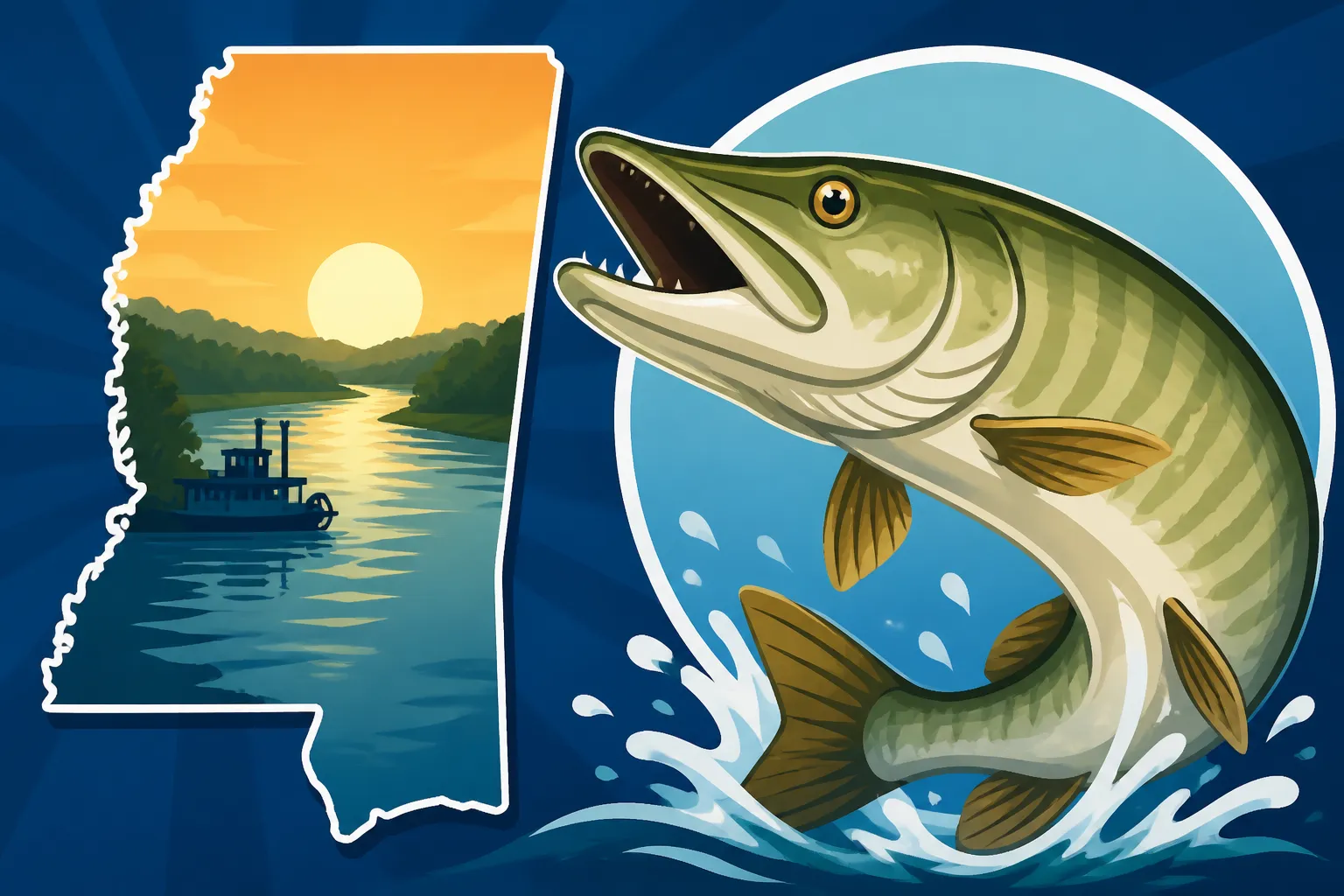
To fully grasp why muskie aren't here, it helps to know a little more about them. The muskellunge (scientific name Esox masquinongy) is the largest member of the pike family. They are truly apex predators in their native range, known for their incredible size, aggressive strikes, and notoriously elusive nature.
Muskie have long, cylindrical bodies, sharp teeth, and a powerful tail that allows them to explode out of cover to ambush prey. Their coloration varies but often includes dark spots or bars on a lighter background, providing excellent camouflage in weedy or woody environments. They are often confused with their smaller cousin, the northern pike, but muskie typically grow much larger and have distinct scale patterns on their cheek and gill covers. A true trophy muskie can easily exceed 50 inches in length and weigh over 50 pounds, making them a true bucket-list fish for many anglers.
The Ideal Muskie Habitat
Muskie require specific environmental conditions to survive and reproduce. They prefer large, relatively shallow lakes with abundant aquatic vegetation, or slow-moving rivers with plenty of submerged structure like fallen trees and weed beds. These areas provide both ambush points for hunting and crucial spawning grounds. Their eggs need specific water temperatures and oxygen levels to hatch, and the fry require a ready supply of small prey fish.
The water temperatures in Mississippi's lakes and rivers, particularly during our long, hot summers, simply become too warm for muskie to comfortably exist, let alone spawn successfully. While some deep, spring-fed lakes might offer brief thermal refuges, the overall environment is not conducive to sustaining a viable muskie population. This is why the MDWFP focuses on species like Largemouth Bass Fishing in Mississippi and Crappie Fishing in Mississippi, which are perfectly adapted to our warmer waters.
Why Mississippi's Climate Isn't Muskie Friendly
Mississippi's climate, while fantastic for many species we love to fish, just doesn't align with the ecological needs of the muskellunge. Our state is known for its warm, humid summers and mild winters, which translate to generally higher water temperatures throughout the year compared to muskie's natural northern range.
Water temperature is a critical factor for cold-blooded fish like muskie. Their metabolic processes, including feeding, growth, and reproduction, are heavily influenced by it. Muskie thrive in waters that rarely exceed the mid-70s Fahrenheit for extended periods. When water temperatures climb much higher, they become stressed, their feeding habits change, and their overall health can decline rapidly.
Mississippi's average summer water temperatures often climb well into the 80s, and even into the low 90s in shallower areas. These sustained high temperatures are simply too much for muskie. While a muskie might survive for a short period if introduced, it would be highly unlikely for them to establish a self-sustaining population, reproduce successfully, or grow to trophy sizes. It's a fundamental mismatch between the fish's biology and the environment.
The Impact of Water Temperature on Fish Metabolism
Think of it like us humans trying to live in an environment that's constantly too hot or too cold without proper heating or cooling. Fish, especially those adapted to specific thermal ranges, experience similar stress. For muskie, elevated water temperatures can lead to:
- Oxygen Depletion: Warmer water holds less dissolved oxygen, which muskie need to breathe.
- Increased Metabolism and Stress: They have to work harder to maintain bodily functions, burning more energy without necessarily being able to replenish it if feeding declines.
- Reproductive Failure: Spawning success is highly dependent on specific water temperatures. If the water is too warm, eggs may not hatch, or fry may not survive.
- Disease Susceptibility: Stressed fish are more vulnerable to diseases and parasites.
These factors combined make it economically and ecologically unfeasible for Mississippi to try and introduce or maintain muskie populations. The resources would be better spent enhancing habitats and managing populations of fish that naturally thrive here.
Comparing Mississippi's Waters to Muskie Strongholds
Let's briefly look at the difference in aquatic environments. In states like Wisconsin or Minnesota, you'll find countless glacial lakes that are deep, clear, and maintain cooler temperatures even in summer. These lakes are often dotted with thick weed beds and submerged timber, offering perfect ambush points. Rivers in these regions also tend to be cooler and have slower, meandering sections ideal for muskie.
Now, consider many of Mississippi's major reservoirs, like Ross Barnett or Sardis Lake. While they are fantastic fishing destinations, they are often shallower, can be more turbid, and heat up considerably during the warmer months. Even our larger rivers, such as the Pearl River or the Mississippi River itself, experience significant temperature fluctuations and summer highs that would be detrimental to muskie. It’s a different world beneath the surface, tailored to different species. If you're looking for guidance on fishing in these specific areas, articles like Ross Barnett Reservoir Fishing Guide or Sardis Lake Fishing Guide can provide excellent local insights.
Mississippi's Native Powerhouses: What You Can Catch
So, muskie are out. But wipe those tears, fellow angler! Mississippi is far from a barren fishing landscape. In fact, we boast an incredible array of hard-fighting, large, and delicious freshwater species that provide challenges and thrills akin to, or even exceeding, the pursuit of a muskie. We have our own unique "fish of a thousand casts" moments, believe me.
Our waters are teeming with robust game fish perfectly adapted to the Southern climate. From the explosive power of a trophy bass to the tenacious fight of a huge catfish, Mississippi offers diverse and exciting opportunities for anglers of all skill levels.
| Fish Species | Average Size (Mississippi) | Preferred Habitat | Fight Characteristics | Prime Season in MS |
|---|---|---|---|---|
| Largemouth Bass | 1-5 lbs (Trophy > 8 lbs) | Vegetated areas, submerged timber, structure | Explosive strikes, acrobatic jumps, strong runs | Spring, Fall |
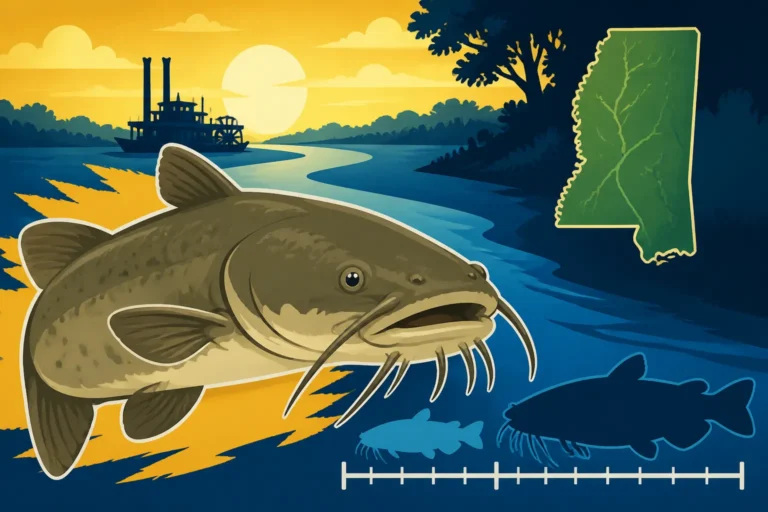
| Blue Catfish | 5-30 lbs (Trophy > 50 lbs) | Deep river channels, reservoirs, swift currents | Powerful, long, sustained runs, brute strength | Year-round |
| Alligator Gar | 20-100+ lbs | Slow-moving rivers, backwaters, oxbows, coastal marshes | Primitive, prehistoric power, incredible fight on the line | Spring, Summer |
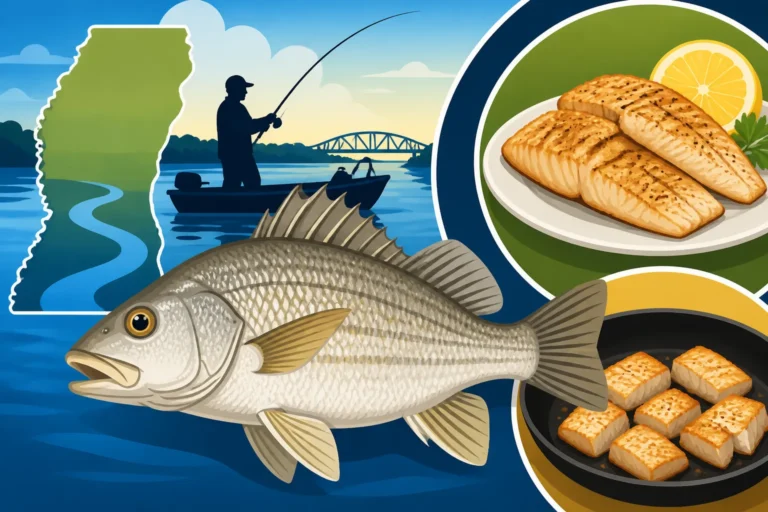
| Hybrid Striped Bass | 2-8 lbs (Trophy > 10 lbs) | Open water, schooling baitfish, tailwaters | Relentless, hard-hitting, strong fighters | Spring, Fall |
This table just scratches the surface of the incredible variety available. You can find more details on these and other species in our Mississippi Freshwater Fish Species Guide.
The Thrill of the Largemouth Bass
If you’re looking for an aggressive, hard-hitting predator, the largemouth bass is Mississippi’s undisputed king. Our reservoirs and smaller lakes are renowned for producing trophy-sized largemouth that can give even seasoned anglers a run for their money. Picture this: you're working a topwater lure near a brush pile on Ross Barnett at dawn, and suddenly, a massive bass explodes from the water, inhaling your bait in a shower of spray. That’s pure adrenaline!
Mississippi anglers use a wide array of techniques to target these impressive fish, from flipping jigs into heavy cover to burning spinnerbaits through grass beds. They are intelligent, powerful, and truly a joy to catch. Finding the right gear is crucial for bass fishing; you can find excellent bass rods, reels, and a vast selection of Best Lures for Largemouth Bass on platforms like Amazon to get geared up for your next outing.
Battling Mississippi's Catfish Giants
For sheer brute strength and the potential for truly enormous fish, you can’t beat Mississippi’s catfish, especially the blue catfish. The Mississippi River and its tributaries, along with our larger reservoirs, hold populations of blue cats that can grow to incredible sizes, easily breaking the 50-pound mark and sometimes exceeding 100 pounds. These fish are absolute tanks, and hooking into a big one means you're in for a serious tug-of-war.
Imagine fishing a deep bend in the Mississippi River, your heavy-duty rod bent double, as a massive blue cat systematically tries to pull you and your boat downstream. It's a test of endurance and tackle, and the reward is a legendary catch and often some fantastic table fare. Many anglers swear by specialized heavy-action rods and reels for this, and you can explore options for Catfish Fishing Techniques and gear readily available on Amazon.
Encountering the Ancient Alligator Gar
If you want to talk about a unique, prehistoric-looking powerhouse, then the alligator gar is our muskie equivalent in terms of sheer awe-factor and primitive power. These incredible fish can grow to astounding lengths and weights, often exceeding six feet and well over 100 pounds, making them one of North America's largest freshwater fish. They are true living fossils and offer a challenging, unforgettable angling experience.
Targeting alligator gar is not for the faint of heart; it requires specialized heavy tackle and a strong will. They are often found in the slow-moving backwaters, oxbows, and larger river systems across the state. The sight of a massive gar rolling on the surface or breaking water during a fight is something you won't soon forget. If you're feeling adventurous, learning about Alligator Gar Fishing in Mississippi will certainly pique your interest.
Adapting Your Angling Focus for Mississippi Success
Since muskie aren't on the menu, the best approach for any angler in Mississippi is to embrace the incredible diversity of fish species we do have. It's about shifting your mindset from chasing a specific, non-native species to appreciating the unique challenges and rewards our local fisheries offer.
This adaptation isn't just about changing your target species; it's about understanding the nuances of Mississippi's waters, seasons, and fish behavior. Our state provides fantastic opportunities for freshwater fishing, whether you prefer tranquil lake fishing, river angling, or even a trip to our beautiful Gulf Coast for saltwater species.
Researching Local Hotspots and Seasons
A key part of successful fishing in Mississippi, just like anywhere, is doing your homework. Different species are more active at different times of the year and in various habitats. For instance, spring is prime time for the Crappie Spawning Season Closure Rules in many areas, while summer might see bass moving to deeper, cooler waters.
Resources like the MDWFP website are invaluable for current regulations, stocking reports, and general information about our fisheries. You can also dive into our articles like Mississippi Fishing Seasons Calendar or Best Fishing Spots in Mississippi to get a head start on planning your next adventure. Knowing when and where to fish for species like Striped Bass Fishing in Mississippi or White Bass Fishing in Mississippi can dramatically increase your chances of success.
Gear Up for Mississippi's Best
While muskie gear is specialized, so too is the tackle for targeting our biggest local fish. You'll need appropriate rods, reels, lines, and lures for species like trophy bass, monster catfish, or powerful gar. Don't show up with ultralight panfish gear if you're hoping to land a 50-pound blue cat!
For bass fishing, a medium-heavy to heavy action rod with a baitcasting reel is often preferred, spooled with strong fluorocarbon or braided line. For catfish, heavy-duty conventional setups are common, capable of handling heavy weights and powerful fish. Even for saltwater species on the Gulf Coast, your gear choices will depend on whether you're targeting speckled trout inshore or red snapper offshore. Equipping yourself properly means you'll not only have a better chance of landing the fish but also enjoy the fight more. Many anglers use Amazon to research and purchase quality gear, from specific lures to high-performance fishing electronics.
Consider a Guided Trip
If you're new to Mississippi fishing or want to maximize your chances of success with a particular species, consider hiring a local fishing guide. These professionals spend countless hours on the water and know the local patterns, hot spots, and techniques like the back of their hand. They can teach you the ropes, put you on fish, and ensure you have a safe and enjoyable experience.
Whether you're after crappie on Grenada Lake or chasing bass on the Ross Barnett, a guide can be an invaluable asset. They often provide all the necessary tackle, bait, and local expertise. You can find guides specializing in various species and locations, from Ross Barnett Reservoir Fishing Guides to Grenada Lake Fishing Guides. It's a fantastic way to accelerate your learning curve and experience the best of Mississippi fishing without the trial and error.
Alternatives to Muskie: Targeting Other Apex Predators
Even without muskie, Mississippi offers incredible opportunities to target other apex predators that will test your skills and provide an unforgettable angling experience. These fish occupy similar ecological niches to muskie in their respective habitats, sitting at the top of the food chain and offering thrilling battles.
Instead of focusing on what's not here, let's celebrate the incredible hunters that are lurking in our waters, ready to give you a fight you won't soon forget.
Gar Species: The Toothiest Challenge
Mississippi is home to several species of gar, including the truly immense alligator gar, as mentioned earlier, and also longnose gar, spotted gar, and shortnose gar. These fish are primitive, powerful, and incredibly exciting to catch. They have elongated bodies, armored scales, and jaws full of needle-sharp teeth.
Targeting gar often involves different techniques than typical game fish, sometimes using rope lures that entangle their teeth or heavy-duty live bait rigs. They are tenacious fighters and a truly unique catch. If you're interested in pursuing these fascinating creatures, a deep dive into Longnose Gar Fishing Tips or Alligator Gar Fishing in Mississippi will give you a good starting point. Just be prepared for a challenge and handle them with extreme care due to their formidable teeth.
Hybrid Striped Bass: The Open Water Hunter
For anglers who love a hard-hitting, fast-action fight in open water, the hybrid striped bass (a cross between a striped bass and a white bass) is an outstanding option. These fish are stocked in many of Mississippi's larger reservoirs, where they school up and chase baitfish, often creating exciting topwater action.
Hybrid stripers are known for their strong, relentless runs and their willingness to strike aggressively. Finding a school of feeding hybrids can lead to a fishing frenzy, with multiple hookups and non-stop action. They are incredibly powerful for their size and provide a fantastic challenge on medium-heavy tackle. Keep an eye on local fishing reports for Mississippi Hybrid Striped Bass Limit and the best times to target them in different reservoirs.
Freshwater Drum: An Overlooked Heavyweight
While not typically considered a glamour species, the freshwater drum (also known as gaspergou) is a surprisingly strong fighter that can grow to impressive sizes in Mississippi rivers and reservoirs. They might not be as visually striking as a muskie or a gar, but they will absolutely put a bend in your rod.
Drum are bottom feeders, often targeted with bait like worms, crawfish, or cut bait. When hooked, they put up a stubborn, dogged fight, often staying deep and pulling hard. For an angler looking for a strong, accessible fight without specialized gear, freshwater drum can be a lot of fun. They are also quite edible, though opinions vary on their table quality. You can learn more about Freshwater Drum Uses and Table Quality if you're curious about preparing them.
Disclaimer
This article is for general informational purposes only and does not constitute professional advice. Laws, prices and regulations vary by location and change over time. Consult a qualified professional for guidance on your specific situation.