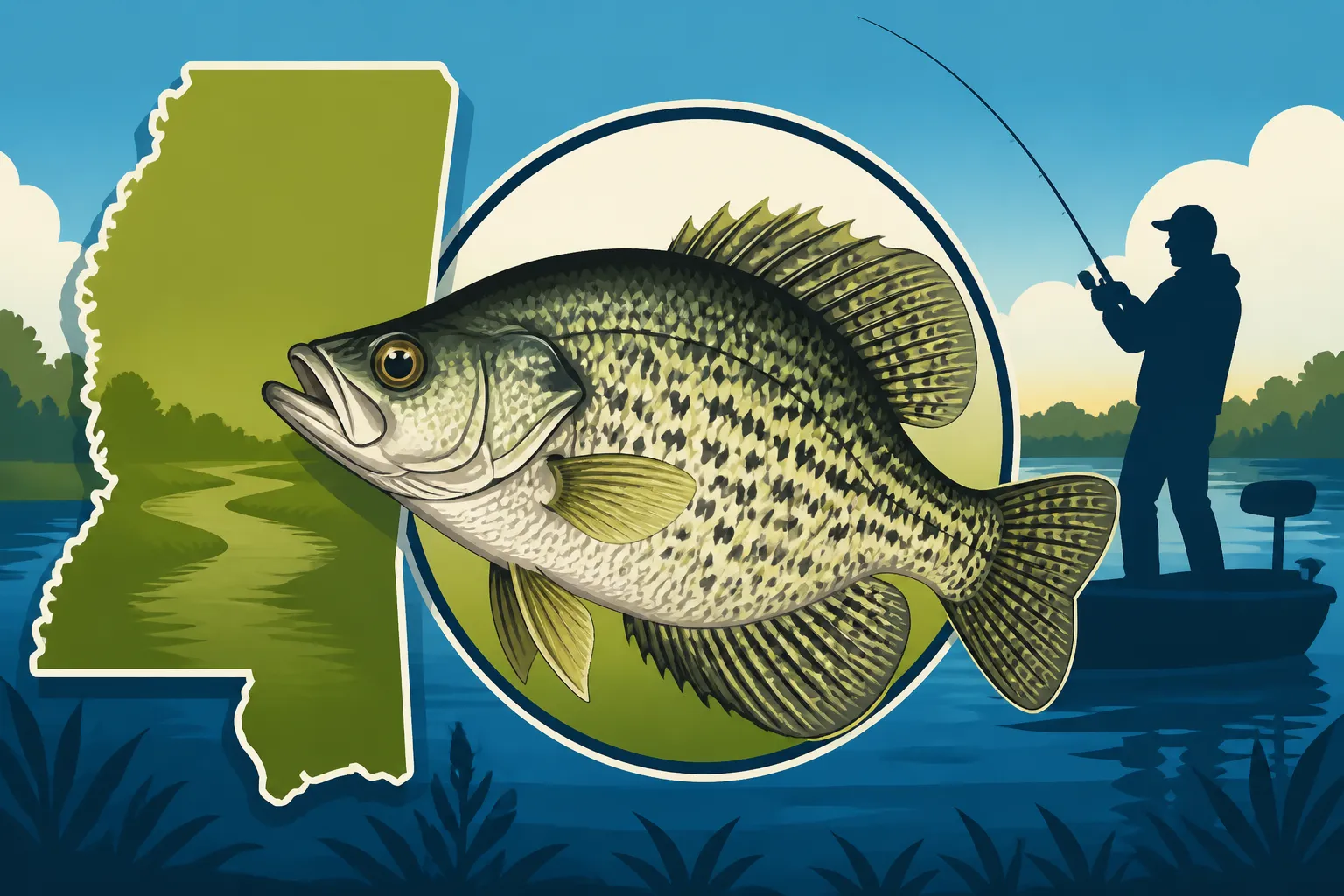
Crappie Identification Guide for Mississippi Anglers
It can be incredibly exciting to reel in a crappie, especially when you're hitting a good bite on one of Mississippi's fantastic lakes. But for many anglers, especially those new to the game or venturing beyond their usual honey holes, the subtle differences between the two main types of crappie can be a real head-scratcher. This guide is designed to clear up that confusion, helping you confidently identify whether you've landed a white crappie or a black crappie, and why knowing the distinction truly matters for your fishing adventures in the Magnolia State.
Why Accurate Crappie Identification Matters
You might think, "A crappie is a crappie, right?" And while both species offer incredible sport and delicious table fare, understanding the specific type you've caught goes far beyond bragging rights. In Mississippi, like many states, regulations are often tailored to individual species, and getting it wrong can lead to unintended consequences or missed opportunities. Knowing your fish enhances your entire angling experience, making you a more informed and responsible sportsman.
Regulatory Implications for Anglers
One of the most crucial reasons to be able to tell white crappie from black crappie is tied directly to fishing regulations. While Mississippi often has statewide creel limits for crappie that apply broadly, there are instances where specific lakes or bodies of water might have special rules for one species over the other, or different slot limits. For example, some lakes might impose a minimum size limit on black crappie that differs slightly from white crappie, or have a combined daily limit that still encourages specific species management. If you mistakenly identify a fish, you could inadvertently violate a rule, leading to a citation or, worse, contributing to an unsustainable harvest pattern for a particular crappie population. It’s always best to be absolutely sure what you have on the end of your line. Always check the current Mississippi Fishing Regulations Explained booklet or the MDWFP website before heading out.
Enhancing Your Angling Experience and Knowledge
Beyond avoiding legal troubles, correctly identifying your crappie species simply makes you a better angler. When you can tell the difference, you start to notice patterns. Perhaps black crappie are biting better in dense cover in a particular lake, while white crappie prefer more open water or subtle structure. This knowledge allows you to refine your techniques, choose more appropriate baits, and target specific areas with greater success. It builds a deeper connection to the ecosystem you're fishing in and contributes to your overall understanding of fish behavior. Plus, there's a certain satisfaction in holding up a beautiful specimen and knowing exactly which species it is, and understanding its place in the aquatic world. It's a key part of becoming a truly seasoned Mississippi angler.
The Two Main Crappie Species in Mississippi
Mississippi is blessed with abundant populations of both white crappie and black crappie, making them a favorite target for anglers across the state. While they share a general "crappie" appearance, each species has distinct characteristics that, once you know what to look for, are surprisingly easy to spot. They both provide fantastic fishing, but they often have slightly different preferences when it comes to habitat and feeding, which we’ll delve into a bit later.
White Crappie Characteristics
White crappie (scientific name: Pomoxis annularis) are often considered the more elongated of the two species. They tend to have a sleeker, more torpedo-shaped body compared to their black crappie cousins. Their coloration can vary quite a bit depending on the water clarity and diet, but generally, they are silvery-white on their sides, fading to a lighter belly, with a darker back. What truly sets them apart are their vertical bars. You'll typically see 6 to 9 distinct, dark vertical bars running down their sides. These bars can be prominent or faded, but they are almost always present in some form, even if faint.
When it comes to the mouth, white crappie tend to have a slightly longer snout and a mouth that extends further back. This might seem like a minor detail, but it can sometimes give them a more "pointed" appearance compared to the blunter face of a black crappie. Habitat-wise, white crappie often prefer larger, more turbid (murky) waters, such as big reservoirs and slow-moving rivers. They are generally more tolerant of silt and higher turbidity, making them abundant in many of Mississippi's big fisheries like Ross Barnett Reservoir and the large flood control reservoirs up north. White Crappie vs Black Crappie: How to Tell Them Apart will give you even more insights.
Black Crappie Characteristics
Black crappie (scientific name: Pomoxis nigromaculatus), as their name suggests, typically have a darker appearance, though again, coloration can vary. Their bodies tend to be deeper and more compressed laterally, giving them a rounder, more disk-like profile compared to the white crappie's elongated shape. Instead of distinct vertical bars, black crappie are usually covered in an irregular pattern of dark, speckled spots across their silvery-gold sides, often extending onto their fins. These spots are what give them their characteristic "peppered" look.
Their mouth is generally smaller and more upturned, giving them a somewhat "cute" or "stubby" facial profile. Black crappie are often found in clearer, cooler waters with more vegetation or woody cover. Think of the clear water lakes with lots of submerged timber and lily pads – that's prime black crappie territory. They are less tolerant of turbidity than white crappie, preferring cleaner environments where they can ambush prey from cover. While both species are abundant in Mississippi, their preferred habitats can sometimes dictate which one you're more likely to encounter in a particular body of water.
Key Identification Markers for Crappie
Now that we've covered the general characteristics, let's dive into the most definitive ways to tell white and black crappie apart. These are the "go-to" features that even seasoned anglers use when there's any doubt. Remember, sometimes color and pattern can be misleading due to environmental factors, but these structural differences are almost always reliable.
Dorsal Fin Spines: The Definitive Tell
If there's one surefire way to distinguish between a white crappie and a black crappie, it's by counting the spines in their dorsal fin. The dorsal fin is the prominent fin on the fish's back. This is where the magic happens, and it's something you can feel for if you're unsure.
A white crappie will always have 6 dorsal fin spines. These spines are rigid and sharp, and you can usually count them easily by gently running your finger over the fin or simply observing them. On the other hand, a black crappie will always have 7 or 8 dorsal fin spines. This anatomical difference is genetically predetermined and doesn't change with age, size, or environmental conditions. So, if you're ever in doubt, remember the numbers: 6 for white, 7 or 8 for black. It’s a simple trick that eliminates almost all confusion. When handling fish for identification, always be gentle and support the fish properly to avoid causing stress or injury.
Coloration and Pattern Differences
While dorsal fin spines are the definitive method, coloration and body patterns are often the first things you'll notice. And generally, they're pretty reliable, as long as you account for some natural variation.
White crappie are known for their distinct vertical bars. Imagine someone took a paintbrush and drew 6 to 9 relatively straight, dark lines from their back down to their belly. These bars can sometimes be faint, especially on fish that have been in a livewell for a while, or those caught from exceptionally clear water. However, the structure of these bars – vertical and somewhat evenly spaced – is a key indicator. Black crappie, by contrast, sport a more speckled or mottled pattern. Their sides are dotted with numerous dark spots that don't arrange themselves into neat vertical bars. Think of it like a peppered texture or camouflage pattern. These spots are often more pronounced in clear water fish and can sometimes even extend onto their fins, giving them a generally darker appearance overall. When considering a fish's color, remember that water clarity, depth, and even diet can influence how vibrant or subdued these patterns appear. A crappie from muddy water might look duller than one from a clear, spring-fed lake.
Mouth and Jaw Structure
Another subtle yet helpful clue lies in the structure of the fish's mouth and jaw. This can be a bit harder to discern if you're not used to looking for it, but with a keen eye, it provides additional confirmation.
White crappie typically have a larger mouth that extends further back on their head. If you imagine a vertical line drawn from the front of their eye, the white crappie's mouth often extends beyond that line, sometimes even to the back edge of the eye. This gives them a more elongated, almost pointed snout. Black crappie, on the other hand, tend to have a shorter, more upturned mouth. Their mouth usually does not extend past the front margin of their eye, giving them a more "compact" or "blunt" facial appearance. This difference in jaw structure can sometimes correlate to feeding habits, with white crappie potentially being better equipped for pursuing larger prey in open water, while black crappie are more adept at picking off smaller morsels from dense cover.
Body Shape and Proportions
Finally, consider the overall body shape. While closely related, the two crappie species do have slightly different silhouettes.
White crappie generally have a more slender, elongated, and oval-shaped body. They often appear "longer" in proportion to their depth. This streamlined shape can be advantageous for moving quickly through open water. Black crappie, in contrast, tend to have a deeper, more compressed body. They appear "taller" or "roundish" for their length, often giving them a more robust or stocky appearance. This deeper body profile can be beneficial for maneuvering through tight spaces in submerged brush and aquatic vegetation, where they often prefer to hunt. Holding the fish vertically can sometimes help exaggerate these differences in body depth, making it easier to compare the two species side-by-side.
Here's a quick comparison table to help you keep these key differences straight:
| Feature | White Crappie | Black Crappie |
|---|---|---|
| Dorsal Spines | 6 | 7 or 8 |
| Body Pattern | 6-9 distinct dark vertical bars | Irregular dark speckles/spots (peppered look) |
| Body Shape | More elongated, slender, oval-shaped | Deeper, more compressed, rounder/disk-shaped |
| Mouth Size | Larger, jaw extends past front of eye | Smaller, jaw typically does not extend past front of eye |
| Coloration | Silvery-white with darker back and distinct bars | Silvery-gold/darker with numerous dark spots |
| Habitat | More tolerant of turbid water, open areas | Prefers clearer water, dense cover, vegetation |
Common Misidentifications and Lookalikes
It's easy to get a little mixed up sometimes, especially if you're quickly trying to identify a fish on the bank or if the fish is particularly small. While crappie are generally distinct, there are other panfish that can sometimes cause a moment of confusion for the less experienced angler. Knowing what not to confuse them with is almost as important as knowing their true identity.
Confusing Crappie with Other Panfish
Mississippi's waters are teeming with a variety of panfish, and sometimes, particularly with juvenile fish, a crappie can be mistaken for a bluegill, redear sunfish, or even a warmouth. However, there are some clear distinctions. Bluegill and other true sunfish (like the ones covered in Bream and Bluegill Fishing in Mississippi) generally have a much smaller mouth relative to their head size, and a more pronounced "ear flap" on their gill plate. Their bodies are also typically much more compressed and round, like a frisbee. While crappie are panfish, they are distinct from the sunfish genus Lepomis. For example, a bluegill will have a very small, terminal mouth, whereas even a small crappie will have a larger, more prominent mouth. The coloration of bluegill is also quite different, often featuring an iridescent blue-green sheen and a black blotch on their dorsal fin. When in doubt, a quick check of the mouth size and the presence (or absence) of the distinct crappie patterns or fin spines will quickly clarify things.
Juvenile Crappie Challenges
Ah, the little ones! Juvenile crappie can sometimes pose a bigger identification challenge than their adult counterparts. Their patterns might not be as pronounced, and their body shapes might not have fully developed the classic white crappie elongation or black crappie depth. A young white crappie might have very faint vertical bars, leading you to wonder if it’s a black crappie. Conversely, a small black crappie's speckles might be less defined, making it seem more like a uniformly colored fish.
This is where the dorsal fin spine count becomes your absolute best friend. Even a juvenile crappie will have the correct number of dorsal spines for its species. So, if you're dealing with a small fish and the visual cues are ambiguous, gently count those spines. It's the most reliable method when the fish hasn't quite grown into its adult markings. Always exercise extreme care when handling small fish, especially if you intend to release them, to minimize stress and injury.
Practical Tips for Identification on the Water
Identifying crappie on the spot, especially when you're excited about a catch or trying to make a quick decision about keeping or releasing, requires a bit of practice. But with a few simple tools and techniques, you can become a crappie identification pro in no time.
Using a Measuring Device and Reference Chart
Having a clear, waterproof reference chart on your boat or in your tackle box can be invaluable. Many local bait shops or state wildlife agencies provide small, laminated guides that show pictures of common fish species, including both white and black crappie, along with their key identification features. Pairing this with a simple measuring board or ruler (which you need anyway to ensure you're within Mississippi Fishing Creel and Size Limits) allows you to quickly compare your catch to the images and descriptions. This is particularly helpful when you're learning, as it provides a visual aid to reinforce the differences we've discussed. You can find excellent, inexpensive folding measuring boards and charts on sites like Amazon that are perfect for keeping handy.
The "Count the Spines" Method
As emphasized earlier, the dorsal fin spine count is the most reliable method, hands down. Make it a habit. When you catch a crappie, before anything else, gently spread the dorsal fin and count those rigid spines. Six for white, seven or eight for black. It’s that simple. If you're on a hot bite, you might find yourself doing this instinctively after a while. This method transcends variations in color, habitat, and even the fish's age, giving you definitive identification every single time. It's a fundamental skill for any serious crappie angler in Mississippi. Practicing this carefully will ensure you don't harm the fish and build your confidence quickly.
Photographing for Later Review
If you're still uncertain, or if you catch a particularly interesting specimen, take a quick photo! A clear picture can be invaluable for reviewing later, perhaps with a more experienced friend or by comparing it to online resources. Make sure to get a shot that clearly shows the dorsal fin, the side of the fish to capture its pattern, and if possible, its mouth structure. You can then refer back to the guide, or even upload the picture to a fishing forum for a second opinion. Remember, a picture is worth a thousand words, and it can save you a lot of head-scratching when you're off the water and have more time to think. This is especially useful if you are trying to understand Crappie Identification Guide for Mississippi Anglers better and solidify your knowledge.
Gear for Better Identification
While not strictly necessary, some gear can make identification easier. A good quality digital scale, for instance, not only helps you weigh your trophy but can also make handling larger fish for a spine count a bit simpler. A proper measuring board, as mentioned, is essential for legal reasons and comparison. Some anglers even carry a small magnifying glass, though this is usually overkill for crappie, but it can help see subtle patterns on other species. For really hands-on types, even a small, durable field guide to Mississippi fish species is a great asset. You can find a wide array of such tools, from basic measuring tapes to comprehensive fish identification books, available on Amazon.
Why Both Species Thrive in Mississippi
Mississippi’s diverse aquatic environments provide fertile ground for both white and black crappie to flourish. Understanding their habitat preferences can actually help you predict which species you're more likely to encounter in certain areas, further aiding in your on-the-water identification.
White Crappie Habitats
White crappie are incredibly adaptable fish, often found in a broader range of habitats. They are particularly abundant in large, turbid reservoirs, slow-moving rivers, and oxbow lakes. Waters with some degree of murkiness or stained visibility don't deter them, and in fact, they often thrive where other more sight-dependent predators might struggle. They tend to prefer areas with open water and scattered cover, such as submerged creek channels, stump fields, or brush piles on main lake points and humps. They are often found in slightly shallower water than black crappie during certain times of the year, and they are more inclined to suspend in the water column over open areas, particularly when chasing baitfish. Their robust nature makes them a consistent catch in many of Mississippi's larger bodies of water, which are often characterized by some degree of turbidity. If you’re fishing a big, open reservoir, like the main lake body of Ross Barnett, you’re often targeting white crappie.
Black Crappie Habitats
Black crappie, while also widespread, generally show a preference for clearer, calmer waters with abundant aquatic vegetation or dense woody cover. Think of the back coves of reservoirs, natural lakes with lily pads, or areas with extensive submerged timber and brush. They rely more heavily on camouflage and ambush tactics, making dense cover essential to their hunting strategy. They are less tolerant of high turbidity and tend to be found in environments where water clarity is higher. They love to relate directly to structure – whether it’s a thick mat of hydrilla, a sprawling willow brush pile, or a complex maze of standing timber. This makes them a popular target for anglers who enjoy dissecting cover with jigs or minnows. If you’re fishing a relatively clear lake, or a protected cove within a larger reservoir, especially if there's significant plant life, there's a good chance you're in prime black crappie territory. Knowing these preferences, along with the distinct Crappie Diet and Feeding Habits for each, can make you a much more effective angler.
Disclaimer
This article is for general informational purposes only and does not constitute professional advice. Laws, prices and regulations vary by location and change over time. Consult a qualified professional for guidance on your specific situation.