Longnose Gar Fishing Tips
You've decided to tackle one of Mississippi's most ancient and formidable freshwater predators – the longnose gar. Many anglers find themselves utterly bewildered by these toothy torpedoes; they see them basking lazily near the surface, cast everything they own, only for the gar to simply ignore their offerings or, worse, strike and somehow never get hooked. This guide is all about demystifying the longnose gar, arming you with the knowledge, gear, and techniques to finally bring one of these incredible fish to hand.
Understanding the Alluring Longnose Gar
Longnose gar are truly fascinating creatures, remnants of a prehistoric era, and they offer a unique challenge to any angler. They're not like your typical bass or crappie; they have their own set of rules, and understanding them is the first step to success.
Gar Biology and Behavior
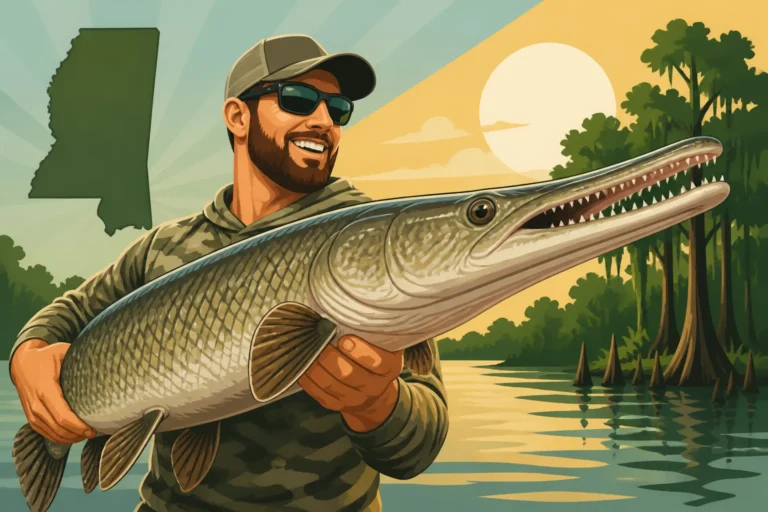
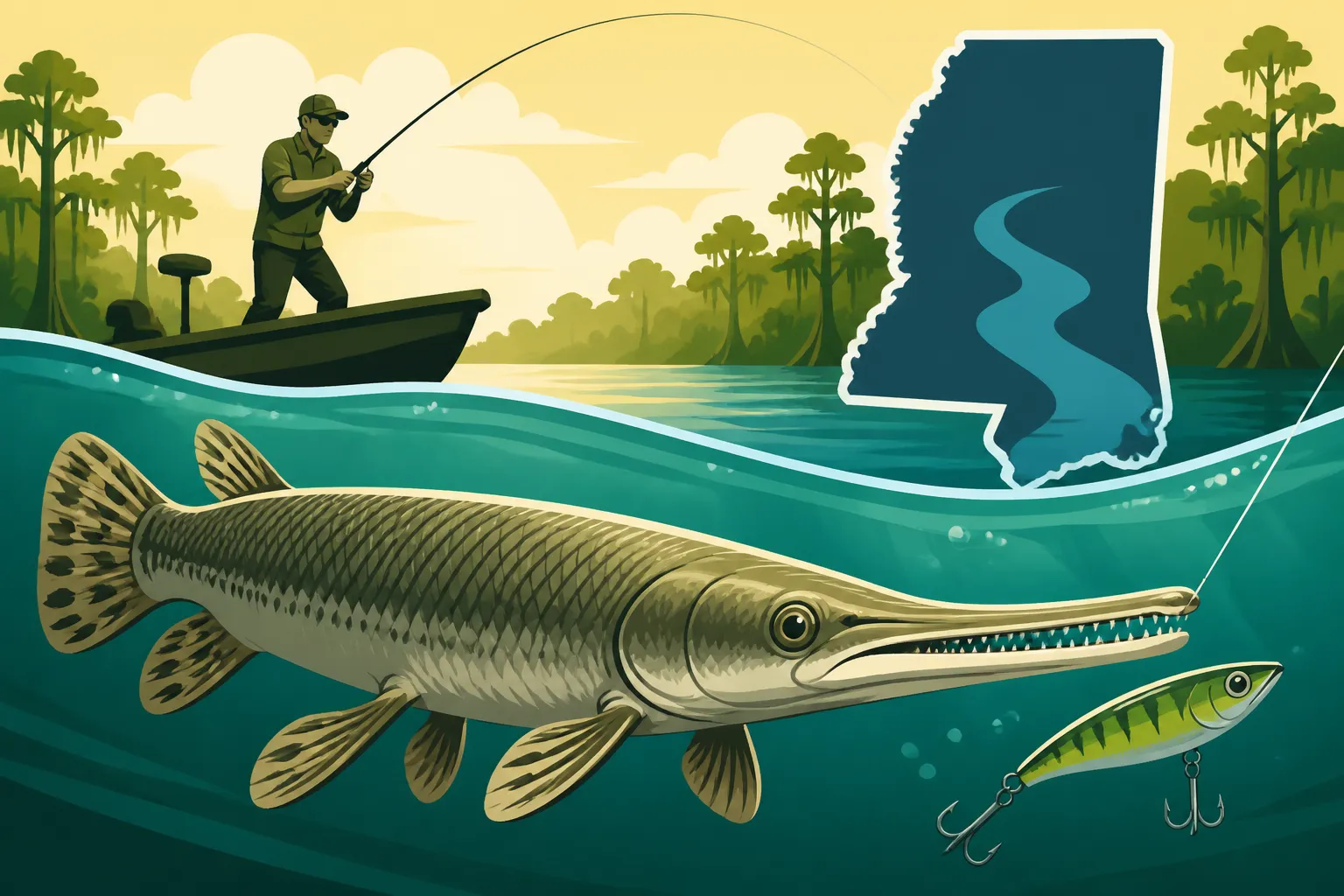
Picture this: a fish with an elongated, cylindrical body, a distinctively long, narrow snout packed with needle-sharp teeth, and a hard, bony plate covering its head. That's your longnose gar, and they can grow surprisingly large in Mississippi waters. They’re visually oriented predators, often seen cruising slowly just beneath the surface, looking for an easy meal. Unlike some fish that ambush from cover, gar are often quite blatant in their presence, which can be both a blessing and a curse for anglers. They're not particularly fast, but their acceleration over short bursts is impressive, especially when they decide to strike.
What do these living fossils eat? Mostly smaller fish, like shad, minnows, and small sunfish. They're opportunistic feeders, though, and won't turn down a shrimp or a juicy worm if it presents itself easily. Their method of attack is usually a side-to-side snap of their head, impaling their prey on those rows of sharp teeth. This unique mouth structure is precisely why they're so challenging to hook with traditional methods, leading to much frustration for the uninitiated.
Where Longnose Gar Call Home in Mississippi
If you're looking for longnose gar in Mississippi, you're in luck – they're fairly widespread! You'll often find them in slower-moving or stagnant waters. Think large rivers like the Mississippi River, the Pearl River, and the Tombigbee River, especially in their backwater sloughs, oxbow lakes, and quiet eddies. Mississippi River Fishing Guide is a great resource for some general areas. They also thrive in the calmer arms and shallow coves of our larger reservoirs, such as Ross Barnett Reservoir or even some of the deeper state fishing lakes.
They love areas with submerged vegetation, lily pads, or standing timber, not necessarily to hide, but because these areas often hold the baitfish they prey upon. On a sunny day, you'll frequently spot them basking near the surface, often in water just a few feet deep, soaking up the warmth. This makes them excellent targets for sight fishing, if you can present your lure effectively without spooking them. Knowing their preferred hangouts is key to increasing your chances of an encounter.
Why They're a Unique Challenge
Honestly, fishing for longnose gar can test your patience like few other species. Their hard, bony mouths are the primary culprit. When a bass hits a lure, there's usually a soft spot for the hook to penetrate. A gar's mouth is almost entirely bone and cartilage, making traditional hook sets incredibly difficult. Many anglers report dozens of strikes for only a handful of hook-ups, if any at all.
Beyond the mouth, their fighting style is unique. While they might not make screaming runs like a big catfish, they're incredibly acrobatic. They'll tail-walk, roll, and thrash violently at the surface, using their long, slender bodies to try and throw the hook. They're also incredibly strong for their size, and their sheer determination can surprise you. It's a real battle of wits and technique, and when you finally land a longnose, it feels like a genuine accomplishment.
Gearing Up for the Tooth-Filled Battle
Tackling longnose gar requires a slightly different approach to your typical freshwater setup. Forget finesse; we're going for robust, reliable gear that can handle both the fish's unique anatomy and its powerful fight.
Rods, Reels, and Line: Your Foundation
When it comes to rods, you want something with a good backbone but enough tip flexibility to absorb those violent head shakes. A medium-heavy to heavy-action spinning or baitcasting rod, typically 6 to 7.5 feet long, is an excellent choice. This allows for decent casting distance but gives you the leverage needed to control a thrashing gar. For reels, a quality spinning reel in the 3000-4000 series or a sturdy baitcasting reel with a smooth drag system will serve you well. Choosing the Right Rod and Reel for Mississippi Fishing can offer more general insights into selection.
Now, for the line, this is crucial. Those teeth are no joke, and they will slice through standard monofilament or fluorocarbon like butter. You absolutely need a strong braided line as your main line, perhaps 30 to 50 lb test. The lack of stretch in braid also helps with detecting subtle bites and getting a solid hook set, even if it's just in a tough part of the mouth. For a leader, many anglers opt for a steel leader or heavy-duty fluorocarbon (60-80 lb) that can withstand the abrasion. Some dedicated gar anglers even forgo leaders entirely, relying on heavy braid straight to a specialized lure.
Specialized Tackle and Baits
This is where gar fishing truly deviates. Since conventional hooks are so challenging, anglers have innovated.
| Tackle Type | Description | Best Use | Pros | Cons |
|---|---|---|---|---|
| Rope Lures | Frayed nylon rope, often with a weight, no hook. | Sight fishing, active gar | High hook-up rate, minimizes harm to fish | Requires careful presentation, can tangle |
| Heavy-Duty Jigs | Weighted jig head with durable soft plastic. | Deeper water, retrieving | Versatile, can attract various species | Hook-up rate still lower than rope |
| Cut Bait | Strips of shad, carp, or other oily fish. | Slower retrieves, scent trail | Natural appeal, good for passive gar | Messy, often swallowed deep |
| Live Bait | Small live minnows or sunfish under a float. | Patience fishing, specific spots | Highly effective, natural presentation | Gar may swallow bait before hook set |
| Large Spoons/Spinners | Heavy, flashy metal lures. | Covering water, attracting attention | Creates flash and vibration | Hook-up rate can be frustratingly low |
Rope lures are truly a game-changer. They consist of a frayed nylon rope, often with a weighted head, but crucially, no hooks. The gar's teeth get tangled in the fibers of the rope, allowing you to reel them in. You can find these at specialty tackle shops or even make your own. For those who prefer traditional methods, large, single-hook artificial lures like spoons or heavy jigs can work, but prepare for many missed strikes.
As for natural baits, fresh cut bait (like shad or mullet) or live bait (like large minnows or small sunfish) can be incredibly effective. However, the challenge remains: how to get a hook to stick in that bony mouth. Some anglers use extra-large, extra-sharp treble hooks on their baits to increase the odds. You might even find some unique gar-specific rigs on Amazon designed to maximize hook exposure.
Essential Accessories for Safety and Success
Gar fishing isn't just about the catch; it's also about handling these toothy critters safely for both you and the fish. A good pair of heavy-duty, long-nosed pliers or a de-hooking tool is absolutely non-negotiable. Trying to remove a hook from a gar's mouth with your fingers is an express ticket to the emergency room. A pair of sturdy, cut-resistant gloves is also a wise investment, especially when you're trying to control a wriggling, tooth-laden fish.
A large, rubberized landing net or a set of lip grippers (like a BogaGrip or a similar brand) can help subdue the fish safely. If you plan on releasing, having these tools ready minimizes handling time and stress on the fish. Lastly, if you're proud of your catch (and you should be!), a tape measure for length and a small digital scale for weight are great additions to your tackle box, allowing you to accurately record your trophy without unnecessary harm.
Mastering the Art of Longnose Gar Techniques
Once you have your gear, it's time to talk strategy. Because of their unique anatomy, longnose gar often require a different set of tactics than what you might be used to.
The "Rope Lure" Revolution
If there's one technique that has truly revolutionized gar fishing, it's the use of rope lures. Imagine a tuft of frayed nylon string, often bundled and weighted to cast easily. When a gar strikes this "lure," its myriad needle-sharp teeth become hopelessly entangled in the nylon fibers. There's no hook to set, no hard mouth to penetrate; it's purely a battle of entanglement.
To use a rope lure effectively, cast it out to where you've spotted gar or into likely gar habitat. Retrieve it slowly, with occasional twitches, mimicking a struggling baitfish. When a gar strikes, don't set the hook! Instead, maintain a steady retrieve pressure. The gar will thrash, trying to dislodge the lure, but its teeth will only get more tangled. Once you've got it near the boat, carefully net or land it, and then gently unravel the rope from its teeth. This method is incredibly effective and often much safer for the fish, as there are no hooks to injure vital organs. You can even find tutorials on Amazon for making your own DIY rope lures, which can be a fun project.
Traditional Bait Fishing Strategies
For those who prefer a more classic approach, bait fishing for longnose gar can be highly productive, albeit with a different set of challenges. Fresh cut bait, like a chunk of shad, carp, or even shrimp, is often irresistible to gar due to its strong scent. You can fish this on the bottom with a simple Carolina rig or suspended under a bobber. Live bait, such as a large minnow or small sunfish, is also a go-to.
The key with bait fishing is patience and letting the gar truly commit. When a gar takes the bait, it's often a subtle movement at first, or a slow swim-off. Resist the urge to set the hook immediately. Let them swim with it for a moment, allowing the bait to get well into their mouth, then set the hook with a strong, sweeping motion. Some anglers use "slip bobber" rigs, allowing the gar to run freely for a few seconds before the line tightens. Remember, you're aiming for the corner of the jaw or a softer spot if possible, but often, it's pure luck.
Adapting Artificial Lures
While rope lures dominate, and bait fishing is reliable, you can catch longnose gar on artificial lures. It just requires specific choices and a high tolerance for missed strikes. Flashy spoons, especially silver or gold, are often effective. Cast them out and retrieve steadily, varying the speed until you find what triggers a strike. The flash mimics a fleeing baitfish, and the gar's predatory instincts take over.
Jigs, particularly those with durable soft plastic bodies (like a paddletail or a fluke-style bait), can also draw strikes. Again, the challenge is getting the hook to penetrate. Consider using jigs with larger, stronger hooks than you might typically use for other species. Topwater lures, such as prop baits or walk-the-dog style lures, can provide exhilarating strikes when gar are actively feeding on the surface, but the hook-up ratio can be even lower. The key with any artificial is to provoke an aggressive strike, hoping the gar's jaws clamp down just right on the hooks. It's not uncommon to go through a few lures as those sharp teeth can shred soft plastics and even damage hard baits over time.
Locating Your Gar Hotspots in the Magnolia State
Mississippi offers a fantastic array of waters where longnose gar thrive. Knowing where to focus your efforts can drastically improve your chances of success.
River Systems and Backwaters
The mighty Mississippi River itself is a prime hunting ground for longnose gar. They're abundant in its calmer sections, especially in the numerous oxbow lakes and backwater sloughs that dot its banks. These areas often have slower currents, plenty of baitfish, and a good mix of submerged and emergent vegetation – all things a gar loves. The Pearl River, especially its lower sections, and the Tombigbee River are also excellent choices. Pearl River Fishing Guide goes into more detail about that system.
When fishing these river systems, look for quiet coves, areas where the current breaks, or the mouths of smaller creeks emptying into the main channel. Gar will often congregate in these spots, waiting for prey to be washed past or simply enjoying the calmer water. Targeting them during low light conditions, like dawn or dusk, can also be productive, as they become more active in their feeding during these times.
Reservoirs and Slow-Moving Areas
Mississippi's large reservoirs, while famous for their bass and crappie, are also home to healthy populations of longnose gar. Ross Barnett Reservoir, Grenada Lake, and Sardis Lake all have areas where gar can be found. Focus on the shallower, stump-filled coves, the backs of major creeks, and any areas with significant lily pad fields or submerged timber. These slow-moving sections provide excellent cover for baitfish, which in turn attracts the gar.
Often, you'll see them just cruising the surface in these calmer sections, especially on sunny days. This makes them ideal for sight fishing with rope lures or carefully presented baits. Ross Barnett Reservoir Fishing Guide can point you to some general areas, but always keep an eye out for those distinctive cigar-shaped shadows lurking near the surface. Don't be afraid to explore areas that might be too shallow or too "weedy" for traditional game fish, as these are often prime gar territory.
Seasonal Movements and Best Times
While longnose gar can be caught year-round in Mississippi, certain seasons and times of day are more productive. Spring, after the water starts to warm up, sees gar becoming very active. They move into shallower waters to spawn, and their feeding activity picks up significantly. This is often an excellent time for sight fishing. Mississippi Spring Fishing Guide offers more general tips for the season.
Summer is also a great time, particularly early mornings and late evenings when the water isn't at its hottest. During the scorching midday sun, gar will often bask near the surface, making them visible but sometimes less willing to strike. Fall can see a resurgence in activity as they feed heavily before the cooler months. In winter, they tend to move to deeper, more stable water, becoming less accessible but still catchable if you target deep holes in rivers or the main channels of reservoirs.
Safely Handling and Releasing Your Catch
Catching a longnose gar is exhilarating, but handling them improperly can lead to injury for both you and the fish. Their sharp teeth and thrashing power demand respect.
Prioritizing Angler and Fish Safety
First and foremost, wear those sturdy gloves we talked about. Seriously, don't skimp on this. Gar can thrash unpredictably, and those teeth can do real damage in a split second. When you bring the fish alongside the boat or to the bank, try to secure its head first. Lip grippers are excellent for this, or you can carefully hold them by the base of the tail to immobilize them somewhat.
Minimize the time the fish is out of the water. If you're going to take a photo, do it quickly and try to support the fish horizontally with two hands to prevent damage to its internal organs. Longnose gar have a primitive lung-like swim bladder, allowing them to breathe air, so they can survive out of water for a bit longer than some other species, but stress is still a factor. If using a rope lure, gently untangle the fibers from their teeth. For hooked fish, use those long-nosed pliers to carefully remove the hook. If the hook is deeply swallowed, it’s often better to cut the line as close to the hook as possible rather than risking further injury by trying to force it out.
Deciding to Keep or Release
Longnose gar aren't typically sought after for their table fare in the same way as crappie or bass, but they are indeed edible, and many people find their white, flaky meat quite delicious. Regulations on gar often differ from other game fish. For instance, Mississippi Non-Game Fish Rules might apply to them, so it's essential to check the current Mississippi Department of Wildlife, Fisheries, and Parks (MDWFP) regulations before you head out, especially if you plan to keep your catch. Some anglers prefer to release gar, treating them as sport fish, appreciating their unique fighting qualities.
If you do decide to keep a gar, dispatch it quickly and humanely. A sharp blow to the head is usually the most effective method. Then, get it on ice as quickly as possible to preserve the meat.
Cleaning and Preparing Gar for the Table
Cleaning a longnose gar is not like cleaning a catfish. Their scales are incredibly tough, almost like armor plating, and trying to scale or fillet them with a regular knife is an exercise in futility. Many experienced gar anglers use a heavy-duty pair of tin snips, game shears, or even an electric saw (like a reciprocating saw) to cut along the backbone and down the side, essentially peeling off the armored skin.
Once you've breached the tough exterior, the meat itself is white, firm, and relatively boneless. Some people describe the taste as similar to crab or scallops, especially when fried or grilled. A popular method is to cut the meat into chunks, marinate them, and then fry them up for "gar balls" or "gar fingers." Just be aware that their roe (eggs) are toxic to humans and other mammals, so always remove them carefully and discard them.
Overcoming Common Gar Fishing Frustrations
Longnose gar are notorious for frustrating anglers, but with a bit of insight and a shift in mindset, you can turn those frustrations into triumphs.
The "Hard Mouth" Dilemma
Ah, the classic gar fishing complaint: "They hit it a hundred times, and I couldn't hook a single one!" This, as we've discussed, stems from their incredibly bony, needle-toothed mouths. Setting the hook aggressively like you would for a bass often results in the hook simply bouncing off. This is where patience truly becomes a virtue.
When using traditional hooks with bait, the trick is to allow the gar to fully commit. Let them take the bait and swim with it for a few seconds before you even think about setting the hook. This gives the hook a chance to move deeper into their mouth, hopefully finding a softer spot in the jaw or the corner of the mouth. Some anglers even pause and allow the fish to turn away before setting the hook, hoping to catch the side of the jaw. When you do set, make it a strong, sweeping motion, not just a quick flick of the wrist. For those truly frustrated by hook sets, remember, the rope lure virtually eliminates this problem by entangling the teeth.
Dealing with Aggressive Fights and Tail Walks
Once hooked, longnose gar are no slouches. Their long, muscular bodies allow for powerful head shakes, rapid rolls, and spectacular tail walks across the surface. Many a gar has been lost right at the boat due to one of these acrobatic displays. The key to combating this is maintaining constant pressure and using your rod to absorb the shocks.
Keep your rod tip high and pointed towards the fish, creating a nice arc in the rod that acts as a shock absorber. This prevents slack line, which is fatal when a gar tail-walks or rolls, as they can easily throw the hook. Let your reel's drag do its job; don't try to muscle the fish in too quickly, especially once it's close. If it starts to roll, try to keep its head up and out of the water if possible, or apply side pressure to throw it off balance. Remember, their strength and agility make them an exciting adversary, so enjoy the fight!
Protecting Your Gear from Those Razor-Sharp Teeth
Those rows of needle-like teeth aren't just for catching prey; they're also incredibly effective at destroying fishing line, leader, and even soft plastic lures. Losing an expensive lure or having your line snap at a critical moment is infuriating, but it's largely preventable.
As mentioned earlier, a wire leader or heavy fluorocarbon leader (60-80 lb) is your best friend when targeting gar with hooks. Even with a leader, always inspect your line after each catch (or even after a missed strike) for fraying or nicks. If you see any damage, re-tie your knot and replace the damaged section. For soft plastic lures, accept that they will get chewed up. Keep a good supply on hand, and don't be surprised if a gar completely shreds a brand-new plastic on its first strike. Choosing more durable soft plastics from brands like Z-Man, which are made from tougher elastomer materials, can help them last a bit longer. Investing in quality gear from a reputable supplier on Amazon will ensure you have durable items that can withstand these toothy encounters.
Longnose gar fishing is a unique and rewarding pursuit in Mississippi. It challenges conventional angling wisdom and forces you to adapt, but the satisfaction of landing one of these prehistoric beauties is truly something special. So, gather your gear, hit those quiet backwaters and river bends, and prepare for a fishing adventure unlike any other. Good luck, and tight lines!
Disclaimer
This article is for general informational purposes only and does not constitute professional advice. Laws, prices and regulations vary by location and change over time. Consult a qualified professional for guidance on your specific situation.