Redfish Diet and Feeding Habits
There’s nothing quite as satisfying as a Mississippi redfish slamming your line, but let's be honest, it can be incredibly frustrating when you're out there, casting away, and they just aren't biting. Oftentimes, the missing piece isn't your technique, but simply understanding what's on their menu. This comprehensive guide is designed to unravel the mystery of the redfish diet and feeding habits in our beautiful Mississippi waters, helping you choose the right bait and tactics to get those fish on the hook.
What Do Redfish (Red Drum) Typically Eat in Mississippi Waters?
If you want to consistently catch redfish, you have to think like a redfish. And thinking like a redfish means understanding what fuels their day-to-day existence in the diverse coastal environments of Mississippi. These powerful, bronze-colored fighters are not picky eaters by any stretch, but they do have a clear preference for certain prey, and knowing these preferences is your secret weapon.
Crustaceans: The Redfish's Favorite Snack
Ask any seasoned angler on the Mississippi Gulf Coast, and they'll tell you that if there's one food source that consistently gets a redfish's attention, it's crustaceans. These crunchy, protein-packed critters are simply irresistible.
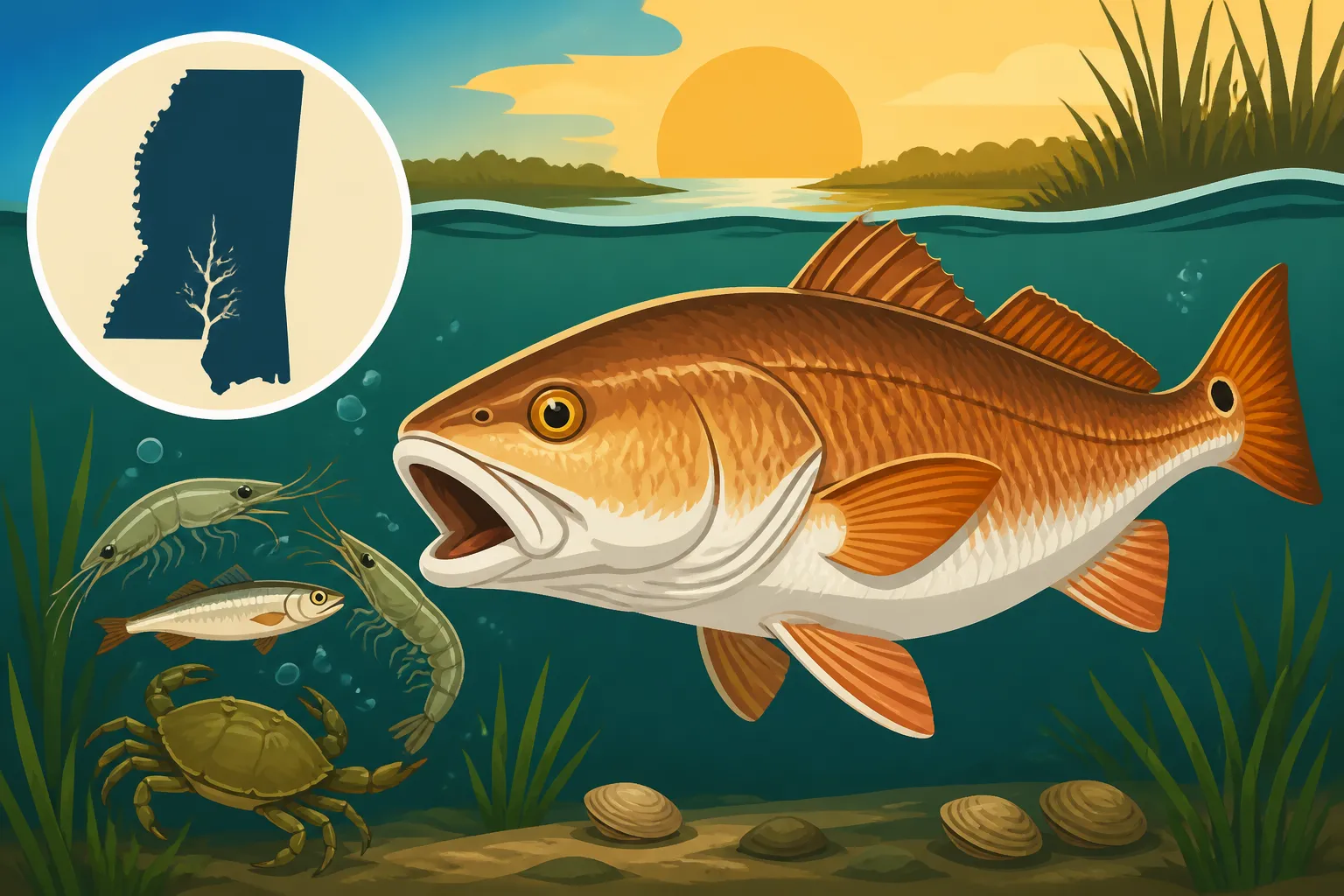
Shrimp, in particular, are at the very top of a redfish's dietary hit list. We're talking about everything from the plentiful white shrimp, brown shrimp, and pink shrimp that populate our estuaries and bays. Redfish will actively root around in the mud and grass flats, using their keen sense of smell and lateral line to detect the presence of these tasty morsels. A live shrimp, kicking and darting around, is often a guaranteed strike, especially when targeting smaller "rat reds" up in the marsh grass. Even larger bull redfish, despite their size, won't pass up a juicy shrimp. The natural scent and erratic movement make shrimp an almost perfect imitation of what they’re constantly hunting.
Beyond shrimp, crabs are another major food source for redfish. Our Mississippi waters are teeming with various crab species, from the ubiquitous fiddler crabs scurrying along the banks to the robust blue crabs that shed their shells, making them incredibly vulnerable. Redfish have powerful crushing plates in their throats designed specifically for breaking down the hard exoskeletons of crabs. They will often "tail" in shallow water, meaning their tails break the surface as they dive head-first into the mud to root out crabs. Mud crabs are also a common prey item, especially in the brackish marsh systems. If you can present a convincing crab imitation, whether live or artificial, you're on the right track.
Finfish: A Staple in Their Diet
While crustaceans might be their bread and butter, redfish are also opportunistic predators that won't hesitate to ambush and devour finfish. As they grow larger, especially, finfish become a more substantial part of their diet, providing the energy needed for their powerful runs and growth.
The coast is alive with various baitfish that redfish readily consume. Mullet are perhaps the most famous, constantly jumping and flickering across the surface, making them an easy target. Redfish will gorge themselves on schools of finger mullet, often chasing them into shallow water or against oyster reefs. Other common baitfish include minnows, pinfish, croaker, and mud minnows. These smaller fish provide a quick, high-calorie meal. Redfish will patrol grass lines, oyster beds, and channel edges, waiting for schools of these baitfish to pass by, then launching an attack with surprising speed and force. The vibrations and flashes of schooling baitfish are a strong attractant.
It's not just the small baitfish either. Larger redfish, particularly the mature "bull reds" found in deeper passes and offshore waters, will readily consume larger finfish. This can include smaller speckled trout, drum, or other panfish that venture too close. They are efficient hunters, and any fish that looks vulnerable is fair game. Understanding this helps explain why anglers targeting Redfish Fishing on the Mississippi Coast often succeed with bigger live baits or large artificial lures designed to mimic sizable prey.
Worms and Other Invertebrates
While not as dominant as crustaceans and finfish, redfish are certainly not above munching on various worms and other invertebrates they encounter while rooting around on the bottom. These items might constitute a smaller percentage of their overall diet but are still part of their opportunistic feeding behavior.
Marine worms, for instance, are a readily available food source, especially in soft, muddy bottoms characteristic of many Mississippi bays and bayous. As redfish churn up the sediment with their downward-facing mouths, they expose these worms, which are quickly gobbled up. While you won't typically target redfish with artificial worm imitations in the same way you might bass, their presence in the natural diet confirms their scavenging tendencies.
Similarly, small clams and oysters are often consumed. Redfish are often found around oyster reefs for a reason: not only do these structures provide cover for baitfish and crabs, but the oysters themselves can become a food source. A redfish might crush a small clam or oyster it finds while foraging, adding another layer to their diverse palate. This highlights their ability to adapt and capitalize on whatever food is most abundant in their immediate environment.
Understanding Redfish Feeding Habits and Behavior
Knowing what redfish eat is only half the battle; understanding how they eat is crucial to presenting your bait effectively. Redfish have evolved specific behaviors and physical characteristics that make them incredibly efficient predators in their coastal habitats.
Bottom Feeders and Foragers
One of the most defining characteristics of a redfish's feeding behavior is their preference for foraging along the bottom. Their mouths are subterminal, meaning they are positioned slightly underneath their snouts, perfectly adapted for rooting and sucking up prey from the seafloor.
When redfish are feeding actively on the bottom, they often create tell-tale signs for observant anglers. In shallow water, especially over grass flats or muddy bottoms, you'll frequently see their tails breaking the surface as they dive down to grub for shrimp, crabs, and worms. This "tailing" behavior is a dead giveaway that redfish are present and actively feeding, making it an prime target for sight fishing. Beyond visible tails, they stir up the bottom, creating plumes of mud or sediment that slowly disperse, indicating recent activity. These mud boils or cloudy areas are excellent indicators that you should present your bait nearby.
Because they spend so much time rooting around, scent and vibration play a much larger role than sight in their feeding. They can detect the smallest movements and odors in the water, even in murky conditions. This is why natural bait, or artificial baits with added scent, can be so effective. A redfish doesn't need to see your bait from a distance if it can smell or feel its presence. This also means casting beyond them and slowly working your bait back into the disturbed area can be incredibly productive, allowing the bait to approach from an angle they are already focused on.
Opportunistic Predators
While they are skilled bottom foragers, redfish are also highly opportunistic and won't pass up an easy meal. They are powerful, fast swimmers when they need to be, capable of ambushing prey in open water or along structure.
Redfish often school, particularly younger fish and those in the intermediate "slot" sizes commonly found along the Mississippi Coast. In these schools, competitive feeding can reach a frenzy. If one fish hits a bait, others are often quick to follow, especially if they sense vulnerability in the prey. This schooling behavior can make for exhilarating fishing, as multiple hook-ups are common. They will eagerly hit anything that looks like an easy meal – a struggling baitfish, a soft plastic lure jigged enticingly, or even a topwater plug splashing across the surface.
In clearer waters, sight fishing for redfish becomes a possibility, especially on calm days. Anglers can often spot schools or individual fish cruising just under the surface or tailing in the shallows. Looking for "nervous water" – subtle disturbances, wakes, or ripples on an otherwise calm surface – can indicate redfish activity. Once spotted, a well-placed cast to a sighted fish often results in an immediate strike, as their predatory instincts kick in. However, remember that redfish can be easily spooked in clear, shallow water, so a stealthy approach is essential.
Tidal and Environmental Influences
The Mississippi Coast is a dynamic environment, and redfish feeding habits are heavily influenced by the constant ebb and flow of tides and other environmental factors. Understanding these can significantly improve your fishing success.
Tides are perhaps the most critical factor. As the tide pushes into the marsh systems, it brings a fresh influx of baitfish, shrimp, and crabs into areas that were previously too shallow or inaccessible. Redfish will follow this incoming tide, pushing deep into the grass to forage. Similarly, as the tide begins to fall, it flushes bait out of the marsh, concentrating it in choke points and deeper channels, creating an ambush alley for waiting redfish. Many experienced anglers swear by the last two hours of an incoming tide and the first two hours of an outgoing tide as prime feeding windows.
Other environmental factors like water clarity, temperature, and current also play a significant role. Clear water might make redfish more wary, necessitating lighter tackle and more natural presentations. Murky water, on the other hand, puts a premium on scent and vibration. Water temperature directly impacts their metabolism; colder water means slower, less frequent feeding, while warmer water makes them more active. Strong currents can concentrate bait and create feeding opportunities around structure, while slack tides might see them spread out and less active. Paying attention to these natural cues is vital for consistent success.
Adapting Your Bait & Lures to Redfish Diet
Now that we understand what redfish eat and how they behave, it's time to translate that knowledge into actionable bait and lure choices. The key is to match the hatch, or at least present something that closely mimics their natural food sources.
The Power of Live Bait
For many serious redfish anglers, live bait is king. It offers natural scent, movement, and an undeniable appeal that artificial lures, however good, sometimes struggle to replicate.
Live shrimp are, without a doubt, one of the most effective baits you can use for redfish along the Mississippi Gulf Coast. You can rig them in various ways: a simple popping cork setup with a fluorocarbon leader and a small kahle or circle hook allows the shrimp to swim naturally just above grass or oyster beds. Alternatively, free-lining a shrimp with no weight, or a very small split shot, is deadly for spooky fish in shallow water. The key is to keep the shrimp alive and kicking. You can often buy them fresh at local bait shops.
Live mullet and pinfish are excellent choices, especially when targeting larger redfish. A 3-5 inch finger mullet or a lively pinfish hooked through the lips or dorsal fin and fished under a popping cork or free-lined can trigger explosive strikes. When chasing bull reds in deeper passes or near jetties, larger mullet of 6-8 inches become more appropriate, often fished on a Carolina rig or a fish-finder rig near the bottom. The natural struggle of these larger baitfish is a siren song for hungry redfish. For catching your own bait, a good cast net can be found on Amazon, often with various mesh sizes to suit different baitfish.
Effective Artificial Lures
While live bait is superb, artificial lures offer versatility, allowing you to cover more water and mimic a wider range of forage. The effectiveness of artificials has grown immensely, and many anglers prefer the challenge and efficiency they offer.
Soft plastic lures are incredibly popular and effective for redfish. Paddle tails, shrimp imitations, and jerk shads rigged on jig heads are staples. The key is to choose colors that match the local bait or water conditions – natural greens, browns, and whites for clear water, and brighter colors like chartreuse or "glow" for murky water. Brands like Gulp! and Z-Man offer soft plastics specifically designed for saltwater, with built-in scent or extreme durability. You can find a huge selection of these specific jig heads and soft plastics, often in multi-packs, on Amazon. A slow, steady retrieve with occasional twitches often mimics a struggling shrimp or baitfish, irresistible to a redfish.
Spoons, particularly weedless spoons, are another fantastic option, especially when fishing over shallow grass flats. Their flash and wobble imitate fleeing baitfish, and their weedless design allows them to glide over vegetation without snagging. Gold spoons are a classic, but silver and copper can also be very effective depending on light conditions.
Don't overlook topwater lures, especially during low light conditions in calm waters. Walking baits or chuggers can create an exciting surface commotion that aggressive redfish simply can't resist. While not always the most consistent producer, a topwater strike from a redfish is an unforgettable experience.
Cut Bait Strategies
Sometimes, the simplest approach is the best. Cut bait, while not offering the natural movement of live bait, provides a powerful scent trail that can draw in redfish from a distance, especially when they are lethargic or in deeper water.
Fresh cut mullet is a prime example. Chunks of fresh mullet, fished on a Carolina rig or fish-finder rig directly on the bottom, release a potent scent that redfish can detect from afar. This strategy is particularly effective when fishing murky water, strong currents, or when targeting larger, less active fish. Similarly, pieces of crab, especially blue crab, can be highly effective. The strong odor of a crushed crab is a major attractant.
The main advantage of cut bait is its ease of use and ability to withstand aggressive bites, making it a good choice for passive fishing or when multiple rods are in use. While you won't get the same visual appeal as a live bait or artificial lure, the scent factor is often enough to provoke a strike. Make sure your cut bait is fresh; stale bait is far less effective.
Seasonal and Environmental Influences on Redfish Feeding
Redfish don't eat the same way all year round, nor do they behave identically in every corner of their habitat. Their feeding patterns are heavily dictated by the seasons and the specific environment they find themselves in. Understanding these shifts helps you adjust your tactics for maximum success.
Spring and Fall Foraging Frenzies
If there are two seasons that truly stand out for redfish feeding in Mississippi, it's spring and fall. These periods represent intense foraging frenzies as redfish prepare for, or recover from, spawning, and baitfish are abundant.
Spring fishing sees redfish becoming incredibly active as water temperatures rise. They are in a pre-spawn and then post-spawn feeding mode, looking to pack on weight. Baitfish, shrimp, and crabs all become more active, moving into the shallower marshes and bayous, and redfish follow them. This is a time when they are often aggressive and willing to hit a variety of baits and lures. Mississippi Spring Fishing Guide provides more detail on this active period.
Fall is arguably the most exciting time for redfish fishing. As water temperatures begin to cool, huge schools of baitfish, especially mullet, begin their annual migration out of the estuaries and into the Gulf. Redfish, particularly the larger ones, gather in massive schools to ambush these baitfish. This "fall run" offers incredible opportunities for fast-paced action. Redfish are often seen crashing bait on the surface, making them easy to spot. This migratory pattern is what often draws the larger "bull reds" into more accessible waters before they retreat to deeper offshore areas for winter. This is prime time for targeting Best Spots to Catch Redfish on the Mississippi Coast.
Summer and Winter Adjustments
While spring and fall are peak seasons, redfish are present year-round, and you can catch them by adjusting your approach to summer heat and winter cold.
Summer in Mississippi brings intense heat, and just like us, redfish feel the effects. During the hottest parts of the day, they often move to deeper holes, shaded areas under docks, or into areas with slightly cooler, oxygenated water. Their feeding can slow down, and they might become more lethargic. The best bite during summer often occurs during the cooler parts of the day: early mornings, late evenings, or even at night. During these times, they might move back into the shallows to feed. Slower presentations and live baits can be particularly effective when the heat is on.
Winter sees redfish metabolism slow down significantly. They become less aggressive and their feeding is more subdued. They'll often school up tightly in deeper, warmer holes within bayous, canals, or protected bays. Presenting baits slowly and directly to these concentrated fish is key. They aren't going to chase a fast-moving lure far, but a shrimp or a slowly jigged soft plastic placed right in front of them might still elicit a strike. Look for them holding close to structure or in sunny, dark-bottomed areas that absorb heat. For specific regulations regarding redfish, consult Redfish Slot Limit on the Mississippi Gulf Coast.
Habitat Specifics
The specific habitat a redfish occupies will also influence what they eat and how you should fish for them. Mississippi's coastal environment offers a rich tapestry of fishing grounds, each with its own characteristics.
Marsh grass is a quintessential redfish habitat. The dense grass provides excellent cover for juvenile redfish and a nursery for small shrimp, crabs, and baitfish. Redfish will patrol the edges and interior of these grass flats, ambushing prey. Fishing with weedless lures or a free-lined shrimp is ideal here.
Oyster reefs are natural magnets for redfish. These sharp, calcified structures are teeming with life, from crabs and shrimp to small fish seeking shelter. Redfish will cruise around these reefs, rooting for buried crustaceans or ambushing baitfish that venture too close. They use the reef structure as ambush points. Using durable baits or lures that can withstand contact with the sharp shells is important.
Nearshore structures like piers, jetties, and deeper holes in passes are where you'll find larger redfish, especially the bull reds. These areas offer deeper water, stronger currents that bring in bait, and significant structure for them to relate to. Here, larger baits and heavier tackle are often necessary to contend with the fish and the environment. You might target them with heavy jigs, large live baits, or robust cut bait on the bottom. Remember to check Redfish Size on the Mississippi Coast to understand the typical size expectations.
No matter where you're fishing or what season it is, observing the water, understanding the tide, and knowing what redfish are naturally foraging for will dramatically improve your chances of a successful day on the water.
Disclaimer
This article is for general informational purposes only and does not constitute professional advice. Laws, prices and regulations vary by location and change over time. Consult a qualified professional for guidance on your specific situation.