Can You Catch Salmon in Mississippi?
It's a question many curious anglers, especially those new to the Magnolia State or visiting from colder climates, often ask: can you really catch salmon in Mississippi? The thought of landing a sleek, powerful salmon in our warm southern waters can be exciting, but the reality is, unfortunately, a bit different. This guide will dive deep into why salmon aren't found in Mississippi, what species you might be mistaking for them, and where your efforts are best spent enjoying the incredible native fisheries Mississippi does offer.
The Truth About Salmon in Mississippi Waters
Let's cut to the chase: for the most part, no, you cannot catch salmon in Mississippi. When people refer to salmon, they're typically thinking of Pacific salmon (like Chinook, Coho, Sockeye) or Atlantic salmon, which are species primarily found in much colder, northern freshwater and ocean environments. Mississippi's climate and waterways simply aren't suitable for these iconic fish to survive, let alone thrive naturally.
Why Salmon Don't Thrive Here: Water Temperature and Habitat
Salmon have very specific environmental needs, and Mississippi's warm, often shallow, waters just don't fit the bill. These fish are adapted to cold, well-oxygenated rivers and streams, often with gravel bottoms for spawning. They spend significant portions of their lives in cold ocean waters before migrating back to freshwater to reproduce.
Mississippi, with its subtropical climate, experiences prolonged periods of warm to hot water temperatures, especially in its lakes, rivers, and coastal areas. Our waters rarely drop to the consistently chilly temperatures salmon require for survival and successful reproduction. Even our deeper reservoirs can get quite warm in the summer months, making them inhospitable. Think about the mighty Mississippi River or even the Gulf Coast – while teeming with life, the temperature profile and available oxygen levels just aren't what a salmon needs to call home. It's truly a matter of ecological mismatch.
Distinguishing Salmon from Native Mississippi Species
Sometimes, anglers might encounter a fish that, to an untrained eye, bears a superficial resemblance to salmon, leading to the question of their presence. This is often due to a combination of size, silvery coloration, and fighting spirit. However, upon closer inspection, these are almost always native Mississippi species perfectly suited to our environment.
Imagine reeling in a powerful fish that flashes silver in the sun. It might be long and streamlined, putting up an impressive fight. You might instinctively think, "Could this be a salmon?" But then you'd look closer at the fin structure, the shape of the head, and the scale patterns. For instance, many of our native species, especially when healthy and robust, have a beautiful, iridescent sheen. If you're really interested in identifying local species, a good field guide, perhaps one you can find on Amazon, is an invaluable tool. It helps you notice the subtle differences that definitively tell you whether you've got a bass, a hybrid, or something else entirely.
Common Misconceptions: What Anglers Might Be Seeing
So, if it’s not salmon, what are anglers occasionally catching that might make them wonder? There are a couple of strong contenders for the "Mississippi salmon" imposter title, primarily due to their appearance and the thrill they offer on the line.
Hybrid Striped Bass: The Mississippi "Salmon" Imposter
This is, by far, the most common fish mistaken for a salmon in Mississippi waters. Hybrid Striped Bass Fishing in Mississippi is incredibly popular here, and for good reason! These hard-fighting fish are a cross between striped bass and white bass. They grow to impressive sizes, are built like torpedoes, and have that striking silvery body with distinct dark stripes running horizontally along their sides. They fight with an aggressive, powerful pull, often making long runs and challenging even experienced anglers.
When a large hybrid striped bass breaks the surface, flashing silver, it's easy to see why someone might momentarily think of a salmon. They're often found in large, open waters of our major reservoirs like the Ross Barnett Reservoir or Pickwick Lake, where they chase schools of baitfish. Their strong migratory patterns within these impoundments can also contribute to the "salmon-like" perception. While they share the "anadromous" (migratory) trait with salmon in their genetic makeup, our hybrids are landlocked and don't make the epic ocean-to-river journeys true salmon do. They are, however, an absolute blast to catch and are fantastic table fare.
Rainbow Trout: A Brief, Rare Appearance
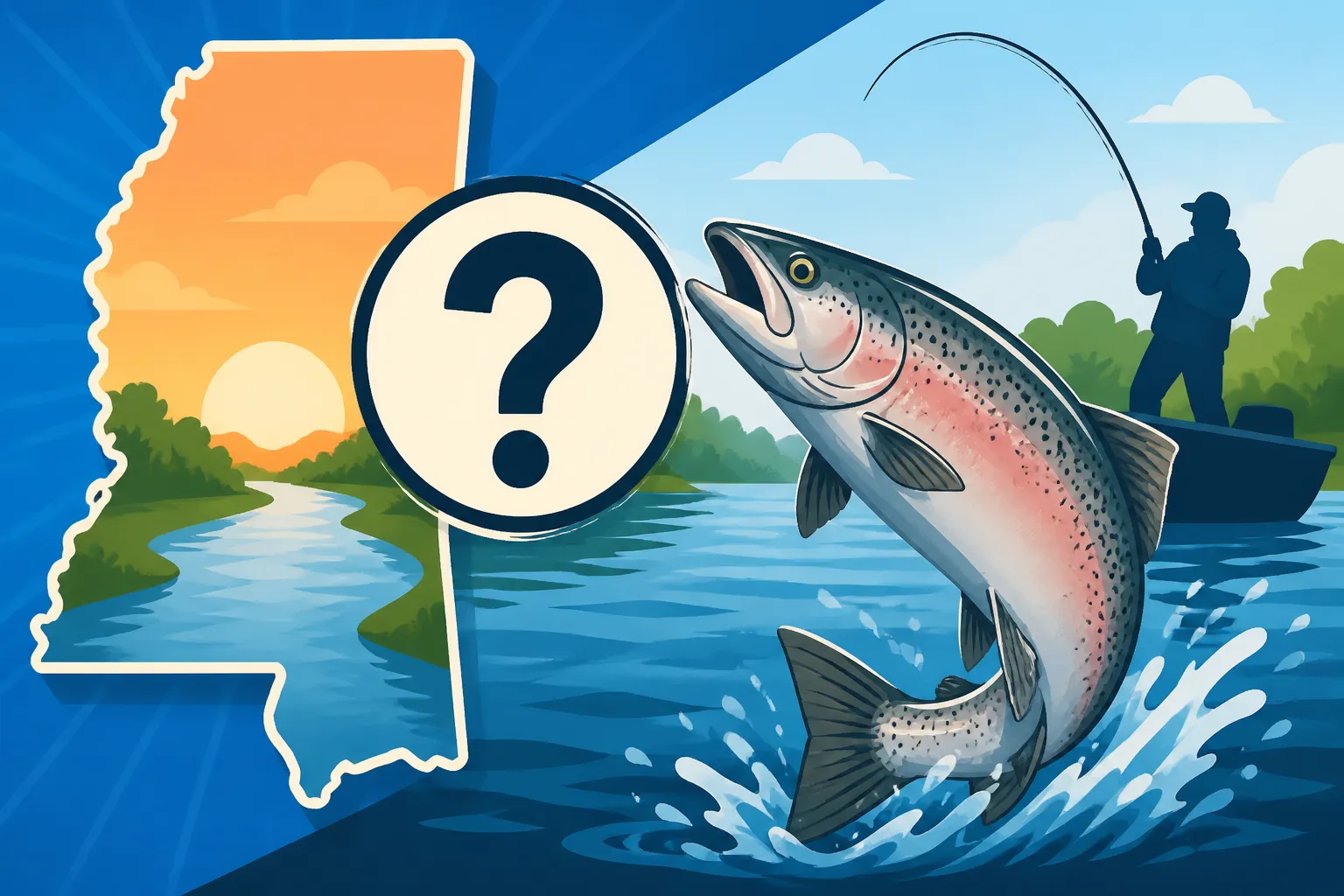
Now, this is an interesting one. While not salmon, rainbow trout are a salmonid species, and they do make a very rare, usually temporary, appearance in Mississippi. In very limited instances, primarily in the colder tailwaters below certain northern Mississippi dams during the coldest parts of winter, the Mississippi Department of Wildlife, Fisheries, and Parks (MDWFP) has stocked a small number of rainbow trout for put-and-take fisheries. This is done purely for recreational opportunity during specific cold-weather windows and is not a self-sustaining population.
These are typically catchable-sized trout, and they provide a unique winter fishing experience. However, as soon as water temperatures rise, these trout cannot survive, and the program is purely seasonal. So, while you might occasionally catch a rainbow trout, it's a deliberate, temporary stocking, not a natural occurrence, and certainly not the vast, natural salmon runs found further north or west. It's a fun novelty, but it's not indicative of a resident salmon or trout population in the traditional sense. Does Mississippi Stock Trout in Any Lakes? covers this in more detail.
Where to Find True Salmon (Not in Mississippi!)
To truly experience salmon fishing, you're going to need to look well beyond Mississippi's borders. These incredible fish are tied to specific geographical and environmental conditions that are simply not present in our state.
The Cold Water Requirements of Salmon
As we discussed, salmon are cold-water fish. This means their natural habitats are typically found in the northern latitudes. For Pacific salmon species, you'd be looking at the coastal rivers and oceans of Alaska, British Columbia, Washington, Oregon, and northern California. These regions boast glacial-fed rivers, vast stretches of cold ocean, and the specific gravel beds necessary for spawning.
Atlantic salmon, on the other hand, are found in rivers flowing into the North Atlantic Ocean, including parts of Canada, New England, and across northern Europe. These areas also share the common thread of cold, pristine waters, complex river systems, and access to chilly marine environments. The entire life cycle of a salmon, from the tiny fry hatching in a gravel nest to the mighty adult migrating thousands of miles, is dictated by these cold-water conditions. Mississippi's abundant Mississippi Freshwater Fish Species Guide and Mississippi Saltwater Fish Species Guide thrive in a completely different, warmer ecosystem.
Traveling for Your Salmon Fishing Adventure
If catching a salmon is on your bucket list, you'll definitely need to plan a trip to one of these dedicated salmon regions. Whether it's casting flies in an Alaskan river, trolling for kings off the coast of British Columbia, or pursuing Atlantic salmon in a New Brunswick stream, the experience is truly unforgettable. It's a very different type of fishing from what we typically enjoy in Mississippi, often requiring specialized gear, different techniques, and a hefty travel budget.
While it means a journey, the reward of battling a powerful Chinook or the delicate art of fly fishing for an Atlantic salmon is worth it for many passionate anglers. Until then, remember that Mississippi offers its own brand of world-class fishing right here at home.
Exploring Mississippi's Diverse Fishery Instead
Alright, so salmon might not be on the menu in Mississippi, but don't let that dampen your spirits! Our state is a true angler's paradise, brimming with diverse freshwater and saltwater species that offer incredible action and delicious meals. Instead of chasing a ghost, embrace the fantastic opportunities right outside your door.
Abundant Freshwater Species for Anglers
Mississippi's lakes, rivers, and reservoirs are absolutely loaded with prime game fish. For many, Largemouth Bass Fishing in Mississippi is king. Lakes like the Ross Barnett Reservoir, Grenada Lake, and Sardis Lake are renowned for producing trophy-sized largemouths. Imagine the thrill of a big bass exploding on a topwater lure near a lily pad patch – that's pure Mississippi magic! You can find an incredible variety of bass lures and equipment readily available on Amazon to get you started.
Then there's Crappie Fishing in Mississippi, which holds a special place in the hearts of many local anglers. The spring crappie spawn brings folks out in droves, filling coolers with these tasty panfish. Techniques range from spider rigging in open water to jigging brush piles, and the pursuit of a slab crappie is a year-round passion. And let's not forget Catfish Fishing in Mississippi! From channel cats to monster blue cats in the Mississippi River, our state offers phenomenal catfishing opportunities, whether you're bank fishing with cut bait or setting trotlines. For optimal success, understanding Best Bait for Catfish in Mississippi can make all the difference.
Exciting Saltwater Opportunities on the Gulf Coast
And if you crave the salty air, Mississippi's Gulf Coast fishing is simply phenomenal. While you won't find salmon, you'll discover a vibrant ecosystem teeming with popular inshore and offshore species. Mississippi Gulf Coast Fishing Guide can point you to areas where you can target speckled trout and redfish, two highly prized game fish that offer fantastic light tackle action and are superb on the dinner plate.
Imagine casting along the marsh grass for a schooling redfish, or drifting a popping cork with live shrimp for speckled trout near the Biloxi Bay. Beyond the estuaries, deeper waters offer opportunities for flounder, sheepshead, and even offshore species like red snapper during their seasons. The diversity is astounding, ensuring that no matter your preference, Mississippi offers a thrilling fishing experience. Before you head out, make sure you've checked the Mississippi Fishing Regulations Explained and Mississippi Fishing Season Dates and Limits to ensure you're compliant and ready for a great day on the water.
Here's a quick comparison of what you might encounter:
| Feature | True Salmon (e.g., Chinook) | Hybrid Striped Bass (Mississippi) | Rainbow Trout (Mississippi, stocked) |
|---|---|---|---|
| Typical Habitat | Cold, clear northern rivers & oceans | Large, warm freshwater reservoirs & rivers | Cold tailwaters, temporary stocking |
| Water Temp Pref. | Very cold (40-60°F) | Moderate to warm (60-80°F) | Cold (45-65°F), but tolerant for short periods |
| Natural Range | Pacific Northwest, Atlantic Northeast | Southeastern U.S. (stocked widely) | Northern U.S., Canada, Europe |
| Body Shape | Sleek, torpedo-shaped, often thick caudal peduncle | Robust, deep-bodied, strong tail | Streamlined, typically smaller, distinctive lateral band |
| Coloration | Silvery, can develop spawning colors (reds, greens) | Silvery, distinct dark horizontal stripes | Silvery, pink/red lateral stripe |
| Mississippi Presence | No (naturally) | Abundant (stocked) | Rare, seasonal (stocked) |
In conclusion, while the idea of catching salmon in Mississippi might be an intriguing thought, it’s not a reality due to the fundamental environmental needs of these northern species. But fear not, because Mississippi offers a truly rich and rewarding fishing experience with its own fantastic array of native and introduced game fish. So, grab your tackle – you can find anything from a new reel to fresh fishing line on Amazon – and head out to explore the amazing waters of the Magnolia State!
Disclaimer
This article is for general informational purposes only and does not constitute professional advice. Laws, prices and regulations vary by location and change over time. Consult a qualified professional for guidance on your specific situation.