Flathead Catfish Average and Maximum Size
There’s something truly special about the flathead catfish, isn't there? For so many of us, it’s not just about the catch; it’s about the sheer anticipation of hooking into one of these magnificent, powerful fish. Anglers across Mississippi are constantly wondering just how big these whiskered giants can get, and what defines a "big one" in our local waters. This guide dives deep into the average and maximum sizes of flathead catfish you can expect to find and chase in Mississippi, helping you understand what it takes to land a true trophy.
Understanding Flathead Catfish in Mississippi Waters
Flathead catfish, often lovingly called "flatheads" or "yellow cats," are a cornerstone of freshwater fishing in Mississippi. They're unique, powerful, and known for their distinct appearance and even more distinct fighting spirit. If you've ever tangled with one, you know exactly what I mean – they don't give up easily!
The Unmistakable Profile and Predatory Nature of Flatheads
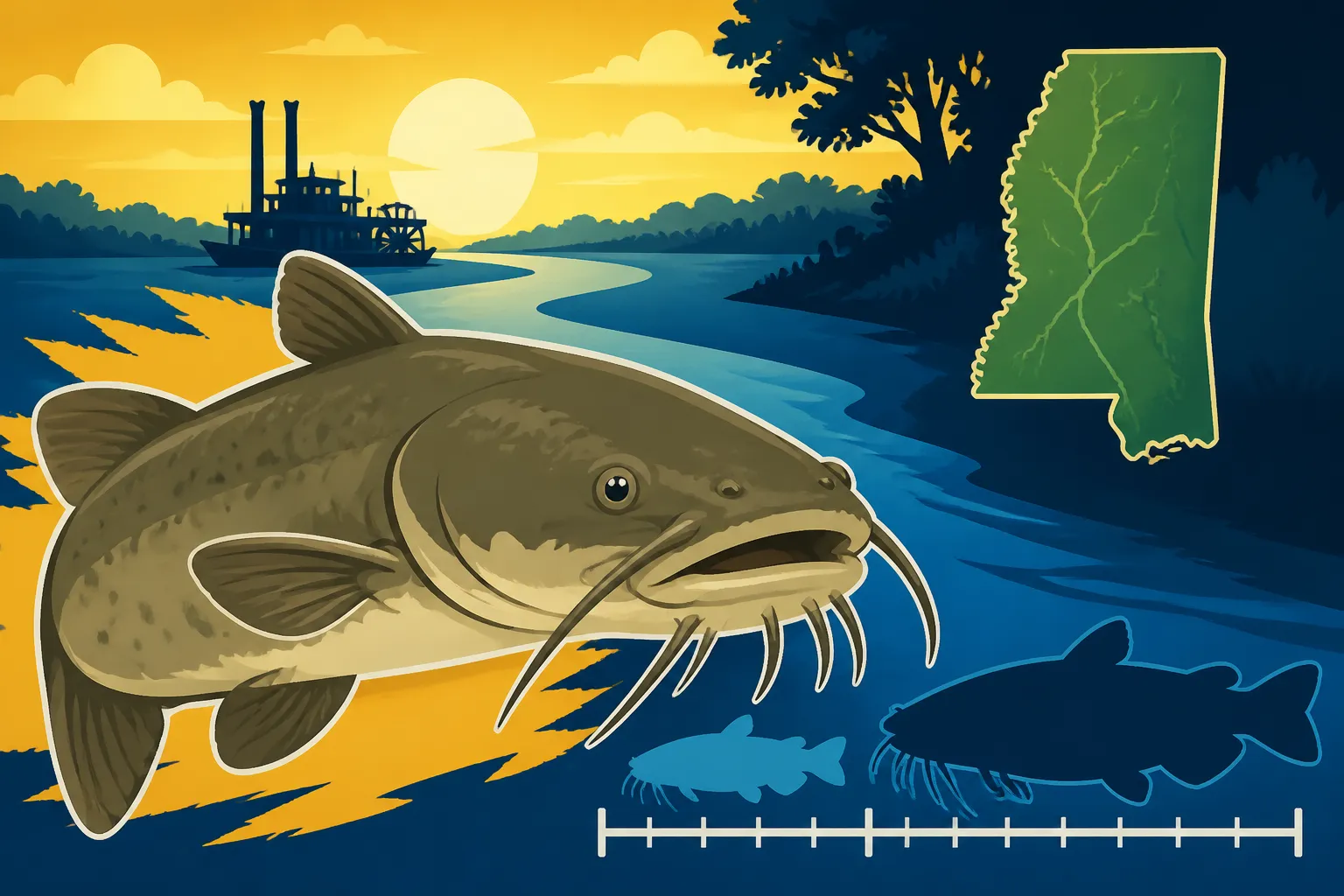
Flatheads stand out from their catfish cousins, like channel cats and blue cats. Their most distinguishing feature is, of course, their flat, broad head. But beyond that, they have a lower jaw that protrudes beyond the upper jaw, small eyes, and a mottled, olive-brown to yellow-brown coloration that often helps them blend into their surroundings. They also have a rounded anal fin, which is a key identifier when distinguishing them from the much larger blue catfish that boast a straight-edged anal fin. Knowing these characteristics is part of understanding the whole picture of these fish. If you're keen to learn more about identifying them, check out our guide on Catfish Identification Chart.
What really sets flatheads apart, though, is their diet. Unlike other catfish that are more opportunistic scavengers, flatheads are pure predators. They prefer live bait – think smaller fish like sunfish, shad, or even smaller carp – and they'll ambush their prey from cover. This predatory nature directly influences their growth. A flathead with a consistent supply of live food in a thriving ecosystem is going to put on weight and length much faster than one in a less abundant environment. They are true apex predators in many of our rivers and reservoirs, contributing to their impressive size.
Environmental Factors Shaping Flathead Growth
Just like with any other fish species, a flathead's growth isn't just about its genetics; it's heavily influenced by the environment it calls home. In Mississippi, we're blessed with a wide variety of waters, from the mighty Mississippi River to numerous lakes, reservoirs, and smaller river systems. Each of these environments offers different conditions that can either accelerate or limit a flathead's potential size.
One of the biggest factors is food availability. A flathead needs a rich diet of smaller fish to reach its maximum potential. Waters with abundant forage fish, like shad or sunfish populations, are prime locations for larger flatheads. Think about the rich ecosystems of the Mississippi River or our larger reservoirs – these places are literal buffets for growing flatheads. Water quality also plays a crucial role. Clean, oxygenated water allows fish to thrive, grow efficiently, and remain healthy. Polluted or oxygen-depleted waters can stunt growth and overall fish health. Furthermore, water temperature and growing seasons impact how long fish can feed actively and metabolize their food. In Mississippi's warmer climate, flatheads have extended feeding periods compared to states further north, which contributes to their potential for substantial growth. Lastly, fishing pressure can sometimes factor in; waters with less angler pressure might allow more fish to reach older, larger sizes. For a deeper dive into their living preferences, you might find Flathead Catfish Habits and Habitat quite insightful.
Average Flathead Catfish Sizes You'll Encounter in Mississippi
When you hit the water targeting flatheads, you're probably hoping for a monster, but it's good to have a realistic expectation of the average catch. Most recreational anglers in Mississippi are going to encounter flatheads within a certain size range, which is still incredibly respectable and a blast to reel in.
Typical Weights and Lengths for Recreational Anglers
For the typical angler in Mississippi, a common flathead catfish catch will often fall into the 5 to 20-pound range. These are robust fish, offering a fantastic fight, and are generally what most folks consider a "good" flathead. A fish in this range will usually measure anywhere from 20 to 30 inches long. You'll find plenty of these fish in our rivers and reservoirs, and they're fantastic table fare too, if you're into that.
Now, it's not uncommon to land flatheads that are bigger than 20 pounds. Many dedicated catfishermen regularly pull in fish in the 20 to 40-pound bracket. A 30-pound flathead is a truly impressive fish, often measuring 35 to 40 inches or more. These are the fish that really test your tackle and your patience, and they leave you with sore arms and bragging rights. It's these consistent catches that keep us coming back for more, year after year.
Here's a general idea of what to expect:
| Size Category | Approximate Weight Range (lbs) | Approximate Length Range (inches) | Experience Level |
|---|---|---|---|
| Small | 1 – 5 | 12 – 20 | Common, beginner |
| Average | 5 – 20 | 20 – 30 | Common, regular |
| Large | 20 – 40 | 30 – 45 | Experienced, good fight |
| Trophy | 40+ | 45+ | Rare, challenging |
Geographic Influences on Average Size Across the State
Mississippi's diverse waterways mean that the average size of flatheads can vary quite a bit depending on where you drop your line. For instance, the sheer size and abundance of forage in the Mississippi River and its associated oxbow lakes often lead to higher average weights. Anglers fishing these waters might find that their "average" fish are a bit heavier than those caught in smaller, more contained river systems or state fishing lakes.
Reservoirs like Ross Barnett or Pickwick Lake, which have large populations of shad and other baitfish, are also known for producing consistent catches of good-sized flatheads. These man-made lakes provide vast habitats and plenty of food, allowing flatheads to grow steadily. Smaller rivers, while still holding flatheads, might have a slightly lower average size due to more limited food resources or less expansive habitat. However, that's not to say a monster can't be hiding in your local creek – flatheads are adaptable! Understanding these nuances can help you decide where to focus your efforts for specific size targets. If you're planning a trip, consider exploring our guide on Mississippi River Catfish Hotspots.
The Quest for Giants: Maximum Flathead Sizes and Record Breakers
While catching a 20-pound flathead is exciting, the dream for many anglers is to hook into a true giant – one that pushes the boundaries of what's possible. Mississippi has certainly produced its share of colossal flatheads that make headlines and inspire countless fishing trips.
Mississippi's State Record Flathead Catfish
Every state has its legendary fish, and Mississippi is no exception. Our state record flathead catfish is a testament to the incredible growth potential of these fish in our abundant waters. While specific numbers can fluctuate and records are always being challenged, the Mississippi state record flathead catfish stands at an absolutely incredible weight, well into the triple digits. Just imagine hooking into a fish that size! It's the kind of catch that defines a lifetime of angling. These record-breaking fish typically come from our largest, most fertile river systems, where conditions are optimal for flatheads to grow old and exceptionally large. To see a full list of these amazing catches, you should definitely check out Mississippi State Record Fish List.
These record holders aren't just big; they're ancient. A flathead catfish that reaches such immense proportions has likely survived many seasons, outsmarted countless anglers, and grown fat on a steady diet of other fish. They are the true kings of their aquatic domains, and their existence fuels the passion of every serious catfish angler in the state.
Beyond the Average: What Makes a True Trophy Flathead
So, what constitutes a "trophy" flathead beyond just the state record? For most anglers, a trophy flathead is generally considered anything over 40 pounds. Once you hit that 40-pound mark, you're talking about a fish that is significantly larger than average, and a true feat to land. Many anglers set their personal "trophy" bar even higher, aiming for 50, 60, or even 70 pounds. These are the fish that truly earn the "monster" moniker.
Catching a flathead of this caliber isn't just about luck; it's about preparation, persistence, and understanding the fish. These giant flatheads are often older, wiser, and incredibly powerful. They tend to prefer deep, structure-rich areas where they can ambush prey and stay hidden. Targeting them requires specific techniques, robust gear, and often, a willingness to fish at night when these predators are most active. Landing one of these beasts is a battle, a test of strength and skill, and an experience that you'll recount for years to come. It’s not just a fish; it’s an adversary that demands respect.
Equipping Yourself to Tackle Mississippi's Big Flatheads
If you're serious about targeting those larger flatheads in Mississippi, you can't just show up with your ultralight spinning rod. These fish are powerful, and they will absolutely humble inadequate tackle. Preparation is key to transforming the dream of a trophy flathead into a reality.
Essential Heavy-Duty Gear for Monster Catfish
When you're after big flatheads, think heavy-duty. Your gear needs to be able to withstand immense pressure and sudden, powerful runs.
First, your rod needs to be stout. Look for heavy-action or extra-heavy action catfishing rods, typically in the 7 to 10-foot range. These rods have the backbone to turn a big fish away from snags and pull them up from deep water. They also need enough sensitivity to detect those subtle bites, even with a large bait. Next up, the reel. A good baitcasting reel or a heavy-duty spinning reel with a strong, smooth drag system is non-negotiable. That drag is your best friend when a 50-pound flathead decides to bolt for a log jam. You'll need it to slowly tire the fish without snapping your line. Many anglers find great robust reels on platforms like Amazon, where they can compare features and read reviews from other serious catfishermen.
Line choice is critical. Forget about anything under 30-pound test. For big flatheads, most experienced anglers will opt for 50-pound test monofilament or braided line, and sometimes even heavier. Braided line offers less stretch and incredible strength for its diameter, giving you excellent feel and power. When it comes to hooks, go big. Circle hooks are highly recommended for catfishing, as they are designed to hook in the corner of the fish's mouth, minimizing harm and making release easier, especially for trophy fish you might want to let go. Sizes from 7/0 to 10/0 are common for targeting large flatheads. Don't forget heavy leaders, strong swivels, and sinkers that are heavy enough to keep your bait on the bottom in strong currents. For some more general advice on setting up your fishing rod, consider reading Best Rod and Reel Setup for Beginners, but remember to scale up everything for flatheads!
Proven Techniques for Targeting Larger Flatheads
Catching big flatheads is often about patience and employing the right techniques. These fish are ambush predators, so you need to present your bait in a way that appeals to their instincts.
Live bait is almost universally accepted as the best choice for trophy flatheads. Think robust baitfish like bluegill, sunfish, gizzard shad, or small carp, typically 4-8 inches long. These baits are lively, emit natural distress signals, and are exactly what a flathead is looking for. You'll want to rig them carefully so they stay alive and active, often with a large circle hook through the back or lips.
Where to fish is just as important as what to fish with. Flatheads love structure. Look for deep holes, submerged logs, brush piles, rock formations, and undercut banks. These are prime ambush points where flatheads will lie in wait for unsuspecting prey. In rivers, current breaks, eddy lines, and the mouths of tributaries can be excellent spots. Many anglers swear by fishing during low-light conditions, particularly at night. Flatheads are primarily nocturnal feeders, and some of the biggest fish are caught after the sun goes down. Setting out jug lines or trotlines can also be incredibly effective for covering more water and enticing larger, more cautious fish. Just be sure to understand all local regulations regarding these methods. Our article on Jug Fishing and Trotline Setup can give you some excellent guidance. For more specific advice on going after these behemoths, consider checking out How to Catch Big Blue Catfish in Rivers, which often applies to flatheads as well, or our specialized guide on Night Fishing for Catfish. Preparing well, using the right gear, and understanding these techniques, you'll be well on your way to battling a Mississippi monster flathead. You can even find specialized catfishing rigs and heavy-duty terminal tackle on Amazon to round out your tackle box.
Disclaimer
This article is for general informational purposes only and does not constitute professional advice. Laws, prices and regulations vary by location and change over time. Consult a qualified professional for guidance on your specific situation.