Kayak Fishing Techniques
There's nothing quite like the feeling of wanting to reach those untouched fishing spots, the ones hidden away from roaring motorboats and crowded banks, but often feeling limited by your gear or budget. Many anglers in Mississippi know the frustration of seeing promising water just out of reach, or the desire for a more intimate connection with nature while they fish. This comprehensive guide is here to shed light on kayak fishing techniques, empowering you to unlock those secluded waters and experience the thrill of the catch like never before across Mississippi's diverse aquatic landscapes.
Why Kayak Fishing is a Game Changer in Mississippi
For years, many of us have been relegated to crowded piers, easily accessible boat ramps, or the limitations of bank fishing. While those methods certainly have their place, kayak fishing offers a whole new dimension, transforming how we interact with Mississippi's incredible fisheries. It's more than just a boat; it's a tool for exploration and a way to truly immerse yourself in the natural world.
Unmatched Access to Untouched Waters
One of the biggest advantages of kayak fishing in Mississippi is the unparalleled access it grants. Imagine those skinny water creeks, oxbow lakes choked with vegetation, or the quiet marshlands along the Gulf Coast that bigger boats simply can't navigate. Your kayak can glide silently through these areas, allowing you to reach pristine fishing holes that rarely see a lure. Whether it's the winding backwaters of the Mississippi River near Vicksburg, the shallow coves of a lesser-known state park lake like Lake Mike Conner, or the intricate bayous off the Pascagoula River, a kayak is your key. You can paddle right into cover, under low-hanging branches, or over submerged timber with minimal fuss, positioning yourself perfectly for a stealthy cast where the fish feel safe and undisturbed.
The Thrill of a Closer Connection to Nature
There’s something profoundly different about being at water level, just inches from the surface, feeling every ripple and hearing every rustle in the reeds. When you're kayak fishing, the roar of a motor is replaced by the gentle dip of your paddle or the quiet whir of a pedal drive. This stealth allows you to approach fish without spooking them, often getting closer to the action than you ever could in a louder vessel. The fight of a fish, even a small bream, feels amplified when you’re eye-level with the water, giving you a raw, exhilarating experience. You become an integral part of the ecosystem, observing ospreys diving for fish, turtles basking on logs, and the subtle movements of baitfish, all while pursuing your quarry. It's a truly immersive experience that grounds you in the moment and enhances every aspect of your time on the water.
Cost-Effectiveness and Simplicity
Let's be honest, the upfront cost and ongoing maintenance of a traditional powerboat can be a major barrier for many aspiring anglers. Fuel costs alone can make a spontaneous trip a luxury. Kayak fishing dramatically cuts down on these expenses. The initial purchase price of a quality fishing kayak is a fraction of a powerboat, and there's no need for gas, expensive repairs, or complex trailer setups.
Transporting a kayak is often as simple as car-topping it on your vehicle's roof rack or sliding it into the bed of a truck. Launching typically requires nothing more than a gentle slope or a designated kayak launch, bypassing crowded boat ramps and their associated fees. Storage is also far less demanding; a garage, shed, or even a covered patio can suffice. This simplicity means less hassle and more time actually fishing, allowing for impromptu trips to local ponds or quick evening excursions after work without the logistical headache.
Choosing the Right Kayak for Mississippi Waters
Picking a fishing kayak isn't a one-size-fits-all decision, especially with Mississippi's diverse fishing environments, ranging from calm lakes to coastal currents. The right choice depends heavily on where and how you plan to fish.
Sit-on-Top vs. Sit-Inside Kayaks
When it comes to fishing kayaks, the main distinction you'll encounter is between sit-on-top (SOT) and sit-inside (SINK) models. For most anglers in Mississippi, especially those starting out, a sit-on-top kayak is almost universally recommended for fishing.
- Sit-on-Top (SOT) Kayaks: These are by far the most popular choice for fishing, and for good reason. They are generally wider and more stable, which is crucial when you're casting, reeling in a fish, or even standing up to sight fish. The open deck provides ample space for gear, tackle boxes, coolers, and rod holders, making everything easily accessible. If you happen to capsize (it happens to the best of us!), re-entry is much simpler on a SOT kayak as they don't fill with water. Most SOT fishing kayaks come with scupper holes that allow water to drain right through the deck, keeping you relatively dry even when waves splash over the side. Brands like Old Town, Perception, and Vibe Kayaks offer excellent SOT options designed specifically for anglers.
- Sit-Inside (SINK) Kayaks: While excellent for paddling long distances or in colder weather, SINK kayaks are less common for dedicated fishing in Mississippi. The enclosed cockpit offers protection from the elements, but it severely limits storage space and makes accessing gear a challenge. Stability is often lower, and standing up is usually impossible. If you do flip a SINK, it can fill with water, making recovery difficult without proper training. Unless you're primarily using it for paddling expeditions and just occasionally dropping a line, a SINK is generally not the best choice for serious kayak fishing.
Stability, Length, and Weight Considerations
These three factors are interconnected and play a huge role in your on-water experience.
- Stability: This is often a top priority for kayak anglers. Wider kayaks (typically 30 inches or more) offer increased primary and secondary stability, meaning they feel less tippy when you get in and out, or when you lean to cast. Many modern fishing kayaks are designed to be stable enough for anglers to stand and sight fish, which is a huge advantage for targeting species like redfish in coastal marshes or bass in shallow coves. However, greater stability often means a slower, less efficient paddle.
- Length: Kayaks generally range from 10 to 14 feet in length. Shorter kayaks (10-11 feet) are more maneuverable, easier to transport, and quicker to turn, making them ideal for tight spaces like winding creeks or crowded timber. However, they don't track as straight and are slower. Longer kayaks (12-14 feet) are faster, track better in open water, and typically offer more storage capacity, making them great for larger reservoirs like Ross Barnett Reservoir or for covering long distances along the Mississippi Gulf Coast.
- Weight: This is a crucial factor for transport and launching. A heavier kayak (80+ lbs) might require a launching cart, a trailer, or a second person to move, especially if you plan to car-top it regularly. Lighter kayaks (under 70 lbs) are much easier to handle solo, but may sacrifice some stability or storage. When looking for accessories like a comfortable seat or extra rod holders, you can find a wide variety of options on Amazon that fit different kayak weights and styles, making it easier to customize your setup without adding excessive bulk.
Propulsion Systems: Paddle, Pedal, or Motorized?
How you move your kayak impacts your fishing strategy and budget.
- Paddle Kayaks: This is the traditional and most affordable option. Paddle kayaks require arm and core strength, providing a great workout while you fish. They are simple, lightweight, and incredibly quiet, allowing for stealthy approaches to fish. For short trips, budget-conscious anglers, or those who enjoy the physical activity, a paddle kayak is an excellent choice.
- Pedal Drive Kayaks: These revolutionary kayaks, popularized by brands like Hobie (with their MirageDrive) and Native Watercraft (with their Propel Drive), use your legs to propel the boat, leaving your hands free for casting, holding a rod, or managing your tackle. They are generally faster and more efficient over long distances than paddle kayaks. This "hands-free" advantage is a massive game-changer for active fishing techniques like trolling or continuous casting. The downside? They are significantly more expensive and often heavier than paddle kayaks.
- Motorized Kayaks (Trolling Motors): Some fishing kayaks are designed to accommodate a small electric trolling motor, either mounted on the stern or as a bow-mount system (like the Minn Kota Ulterra with Spot-Lock). This offers the ultimate in convenience, speed, and hands-free control, allowing you to cover vast distances quickly, fight currents, or maintain position effortlessly with GPS anchoring. While very effective, adding a motor involves extra cost for the motor and battery, plus the added weight and complexity of battery management. Ensure you understand all the Mississippi Fishing Regulations Explained regarding motorized vessels, even small ones.
Essential Gear and Rigging for Kayak Anglers
Once you've chosen your trusty vessel, it's time to equip it properly. Kayak fishing is all about efficiency and organization in a confined space. Having the right gear, and knowing how to rig it effectively, can make or break your day on the water.
Safety First: PFDs, Whistles, and Lights
This isn't just about good practice; in Mississippi, it's the law. Every person on board a kayak must have a readily accessible U.S. Coast Guard-approved Personal Flotation Device (PFD). Children under 13 must wear one at all times.
- PFD (Life Vest): Don't just "have" it; wear it. Modern fishing PFDs are designed for comfort, with plenty of pockets for small gear, and often feature high backs that don't interfere with your kayak seat. Inflatable PFDs are popular for their minimalist design, but require manual or automatic inflation and regular inspection. Regardless of type, ensure it fits properly and is in good condition. You can find excellent options, including comfortable fishing-specific vests, by searching on Amazon.
- Whistle or Horn: A sound-producing device is legally required. A simple whistle attached to your PFD is sufficient to alert other boaters or signal for help if needed.
- Lights (for low light/night): If you plan on fishing before sunrise or after sunset, or if fog rolls in, you'll need a white light visible 360 degrees, typically an all-around light on a pole. A headlamp is also invaluable for rigging, baiting hooks, or navigating in the dark. Always check the Mississippi Fishing Regulations Explained for specific requirements for night operation.
- Float Plan: Before every trip, tell someone where you're going, when you expect to return, and the color of your kayak. This simple step can be a lifesaver if you encounter an unexpected problem.
Rod Holders, Storage, and Electronics
Maximizing your limited space is key to a productive and enjoyable kayak fishing trip.
- Rod Holders: These are indispensable. You'll want at least one rod holder for trolling or holding a spare rod. Flush-mount holders integrate seamlessly into the kayak deck, while rail-mount or track-mount holders (like those from RAM Mounts or Scotty) offer adjustable positioning for different fishing styles. Having a variety allows you to quickly switch between techniques, whether you're trying some Crappie Fishing Techniques for Mississippi Lakes or setting up for Catfish Fishing Techniques.
- Storage Solutions: Crates, milk crates, or specialized kayak tackle boxes are fantastic for keeping your gear organized and accessible. Many anglers customize a milk crate with PVC pipes for rod storage and add bungee cords or netting to secure tackle boxes. Dry bags are essential for protecting electronics, wallets, keys, and phones from splashes. A small cooler bag can keep drinks, snacks, and even your catch fresh.
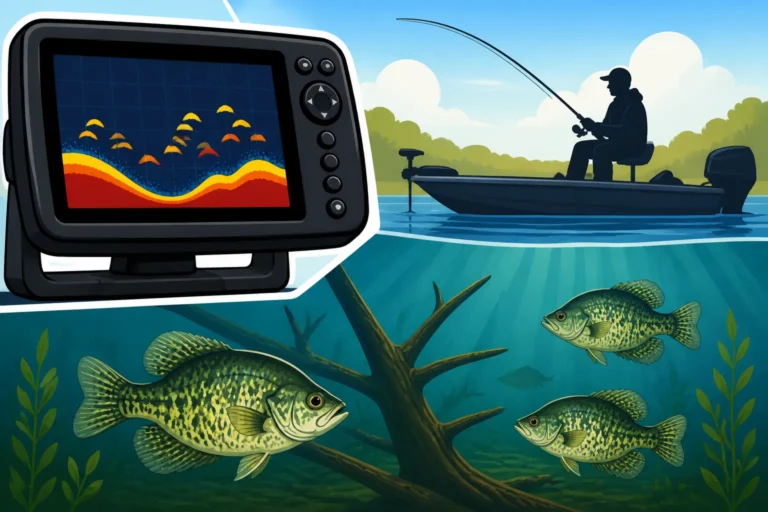
- Electronics (Fish Finders/GPS): A fish finder can drastically improve your success, especially on larger lakes like Grenada Lake or Ross Barnett Reservoir. Modern units, often with GPS, help you locate structure, baitfish, and depth contours. When mounting, consider a compact unit with a small battery (like a sealed lead-acid or lithium battery) to manage weight and space. Ensure all wiring is waterproof and secure.
Anchoring and Positioning Techniques
Maintaining your position, or controlling your drift, is a fundamental skill in kayak fishing.
- Stake-Out Poles: For shallow water (under 8-10 feet), a stake-out pole (a solid fiberglass or aluminum rod) is incredibly effective. Simply push it into the bottom, and it holds your kayak in place quietly. This is fantastic for sight fishing the flats on the Mississippi Gulf Coast or holding over a brush pile in a lake.
- Small Anchors: A 1.5-3 lb grapple anchor or mushroom anchor is perfect for deeper water or areas with current. Attach it to an anchor trolley system, which allows you to deploy the anchor from either the bow or stern of your kayak, preventing weather-vaning and keeping your kayak properly oriented to the wind or current.
- Drift Socks/Drift Chutes: These fabric cones deploy in the water and create drag, slowing down your drift. They are invaluable on windy days or when you want to slowly work a long stretch of structure, giving you more time to present your lure effectively.
- Power-Pole Micro Anchor: For those who want the ultimate in quick and precise shallow water positioning, a Power-Pole Micro Anchor offers push-button deployment and retrieval, holding your kayak firmly in place. While an investment, it's a favorite for serious shallow water anglers.
Mastering Kayak Fishing Techniques
Kayak fishing isn't just about getting on the water; it's about adapting your angling skills to the unique advantages and challenges of fishing from a smaller, lower-profile vessel. It forces you to be more mindful of your surroundings and your presentation.
Casting and Presentation from a Kayak
Fishing from a kayak often means you're lower to the water and in tighter spaces. This requires a few adjustments to your casting and presentation.
- Lower Angle Casting: With less height, you'll naturally have a lower casting trajectory. Practice sidearm or roll casts to keep your lures from snagging overhead branches or spooking fish with a high-flying lure. Accuracy becomes paramount when you're trying to hit a small pocket in the lily pads or tuck a lure under an overhang.
- Short to Medium Rods: While longer rods (7-7.5 ft) are popular for bass fishing, in a kayak, a slightly shorter rod (6.5-7 ft) can be more manageable, especially if you're not standing. This prevents snags on your PFD or gear behind you.
- Stealthy Approach: The biggest advantage of a kayak is stealth. Make quiet paddle strokes, avoid bumping the sides of your kayak, and keep your movements smooth. This allows you to get much closer to spooky fish, leading to more natural presentations and often, more bites.
- Standing vs. Sitting: Many modern fishing kayaks offer the stability to stand, which provides a much better vantage point for sight fishing and allows for more powerful casts. However, it's crucial to practice standing in calm conditions first and always wear your PFD. If the water is choppy or you're less confident, sitting is perfectly fine and often preferred for stability and comfort during long days.
Targeting Specific Mississippi Species
Mississippi's waters are teeming with diverse fish, and kayaks can give you an edge for many of them.
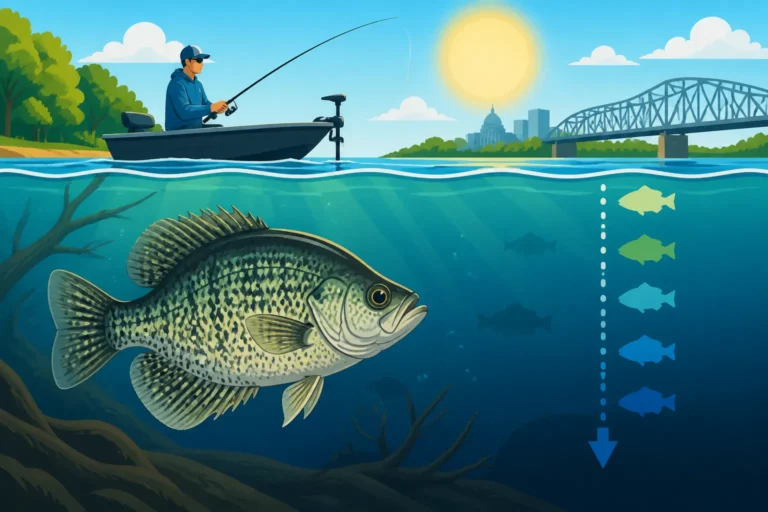
- Crappie: Kayaks are absolutely deadly for Crappie Fishing in Mississippi! They allow you to meticulously work brush piles, submerged timber, and bridge pilings that bigger boats can't reach without spooking fish. Techniques like single-pole jigging, where you vertically present a small jig or live minnow directly into cover, are incredibly effective from a quiet kayak. You can also spider rig in shallower, less trafficked areas. Lakes like Grenada Lake or Sardis Lake offer fantastic crappie opportunities, and a kayak lets you explore every hidden nook.
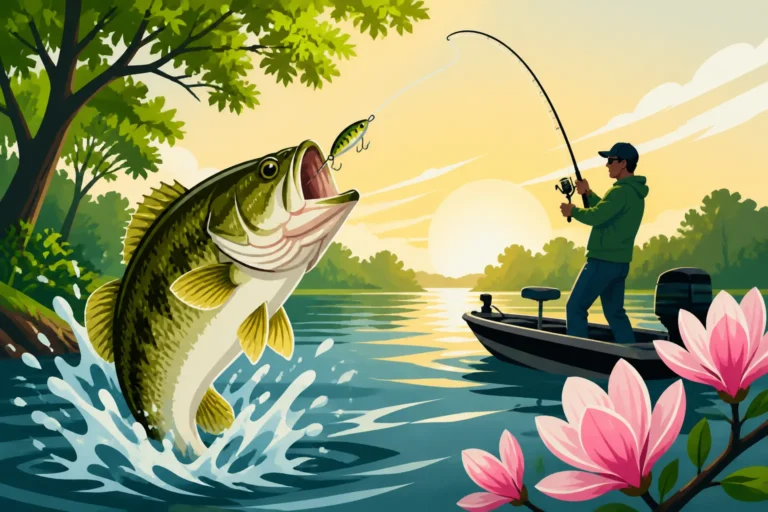
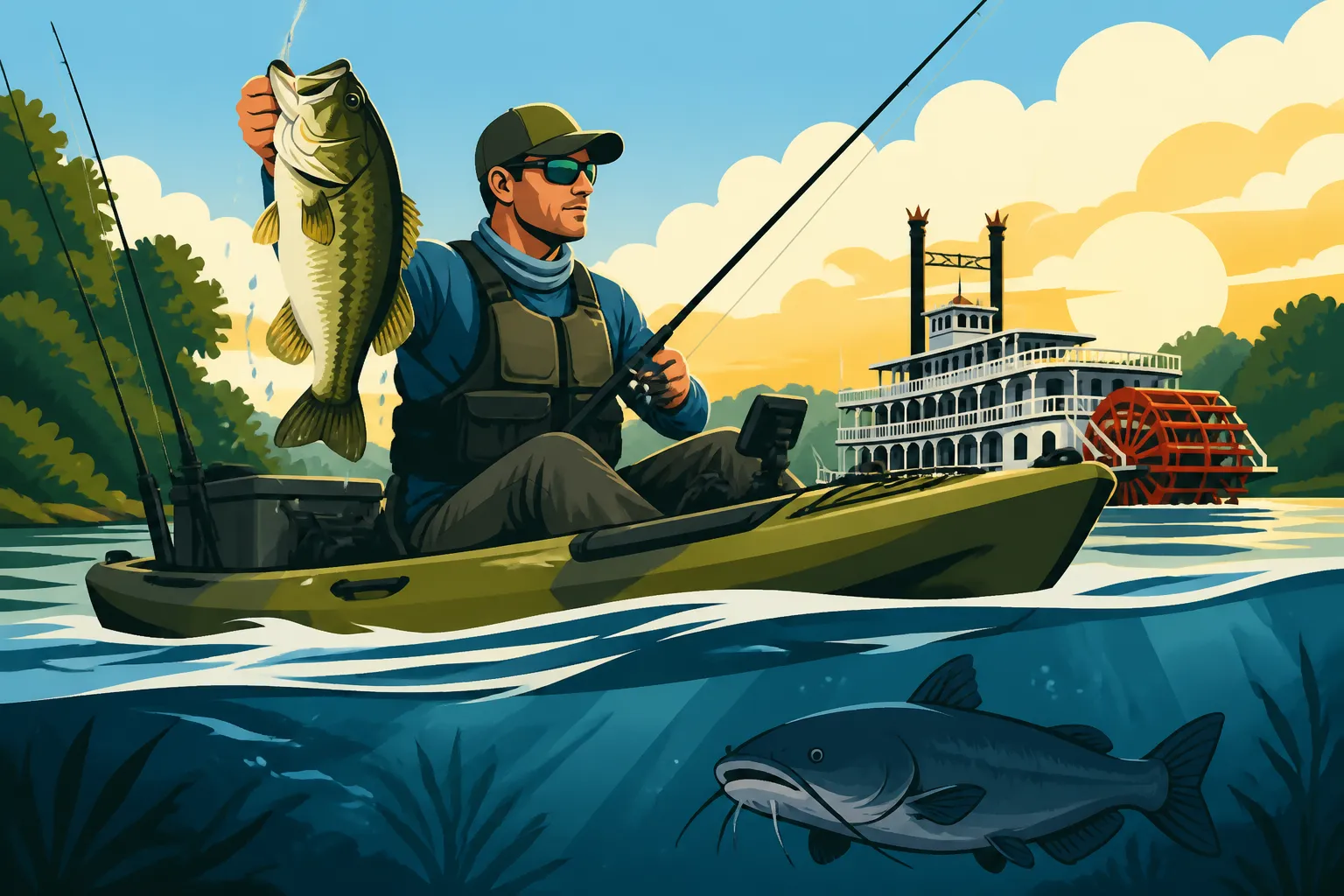
- Largemouth Bass: For Largemouth Bass Fishing in Mississippi, kayaks are perfect for flipping and pitching into dense cover – lily pads, submerged grass beds, flooded timber, and docks. You can silently approach the edges of thick vegetation along the Pearl River or maneuver through the cypress trees of Lake Washington. Topwater action is particularly thrilling from a kayak; the quiet approach often leads to explosive strikes right at your feet.
- Catfish: When it comes to Catfish Fishing in Mississippi, kayaks can be surprisingly effective. Whether you're targeting channel cats in smaller rivers or blue cats in the Mississippi River, a kayak lets you set up in quiet bends, along cut banks, or over deep holes that are harder for traditional boats to reach. You can deploy jug lines (check regulations for numbers and tagging requirements) or trotlines from your kayak, carefully adhering to Mississippi fishing license requirements and local rules. The fight of a big catfish from a kayak is an unforgettable experience!
- Redfish & Speckled Trout: On the Mississippi Gulf Coast, kayaks are indispensable for Redfish Fishing on the Mississippi Coast and Speckled Trout Fishing on the Mississippi Coast. You can silently pole or paddle the shallow marsh flats, sight fishing for cruising redfish in crystal clear water around Biloxi Bay or Bay St. Louis. For speckled trout, drift fishing oyster reefs or grass beds with live shrimp under a popping cork is incredibly productive. The stealth of a kayak allows you to get within casting distance without alerting these wary inshore predators.
Managing Your Catch and Handling Fish
Once you've hooked and landed a fish from a kayak, knowing how to handle it efficiently and ethically is crucial.
- Keeping Fish Fresh: If you plan to keep your catch, a small cooler bag or a soft-sided cooler that fits in your tankwell is ideal. Add some ice or gel packs to keep fish fresh. A stringer can work for panfish in cooler weather, but a cooler is generally better to preserve quality. Make sure your stringer is securely attached and kept away from propeller blades if you're using a motor.
- Unhooking and Release: Always have pliers, de-hookers, or fish grippers easily accessible. Unhooking a feisty fish, especially one with treble hooks, in a confined space can be challenging. Practice makes perfect. For catch and release, minimize handling, support the fish horizontally, and release it gently back into the water, ensuring it swims away strongly.
- Measuring Fish: Keep a measuring board or tape handy, ideally one that can be laid across your lap or secured to your deck for quick and accurate measurements, especially when dealing with specific Mississippi Fishing Creel and Size Limits.
Planning Your Mississippi Kayak Fishing Adventure
A successful kayak fishing trip isn't just about the gear and the technique; it's heavily reliant on smart planning. Knowing where to go and what to expect from the conditions can make all the difference.
Choosing the Right Water Body
Mississippi offers an incredible variety of waters, each with its own charm and challenges for kayak anglers.
- State Park Lakes: Many of Mississippi's beautiful state parks feature smaller, often calmer lakes that are perfect for kayak fishing, especially for beginners or family outings. Places like Lake Lincoln State Park or Percy Quin State Park offer great access and often hold good populations of bass, crappie, and bream. Remember to check if Do You Need a License to Fish in Mississippi State Parks? or special permits are required, as some state park lakes have additional rules.
- Large Reservoirs: Lakes like Ross Barnett Reservoir, Grenada Lake, and Sardis Lake are renowned for their fishing. While they can have open, windy areas, they also feature extensive coves, tributaries, and shallow backwaters that are ideal for kayaks. A kayak allows you to explore the timber-filled arms of Grenada Lake or the secluded bays of Ross Barnett Reservoir Fishing Guide with ease.
- Rivers and Creeks: The Pearl River Fishing Guide, Pascagoula River, and countless smaller tributaries offer fantastic opportunities for bass, catfish, and panfish. The current can be a factor, so understanding river flow and having a good anchor system is essential. Kayaks excel at navigating tight bends and logjams, giving you access to untouched pockets.
- Coastal Marshes and Bays: The Mississippi Gulf Coast Fishing Guide is a kayak angler's paradise. The vast network of marshes, bayous, and shallow bays around Biloxi, Gulfport, and Bay St. Louis are tailor-made for stealthy kayak fishing for redfish, speckled trout, and flounder. Look for protected areas away from heavy boat traffic.
Weather, Water Conditions, and Safety Checks
Neglecting to check conditions is a common mistake that can quickly turn an enjoyable trip into a miserable or even dangerous one.
- Weather Forecast: Always check the weather forecast, paying close attention to wind speed and direction, potential for thunderstorms, and air temperature. High winds can make paddling incredibly difficult and create dangerous chop on larger bodies of water. A sudden thunderstorm can appear quickly in Mississippi, so be prepared to get off the water if you see dark clouds or hear thunder. There are many reliable weather apps available, including several you can download directly from Amazon, that provide hyper-local, hour-by-hour forecasts that are invaluable for planning.
- Water Conditions: Pay attention to recent rainfall and water levels. High water can create strong currents on rivers or flood new areas in lakes. Low water can expose hidden hazards or make launching difficult. For coastal fishing, tidal charts are crucial, as fish behavior and access to certain areas are heavily influenced by the tides.
- Pre-Trip Gear Check: Before every outing, quickly inspect your kayak for any damage, ensure your PFD is in good condition, and confirm all your essential gear (paddle, anchor, tackle, water, snacks, first-aid kit) is packed and secured. Charge your phone and any electronics you plan to use. It’s always a good idea to bring extra drinking water, especially during Mississippi’s hot summer months.
Common Challenges and Solutions in Kayak Fishing
While kayak fishing is incredibly rewarding, it comes with its own set of hurdles that, with a little foresight and the right techniques, are easily overcome. Don't let these challenges deter you; embrace them as part of the learning process!
Dealing with Wind and Current
These are perhaps the two biggest adversaries for any kayak angler, especially on larger, open bodies of water or fast-flowing rivers.
- Strategies for Wind: On windy days, try to fish on the leeward side of the lake or river – the side sheltered from the wind. This area will often have calmer water and less challenging paddling. If you must fish into the wind, paddle hard and maintain a steady course. When drifting with the wind, use a drift sock (also known as a drift chute) to slow your progress and maintain control, allowing you more time to cast and work a productive area. A good quality pedal drive kayak can also make a significant difference in windy conditions, as your legs are stronger than your arms for sustained propulsion.
- Strategies for Current: When fishing rivers like the Pearl River or the Mississippi River, understanding current breaks and eddies is crucial. These are areas where the current slows down, creating holding spots for fish. Use your anchor or stake-out pole upstream of where you want to fish, allowing the current to position you naturally over the target area. Always be mindful of navigational hazards like submerged logs or strainers in strong currents. If fishing for species like catfish, the current can be your friend, positioning your bait naturally. Always ensure you have a strong, reliable anchor system.
Managing Gear and Tackle in Limited Space
One of the undeniable truths of kayak fishing is that space is at a premium. Clutter can quickly become a tangled mess or a safety hazard.
- Organization Hacks: Invest in waterproof tackle boxes that fit snugly into your crate or storage areas. Use bungees, gear tracks, and deck rigging to secure loose items. Many anglers mount rod holders, fish finder screens, and accessory trays on universal track systems, which allows for customization and quick adjustments. Consider using smaller, multi-compartment bags for frequently used items rather than large, bulky boxes. Amazon offers a huge selection of specialized kayak storage solutions, from rail-mounted tackle boxes to waterproof pouches, making it easy to find exactly what you need to keep things tidy.
- Minimizing Clutter: Only bring what you genuinely need for the day's fishing. Do you really need five different tackle trays, or will two suffice? Streamlining your gear not only frees up space but also reduces the chances of snags, lost items, or frustrating searches for the right lure. Keep a small mesh bag or "trash can" on deck for line clippings, bait wrappers, and other refuse to keep your workspace clean and the environment pristine.
Launching and Landing Solo
Getting your kayak on and off the water by yourself can be one of the most physically demanding parts of the trip, especially with heavier fishing kayaks.
- Wheeled Carts: A good kayak cart is practically a necessity for solo anglers. It allows you to transport your kayak from your vehicle to the launch point with relative ease, even over uneven terrain. Look for carts with durable wheels suitable for sand, gravel, or pavement, depending on your usual launch spots in Mississippi.
- Launch Techniques:
- Belly Landing: If launching from a bank or low dock, carefully slide the bow of your kayak into the water, then slowly walk it forward until there’s enough water for you to step in.
- Sliding off a Trailer/Truck Bed: Back your trailer or vehicle as close to the water as safely possible. With a gentle push, slide your kayak into the water.
- Public Ramps: If using a public boat ramp, be courteous to other boaters. Get your kayak ready before you get to the ramp, and launch quickly to avoid blocking the ramp.
- Choosing Appropriate Access Points: Scout your launch sites beforehand, if possible. Look for gentle slopes, sandy beaches, or designated kayak launches that make entry and exit easier. Avoid steep, rocky banks or areas with strong currents or heavy boat traffic, especially when fishing for species like Mississippi Striped Bass Regulations which might be in areas with higher boat activity.
By understanding and preparing for these common challenges, you'll be well on your way to a more enjoyable and successful kayak fishing experience across Mississippi's fantastic waterways.
| Kayak Type | Best for Mississippi Scenarios | Key Advantages | Key Considerations |
|---|---|---|---|
| Sit-on-Top | All-around freshwater (bass, crappie, catfish), coastal (redfish, trout) | Very stable, easy re-entry, ample deck space, good for standing | Can be slower than SINK, wetter ride in chop |
| Pedal Drive | Covering large lakes (Ross Barnett, Grenada), fighting current, trolling | Hands-free propulsion, faster, efficient, great for covering distance | More expensive, heavier, more complex maintenance |
| Motorized | Fast current, covering vast distances, long drifts, serious anglers | Speed, effortless positioning (GPS anchor), hands-free | High cost (motor + battery), heavy, battery management, additional regulations apply |
| Paddle (SOT) | Small creeks, tight timber, budget-friendly, stealthy approaches | Most affordable, lightweight, simple, quietest for stealth | Requires physical effort, slower over distance, less stable for standing |
| Shorter (10-11 ft) | Winding rivers, dense vegetation, easy transport | Highly maneuverable, easier to transport, good for tight spots | Slower, less stable in open water, less storage |
| Longer (12-14 ft) | Large reservoirs, open bays, covering long distances | Faster, better tracking, more storage, often more stable for standing | Heavier, harder to maneuver in tight spots, more challenging to transport |
Disclaimer
The information provided in this guide is for general informational purposes only and does not constitute legal or professional advice. Fishing regulations, license requirements, and safety guidelines can change frequently. Always consult the official Mississippi Department of Wildlife, Fisheries, and Parks (MDWFP) website or relevant local authorities for the most current and accurate information before planning any fishing trip. Adherence to all local, state, and federal laws is the responsibility of the angler. Fishing carries inherent risks; always prioritize safety and wear a PFD.