Mississippi State Record Catfish Weight
There's a special kind of thrill that comes with chasing trophy fish, and for many anglers in Mississippi, that dream fish is a colossal catfish. You hear the whispers of legendary catches, the stories of monster blues and flatheads pulled from our deep rivers and vast lakes, and it naturally sparks a question: just how big do these giants get, and what's the official record for these incredible fish in our state? This guide will dive deep into the fascinating world of Mississippi's state record catfish, revealing the incredible weights and the species that hold these coveted titles, offering a glimpse into the pursuit of these freshwater titans.
The Giants of Mississippi Waters: State Record Catfish
Mississippi’s waters are truly blessed with an abundance of robust catfish, from the common channel cat found in nearly every pond to the immense blue and flathead catfish that lurk in our major river systems. The sheer size some of these fish attain is nothing short of astounding, turning casual fishing trips into tales of epic battles against powerful aquatic adversaries. For many, catching a fish that breaks into double digits is a lifetime achievement, but imagine reeling in something many times that weight – that’s the realm of state record catfish.
Channel Catfish Records
The channel catfish is arguably the most recognized and beloved catfish species in Mississippi. They're widespread, aggressive biters, and a fantastic meal. For many of us, the channel cat was the first fish we ever caught, sparking a lifelong love affair with angling. While most channel cats you’ll encounter are in the 1 to 10-pound range, these fish can grow surprisingly large under optimal conditions.
The state record for a channel catfish in Mississippi is a testament to their potential. Picture this: a fish that tips the scales at an unbelievable 52 pounds, 0 ounces. That’s not just a big channel cat; that’s a true behemoth, a fish that would have pushed any angler and their gear to the absolute limit. This record-breaker showcases that even the more common species can hold unexpected surprises, reminding us that every cast in Mississippi waters has the potential for something truly special. Anglers targeting these larger specimens often focus on deeper holes in rivers and larger lakes, using robust baits like cut shad or large chunks of chicken liver.
Blue Catfish Records
If you’re talking about sheer size and brute strength, the blue catfish reigns supreme in Mississippi. These magnificent creatures are built for power, with broad shoulders and a deep-forked tail designed to navigate strong currents. They thrive in the vast, nutrient-rich waters of the Mississippi River and its larger tributaries, feeding on a wide array of forage fish. The reputation of the blue cat for incredible fights is well-deserved; landing a truly large one is a test of endurance and skill.
The Mississippi state record for a blue catfish is nothing short of legendary. The record currently stands at an astounding 101 pounds, 0 ounces. Imagine the fight, the strain on the rod, the scream of the drag as a fish over a hundred pounds takes off! This kind of catch is what dreams are made of for many dedicated catfish anglers. Catching a blue cat of this magnitude typically requires specialized heavy-duty tackle, braided line, and robust bait like fresh cut skipjack or large live shad. These monster blues are often found in the deepest channels and scour holes of the Mississippi River Fishing Guide, often relating to underwater structure or significant current breaks.
Flathead Catfish Records
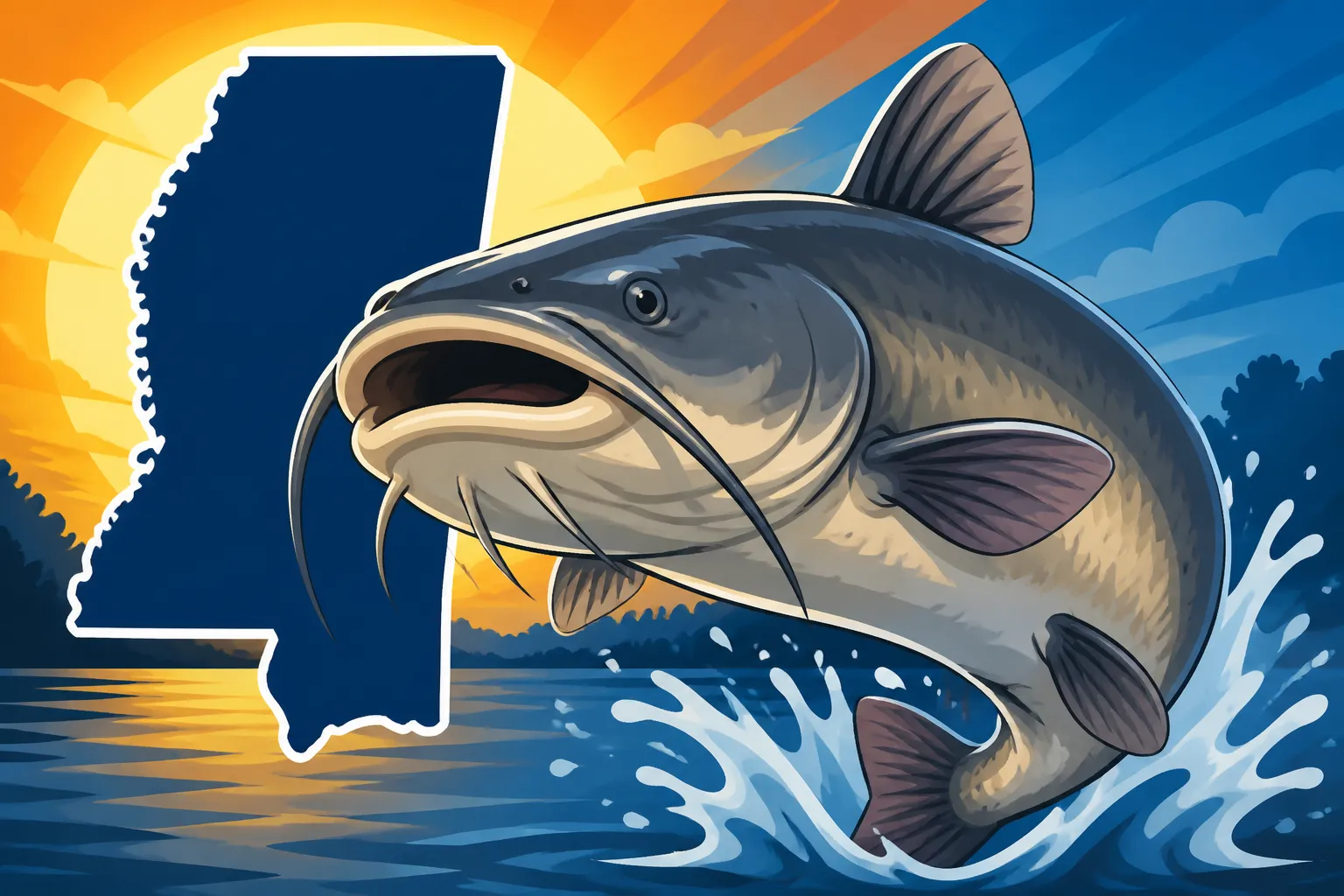
The flathead catfish is a species apart, known for its solitary nature, predatory instincts, and distinctive appearance. Unlike their scavenger cousins, flatheads prefer live prey and tend to hide near submerged timber, rock piles, or undercut banks, ambushing their meals. They are incredibly powerful, and their broad, flat head and massive mouth are perfectly adapted for engulfing substantial prey. A flathead on the line is a powerful, stubborn fight, often characterized by deep, powerful runs and a relentless determination to get back into cover.
Mississippi’s state record for a flathead catfish commands respect. This incredible fish weighed in at a formidable 77 pounds, 0 ounces. While perhaps not as heavy as the top blue cat record, a flathead of this size possesses immense power and an unparalleled ability to leverage structure to its advantage. An angler fortunate enough to hook into such a fish would face a true test of their tackle and resolve. Targeting these giants often involves fishing with large live baits like sunfish or perch, presented precisely near heavy cover in deep river bends or the backwaters of major reservoirs. Success with flatheads often comes down to patience, stealth, and a willingness to fish in some of the nastiest, snag-filled spots.
Where Do These Record-Breaking Catfish Come From?
Mississippi is a state blessed with abundant water resources, from the mighty Mississippi River to sprawling reservoirs and countless smaller streams. This diverse aquatic landscape provides the perfect habitat for catfish to thrive, grow to immense sizes, and, occasionally, produce record-breaking specimens. Understanding where these giants are typically found can offer valuable insights for aspiring trophy anglers.
The Mississippi River: A Catfish Paradise
There's no denying the Mississippi River's role as a legendary fishery, especially when it comes to gargantuan catfish. Its vastness, incredible depth, and constant flow provide an ideal environment for blue and flathead catfish to reach their full potential. The river's rich ecosystem supports a massive forage base, allowing these fish to feed voraciously and grow at an impressive rate. Deep river channels, submerged log jams, sharp bends, and oxbow lakes all offer prime real estate for monster cats.
Anglers often target specific features within the river, like the mouths of major tributaries where baitfish congregate, or deep scour holes below prominent sandbars. The sheer volume of water and the powerful currents mean that fish living here are strong, healthy, and accustomed to a challenging existence. It’s no surprise that many of the state’s heaviest catfish records have come from this iconic waterway. Fishing the Mississippi River requires specialized knowledge and equipment, but the rewards can be truly monumental.
Major Reservoirs and Lakes
While the Mississippi River often gets the spotlight for truly massive catfish, many of the state's large reservoirs and state fishing lakes also hold significant populations of big cats. Lakes like Ross Barnett Reservoir Fishing Guide, Grenada Lake Fishing Guide, and Sardis Lake Fishing Guide are renowned for their crappie and bass fishing, but they are also fantastic catfish factories. These impoundments offer vast expanses of water, diverse underwater structures, and healthy populations of baitfish.
In these reservoirs, catfish can be found in a variety of habitats, from deep channels and old river beds to expansive flats and around submerged timber. During different seasons, they might move from deeper wintering holes to shallower spawning areas, offering year-round opportunities for anglers. While individual fish might not always reach the truly staggering weights of their river-dwelling cousins, these lakes consistently produce respectable and often trophy-sized channel, blue, and flathead catfish. They provide more accessible fishing opportunities for many anglers compared to the powerful currents of the main river.
Smaller Rivers and Tributaries
Don't underestimate the potential of Mississippi's smaller rivers and their numerous tributaries. While they might not yield state records as frequently as the Mississippi River, waterways like the Pearl River Fishing Guide and the Pascagoula River Fishing Guide can still produce surprisingly large catfish. These rivers often have a more intimate feel, with anglers exploring snags, deep bends, and feeder creeks.
The catfish in these smaller systems might not face the same intense currents as those in the main river, but they still have plenty of forage and structure to grow large. Fishing these areas often involves a different approach, perhaps focusing more on precise bait placement around specific cover rather than drifting vast expanses. Sometimes, the quiet, overlooked spots are where an angler can hook into a personal best, proving that trophy catfish aren’t exclusively found in the state's largest, most famous waters. Every river and creek in Mississippi holds its own potential for a memorable catfish encounter.
Understanding the Quest for a Record Catfish
Chasing a state record catfish isn't just about luck; it's a combination of skill, preparation, patience, and a deep understanding of the fish and their habitat. For those who dare to dream of etching their name in the record books, there's a serious side to the pursuit, involving heavy-duty gear and strict adherence to official protocols.
The Challenge of Catching a Giant
Landing a catfish that weighs dozens, or even over a hundred pounds, is no small feat. It’s a full-body workout and a test of wills. Imagine battling a fish that strong in heavy currents or around submerged obstacles – it requires equipment that can withstand immense pressure. Anglers targeting these leviathans typically employ specialized heavy-action catfish rods, often 7 to 10 feet long, paired with robust conventional reels loaded with heavy braided line, sometimes 80-pound test or more. The terminal tackle must be equally stout, with strong swivels, heavy weights to hold bait on the bottom, and massive, razor-sharp hooks.
Beyond the gear, the technique is crucial. Catfish Fishing Techniques often involve setting up multiple rods with different baits and depths, waiting patiently for that tell-tale pull that signals a true monster. Presentation of the Best Bait for Catfish in Mississippi, such as fresh cut shad, skipjack, or live bluegill, is key to attracting these top predators. It’s an art form born from years of experience and countless hours on the water. Many anglers find reliable gear for targeting these giants through reputable online retailers like Amazon, ensuring they have the strength and durability needed for such a monumental task.
Official Documentation and Verification
Catching a potential state record is only the first step; getting it officially recognized requires meticulous attention to detail and strict adherence to established rules. The Mississippi Department of Wildlife, Fisheries, and Parks (MDWFP) has clear guidelines for verifying state records to ensure fairness and accuracy. This process typically involves several critical steps:
First, the fish must be weighed on a certified scale. This isn't your average bathroom scale; it needs to be a commercially certified scale, usually found at marinas, grocery stores, or tackle shops, which is regularly calibrated for accuracy. Second, the weighing must be witnessed by at least two independent individuals, usually not directly involved in the catch. Third, the species must be positively identified by a qualified biologist from the MDWFP. This is especially important for catfish, as different species can look similar, particularly to an untrained eye. Finally, photographic evidence is usually required, along with a detailed account of the catch, including the date, time, and location.
Failing to follow any of these steps can disqualify a potential record, no matter how large the fish. This rigorous process is in place to maintain the integrity of the state record system, ensuring that every record-holder truly earned their place in history. Always be familiar with Mississippi Fishing Regulations Explained before you even cast a line.
Conservation and Ethical Angling
While the pursuit of a state record is exciting, it’s vital that anglers practice ethical and responsible fishing, especially when targeting such magnificent creatures. Large, mature catfish, particularly the blues and flatheads, are often important breeding stock. Many trophy anglers, even those who land potential records, choose to release these giants back into the water after a quick weigh-in and photo. This ensures they can continue to contribute to the population and provide future generations of anglers with the same thrilling opportunities.
Adhering to Mississippi Fishing Creel and Size Limits is not just a legal requirement but a fundamental aspect of conservation. Knowing the rules for specific species and locations helps manage fish populations and prevent overharvesting. Using appropriate gear also minimizes harm to the fish; for example, using circle hooks can reduce gut-hooking, improving the chances of survival for released fish. The ultimate goal is to enjoy the sport today while ensuring healthy fish populations for tomorrow. To truly understand the nuances of landing a trophy catfish, many seasoned anglers also recommend diving into specialized literature, which you can often find a wide selection of on platforms like Amazon, offering insights into advanced techniques and local hot spots.
Beyond the Record: Mississippi's Catfish Culture
While the state record weights for catfish are truly impressive and inspire dreams of landing a personal best, the allure of catfish fishing in Mississippi extends far beyond the pursuit of records. It's deeply embedded in the state's angling culture, offering diverse experiences for everyone from casual bank fishermen to dedicated tournament pros.
Catfish as a Staple in Mississippi Fishing
For many Mississippians, catfish aren't just a fish; they're a way of life. From tranquil afternoons spent cane-pole fishing for channel cats in a farm pond with the family to intense night-fishing expeditions for monster blue cats in the Mississippi River, catfish offer accessible and rewarding angling opportunities. They are arguably the most commonly pursued freshwater species in the state, celebrated for their fighting spirit and, of course, their delectable table fare.
The social aspect of catfish fishing is also huge. Gatherings around campfires, fish fries after a successful outing, and sharing stories of the "one that got away" are all integral parts of the experience. It connects generations, teaching patience, outdoor skills, and an appreciation for Mississippi's natural beauty. This widespread appeal ensures that catfish fishing remains a vibrant and cherished tradition throughout the state.
Techniques for Targeting Big Catfish
If you're aspiring to catch larger catfish, understanding a few key techniques can make all the difference. While the record-breakers require specific tactics, even catching a respectable 20-pounder can be achieved with strategic effort.
First, focus on bait. Big catfish often prefer natural, potent baits. Fresh cut shad or skipjack are perennial favorites for blue and flathead catfish in rivers and large reservoirs. For channel cats, traditional baits like chicken liver, nightcrawlers, or specially formulated stink baits can be incredibly effective. Second, target the right locations. Look for deeper water, structure like submerged timber or rock piles, and areas with current breaks. In rivers, channel edges and scour holes are prime. In lakes, old creek channels and humps can hold fish. Third, don't skimp on your gear. While you might not need record-chasing tackle for every outing, a medium-heavy to heavy rod with a reliable reel and strong line (at least 20-30 pound test for larger fish) will save you a lot of heartbreak. And finally, patience is paramount. Catfishing often involves waiting for fish to find your bait, so settling in for an extended period is key. Learning from experienced anglers or resources found online, perhaps even through books available on Amazon, can be beneficial for refining your approach.
The Thrill of the Chase
Ultimately, the quest for a state record catfish, or even just a personal best, is about the thrill of the chase. It's the anticipation as your rod tip dips, the heart-stopping moment the drag starts to scream, and the sheer power felt through the line. Every bent rod and every hard-fought battle creates a memory that lasts a lifetime, whether the fish breaks a record or not.
Mississippi's waters hold incredible potential, not just for state records but for countless unforgettable fishing experiences. So, whether you're dreaming of a 100-pound blue cat or just a relaxing afternoon catching dinner, the world of Mississippi catfish fishing is waiting to be explored. Grab your gear, head to your favorite spot, and embrace the adventure that each cast brings.
| Catfish Species | State Record Weight (lbs) | State Record Length (inches) |
|---|---|---|
| Blue Catfish | 101.0 | 56.63 |
| Flathead Catfish | 77.0 | 52.0 |
| Channel Catfish | 52.0 | 44.0 |
Disclaimer
This article is for general informational purposes only and does not constitute professional advice. Laws, prices and regulations vary by location and change over time. Consult a qualified professional for guidance on your specific situation.