White Crappie vs Black Crappie: How to Tell Them Apart
It’s a common scenario for us Mississippi anglers: you pull up a beautiful slab, and then the eternal question pops into your head – is it a white crappie or a black crappie? It can be surprisingly tricky to tell them apart, even for seasoned fishermen, especially when environmental factors play tricks with their coloring. But understanding the subtle differences isn't just about satisfying curiosity; it can actually impact your fishing strategy and ensure you're following local regulations correctly. This guide will walk you through all the key identifiers, so you can confidently distinguish between these two beloved panfish.
Why Distinguishing Crappie Matters for Mississippi Anglers
Knowing whether you've landed a white crappie or a black crappie isn't just a fun fact to share with your buddies; it can genuinely inform your fishing approach and even keep you on the right side of the rules. These two species, while similar in many ways, have distinct preferences and behaviors that can make all the difference in your success on the water.
Understanding Species-Specific Behaviors
Both white and black crappie are fantastic sportfish, but they don't always hang out in the exact same spots or feed in the exact same way. White crappie, for instance, tend to be a bit more tolerant of murkier water and often prefer larger, more open reservoirs. They might be found suspended in creek channels or around deeper, sparse cover. Understanding this could lead you to focus your efforts in different areas of a lake or at different depths.
Black crappie, on the other hand, generally prefer clearer, cooler water with an abundance of submerged vegetation or timber. If you know you're in a clear-water lake with lots of lily pads and fallen trees, you might specifically target those areas knowing a black crappie is more likely to be hiding there. This subtle difference in preferred habitat means that if you're trying to target one over the other, or if one species is biting better on a given day, knowing which one you're seeing can help you refine your presentation and location choices. When you understand what each species prefers, you can become a more efficient and successful angler.
Adhering to Regulations and Limits
While many Mississippi lakes have a combined creel limit for crappie, meaning you can keep a certain number regardless of whether they're white or black, there can sometimes be very specific local rules. For example, some individual lakes or bodies of water might have specific size limits or daily creel limits that apply differently to one species versus the other. This isn't super common for crappie in Mississippi, but it’s always good to be aware that it could happen, especially with the ever-evolving nature of fishing management.
Imagine a hypothetical scenario where a particular lake you visit has an experimental regulation: a 10-inch minimum size limit for white crappie, but no size limit for black crappie, with the goal of managing population dynamics. If you couldn't tell them apart, you might inadvertently keep an undersized white crappie, or release a perfectly legal black crappie. While the Mississippi Crappie Regulations by Lake often lump them together, being able to identify them definitively means you're always prepared for any unique regulations that might pop up. It’s all part of being a responsible and informed angler, respecting the fishery and its rules. You can always check the full Mississippi Fishing Regulations Explained for the latest official information.
The Classic Visual Cues: Markings and Coloration
When you first pull a crappie out of the water, the most immediate things you'll notice are its color and markings. These are often the first clues we rely on, even though they can sometimes be a bit misleading due to environmental factors. Still, with a keen eye, they offer valuable insights.
White Crappie: Vertical Bars and Faint Spots
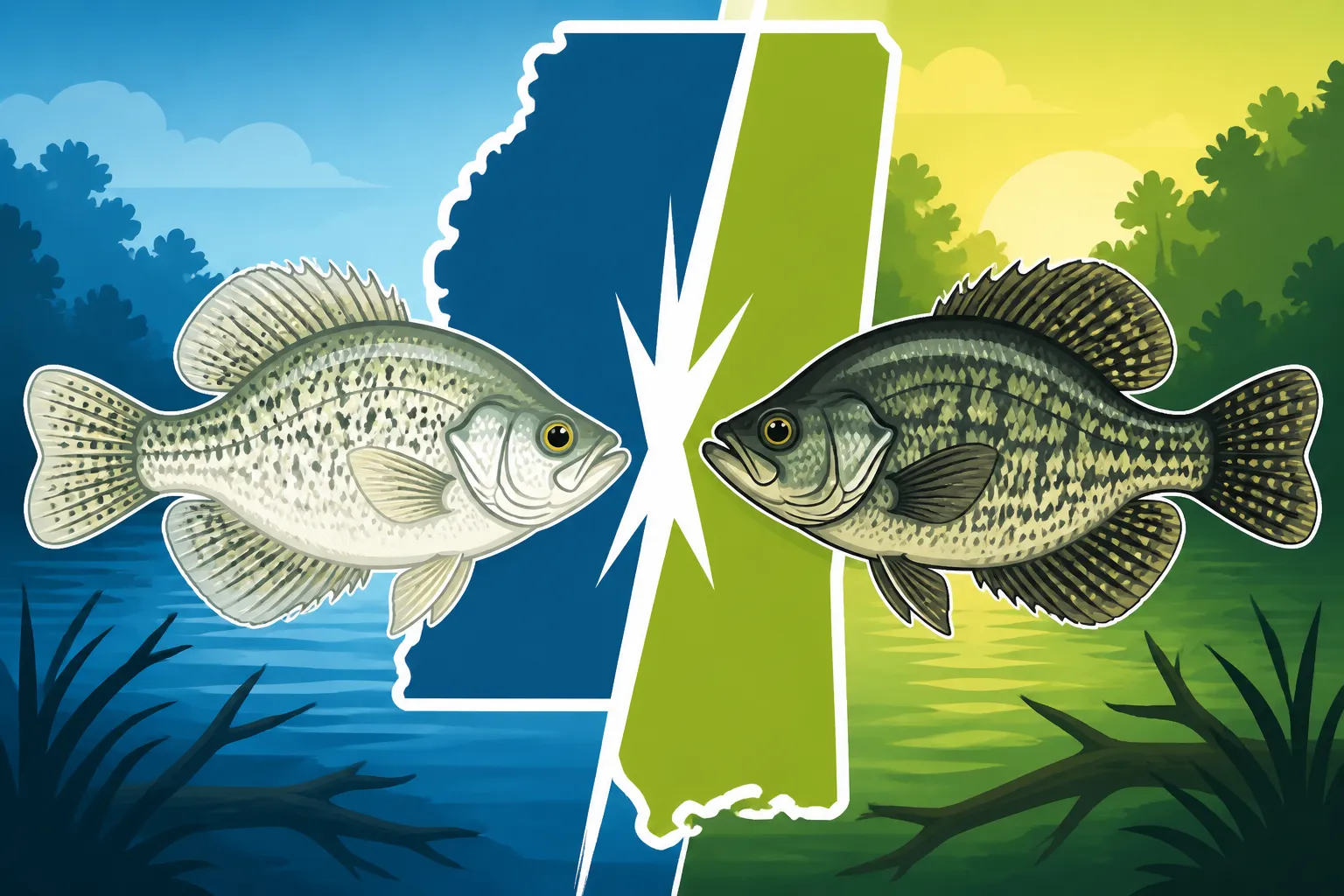
White crappie are often recognized by their distinctive, though sometimes faint, vertical bars running down their sides. Typically, you'll see anywhere from six to eight dark vertical bands that extend from their back down towards their belly. These bars can be quite pronounced in some fish, giving them a striped appearance, while in others, particularly those from murkier waters, they might be barely visible, looking more like smudges.
Their overall coloration tends to be a lighter, more silvery tone, especially on their sides and belly. While they do have spots, these are generally much fainter and less numerous than those found on a black crappie. The spots are usually concentrated on their fins rather than spread across their entire body. However, it's crucial to remember that a white crappie caught in very clear water might take on a slightly darker, more olive hue, and a black crappie from turbid water might appear lighter, making visual identification a bit of a challenge at times. It's why we can't solely rely on color alone!
Black Crappie: Irregular Mottling and Dark Spots
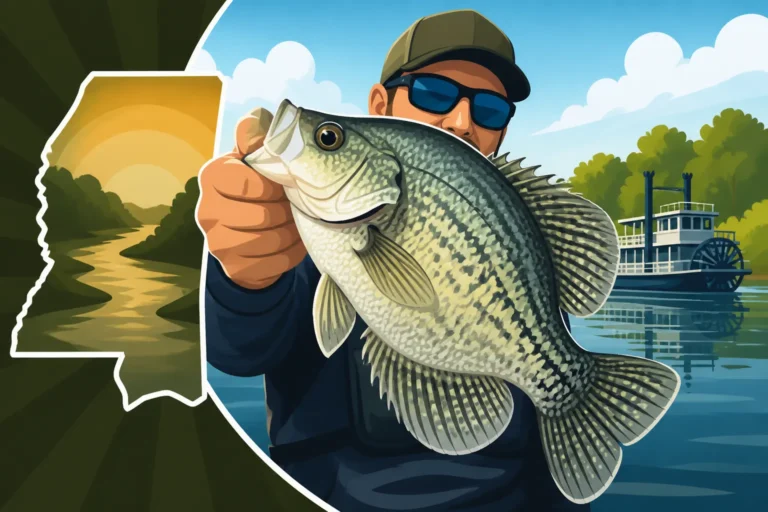
Black crappie, on the other hand, are characterized by their beautiful, irregular dark spots that are scattered haphazardly across their entire body, almost like a peppered pattern. Instead of vertical bars, these spots form a mottled, almost camouflage-like appearance, giving them a darker, often bronze or olive-green coloration overall. This "peppered" look is very distinctive and usually extends not only over their body but also onto all their fins – the dorsal, caudal (tail), and anal fins will often show this spotting quite clearly.
The intensity of these spots and the overall body color can vary greatly depending on the crappie's habitat. Fish from clear, deep lakes with lots of vegetation might be strikingly dark and richly colored, with very prominent spots. Those from slightly stained or turbid water might appear a bit lighter, but the irregular, scattered spot pattern remains the key identifier, rather than any organized vertical bars. If you see a crappie that looks like it's been liberally sprinkled with black pepper, chances are you've got a black crappie in your hands.
The Dorsal Fin Detective: Counting Spines
If color and markings leave you scratching your head, don't worry! There's a much more reliable, anatomical difference that will help you definitively tell the two species apart. This method involves a quick, gentle check of their dorsal fin.
The Definitive Count: Dorsal Fin Spines
This is hands down the most reliable way to distinguish between a white crappie and a black crappie. Forget about color variations or faint patterns; the number of spines in their dorsal fin is a consistent biological marker. White crappie consistently have fewer dorsal spines, usually 5 to 6. Black crappie, conversely, will always have 7 to 8 dorsal spines.
To count them, simply look at the dorsal fin (the one on their back). You'll notice sharp, bony rays at the front of the fin – these are the spines. Carefully and gently run your finger along the front edge of the dorsal fin, counting the stiff, unjointed rays. The softer, branched rays behind them are not counted. It's an easy and accurate method that once you learn, you'll use every time you're unsure. This key difference makes identification almost foolproof, no matter how much the fish's color has been influenced by its environment.
Beyond the Spines: Dorsal Fin Shape
While the spine count is the ultimate giveaway, the overall shape of the dorsal fin can also offer a subtle hint once you get a feel for it. White crappie tend to have a dorsal fin where the base, or the part that attaches to the fish's back, is noticeably longer than the height of the fin. This often gives their dorsal fin a more elongated or swept-back appearance, making it look a bit more proportional to their generally more streamlined body.
Black crappie, on the other hand, usually have a dorsal fin where the length of the base is roughly equal to its height. This makes their dorsal fin appear more compact, taller, and sometimes a bit more rounded or symmetrical. It starts a little further forward on their back, contributing to their deeper-bodied appearance. While this isn't as definitive as counting the spines, it's another characteristic that, when combined with other features, helps paint a clearer picture of which species you're holding. Learning these nuances will greatly improve your Crappie Identification Guide for Mississippi Anglers skills!
Body Shape and Mouth Structure Differences
Beyond the markings and fin characteristics, the overall body shape and even subtle aspects of their mouth structure can also help you differentiate between white and black crappie. These features speak to their genetic makeup and evolutionary adaptations, making them consistent identifiers.
White Crappie: Elongated and Streamlined
When you hold a white crappie, you'll often notice it has a more elongated, somewhat oval, and streamlined body shape compared to its black crappie cousin. Think of it as being a bit more "torpedo-like" or slender for its length. This body design is generally thought to be advantageous for fish that spend more time in open water, allowing for faster bursts of speed when chasing baitfish.
The dorsal fin on a white crappie also tends to start a bit further back on its body. This positioning, combined with its longer and lower dorsal fin base (as discussed earlier), contributes to that overall sleek, less "compressed" profile. While they still possess that distinct crappie profile, their body doesn't have the same deep, almost circular appearance that black crappie often exhibit.
Black Crappie: Deeper-Bodied and Compressed
Black crappie typically have a deeper, more laterally compressed body. If you were to look at them head-on, they would appear thinner, almost "pancaked," from side to side. From a profile view, they often look more round or disc-shaped, with a greater distance from their back to their belly compared to their overall length. This deeper body profile is characteristic of many fish that live in areas with dense cover, allowing them to maneuver through tight spaces more effectively.
Their dorsal fin usually starts further forward on their back, closer to the head. This contributes to that deep-bodied appearance and creates a more compact, almost equilateral triangle shape when you consider the dorsal and anal fins in conjunction with the body. This rounder, deeper build is a key visual clue that, when combined with the markings and spine count, makes identification much easier.
Mouth Size and Angle
While both species are known for their upward-pointing mouths – a perfect adaptation for ambushing prey from below – there are very subtle differences that experienced anglers sometimes notice. White crappie might have a slightly larger gape, or mouth opening, allowing them to engulf larger baitfish. This could be a reflection of their tendency to feed more in open water on schools of bait.
Black crappie, while still having an impressive upward-facing mouth, can sometimes appear to have a slightly more pronounced upward angle to their jaw. This difference is far less definitive than spine counts or body shape, and largely depends on individual fish and observer perception. It’s definitely not a primary identification method, but rather a subtle nuance you might pick up on after handling many of both species. For most anglers, focusing on fin spines, body shape, and markings will be much more practical.
Habitat and Behavioral Clues (Less Reliable, but Helpful)
Beyond the physical characteristics, observing where you catch crappie and understanding their general behavior can offer additional clues to their identity. While these aren't foolproof methods, they can complement your physical identification skills and give you a better sense of which species you're likely to encounter in different fishing spots across Mississippi.
White Crappie: The Open Water Roamers
White crappie are often considered the more resilient and adaptable of the two species. They tend to thrive in a wider range of water conditions, including slightly more turbid or stained waters, which are common in many of Mississippi's larger reservoirs. You'll often find them congregating in larger schools, particularly in open water areas, around creek channels, river bends, or on deeper submerged humps and brush piles. They are strong schoolers and will actively chase baitfish in these more expansive environments.
Because they are more tolerant of varying water clarity and temperature fluctuations, you might find them more consistently active through different seasons and weather patterns compared to black crappie. They’re a common catch when trolling open water with multiple lines or spider rigging. Lakes like Ross Barnett Reservoir Fishing Guide are classic white crappie strongholds, where you can often find them suspended over deeper structure, moving with schools of bait.
Black Crappie: The Cover-Loving Cousins
Black crappie typically prefer clearer, cooler water, and they have a strong affinity for heavy cover. Think dense submerged timber, brush piles, lily pads, standing cypress trees, and docks. They love to ambush prey from the shadows, so you'll often find them tucked right into the thickest part of the cover. This makes them a favorite target for anglers who enjoy meticulously picking apart structure with jigs or minnows.
While they do school, their schools are often smaller and more loosely organized than those of white crappie. They might be found in shallower water, especially during the spring spawning season, as they seek out protected areas to build their nests. Lakes with abundant clear water and natural woody cover, like portions of Sardis Lake Fishing Guide or smaller, clearer state lakes, are prime black crappie territory. If you're fishing tight to cover in pristine waters, there's a good chance you're targeting black crappie. Don't forget to check out our Mississippi Spring Fishing Guide for tips on when they're most active!
Practical Tips for Identification on the Water
Even with all this knowledge, identifying crappie quickly on the water can still feel like a challenge sometimes. The light can be tricky, the fish might be flopping, and you're just excited to get it in the livewell or release it safely. Here are some practical tips to make identification easier in the moment.
Quick Check Guide
To simplify things, here's a quick reference table that highlights the most critical differences. Keep this in mind, and you'll be identifying crappie like a pro in no time!
| Feature | White Crappie | Black Crappie |
|---|---|---|
| Dorsal Spines | 5 to 6 (reliable!) | 7 to 8 (reliable!) |
| Body Markings | 6-8 distinct vertical bars, fainter spots | Irregular, scattered dark spots (mottled/peppered) |
| Overall Color | Generally lighter, silvery, more uniform | Often darker, bronze/olive, spots on fins |
| Body Shape | More elongated, streamlined, oval | Deeper-bodied, rounder, compressed |
| Dorsal Fin Base | Longer than height, appears swept back | Equal to height, appears more compact/taller |
| Preferred Habitat | Open water, turbid conditions, creek channels | Clearer water, heavy cover (timber, vegetation) |
This table is your best friend when you’re out on the lake. Prioritize that dorsal spine count; it’s the most consistent and least ambiguous factor.
When in Doubt: Observe and Learn
It’s perfectly okay if you can’t make an instant identification every single time, especially when you're just starting out or encounter a crappie with unusual markings. What's important is to use every catch as a learning opportunity.
Don't hesitate to take a quick photo with your phone! You can examine the picture later, zooming in on the dorsal fin or markings when you're not in the middle of a hot bite. You might even find some excellent laminated field guides on Amazon that you can keep right in your tackle box or boat. These visual aids are invaluable resources. Another great strategy is to show your catch to more experienced local anglers or consult with staff at bait shops or local fishing spots. They often have an incredible wealth of knowledge about the fish in their specific waters. The more you observe, the more confident you'll become in distinguishing between these fantastic fish, making your time on the water even more rewarding, whether you're fishing for Trophy Crappie in Mississippi Waters or just filling your cooler! To really dial in your technique, check out Crappie Fishing Techniques for Mississippi Lakes and Best Time of Day to Catch Crappie. You can find them in many great Best Crappie Lakes in Mississippi locations, including Grenada Lake Crappie Fishing Guides and Ross Barnett Reservoir Crappie Fishing.
Disclaimer
This article is for general informational purposes only and does not constitute professional advice. Laws, prices and regulations vary by location and change over time. Consult a qualified professional for guidance on your specific situation.