Best Fishing Line for Catfish
There's nothing quite like the heart-stopping thud of a big catfish hitting your bait, followed by the powerful, relentless drag of its fight. But that excitement can quickly turn into crushing disappointment if your fishing line isn't up to the task. Many of us have felt that gut-wrenching snap, the sudden slack, or the agony of a line shredded on underwater structure, leaving us wondering what behemoth we just lost. This guide is all about helping you avoid those heartbreaks by understanding the best fishing line options specifically for tackling Mississippi's fantastic catfish population, ensuring your line is as tough and reliable as the fish you're chasing.
Understanding Catfish and Their Habitat
Before we even talk about specific lines, it’s crucial to wrap our heads around what we’re fishing for and where these whiskered warriors hang out. Catfish aren't delicate creatures; they're built for power, and they often live in some pretty unforgiving environments. Knowing this helps us pick a line that can withstand their brute force and the rugged terrain they call home.
Different Catfish Species and Their Fights
Mississippi is blessed with three main species of catfish, each with its own characteristics that influence your line choice. You've got your Channel Catfish, often found in smaller rivers, ponds, and reservoirs. They’re usually smaller than their cousins but put up a spirited fight, often running and darting. Then there are the Blue Catfish, the true giants of the Mississippi River and our larger reservoirs. These fish grow to immense sizes and are known for their deep, powerful runs and stubborn pulling. Hooking into a blue cat can feel like snagging a submerged log that suddenly decides to swim away with all your gear. Finally, the Flathead Catfish are ambush predators, often found lurking in submerged timber, rock piles, or undercut banks. They're incredibly strong and tend to bulldog, trying to pull you straight into structure the moment they feel the hook. Understanding these differences means you can tailor your line choice for the specific challenge. When targeting trophy-sized blue or flathead cats, your line needs to be exceptionally robust to handle their sheer power and their tendency to dive into snags.
Common Catfish Habitats in Mississippi
Mississippi’s waterways offer a diverse range of habitats for catfish, and each presents unique challenges for your fishing line. From the mighty Mississippi River Catfish Hotspots to the vast expanse of the Ross Barnett Reservoir and numerous smaller lakes and farm ponds, catfish are everywhere.
In the fast-flowing currents of the Mississippi River or the Pearl River, your line will contend with strong water pressure and debris. These river systems are often littered with submerged logs, rock beds, and other snags that can abrade or cut lighter lines in an instant. Picture a massive blue cat making a run for a submerged log jam – if your line isn't tough enough, it's game over.
Lakes and reservoirs like Grenada Lake or Sardis Lake, while not always as current-heavy, still have plenty of underwater structure. Brush piles, old creek beds, stumps, and rip-rap are common hiding spots for catfish, particularly flatheads. When a flathead decides to dive into a thick brush pile, it's a test of wills, and your line needs to be able to resist being frayed or snapped by sharp edges. Even in seemingly open waters, a big cat can dive deep and rub your line against the bottom or unseen structure. Farm ponds, while often less snaggy, still demand a strong line for pulling a feisty channel cat out of thick lily pads or weeds.
Key Characteristics of a Good Catfish Line
When you're serious about landing those whiskered monsters, simply grabbing the cheapest line off the shelf isn won't cut it. Catfish demand a line with specific attributes that can stand up to their power and the demanding environments they inhabit.
Strength and Abrasion Resistance
This is arguably the most critical factor for catfish fishing. Catfish don't fight fair; they're all about brute strength and dirty tactics. They'll rub your line against logs, rocks, concrete pilings, and anything else they can find to break free. So, your line needs to be incredibly strong, not just in terms of breaking strength, but also in its ability to resist cuts and abrasions. Think about a giant blue cat on the Mississippi River, using the powerful current to its advantage, trying to drag your line across a jagged rock pile. A weak line would fray and snap in seconds. You need a line that can take a beating and keep on fighting. This often means choosing a higher pound-test than you might for other species, but it also means looking at the material itself and how it handles friction. Many experienced catfish anglers will opt for lines known for their robust outer coatings or dense compositions.
Line Diameter and Sensitivity
While strength is paramount, line diameter and sensitivity play a significant role in your overall fishing experience. A thicker line is generally stronger, but it can also be less sensitive, making it harder to feel subtle bites, especially from finicky flatheads. It also creates more drag in the water, which can be an issue in strong currents or when trying to achieve a natural bait presentation. Conversely, a thinner line offers more sensitivity and less drag, but sacrifices raw strength and abrasion resistance. It’s a delicate balance.
For casting and reeling, a line that's too thick can reduce your casting distance and make it harder to manage on your reel. For example, a heavy braid will let you feel every little tap, but if it's too thick, you might struggle to get your bait where the fish are hiding. Finding that sweet spot where you have enough power to land a big cat without completely sacrificing feel or casting ability is key. Many anglers consider a lower diameter for its ability to cut through the current more efficiently, reducing bow in the line and making it easier to detect a bite, even if it means sacrificing a small amount of ultimate breaking strength.
Visibility and Color
Does line color really matter to a catfish? That's a debate that's been going on for generations around campfires and bait shops. Some anglers swear by certain colors, while others believe catfish don't care at all. Catfish primarily rely on their sense of smell and touch, rather than sight, especially in the often murky or stained waters they inhabit. Because of this, many believe line visibility isn't as critical as it is for sight-feeding fish like bass or trout.
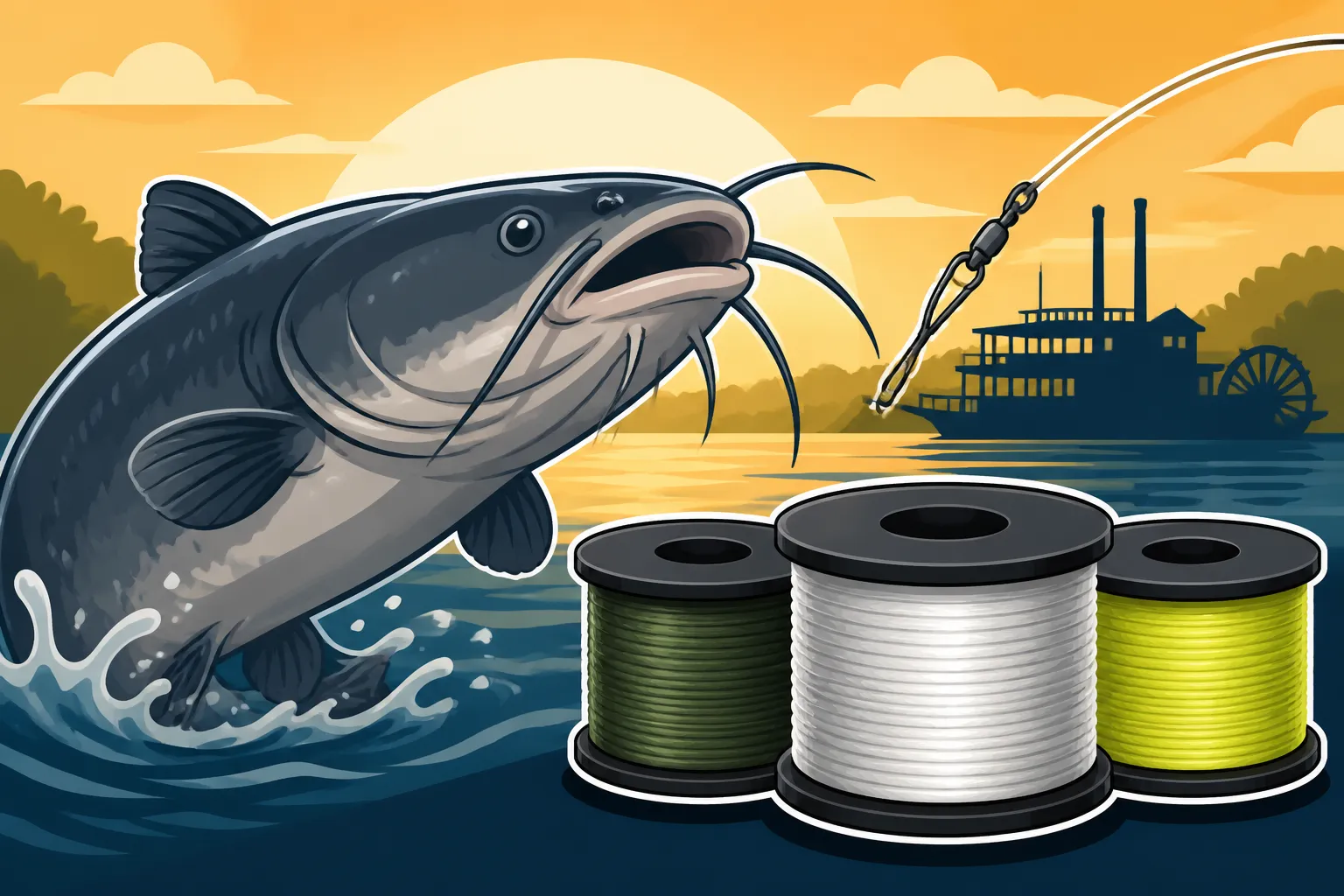
However, there's a strong argument to be made for using a high-visibility line for your benefit. Brightly colored lines, like neon green or yellow, make it much easier for you to see your line, detect subtle movements that indicate a bite, and track your bait. This is especially helpful during night fishing for catfish, which is a popular and productive technique. On the other hand, some anglers still prefer clear or low-visibility lines, believing that while catfish may not have keen eyesight, they still might be spooked by a brightly colored line in clearer water. Often, the solution is a compromise: a high-vis main line connected to a short, clear fluorocarbon leader, giving you the best of both worlds.
Top Fishing Line Types for Catfish in Mississippi
When it comes to picking the actual material for your catfish line, you generally have three main contenders: monofilament, braided, and fluorocarbon. Each has its strengths and weaknesses, making them suitable for different situations and preferences when you're out fishing in Mississippi.
Monofilament Line: The Classic Choice
Monofilament, or "mono," has been the go-to fishing line for decades, and for good reason. It's made from a single strand of nylon, making it relatively inexpensive and widely available. For catfish, especially those not quite in the trophy category, it's a fantastic all-around choice.
One of mono's biggest advantages is its stretch. This elasticity acts as a shock absorber, cushioning the sudden, powerful strikes of a catfish and helping to prevent hooks from tearing out of a fish's mouth. It's also very forgiving if your drag isn't perfectly set. This stretch can be a double-edged sword, though, as it reduces sensitivity, making it harder to feel lighter bites or detect if your bait has been picked up.
Mono is also quite easy to handle on a reel, it casts smoothly, and its knots are generally reliable and easy to tie. It's a great option for those learning Best Knots for Freshwater Fishing. It also tends to be fairly abrasion resistant for its price point, especially thicker lines, making it decent for areas with some structure, though it won't stand up to constant rubbing against sharp rocks like braid might. For general Catfish Fishing in Mississippi in ponds and smaller lakes, a good quality monofilament like some of the offerings you can find on Amazon is often more than sufficient and very cost-effective.
However, mono does have a larger diameter for its given breaking strength compared to braid, and it can suffer from memory, meaning it retains the coil shape from the spool, leading to more tangles over time. It can also degrade with prolonged UV exposure.
Braided Line: Power and Sensitivity
Braided line, often just called "braid," is made by weaving together multiple strands of synthetic fibers, typically Spectra or Dyneema. This construction gives it some incredible properties that make it a favorite for many serious catfish anglers, especially those targeting huge Blue Catfish Fishing in Mississippi or Flathead Catfish Habits and Habitat.
The most significant advantage of braid is its incredible strength-to-diameter ratio. You can use a much thinner braided line to achieve the same breaking strength as a much thicker monofilament. This means more line on your reel and better casting distance. Its lack of stretch is another huge benefit; it provides maximum sensitivity, allowing you to feel every bump, every nibble, and every subtle twitch of your bait, even in deep water or strong currents. This sensitivity is invaluable when a big flathead gently mouths your bait.
Braid also boasts superior abrasion resistance compared to monofilament, thanks to its tightly woven construction. It’s tough against submerged timber and rocks, though sharp oyster shells or barnacles can still cut it. Because of this, braid is often recommended for fishing in heavy cover or for methods like Jug Fishing and Trotline Setup, where the line will be under constant stress and exposed to plenty of snags.
The downsides? Braid is typically more expensive than monofilament. Its lack of stretch can mean less forgiveness on powerful strikes, potentially tearing the hook out of a soft-mouthed fish if your drag isn't set perfectly. It can also be harder to cut and, due to its thinness and slickness, requires specific knots designed for braided line to ensure good knot strength. Many anglers overcome the visibility issue by adding a monofilament or fluorocarbon leader.
Fluorocarbon Line: The Stealthy Option (and Leader Material)
Fluorocarbon line shares some characteristics with monofilament, as it's also a single-strand line, but it's made from polyvinylidene fluoride (PVDF), a denser material. Its properties make it a bit of a niche player for main line catfishing but an excellent choice for leader material.
The main draw of fluorocarbon is its near invisibility underwater. It has a refractive index very close to that of water, making it incredibly difficult for fish to see. While this might not be as critical for catfish as it is for clear-water bass, it can still be an advantage in certain situations, like fishing in clearer reservoirs or for particularly finicky flatheads.
Fluorocarbon also offers excellent abrasion resistance, often superior to monofilament, and it's much more resistant to UV degradation. It has less stretch than mono, providing more sensitivity, though not quite as much as braid. It also sinks faster than mono, which can be useful for getting baits down quickly in current or deep water.
However, as a main line for catfish, fluorocarbon can be quite stiff, making it prone to "memory" and more challenging to cast, especially in higher pound tests. It's also significantly more expensive than monofilament. For these reasons, many experienced catfish anglers don't use fluorocarbon as their main line. Instead, they harness its low visibility and abrasion resistance by using it as a leader paired with a braided main line. This gives you the sensitivity and strength of braid with a stealthy, tough section right before your hook, perfect for the often snaggy environments that catfish frequent. You can often find great deals on fluorocarbon leader material on Amazon.
Choosing the Right Line Weight and Setup
Deciding on the specific pound test and how to set up your line is just as important as choosing the type of line. It's all about matching your gear to the size of the fish you're targeting and your fishing method.
Matching Line to Catfish Size and Method
When it comes to line weight, a general rule of thumb for catfish is to go a bit heavier than you might think necessary. These fish are powerful, and you don't want to be undergunned.
- For smaller Channel Cats (1-10 pounds) in ponds or smaller rivers: A 10-20 lb test monofilament is often sufficient. If you prefer braid for the sensitivity, you could go with 15-30 lb test. This range offers a good balance of strength and castability for general Catfish Fishing Techniques.
- For medium-sized Cats (10-30 pounds) in larger lakes and reservoirs: You'll want to step up your game. 20-40 lb test monofilament or 30-50 lb test braided line is a good starting point. This gives you the power to handle stronger runs and navigate some light cover.
- For trophy Blue and Flathead Cats (30+ pounds) in the Mississippi River or major reservoirs: This is where you need serious firepower. Many anglers will go with 50-80 lb test braided line. Some even go heavier, especially for the sheer pulling power required to extract a monster from heavy structure. For these giants, braid's no-stretch sensitivity and incredible strength are invaluable. This is also where you'll want to be careful with your Mississippi Fishing Regulations Explained, particularly any specific rules for trotlines or jug fishing if you're not using a rod and reel.
Consider your fishing method too. If you're bank fishing with heavy weights, you'll benefit from a stronger, more abrasion-resistant line. If you're doing more active casting and retrieving, you might prioritize a line that casts well. For methods like Jug Fishing and Trotline Setup, extremely heavy and durable lines, often 100 lb test or more, are used because they are designed to withstand constant rubbing and abuse without breaking, and they need to hold strong against multiple large fish.
Main Line vs. Leader Considerations
Often, the best setup for catfish involves a combination of lines – a main line and a leader. This strategy allows you to optimize different line properties for specific purposes.
Why use a leader?
- Abrasion Resistance: A tough fluorocarbon or heavy monofilament leader can provide an extra layer of protection against sharp teeth, gill plates, and abrasive structure right where it matters most – near the hook. This is crucial when a powerful flathead tries to saw through your line.
- Visibility: If you're using a brightly colored braided main line for its visibility and sensitivity, a clear fluorocarbon leader can offer the stealth factor right at the business end, potentially making your bait appear more natural.
- Sacrificial Section: A leader acts as a sacrificial section. If you get snagged, you might only lose your leader and hook, saving your more expensive main line.
Common Leader Materials:
- Fluorocarbon: Excellent choice for leaders due to its near invisibility and high abrasion resistance. For heavy catfishing, use a fluorocarbon leader that is at least equal to, or often significantly heavier than, your main braided line. For instance, a 50 lb braid might be paired with a 60-80 lb fluorocarbon leader.
- Heavy Monofilament: Another good option for leaders, particularly if you want a bit more stretch or prefer its easier knot-tying properties. It's usually more affordable than fluorocarbon.
Knot Choices:
When connecting your main line to your leader, reliable knots are absolutely crucial. For connecting braided main line to a fluorocarbon or monofilament leader, popular choices include the Double Uni Knot, the FG Knot (a bit more advanced but very strong and streamlined), or the Albright Knot. Practice these knots at home until you can tie them quickly and securely, because a weak knot is often the weakest link in your entire setup, and that's usually where the big one gets away!
Remember, the goal is to create a fishing system that handles the specific demands of catfish in Mississippi's unique environments. Don't be afraid to experiment with different line types and weights to find what works best for your style of fishing and the specific waters you frequent.
Here's a quick comparison of the three primary line types for catfish fishing:
| Line Type | Strength vs. Diameter | Abrasion Resistance | Stretch | Visibility | Sensitivity | Ideal Use for Catfish |
|---|---|---|---|---|---|---|
| Monofilament | Moderate | Good | High | Moderate | Low | General purpose, smaller to medium cats, shock absorption |
| Braided | Excellent | Excellent | None | High | Excellent | Trophy cats, heavy cover, deep water, jug lines |
| Fluorocarbon | Good | Excellent | Low | Very Low | Good | Leaders, clear water, stealth, good abrasion resistance |
Whether you're targeting small channel cats in a local pond or battling a monster blue cat on the Mississippi River, having the right fishing line is paramount. By considering the unique fighting styles and habitats of Mississippi's catfish, and by choosing a line with the appropriate strength, abrasion resistance, and other characteristics, you'll be well on your way to more successful and memorable fishing trips. Don't let a snapped line be the story of "the one that got away" ever again!
Disclaimer
This article is for general informational purposes only and does not constitute professional advice. Laws, prices and regulations vary by location and change over time. Consult a qualified professional for guidance on your specific situation.