Best Jig Color for Stained Water Crappie Fishing
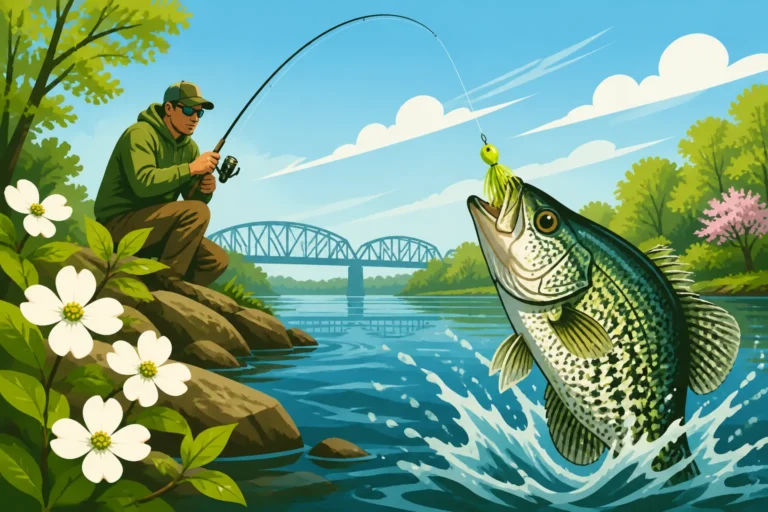
There’s nothing quite as frustrating as showing up to your favorite Mississippi crappie hole, only to find the water murky, muddy, or stained after a good rain or a busy weekend. That crystal-clear water you were hoping for has turned into a challenging, low-visibility environment, leaving many anglers wondering if their go-to lures will even be seen. But don't you worry, because this comprehensive guide is here to equip you with the knowledge of the best jig colors to tackle those stained water conditions and still reel in a mess of slab crappie.
Understanding Stained Water Conditions in Mississippi Lakes
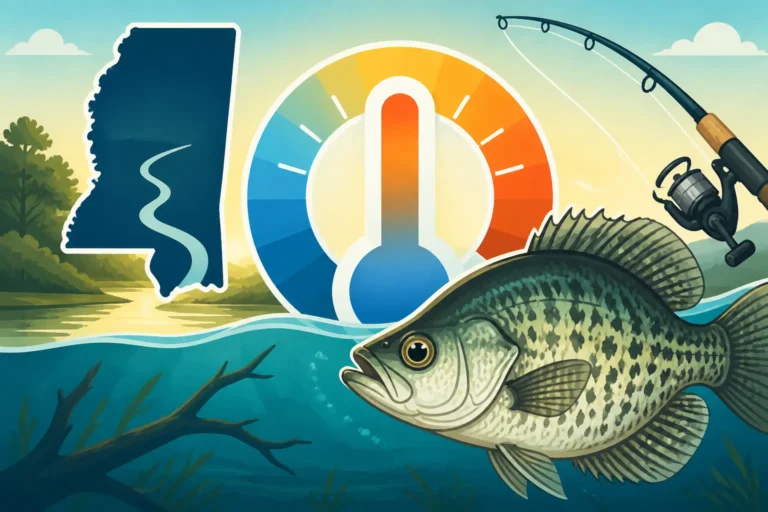
Crappie fishing in Mississippi is a beloved pastime, but our lakes and rivers are dynamic environments. One day the water can be clear, and the next it can be stained, making it feel like you've got to learn how to fish all over again. Understanding what causes these changes and how they impact the fish is the first step to adapting your strategy.
What Makes Water Stained?
Stained water isn't just one thing; it comes in various shades and opacities, each presenting its own set of challenges. The most common culprit is heavy rainfall. When those Mississippi deluges hit, they bring runoff from agricultural fields, forests, and residential areas, carrying sediment, dirt, and organic matter into our waterways. This can turn a beautiful lake into a coffee-colored mess overnight. You'll often see this phenomenon on major reservoirs like Ross Barnett Reservoir, especially in its shallower arms, or after significant rain events on Grenada Lake.
Beyond rain, decaying vegetation can also stain water, particularly in lakes with extensive shallow areas and abundant aquatic plants. As these plants break down, they release tannins, giving the water a tea-stained or brownish tint. Boat traffic, especially in shallower areas or busy channels, can stir up bottom sediments, creating localized patches of murky water. Even strong winds can churn up shallow flats, reducing visibility for both fish and fishermen. Each type of stain affects how light penetrates the water, which in turn dictates how colors appear – or disappear – underwater.
How Stained Water Impacts Crappie Behavior
Imagine trying to find your dinner in a dimly lit room, or even worse, a pitch-black one. That's essentially what crappie face in stained water. Crappie are primarily sight feeders; they rely heavily on their vision to locate baitfish, insects, and your jig. When visibility drops, their primary hunting tool is severely hampered. This doesn't mean they stop eating, but it does mean they have to adjust their tactics.
In murky conditions, crappie often become more reliant on their lateral lines, which detect vibrations in the water, and their sense of smell. They might hold tighter to cover – submerged brush piles, timber, bridge pilings – using it as an ambush point where they can dart out on unsuspecting prey that swims too close. Sometimes, they'll move shallower, especially on cloudy days, to where what little light penetrates the water column is most effective. Other times, they might actually go deeper, seeking out clearer water below the stained layer if one exists. This shift in behavior means your presentation needs to not only be seen but also felt and potentially even smelled, to trigger a strike.
The Science Behind Jig Color Selection in Stained Water
Picking a jig color isn't just about what looks good to us; it's about what the crappie can actually perceive underwater. In stained water, understanding light penetration and how colors behave is absolutely critical to your success.
Light Penetration and Color Visibility
Sunlight, as we know it, is made up of a spectrum of colors, each with a different wavelength. When light hits water, these wavelengths are absorbed at different rates. Red, being a long-wavelength color, is absorbed very quickly and disappears first, often just a few feet below the surface. Orange follows, then yellow, green, blue, and finally violet. This means that if you're fishing a red jig in stained water even just 5-10 feet deep, it likely looks black or dark brown to the fish.
In stained or murky water, this absorption process is dramatically accelerated. The suspended particles scatter and absorb light much more efficiently, reducing the overall penetration of all wavelengths. This is why bright, contrasting colors become so important. You need colors that stand out even when light is at a premium. The goal isn't necessarily to perfectly mimic baitfish color, but rather to create a visual presence that the crappie can detect.
The Role of Contrast and Vibration
Since crappie's sight is compromised in stained water, we need to leverage other factors to get their attention. This is where contrast and vibration come into play. A jig with high contrast will stand out more against the murky background. Think of a neon sign in a fog – it might not be perfectly clear, but it definitely grabs your attention. Bright colors like chartreuse, electric blue, or hot pink offer this kind of visual pop.
But it's not just about being bright. Sometimes, a darker color can be equally, if not more, effective. A dark jig, like black, creates a strong silhouette against the lighter surface light from above. This silhouette can be a clear target for crappie looking up from below. Beyond color, the jig's action and profile are vital. Jigs with larger bodies, curly tails, or paddle tails create more water displacement and vibration. This subtle "thump" can be picked up by the crappie's lateral line system, guiding them to your lure even when they can't see it clearly. When you're fishing in murky conditions, sometimes you need to combine visual appeal with tactile attraction.
Top Jig Colors for Stained Water Crappie in Mississippi
Now that we understand the "why," let's dive into the "what." Certain jig colors have proven themselves time and again in Mississippi's stained waters, earning their place in every crappie angler's tackle box.
Chartreuse and Bright Greens – The Go-To Choices
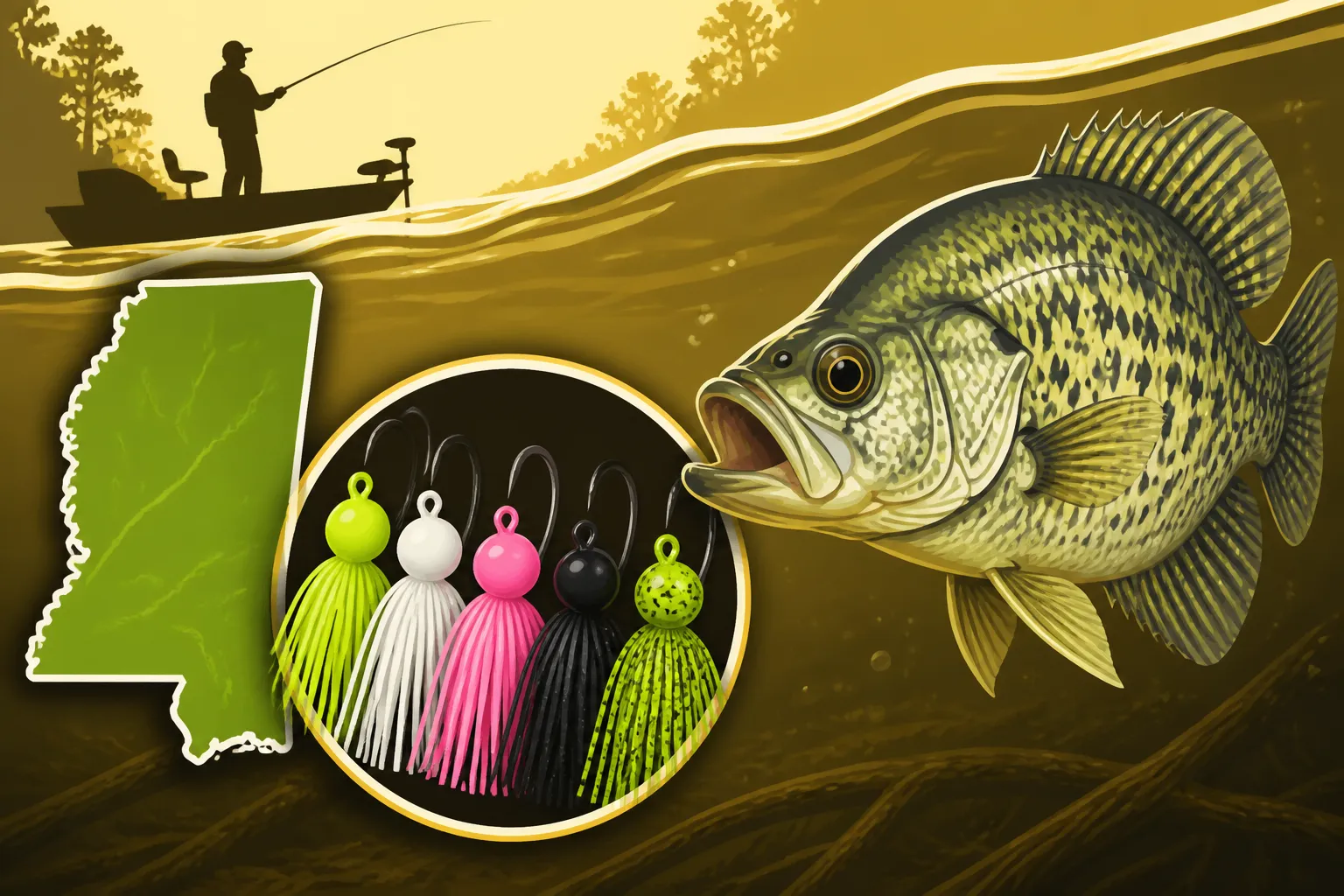
If there's one color that crappie anglers universally reach for when the water turns murky, it's chartreuse. This vibrant, fluorescent yellow-green simply glows underwater, even in incredibly low light conditions. It's almost as if it has its own light source, making it highly visible to crappie when other colors fade into the background. Whether you're fishing the muddy tributaries of the Pearl River or the often-turbid waters of Grenada Lake, a chartreuse jig is almost always a safe bet.
I've had countless days on places like Sardis Lake and Ross Barnett Reservoir where the crappie bite was incredibly tough in stained water, and a simple chartreuse jig was the only thing that would get a strike. It just penetrates the murk and screams "eat me!" to those fish. Many anglers swear by variations like "electric chicken," which is a combination of chartreuse and a bright pink, or chartreuse paired with orange. These multi-color combinations offer even more contrast and visual appeal. You can find a huge variety of these effective jigs on platforms like Amazon, making it easy to stock up before your next trip. Remember, when in doubt, chartreuse it out!
Oranges and Pinks – High Visibility and Attraction
While chartreuse might be king, don't underestimate the power of oranges and bright pinks in stained water. These colors, while perhaps not as universally acclaimed as chartreuse, still maintain excellent visibility deeper than true reds, making them a fantastic alternative or complementary color. They often shine when the water has a slight tea-stained or brownish tint, as opposed to a purely muddy, chocolaty hue.
Imagine fishing a slightly off-color bayou off the Mississippi River – an orange or pink jig can often be the ticket. They provide a strong, distinct visual signal that crappie simply can't ignore. Popular combinations include orange/chartreuse, pink/white, or even a solid hot pink. These colors can be particularly effective when crappie are aggressive and actively feeding, as their boldness can really trigger a reaction strike. If your trusty chartreuse isn't quite cutting it, or you're looking to cycle through different options to see what triggers a bite, definitely give a bright orange or pink jig a try. They’ve proven their worth in many challenging situations.
Black and Darker Colors – Creating a Silhouette
This might sound counter-intuitive when we've been talking about bright, high-visibility colors, but black and other very dark jigs are incredibly effective in stained water. The reason? Silhouette. Against the lighter surface light filtering down from above, a dark jig creates a stark, undeniable outline that crappie can easily detect, even in the murkiest conditions. It's like a shadow moving through the water, a clear target for a fish looking upwards.
On those really dark, overcast days, or when the water is particularly muddy on lakes like Grenada Lake or Arkabutla Lake, a solid black jig can be absolutely deadly. It's a subtle approach, relying on the fish's ability to see shape rather than color. Many anglers combine black with a bright tip or tail, such as black/chartreuse or black/pink, to get the best of both worlds: a strong silhouette with a little visual pop. These darker colors are also fantastic for night fishing, where the silhouette effect is even more pronounced. So, don't shy away from the dark side; a black jig might just be your secret weapon in stained conditions.
Two-Tone and Multicolored Jigs
Sometimes, the best solution isn't a single color, but a thoughtful combination of two or more. Two-tone or multicolored jigs offer the best of both worlds, providing both high visibility and strong contrast. These jigs are designed to maximize their presence in challenging conditions, giving crappie multiple visual cues to home in on. Think of them as a billboard in the murk.
Some of the most popular and effective two-tone combinations for Mississippi's stained waters include black/chartreuse, red/chartreuse, blue/chartreuse, and black/pink. The darker color creates that crucial silhouette, while the brighter accent provides a flash of vibrant visibility. This versatility means you're covering more bases – you're appealing to crappie that might be keying in on contrast, as well as those looking for a pop of color. It's always a good idea to experiment with various combinations. What works on Ross Barnett Reservoir one day might be different from what's hot on Eagle Lake the next. You can often find multi-packs of these varied jigs on sites like Amazon, which is perfect for testing out different patterns without breaking the bank. Don't be afraid to mix it up; sometimes, that unexpected color combo is exactly what those finicky crappie are looking for.
| Stained Water Condition | Primary Jig Colors | Secondary Options | Why They Work |
|---|---|---|---|
| Heavy Muddy/Chocolate Milk | Chartreuse, Black/Chartreuse | Solid Black, Electric Chicken | High visibility in extreme low light; strong silhouette. |
| Tea-Stained/Brownish | Chartreuse/Orange, Hot Pink, Orange | Dark Blue/Chartreuse, White/Chartreuse | Good light penetration for these specific tints; strong contrast. |
| Cloudy Day/Overcast | Solid Black, Black/Blue | Dark Purple, Black/Chartreuse | Excellent silhouette against dim ambient light. |
| Low Light (Dawn/Dusk) | Chartreuse, Bright Orange | White, Glow-in-the-Dark (if applicable) | Maximize visibility during periods of transition. |
Beyond Color: Jig Features and Techniques for Stained Water
While jig color is paramount in stained water, it’s only one piece of the puzzle. How you present that jig, and what features it possesses, can significantly impact your success. Remember, in these conditions, you’re trying to give the crappie every possible reason to find and strike your lure.
Jig Size, Profile, and Vibration
When crappie can’t see well, their other senses become heightened. Their lateral line system is incredibly sensitive to vibrations and water displacement. This means that your jig’s physical characteristics can be just as important as its color. Consider using slightly larger jigs than you might typically throw in clear water. A 1/16 oz or even a 1/8 oz jig head paired with a soft plastic body can create a more substantial profile and push more water, making it easier for crappie to detect.
Beyond size, the soft plastic body itself plays a huge role. Look for plastics with features that enhance vibration. Curly tails, paddle tails, and even ribbed bodies all create different types of water movement as they’re retrieved. Brands like Bobby Garland's Baby Shad or the various Mr. Crappie jigs from Strike King offer excellent options with plenty of action. A soft plastic that shimmies, wiggles, or thumps can be the difference between a missed opportunity and a hook-up. Choosing the right jig for jig fishing for crappie is more than just color; it’s about making a disturbance the fish can feel.
Retrieve Speed and Presentation
In clear water, a faster retrieve can sometimes trigger reaction strikes. In stained water, however, crappie generally need more time to locate your jig and decide to strike. A slower, more deliberate retrieve is usually the way to go. This gives the fish ample opportunity to find your lure using their lateral line and scent, and then position themselves for a strike. Think of it as giving them a chance to "smell their way" to your offering.
Consider techniques like slow-rolling your jig along contours or through brush piles, or using a stop-and-go retrieve. Pauses can be incredibly effective, allowing the jig to flutter naturally, mimicking an injured baitfish. When crappie are holding tight to cover, vertical jigging directly into that cover can also be highly productive, keeping your lure in the strike zone longer. Often, when fishing in such conditions, you'll be relying heavily on feel rather than seeing the bite, so pay close attention to any subtle taps or changes in line tension. For more in-depth knowledge, you might want to explore our guide on Crappie Fishing Techniques for Mississippi Lakes.
Incorporating Scent and Attractants
If crappie are relying more on their sense of smell in stained water, why wouldn't you give them something good to sniff out? Incorporating scent into your stained water crappie strategy is a smart move. Many soft plastic crappie jigs now come pre-scented, infused with fish attractants that release a powerful aroma underwater. These can be incredibly effective, acting as an additional draw for crappie that might not immediately see your jig.
Alternatively, you can add liquid or gel attractants to your unscented jigs. Products like Pro-Cure, Berkley Gulp! Alive, or Garlic Spray can be applied directly to your soft plastic jig or even your live minnows if you're using them. This creates a scent trail that crappie can follow, even in the murkiest water, leading them right to your lure. It's an extra layer of attraction that can significantly boost your success rates when visibility is low. Combine a vibrant, vibrating jig with a potent scent, and you’ve got a powerful attractant that’s hard for any crappie to resist, whether you’re fishing the depths of the Sardis Lake Crappie Size Limit areas or shallow flats.
Final Thoughts for Your Next Mississippi Crappie Adventure
Crappie fishing in Mississippi's stained waters can be a truly rewarding challenge. By understanding how water conditions affect fish behavior and applying the right strategies, you can turn a tough day into a fantastic one. Remember to lean into those bright, high-contrast colors like chartreuse, orange, and pink, and don't forget the power of a dark silhouette provided by black. Always consider the added attraction of vibration from a well-chosen jig body and the undeniable appeal of scent.
Beyond specific jig colors, remember that your overall approach matters. Pay attention to retrieve speed, consider the depth you're fishing, and always be willing to experiment. Sometimes, changing up your jig size, trying a different technique like Trolling for Crappie on Mississippi Reservoirs, or simply adding a drop of attractant can make all the difference. Stocking up on a variety of colors and styles before you head out is always a good idea. For a deeper dive into the world of crappie, don't forget to check out our guides on topics like Best Bait for Crappie in Mississippi or even how to read your fish finder to locate schools. With these tips in your tackle box, you’re well on your way to conquering those stained water crappie and making some incredible memories on Mississippi’s beautiful lakes and rivers!
Disclaimer
The information provided in this guide is for general informational purposes only. Fishing regulations, conditions, and fish behavior can change rapidly. Always consult the latest Mississippi Department of Wildlife, Fisheries, and Parks (MDWFP) regulations before fishing. Adherence to local, state, and federal laws is the responsibility of the angler. Fishing carries inherent risks, and safety precautions should always be observed.