How to Anchor Properly for River Catfishing
There’s nothing quite like the thrill of river catfishing in Mississippi, is there? The tug of a big blue or flathead on your line, the current swirling around your boat – it’s pure magic. But let’s be real, that magic can quickly turn into pure frustration if your anchor isn't holding. We’ve all been there: you finally find that perfect submerged log, that sweet eddy line, only for your boat to slowly but surely drift away, pulling your lines out of the strike zone. It’s enough to make you want to pull your hair out! This guide is here to save your sanity and help you master the art of anchoring properly for river catfishing, keeping you precisely where the catfish are biting.
Understanding River Dynamics and Your Target Fish
Before you even think about dropping an anchor, you need to become a student of the river. Rivers are living, breathing systems, and understanding their dynamics is key to staying put and finding those elusive catfish.
The Challenge of River Currents
River currents are the angler’s greatest adversary when it comes to anchoring. Unlike still lakes, rivers constantly push and pull at your boat, testing the strength of your anchor and your setup. Imagine you're trying to hold a balloon steady in a strong breeze – that's a bit like what your anchor is doing. The current isn't just a uniform flow; it has faster sections, slower eddies, and hidden boils.
It’s incredibly frustrating to meticulously set up your spread, get your baits down, and then feel that slow, inevitable creep as your boat starts to drift downstream. You lose your prime spot, your lines get tangled, and the whole rhythm of your fishing day is disrupted. The strength of the current varies wildly depending on recent rainfall, dam releases, and the width and depth of the river. A swift current requires a heavier anchor and more rode (anchor line) to dig in effectively, while a slower current might allow for a lighter touch. Always err on the side of caution; a little extra preparation can save you a lot of headache.
Catfish Behavior and Preferred Spots
Catfish, whether we're talking about mighty blue cats, stealthy flatheads, or abundant channel cats, are creatures of structure and current. They aren't just swimming around aimlessly; they're almost always holding in specific areas where they can ambush prey or conserve energy.
Think about it from a catfish's perspective: constantly fighting a strong current is exhausting. So, they look for places to get out of the main flow while still having access to food that the current brings. This often means deep holes, the outside bends of a river where the current carves out deeper pockets, submerged timber, rock piles, or even artificial structures like bridge pilings. For more on what makes these fish tick, you might want to read up on Flathead Catfish Habits and Habitat or even the general Catfish Fishing Techniques. Anchoring precisely means placing your boat so your baits are presented right in these fish-holding zones. If you're off by just a few feet, your bait could be swept away, or worse, completely missed by a hungry cat.
Choosing Your Target
Mississippi rivers are home to a fantastic variety of catfish, and knowing which species you're after can subtly influence your anchoring strategy. For instance, if you're targeting those massive blue catfish, you'll often be looking for deep, main-channel holes and strong current breaks in bigger rivers. Our guide on Blue Catfish Fishing in Mississippi delves deeper into these giants.
If you're after smaller but equally feisty channel catfish, you might find them in slightly shallower, more moderate currents, often near feeder creeks or bank structure. And then there are the elusive flatheads, which are kings of heavy cover and woody debris. They love to hide out in logjams, undercut banks, and thick timber, often in slower-moving sections or eddies adjacent to fast water. Knowing these preferences helps you pinpoint where to drop your anchor and how far to cast. For an in-depth look at these common catches, consider checking out our articles on Channel Catfish Fishing in Mississippi or even Best Bait for Catfish in Mississippi.
Essential Anchoring Equipment for River Catfishing
Having the right gear isn't just a luxury; it's a necessity when river anchoring. Skimping on your anchor setup is a surefire way to end up drifting downstream or, even worse, losing your anchor to a snag.
Selecting the Right Anchor Type
This is probably the most critical decision you'll make. Not all anchors are created equal, especially when battling river currents.
- River Anchor (Box Anchor): For catfishing on a river, a box anchor or a true "river anchor" with flukes designed to dig into muddy or sandy bottoms is often your best bet. These are specifically designed to grip, even in a strong flow, and can be easier to retrieve than some other types.
- Navy Anchor: While common, a traditional navy anchor might struggle to get a good bite in soft riverbeds unless it's exceptionally heavy. They're better suited for rocky bottoms or temporary holds.
- Grapple/Fluke Anchor: These anchors are fantastic for digging in, but their flukes can also be notorious for snagging on submerged timber or rocks – a common occurrence in many Mississippi rivers. If you use one, consider a breakaway system (more on that later).
- Mushroom Anchor: These are generally designed for very soft, muddy bottoms and lighter boats in calm waters. They usually won't provide enough holding power for a fishing boat battling a strong river current.
Ultimately, you want an anchor that is heavy enough and designed to dig in. Don't be afraid to go a little heavier than you think you need. You can find a wide range of reliable anchor options, including specialized river anchors, on platforms like Amazon, often with reviews from other anglers who have tested them in similar conditions.
Anchor Rope, Chain, and Hardware
The anchor itself is only one part of the equation. What connects it to your boat is just as vital.
- Rode Ratio: This refers to the ratio of your anchor line (rode) length to the depth of the water. For river anchoring, you generally need a much higher ratio than in still water – think 7:1 or even 10:1 (meaning for 10 feet of water, you need 70 to 100 feet of line deployed). This low angle allows the anchor to dig in horizontally rather than pulling straight up. Without enough scope, your anchor will just drag.
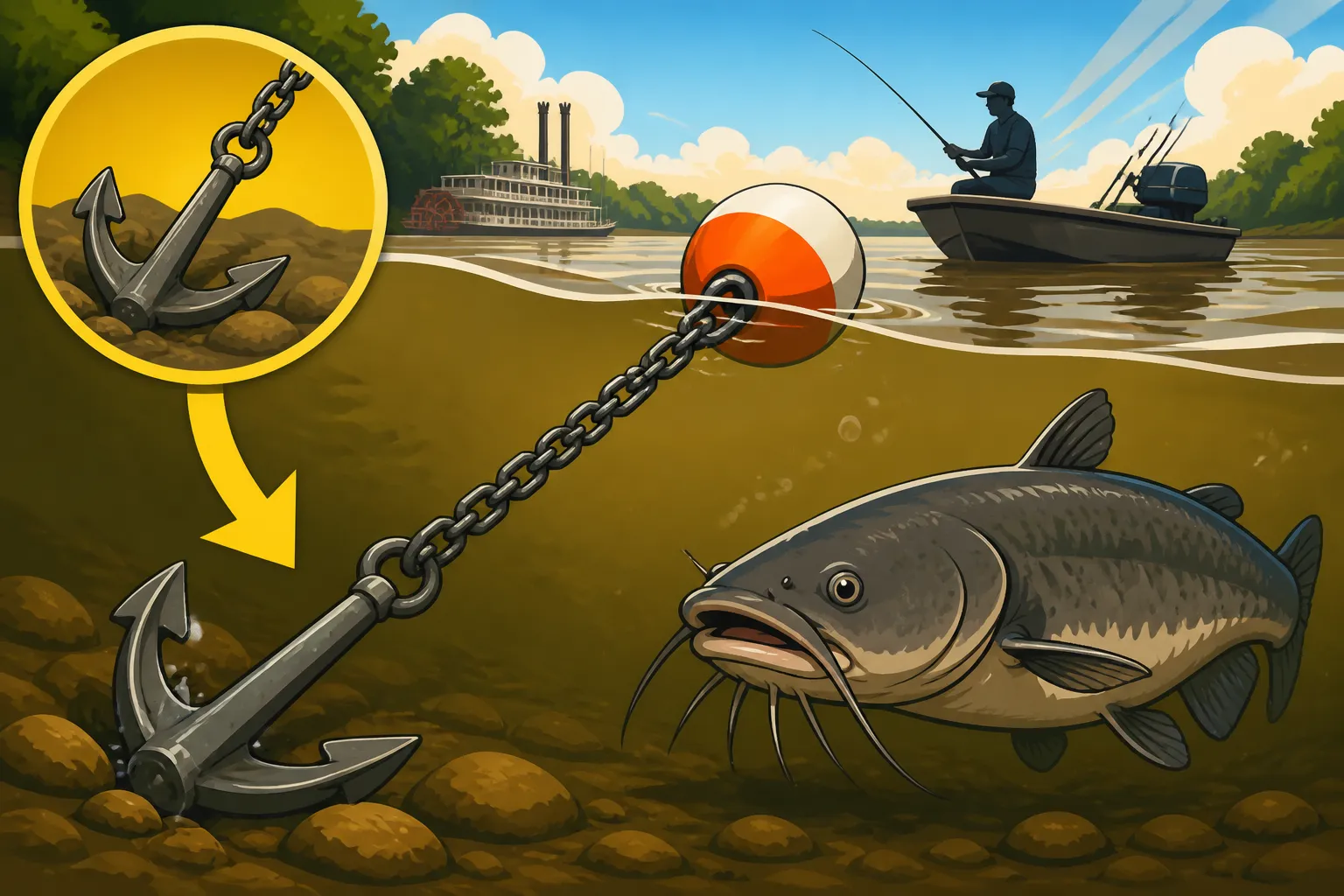
- Anchor Chain: A short length of heavy chain (at least 3-6 feet) between your anchor and your rope is a game-changer. The weight of the chain helps the anchor lie flat and dig in, and it provides abrasion resistance against sharp rocks or debris on the river bottom.
- Rope Type: Choose a marine-grade nylon rope that's strong enough for your boat's size and the currents you'll face. Nylon has a bit of stretch, which helps absorb shock from waves and current, preventing sudden jerks that could dislodge your anchor.
- Hardware: Don't overlook the small stuff. Make sure your shackles, thimbles, and cleats are robust and securely fastened. A weak link in the chain (literally!) can lead to a lost anchor and a frustrating drift. Double-check knots and connections before every outing.
Safety Gear and Accessories
Anchoring, especially in rivers, isn't without its risks. Being prepared means being safe.
- Life Jackets: This should go without saying, but ensure everyone on board has a properly fitted life jacket readily accessible, or better yet, worn, especially when dealing with currents. It's not just a recommendation; it's often the law, and you can learn more by checking out Mississippi Life Jacket Rules for Anglers.
- Anchor Buoy and Retrieval Ring: A brightly colored anchor buoy attached to your anchor rope can be a lifesaver if you need to quickly detach from your anchor in an emergency (like a sudden storm or engine trouble). A retrieval ring, which slides down the anchor line, can also help lift a snagged anchor from a different angle.
- Cutting Tool: Always have a sharp knife or cutting tool easily accessible. In a worst-case scenario where your anchor is hopelessly snagged or you need to move quickly, cutting the line might be your only option.
- Gloves: Heavy-duty gloves protect your hands from rope burn and potential cuts, especially when deploying or retrieving a heavy, wet anchor line.
Step-by-Step Guide to Proper River Anchoring
Getting your anchor set correctly is a skill that takes practice, but following a systematic approach will greatly improve your success rate and reduce headaches.
Pre-Anchoring Reconnaissance
Before you even think about slowing down, take a moment to survey your chosen spot. This isn't just about finding the fish; it's about finding a safe, effective place to anchor.
First, read the current. Observe how fast the water is moving and identify any eddies or slack water areas. Note the direction of the strongest flow. This will tell you where to approach from and how much scope you'll need. You can often see debris floating downstream, which gives you a visual cue.
Next, identify potential snags. Submerged timber, rock piles, old fishing lines – these are all notorious anchor grabbers. If you know a spot has a lot of heavy cover, be prepared to use a breakaway system or choose a different anchor type. A good fish finder can help you map the bottom structure and identify potential hang-ups before you deploy. You can find reliable fish finders and other boat equipment on Amazon.
Finally, visualize your boat's position. Where do you want your boat to end up relative to the fish-holding structure? This mental image is crucial for executing the next steps accurately. You want your baits to be delivered right into the strike zone, not 20 feet upstream or downstream.
Positioning Your Boat Upstream
This is arguably the most counter-intuitive, yet critical, step in river anchoring. You almost always want to approach your desired fishing spot from downstream and motor past it.
Think about it: if you drop your anchor directly on top of your fishing spot, your boat will drift downstream as you pay out the anchor line, pulling your anchor right through the area you want to fish. Instead, motor slowly upstream, past your intended target zone, accounting for the length of anchor rode you'll need to deploy.
Let’s say you want to fish a specific logjam that's 20 feet deep, and you plan on a 7:1 rode ratio (140 feet of line). You need to motor at least 140 feet upstream of that logjam before you even consider dropping your anchor. This allows the anchor to set upstream and pull your boat back into position over your desired spot once the line is fully deployed. It takes practice to judge this distance, especially with varying currents, so start with a generous estimate.
Deploying Your Anchor Safely
Once you're positioned upstream, it's time to get that anchor in the water.
- Reduce Speed: Bring your boat to a near standstill, just letting the current push you slowly downstream.
- Drop the Anchor: Gently lower the anchor to the bottom. Don't just heave it overboard and hope for the best. Gently lowering it helps prevent it from snagging immediately or getting tangled in its own chain and rope.
- Pay Out Line: As the current slowly carries your boat downstream, steadily pay out the anchor line. Keep the line taut enough to feel the anchor dragging and digging, but not so taut that it pulls the anchor free. You want it to "walk" along the bottom until it bites firmly.
- Feel for the Set: You'll feel a distinct "thump" or resistance when the anchor grabs. Keep paying out line until you have your desired rode ratio.
- Engage: Once you've paid out enough line, slowly snub the anchor line against your boat's cleat. Let the current pull against the anchor for a few moments, ensuring it really digs in. You should feel the boat slow down and then hold firm.
This controlled deployment helps the anchor dig in properly and avoids a chaotic mess of rope and chain.
Checking the Anchor Hold and Adjusting
After deployment, it's crucial to verify that your anchor is holding securely.
- Visual Check: Look for fixed landmarks on the shore – a specific tree, a dock, a unique rock. Watch these landmarks relative to your boat. If they appear to be moving, even slowly, your anchor is likely dragging.
- Line Tension: Feel the anchor line. It should be taut and humming with tension, but without any jerking motions that indicate slipping.
- Motor Test: A quick, gentle test with your boat's motor is a great way to confirm the hold. Put your motor in reverse (or forward, depending on your setup and current) and apply a little throttle, pulling against the anchor. If it holds firm, you're good. If it starts to drag, you'll feel it immediately.
If your anchor is dragging, don't just sit there hoping it'll eventually hold. That's a recipe for frustration. Instead, retrieve some line, motor back upstream, and try redeploying, making sure to pay out even more scope this time. Sometimes, you just hit a patch of slick bottom, and moving a few feet can make all the difference.
Retrieving Your Anchor
Retrieving an anchor, especially a heavy one that’s dug in deep, can be a workout.
- Motor Upstream: Carefully motor your boat slowly upstream, directly over the anchor. This reduces the strain on the line and helps to break the anchor free from its hold.
- Pull Vertically: Once you're directly over the anchor, pull the line straight up. The anchor should pop free. If it's stubborn, try pulling from a slightly different angle, or give a few sharp jerks.
- Clean and Stow: Once the anchor is free, retrieve the line, cleaning off any mud or debris as you go. Coil the rope neatly and secure the anchor so it doesn't bounce around or become a hazard while you're moving. A good anchor locker or dedicated spot helps keep things tidy.
Advanced Anchoring Strategies for Tricky Situations
Sometimes, a single anchor just isn't enough, or you're fishing in a spot that demands extra ingenuity. These advanced techniques can help you overcome those challenges.
Two-Anchor Systems for Stability
In strong currents or when you need absolute precision and stability, a two-anchor system is your best friend. This setup helps prevent your boat from swinging back and forth, keeping your baits in the most productive zone.
Here's how it generally works:
- First Anchor: Deploy your primary anchor as described above, well upstream of your target spot. Let it set firmly.
- Position Your Boat: Once the first anchor is holding, let your boat settle over your desired fishing zone.
- Second Anchor (Downstream): From your fishing position, deploy a second, lighter anchor off the stern or downstream side of your boat. Pay out enough line for it to grab and hold.
- Adjust Tension: Once both anchors are set, you can fine-tune your boat's position by adjusting the tension on each anchor line. This allows you to "stern out" or "bow out" your boat precisely where you want it, minimizing swing and keeping your boat perfectly aligned with the current.
This method is especially useful when targeting specific structures like a deep hole behind a logjam or trying to fish multiple rods in a tight spread. It creates a much more stable platform for your fishing.
Breakaway Anchor Systems
One of the most frustrating things about river fishing is losing an anchor to a snag. Submerged trees, rebar, rock piles – rivers are full of hidden hazards. A breakaway anchor system is a clever way to save your anchor when it gets stuck.
The basic idea is to attach your anchor chain to the bottom of your anchor (near the flukes) instead of the top. Then, you run a lighter line or a zip tie from the top of the anchor (where you would normally attach the chain) back down to the chain itself.
When your anchor snags, instead of pulling from the top and burying it deeper, you pull from the bottom. The zip tie or lighter line breaks, and you're now pulling the anchor free in reverse, usually dislodging it. This simple modification can save you a lot of money and prevent the heartache of a lost anchor. You can easily find the necessary components, such as heavy-duty zip ties or specialized breakaway anchor kits, on Amazon.
Dealing with Strong Currents and Debris
Mississippi's rivers, especially after heavy rains, can turn into fast-moving highways of water, carrying all sorts of debris. Fishing in these conditions requires extra vigilance.
- Heavier Anchor and More Scope: In strong currents, always use a heavier anchor than you think you need, and deploy even more rode. A 10:1 scope might be necessary to get a good hold.
- Watch for Debris: Keep an eye out for floating logs, branches, or even entire trees coming downstream. These can snag your anchor line, potentially pulling your boat free or causing damage. If large debris is heading your way, be prepared to quickly release your anchor line (using a buoy for later retrieval) and motor out of the way.
- Anchor Watch: In particularly swift currents, assign someone to "anchor watch" to constantly monitor the anchor line and ensure you're not dragging. Even a slight drag can quickly lead to a full-blown drift.
- Consider a Drift Sock: Sometimes, if the current is too strong to anchor safely, a drift sock or sea anchor can be used to slow your drift, allowing you to present baits effectively even while moving. This isn't anchoring, but it's a valuable current-management tool.
Anchoring in the Mississippi River
The mighty Mississippi River presents its own unique challenges and opportunities for catfishing. It’s a vast, powerful waterway, and anchoring here requires respect and proper technique. If you're planning a trip to this iconic river, our Mississippi River Fishing Guide has more in-depth information.
- Power and Depth: The Mississippi River is often incredibly deep and has immense current. You'll need a much heavier anchor and more rode than you'd typically use on smaller rivers. Don't be surprised if you need an anchor significantly larger than what you'd use on a reservoir.
- Bottom Structure: The bottom of the Mississippi can vary wildly, from soft mud to treacherous rock piles and old snagged timber. A good sonar unit is indispensable for finding clear spots to set your anchor or identifying productive structure like the Mississippi River Catfish Hotspots.
- Barge Traffic: Be acutely aware of barge traffic. These massive vessels create huge wakes that can easily swamp a small boat or pull an anchor free. Always position your boat well out of the navigation channel and be prepared for large wakes. If a barge is approaching, be ready to take waves head-on to prevent capsizing.
- Border Water Rules: If you're fishing near the borders with Arkansas or Louisiana, be mindful of specific regulations. Always double-check Mississippi Freshwater Fishing Rules and Mississippi Fishing Regulations Explained to ensure compliance. You might also want to consult Mississippi Boat Fishing Regulations.
Mastering anchoring on the Mississippi River takes time and experience, but the reward of landing a giant blue cat from its legendary waters is worth every effort.
Anchor Types for River Catfishing
To help you visualize the best options, here’s a quick comparison of common anchor types and their suitability for river catfishing:
| Anchor Type | Description | River Suitability (Catfishing) | Pros | Cons |
|---|---|---|---|---|
| River Anchor | Often a box-style or specialized anchor with multiple flukes designed for river bottoms. | Excellent: Designed specifically for strong currents and soft riverbeds. | Superior holding power, relatively easy to retrieve. | Can be bulky to store. |
| Fluke (Danforth) | Lightweight, popular, with two large, flat flukes that pivot to dig into the bottom. | Good to Fair: Digs well in mud/sand but can snag in heavy timber. Better with breakaway system. | Strong hold in soft bottoms, compact. | Prone to snagging on rocks/timber, less effective in very rocky areas. |
| Navy (Stock) | Traditional design with two arms and a stock. | Poor to Fair: Typically not heavy enough for strong river currents, struggles in soft bottoms. | Historically significant, good for rocky bottoms if heavy enough. | Low holding power for its weight in soft riverbeds, can be cumbersome. |
| Grapnel | Four or more hooks/prongs designed to hook onto rocks or coral. Foldable. | Poor: Primarily for rocky bottoms; not suitable for most river catfishing unless modified. | Excellent for rocky areas, compact when folded. | Very high snag risk in timber/debris, poor hold in mud/sand. |
| Mushroom | Heavy, inverted cup shape that sinks into soft mud. | Poor: Designed for very soft bottoms and extremely light craft in calm waters. | Simple, holds well in specific conditions. | Insufficient holding power for river currents and fishing boats. |
Disclaimer
This article is for general informational purposes only and does not constitute professional advice. Laws, prices and regulations vary by location and change over time. Consult a qualified professional for guidance on your specific situation.