Bass Fishing Techniques for Mississippi Anglers
For many of us who love chasing largemouth bass, the waters of Mississippi can feel like a riddle wrapped in an enigma. One day they're biting everything you throw, the next you can't buy a strike, leaving you wondering if you're doing something wrong. The truth is, bass fishing in our state's diverse lakes, rivers, and reservoirs demands a deep understanding of seasonal changes, local conditions, and refined techniques. This comprehensive guide is here to unravel those mysteries, equipping you with the knowledge and confidence to consistently put more Mississippi bass in your boat, or from the bank.
Understanding Mississippi Bass Behavior Through the Seasons
Bass are creatures of habit, yet those habits shift dramatically with the seasons. What works in the chilly grasp of winter will likely fail spectacularly during the summer sizzle. Knowing these seasonal patterns is the bedrock of successful bass fishing in Mississippi, allowing you to anticipate where the fish will be and what they'll be willing to bite. Ignoring these cycles is a surefire way to spend more time casting and less time catching.
Springtime Spawn Strategies
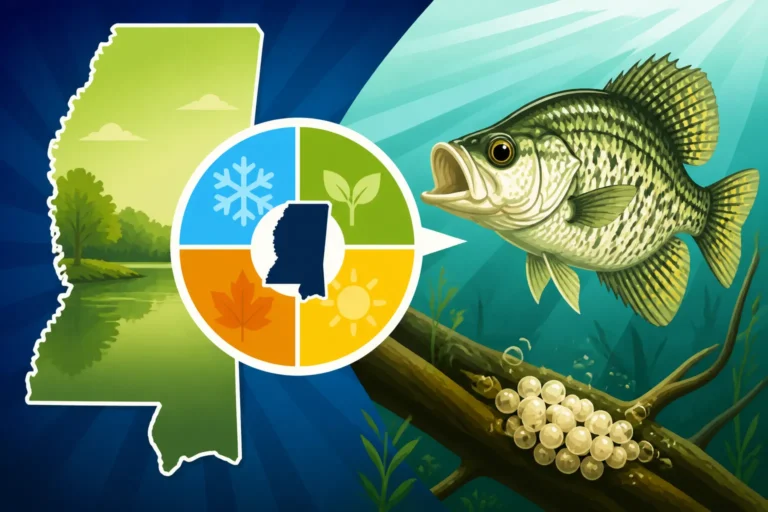
Ah, spring! The water warms, the days get longer, and the bass start thinking about one thing: making more bass. This pre-spawn and spawn period is arguably the most exciting time to target big bass, but it's also incredibly nuanced. Fish transition from deep-water wintering holes to shallow spawning beds, often following specific migration routes. They're driven by water temperature and photoperiod, and understanding these cues is paramount.
In early spring, when water temperatures start climbing into the low 50s, bass move from deep winter haunts into staging areas, typically points, humps, and creek channel bends leading into spawning coves. They're looking for warmer water and baitfish that are also moving shallower. This is a fantastic time for lipless crankbaits, jerkbaits, and spinnerbaits, as bass are aggressively feeding to build energy for the spawn. As temperatures nudge into the upper 50s and low 60s, the pre-spawn bite intensifies, and soft plastics like Texas-rigged worms or jigs fished slowly along these staging areas become deadly. Remember that male bass often move up first to scout and clean beds, with the bigger females following when conditions are just right.
Once the water hits that sweet spot, generally 62-68 degrees Fahrenheit, the bass are on the beds. You'll find them in shallow, protected areas with hard bottoms – often around stumps, lily pads, or even just sandy spots near shoreline cover. This is when sight fishing comes into its own. Polarized sunglasses become your best friend as you scan for circular depressions on the bottom. When you spot a bass on a bed, a slow-falling bait like a jig, creature bait, or even a soft plastic stickbait (like a wacky-rigged Senko) dropped right into the bed can trigger a territorial strike. Just remember, these fish are vulnerable, so practice careful catch and release, especially with the bigger females, to ensure future generations of bass. The When Do Bass Spawn in Mississippi? guide offers even more insights into these crucial dates.
Summer's Deep and Shady Tactics
When the Mississippi summer heat truly settles in and water temperatures soar into the 80s, bass patterns shift dramatically. They seek refuge from the scorching sun and often lower oxygen levels in shallow water. This means they'll either go deep or find dense cover that offers shade and cooler temperatures. Trying to fish the same shallow spots you dominated in spring will often result in frustration.
During the daytime, bass will typically retreat to deeper, cooler water. Look for them on offshore humps, ledges, creek channels, and the deepest parts of brush piles or standing timber. Large Texas-rigged worms, deep-diving crankbaits, football jigs, and Carolina rigs are excellent choices for probing these depths. Sometimes, a slow presentation is key; let your bait sit for a moment after reaching the bottom before slowly dragging it along. Pay close attention to your electronics to pinpoint these submerged structures and any baitfish schools nearby, as bass will often follow their food source.
Alternatively, some bass will stick to shallow water if there's enough dense, overhead cover to provide shade. Think thick mats of hydrilla, dense lily pad fields, or heavily shaded docks and cypress trees. Flipping and pitching heavy jigs or creature baits into these dark, tangled areas can be incredibly effective. You'll need stout rods and heavy line to muscle these fish out of the cover. Early mornings, late evenings, and even night fishing can also be productive in summer, as bass move shallower under the cover of darkness to feed. For a deeper dive into the seasonal rhythms, check out our guide on the Mississippi Fishing Seasons Calendar.
Fall Turnover and Feeding Frenzies
Fall brings a welcome cool-down and a renewed sense of urgency for bass as they prepare for winter. This season is characterized by what anglers call "turnover" in many lakes and reservoirs. As surface waters cool, they become denser and sink, mixing with the deeper, warmer water below. This can temporarily disrupt fishing as baitfish scatter and bass adjust to changing water conditions and oxygen levels. However, once the lake stabilizes, it's often a prime time for aggressive feeding.
After the initial turnover, usually when water temperatures are in the 60s, bass go on a full-blown feeding spree. They're chasing shad and other baitfish, trying to pack on calories for the lean winter months. This is when fast-moving baits truly shine. Consider throwing spinnerbaits, crankbaits, lipless crankbaits, and bladed jigs (like a Chatterbait). Look for bass schooling up and chasing bait in the backs of creeks, along points, and on flats where shad are congregating. These fish are often very aggressive, so don't be afraid to experiment with different retrieve speeds.
Later in the fall, as temperatures drop into the 50s, bass will start to migrate towards deeper wintering areas. They'll still be feeding, but often less aggressively. At this point, focus on secondary points, creek channel edges, and deeper brush piles. Jigs, slower-moving crankbaits, and swimbaits can still be very effective. It’s a fantastic time to target those elusive trophy bass as they feed up before slowing down for winter. Our guide on What Is the Best Time to Fish for Bass in Mississippi? provides more specific timings for these fall patterns.
Winter's Slow and Subtle Approaches
Winter bass fishing in Mississippi can be tough, but it's also incredibly rewarding for those who are patient and understand the subtle nuances required. When water temperatures dip into the 40s and low 50s, bass metabolism slows down significantly. They don't need to eat as often, and they're rarely going to chase a fast-moving lure very far. This means a slower, more methodical approach is essential.
During winter, bass will typically congregate in deeper, stable areas of the lake or reservoir. Think main lake points that drop off sharply, deep creek channels, submerged humps, and the deepest brush piles or standing timber. They often suspend in schools or hug the bottom, conserving energy. Vertical jigging spoons, slow-rolled football jigs, and finesse baits like shaky heads or drop shots are excellent choices. The key is to present your lure slowly and keep it in the strike zone for as long as possible. Sometimes, the bite will feel like nothing more than a slight "tick" on your line, so paying close attention to your line and rod tip is critical.
Clear, sunny days in winter can sometimes draw bass shallower for a brief period, particularly in stained or muddy water where the sun can penetrate and warm the shallows. However, this is often short-lived. For the most part, be prepared to fish deep and slow. On the coldest days, an hour or two around midday might be your best bet, as this is when water temperatures might be at their warmest. Don't be discouraged if you only catch a few fish; winter bass fishing is about quality over quantity, and often those few bites are from larger, healthy fish.
Essential Gear for Mississippi Bass Fishing
Having the right tools for the job can make all the difference, especially when you're battling a stubborn Mississippi largemouth or trying to coax a bite in challenging conditions. The sheer variety of gear out there can be overwhelming, but understanding the core essentials and how they apply to different techniques will simplify your choices and significantly improve your angling success.
Rods, Reels, and Line Choices
The foundation of any bass fishing setup is your rod, reel, and line. These three components work in harmony, and selecting the right combination for the technique you're employing is crucial. You wouldn't use a finesse spinning rod to flip heavy jigs into thick hydrilla, just as you wouldn't use a heavy flipping stick for a delicate drop shot presentation.
For most Mississippi bass anglers, a versatile setup or two will cover a lot of ground. A medium-heavy fast action baitcasting rod, around 7 feet long, paired with a reliable baitcasting reel (with a gear ratio around 6.4:1 or 7.1:1) is an excellent all-around choice for Texas rigs, spinnerbaits, smaller crankbaits, and jigs. Spool it with 15-20 pound fluorocarbon for good sensitivity and abrasion resistance, or monofilament if you prefer a bit more stretch for topwater or treble hook baits. For heavy cover, consider a heavy action rod, 7'3" to 7'6" in length, with a high-speed reel (8.1:1 or higher) spooled with 50-65 pound braided line. Braided line offers incredible strength and no stretch, perfect for ripping fish out of thick vegetation. For finesse techniques, a medium-light or medium action spinning rod (6'6" to 7' long) paired with a 2500-3000 size spinning reel is ideal. Spool it with 10-15 pound braided line as a main line, then attach a 6-10 pound fluorocarbon leader for stealth and sensitivity. Many anglers find great deals on these essential setups on platforms like Amazon, especially when starting out or looking to expand their arsenal.
Tackle Box Essentials: Lures and Baits
Walking into a tackle shop can be like entering a candy store, but for bass anglers, it can also be incredibly confusing. What do you really need? While specific choices will vary by season and location, there are core lure types that every Mississippi bass angler should have. Soft plastics are non-negotiable: various sizes of worms (straight tail, ribbon tail), creature baits, and soft plastic stickbaits. Jigs in multiple weights and colors are also a must. For hard baits, stock up on shallow, medium, and deep-diving crankbaits, jerkbaits, and a few reliable topwater lures (frogs, poppers, walking baits). Spinnerbaits and bladed jigs provide flash and vibration, especially effective in stained water or during aggressive feeding periods.
Don't forget terminal tackle! This includes hooks (EWG, straight shank, worm hooks in various sizes), weights (bullet weights, drop shot weights, lead or tungsten), swivels, and various snaps. Having a good selection of these small but critical items ensures you can adapt to different techniques and conditions. It's often helpful to organize your tackle by lure type or even by technique (e.g., a box for crankbaits, a box for finesse plastics). This makes on-the-water adjustments quicker and less frustrating. You can find comprehensive tackle box starter kits and individual components readily available, often with competitive pricing, on Amazon. Our guide on the Best Lures for Largemouth Bass can help you fill that tackle box with confidence.
Electronics and Navigation Tools
In modern bass fishing, electronics have become almost as important as the rod and reel itself. Gone are the days of guessing; today's technology allows you to see the underwater world in incredible detail, giving you a significant advantage. This is especially true on large, complex reservoirs like Ross Barnett or Grenada Lake.
A quality fish finder/chartplotter combo is a game-changer. Look for units with good GPS mapping capabilities (like those from Lowrance, Humminbird, or Garmin) that allow you to navigate safely, mark waypoints for productive spots, and follow contour lines. Side imaging and down imaging are invaluable technologies that let you see structure, cover, and even individual fish away from and directly beneath your boat. This helps you identify submerged brush piles, old creek channels, and schools of baitfish that bass are feeding on. Being able to mark these precise locations, save them, and return to them later can be the difference between a tough day and a banner day.
Beyond the main unit, a good trolling motor, especially one with GPS anchoring capabilities (like a Minn Kota Ultrex or a Lowrance Ghost), can vastly improve your boat control and ability to stay on productive spots, even in windy conditions. Many anglers also utilize portable power stations or extra batteries to keep their electronics running all day. For bank anglers or those in smaller boats, even a portable, castable fish finder can provide valuable information about depth and bottom structure. Remember, these tools are there to help you interpret the water, not just to find fish for you; learning how to read the screen and understand what you're seeing is part of the art.
Top Freshwater Bass Lures and How to Rig Them
The world of bass lures is vast and sometimes overwhelming, but mastering a few key types and their rigging techniques will cover the majority of situations you'll encounter in Mississippi. Each lure has its strengths and weaknesses, and understanding when and how to deploy them is vital for consistent success.
Soft Plastics: Worms, Jigs, and Creature Baits
Soft plastics are arguably the most versatile and productive category of bass lures. They mimic a wide variety of prey, from worms and crawfish to baitfish, and can be fished in countless ways. Every Mississippi angler should have a diverse collection.
Plastic Worms: The classic plastic worm is a bass catcher's staple. Ribbon-tail worms (like Zoom Ol' Monster) provide lots of action, while straight-tail worms (like a Zoom Trick Worm) offer a more subtle, darting presentation. The most common way to rig them is Texas-style: thread a bullet weight onto your line, then tie on an EWG (Extra Wide Gap) hook, burying the hook point back into the worm for a weedless setup. This allows you to fish them through grass, brush, and timber without snagging. Vary your retrieve from slow dragging on the bottom to twitching and hopping. Another popular method is the Carolina rig: use a heavier bullet weight, then a swivel, followed by a 2-4 foot leader to your worm. This setup keeps the weight on the bottom while the worm floats freely above, great for covering open water and targeting deeper points. For a more subtle approach, try a wacky rig or Neko rig with a soft stickbait (like a Gary Yamamoto Senko), hooking it through the middle for a unique flutter on the fall.
Jigs: Bass jigs, whether skirted jigs, football jigs, or bladed jigs (Chatterbaits), are phenomenal big-bass baits. Skirted jigs mimic crawfish or baitfish, and are often paired with a soft plastic trailer (like a craw or creature bait). They're fantastic for pitching into heavy cover, flipping docks, or dragging along the bottom. Football jigs are designed with a wider head to roll over rocks and structure, making them excellent for deeper, rocky areas. The key to jig fishing is subtle detection; bass often just "load up" on the jig, feeling like a slight weight on your line rather than a hard strike. Bladed jigs, like the Original Chatterbait, combine the vibration of a spinnerbait with the profile of a jig, creating a unique action that bass can't resist, especially around grass edges or scattered cover.
Creature Baits: These oddly shaped soft plastics (e.g., Zoom Brush Hog, Strike King Rage Craw) are designed to mimic crawfish, lizards, or other bottom-dwelling prey. They have appendages that flap and undulate, creating a lot of movement underwater. Rig them Texas-style with a bullet weight, and pitch them into brush, stumps, or thick vegetation. Their bulkier profile and aggressive action often appeal to larger, more territorial bass. Experiment with different colors – green pumpkin, black and blue, and junebug are perennial favorites in Mississippi.
Hard Baits: Crankbaits, Jerkbaits, and Topwaters
While soft plastics offer versatility, hard baits excel at covering water, generating reaction strikes, and mimicking baitfish with realistic profiles and actions. They're essential for active bass.
Crankbaits: These lipped lures dive to various depths depending on the size and angle of their bill. Shallow-diving crankbaits (square bills, lipless crankbaits) are great for covering flats, fishing around stumps, and through sparse grass. Medium and deep-diving crankbaits are perfect for probing ledges, humps, and creek channels in deeper water. The key to crankbait fishing is making contact with cover. When your crankbait hits a stump, rock, or the bottom, pause it for a second, then rip it free. This deflection often triggers a strike from a following bass. Color choice can be important; natural baitfish patterns for clear water, brighter colors (like chartreuse or red craw) for stained or muddy water. You can find a vast selection of these on Amazon to suit any depth or color preference.
Jerkbaits: Jerkbaits are long, slender baits designed to be fished with a "rip-rip-pause" retrieve. They dart erratically underwater, then suspend or slowly float, mimicking a wounded baitfish. This stop-and-go action is incredibly effective, especially in cooler water (spring and fall) or when bass are finicky. Work them around points, channel swings, and over submerged cover. The pause is often when the strike occurs, so be ready!
Topwater Lures: There's nothing quite like a bass exploding on a topwater lure. These baits ride on the surface and are pure excitement. Poppers create a "pop" and splash, walking baits (like a Heddon Super Spook) glide side-to-side, and hollow-bodied frogs are perfect for fishing over thick mats of vegetation. Topwater fishing is generally best in low light conditions (early morning, late evening, overcast days) or during active feeding periods in warmer water. When fishing frogs, wait a beat after the strike before setting the hook; bass often just "slurp" the bait down, and premature hooksets lead to missed fish.
Spinnerbaits and Chatterbaits: Vibration and Flash
When you need to cover water efficiently and get a reaction, spinnerbaits and bladed jigs (often called Chatterbaits, though that's a brand name) are hard to beat. They create a lot of commotion, making them excellent search baits.
Spinnerbaits: These lures feature one or more spinning blades that create flash and vibration, mimicking a school of baitfish or a crawfish. They are incredibly versatile and can be fished at various depths by adjusting retrieve speed and weight. Single blade (Colorado or Willow Leaf) or double blade (tandem, willow-willow) configurations each have their uses. Colorado blades create more thump and are better in stained water or low light, while willow leaf blades offer more flash and a faster retrieve, ideal for clear water. Spinnerbaits are excellent for fishing around stumps, along grass lines, and over submerged structure. They're also surprisingly weedless, especially with an upright wire arm.
Bladed Jigs (Chatterbaits): As mentioned earlier, bladed jigs offer a unique, erratic vibration that bass find irresistible. The flat, hexagonal blade attached to the jig head causes the lure to hunt and shimmy, much like a struggling baitfish. They excel around sparse grass, along seawalls, and when retrieved erratically over submerged cover. Many anglers will add a soft plastic trailer, often a craw or a swimbait, to further enhance the profile and action. These lures are fantastic when bass are actively feeding or when you need a bait that stands out in stained water.
| Lure Type | Best Conditions | Retrieve Style | Depth Range | Ideal Trailer/Rigging |
|---|---|---|---|---|
| Plastic Worm | Versatile: Light cover, open water, finesse | Drag, hop, twitch, slow crawl | All depths | Texas, Carolina, Wacky |
| Skirted Jig | Heavy cover, brush piles, docks | Pitch, flip, slow drag, hop | Bottom | Craw, creature bait |
| Crankbait | Covering water, reaction strikes, contacting cover | Steady retrieve, stop & go, deflection | Shallow to deep | N/A (single unit) |
| Jerkbait | Cooler water, clear water, finicky bass | Rip-rip-pause, slow twitch | Mid-water | N/A (single unit) |
| Topwater Lure | Low light, calm water, over mats | Pop, walk-the-dog, steady retrieve (frogs) | Surface | N/A (single unit) |
| Spinnerbait | Stained water, wind, active fish | Steady retrieve, slow roll, bump cover | All depths | Grub, small swimbait |
| Bladed Jig | Grass lines, reaction bites, murky water | Steady retrieve, pump & pause | Shallow to mid | Swimbait, craw |
Mastering Different Fishing Structures and Cover
Finding the fish is often 90% of the battle, and in bass fishing, that means understanding structure and cover. Bass are ambush predators, and they associate closely with anything that provides shelter, shade, or a feeding advantage. Learning to identify and effectively fish these elements will dramatically increase your success rate across Mississippi's diverse waterways.
Fishing Standing Timber and Brush Piles
Mississippi's reservoirs are famous for their standing timber and deliberately placed brush piles, often remnants of flooded forests or submerged Christmas trees that anglers have sunk. These are bass magnets, providing vertical cover, ambush points, and excellent habitat for baitfish. However, they're also notorious for eating lures!
When fishing standing timber, look for the edges of the timber lines, especially where old creek channels or ditches run through them. Bass will often position themselves along these edges, using the timber as cover while still having access to open water to ambush prey. Use weedless presentations like Texas-rigged worms or jigs, pitching them right up against the tree trunks or letting them fall through the branches. Spinnerbaits can also be very effective, slowly "waking" them through the timber, allowing the blades to thump against the wood. Pay attention to your line as your bait falls; many bites occur on the drop as the lure passes a bass. Always be prepared for a strong fight, as these fish will try to bury you in the wood.
Brush piles, whether natural or man-made, are prime real estate for bass, especially in deeper water. They offer dense cover that can hold schools of fish. Once you've located a brush pile with your electronics, try approaching it from different angles and casting various baits. A slow-falling jig or Texas-rigged creature bait worked meticulously through the branches can be deadly. Drop shot rigs are also excellent for presenting a bait just above the pile without getting snagged. Sometimes, a deep-diving crankbait ripped over the top of a deep brush pile can trigger reaction strikes. Just like with standing timber, heavy line is your friend here to help pull fish (and sometimes lures) out of the snags. Knowing the Best Fishing Spots in Mississippi will often lead you to areas rich with these kinds of structure.
Navigating Hydrilla and Lily Pads
Vegetation is a double-edged sword for bass anglers. It holds a ton of fish, but it can also be a nightmare to fish through. Hydrilla, lily pads, coontail, and other forms of aquatic vegetation provide oxygen, shade, and a perfect ambush point for bass.
Dense mats of hydrilla or lily pads are prime targets, especially in warmer months. Bass will live underneath these mats, enjoying the cooler water and the cover from overhead predators. The best way to fish these areas is by "punching" or "flipping." Use a heavy bullet weight (1 oz or more) and a stout, weedless hook with a compact creature bait or jig. Texas-rig your bait, peg the weight to the line, and literally punch it through the mat. Let it fall to the bottom, jiggle it a few times, then reel in and punch another hole. The bite can be subtle, so watch your line for any twitch or movement as the bait falls. Heavy braided line (50-65 lb) is essential to cut through the vegetation and horse fish out of the cover.
The edges of grass lines are also incredibly productive. Bass will often cruise these edges, moving in and out of the cover to feed. Spinnerbaits, bladed jigs, and square bill crankbaits are fantastic for working parallel to the grass edges, deflecting off the vegetation to trigger strikes. Topwater frogs or rats are excellent for fishing over the top of lighter mats or lily pads, creating a commotion that draws bass out of the cover. Remember, fishing vegetation requires patience and persistence, but the rewards—often larger bass—are well worth the effort.
Targeting Points, Humps, and Drop-offs
These structural elements are classic bass holding areas and are found in almost every Mississippi lake and reservoir. They are transitions in the bottom contour that bass use as highways and feeding stations.
Points are extensions of the shoreline that run out into the main body of water. They act as funnels for baitfish and offer bass access to both shallow and deep water. Shallow points are great in spring and fall, while deeper points hold fish during summer and winter. Fish them with crankbaits, jigs, Carolina rigs, and Texas rigs, fanning your casts around the point to cover different depths. During windy conditions, the "wind-blown" side of a point can be particularly productive as baitfish are pushed against it.
Humps are underwater islands or elevated areas that rise from the bottom. They are often overlooked but can be goldmines for bass, especially on larger, featureless flats. Bass will school up on humps to ambush baitfish passing over them. Locate humps with your electronics and then fish them thoroughly with deep-diving crankbaits, football jigs, or Carolina rigs. Pay attention to which side of the hump the bass are holding on – it's often the side closest to a creek channel or a deeper drop-off.
Drop-offs or ledges are sudden changes in depth, often marking the edge of a creek channel or a flat. These are key bass holding areas year-round, as bass can easily move up or down the water column to feed or find comfortable temperatures. In the summer, ledges are prime locations for deep-diving crankbaits, swimbaits, and heavy jigs. Work your lure along the edge of the drop-off, maintaining bottom contact as much as possible. A Carolina rig is also excellent for slowly dragging a bait down a drop-off, presenting it naturally to bass lurking along the edge. The Ross Barnett Reservoir Fishing Guide and Grenada Lake Fishing Guide offer specific advice for targeting these structures on those prolific lakes.
Advanced Techniques for Tricky Conditions
Even the best anglers face days when the bass seem to have lockjaw. Tricky conditions like muddy water, cold fronts, or fluctuating barometric pressure can turn a promising day into a frustrating one. However, by understanding how these factors affect bass and adjusting your techniques accordingly, you can still find success when others are struggling.
Adjusting for Muddy or Clear Water
Water clarity is one of the most significant factors influencing bass behavior and your lure selection. Mississippi's waters can range from crystal clear to chocolate milk, sometimes within the same week after heavy rains.
Muddy Water Strategies: When the water is stained or muddy, bass rely more on their lateral line (which detects vibration) and their sense of smell. Forget subtle presentations; you need to make some noise! Focus on lures that move a lot of water and create strong vibrations: bladed jigs, spinnerbaits with large Colorado blades, loud lipless crankbaits, and dark-colored jigs with bulky trailers. Chartreuse, black and blue, or orange/red craw patterns are often excellent color choices because they provide a strong silhouette against the murky background. Fish closer to cover, as bass's visibility is reduced, making them less willing to stray far from ambush points. You'll often find them shallower too, where light penetration is slightly better. The Fishing After a Cold Front guide discusses how fish react to such drastic changes.
Clear Water Approaches: In clear water, bass are more visually oriented and tend to be warier. Your presentation needs to be more subtle and natural. Downsize your lures, opt for natural baitfish colors (shad, green pumpkin, watermelon), and use lighter line (especially fluorocarbon for its invisibility underwater). Finesse techniques like drop shots, shaky heads, small jigs, and light Texas rigs are highly effective. Long casts are crucial to avoid spooking fish. In clear water, bass will often hold deeper or tighter to cover during bright, sunny days. Consider fishing early mornings, late evenings, or overcast days when they might be more willing to move shallower. Sometimes, a subtle topwater bait like a walking bait can draw them up, as long as your retrieve is smooth and not too aggressive.
Fishing After a Cold Front or Heavy Rain
These weather events can be notoriously tough on bass fishing, but they don't have to shut down your day entirely. Understanding the post-front funk or post-rain chaos can help you adapt.
Post-Cold Front: A sudden drop in temperature and accompanying high, clear skies (often due to high barometric pressure) is a classic recipe for tough fishing. Bass become lethargic and often suspend or bury themselves in the thickest cover. When faced with a cold front, slow down your retrieve dramatically. Finesse techniques are paramount here: light line, small baits, and extremely slow presentations. Think shaky heads, drop shots, tiny jigs, or even simply letting a Texas-rigged worm sit motionless on the bottom for extended periods. Focus on main lake points, channel swings, and brush piles where bass can quickly move up or down to adjust to temperature changes. The bite will be subtle, so focus intensely on line watch and light rod feel.
After Heavy Rain: Heavy rains can drastically change water conditions. The most immediate effect is often increased water flow and turbidity, especially in rivers and feeder creeks. This can scatter baitfish and move bass. If the water is rising and muddy, target transition areas where the muddy water meets clearer water, or look for current breaks like eddies, fallen trees, or bridge pilings. Bass will often stack up in these areas to escape the strong current and ambush disoriented baitfish. Use loud, vibrative baits (spinnerbaits, bladed jigs) in dark or bright colors. If the rain has cleared and the water is stabilizing, bass may move into newly flooded vegetation, where they can be targeted with pitching and flipping techniques. Patience and persistence are key after heavy rain, as bass need time to re-establish their patterns.
Understanding Barometric Pressure and Lunar Phases
While often debated, many seasoned anglers swear by the influence of barometric pressure and lunar phases on bass activity. Paying attention to these subtle environmental cues can provide another layer of understanding.
Barometric Pressure: A general rule of thumb is that stable or falling barometric pressure is often associated with good fishing, while rising pressure (often after a cold front) can make fishing tougher. When pressure is stable or falling, bass tend to be more active, feeling less "pressure" on their swim bladders and moving freely. This is when fast-moving baits and active presentations shine. When pressure is rising, bass often feel uncomfortable, retreat to deeper water or dense cover, and become less active. This is when a finesse, slow presentation is usually more effective. Keep an eye on weather apps that track barometric pressure; a steady barometer is your friend.
Lunar Phases: Some anglers believe lunar phases, particularly the full and new moons, influence bass feeding patterns. While scientific evidence is mixed, the theory is that increased gravitational pull affects water movement and baitfish activity, which in turn affects bass. Many believe that the days immediately before and after a full or new moon can trigger aggressive feeding binges. While it shouldn't be your primary fishing strategy, checking a lunar calendar and being aware of these phases might give you a slight edge or an explanation for an unusually good or tough day. Remember, consistent effort and adapting to real-time conditions will always trump relying solely on lunar predictions.
Mississippi's Premier Bass Fishing Destinations and Their Unique Challenges
Mississippi boasts an incredible array of bass fishing opportunities, from vast reservoirs to intricate river systems. Each destination presents its own unique set of challenges and rewards, requiring anglers to adapt their techniques to the local environment. Knowing what to expect at these hotspots can greatly improve your chances of landing that trophy bass.
Ross Barnett Reservoir Bass Fishing
Often simply called "The Rez," the Ross Barnett Reservoir is a massive, diverse impoundment near Jackson, offering incredible bass fishing. It's known for its extensive standing timber, hydrilla beds, and a mix of shallow and deep-water opportunities. Bass fishing on the Rez can be spectacular, but it demands adaptability.
The biggest challenge on Ross Barnett is its sheer size and diversity. You'll find everything from cypress tree-lined bays to vast open flats and deep creek channels. In spring, the shallow, warmer northern end and protected bays are prime for spawning bass. Flipping jigs and creature baits into the cypress trees or working spinnerbaits along emergent grass lines can be incredibly effective. As summer heats up, bass retreat to the deeper standing timber, brush piles along the old Pearl River channel, or dense mats of hydrilla. Punching heavy jigs through the hydrilla or slowly working Texas-rigged worms through the timber are go-to methods.
Fall on the Rez often means a strong topwater bite in the mornings and evenings, especially around the main lake points and humps where shad are active. Crankbaits and spinnerbaits are excellent for covering water and targeting schooling fish. Winter sees bass congregating in deeper holes along the old river channel or suspending in the timber. Finesse jigs, drop shots, and vertical spoons are the ticket then. Always be mindful of the significant amount of submerged timber on the Rez; a good set of electronics is invaluable for navigation and finding fish-holding cover. Our dedicated guide, Ross Barnett Reservoir Bass Fishing, offers even more localized insights.
Sardis Lake and Grenada Lake Bass Strategies
Sardis and Grenada Lakes, both U.S. Army Corps of Engineers flood control reservoirs in northern Mississippi, are legendary for their crappie fishing, but they also offer fantastic bass opportunities, particularly for larger fish. They share some characteristics but also have unique features.
Sardis Lake: Sardis is characterized by its large expanses of open water, extensive riprap (rock banks), and numerous creek arms. Bass fishing here can be excellent, particularly in the spring and fall. In spring, bass move to the backs of creek arms and shallower points to spawn, where Texas-rigged worms, spinnerbaits, and shallow crankbaits are effective. Summer fishing often focuses on deeper main lake points, submerged humps, and the abundant riprap, where bass will hold close to the rocks. Football jigs, deep crankbaits, and Carolina rigs are great choices. In fall, look for schooling bass chasing shad on the flats and along channel swings. Jerkbaits, spinnerbaits, and lipless crankbaits can produce aggressive bites. The riprap areas are productive almost year-round, offering easy access for bank anglers too. Consult the Sardis Lake Fishing Guide for more specifics.
Grenada Lake: Known for its massive crappie, Grenada also holds a healthy population of largemouth bass. It's similar to Sardis in its flood control nature but often has more standing timber and brush in its main lake and creek arms. Spring bass move into the numerous coves and creeks, with plastic worms, jigs, and spinnerbaits being top producers around newly flooded cover. In summer, bass seek out the deeper timber and brush piles; a heavy Texas rig or a jig pitched into this cover can pull out some giants. Fall brings aggressive feeding, especially with schooling bass chasing shad in the main lake and larger creek arms. Topwater baits, crankbaits, and lipless crankbaits will shine. Winter is a grind, but deep jigs and spoons fished vertically in the timber can tempt reluctant bass. Like Ross Barnett, Grenada has a lot of submerged hazards, so careful navigation is important. The Grenada Lake Fishing Guide offers valuable, detailed information.
The Mighty Mississippi River for Bass
Fishing for bass on the Mississippi River is a completely different ballgame than fishing reservoirs. The river is a dynamic, ever-changing environment with strong currents, fluctuating water levels, and a maze of backwaters, oxbows, and tributary mouths. It's challenging but offers the chance for truly massive bass, especially in the numerous connected lakes.
The key to river bass fishing is understanding current and finding slack water. Bass will seek out current breaks where they can rest and ambush prey without expending too much energy. Look for eddies, fallen trees, log jams, wing dams, bridge pilings, and the mouths of tributary creeks. Texas-rigged creature baits, jigs, and spinnerbaits are excellent choices for pitching into these current breaks. Shallow-running crankbaits can also be very effective for covering water along riprap banks or wing dams.
The real gems of the Mississippi River are its numerous backwater lakes and oxbows, like Eagle Lake and Lake Washington, which are connected to the main river system. These areas offer more stable, often less current-affected environments, resembling traditional lakes. Bass in these oxbows behave more like reservoir bass, relating to vegetation, stumps, and deeper channels. In these areas, all your standard reservoir techniques – plastic worms, jigs, crankbaits, and topwaters – will be effective depending on the season. Always be aware of current conditions on the main river, as rapidly rising or falling water can significantly impact fishing in both the main channel and connected backwaters.
Conservation and Responsible Bass Angling in Mississippi
As passionate bass anglers, we have a responsibility to protect and preserve Mississippi's incredible fisheries for future generations. Engaging in responsible angling practices, understanding and following regulations, and promoting conservation efforts are crucial. After all, what's the point of mastering all these techniques if there are no fish left to catch?
Catch and Release Best Practices
While many anglers enjoy a fresh bass dinner, practicing catch and release, especially for larger, trophy-sized bass, is a vital component of sustainable fishing. Trophy bass are often the best spawners, contributing significantly to the genetic pool of a lake.
When you catch a bass you intend to release, handle it with care. Minimize its time out of the water. If possible, keep the fish in the water while you remove the hook. If you must bring it aboard, use wet hands to hold the fish horizontally, supporting its belly, rather than holding it vertically by the jaw. A lip gripper can be helpful, but ensure the fish's weight is still supported. Use a de-hooking tool or needle-nose pliers to quickly remove the hook. If the fish is deeply hooked, it's often best to cut the line as close to the hook as possible rather than tearing sensitive tissue. Allow the fish time to recover before releasing it, especially in warm water. Gently hold it in the water until it's ready to swim off under its own power. These simple practices significantly increase a fish's survival rate. For more on releasing trophy fish, check out our guide on Trophy Bass in Mississippi Waters.
Understanding Mississippi Black Bass Regulations
Ignorance of the law is never an excuse. Mississippi has specific regulations for black bass (largemouth, smallmouth, and spotted bass) regarding daily creel limits and size limits. These regulations are designed to maintain healthy fish populations and ensure quality fishing experiences for everyone.
Before heading out, always consult the most current Mississippi Department of Wildlife, Fisheries, and Parks (MDWFP) fishing regulations guide. This can typically be found online or at local bait and tackle shops. While statewide limits exist, some lakes and reservoirs may have special regulations that supersede the general rules. For example, some lakes might have a slot limit, where bass within a certain size range must be immediately released, or specific daily creel limits for certain species. Knowing the Mississippi Black Bass Regulations is not just about avoiding a fine; it's about being a responsible steward of the resource. Always measure your fish carefully and adhere to the rules. Our detailed guide on How Many Bass Can You Keep in Mississippi? can help clear up any confusion.
Protecting Our Fisheries for Future Generations
Conservation goes beyond just catch and release and following regulations. It encompasses a broader commitment to protecting the entire aquatic ecosystem. This includes actions both on and off the water.
One critical aspect is preventing the spread of invasive species. Always clean, drain, and dry your boat, trailer, and fishing gear after each outing, especially when moving between different bodies of water. This helps prevent the transfer of harmful plants, mussels, and other organisms that can devastate native fisheries. Properly dispose of all trash, including old fishing line, bait containers, and plastic packaging. Monofilament line, in particular, can be incredibly damaging to wildlife. Supporting local conservation organizations, participating in lake cleanups, and advocating for responsible land and water management practices are all ways we can contribute. Our fisheries are a precious resource, and it's up to all of us to ensure they thrive for many years to come. The future of Mississippi fishing truly rests in our hands.
Disclaimer
The information provided in this guide is for general informational purposes only and is subject to change. Fishing regulations in Mississippi can vary by location and season. Always consult the official Mississippi Department of Wildlife, Fisheries, and Parks (MDWFP) regulations before engaging in any fishing activities to ensure compliance with current laws. Fishing inherently carries risks; always prioritize safety and wear appropriate personal flotation devices.