Silver Carp and Asian Carp in Mississippi Waters
The sight of a majestic Mississippi River sunset, rod in hand, is a dream for many anglers. But beneath the surface, a serious challenge looms: the ever-growing presence of invasive Asian carp species. These unwelcome guests are not just an ecological nuisance; they're actively reshaping our beloved fishing waters, making it harder for native species to thrive and sometimes even posing a physical threat to boaters. This guide will dive deep into understanding these pervasive fish, how to identify them, the impact they have, and what we, as responsible anglers and outdoor enthusiasts, can do to help mitigate their spread and impact in Mississippi's precious waterways.
Understanding the Asian Carp Threat in Mississippi
The story of Asian carp in Mississippi isn't a simple one. It’s a complex ecological drama that began decades ago and continues to unfold, impacting everything from the smallest baitfish to the largest game fish, and even threatening the livelihoods of those who depend on our rivers and lakes. Understanding their origins and behavior is the first step toward appreciating the scale of the challenge we face.
What Exactly Are Asian Carp?
When we talk about "Asian carp," we're generally referring to a group of several non-native species that were intentionally brought to the United States. The primary players in Mississippi, and indeed across much of the central U.S., are Silver Carp, Bighead Carp, Grass Carp, and to a lesser extent, Black Carp. These fish are all members of the minnow family, Cyprinidae, and originate from various river systems in Asia.
Each species has its unique characteristics, but they share a common thread: they are highly adaptable, prolific breeders, and incredibly efficient at consuming food resources. They essentially outcompete native species for sustenance, which is a major part of the problem. They don't belong in our delicate ecosystems, and their presence disrupts the natural balance that has evolved over millennia.
How Did They Get Here?
It's a common misconception that Asian carp simply swam here on their own. The truth is, their introduction was very much human-driven, though largely unintentional in terms of their widespread escape into wild waterways. Back in the 1970s, these carp species were imported to the southern United States for use in aquaculture facilities. The idea was to use them as a biological control: Grass Carp were brought in to control aquatic vegetation in ponds, and Silver and Bighead Carp were used to help manage algae and plankton blooms in wastewater treatment lagoons and fish farms.
Unfortunately, it wasn't long before floods, breaches in pond walls, or even deliberate releases led to their escape into the massive Mississippi River system. Once in the river, their journey was swift and relentless. They found a perfect habitat with abundant food and few natural predators, allowing them to reproduce rapidly and spread throughout the river basin, including into the tributaries and connected lakes that anglers in Mississippi cherish. The sheer scale of the Mississippi River Fishing Guide provides ample pathways for these fish to move.
The Ecological and Economic Impact
The consequences of Asian carp invading Mississippi waters are far-reaching, hitting both the natural environment and human interests. Ecologically, they pose an enormous threat to our native fish species. Silver and Bighead Carp are voracious filter feeders, consuming vast quantities of plankton – the very base of the aquatic food web. This means less food for native filter feeders like paddlefish and gizzard shad, and also less food for the juveniles of many game fish species, like bass and crappie, which rely on plankton during their early life stages.
This competition can lead to a decline in native fish populations, disrupting the entire food chain. For example, if young crappie don't get enough to eat, fewer will survive to adulthood, directly impacting the quality of fishing in our lakes. The physical behavior of Silver Carp, famously jumping high out of the water when startled by boat motors, also poses a direct physical danger to boaters and anglers. Imagine cruising along, enjoying a peaceful day, only to have a 20-pound fish leap into your boat or hit you in the face – it’s a very real and dangerous scenario that many anglers have unfortunately experienced.
Economically, the impact is felt by commercial fishermen, recreational anglers, and even tourism. Declining native fish populations can hurt bait shops, fishing guides, and local businesses that rely on a thriving fishery. The danger posed by jumping Silver Carp can deter people from enjoying our waterways, impacting the recreational value of these natural resources. The cost of management and research into control methods also places a burden on state budgets. It's truly a multi-faceted problem that affects everyone who loves Mississippi's outdoors.
Identifying Silver Carp and Other Asian Carp
Proper identification is crucial, not only for reporting purposes but also for anglers who might encounter these fish. While "carp" might bring to mind the common carp, which has been in North America for over a century, Asian carp have distinct features and behaviors that set them apart. Knowing what to look for can help you distinguish these invasive species from our native fish and even from the more established common carp.
Silver Carp: The "Jumping Fish"
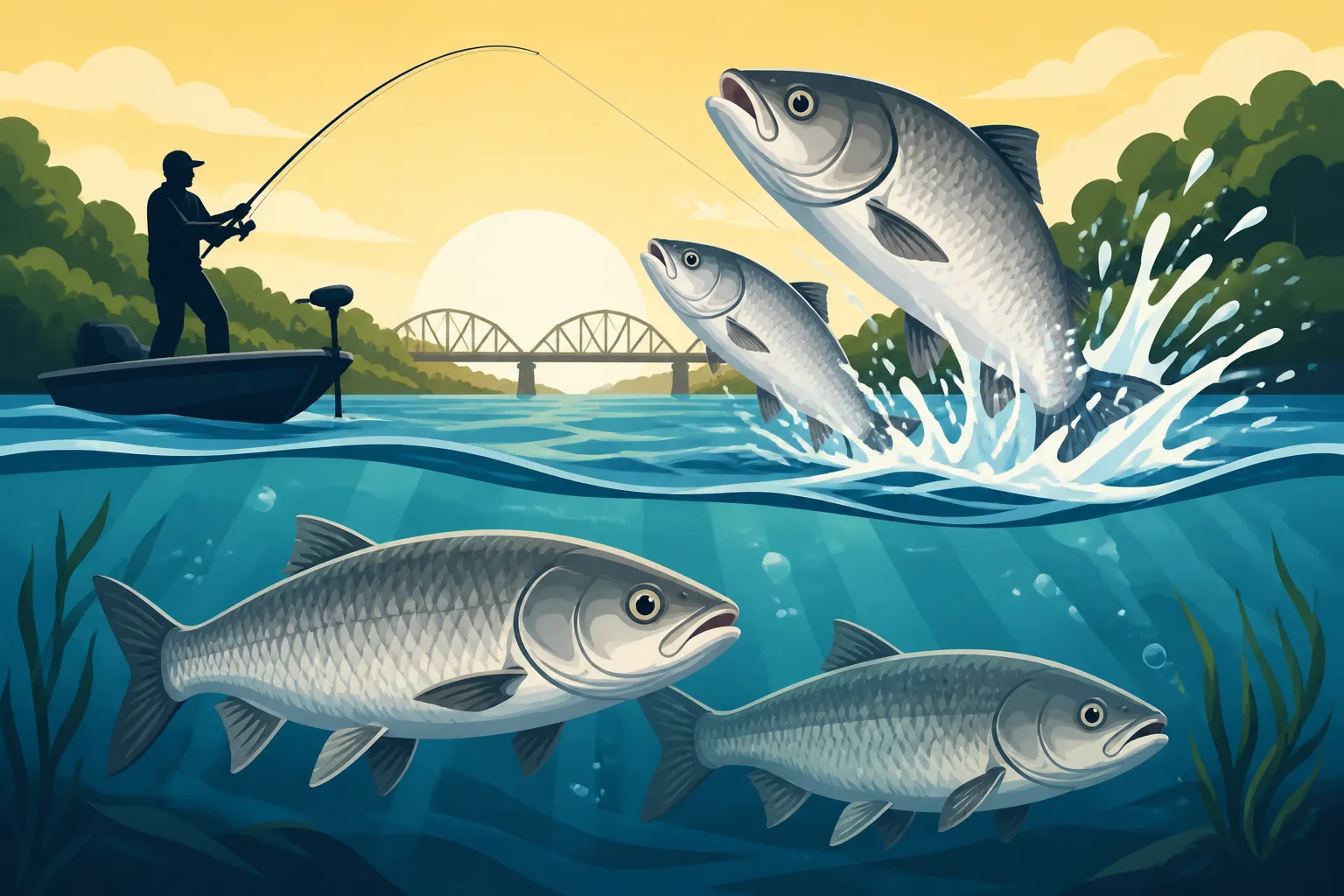
The Silver Carp (Hypophthalmichthys molitrix) is perhaps the most recognizable of the Asian carp due to its peculiar habit of leaping out of the water. When disturbed by boat motors or vibrations, these fish can propel themselves several feet into the air, creating a truly startling (and potentially dangerous) spectacle. Physically, they are characterized by their silvery scales, a deep body that is somewhat compressed laterally, and most notably, eyes that are set very low on their head, below the midline of their body.
They typically grow quite large, often reaching lengths of over three feet and weighing 20 pounds or more, with some individuals growing even larger. Their mouths are upturned, reflecting their feeding strategy as filter feeders that gulp water to strain out microscopic plankton. If you see a fish jumping out of the water in a Mississippi waterway, especially one with low-set eyes and a shiny, silver body, it's almost certainly a Silver Carp. For a deeper dive into why they behave this way, you might find Why Silver Carp Jump Out of the Water interesting.
Bighead Carp: The Filter Feeder
Bighead Carp (Hypophthalmichthys nobilis) are another major invasive species in Mississippi. While they don't share the Silver Carp's dramatic jumping habit, they are equally problematic due to their feeding patterns. Like Silver Carp, they are filter feeders, but Bighead Carp tend to consume larger plankton and zooplankton, putting them in direct competition with many of our native species, including larval game fish and adult paddlefish.
Their physical characteristics include a large, broad head (hence the name "Bighead"), eyes set low on the head similar to Silver Carp, and often irregular dark blotches or spots along their body, which can make them appear somewhat mottled compared to the uniformly silver appearance of their cousins. They can also grow to immense sizes, often exceeding 40 pounds, with some individuals reaching well over 60 pounds. Differentiating between the two can be tricky at first glance, but focusing on the head size and body markings can help.
Other Invasive Carp Species (Grass and Black Carp)
While Silver and Bighead Carp dominate the discussion due to their abundance and dramatic impacts, two other Asian carp species, Grass Carp and Black Carp, also pose significant threats, though perhaps in different ways.
Grass Carp (Ctenopharyngodon idella) were introduced primarily for aquatic vegetation control. They are distinguishable by their torpedo-shaped bodies, larger scales, and terminal mouth (at the front of the head) without the low-set eyes of the filter feeders. While some populations are triploid (sterile) and approved for specific vegetation management, wild fertile populations have established themselves and can cause significant damage by consuming vast amounts of aquatic plants. This can eliminate critical habitat and food sources for native fish, waterfowl, and other aquatic wildlife.
Black Carp (Mylopharyngodon piceus) are a particularly concerning species due to their diet. They are molluscivores, meaning they primarily feed on snails and mussels. This poses an existential threat to Mississippi's native mussel populations, many of which are already endangered or threatened. Mussels play a vital role in filtering water and are an important part of the aquatic ecosystem. Black Carp are identifiable by their darker, often blackish-brown bodies, large, thick scales, and a somewhat elongated, cylindrical shape. Their pharyngeal teeth, designed for crushing shells, are a key distinguishing feature if examined. The good news is that Black Carp populations in Mississippi are currently much smaller than those of Silver and Bighead Carp, but their potential for ecological damage is immense.
| Feature | Silver Carp | Bighead Carp | Grass Carp | Black Carp |
|---|---|---|---|---|
| Eyes | Set very low on the head | Set very low on the head | Normal position | Normal position |
| Body Color | Uniformly silvery | Silvery with irregular dark blotches | Dark olive back, silvery sides | Dark brown to blackish |
| Body Shape | Deep body, compressed laterally | Deep body, moderately compressed | Torpedo-shaped, cylindrical | Elongated, cylindrical |
| Mouth | Upturned, large | Terminal, large | Terminal, no barbels | Terminal, no barbels |
| Scales | Small, silvery | Small, with dark blotches | Large, distinct | Large, thick |
| Notable Behavior | Jumps out of water when startled | Does not typically jump | Strong vegetation eater | Eats snails and mussels |
| Primary Diet | Phytoplankton (microscopic algae) | Zooplankton (microscopic animals) & phytoplankton | Aquatic vegetation | Mussels, snails, invertebrates |
| Size | Up to 3+ feet, 20+ lbs | Up to 5+ feet, 60+ lbs | Up to 5+ feet, 80+ lbs | Up to 5+ feet, 150+ lbs |
The Challenge of Managing Asian Carp in Mississippi
Managing Asian carp is an uphill battle. These species have proven incredibly resilient and adaptive, spreading rapidly throughout the intricate network of Mississippi's rivers, lakes, and oxbows. The sheer scale of their presence makes complete eradication an unrealistic goal, shifting the focus to containment and population control. It's a long-term commitment that requires a multi-faceted approach, integrating various strategies and involving many stakeholders.
Why Are They So Hard to Control?
The difficulties in controlling Asian carp stem from several key biological and ecological factors. First and foremost, their reproductive rates are staggering. They can spawn multiple times in a season, releasing hundreds of thousands of eggs, leading to explosive population growth. This rapid reproduction means that even if a significant number are removed, the remaining population can quickly rebound.
Secondly, their rapid growth rates allow them to quickly reach sizes where they have few natural predators. They are also highly mobile, easily navigating vast river systems like the Mississippi River, which acts as a superhighway for their dispersal. Their feeding habits as filter feeders for Silver and Bighead carp means they are often not attracted to traditional hook-and-line baits, making them difficult for recreational anglers to target with conventional methods. This biological advantage, combined with the vastness of the water bodies they inhabit, makes comprehensive control a monumental task.
Current Management Strategies
Mississippi, alongside federal agencies and neighboring states, is actively engaged in trying to manage Asian carp populations. The Mississippi Department of Wildlife, Fisheries, and Parks (MDWFP) is at the forefront of these efforts. One of the primary strategies involves encouraging commercial harvest. By creating markets for Asian carp, the hope is to incentivize commercial fishermen to remove large numbers of these fish from the system. This can help reduce their populations and provide a source of income, essentially turning a problem into a potential resource.
Beyond commercial harvest, there's ongoing research into more innovative control methods. This includes studying the effectiveness of acoustic barriers, which use sound waves to deter carp from entering specific areas, and even electric barriers, similar to those used in other states. The goal is often to prevent their spread into more pristine tributary systems or to protect critical spawning grounds for native fish. Additionally, educational campaigns are vital to inform the public about the threat and how they can help. For more details on state efforts, you can check out What Mississippi Is Doing About Asian Carp.
The Role of Anglers in Control Efforts
As anglers, we have a vital role to play in the fight against Asian carp. While we might not be able to stop their spread entirely, our actions can make a real difference. One of the most direct ways is by encouraging the harvest of these fish. If you encounter Asian carp, especially Silver or Bighead Carp, consider harvesting them rather than releasing them. There are regulations to follow, of course, but removing them from the water is a net positive for the ecosystem.
Another critical role is reporting sightings. If you see significant numbers of Asian carp, or particularly if you observe them in waterways where they haven't been widely reported before, contacting the MDWFP can provide valuable data for researchers and management teams. This helps them track their spread and target control efforts more effectively. Most importantly, never move live fish from one water body to another. This is how many invasive species spread, and it's a practice that can quickly undo years of conservation work. Understanding and following Mississippi Fishing Regulations Explained is paramount here.
Fishing for Asian Carp: A New Opportunity (and Responsibility)
While Asian carp are undoubtedly a problem, they also represent a unique opportunity. For adventurous anglers, they offer a different kind of fishing challenge. More broadly, harvesting these fish can be a direct way to contribute to conservation efforts, and with proper preparation, they can even be a nutritious and delicious food source. This shift in perspective, from solely viewing them as a nuisance to seeing them as a resource, is key to managing their populations.
The Nutritional Value and Edibility of Asian Carp
Let's address the elephant in the room: many people are hesitant to eat carp, often associating it with muddy flavors or bony flesh. However, Asian carp, particularly Silver and Bighead, are often quite different from the common carp in terms of taste and texture. They are known for having firm, white, flaky meat that is surprisingly mild, especially when sourced from cleaner, flowing waters. They are also packed with protein and omega-3 fatty acids, making them a very nutritious choice.
The biggest challenge with these fish, especially Silver Carp, is their intramuscular bones – small, Y-shaped bones that can be difficult to navigate. However, with proper filleting techniques (like scoring the fillets) or by processing them into ground meat, these bones become less of an issue. Some have even compared the taste to cod or tilapia, demonstrating that with an open mind, Asian carp can be a delicious meal. If you're curious to try, exploring resources like Is Asian Carp Edible? can give you tips and recipes.
Techniques for Catching Silver Carp and Other Species
Catching Asian carp, especially the filter-feeding Silver and Bighead Carp, often requires different techniques than traditional rod-and-reel angling for game fish.
- Bowfishing: This is by far the most popular and effective method for targeting Silver Carp and Bighead Carp in Mississippi. Because they don't bite traditional baits, bowfishing allows anglers to directly target the fish visually, especially when they are schooling or jumping. It's an exciting and challenging sport that directly contributes to removing these invasive species from the water. Many specialized bows, arrows, and reels are available for bowfishing, and you can easily find suitable gear on platforms like Amazon.
- Netting and Seining: Commercial fishermen use large nets and seines to harvest significant numbers of Asian carp, particularly in river channels and backwater areas where they congregate. This method is highly effective for population reduction and often provides the bulk of carp for processing markets.
- Rod and Reel (for Grass Carp and Common Carp): While Silver and Bighead Carp are rarely caught on hook and line, Grass Carp can sometimes be caught using baits like corn, bread, or even artificial flies designed to mimic vegetation. Common carp, which are not Asian carp but are also prevalent, are readily caught on dough balls, corn, or worms. If you are targeting these species, you'll want to use strong tackle, as they can put up a formidable fight.
- Location and Time: Asian carp often prefer slack water areas, backwater lakes, and river bends, particularly in the lower portions of the Mississippi River and its larger tributaries. Early mornings and late evenings can be productive, especially for bowfishing, as visibility is good but the fish may be less disturbed.
Utilizing Your Catch
So, you've successfully harvested some Asian carp – now what? Utilizing your catch is a crucial part of the management strategy.
- Personal Consumption: As discussed, these fish can be a delicious and healthy meal. Experiment with different recipes – smoking, grilling, frying, or even turning them into fish cakes or pâté can be excellent ways to enjoy them. There are many online resources and cookbooks dedicated to preparing carp.
- Donation and Commercial Processing: If you're a recreational angler who harvests more than you can eat, or if you're a commercial fisherman, consider options for donation or commercial processing. Programs and businesses exist that process Asian carp into various products, including human food, pet food, and even fertilizer. This creates a value chain that supports ongoing removal efforts. Some companies even offer specialized filleting tools which you might find readily available on Amazon, making the process smoother.
- Education and Awareness: Sharing your experiences and delicious carp dishes with friends and family can help change public perception. The more people who understand the problem and are willing to utilize these fish, the stronger our collective efforts will be to manage their populations. Remember, every fish removed is one less competing with our native species.
Protecting Mississippi's Native Fisheries
The ultimate goal behind all these efforts against Asian carp is to protect and restore Mississippi's incredible native fish populations. Our state boasts a rich diversity of freshwater species, from the prized largemouth bass and crappie to unique fish like paddlefish and various catfish species. These native fish are not just important for recreation; they are integral to the health of our aquatic ecosystems and reflect the natural heritage of the Magnolia State.
Understanding the Native Fish Ecosystem
Mississippi's freshwater systems are incredibly vibrant and diverse. We have iconic game fish like Largemouth Bass Fishing in Mississippi and Crappie Fishing in Mississippi, which draw anglers from all over. But beyond these popular species, our waters are home to a fascinating array of other fish, including different kinds of sunfish (bream), various catfish species, and important forage fish like shad and minnows. Each of these species plays a specific role in the food web and the overall health of the ecosystem.
For instance, the Paddlefish (Spoonbill) in Mississippi Rivers, a truly ancient and unique fish, is a filter feeder, just like Silver and Bighead Carp. This means direct competition for food, which can severely impact paddlefish populations already facing other pressures. Similarly, Buffalo Fish Identification and Where They Live highlights another native filter feeder that is suffering due to carp competition. A healthy ecosystem relies on a balance, and the introduction of Asian carp has thrown that balance completely out of whack, stressing our native species by reducing their food sources and altering their habitats.
Prevention is Key: Stopping the Spread
While we're dealing with existing Asian carp populations, preventing their further spread into new waterways is absolutely critical. This is where every angler, boater, and outdoor enthusiast becomes a frontline defender. The "Clean, Drain, Dry" initiative is a simple yet powerful mantra:
- Clean: Remove all visible aquatic plants, animals, and mud from your boat, trailer, and fishing gear (waders, boots, nets, etc.) before leaving any access area.
- Drain: Drain all water from your boat, motor, livewell, bilge, and bait buckets before leaving the ramp. This is especially important for bait buckets, as microscopic larvae or juvenile fish could be inadvertently transported.
- Dry: Allow your boat and gear to thoroughly dry for at least five days before using it in a different water body. If drying isn't possible, wash with high-pressure hot water (140°F or higher).
Beyond these practices, it's vital to never move live fish from one water body to another. This includes baitfish. What might seem like a harmless act could introduce an invasive species or disease to a pristine lake or river. Finally, if you suspect an illegal transfer or encounter an invasive species in a new location, report suspicious activities to the MDWFP. Your vigilance is one of our most potent tools.
Supporting Conservation Efforts
The fight against Asian carp and for the health of our native fisheries is ongoing, and it requires sustained effort and resources. As citizens, we can actively support these conservation efforts in several ways. The most direct way is by purchasing a Mississippi fishing license. The fees collected from these licenses are directly allocated to the MDWFP, funding critical programs such as fisheries management, habitat restoration, law enforcement, and research into invasive species control. Knowing How Mississippi Fishing License Fees Are Used can really underscore the importance of this simple act.
Beyond licenses, consider becoming involved in local conservation groups or volunteer efforts. Many organizations work to clean up waterways, restore habitats, or educate the public about invasive species. Every little bit helps. By staying informed, practicing responsible outdoor ethics, and supporting the agencies and organizations dedicated to protecting our natural resources, we can all contribute to a healthier future for Mississippi's native fisheries. It's not just about catching fish; it's about preserving a cherished way of life and a vital part of our state's natural beauty.
Disclaimer
This article is for general informational purposes only and does not constitute professional advice. Laws, prices and regulations vary by location and change over time. Consult a qualified professional for guidance on your specific situation.