Trophy Crappie in Mississippi Waters
The dream of hooking a true trophy crappie in Mississippi waters is a powerful one for many anglers. It's not just about filling a cooler; it's about the challenge, the finesse, and the sheer thrill of battling a giant slab that pushes the scales. If you've ever found yourself wondering where these monster crappie hide and what it takes to bring one to the boat, you're in the right place. This guide is dedicated to helping you understand what makes a crappie a trophy in our state, where to find them, and the specialized tactics that can turn your dream into a reality.
Defining "Trophy" Crappie in Mississippi
Before we dive into tactics and locations, let's nail down what we actually mean by a "trophy" crappie here in Mississippi. It's more than just a big fish; it's a fish that stands out, a memory-maker, and often, a testament to an angler's skill and persistence.
What Makes a Crappie a Trophy
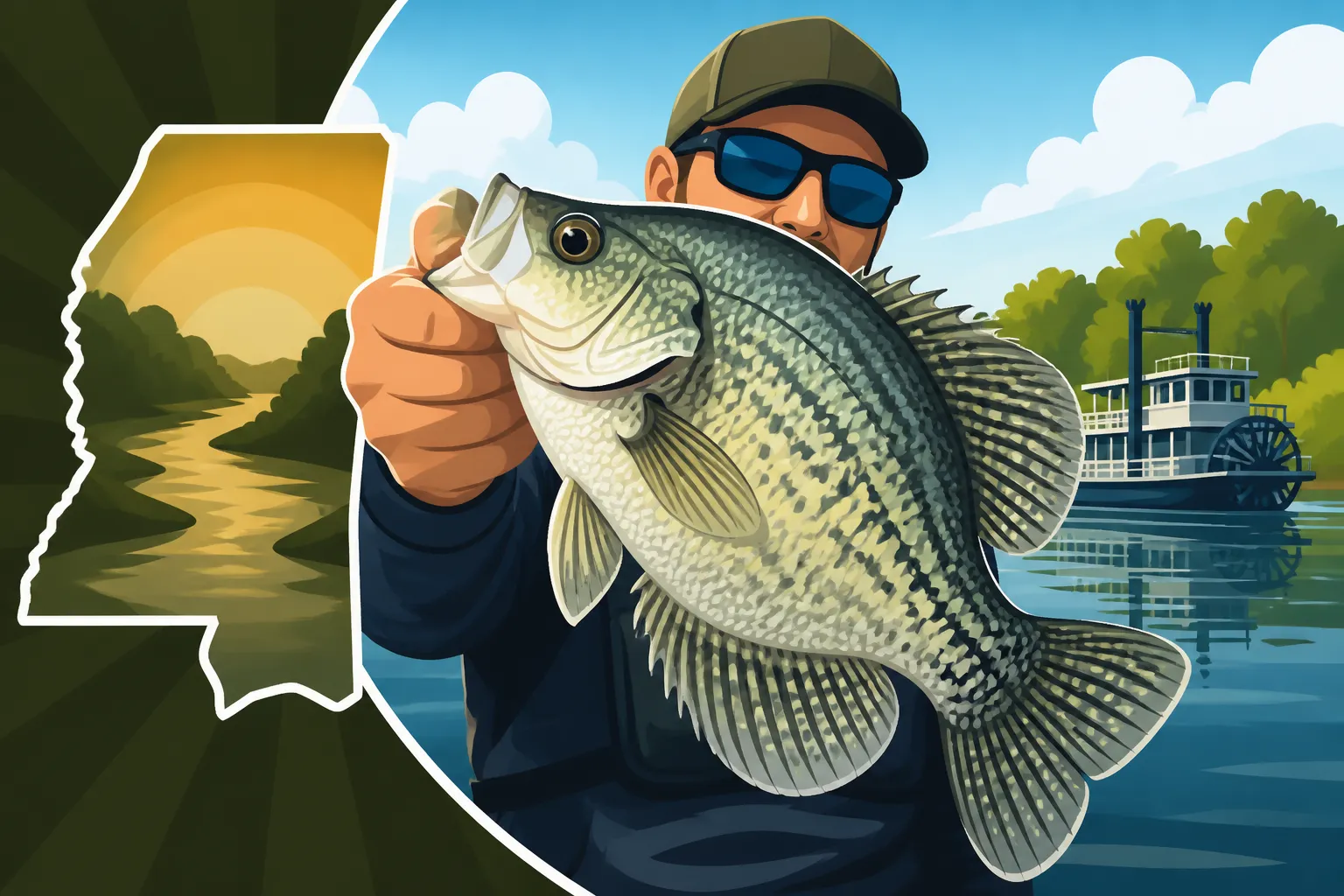
For many seasoned crappie anglers in Mississippi, a "trophy" is generally considered a fish weighing in at two pounds or more. While a one-and-a-half-pound crappie is certainly a fantastic catch and will make for a delicious meal, that two-pound mark is often the benchmark for a true "slab" that gets your heart really pumping. These fish are typically older, wiser, and have successfully evaded countless hooks, making their capture all the more rewarding. They possess a certain girth and length that immediately distinguishes them from their smaller counterparts, often with broad shoulders and a deep body.
Think about it: most of the crappie you pull from a typical lake might be in the three-quarter to one-and-a-quarter-pound range. A fish that weighs double that isn't just a little bigger; it's a completely different class of fish. It's the kind of crappie you take a photo with before carefully releasing it, or perhaps mount on your wall as a lifelong reminder of a special day on the water. The sheer size of these fish often means they are the dominant ones in their habitat, having had ample access to forage and prime hiding spots.
Mississippi's State Record Crappie and Notable Catches
Mississippi is undeniably a crappie fishing paradise, and our state records reflect the potential for truly massive fish. The official state record for white crappie stands at a whopping 3 pounds, 15 ounces, a leviathan caught years ago on Enid Lake. For black crappie, the record is 3 pounds, 9 ounces, also caught on Enid. These records aren't just numbers; they tell a story of incredible fisheries and the occasional genetic anomaly or perfect storm of conditions that allow a crappie to reach such colossal proportions.
While breaking a state record is a monumental feat, there are countless stories of anglers landing crappie in the 2.5 to 3.5-pound range across our premier reservoirs every single year. Lakes like Grenada and Sardis regularly produce crappie that would be state records in many other places, solidifying Mississippi's reputation as a top destination for trophy crappie. These lakes have the perfect combination of fertile waters, abundant forage, and excellent habitat to support these giants. Knowing these records exist and are occasionally challenged keeps the dream alive for every angler casting a line into Mississippi's famous waters. If you're curious about all the giants, check out Mississippi State Record Crappie Weight.
Top Waters to Hunt Trophy Crappie
Mississippi boasts some of the finest crappie fishing in the country, and a few lakes consistently stand out as prime locations for targeting those elusive trophy slabs. These are the places where legends are made and where every cast holds the promise of a fish of a lifetime.
The Legendary Reservoirs: Grenada, Sardis, and Enid
When you talk about trophy crappie in Mississippi, three names immediately come to mind: Grenada Lake, Sardis Lake, and Enid Lake. These immense flood control reservoirs in North Mississippi are renowned for their incredible crappie populations and, more importantly, their propensity to produce true giants.
Grenada Lake, often hailed as the "Crappie Capital of the World," is perhaps the most famous. Its vast acres of submerged timber, deep creek channels, and expansive flats provide an ideal environment for crappie to thrive and grow large. The lake is managed to create excellent habitat, with periodic drawdowns that help stimulate aquatic vegetation growth, which in turn supports the forage base. Anglers here regularly pull 2-pounders, and 3-pound fish are not unheard of, particularly during the pre-spawn and spawn periods. The lake's robust gizzard and threadfin shad populations ensure a steady diet for rapidly growing crappie. If you want to dive deeper, you can explore the Grenada Lake Fishing Guide.
Sardis Lake, another jewel in North Mississippi, offers similar outstanding crappie fishing. Known for its massive crappie, Sardis provides abundant structure, including stumps, logs, and creek beds, especially when water levels fluctuate. Like Grenada, Sardis benefits from excellent management practices and a rich forage base. Many anglers consider Sardis to be on par with Grenada for sheer numbers and size potential. The "Wolf River" area and the main lake's deeper channels are prime targets for big crappie, especially in cooler months. For more details on this fantastic fishery, check out the Sardis Lake Fishing Guide.
Enid Lake, though perhaps a little smaller in surface area than Grenada or Sardis, holds both state records for crappie, a testament to its trophy potential. Enid's fertile waters and numerous submerged brush piles and timber make it a crappie heaven. It's often said that if you want a true monster, Enid is where you go to earn it. The lake's deep channels and ledges are crucial for finding crappie during the summer and winter, while shallower areas explode with activity during the spring spawn. Each of these reservoirs provides a unique challenge and experience, but all share the common thread of being fantastic places to pursue trophy crappie. The Enid Lake Fishing Guide offers more specific tips for this incredible lake.
Other Productive Lakes for Big Slabs
While the Big Three reservoirs dominate the trophy crappie conversation, Mississippi has other productive lakes that shouldn't be overlooked. These waters might not produce the same sheer volume of 2-pounders as the northern reservoirs, but they consistently kick out impressive fish and often hold their own secrets.
Ross Barnett Reservoir, located near Jackson, is a massive body of water known for its diverse fishery, including some very respectable crappie. While perhaps more famous for its bass, "The Rez" holds plenty of 1.5 to 2-pound crappie, with occasional fish pushing the 2.5-pound mark. Its extensive timber, grass beds, and creek channels offer ample cover. The Pelahatchie Bay area and the main river channel are popular spots for crappie anglers. The advantage of Ross Barnett is its accessibility from the central part of the state, making it a convenient option for many. Learn more about this versatile fishery in the Ross Barnett Reservoir Fishing Guide.
Arkabutla Lake, the fourth of the big northern flood control lakes, also consistently produces large crappie. While it might fly a bit under the radar compared to its more famous siblings, Arkabutla offers excellent crappie fishing with plenty of submerged trees, stumps, and channels to explore. Anglers who take the time to learn its nuances often find themselves rewarded with quality fish. These lakes all benefit from strong local angler communities and ongoing research by the Mississippi Department of Wildlife, Fisheries, and Parks (MDWFP) to maintain healthy fish populations. For more insights on Arkabutla, check out the Arkabutla Lake Fishing Guide.
Additionally, several smaller state lakes and even private ponds throughout Mississippi can surprise you with a giant crappie. These smaller bodies of water often receive less fishing pressure and, if managed well, can allow individual crappie to grow to impressive sizes. Always check local regulations, as creel and size limits can vary significantly from the statewide regulations on these smaller, more intensively managed waters. The key to finding trophy crappie in these lesser-known spots is often local knowledge and a willingness to explore.
Understanding the Behavior of Giant Crappie
Catching trophy crappie isn't just about fishing in the right lake; it's about understanding why those fish get so big and where they choose to spend their lives. Bigger crappie behave differently than their smaller counterparts, and cracking that code is essential for consistent success.
Biological Factors Behind Large Crappie Growth
Several biological factors contribute to a crappie reaching trophy size. It's not just luck; it's a combination of genetics, age, and access to a plentiful, high-quality food source.
Firstly, genetics play a significant role. Just like people, some crappie are simply predisposed to grow larger and faster than others. While you can't pick out the genetically superior fish, fishing in lakes known for producing giants increases your odds of encountering these exceptional individuals. The MDWFP often stocks lakes with proven strains of crappie to enhance growth potential.
Secondly, age is crucial. A two-pound crappie isn't a young fish; it's typically several years old, often 5-8 years or even more in some cases. To reach such an age, the fish must have successfully avoided predators and, importantly, anglers. This means they are often warier and seek out better cover. The growth rate of crappie can vary significantly depending on environmental conditions, but generally, consistent access to food and good water quality allows them to pack on the pounds over time.
Finally, a rich forage base is arguably the most critical factor. Crappie are opportunistic predators, and a steady supply of easy-to-catch prey is essential for rapid growth. Lakes with abundant populations of threadfin and gizzard shad, as well as various minnows and small invertebrates, provide the fuel for crappie to reach impressive sizes. When the baitfish population is booming, crappie don't have to expend as much energy hunting, allowing them to conserve calories and grow faster. Water quality, including dissolved oxygen levels and temperature, also plays a role, as optimal conditions reduce stress and promote health. Understanding what crappie eat and how their diet changes with size is fundamental to targeting them effectively. You can learn more in Crappie Diet and Feeding Habits.
Where Trophy Crappie Prefer to Live
Trophy crappie aren't usually found schooling with a hundred small fish in open water. They are often more solitary or found in smaller groups, preferring specific types of habitat that offer both ample cover and access to food, without too much competition.
One of the primary haunts for big crappie is deep submerged timber and brush piles. These areas provide excellent ambush points for feeding and protection from larger predators. The thicker and more complex the cover, the more likely a trophy crappie will call it home. These fish will often sit right in the thickest part of the cover, making them challenging to extract once hooked. Anglers often spend hours meticulously mapping out and marking these hidden structures with their electronics.
Deep creek channels and river bends are also magnets for large crappie, especially during the colder months or when fish are transitioning between spawning and summer patterns. These channels often provide cooler, more stable water temperatures and serve as natural highways for both crappie and their prey. Crappie will often position themselves along the edges or on humps within these channels, particularly where there's some form of additional structure like a fallen tree or rock pile.
Ledges and drop-offs are another key habitat. These sudden changes in depth create natural current breaks and staging areas for crappie as they move up and down the water column. Trophy crappie will often relate to the deepest part of these ledges, especially in reservoirs where water levels can fluctuate. When the fish are deep, knowing how to find them is key. Understanding How Deep Do Crappie Go in Summer can make a huge difference in your success. They might suspend just off the bottom or hug tightly to any cover found along the drop. Finding these specific spots often requires good electronics and a lot of patience, but the rewards can be significant.
Tactics and Techniques for Landing Trophy Crappie
Targeting trophy crappie requires a bit more finesse and specialized knowledge than simply casting a jig under a bobber. These bigger fish are smarter and often more sensitive to pressure, meaning your approach needs to be dialed in.
Advanced Presentation and Bait Selection
When it comes to presenting your bait to a trophy crappie, precision is paramount. You're not just looking for any crappie; you're looking for the biggest, smartest ones in the lake.
One of the most effective techniques for targeting suspended or structure-oriented trophy crappie is spider rigging. This involves using multiple long rods (often 10-16 feet) spread out around the boat, each with a different bait or jig fished at varying depths. This allows you to cover a wide area and pinpoint the depth where the big fish are holding. The boat moves slowly, almost imperceptibly, presenting a spread of baits as if a school of minnows is moving through the water. The key is to keep your baits vertical and subtle. If you want to learn more, check out Spider Rigging Techniques. The setup often includes specialized rod holders that fan the rods out, giving each bait a distinct presentation.
For bait selection, don't be afraid to go bigger. While small jigs and minnows catch crappie, trophy crappie often prefer a more substantial meal. Larger minnows, often called "tuffy" minnows or shiners, in the 2-3 inch range, are excellent choices. They offer a bigger profile and more enticing action. Additionally, larger soft plastic baits, such as 2-3 inch paddle tails or tube jigs, can mimic larger shad or baitfish. Experiment with colors, but often natural colors like shad, chartreuse, or white work best. The idea is to trigger a predatory response from a big fish looking for a significant meal, not just a snack. Knowing Best Bait to Catch Trophy Crappie can really give you an edge.
Furthermore, consider slow trolling with small crankbaits or larger jigs. This technique allows you to cover water efficiently, especially over vast flats or along channel ledges where crappie might be spread out. The vibration and profile of a crankbait can often entice a larger crappie that might ignore a subtle jig. The speed is crucial – just fast enough to get the lure's action, but slow enough for a crappie to intercept it.
Mastering Seasonal Crappie Patterns
Trophy crappie move and behave differently throughout the year, driven by water temperature, spawning cycles, and baitfish movements. Mastering these seasonal patterns is critical for consistent success. You can get a general overview in Crappie Fishing Techniques for Mississippi Lakes.
In spring, particularly during the pre-spawn and spawn, big crappie move shallower to feed aggressively before laying eggs. This is often considered the best time to catch the biggest fish of the year. Look for them staging on deeper points and ledges adjacent to spawning flats, then moving into shallow brush, stumps, and even grass beds when the water temperature is right. This is when they are most accessible and often most vulnerable. For specific tips on fishing this prime season, consider reading Mississippi Spring Fishing Guide.
During the summer months, as water temperatures rise, trophy crappie typically retreat to deeper, cooler water. They will often suspend over or near deep submerged timber, brush piles, or along creek channel ledges. Finding these deep-water sanctuaries requires excellent electronics to locate both the fish and the structure they relate to. They might feed during low light hours but will generally be less active during the heat of the day.
Fall sees crappie following baitfish migrations as water temperatures begin to cool. Shad often move into creek arms and shallower flats, and crappie will follow. This can be an excellent time for aggressive fish as they fatten up for winter. Look for them in medium depths, often relating to structure along these baitfish highways.
Finally, winter crappie fishing can be incredibly productive for trophy fish, though it often requires a lot of patience. Big crappie will stack up in deep, stable water, usually in the main lake basins, deep creek channels, or dense submerged timber. They will be lethargic, and their bites will be incredibly subtle. Vertical jigging or slow trolling with live minnows is often the most effective method, presented right on their noses. Understanding how to approach them in colder conditions is vital for success, as detailed in Winter Crappie Fishing in Mississippi.
Essential Gear for Serious Crappie Anglers
While you can catch a crappie on almost any rod, targeting trophy fish consistently demands a more specialized and refined setup. The right gear won't just help you catch more fish, but it will also increase your chances of landing those truly big ones once they bite.
Rods, Reels, and Line Built for Big Fish
When pursuing trophy crappie, your choice of rod, reel, and line becomes critical. You need sensitivity to detect subtle bites and enough backbone to handle a powerful fish around heavy cover.
For rods, many trophy crappie anglers opt for longer, lighter action spinning rods, typically in the 7-to-12-foot range. A medium-light or light power rod with a fast or extra-fast action tip is ideal. The length helps with casting distance, managing line, and absorbing the shock of a big crappie's head shakes. The sensitive tip allows you to feel the faintest peck or the slight weight of a crappie taking your bait, which is often how trophy crappie bite. The backbone ensures you have the power to drive the hook home and pull the fish away from snags. For specific recommendations, check out Choosing the Right Rod and Reel for Mississippi Fishing.
Matching your rod with the right reel is equally important. A small, lightweight spinning reel in the 1000 or 2000 series is perfect. It balances well with the light rod, and the smooth drag system is crucial for fighting big crappie, especially on lighter lines. A good quality reel will ensure smooth line retrieval and prevent line twist, which can be a nuisance with light tackle.
As for line, many serious crappie anglers now use a combination of braided mainline and a fluorocarbon leader. A 6-10 lb test braided mainline offers incredible sensitivity, zero stretch, and excellent casting distance. Its thin diameter also cuts through the water better, which is helpful when fishing deep. Tying on a 4-6 lb test fluorocarbon leader (2-4 feet long) provides invisibility in clear water, abrasion resistance, and a slight bit of stretch to act as a shock absorber. Some anglers still prefer straight monofilament in 4-6 lb test, especially in stained water or for a more traditional setup. Monofilament offers more stretch, which can be forgiving, but lacks the sensitivity of braid. For detailed insights on line choices, consider Best Fishing Line for Crappie.
Leveraging Modern Electronics and Accessories
In today's crappie fishing world, electronics are no longer a luxury; they are a necessity for finding and catching trophy fish, especially in large reservoirs with complex underwater topography.
A good fish finder with GPS, side imaging, and down imaging is invaluable. Side imaging allows you to scan wide areas to locate submerged timber, brush piles, and schools of baitfish or crappie that are off to the sides of your boat. Down imaging provides a clearer, photo-like view directly beneath your boat, helping you interpret structure and distinguish fish from cover. The GPS is essential for marking waypoints once you find productive spots, allowing you to return to them precisely. Brands like Humminbird and Garmin offer excellent units with these capabilities, and you can often find a wide range of options on platforms like Amazon.
Beyond traditional sonar, live-scanning sonar technologies, such as Garmin's LiveScope or Lowrance's ActiveTarget, have revolutionized crappie fishing. These systems provide real-time, three-dimensional views of what's happening under the water, allowing you to see your bait and how fish are reacting to it. This takes the guesswork out of vertical jigging or spider rigging, as you can literally watch a trophy crappie approach your bait and know exactly when to set the hook. This technology provides an unparalleled advantage in locating and targeting specific fish.
Other essential accessories include a long-handled landing net with rubberized mesh (to protect the fish), a reliable measuring board and scale to accurately record your trophy, and a portable aerator or livewell to keep any kept fish healthy. Having a selection of tackle storage boxes to organize your jigs, hooks, weights, and minnow buckets on Amazon can help keep your boat clutter-free and efficient. Don't forget polarized sunglasses to cut glare and help you see into the water, and good quality rain gear for unexpected weather.
Sustaining Mississippi's Trophy Crappie Fishery
The pursuit of trophy crappie is exhilarating, but it also carries a responsibility. Ensuring that Mississippi continues to produce these magnificent fish for future generations requires conscious effort from all anglers. Conservation isn't just a buzzword; it's a practice that directly impacts the quality of our fishing experiences.
The Importance of Conservation and Responsible Angling
One of the most impactful things we can do as anglers is to practice responsible angling, especially when it comes to trophy-sized fish. This often means catch and release for the largest crappie. While it's tempting to keep every big fish, releasing those massive 2-pound-plus slabs helps maintain the genetic diversity and spawning potential of the crappie population. These large, older fish are often the most prolific spawners, contributing significantly to the next generation of crappie. If you do choose to keep a trophy, ensure you handle it carefully, minimize its time out of water, and use proper fish care techniques.
Understanding and adhering to slot limits and daily creel limits is another critical aspect of conservation. Mississippi often employs special regulations on certain lakes or species to protect fish during critical growth stages or to manage population dynamics. For example, some lakes might have a slot limit where fish within a certain size range must be released, allowing them to grow larger and spawn. Always check the current Mississippi Fishing Creel and Size Limits for the specific body of water you're fishing. Violating these limits not only carries potential penalties but also negatively impacts the very resource we cherish.
Practicing good angling etiquette, such as properly disposing of fishing line and litter, being mindful of other anglers, and respecting private property, also falls under responsible angling. These seemingly small actions collectively contribute to a healthy and enjoyable fishing environment for everyone. Investing in high-quality, biodegradable fishing line, which can sometimes be found on Amazon, is a small but meaningful step toward reducing environmental impact.
Supporting Management and Habitat Programs
The health of Mississippi's trophy crappie fishery doesn't happen by accident; it's the result of dedicated efforts by the Mississippi Department of Wildlife, Fisheries, and Parks (MDWFP). As anglers, we can support these efforts in several ways.
Firstly, buying a Mississippi fishing license is paramount. A significant portion of the revenue generated from license sales directly funds fisheries management programs. This includes stocking efforts, habitat improvement projects (like placing artificial brush piles), scientific research into fish populations, and enforcement of fishing regulations. Every dollar spent on a license contributes to the sustainability of our fisheries. If you've ever wondered about the impact of your license purchase, you'll be interested to learn How Mississippi Fishing License Fees Are Used.
Secondly, participating in angler surveys or reporting your catches when requested by MDWFP can provide invaluable data. This information helps biologists monitor fish populations, assess growth rates, and make informed decisions about future management strategies, ensuring that our lakes continue to produce trophy crappie.
Lastly, consider becoming involved in local fishing clubs or conservation organizations. These groups often work in conjunction with state agencies on habitat restoration projects, lake cleanups, and educational initiatives. By giving back to the resource, you're not just ensuring the future of trophy crappie fishing for yourself, but for generations of anglers to come. The sustained health of these legendary crappie lakes depends on a collaborative effort between state agencies and a responsible, engaged angling community.
Mississippi's Top Crappie Lakes for Trophies
| Lake Name | Average Crappie Size (lbs) | Trophy Potential (2+ lbs) | Primary Species (Crappie) | Key Features for Trophies |
|---|---|---|---|---|
| Grenada Lake | 1.5 – 2.0 | High | White Crappie | Extensive submerged timber, deep creek channels, shad forage |
| Sardis Lake | 1.5 – 2.0 | High | White Crappie | Abundant standing timber, ledges, fertile waters |
| Enid Lake | 1.2 – 1.8 | High (State Records) | White & Black Crappie | Deep channels, brush piles, known for giants |
| Ross Barnett Reservoir | 1.0 – 1.5 | Medium | White & Black Crappie | Timber, grass, creek channels, consistent quality |
| Arkabutla Lake | 1.0 – 1.5 | Medium | White Crappie | Submerged timber, stump fields, river channels |
Disclaimer
This article is for general informational purposes only and does not constitute professional advice. Laws, prices and regulations vary by location and change over time. Consult a qualified professional for guidance on your specific situation.