How to Fish a Spinnerbait in Muddy Water
It's easy to feel a pang of frustration when you arrive at your favorite fishing spot, full of anticipation, only to find the water that was clear yesterday has turned the color of chocolate milk after a heavy rain. Many anglers pack up right then and there, thinking the day is ruined. But here's a little secret: muddy water doesn't have to mean no fish! In fact, with the right approach and a trusty spinnerbait, you can often turn these challenging conditions into some of your most productive fishing days. This comprehensive guide is all about equipping you with the knowledge and tactics to effectively fish a spinnerbait in muddy waters, transforming those "unfishable" days into memorable catches.
Understanding Muddy Water Conditions and Fish Behavior
Before you even tie on a lure, it’s crucial to understand what's happening beneath the surface when the water gets murky. It's not just about visibility; it's about how this change affects the fish themselves and, consequently, how you need to adjust your strategy.
Why Muddy Water is a Challenge for Anglers
The most obvious challenge with muddy water is the severely reduced visibility. As anglers, we rely heavily on our eyes to spot structure, see subtle bites, and even choose our lures based on how they look in the water. When you can't see past a few inches, it feels like you're fishing blind, which can certainly be disheartening. This lack of visual information can make it difficult to determine the best casting lanes, identify potential ambush points for fish, or even tell if your bait is running correctly.
Beyond our own visual limitations, the fish themselves are impacted. Many game fish, especially bass, are sight feeders. They use their eyes to track prey, identify threats, and navigate their environment. When the water turns muddy, their primary hunting sense is severely compromised, forcing them to adapt. This shift in their sensory reliance means that baits that appeal visually in clear water become far less effective, demanding a different kind of presentation from us.
Lastly, muddy water often comes with other environmental changes, such as increased current from rainfall or a sudden drop in water temperature. These factors can further disorient fish and alter their feeding patterns, adding another layer of complexity to an already challenging situation. Understanding these intertwined dynamics is the first step toward finding success.
How Fish React to Turbid Water
When clarity drops, fish don't just disappear; they adapt. One of the most common reactions is that fish will often move shallower and tighter to cover. Think about it from their perspective: if they can't see, they're going to seek out areas where they feel more secure and where prey might be easier to ambush. This means focusing your efforts on shallow banks, submerged timber, rock piles, or dense vegetation becomes even more critical. They'll hug these features not just for protection but also because it limits the directions from which they need to perceive danger or prey.
Furthermore, fish in turbid water switch from primarily visual hunting to relying on their other senses. Their lateral line, a sensory organ running along their sides, is incredibly sensitive to vibrations in the water. This allows them to detect movement, even in pitch darkness or extremely murky conditions. They also rely more on their sense of smell. Therefore, lures that create strong vibrations and baits that emit enticing scents gain a significant advantage in these low-visibility conditions. It's about triggering a reaction strike or appealing to their "nose," rather than their "eyes."
It’s also worth noting that fish might become less active overall in heavily muddy water, conserving energy and waiting for conditions to improve. However, some species, particularly catfish, can thrive in these conditions. For species like bass and crappie, the key is often to present a bait that is impossible to ignore, drawing them out of their hiding spots with irresistible vibration or a slow, easy target. If you're looking for different species to target, our Catfish Fishing Techniques guide might give you some alternative ideas, but for now, let's stick with bass and spinnerbaits.
Recognizing Productive Muddy Water Situations
Not all muddy water is created equal, and some turbid conditions are actually more productive than others. The kind of mud matters. Fresh mud, often a result of recent heavy rains, can initially put fish off. However, as it starts to settle, it can create a fantastic bite. The influx of new water often brings nutrients and baitfish into an area, which in turn attracts game fish. Look for areas where the water clarity is improving slightly, perhaps from chocolate milk to a strong coffee color – this transition often signifies settling sediment and increased fish comfort.
Another highly productive scenario is finding "mud lines" or transition zones where muddy water meets clearer water. These seams are phenomenal ambush points for bass. Baitfish often hover on the clearer side of the line, while predator fish lurk just inside the murkier water, waiting to dart out and strike. You'll find these lines near creek channels, points, or where runoff enters a main body of water. Casting parallel to these lines, allowing your spinnerbait to cross back and forth, can be incredibly effective.
Lastly, consider water temperature. Warmer, oxygenated muddy water can be better than cold, muddy water. During cooler months or after a cold front, fish might be even more lethargic in muddy conditions. However, after a warm rain in spring or summer, the mud can actually hold more heat, making fish more active. So, don't just write off muddy water without assessing these subtle but significant factors. Our guide on Fishing After a Cold Front delves into how these temperature drops impact fish behavior, which is definitely worth a read.
Spinnerbait Selection for Muddy Water Success
Choosing the right spinnerbait for muddy water is paramount. You can't just throw your favorite clear-water spinnerbait and expect the same results. It's all about maximizing two key sensory appeals for fish that can't rely on their eyes: vibration and contrast.
Blade Color and Configuration Choices
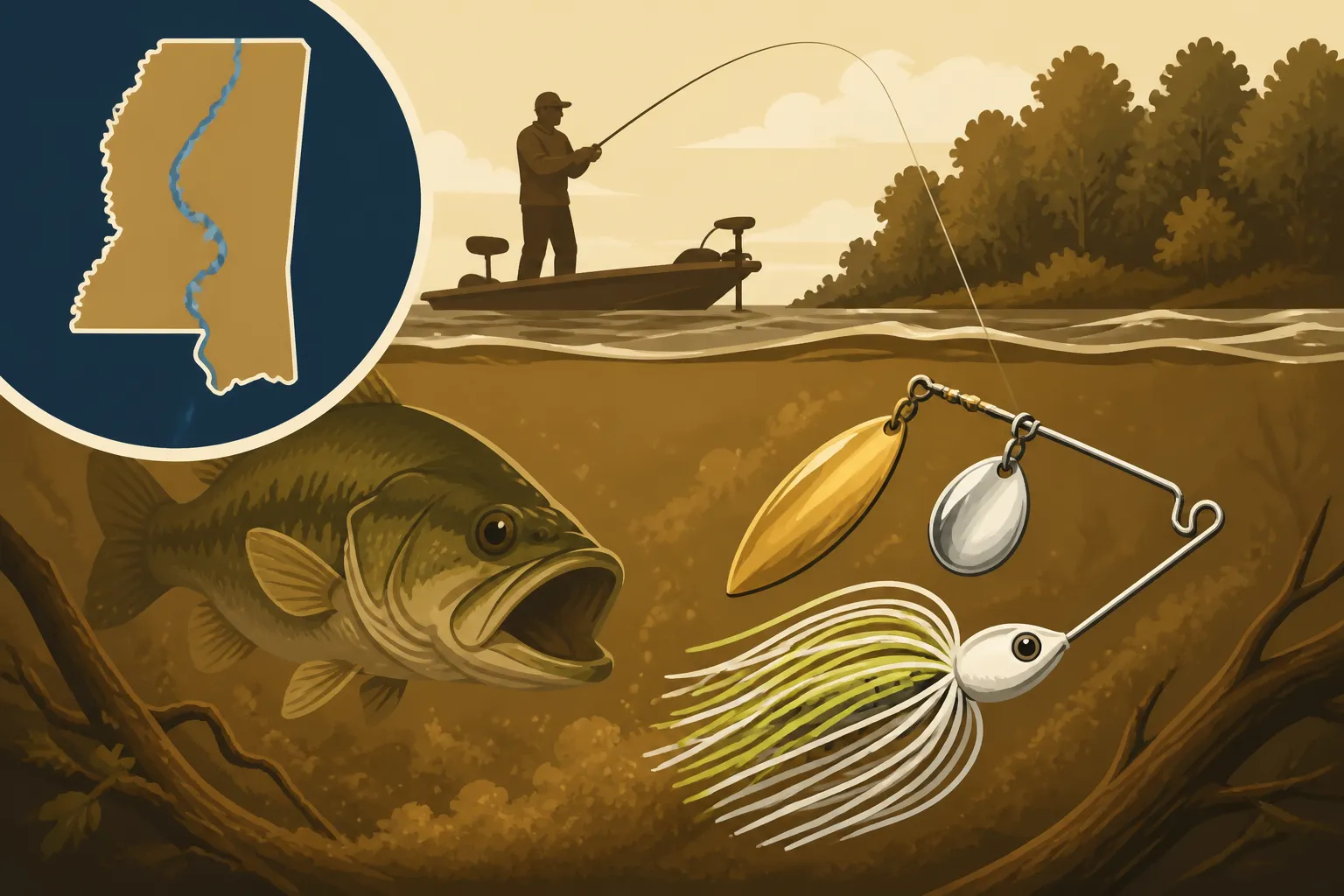
When visibility is low, your spinnerbait's blades need to work overtime. Forget the subtle shimmer of silver or nickel blades; in muddy water, they simply disappear. Instead, you want blades that create maximum visual contrast and vibration. Gold or copper blades are excellent choices because they offer a bolder flash that stands out in stained water, reflecting ambient light more effectively. Beyond that, consider painted blades in bright, opaque colors like chartreuse, orange, or even red. These create a strong silhouette and pop of color that can be seen from a greater distance by fish navigating the murk.
Blade configuration is equally important. For supreme vibration, the Colorado blade is your best friend. Its round, cupped shape creates a heavy thump and slower fall, allowing fish to hone in on it. A double Colorado blade setup delivers the ultimate thumping action, which is often irresistible in muddy conditions. If you're fishing in slightly less turbid water or want a bit more flash with the thump, a tandem setup combining a Colorado blade with a Willowleaf blade can be effective. The Colorado provides the vibration, and the Willowleaf adds a bit of flash and a slightly faster retrieve speed. You can find a fantastic selection of these specialized spinnerbaits, often with various blade configurations, on platforms like Amazon, making it easy to experiment and find what works best for your local conditions.
Remember, the goal is to create a disturbance that fish can't ignore. The larger the blade, generally the more vibration and displacement it creates. Don't be afraid to go with larger blades than you might typically use in clearer water – sometimes a bigger profile is exactly what's needed to trigger a strike.
Skirt Colors and Trailer Considerations
Just like with blades, skirt colors need to provide maximum contrast and appeal in muddy water. Forget natural baitfish patterns; in low visibility, fish aren't discerning critics. Your best bets are darker, more opaque colors and bold, contrasting combinations. Black and blue is a classic muddy water combination because it creates a strong silhouette against any available light. Black and chartreuse is another powerhouse, offering a vibrant pop that's highly visible. Junebug, a dark purple with flakes, also performs exceptionally well. Sometimes, a pure white or bright chartreuse skirt can work wonders, offering a stark contrast that stands out even in the murkiest conditions. The key is to provide a noticeable profile and color that fish can detect from afar.
Adding a trailer to your spinnerbait is almost mandatory in muddy water. A soft plastic trailer not only adds bulk to your presentation, making it a bigger, more appealing target, but it also enhances the action and vibration. Paddle-tail swimbaits or grub tails in contrasting colors (like a chartreuse trailer on a black and blue skirt) will kick and wag, sending out additional sensory signals. The extra movement can be the difference between a curious glance and a committed strike. Many anglers also infuse their trailers with scent or apply scent sprays directly to them, which offers yet another layer of attraction for fish relying on their olfactory senses.
When choosing a trailer, think about how it complements your skirt. A long, flowing trailer can also slow down your spinnerbait's fall, keeping it in the strike zone longer. This subtle difference can be crucial when fish are moving slower and need more time to locate and commit to a bait.
Weight and Vibration for Low Visibility
The weight of your spinnerbait is a critical factor in muddy water, influencing both how deep you can fish it and how effectively you can feel its action. In general, you'll want to lean towards heavier spinnerbaits than you might typically use. A heavier bait allows you to cast further, penetrate through thicker cover, and most importantly, maintain contact with the bottom or desired depth more easily. When you can't see, feeling your lure's action and any subtle bottom contact becomes your primary source of information.
Beyond just reaching depth, the weight also plays a role in vibration. While blade configuration is the primary driver of thump, a heavier bait allows you to slow down your retrieve significantly without the lure rising too high in the water column. A slower retrieve ensures the blades have ample time to spin and displace water, creating that crucial vibration that attracts fish in low-visibility conditions. It gives the fish more time to locate the bait and decide to strike.
Experimentation with weight is key. In shallow, extremely muddy creeks, a 1/4 ounce or 3/8 ounce might be perfect. But in deeper, stained reservoirs like Ross Barnett Reservoir, you might need a 1/2 ounce or even 3/4 ounce to effectively probe submerged timber or creek channels. The heavier weight also helps the spinnerbait "plow" through any lighter debris or suspended sediment, keeping your blades spinning cleanly and maximizing that irresistible thump. This attention to weight helps ensure your bait is not only seen but also felt by fish that are otherwise relying on their lateral lines.
Mastering Spinnerbait Presentation in Muddy Water
Having the right spinnerbait is only half the battle; knowing how to present it effectively in muddy water is the other. Your retrieve, target areas, and even your approach need to be fine-tuned to appeal to fish that can't clearly see their next meal.
Retrieval Speeds and Depths
One of the biggest mistakes anglers make in muddy water is retrieving their spinnerbaits too fast. In clear water, a quick retrieve can generate reaction strikes, but in the murk, fish simply don't have enough time to locate, track, and commit to a fast-moving bait. Instead, slow down. A "slow-roll" retrieve is often the most effective technique. This involves reeling just fast enough to keep your blades turning and creating vibration, often at a pace where the spinnerbait is barely moving above the bottom or through cover.
The depth at which you retrieve is also crucial. Fish in muddy water often position themselves very close to cover or the bottom. They’re less likely to chase a bait far out of their immediate strike zone. Therefore, try to keep your spinnerbait in the most productive depth range for as long as possible. If you're fishing a shallow flat, keep it just above the grass. If you're working a drop-off, try to tick the bottom or the edge of the structure. Vary your retrieve, too – short pauses, slight twitches, or a sudden burst of speed followed by a slowdown can often trigger a strike from a hesitant fish. Our guide on Best Time of Day to Catch Bass might highlight how retrieve speeds change with light conditions, but in muddy water, the focus remains on generating consistent vibration at a detectable speed.
Don't be afraid to experiment. Sometimes a slightly faster retrieve can be effective if the water isn't too muddy and fish are aggressive, especially when trying to elicit a reaction strike from bass hiding in shallow cover. However, always start slow and gradually increase speed until you find what the fish prefer on that particular day.
Target Areas and Structure Focus
With visibility compromised, fish in muddy water gravitate towards anything that offers cover, a current break, or an ambush point. This narrows down your target areas significantly, making your casting more precise and your efforts more concentrated. Look for visible structure first: fallen trees (laydowns), dock pilings, rock formations, and dense patches of emergent vegetation (like lily pads or cattails). These features provide shade, protection, and prime real estate for predators to hide and wait for unsuspecting prey.
Beyond visible cover, think about submerged structure that creates current breaks or depth changes. Creek channels, subtle humps, and even old roadbeds can be magnets for fish in turbid conditions. These areas funnel baitfish and provide distinct edges that fish can relate to. Pay particular attention to the shallowest banks that have access to deeper water nearby – often, fish will push up into these protected shallows, especially after a rain when new food sources might be washing in. Our Best Structure to Fish for Bass in a Reservoir guide offers more insights into identifying these key areas in larger bodies of water.
When you find these target areas, don't just make one cast and move on. Work the area thoroughly from different angles. If there's a laydown, cast past it and retrieve your spinnerbait right through the branches. If it's a dock, try running your bait along each side and underneath. Fan casting around a promising piece of structure ensures you cover all potential hiding spots and gives fish multiple opportunities to detect your lure's presence.
Overcoming Common Muddy Water Mistakes
Fishing in muddy water comes with its own set of pitfalls that can quickly lead to a frustrating day. Being aware of these common mistakes can save you a lot of grief and significantly increase your chances of success. Firstly, as mentioned, fishing too fast is a cardinal sin. Patience is your best friend. A slow, methodical retrieve allows fish time to sense your spinnerbait and react. Rushing through an area means your lure is likely passing by fish before they even know it's there.
Another common error is using the wrong colors or blade configurations. Silver blades and natural skirt patterns might look great in clear water, but they offer little to no contrast or vibration in the murk. Stick to bold, contrasting colors and aggressive thumping blades. Similarly, neglecting the power of scent is a missed opportunity. Fish in muddy water rely heavily on their sense of smell, so adding a scent to your spinnerbait's skirt or trailer can give you a significant edge.
Lastly, giving up too soon is perhaps the biggest mistake of all. It's easy to get discouraged when you're not seeing bites or feel like you're casting into a void. But muddy water fishing often requires persistence. Keep working those prime target areas, vary your retrieve slightly, and trust your chosen bait. Remember, fish are still there, they're just harder to locate. A shift in strategy and a dose of determination can turn a slow morning into an exciting afternoon. For a broader look at bass fishing, explore our Best Lures for Largemouth Bass article, where spinnerbaits are certainly highlighted as versatile options.
Advanced Tips and Gear for Muddy Water Success
To truly excel at fishing a spinnerbait in muddy water, it pays to refine your gear choices and incorporate some advanced tactics. The right rod, reel, and line can significantly enhance your feel and control, while extra sensory appeals can clinch a strike.
Rod, Reel, and Line for Heavy Cover
When you're slinging a spinnerbait into heavy cover or through thick vegetation in muddy water, your rod, reel, and line become an extension of your senses. A medium-heavy to heavy power baitcasting rod, typically 6'6" to 7'6" in length, is ideal. This kind of rod offers the backbone needed to cast heavier spinnerbaits accurately and, more importantly, to quickly pull a strong bass out of dense cover once it bites. The sensitivity of a good graphite rod will also help you detect subtle bumps or changes in vibration when you can't see anything.
Pair this rod with a reliable baitcasting reel that has a sturdy retrieve ratio, somewhere in the 6.1:1 to 7.1:1 range. This allows for both slow, controlled retrieves and the power to quickly reel in slack and set the hook. Smooth drag is also essential, especially when battling a fish in snaggy environments. When it comes to line, you have a couple of solid options. Fluorocarbon line in 15-20 pound test offers good abrasion resistance and relatively low stretch for better feel. However, many anglers prefer braided line in 30-50 pound test for its incredible strength, zero stretch (which greatly enhances sensitivity in murky water), and superior abrasion resistance against wood and rocks. While it lacks invisibility, the murky water negates this drawback, making braid a fantastic choice for dirty water spinnerbaiting. For a deeper dive into gear, check out our Choosing the Right Rod and Reel for Mississippi Fishing guide. You can find excellent quality rods, reels, and lines specifically designed for these demanding conditions on sites like Amazon.
The Importance of Scent and Sound
In conditions where sight is severely limited, appealing to a fish's other senses becomes paramount. Scent is a game-changer in muddy water. Many companies offer liquid scents, gels, or sprays that you can apply directly to your spinnerbait's skirt and trailer. These products, often fish-attractant formulas, release a concentrated odor trail that fish can follow, guiding them to your lure even if they can't see it. Favorites often include garlic, shad, or crawfish scents. Reapply frequently, especially if you're making a lot of casts or getting hung up.
Beyond the natural vibration of the blades, adding extra sound can further enhance your spinnerbait's appeal. Some spinnerbaits come with internal rattles built into the head or skirt. If yours doesn't, you can often add small glass or plastic rattles to the hook shank or trailer. These rattles create an additional auditory cue that can draw fish in from a greater distance, particularly in truly opaque conditions. The combination of strong vibration from the blades, a potent scent trail, and a distinct rattling sound creates an irresistible package that can make fish strike purely out of curiosity or territorial instinct, even when they're not actively feeding.
Seasonal Adjustments for Turbid Conditions
Muddy water can occur at any time of year, and your spinnerbait approach might need slight seasonal adjustments to maximize its effectiveness.
In spring, particularly during or after the spawn, muddy water can be fantastic. Bass are often shallow, guarding beds or recovering, and are highly territorial. A slow-rolled spinnerbait in muddy coves or creek arms can trigger aggressive strikes. Fish are already in shallow cover, making them easier to target. Our Mississippi Spring Fishing Guide offers more insights into this exciting season.
During the summer, especially after pop-up thunderstorms, fresh mud can flush into bays and shallow pockets. Fish will often follow this influx of cooler, oxygenated water and baitfish. Focus on the edges of the newly turbid areas or where current breaks occur. You might need to retrieve slightly faster if the water is warmer and fish are more active, but still prioritize vibration and contrast. Learn more about managing warm water in our How to Catch Bass in Hot Summer Weather article.
Fall fishing in muddy water often revolves around baitfish migration. As temperatures drop, baitfish schools move into creeks and shallower areas, and predator fish follow. If a rain front muddies up these zones, a spinnerbait can be deadly. Fish are often actively feeding to bulk up for winter, so they might be more inclined to chase.
Winter muddy water can be the toughest, as fish become more lethargic. Focus on slightly deeper, less affected areas if possible. Slow-rolling a heavy spinnerbait along channel swings or deep-water bends with a very deliberate, almost crawling retrieve can coax bites. The key here is extreme patience and keeping the bait in the strike zone for extended periods.
No matter the season, remember that muddy water fishing is about making your offering impossible to ignore. Adapt your approach, trust your senses, and let that spinnerbait do its thumping work!
| Factor | Slightly Stained Water (Coffee Color) | Moderately Muddy Water (Chocolate Milk) | Extremely Turbid Water (Thick Mud) |
|---|---|---|---|
| Blade Color | Gold, Copper, Chartreuse | Gold, Chartreuse, Orange, Painted Blades | Painted Blades (Chartreuse, Red, White) |
| Blade Type | Tandem (Colorado/Willow), Double Colorado | Double Colorado, Large Colorado | Oversized Double Colorado |
| Skirt Color | Black & Blue, Junebug, Chartreuse & White | Black & Blue, Black & Chartreuse, Junebug, White | Solid Black, Solid Chartreuse, Solid White |
| Trailer | Paddle-tail, Grub (matching/contrasting) | Paddle-tail, Grub (contrasting), Scented | Large Paddle-tail, Scented, Bulkier |
| Weight | 3/8 oz – 1/2 oz | 1/2 oz – 3/4 oz | 3/4 oz – 1 oz+ |
| Retrieve Speed | Slow to Medium Slow | Very Slow | Extremely Slow, Bottom-bouncing |
| Scent | Recommended | Highly Recommended | Essential |
| Rattles | Optional, but helpful | Recommended | Highly Recommended |
Disclaimer
The information provided in this guide is for general informational purposes only and is not intended as legal advice. Fishing regulations, license requirements, and best practices can change. Always consult the latest Mississippi Department of Wildlife, Fisheries, and Parks (MDWFP) regulations before fishing. Adherence to all local, state, and federal laws is the sole responsibility of the angler.