Arkabutla Lake Tailwater Fishing Access
There’s a unique thrill that comes with discovering a truly productive fishing spot, especially one that isn't the main draw everyone flocks to. Many anglers in Mississippi spend their days on the big reservoirs, which are fantastic, but often overlook the incredible opportunities lurking just below the surface in the tailwater sections. If you're tired of crowded boat ramps and want to tap into a fishery often dictated by powerful currents and abundant forage, then the Arkabutla Lake tailwater fishing access is a secret weapon you absolutely need to explore. This guide will walk you through everything you need to know to successfully navigate and fish this dynamic environment.
Understanding Arkabutla Lake's Tailwater Environment
The tailwater below Arkabutla Lake's dam is a distinctly different environment from the main lake itself. The constant flow of water, regulated by the dam releases, creates a highly oxygenated, current-rich habitat that draws in a diverse array of fish species. This isn't your typical still-water pond or quiet cove; it's a vibrant, ever-changing riverine system that demands a specific approach but offers immense rewards.
What Makes Tailwaters Unique for Fishing?
Tailwaters, like the stretch below Arkabutla Dam, are truly unique fishing ecosystems that stand apart from the main lake bodies they drain. The primary factor is the consistent, often powerful, water flow originating from the dam's release gates. This flow brings with it a surge of oxygen, which is a major draw for fish, particularly during warmer months when still-water lakes might experience lower oxygen levels in their deeper sections. The constant current also acts as a natural conveyor belt, carrying dislodged baitfish, insects, and other food sources downstream, creating a continuous buffet for predatory fish.
Think of it like this: the dam acts as a giant filter and feeder. As water rushes through, it churns up nutrients and pushes smaller organisms and baitfish that might have been hiding in the main lake's depths. This abundance of moving food attracts larger game fish looking for an easy meal without having to expend too much energy in the current. Furthermore, the water released from the dam typically comes from the cooler, deeper parts of the lake, meaning the tailwater often maintains a more stable, cooler temperature than the surface waters of the reservoir, even in the scorching Mississippi summer. This temperature stability is another major attractant for many cold-blooded fish species, helping them stay active and comfortable.
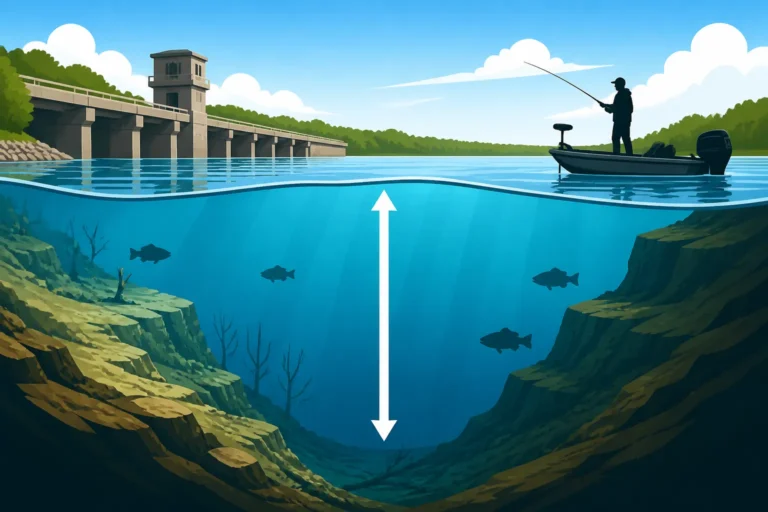
The constant current also shapes the river bottom, creating scour holes, gravel bars, and current breaks that provide perfect ambush points and resting areas for fish. Learning to identify these subtle changes in the flow and structure is paramount to success. It's a challenging environment for sure, but the rewards—often feisty, current-adapted fish—are well worth the effort.
Key Species Found Below Arkabutla Dam
The dynamic environment of the Arkabutla Lake tailwater supports a robust population of several popular game fish, each with its own preferred habitat within the current. Knowing what to expect and what to target will help you fine-tune your approach and increase your chances of a successful outing. Many anglers who are familiar with the main body of water in our comprehensive Arkabutla Lake Fishing Guide are often surprised by the diversity and vigor of the fish found below the dam.
One of the most sought-after species here, especially in late winter and early spring, is the white bass. These hard-fighting fish make incredible spawning runs up the Coldwater River, which is fed by the Arkabutla tailwater. During these runs, you can often find schools of white bass stacked up in eddies and current breaks, providing fast and furious action. They're aggressive and respond well to small jigs and spinnerbaits.
Beyond the seasonal white bass frenzy, the tailwater is a year-round hotspot for catfish. You'll find channel catfish, blue catfish, and even the occasional flathead lurking in the deeper holes and along the bottom. The constant current delivers a steady supply of food, making these fish opportunistic and often quite large. For specific techniques, our Catfish Fishing Techniques guide can offer more insights. Additionally, crappie often drop out of the main lake into the tailwater, particularly during cooler months, seeking areas of reduced current around submerged structure. Though not as prevalent as in the main lake, don't be surprised to hook into some respectable crappie. Other species like freshwater drum, various sunfish, and even hybrid striped bass (depending on stocking and migration patterns) can also be encountered, making every cast a potential surprise.
Navigating Arkabutla Lake Tailwater Access Points
Getting to the fish is half the battle, and knowing the specific public access points for the Arkabutla Lake tailwater is crucial. This isn't a massive, sprawling area like the main lake, so understanding the layout and available facilities will make your trip much smoother.
Public Access Areas and Boat Ramps
While Arkabutla Lake itself boasts numerous access points, the tailwater area below the dam primarily offers access to the Coldwater River, which is the outflow. One of the most common and easily accessible spots for bank anglers and those with smaller boats or kayaks is often referred to simply as the "Dam Site" area or the Coldwater River access point. You'll typically find parking available near the dam spillway, which allows for bank fishing along certain stretches of the river. It’s imperative to respect any posted signs regarding restricted areas near the dam structure itself, as these are for public safety and dam operations.
For boat anglers looking to explore further downstream, there may be unimproved or primitive access points along the Coldwater River a bit away from the immediate dam area, but reliable, improved boat ramps are fewer and farther between directly below the dam compared to the main lake. Anglers often launch at nearby ramps on the Coldwater River itself, which would require a short drive from the dam area, or opt for a kayak or canoe for easier access and maneuverability in the current. Always check local maps and MDWFP resources for the most up-to-date information on boat ramps and public land access. Remember, some areas might be privately owned, so always be mindful of where you're stepping.
Essential Gear for Tailwater Fishing
Fishing in a tailwater environment demands a slightly different approach to gear than what you might use on a calm lake. The constant current, the potential for larger, stronger fish, and the need for precision in your presentation all influence your tackle choices. Having the right tools won't just improve your catch rate, it'll make the experience more enjoyable and safer.
For white bass and crappie in the current, light to medium-light spinning rods (6-7 feet) paired with reels spooled with 6-10 lb test monofilament or braided line are ideal. The longer rod helps with casting distance and managing line in the current. For catfish, you'll want something more substantial: medium-heavy to heavy rods (7-9 feet) with baitcasting or large spinning reels, spooled with 20-50 lb test monofilament or heavy braid. The extra length and backbone are crucial for controlling powerful fish in the flow. Our guide on Choosing the Right Rod and Reel for Mississippi Fishing can give you more general advice, but remember to lean towards slightly heavier gear for tailwaters.
When it comes to lures and bait, jigs are king in current, especially for white bass and crappie. Small leadhead jigs (1/8 to 1/4 oz) with plastic grubs, tubes, or marabou feathers in white, chartreuse, or bright colors are highly effective. Spinnerbaits and small crankbaits that dive to match the depth are also excellent choices. For catfish, traditional baits like chicken liver, cut bait (shad or skipjack), nightcrawlers, and shrimp fished on a Carolina rig or a heavy bottom rig are proven winners. Don't forget heavier sinkers (1/2 oz to 2 oz, or even more depending on current speed) to keep your bait on the bottom. Safety gear, especially if wading or fishing from a small boat, is non-negotiable. A PFD (personal flotation device) is a must, even for strong swimmers, as the current can be unpredictable. Sturdy, non-slip wading boots or shoes are essential for bank anglers due to potentially slippery and uneven terrain.
Strategies for Successful Arkabutta Tailwater Fishing
Fishing the Arkabutla tailwater isn't just about showing up with a rod and reel; it's about understanding the subtle nuances of the river and how fish react to the constant flow. Success here comes down to timing, observation, and proper presentation.
Seasonal Fishing Patterns and Best Times
The Arkabutla tailwater truly shines during specific seasons, though year-round opportunities exist if you know where to look. Understanding these patterns is key to maximizing your success and targeting the species you desire. For a broader overview of fishing throughout the year, our detailed Mississippi Fishing Seasons Calendar can provide context, but here we'll focus on the tailwater specifics.
Spring, particularly late winter through early spring (February to April), is prime time for the white bass run. As water temperatures begin to rise, large schools of white bass move out of Arkabutla Lake and into the Coldwater River tailwater to spawn. This is when the action can be incredibly fast-paced, often referred to as a "run." Anglers flock to these areas, and rightly so, as catching dozens of white bass in a single outing is not uncommon. During this period, focusing on eddies, shallow gravel bars, and the mouths of smaller tributaries entering the Coldwater River can be highly productive.
As spring transitions into summer, the white bass scatter, but the catfish action heats up considerably. Channel catfish, blue catfish, and flatheads become very active in the warmer water, readily taking cut bait or live bait. Summer is also a good time for some incidental bass and crappie, especially in the deeper, cooler holes or around significant current breaks. Fall sees fish becoming more aggressive as they feed up for winter, and while not as defined as the spring white bass run, you can find good opportunities for crappie and bass moving into the tailwater from the main lake. Winter can be challenging but offers excellent chances for big catfish in deep holes, and sometimes a surprising crappie bite in slack water areas. The impact of water releases from the dam is critical; higher flows can mean more active fish and better fishing, but also more challenging conditions for anglers, especially those on the bank or in smaller vessels.
Reading the Water and Current
One of the biggest differences between lake fishing and tailwater fishing is the constant presence of current. Learning to "read the water" – understanding how the current moves and how fish position themselves within it – is perhaps the most vital skill you can develop for success at Arkabutla Lake's tailwater. This ability transforms a frustrating day of tangled lines into a productive angling adventure.
Fish, especially predatory fish, are masters of energy conservation. They won't fight the main current all day if they don't have to. Instead, they position themselves in "current breaks" or "seams" where the water flow is significantly slower, allowing them to rest while still being close enough to ambush prey swept downstream by the faster water. Look for visual cues like eddies, which are circular currents formed behind obstructions, or the distinct lines where fast and slow water meet. Submerged rocks, fallen trees, bridge pilings, or even subtle changes in the riverbed can create these critical current breaks. Identifying these spots is paramount.
Once you've located a promising current break, the next step is proper presentation. Instead of casting directly into the fast current, cast upstream of your target area and allow your bait or lure to drift naturally with the current into the slack water or seam. This mimics the natural movement of forage and makes your offering appear irresistible to waiting fish. For bottom-dwelling species like catfish, ensure your weight is heavy enough to hold your bait in place without being swept away, but not so heavy that it's completely stuck. Experiment with different weights and rigging styles. If you're struggling to find fish, sometimes connecting with a local guide through platforms like FishingBooker can offer invaluable insights into real-time tailwater conditions and patterns, helping you understand how best to read the water on a particular day. Learning this skill takes practice, but once you master it, fishing the Arkabutla tailwater will become incredibly rewarding.
Important Regulations and Responsible Angling
Before you even make your first cast below the Arkabutla Dam, it's absolutely crucial to be aware of the specific rules and regulations that govern fishing in Mississippi, and particularly in tailwater areas. Ignorance of the law is no excuse, and responsible angling ensures these fantastic resources remain viable for generations to come.
Understanding Specific Tailwater Regulations
Fishing regulations in Mississippi are set by the Department of Wildlife, Fisheries, and Parks (MDWFP), and they are not always uniform across all bodies of water. While many statewide rules apply, certain lakes, rivers, or specific tailwater sections might have unique size limits, creel limits, or special restrictions. It's not uncommon for tailwaters to have different rules regarding specific species or methods, especially if they are part of a special management area or a known spawning ground. This is why our comprehensive guide, Mississippi Fishing Regulations Explained, is a must-read for any angler.
For the Arkabutla Lake tailwater, it's essential to consult the most current MDWFP fishing regulations pamphlet or their website before your trip. Pay close attention to sections concerning the Coldwater River and any specific mentions of Arkabutla Lake's spillway or outflow. This includes daily creel limits (the number of fish you can keep), size limits (minimum or sometimes maximum lengths), and any seasonal closures or restrictions on specific gear types. For example, during peak white bass runs, there might be specific regulations regarding the number of rods allowed or restrictions on snagging. And, of course, you'll need a valid Mississippi Fishing License Guide before you even think about dropping a line. Don't forget, failure to adhere to these rules can result in significant fines and penalties, overshadowing any joy you might get from a successful catch.
Practicing Safety and Conservation
Fishing the Arkabutla tailwater can be an exhilarating experience, but the dynamic nature of the environment also necessitates a strong focus on safety and conservation. As anglers, we are stewards of these natural resources, and it's our responsibility to protect them and ensure our own well-being.
Safety in a tailwater environment starts with acknowledging the power of moving water. Currents can be strong and unpredictable, especially after significant dam releases. Always wear a PFD (Personal Flotation Device) if you're in a boat or kayak, and consider one even if you're wading or bank fishing in slippery, fast-moving areas. Sturdy, non-slip footwear is critical for bank anglers, as the ground can be uneven, muddy, or covered in slick algae-covered rocks. Be aware of your surroundings, especially if you're alone, and let someone know your float plan or where you intend to fish. Unexpected increases in water flow can happen, so always be prepared to move to higher ground or secure your vessel.
On the conservation front, practicing "Leave No Trace" principles is paramount. Pack out everything you pack in, including fishing line, bait containers, and any other trash. If you're harvesting fish, only keep what you'll eat and adhere strictly to all Mississippi Fishing Creel and Size Limits. Handle any fish you intend to release with care, minimizing their time out of water and ensuring a healthy release. Consider using barbless hooks for catch-and-release fishing to reduce harm. By prioritizing both personal safety and the health of the fishery, you contribute to a sustainable and enjoyable angling experience for everyone.
| Species Targeted | Preferred Baits/Lures | Best Seasons | Key Tailwater Locations |
|---|---|---|---|
| White Bass | Small jigs (white/chartreuse), inline spinners, small crankbaits | Early Spring (Feb-Apr) | Eddies, gravel bars, tributary mouths |
| Channel Catfish | Chicken liver, nightcrawlers, cut bait | Spring, Summer, Fall | Deep holes, current seams, brush piles |
| Blue Catfish | Cut shad, skipjack, prepared baits | Year-round (Summer/Fall peak) | Main channel, deep scour holes, near structure |
| Crappie | Small jigs (minnow imitations), live minnows | Fall, Winter, Early Spring | Slack water, submerged timber, slower current areas |
| Freshwater Drum | Worms, crawfish, jigs | Spring, Summer, Fall | Bottom of deep holes, slower current areas |
Disclaimer
Please remember that fishing conditions, regulations, and access points can change. Always consult the latest Mississippi Department of Wildlife, Fisheries, and Parks (MDWFP) regulations before your trip. This guide is for informational purposes only and does not guarantee fishing success or cover every possible scenario. Fish responsibly and safely.