How to Fish Live Shrimp Under a Popping Cork
There's nothing quite like the thrill of seeing that bright popping cork disappear under the surface, signaling a fish has taken your bait. But let's be honest, for newcomers to saltwater fishing, or even those just trying out this specific technique, getting started with live shrimp under a popping cork can feel a little daunting. The good news is, it's one of the most consistently effective methods for catching a variety of prized species along Mississippi's beautiful Gulf Coast. This comprehensive guide will walk you through everything, from why this rig works so well to setting it up perfectly and knowing exactly how to fish it for maximum success.
Why the Popping Cork and Live Shrimp Combo is a Coastal Powerhouse
For generations, anglers along the Gulf Coast have relied on the simple yet deadly combination of a popping cork and live shrimp. It's not just tradition; there's real science and fish psychology behind its effectiveness. This rig capitalizes on a fish's natural instincts, drawing them in and presenting an irresistible meal.
Mimicking Nature's Distress Signal
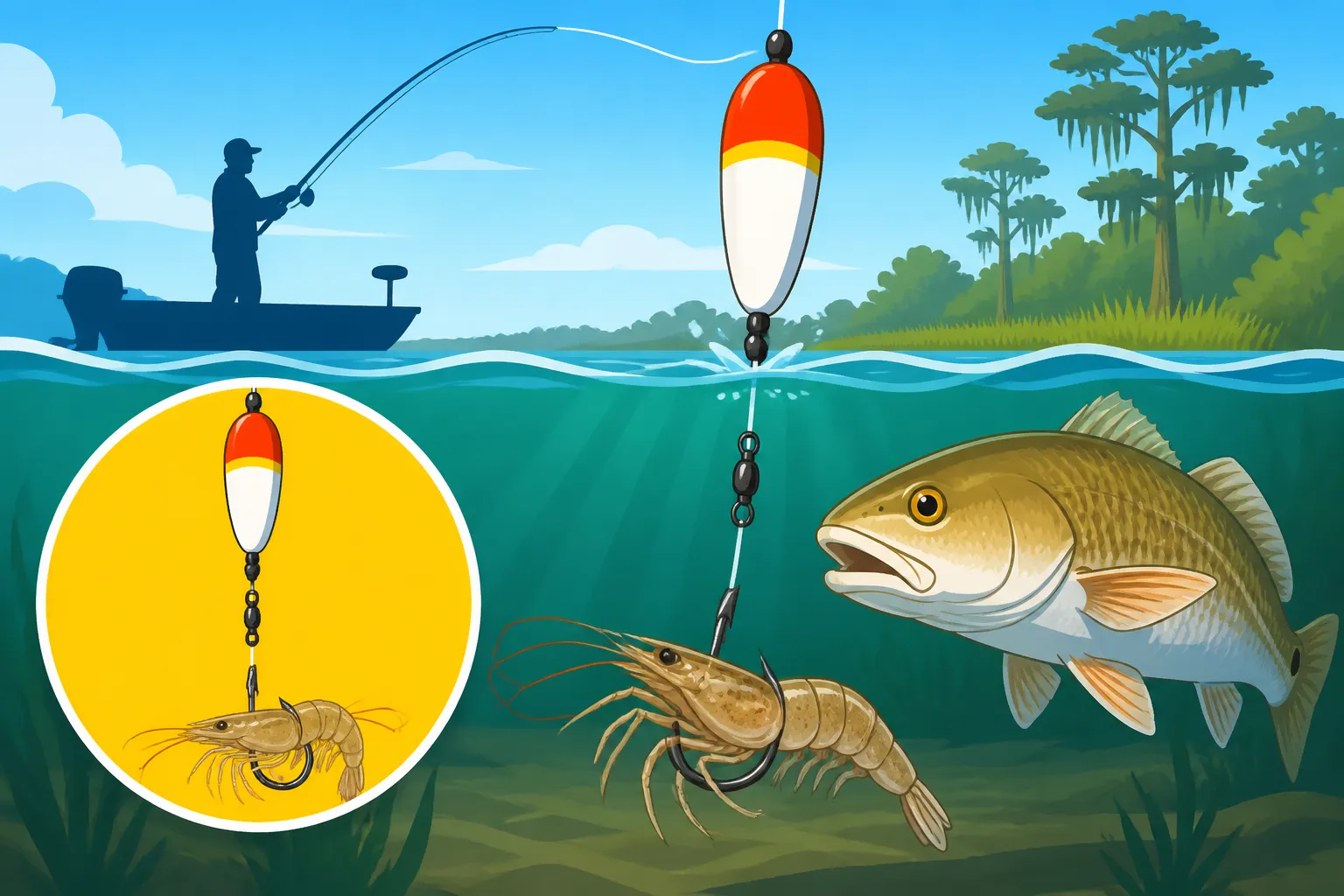
The genius of the popping cork lies in its ability to simulate the sounds and commotion of distressed baitfish on the surface. When you give your rod a sharp twitch, the concave face of the popping cork slaps the water, creating a distinct "pop" or "chug." This sound travels through the water, mimicking the noises small fish make when fleeing predators or shrimp flicking their tails in alarm. It's an auditory beacon that instantly grabs the attention of nearby predatory fish, making them believe there's an easy meal struggling at the surface. Below the cork, your live shrimp, hooked lightly, is doing its own dance, adding visual appeal to the distress calls. It’s a full sensory assault that fish simply can't ignore, often leading to aggressive strikes.
Targeting Top Mississippi Inshore Species
This versatile setup is a true multi-species slayer, particularly for the most sought-after game fish in Mississippi's inshore waters. Speckled trout, with their distinctive spots and aggressive nature, absolutely adore a live shrimp under a popping cork, especially when they're feeding actively in shallow grass flats or around oyster beds. Redfish, those powerful bronzed bullies of the marsh, are also notorious for pouncing on this rig, especially when it's worked around points, shorelines, or submerged structure. Beyond these two superstars, you'll find that flounder, with their ambush predator tactics, will often grab a shrimp that drifts just past their hiding spot. Even smaller species like croakers, white trout, and various panfish can't resist a lively shrimp. If you're looking to consistently catch a variety of fish on the Gulf Coast, mastering this technique is non-negotiable. It's a fantastic way to experience some incredible Speckled Trout Fishing on the Mississippi Coast and fantastic Redfish Fishing on the Mississippi Coast.
Essential Gear for Your Popping Cork Rig
Having the right tools for the job makes all the difference, and fishing with a popping cork and live shrimp is no exception. While it's a relatively simple setup, choosing the correct components will enhance your experience and increase your chances of success. You don't need to break the bank, but investing in quality gear tailored to inshore saltwater fishing will pay dividends.
Selecting the Right Rod, Reel, and Line
For this technique, you want a rod and reel combo that offers a good balance of casting distance, sensitivity, and fighting power.
- Rods: A medium to medium-heavy spinning rod, typically in the 7 to 7-and-a-half-foot range, is ideal. This length provides excellent leverage for casting popping corks, which can be a bit awkward, and gives you the backbone needed to fight strong redfish and speckled trout. A fast or extra-fast action tip is beneficial because it allows for quick, sharp pops of the cork and better feel for subtle bites, even when the cork isn't fully submerged.
- Reels: A 2500 to 3000 size spinning reel is a perfect match for these rods. These reels offer a good retrieve rate, smooth drag, and enough line capacity for most inshore battles. Brands like Shimano, Daiwa, and Penn are popular choices among Gulf Coast anglers for their durability in saltwater environments. If you're just starting, you can find reliable combos on platforms like Amazon that will get you out on the water without a huge investment.
- Line: For your main line, 10 to 15-pound braided line is highly recommended. Braid offers superior sensitivity, minimal stretch, and excellent casting distance, which is crucial for covering more water. Its thin diameter for its breaking strength also helps cut through wind. However, because braid is highly visible and has no stretch, you'll definitely want to tie on a fluorocarbon leader. A 20 to 30-pound fluorocarbon leader, about 2-3 feet long, is a good starting point. Fluorocarbon is nearly invisible underwater and offers better abrasion resistance, protecting your main line from oyster shells or fish teeth. Learning Best Knots for Freshwater Fishing will translate well here, as a good double uni or FG knot is essential for connecting your braid to your fluorocarbon leader.
Choosing Your Popping Cork and Leader
The cork itself is a critical component, and there's a surprising variety out there.
- Popping Cork Styles: The most common types you'll encounter are rattling corks and non-rattling (Chugger style) corks. Rattling corks have small beads or weights inside that create additional noise when popped, which can be fantastic for drawing attention in stained or deeper water. Non-rattling corks still make a distinct "pop" but are generally preferred in clearer, shallower water where fish might be warier of excessive noise. Brands like Cajun Thunder, Four Horsemen, and Comal tackle offer excellent popping corks. Some even feature weights on the bottom, allowing for longer casts and keeping the cork upright more effectively.
- Leader Material and Length: The leader material from your popping cork down to your hook should also be fluorocarbon, typically 15 to 25-pound test. The length of this leader is absolutely crucial and will vary depending on the depth of the water you're fishing. A general rule of thumb is to set your leader length so that your shrimp swims just above the bottom, or just above any grass beds or structure. In 3 feet of water, a 2-foot leader might be perfect. In 6 feet, you might go with 4 feet. The goal is to present the shrimp naturally without dragging the bottom, but close enough to entice fish feeding near the substrate.
Hooking Up: Hooks and Swivels
The final pieces of the puzzle are your terminal tackle.
- Hooks: When fishing with live shrimp, a small, sharp hook is paramount to keep the shrimp lively and to ensure good hooksets. A 1/0 or 2/0 circle hook or Kahle hook is generally preferred. Circle hooks are excellent because they typically hook the fish in the corner of the mouth, making for easy releases and preventing gut-hooking. If you prefer to feel the bite more aggressively, a J-hook in the same size range can work, but be mindful of setting the hook too hard, which can rip through the shrimp. Ensure your hooks are made from high-quality, corrosion-resistant materials suitable for saltwater.
- Swivels: While not strictly necessary for every setup, a small barrel swivel can be a useful addition, particularly between your main braided line and your fluorocarbon leader coming off the cork. This helps reduce line twist, which can be a real headache, especially when casting and retrieving frequently. You can also use a small swivel to attach your leader directly to the bottom of the popping cork. For optimal rigging, consider picking up a selection of swivels from an online retailer like Amazon to have various sizes on hand.
| Component | Recommended Size/Type | Purpose |
|---|---|---|
| Rod | 7-7.5 ft, Medium-Heavy, Fast Action Spinning | Casting, fighting fish, sensitivity |
| Reel | 2500-3000 Series Spinning | Line capacity, smooth drag, retrieve |
| Main Line | 10-15 lb Braided Line | Sensitivity, casting distance, low stretch |
| Leader (Main) | 20-30 lb Fluorocarbon (2-3 ft) | Low visibility, abrasion resistance |
| Popping Cork | Rattling or Chugger style (e.g., Cajun Thunder) | Attract fish, suspend bait |
| Leader (Corka-hook) | 15-25 lb Fluorocarbon (adjustable length) | Connect cork to hook, low visibility |
| Hook | 1/0 – 2/0 Circle Hook or Kahle Hook | Secure live shrimp, good hooksets, easy release |
| Swivel | Small Barrel Swivel (optional, between main line & leader) | Reduce line twist |
Step-by-Step Rigging Your Live Shrimp Under a Popping Cork
Okay, you've got all your gear. Now comes the moment of truth: putting it all together. Don't worry, it's simpler than it sounds, and once you do it a few times, it'll become second nature. The key is ensuring everything is tied securely and your shrimp is presented as naturally as possible.
Assembling the Components
Let's start from your rod tip and work our way down to the shrimp.
- Tie Your Main Line to Your Leader: First, take your braided main line and tie it to your 20-30 pound fluorocarbon leader. A strong, reliable knot like an FG knot or a double uni knot is essential here. This is the foundation of your rig, so make sure it's snug and trim any tag ends.
- Attach the Popping Cork: Now, slide your popping cork onto your fluorocarbon leader. Most popping corks have a wire through the center with loops at each end. You'll thread your leader through one of these loops and tie it securely with a Palomar knot or improved clinch knot. Ensure the cork is oriented correctly – the concave or cupped end should face your rod tip, as this is the part that creates the "pop" when pulled.
- Tie on Your Bottom Leader: From the other end of the popping cork (the end facing away from your rod tip), you'll tie on your lighter, 15-25 pound fluorocarbon leader. This is the "cork-to-hook" leader. The length, as we discussed, is crucial and depends on the depth you're fishing. Start with about 1.5 to 2 feet and adjust as needed. You'll tie this leader to the bottom loop of your popping cork with another strong knot.
- Attach the Hook: Finally, tie your 1/0 or 2/0 circle or Kahle hook to the very end of this bottom leader. Again, a Palomar or improved clinch knot will work perfectly. Double-check all your knots for security by giving them a good, firm tug before you even think about putting a shrimp on. There's nothing more frustrating than losing a fish because of a sloppy knot!
Properly Hooking Your Live Shrimp for Maximum Action
This is where many anglers make mistakes, and it can significantly impact how long your shrimp stays alive and how effectively it attracts fish. The goal is to hook the shrimp in a way that allows it to swim naturally and stay alive for as long as possible.
There are generally two preferred methods:
- Through the Horn (or "Head"): This is often the most common and effective method. Gently pick up your shrimp and locate the hard, black spot at the base of its horn (the rostrum) on top of its head. This area is surprisingly durable. Carefully thread your hook through this black spot, ensuring you don't puncture any vital organs or the brain, which would kill the shrimp quickly. The barb of the hook should be exposed. When hooked this way, the shrimp will kick and swim naturally, staying lively for a long time. It also presents a small target for fish to strike, reducing the chances of them just nipping the tail. This method is particularly effective when targeting species like speckled trout that often strike the head of their prey.
- Through the Tail (or "Fan"): If you're having trouble with shrimp survival or if fish are consistently short-striking (nipping the head and missing the hook), you can try hooking the shrimp through the very last segment of its tail, just before the fan. Again, pass the hook through gently, exposing the barb. While this method might not keep the shrimp alive quite as long as hooking through the head, it can be effective for a different presentation. The shrimp will often swim backward, providing a different fleeing action. This method can sometimes reduce the chance of a "gut hook" if you're using J-hooks.
No matter which method you choose, always handle your live shrimp gently. Keep them in a well-aerated livewell or a bucket with a good aerator. A happy, lively shrimp is a productive shrimp!
Mastering the Retrieve and Reading the Bite
You've got your rig set up, your shrimp is twitching, and you're out on the water. Now what? The art of fishing a popping cork isn't just about casting; it's about the cadence of your retrieve and knowing how to interpret what your cork is telling you. This is where the magic really happens and where you can differentiate yourself from other anglers.
The "Pop, Pause, Retrieve" Technique
This technique is a rhythm, almost like a dance, and finding the right tempo for the day is key.
- The Cast: Make a good, accurate cast to your desired fishing zone – perhaps along a grass line, near a oyster bed, or over a submerged shell reef. Let your rig settle in the water.
- The Pop: After your cork and shrimp have settled, give your rod tip a sharp, downward twitch. This should make the cork "pop" or "chug" loudly, creating that irresistible sound. The force of the pop isn't always the same; sometimes a subtle "tick" is all that's needed, while other times a loud, aggressive "smack" will call them in. Experiment to see what the fish prefer.
- The Pause: This is arguably the most critical part of the retrieve. Immediately after the pop, let your rig sit completely still. This pause allows the distressed shrimp to flutter naturally back down to its resting depth, mimicking a stunned baitfish. Most strikes occur during this pause, as fish move in to investigate the commotion and find a seemingly easy meal. The length of your pause should also be varied – sometimes a quick 3-second pause is enough, other times 10-15 seconds might be better.
- The Retrieve: After your pause, slowly reel in any slack line, then repeat the "pop, pause, retrieve" sequence. Your overall retrieve should be slow and deliberate, allowing your shrimp plenty of time in the strike zone. You're not trying to cover water quickly; you're trying to entice a fish with a struggling meal. If you're fishing a strong current, you might simply cast upstream and let the current do most of the work, just giving an occasional pop to attract attention. When fishing on an Inshore Fishing Charters on the Mississippi Coast, your guide will often demonstrate their preferred cadence, which is a great learning opportunity.
Interpreting the Popping Cork's Dance
Your popping cork isn't just a bobber; it's a direct communication line to what's happening beneath the surface. Learning to read its signals is a crucial skill.
- The Vanishing Act: The most obvious bite is when the cork completely disappears beneath the surface. This usually means a fish has grabbed your shrimp and is swimming away. Set the hook with a firm, sweeping motion of your rod tip.
- The Sideways Slide: Sometimes, a fish might pick up the shrimp and move slowly sideways, causing your cork to gently glide across the surface without fully submerging. This is common with redfish, which might "mouth" the bait before fully committing. Resist the urge to set the hook immediately. Wait until the cork begins to move more purposefully or starts to go under, then set the hook.
- The Subtle Dip or Jiggle: Smaller fish or warier speckled trout might just peck at the shrimp, causing the cork to dip slightly or jiggle nervously. Again, patience is key. These lighter bites can indicate a fish is interested but not fully committed. A gentle twitch of the rod might re-engage the shrimp and provoke a more aggressive strike.
- The "No Show": Sometimes, you'll feel a solid tug on your line, but the cork barely moves or doesn't go under. This can happen if a fish grabs the shrimp and swims towards you, creating slack in the line. Always be prepared to reel down quickly and set the hook if you feel any unusual resistance, regardless of what the cork is doing.
Always keep your eye on the cork and be ready to react quickly. Remember, the goal is to impart an irresistible action to your live shrimp, and your popping cork is the conductor of that symphony.
Where and When to Deploy This Technique in Mississippi
One of the great things about fishing a live shrimp under a popping cork is its versatility. While it shines in specific scenarios, understanding the best locations and times to use it in Mississippi will significantly boost your success. It's a method that works beautifully with the dynamics of our coastal ecosystems.
Prime Mississippi Hotspots for Popping Corks
Mississippi's Gulf Coast offers a diverse array of habitats where this technique truly excels. Knowing where to focus your efforts will save you time and increase your chances of finding fish.
- Grass Flats: These expansive underwater meadows are nurseries for baitfish and shrimp, making them prime feeding grounds for predatory species. Cast your popping cork along the edges of grass beds or into potholes (sandy openings within the grass). The grass provides cover for both bait and game fish, and the popping cork will draw them out. Look for areas with a mix of healthy green grass and sandy bottoms in depths from 2 to 5 feet.
- Oyster Reefs and Shell Beds: Oysters and other shells create complex underwater structures that attract a myriad of marine life, from small crabs and shrimp to the game fish that feed on them. Drift or slowly motor over these areas, casting your popping cork around the edges and over the top. The jagged structure also provides current breaks where fish like to ambush prey. These spots are particularly productive for speckled trout.
- Bayous and Estuaries: The calmer, nutrient-rich waters of Mississippi's bayous and estuaries are ideal for this technique, especially during cooler months when fish move into shallower, protected waters. Target points, creek mouths, and areas where marsh grass meets deeper channels. The popping sound echoes well in these confined spaces, drawing fish from surprising distances.
- Pier and Dock Pilings: While often associated with bottom fishing, pier and dock pilings can also hold fish suspended higher in the water column, especially if there's good current. Cast your popping cork tight to the pilings and let the current carry your shrimp naturally. The "pop" can draw fish out from under the structure. You might also find success along the jetties and rocks near places like the Biloxi Fishing Pier, where currents bring baitfish.
- Shallow Spoil Islands and Channels: Man-made spoil islands, often created from dredging, and the adjacent channels can be magnets for fish. Work your popping cork around the drop-offs and ledges, especially on the leeward side of the islands where current is less severe. These areas are excellent for both redfish and trout. For a broader overview of places, check out a Mississippi Gulf Coast Fishing Guide.
Timing Your Attack: Tides, Seasons, and Conditions
Beyond location, understanding the rhythm of the coast – the tides, seasons, and weather – will fine-tune your approach.
- Tides: Tidal movement is paramount for inshore fishing. Moving water generally means feeding fish. The incoming and outgoing tides are typically the most productive, as currents dislodge bait and carry food past hungry predators. Look for baitfish activity during these times. Slack tide (the period of little to no water movement between tides) can be slower, but fish might still be caught by adjusting your presentation to be slower and more deliberate. Understanding How to Read Tide Charts for Gulf Coast Fishing will be invaluable here.
- Seasons:
- Spring (March-May): As water temperatures rise, fish become very active. This is a prime time for popping corks, especially for speckled trout moving into the bays and estuaries to spawn. Redfish are also plentiful.
- Summer (June-August): While the heat can make fishing challenging, early mornings and late evenings are fantastic. Fish often retreat to deeper pockets or shaded areas during the hottest parts of the day. The popping cork still works well, particularly over deeper grass beds or near structure.
- Fall (September-November): Many consider fall the absolute best time for popping cork fishing. The famous "fall run" sees huge schools of baitfish, and game fish feed aggressively to fatten up for winter. Redfish and speckled trout will be abundant in the shallows.
- Winter (December-February): Fish move into deeper bayous and protected canals seeking warmer water. While slower, the popping cork can still be effective on warmer winter days, especially during midday, by slowing down your retrieve and focusing on deep holes.
- Conditions: Overcast days or periods of low light (dawn and dusk) are often highly productive, as fish feel more comfortable feeding in the open. During bright, sunny days, fish might be tighter to cover or in deeper water. While the popping cork is generally effective, avoid fishing in extremely windy conditions where controlling your cast and reading the cork becomes impossible. Always remember to comply with Mississippi Fishing Regulations Explained regarding bag and size limits for specific species.
Troubleshooting Common Popping Cork Challenges
Even the most seasoned anglers run into snags and frustrations. The popping cork rig, while simple, isn't immune to common issues. Knowing how to quickly diagnose and fix these problems will keep you fishing effectively and enjoying your time on the water. After all, the goal is to catch fish, not to untangle knots!
Dealing with Tangles and Line Twist
One of the most common headaches with any spinning tackle, and particularly with popping corks that get cast and popped repeatedly, is line twist and subsequent tangles.
- Identifying the Problem: If your line starts to coil up off your reel spool, if your bait is spinning excessively when retrieved, or if you're getting inexplicable wind knots, you likely have line twist. This often happens if you're reeling against a strong drag or retrieving lures that spin without a swivel.
- Prevention is Key:
- Use Quality Swivels: As mentioned earlier, a small barrel swivel between your main line and your leader, or directly at the top of your popping cork if your main line is directly attached to the cork's wire, can significantly reduce line twist. Brands like Berkeley or Spro offer excellent, small, strong swivels that won't impede your casting.
- Check Your Bail: Ensure your spinning reel's bail is fully open before casting and fully closed manually before reeling. Slapping the bail shut automatically can sometimes introduce twist.
- Avoid Over-Reeling: When fighting a fish, don't crank the handle if the drag is slipping. You're just twisting the line against the drag. Let the drag do its job.
- Proper Spooling: When spooling new line onto your reel, ensure it's coming off the filler spool in the same direction it's going onto your reel spool. If done incorrectly, you can introduce twist from the start.
- The Fix: If you've accumulated significant line twist, the best way to resolve it is to cut off your rig and let out a long section of bare line (100-150 feet) behind the boat while moving slowly, or in a light current. The water tension will untwist the line. Alternatively, attach a heavy lead-free lure (like a spoon, ensuring it doesn't spin on retrieve) and cast it out, then slowly reel it in several times. Repeat until the twist is gone, then re-tie your rig. You can find quality line and tools to help prevent twist from places like Amazon.
When the Fish Aren't Biting: Adjustments to Make
There will be days when the fish simply aren't cooperating, even with your perfectly rigged live shrimp. Don't throw in the towel! These are the times to experiment and make adjustments.
- Vary Your Retrieve: The "pop, pause, retrieve" is a guideline, not a rigid rule.
- Softer Pops: If aggressive popping isn't working, try much softer twitches, just enough to make the shrimp flutter without a loud splash.
- Longer Pauses: Extend your pauses significantly. A fish might need more time to home in on the bait or might be lethargic.
- Faster/Slower Retrieves: Occasionally, a faster retrieve with quicker pops can trigger reaction strikes, especially if fish are chasing schooling bait. Conversely, an extremely slow retrieve can tempt less active fish.
- Adjust Leader Length: This is a critical but often overlooked adjustment. If fish are hugging the bottom or deeper in a grass bed, lengthen your leader so your shrimp gets closer to them. If they're shallower or looking up, shorten it.
- Change Popping Cork Style: If you're using a rattling cork and the bite is slow, switch to a non-rattling chugger. Sometimes, the extra noise is a deterrent, especially in clear, calm water.
- Check Your Shrimp: Is your live shrimp still lively? A dead or dying shrimp is far less appealing. Replace it with a fresh one. Also, check if you're getting finicky bites that are tearing the shrimp without a hookup; you might need to adjust your hook size or type, or try a different hooking method.
- Move! If you've exhausted all adjustments in one spot, it's time to move to another. Fish are rarely everywhere at once. Look for changes in structure, current, or water depth, or consider visiting a different known hotspot. Refer back to your Best Spots to Catch Speckled Trout on the Mississippi Coast or Best Spots to Catch Redfish on the Mississippi Coast guides for inspiration. Sometimes a slight change in location is all it takes to find actively feeding fish.
- Consider Time of Day/Tide: Re-evaluate the conditions. Is the tide changing? Is the sun now high in the sky, driving fish to shade? Adjust your strategy based on the environmental factors.
By being adaptable and willing to experiment, you can turn a slow day into a successful one. The key is never to stop learning and observing.
Disclaimer
Fishing inherently carries risks, including but not limited to adverse weather conditions, boating accidents, and encounters with wildlife. Always prioritize safety, wear a personal flotation device, check local weather forecasts, and be aware of your surroundings. Ensure you possess a valid Mississippi Fishing License Guide and adhere to all local, state, and federal fishing regulations, including size and creel limits. The information provided in this guide is for informational purposes only and should not be considered a substitute for professional advice or personal judgment.