Best Depth to Troll for Crappie in Summer
When the sweltering Mississippi summer heat bears down, and the sun bakes the surface of our beloved lakes and reservoirs, many crappie anglers face a frustrating reality: the fish seem to vanish. They haven't disappeared entirely; they've simply retreated to the cooler, more stable depths where conditions are more hospitable. This guide is here to unravel the mystery of summer crappie, focusing on the best depths to troll for them, so you can keep those filets coming even when the mercury soars.
Understanding Crappie Behavior in Mississippi Summer Heat
Summer fishing in Mississippi can be a real head-scratcher, especially for crappie. One day they're biting like crazy in shallower water, and the next, it's like they've packed up and moved to another state. But once you understand why they move, finding them becomes a whole lot less daunting.
Why Crappie Go Deep When Temperatures Rise
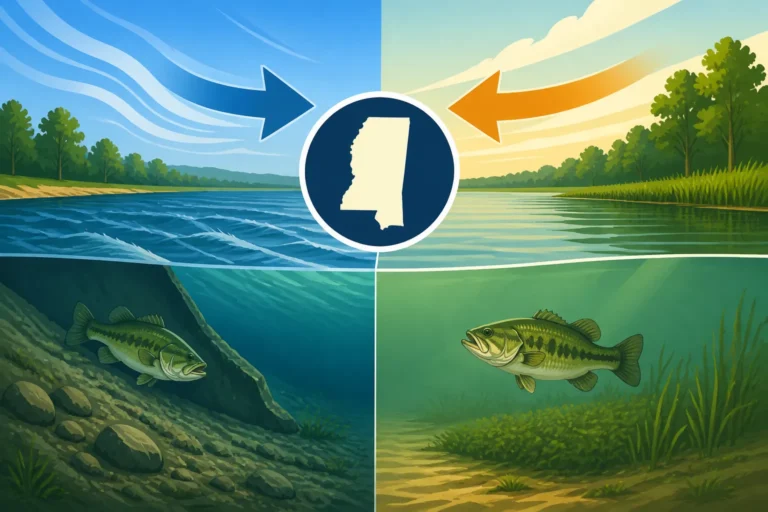
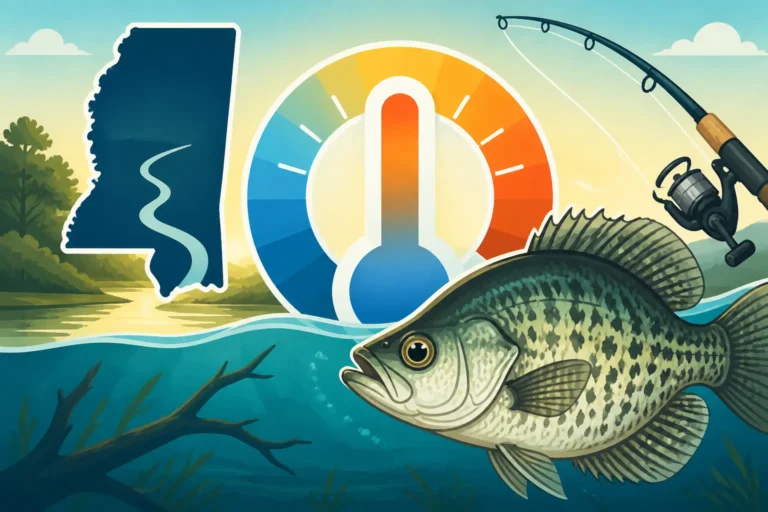
As air temperatures climb, the surface water in lakes and reservoirs heats up rapidly. This causes a phenomenon called thermal stratification, where the water separates into distinct layers based on temperature. The warmest water stays on top, forming an epilimnion, while cooler, denser water settles below, creating a hypolimnion. Between these two, there's a thermocline – a transitional layer where the temperature drops sharply. Crappie, being cold-blooded creatures, are incredibly sensitive to temperature changes. They're constantly seeking their preferred temperature range, which generally falls between 68-75 degrees Fahrenheit.
Beyond just temperature, dissolved oxygen (DO) plays a crucial role. Warm water holds less oxygen than cold water. As temperatures rise, the shallower, warmer water can become oxygen-depleted, especially in fertile lakes with decaying organic matter. While the deepest parts of the lake might be cool, they can also become anoxic (devoid of oxygen) in the hypolimnion. This forces crappie to find that "sweet spot" within the thermocline or just above it, where both temperature and oxygen levels are optimal. For example, in a large reservoir like Ross Barnett, the fish will definitely seek out cooler, oxygenated water, often suspending over deeper areas. Similarly, on Grenada Lake, understanding this stratification is key to successful summer fishing.
Key Factors Influencing Crappie Depth
It's never just one thing that determines where crappie decide to hang out. Several interconnected factors influence their depth preferences during the summer months, and a good angler learns to read these subtle cues.
First and foremost is water temperature. As mentioned, crappie have a preferred comfort zone. Finding the thermocline is often the first step in locating summer crappie. Modern fish finders are incredibly helpful for this, showing you exactly where those temperature breaks occur. Beyond that, dissolved oxygen levels are critical. While cooler water is usually better, if the bottom layers become completely devoid of oxygen due to decomposition, crappie won't be there, no matter how cool it is. They'll suspend higher, perhaps just above that anoxic zone.
Next, structure is always a magnet for crappie. Even when deep, they'll relate to submerged brush piles, timber, creek channels, ledges, or humps. These features offer ambush points for feeding and protection from predators. If you find a submerged stump field in 20 feet of water, chances are there's a crappie or two nearby. Finally, forage location is paramount. Crappie follow their food. If schools of shad or other baitfish are holding at a particular depth, you can bet the crappie won't be far behind. These baitfish also seek comfortable temperatures and oxygen levels, so understanding their movements is essentially understanding crappie movements. A quick glance at your fish finder (check out our guide on Reading a Fish Finder for Crappie) will often show you clouds of bait, and the crappie will likely be lurking on the edges or directly within those schools.
Pinpointing the Best Trolling Depths for Summer Crappie
Now that we understand the "why," let's dive into the "where." Finding that ideal depth for trolling crappie in the Mississippi summer requires a blend of general knowledge and on-the-water adjustments. It's rarely a set-it-and-forget-it scenario.
General Depth Ranges in Mississippi Reservoirs
During the peak summer months in Mississippi, you'll generally find crappie holding much deeper than their spring counterparts. While spring might see them in 2-10 feet of water, summer often pushes them into the 15 to 25-foot range, sometimes even deeper, especially in large, deep impoundments like Sardis Lake or Enid Lake. However, it's not simply about finding "deep" water; it's about finding deep water that meets their temperature and oxygen needs.
Think of it this way: in the early morning or late evening, they might push up slightly to feed on baitfish that have moved shallower, perhaps around 12-18 feet. But as the sun climbs high, they'll retreat to the cooler, more stable depths, often suspending over 30-40 feet of water, but themselves only being 18-25 feet down. The specific depth can vary significantly from lake to lake, and even within different sections of the same lake. For instance, the main lake basin in a clear lake might see crappie holding deeper than a stained, shallower arm of the same reservoir. Always start by scanning deeper creek channels, river bends, and main lake points with your electronics.
Adjusting Depth Based on Structure and Forage
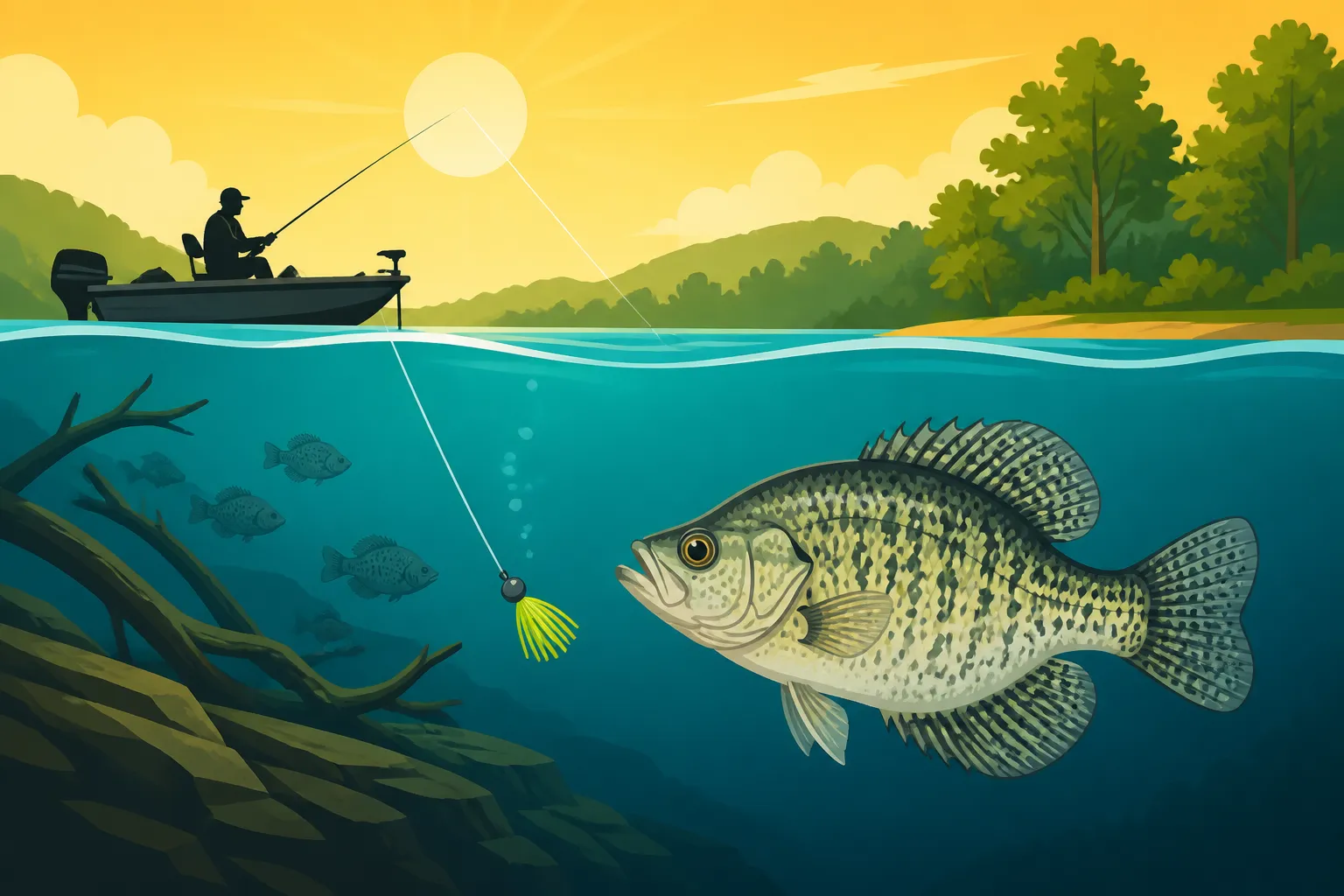
Simply trolling at a general depth isn't enough; you need to fine-tune your approach based on what your electronics are telling you. Structure is still king, even when fish are deep. Crappie will often be found relating to the tops or sides of submerged brush piles, timber, or rock ledges. If your fish finder marks a brush pile in 20 feet of water, the crappie might be holding anywhere from 15 feet to just above the top of that brush. Your goal is to get your lure into that zone.
Forage location is equally important. When you mark large schools of shad, pay close attention to the depth at which they are concentrated. Crappie will often be found just below or on the edges of these baitfish schools, picking off stragglers. If the shad are holding at 18 feet, try trolling your lures at 16, 18, and 20 feet to cover the entire feeding zone. This is where your electronics truly shine. A quality fish finder, like those from Humminbird or Lowrance (available on Amazon), can show you not only the depth of the bottom but also the thermocline, baitfish schools, and even individual crappie. Don't be afraid to experiment. If you're not getting bites at 20 feet, try letting out more line to get to 22 or 24 feet, or reel in a bit to hit 18 feet. This constant adjustment is the secret sauce for successful summer crappie trolling. Understanding How Deep Do Crappie Go in Summer can save you a lot of guesswork.
Essential Trolling Techniques and Gear for Deep Summer Crappie
Trolling for deep crappie in the summer isn't the same as jigging shallow brush in the spring. It requires specific gear and a refined technique to consistently put your bait in front of the fish.
Gear for Effective Deep-Water Trolling
Your typical ultralight setup might not cut it when you're trying to get a heavy jig or crankbait down to 20+ feet and keep it there. You'll want to lean towards slightly heavier tackle to manage the weights and maintain control.
- Rods: Look for longer trolling rods, typically 8 to 14 feet in length, with a medium-light to medium action. These longer rods help spread your lines out, preventing tangles, and the softer tips act as great strike indicators, even for subtle bites when you're dragging heavy weights. Brands like BnM Poles or Ugly Stik make excellent crappie trolling rods.
- Reels: While spinning reels can work, many deep-water trollers prefer baitcasting reels or small line-counter reels. Line-counter reels are particularly useful because they allow you to precisely replicate the amount of line you have out, which directly translates to consistent depth control. If you find a productive depth, you can easily repeat it.
- Line: Braided line, like PowerPro or Spiderwire (both found on Amazon), in 10-15 pound test is a popular choice for deep trolling. It has minimal stretch, offering excellent sensitivity for detecting bites, and its thin diameter helps lures run deeper with less weight. A 6-10 foot fluorocarbon leader (6-8 pound test) is often tied to the braid for stealth in clearer water. Monofilament can also work, but its stretch makes it less sensitive, and its thicker diameter means you'll need more weight to reach the same depth.
- Weights: To get your baits down, you'll need various weights. Pencil weights, bottom bouncers, or even small bell sinkers ranging from 1/2 ounce up to 2 ounces are common. The amount of weight depends on your trolling speed, line diameter, and desired depth.
- Electronics: As emphasized, a good fish finder with side imaging or down imaging is virtually indispensable. It helps you find structure, baitfish, and crappie, and many units can even show you the thermocline. You can find a wide range of reliable fish finders on Amazon.
Mastering the Art of Depth Control
Getting your lure to the exact depth where crappie are holding is crucial, and it's more of an art than a science, requiring constant attention and adjustment.
First, trolling speed is a major factor. Slower speeds (0.5 to 1.5 mph) will allow your lures to run deeper with less weight, while faster speeds will lift them higher. You'll need to experiment to find the speed that triggers bites, and then adjust your weight or line length accordingly to maintain depth. A good GPS unit or even a simple boat speed app on your phone can help you keep your speed consistent. Next, line length directly impacts depth. The more line you let out, the deeper your bait will go. This is where line-counter reels are invaluable, helping you replicate successful presentations. If you're using conventional reels, develop a system for letting out consistent amounts of line, perhaps by counting pulls or measuring against a boat feature.
Weight size is the third leg of the depth-control stool. Start with a lighter weight and increase it until you hit your desired depth at your preferred trolling speed. It's a delicate balance. Too much weight can make your presentation unnatural, while too little won't get you to the fish. Lastly, continuously monitor your fish finder. Most modern units can show you a "depth history" of your lure if you have a transducer with an adequate cone angle directly under your boat. Observing your lure on the screen relative to fish and structure will help you make real-time adjustments. Our detailed guide on Trolling for Crappie on Mississippi Reservoirs offers even more specifics on this technique.
Popular Rigs and Lures for Deep Crappie
When crappie are deep, you need presentations that get down quickly and effectively, and that appeal to their summer preferences.
- Spider Rigging: This is a fan-favorite for deep-water crappie. It involves deploying multiple long rods (often 4-8 per angler) from the front of the boat, creating a "spider web" of lines. Each rod typically has a lead-head jig or a combination of a jig and a minnow. The weights are usually integrated into the jig heads, or a small lead weight is placed just above the jig. This allows you to present multiple baits at varying depths and horizontal spreads. Our article on Spider Rigging Techniques delves deeper into this effective method.
- Double-Jig Rigs: For a more active presentation, a double-jig rig on a single line is incredibly effective. You tie two jigs (often 1/16 to 1/8 ounce) a foot or two apart, with a weight (1/2 to 1 ounce) either below the bottom jig or above the top one. This allows you to present two different colors or sizes of jigs simultaneously, increasing your chances of finding what the crappie want. Small plastic baits like Bobby Garland's Baby Shad or Mister Twister Sassy Shads work exceptionally well on these jigs. You can find a huge selection of these jigs and plastics on Amazon.
- Small Crankbaits: Don't overlook small, deep-diving crankbaits. Lures like Bandit 100 or 200 series crankbaits, or even smaller Rapala Shad Raps, can be deadly for summer crappie. These baits dive to specific depths on their own, often 8-15 feet, and can be further deepened with additional lead weights (like an in-line sinker or a three-way swivel rig). Crankbaits offer a different action and profile that can entice aggressive crappie, especially if they are actively chasing baitfish. Experiment with colors like chartreuse, white, or shad patterns. Check out Best Bait for Crappie in Mississippi for more options.
- Live Bait: While artificials are great, sometimes nothing beats a live minnow. When trolling deep, you can rig minnows on a simple hook (size 2-4 Aberdeen or kahle hook) with a split shot or small sinker, or combine them with a jig head. The natural movement and scent of a live minnow can be irresistible to deep, sluggish crappie.
Real-World Scenarios and Troubleshooting Deep Summer Crappie
Even with the right gear and knowledge, crappie can be fickle. Being able to troubleshoot and adapt on the water is what separates a good angler from a great one.
What to Do When Crappie Aren't at Expected Depths
It's happened to all of us. You've done your homework, you're at the "right" depth, but the bites just aren't coming. Don't panic, it's time to adjust.
First, vary your depths. If you're trolling at 20 feet, deploy some lines at 18, some at 22, and maybe even a couple at 25 feet. Crappie can suspend at very specific depths, sometimes within a foot or two of the optimal thermocline. A slight adjustment can make all the difference. Try a staggered approach with your spider rigs, or use different weight sizes on your single rod setups. Second, change your trolling pattern. Instead of a straight line, try making wide turns or S-curves. This causes your outside lines to speed up and rise slightly, while your inside lines slow down and sink. This change in speed and depth can trigger bites from hesitant crappie. This is a common tactic discussed in Crappie Fishing Techniques for Mississippi Lakes.
Third, look for new structure or baitfish. If the area you're fishing isn't producing, use your electronics to scout for new brush piles, ledges, or concentrations of bait. Crappie will move with their food. Sometimes, a subtle creek channel bend or a solitary stump could be holding a school of fish. Don't be afraid to pull up stakes and move to a new area if your current one is dead. Mississippi has many productive Best Crappie Lakes in Mississippi, so if one spot isn't working, another might be.
Adapting to Changing Conditions
Mississippi weather is notoriously unpredictable, and conditions can change rapidly, impacting crappie behavior and depth. Being adaptable is key to continued success.
Weather fronts are a prime example. A strong cold front rolling through can completely shut down a bite or send crappie even deeper as they seek stability. After a front, fish may become sluggish and hold tight to cover. You might need to slow your troll even further, use smaller baits, or switch to a more subtle presentation, like a small minnow on a hook with minimal weight. Conversely, a warm front or stable weather can make crappie more active and willing to chase.
High or low water levels also play a role. During periods of drought and low water, crappie in shallower areas might be forced into deeper basins. After heavy rains and rising water, they might spread out into newly flooded cover. Always check local reports and gauge levels for your specific lake. Finally, time of day influences crappie depth. While they are generally deep in summer, the early morning and late evening low-light periods might see them move slightly shallower to feed. This is often the Best Time of Day to Catch Crappie. During these times, you might find success trolling a few feet higher in the water column or closer to secondary points and humps. Keep an eye on the sun and adjust your depths throughout the day.
| Depth Range (Feet) | Typical Scenario | Trolling Speed (mph) | Recommended Weight (oz) |
|---|---|---|---|
| 12-18 | Early/Late Day, Stained Water, Over Humps/Ledges | 1.0-1.5 | 1/4 – 3/4 |
| 18-25 | Mid-Day, Main Lake Basin, Thermocline | 0.8-1.2 | 3/4 – 1.5 |
| 25-30+ | Clear Water, Suspended Over Deep Channels, Near Bottom Structure | 0.5-1.0 | 1.0 – 2.0 |
Disclaimer
Fishing conditions and regulations in Mississippi can change. Always consult the latest rules and guidelines from the Mississippi Department of Wildlife, Fisheries, and Parks (MDWFP) before heading out. This guide is for informational purposes only.