How to Fish a Carolina Rig for Catfish
There’s nothing quite like the thrill of feeling a steady throb on your line, knowing a big Mississippi catfish has taken your bait. But let's be honest, getting that bait right in front of them, especially on tricky bottoms or in current, can be a real headache. Snags, poor bait presentation, or simply not reaching the strike zone are common frustrations. This comprehensive guide will walk you through everything you need to know about setting up and effectively fishing a Carolina Rig for catfish, ensuring your bait stays put and entices those whiskered giants.
Understanding the Carolina Rig for Catfish
The Carolina Rig is a staple in many anglers' arsenals, and for good reason. While often associated with bass fishing, its adaptability makes it an absolutely phenomenal choice for targeting catfish, particularly bottom-feeders like blues, channels, and flatheads, in a wide array of environments found across Mississippi. It’s designed to keep your bait close to the bottom where catfish often feed, while allowing it to move somewhat freely, mimicking a natural food source. This subtle, natural presentation is often key to coaxing bites from wary fish.
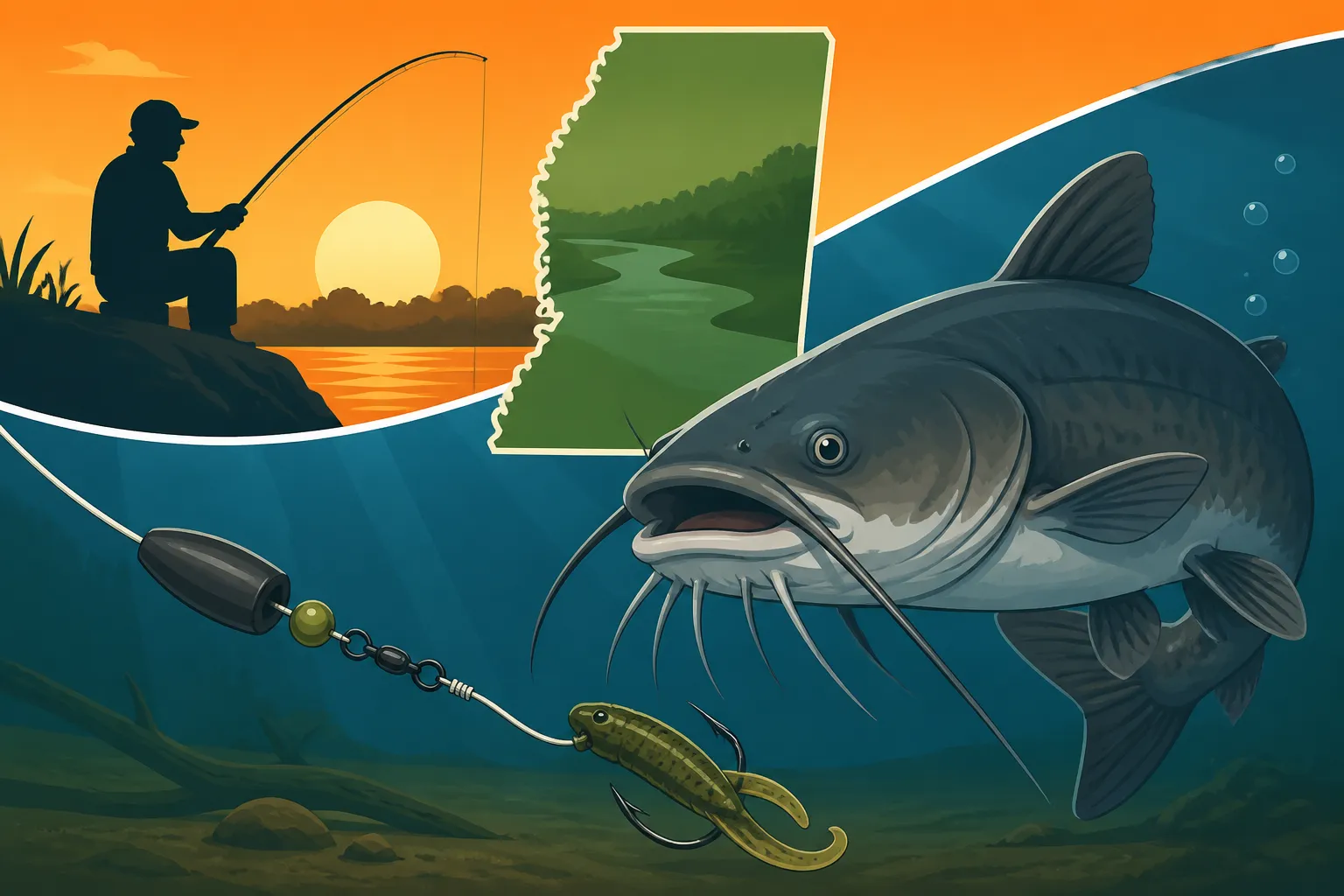
Anatomy of the Carolina Rig
To truly understand how to wield a Carolina Rig effectively, you first need to grasp its distinct components and the crucial role each plays in its overall performance. Think of it as a specialized tool, with each part designed for a specific job.
The weight is the first element you'll thread onto your mainline. Typically, egg sinkers, bullet weights, or even flat saucer weights are preferred for catfish due to their ability to roll over snags more easily than pyramid or bank sinkers. The size of your weight is critical and depends heavily on the fishing conditions. In slow-moving lake waters or ponds, a 1/2 oz to 1 oz weight might suffice to get your bait down. However, when you're battling the powerful currents of the Mississippi River or the deeper channels of the Pearl River, you might need to go significantly heavier, perhaps 2 oz, 3 oz, or even more, to ensure your bait reaches and stays on the bottom. You can find a wide variety of these weights on platforms like Amazon, making it easy to stock up before your next trip.
Next up is the bead. This small, often plastic or glass component, sits between your weight and your swivel. Its primary job is twofold: first, it protects the knot at your swivel from the constant banging and abrasion of the sliding weight. Imagine a heavy lead weight repeatedly smashing into your knot – not a recipe for success! Second, some anglers believe a glass bead can create an audible clicking sound underwater as the weight moves, potentially attracting curious catfish, much like a dinner bell.
The swivel is the linchpin of the Carolina Rig. It’s tied to your mainline on one end and your leader on the other. A high-quality, strong swivel is essential. Swivels prevent line twist, which can be a major issue, especially if you're using live bait that tends to spin or if you're retrieving your rig slowly across the bottom. Barrel swivels or ball-bearing swivels are excellent choices, and you should always opt for one with a breaking strength that matches or exceeds your main fishing line. This prevents a weak link in your setup.
Following the swivel is the leader, a separate length of fishing line tied to the other end of your swivel. The leader is usually made of fluorocarbon or monofilament. Fluorocarbon is often favored because it’s nearly invisible underwater and is more abrasion-resistant, which is a huge plus when fishing around rocky bottoms or submerged timber where big catfish like to hang out. Monofilament, while not as invisible, offers more stretch, which can act as a shock absorber during violent strikes. The length of your leader is a matter of personal preference and conditions, but a good starting point is usually 18 inches to 3 feet. A longer leader provides a more natural, uninhibited presentation of your bait, allowing it to waft enticingly in the current or rest gently on the bottom, separate from your heavy weight. However, too long a leader can make casting difficult and bite detection less sensitive.
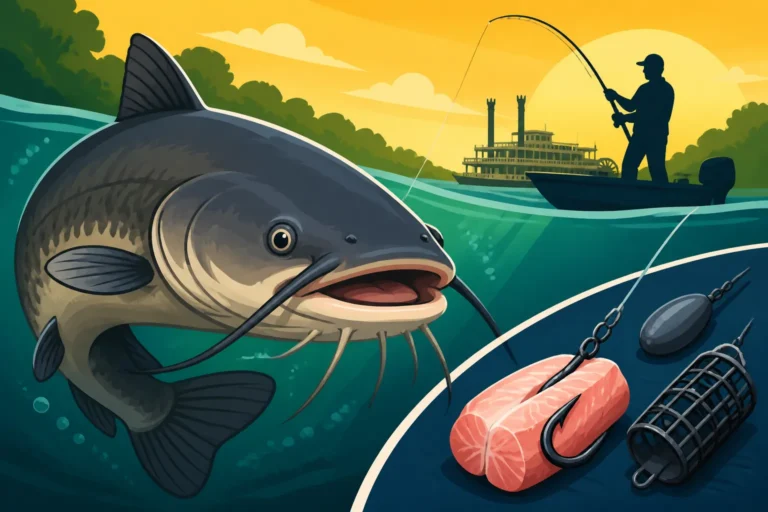
Finally, at the business end of your leader is the hook. For catfish, you'll want a strong, sharp hook appropriate for the size of fish you're targeting and the bait you're using. Circle hooks are incredibly popular for catfish and highly recommended, especially if you plan on releasing fish. They are designed to hook fish in the corner of the mouth, minimizing deep hooking and making de-hooking much easier. Common sizes range from 3/0 to 8/0, depending on your bait and the potential size of the fish. For example, a 3/0 to 5/0 might be perfect for cut shad for channel catfish, while an 8/0 might be needed for a live bluegill for a monster blue or flathead.
Why the Carolina Rig Shines for Catfish Anglers
The Carolina Rig isn't just another way to present bait; it's a strategic advantage that addresses many common challenges in catfish angling. Its design simply makes it incredibly effective in a variety of situations you'll encounter while fishing for catfish in Mississippi.
One of its biggest advantages is its versatility in different bottom types. Whether you're fishing a relatively clean, sandy flat in Ross Barnett Reservoir, dragging your bait across rocky ledges in the Tennessee-Tombigbee Waterway, or navigating snaggy submerged timber in the backwaters of the Mississippi River, the Carolina Rig performs admirably. The sliding weight can bump and roll over obstacles, while your bait, trailing on its leader, is often kept just above or slightly behind these snags, reducing the chances of getting hung up. This is a huge relief when you're trying to fish those productive, yet notoriously snaggy, areas.
The rig's ability to provide a natural bait presentation is perhaps its most compelling feature. Because the weight slides freely on the main line, it settles on the bottom, while your bait, attached to the leader, drifts gently behind it. This separation means your bait isn't pinned down by the weight; instead, it can waft and move with the subtle currents, making it appear much more alive and appetizing to a hungry catfish. This is especially effective with live bait or strips of cut bait that have some natural movement. It presents the bait in a way that’s hard for a cautious catfish to resist, often leading to more confident bites.
Lastly, the Carolina Rig offers fantastic sensitivity and bite detection. Despite the weight being on the bottom, the direct connection from your mainline through the sliding weight to your swivel means that when a catfish takes the bait, you often feel it clearly. The weight itself acts as an anchor, but when a fish pulls on the leader, that pull translates quickly up your main line to your rod tip. You'll feel everything from subtle taps to a heavy, steady pull as a big blue cat cruises off with your offering. This sensitivity allows you to react quickly, setting the hook effectively before the fish has a chance to swallow the bait too deeply, which is especially important when using circle hooks. For more on how to identify different species, check out our guide on Catfish Identification Chart.
Setting Up Your Carolina Rig for Mississippi Catfish
Alright, let's get down to the brass tacks: how do you actually tie this magic rig and what specific gear should you be looking at when fishing those legendary Mississippi waters? Getting the setup right is half the battle won, ensuring your rig functions as intended and stands up to the powerful runs of a big cat.
Step-by-Step Rigging Guide
Assembling a Carolina Rig is straightforward once you know the sequence. Follow these steps, and you'll be rigging like a pro in no time:
- Thread the Weight: Take your main fishing line (the line coming from your reel) and thread your chosen weight onto it. Remember, this weight will slide freely.
- Add the Bead: After the weight, slide a bead onto your mainline. This bead acts as a buffer between the weight and your knot.
- Tie on the Swivel: Now, tie the mainline to one eye of your chosen swivel. A strong, reliable knot like the Palomar knot or an improved clinch knot is essential here. You don't want your mainline slipping! If you need a refresher, we have a great article on How to Tie a Palomar Knot.
- Prepare the Leader: Take a separate piece of line for your leader, typically 18 inches to 3 feet long. Fluorocarbon is a popular choice for its stealth and abrasion resistance.
- Tie Leader to Swivel: Tie one end of your leader to the other eye of the swivel. Again, use a strong knot.
- Attach the Hook: Finally, tie your hook to the free end of your leader. A snell knot is excellent for circle hooks, ensuring they turn properly in the fish's mouth. Otherwise, another Palomar or improved clinch knot will do.
And that's it! Your Carolina Rig is ready for bait. When you're done, double-check all your knots by giving them a firm tug. It's always better to find a weak knot on the bank than when you've got a trophy fish on the other end.
Choosing the Right Gear for Mississippi Waters
Matching your gear to the environment and the size of catfish you're pursuing in Mississippi is paramount. While the Carolina Rig itself is adaptable, your rod, reel, and line need to be up to the task.
For rods and reels, most Mississippi catfish anglers opt for a medium-heavy to heavy-action rod, typically 7 to 9 feet long. This length provides good casting distance and enough backbone to muscle in powerful fish. A fast-action tip will give you the sensitivity to detect subtle bites while retaining the power lower down to handle larger fish. As for reels, a baitcasting reel is often preferred for its strength and ability to handle heavier lines and weights, especially if you're targeting big blue cats or flatheads in the Mississippi River. However, a sturdy spinning reel in the 4000-6000 series can also be effective, particularly for channel catfish or lighter applications. Brands like Penn, Daiwa, or Shimano offer robust options, many of which are readily available on Amazon or at local tackle shops across the state.
Your mainline choice is critical. Braided line, with a breaking strength of 30 to 65 pounds, is a favorite among serious catfishermen. Its minimal stretch provides incredible sensitivity, allowing you to feel every bump on the bottom and every subtle bite. It also has excellent abrasion resistance, which is vital when fishing around structure. However, braid can be less forgiving in a sudden strike and can be harder to tie certain knots. Monofilament line, typically 20 to 40 pounds, offers more stretch, which can prevent hooks from pulling out, and is generally more budget-friendly. It's a good all-around choice for a variety of catfish scenarios. Consider the trade-offs and pick what suits your fishing style and target species. For a deeper dive, check out our guide on Best Fishing Line for Catfish.
When it comes to specific weight and hook sizes for Mississippi catfish, you'll want to adjust based on the species and conditions:
- Channel Catfish: Often found in lakes, ponds, and smaller rivers throughout Mississippi, channel cats rarely exceed 20 pounds. For these, a 1/2 oz to 1 oz egg sinker, a 3/0 to 5/0 circle hook, and a 1-2 foot fluorocarbon leader in 15-20 lb test will work wonderfully. They respond well to cut bait, stink baits, and even worms. Check out our detailed guide on Channel Catfish Fishing in Mississippi.
- Blue Catfish: The undisputed heavyweights of the Mississippi River, blues can grow to immense sizes. When targeting these giants, especially in strong current, don't shy away from heavy weights—2 oz, 3 oz, or even more might be necessary. Pair this with a robust 6/0 to 8/0 circle hook, and a 2-3 foot leader of 40-60 lb fluorocarbon. Big cut baits like shad or skipjack are their preferred meal. For more on these powerful fish, see Blue Catfish Fishing in Mississippi.
- Flathead Catfish: These ambush predators prefer live bait and often lurk around heavy cover in rivers and larger reservoirs. For flatheads, you'll need a stout setup similar to what you'd use for big blues. Heavy weights, 5/0 to 8/0 circle or J-hooks (though circle hooks are always recommended for easy release), and a strong 30-50 lb fluorocarbon leader are essential. Live bluegill or sunfish are top choices, but be sure to check Mississippi Freshwater Fishing Rules regarding the use of live baitfish.
A quick trip to a local tackle shop or browsing online for "catfish tackle" on a site like Amazon will give you a good idea of the vast array of options available to ensure you're perfectly outfitted for your next catfish adventure.
Master the Techniques: Fishing the Carolina Rig for Catfish
Once your Carolina Rig is tied and your gear is ready, it's time to put it to use. Fishing a Carolina Rig effectively for catfish involves more than just casting and waiting; it requires understanding how to present your bait, where to present it, and what bait to use to maximize your chances of success.
Effective Casting and Retrieval Strategies
When deploying your Carolina Rig, casting accurately is crucial. You want to place your bait where the catfish are, which often means near structure, channel edges, or current breaks. With a heavy weight and often a longer leader, you might need to adjust your casting motion to a slower, more deliberate swing to prevent your bait from helicoptering or tangling. A gentle lob cast is often more effective than a hard, fast throw.
Once your rig is in the water and has settled to the bottom, the retrieval strategy comes into play. The most common technique is a slow drag. After letting your weight settle, engage your reel and slowly sweep your rod from about 9 o'clock to 11 o'clock, then reel up the slack as you return your rod tip to the 9 o'clock position. This subtle movement causes the weight to drag along the bottom, while your bait trails naturally behind. This mimics baitfish or crustaceans moving along the bottom, a natural food source for catfish.
Another effective method involves subtle lifts and drops. Instead of a continuous drag, you might lift your rod tip a foot or two, let the rig settle, reel up slack, and then repeat. This can be particularly effective in areas with more structure, as it allows your bait to hop over obstacles and then settle back down, creating an enticing puff of sediment that can grab a catfish's attention.
Detecting bites with a Carolina Rig can vary. Sometimes, a big blue cat will hammer it, and you'll feel a solid, unmistakable pull. Other times, it might be a series of subtle taps, feeling like a light bump against the line, especially from smaller channel cats. When you feel anything out of the ordinary, even a slight sponginess or increased weight, it’s often a bite. The key is to be patient, let the fish take the bait, and if using a circle hook, simply reel into the fish rather than setting the hook with a hard jerk. The circle hook will do the work of finding the corner of the fish's mouth.
Where to Find Catfish in Mississippi with a Carolina Rig
Mississippi boasts incredible catfish opportunities, and knowing where to throw your Carolina Rig can make all the difference.
River channels are prime real estate for all three major catfish species, especially the mighty Mississippi River itself. Deep holes, sharp bends, and the edges of sandbars where the current carves out deeper troughs are all excellent spots. The Pearl River and Tennessee-Tombigbee Waterway also hold fantastic catfish populations. The Carolina Rig excels here because the heavy weight keeps your bait in the strike zone despite the current, while the free-moving bait remains enticing. Our Mississippi River Fishing Guide has more localized tips.
In reservoirs like Ross Barnett Reservoir, Grenada Lake, and Sardis Lake, focus your efforts on humps, ledges, and creek channels. Catfish often relate to these contour changes, using them as travel routes or ambush points. Submerged roadbeds, old creek beds, and drop-offs are fantastic places to drag a Carolina Rig. The rig's ability to present bait naturally on varying depths makes it ideal for these structures. For specific hotspots, dive into our Ross Barnett Reservoir Fishing Guide or Grenada Lake Fishing Guide.
Structure is universally appealing to catfish. This includes submerged timber, brush piles, rock piles, and even bridge pilings. Catfish use these areas for cover, ambush points, and as resting spots out of strong currents. While fishing around heavy cover, be prepared for snags. Using a heavier fluorocarbon leader can help mitigate break-offs. Cast your Carolina Rig just upstream or upcurrent of the structure, letting it drift naturally into the zone.
Look for current breaks wherever you fish in moving water. These are areas where the main current slows down, creating an eddy or slack water. Catfish will often position themselves on the edge of these breaks, waiting for food to be swept past them. Examples include the downstream side of islands, points, wing dams, or even large rocks. The Carolina Rig can be cast into the faster current and allowed to drift into the slower water, presenting your bait right into a catfish’s lair.
Best Baits to Use with Your Carolina Rig for Catfish
The Carolina Rig pairs exceptionally well with a variety of baits, but some stand out as clear winners for Mississippi catfish.
Cut bait is arguably king for blue and channel catfish. Fresh is always best. Shad, skipjack herring, mullet, and even cut strips of bream (check local regulations on using game fish as bait) are incredibly effective. The scent trail they emit is a powerful attractant. When using cut bait on a Carolina Rig, ensure your hook is exposed for a good hookset. For detailed information, see Best Bait for Catfish in Mississippi.
Live bait is a flathead catfish's favorite, but big blues will readily take it too. Small bluegill, sunfish, or even large minnows are excellent choices. Hook them through the back (avoiding the spine) or through the lips to keep them lively. The Carolina Rig allows the live bait to swim freely on the leader, making it look incredibly natural and enticing. Always verify Mississippi Fishing Regulations Explained regarding legal live bait species and sizes.
For channel catfish, especially in ponds and slower-moving waters, prepared baits like stink baits, punch baits, or dough baits can be incredibly effective. While sometimes messy, their strong odor can attract channel cats from a distance. Just make sure your hook is well-embedded in the bait, or use a bait holder style hook designed for these types of offerings.
Remember, the fresher the bait, the better your chances. Whether you're catching your own shad or buying a fresh bag of frozen bait, quality makes a difference.
Carolina Rig Components Comparison
To help you decide on the right setup, here's a quick comparison of Carolina Rig components based on common Mississippi fishing scenarios.
| Component | Targeting Channel Catfish (Lakes/Slow Rivers) | Targeting Blue Catfish (Mississippi River/Reservoirs) | Targeting Flathead Catfish (Rivers/Heavy Cover) |
|---|---|---|---|
| Weight | 1/2 oz – 1 oz Egg Sinker | 2 oz – 4 oz (or more) Egg/Flat Sinker | 1 oz – 3 oz Egg/Flat Sinker |
| Bead | Plastic or Glass (6-8mm) | Glass or Hard Plastic (8-10mm) | Glass or Hard Plastic (8-10mm) |
| Swivel | Size 4 – 2 Barrel Swivel (20-30 lb test) | Size 1/0 – 3/0 Heavy Duty Barrel/Ball Bearing (50-80 lb test) | Size 1/0 – 3/0 Heavy Duty Barrel/Ball Bearing (50-80 lb test) |
| Leader | 1.5 – 2.5 ft Fluorocarbon (15-20 lb test) | 2 – 3.5 ft Fluorocarbon (40-60 lb test) | 2 – 3 ft Fluorocarbon (30-50 lb test) |
| Hook | 3/0 – 5/0 Circle Hook | 6/0 – 8/0 Heavy Duty Circle Hook | 5/0 – 8/0 Heavy Duty Circle Hook (live bait specific) |
| Best Bait | Cut Shad, Chicken Livers, Worms, Prepared Baits | Cut Shad, Skipjack, Mullet, Large Perch (cut) | Live Bluegill, Sunfish, Large Live Minnows |
| Mainline | 15-20 lb Mono / 20-30 lb Braid | 30-50 lb Mono / 50-80 lb Braid | 30-50 lb Mono / 50-65 lb Braid |
| Rod/Reel | Medium-Heavy Spinning/Baitcasting (7 ft) | Heavy Baitcasting (7.5-9 ft) | Heavy Baitcasting (7.5-8.5 ft) |
Disclaimer
Fishing regulations, license requirements, and local conditions can change. Always check the latest Mississippi Department of Wildlife, Fisheries, and Parks (MDWFP) regulations before heading out. This guide is for informational purposes only and should not replace official guidelines.