Largemouth Bass vs Spotted Bass Differences
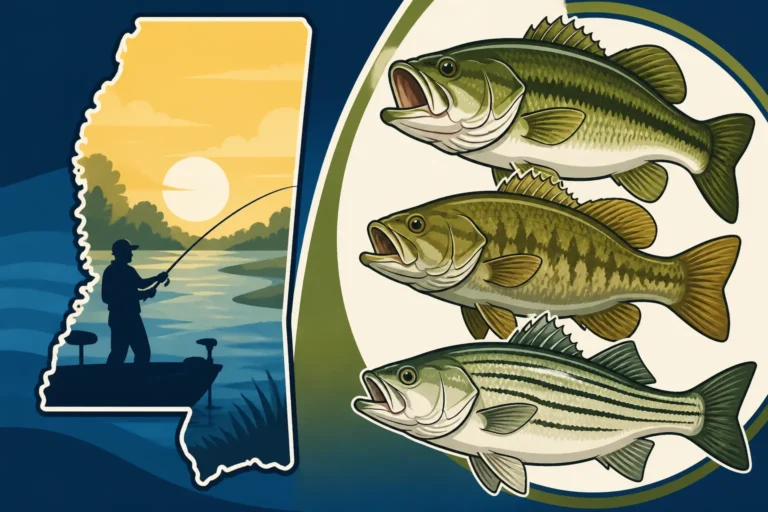
It's a tale as old as time for many anglers across Mississippi: you reel in a beautiful bass, full of excitement, only to pause and wonder, "Is this a largemouth or a spotted bass?" The truth is, these two popular species often get mistaken for one another, and it's a common frustration, especially when regulations, size limits, and even fishing strategies can differ. This guide is here to untangle that confusion, walking you through the distinct features and habits that separate these fantastic game fish, so you can confidently identify your catch and improve your fishing success.
The Initial Confusion: Why They're So Often Mistaken
It’s completely understandable why so many anglers, even seasoned ones, find themselves scratching their heads when trying to differentiate between largemouth bass and spotted bass. On the surface, they share a striking resemblance, both sporting that iconic dark lateral line and a generally greenish hue that helps them blend into their aquatic environments. You're not alone if you've ever stared intently at a fish in your livewell, trying to play a mental game of "spot the difference" before deciding whether to keep it or let it go.
Habitat Overlap and Physical Similarities
One of the biggest culprits behind this widespread confusion is the significant overlap in their habitats across Mississippi. You might catch both a largemouth and a spotted bass from the exact same stretch of water, whether it's a creek arm in a large reservoir like Ross Barnett or a smaller river system. They often coexist, sharing similar food sources and cover, which makes it even trickier to distinguish them based purely on where you caught them. Both species are predatory and ambush prey, leading them to lurk around structure, submerged timber, or weed lines. Their basic body shape – torpedo-like and muscular – is also quite similar, designed for powerful bursts of speed to strike at unsuspecting baitfish or crawfish. This general appearance can easily lead to a quick, incorrect assumption, especially when the fish is thrashing around at the boat or the light isn't ideal.
Beyond the general appearance, some subtle markings can be misleading. Both bass species exhibit dark blotches or spots along their sides, which, for a quick glance, might seem identical. The coloration itself can vary wildly depending on the water clarity, depth, and even the fish's diet. A bass caught from murky, dark water might appear much darker than one from clear, sandy bottom areas, regardless of its species. This adaptability in appearance makes visual identification a nuanced skill, requiring a closer look than many anglers initially give it.
The Frustration of Misidentification
The frustration isn't just about knowing what you caught; it often extends to adherence to fishing regulations. Mississippi, like many states, has specific Mississippi Fishing Regulations Explained for different species, including size and creel limits. Imagine the scenario: you’ve had an incredible day on the water, you’re certain you’ve caught your limit of largemouth, only to realize later that a few of those were actually spotted bass, pushing you over the legal limit for that species. This kind of mistake can lead to fines and penalties, which is something every angler wants to avoid. Nobody wants to deal with a citation because of an honest mistake in identification.
Moreover, correctly identifying your catch can significantly enhance your fishing strategy. Largemouth and spotted bass, while sharing some common traits, often prefer different depths, structures, and even react differently to certain lures. If you're consistently misidentifying them, you might be using the wrong approach for the species you're actually targeting, potentially limiting your success. For example, if you're trying to master Bass Fishing Techniques for Mississippi Anglers and you're focusing on shallow, heavy cover, that strategy might be perfect for largemouth, but less effective if the water you're fishing is predominantly holding spotted bass that prefer deeper, rockier structures. Knowing exactly what you're catching helps you refine your tactics and become a more effective angler. It's about more than just a name; it's about understanding the fish's world.
Key Physical Characteristics: How to Tell Them Apart
Alright, let's get down to brass tacks. While they might look similar at first glance, there are distinct physical characteristics that act as tell-tale signs to differentiate between a largemouth bass and a spotted bass. Once you know what to look for, these differences become much easier to spot, and you'll be identifying your catch with confidence in no time. Think of it like learning the secret handshake of bass identification!
Mouth Size and Jawline Clues
The mouth is often the most immediate and clearest indicator, hence the name "largemouth."
Take a look at the fish's mouth when it's closed.
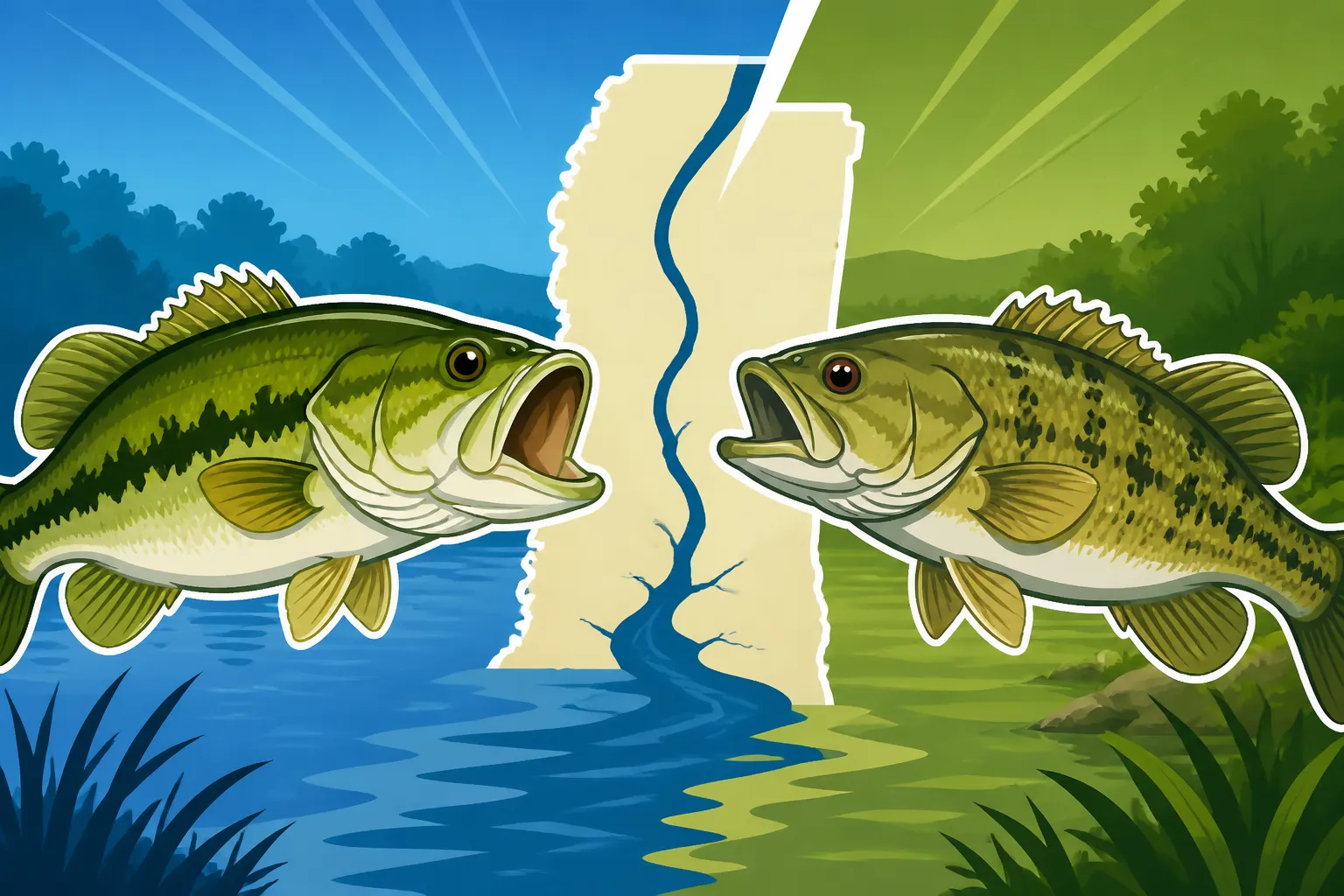
- Largemouth Bass: If you hold the fish horizontally and close its mouth, the rear corner of its jaw (the maxillary) will extend noticeably beyond the rear edge of its eye. It's truly a "large mouth," making them adept at swallowing sizable prey whole. This anatomical feature is crucial for Largemouth Bass Diet and Feeding Habits, allowing them to consume larger forage.
- Spotted Bass: For a spotted bass, the rear corner of its jaw typically aligns with the middle of the eye or only extends slightly past the rear edge of the eye, but never significantly beyond it. Their mouth is proportionate to their head, giving them a slightly less exaggerated "grumpy" look compared to their largemouth cousins.
This jaw extension difference is usually the easiest way to make a quick identification. It's like the fundamental rule of thumb when someone asks you How to Identify a Spotted Bass versus a largemouth.
Lateral Line and Scale Patterns
While both species have a prominent lateral line and dark blotches, a closer inspection reveals some key differences in their patterning and scale appearance.
- Largemouth Bass: The dark lateral line on a largemouth is usually a very distinct, often broken, horizontal band of blotches that runs from the gill plate to the tail. The scales on a largemouth often appear slightly larger and more pronounced. The overall pattern can sometimes look a bit more mottled or blotchy, especially on younger fish.
- Spotted Bass: Spotted bass also have a lateral line, but it’s typically less distinct, sometimes appearing as a continuous, jagged line rather than separate blotches. The real key here is the presence of small, dark spots below the lateral line, forming rows of tiny dots. This is where the "spotted" in "spotted bass" comes from! You won't typically find these distinct rows of spots on a largemouth. The scales on a spotted bass often appear smaller and smoother in comparison. This can be a subtle but definitive characteristic, especially when the light hits the fish just right.
If you’re still unsure about the mouth, carefully examining the scale patterns, particularly those small spots below the lateral line, can be the deciding factor. It's a bit like looking for a secret code on the fish's side.
The Crucial Tongue Patch and Dorsal Fin
These two features are often overlooked but can provide absolute certainty in identification, especially if the jawline and spots are ambiguous.
- Tongue Patch: This is perhaps the most foolproof method. Gently open the fish's mouth and run your finger over the center of its tongue.
- Spotted Bass: A spotted bass will almost always have a small, rough patch of teeth or cartilage right in the middle of its tongue. It feels like a small, sandpaper-like patch. This is a very reliable indicator for a spotted bass.
- Largemouth Bass: A largemouth bass will have a smooth tongue, completely lacking this patch of teeth.
This "tongue patch" is a definitive identifier that rarely lies. If you're ever in doubt, this is the tie-breaker. You don't need fancy equipment to check; just a gentle touch.
- Dorsal Fin: The dorsal fin is the fin on the fish's back.
- Largemouth Bass: The dorsal fin of a largemouth bass is deeply divided, almost looking like two separate fins connected by a very low membrane. There's a clear, deep notch between the spiny anterior part and the soft-rayed posterior part.
- Spotted Bass: The dorsal fin of a spotted bass is less deeply divided, appearing more continuous. While there's still a separation, the notch is much shallower, making it look like one long fin rather than two distinct ones.
Comparing the dorsal fin can sometimes be a bit trickier, especially on smaller fish, but when combined with the jaw and tongue patch, it solidifies your identification. Using these three key physical traits – mouth, lateral line spots, and especially the tongue patch and dorsal fin – will equip you to correctly identify these two popular Mississippi Freshwater Fish Species Guide every time you hook one.
| Feature | Largemouth Bass | Spotted Bass |
|---|---|---|
| Jaw Extension | Extends well beyond the rear edge of the eye | Aligns with the middle of the eye or slightly past it |
| Lateral Line | Distinct, often broken horizontal band of blotches | Less distinct, often jagged line, with distinct spots below |
| Tongue | Smooth | Rough patch of teeth/cartilage on the tongue |
| Dorsal Fin Notch | Deeply divided, appearing almost as two separate fins | Shallower division, appearing more continuous |
| Overall Build | Often stockier, more robust | Generally slenderer, more streamlined |
| Habitat Tendency | Heavy cover, weeds, shallow structure | Deeper, rocky structure, current |
Behavior, Habitat, and Fishing Differences
Beyond their physical appearance, largemouth and spotted bass also exhibit distinct behavioral patterns and habitat preferences. Understanding these differences isn't just academic; it directly influences where you look for them and what techniques you'll use to catch them. Thinking like the fish is half the battle, and knowing which bass species you're pursuing allows you to tailor your approach for maximum success. This knowledge can genuinely transform your fishing days, turning frustration into consistent hook-ups.
Preferred Environments and Structure
While there's certainly an overlap, each species typically gravitates towards specific types of environments and structures. If you’re fishing a large body of water like the Ross Barnett Reservoir, knowing these tendencies can save you a lot of time.
- Largemouth Bass: These are the kings of cover. Largemouth bass thrive in shallow, heavily vegetated areas, around lily pads, thick grass beds, submerged timber, brush piles, and boat docks. They love anything that provides an ambush point and shade. Think muddy, stained, or slightly clearer water with plenty of places to hide. They are often found in the backs of coves, shallow flats, and along shoreline edges. When you think of classic best fishing spots for bass in Mississippi, you're often thinking of prime largemouth habitat.
- Spotted Bass: Spotted bass, on the other hand, are often referred to as "rock bass" or "coosa bass" in some regions, which tells you a lot about their preferred habitat. They prefer clearer water, often found in rivers and streams with current, or in reservoirs and larger lakes where they relate more to rocky bottoms, ledges, points, and bluff walls. They're more comfortable in deeper water than largemouth, and they love current breaks and submerged rocky structures. You might find them schooling over deep humps or along river channel bends. They are less dependent on heavy vegetation.
Understanding these environmental preferences means you can strategically target areas. If you're on a lake and you know you're in an area with a lot of current and deep rocky features, chances are you'll encounter more spotted bass. Conversely, if you're working a shallow cove choked with hydrilla, you're likely going to find more largemouth.
Feeding Habits and Aggressiveness
The way these two bass species feed and their general temperament also differ, which is crucial for choosing the right bait and presentation.
- Largemouth Bass: Largemouth are typically ambush predators. They'll patiently wait in thick cover for prey to pass by, then explode with a powerful strike. Their diet includes everything from baitfish like shad and sunfish to crawfish, frogs, and even small birds or rodents that fall into the water. They are known for their explosive, often topwater, strikes and their tendency to fight hard by jumping and head-shaking to throw the hook. They are generally territorial and will defend their preferred spots.
- Spotted Bass: Spotted bass are often more opportunistic and schooling predators. While they'll certainly ambush prey, they are more prone to chasing down baitfish in open water or schooling up to feed on shad. Their diet is similar to largemouth, but they tend to consume a higher proportion of smaller baitfish and crawfish. They are renowned for their relentless, hard-fighting nature, often diving deep and pulling hard without as many acrobatic jumps as a largemouth. They are considered very aggressive and will readily hit a wide variety of lures.
This difference in feeding habits and aggression means you might approach them differently. If you're using a big frog over lily pads, you're clearly targeting a largemouth. If you're drop-shotting a small worm on a deep rocky ledge, you're probably after a spotted bass.
Impact on Fishing Techniques and Gear
The behavioral and habitat differences directly translate into distinct fishing techniques and preferred gear. What works wonders for one might be ignored by the other. This is where getting your gear right, perhaps browsing Amazon for specific lures or tackle, can make a real difference.
- Largemouth Bass Fishing: For largemouth, techniques often involve casting into heavy cover. Think Texas-rigged plastics, jigs, spinnerbaits, crankbaits, and topwater lures fished around weeds, stumps, and docks. Rods tend to be heavier power with fast actions, often paired with baitcasting reels to handle heavier line and pull fish out of thick vegetation. Lure size can often be larger to appeal to their ambush predatory nature. Anglers targeting Largemouth Bass Fishing in Mississippi often focus on these power fishing techniques.
- Spotted Bass Fishing: Spotted bass, due to their preference for deeper, open water and schooling behavior, respond well to finesse techniques. Drop-shotting, shaky heads, small swimbaits, jerkbaits, and smaller crankbaits are highly effective. They are also known to readily hit spoons and Alabama rigs when schooled up. Rods might be medium-light to medium power, often spinning tackle, allowing for lighter lines and more sensitive presentations needed for deeper fish. Many anglers find success using a variety of offerings, and sometimes having a good selection means checking out what’s popular for spotted bass on Amazon.
For instance, when trying to understand the differences between largemouth bass and spotted bass in terms of fishing, remember that largemouth are generally associated with "chunkier" presentations, while spotted bass often require more subtle or smaller offerings. Of course, there are always exceptions, and a hungry bass is a hungry bass, but these general guidelines will significantly improve your chances of success. Thinking about your target species before you even launch the boat helps you choose the right tackle and approach for the day.
Why Proper Identification Matters in Mississippi
So, why go through all this trouble? Why bother with jawlines and tongue patches when a bass is a bass, right? Not exactly. For anglers in Mississippi, correct identification is more than just showing off your knowledge; it's about responsible angling, legal compliance, and ultimately, making you a more skilled and successful fisherman. It ties into everything from Mississippi Fishing License Guide requirements to conservation efforts.
Adhering to Regulations and Limits
This is arguably the most critical reason for accurate identification. Mississippi has specific regulations for different species of black bass. The Mississippi Department of Wildlife, Fisheries, and Parks (MDWFP) sets these rules to manage fish populations, ensure sustainability, and provide quality fishing opportunities.
- Creel Limits: Imagine you’re on a fantastic fishing trip to a lake like Pickwick Lake, and you're catching fish left and right. The daily creel limit for largemouth bass might be one number, while the limit for spotted bass could be another, or they might be combined. If you misidentify a few fish, you could inadvertently exceed the legal limit for one species, even if you’re under the combined limit. This isn't just a minor oversight; it's a violation that can lead to significant Mississippi Fishing License Penalties and Fines. Nobody wants their great day on the water to end with a ticket.
- Size Limits: Similarly, minimum or slot size limits often apply. A largemouth bass might have a 14-inch minimum length, while a spotted bass might have none, or a different one entirely. Releasing an undersized largemouth that you thought was a legal spotted bass is a missed opportunity, but keeping an undersized largemouth because you mistook it for a spotted bass is a legal issue. It’s imperative to know what you have in your livewell before you head to the boat ramp. You can usually find the most current Mississippi Black Bass Regulations on the MDWFP website or in their annual fishing guide, which is a must-have for any serious angler.
These regulations are in place for good reason: to protect the fishery and ensure there are plenty of fish for future generations. As responsible anglers, it's our duty to know and follow these rules. Taking a moment to properly identify your catch is a small effort for a big reward – peace of mind and ethical angling.
Understanding Fish Behavior for Better Success
Beyond the legal aspect, accurate identification unlocks a deeper understanding of the fish you're targeting, leading to more successful and enjoyable fishing trips. Knowing the Largemouth Bass vs Spotted Bass Differences in their natural behavior helps you make better decisions.
- Targeted Techniques: As we discussed, largemouth and spotted bass have different preferences for habitat and feeding. If you mistakenly believe a body of water is primarily holding largemouth and you're throwing big spinnerbaits into dense weeds, you might miss out on a fantastic spotted bass bite happening on the deep rock ledges with a small finesse worm. Conversely, if you're targeting spotted bass and you're trying to fish deep structure all day, you might overlook the largemouth hiding in the shallow timber. Knowing which species is more prevalent, or even being able to switch tactics on the fly based on what you’re catching, allows you to adapt your approach. This includes choosing the right baits, line, rods, and reels, all of which can be found through retailers like Amazon.
- Predicting Hotspots: With a clear understanding of their preferences, you can more accurately predict where each species will be at different times of the year or under various conditions. For example, during a hot Mississippi summer, largemouth might be buried deep in shady cover in shallower water, while spotted bass could be holding to deep structure near current. If you know you're fishing a spot primarily known for one species, but you start catching the other, it's a huge clue that something in the environment has shifted, or you've stumbled upon a productive, overlooked pattern. This makes you a more versatile angler, able to consistently find and catch fish no matter the conditions or the specific body of water you’re on. It's not just about catching fish; it's about learning the patterns that lead to consistent catches.
By diligently learning to distinguish between largemouth and spotted bass, you're not just becoming a better identifier; you're becoming a better fisherman, period. You're arming yourself with the knowledge to respect the regulations, protect the fisheries, and put more fish in your boat.
Disclaimer
This article is for general informational purposes only and does not constitute professional advice. Laws, prices and regulations vary by location and change over time. Consult a qualified professional for guidance on your specific situation.