Panfish Species Found in Mississippi
There’s a special kind of joy that comes from reeling in a feisty panfish – that satisfying tug on the line, the vibrant colors flashing in the sun, and the promise of a delicious meal. But if you’ve ever found yourself scratching your head at the boat ramp, wondering exactly what kind of sunfish you just caught, you're certainly not alone. Mississippi waters are teeming with various panfish, and this guide is here to help you identify these fantastic little fighters, understand their habits, and discover how to catch them for an unforgettable day on the water.
What Exactly Is a Panfish, Anyway?
Before we dive into the specific species, let's clear up what "panfish" actually means. It’s not a scientific classification, but rather a colloquial term that refers to any small, edible freshwater fish that is generally small enough to fit whole in a frying pan. In Mississippi, this usually means various members of the sunfish family, including bluegill, crappie, and redear sunfish, among others. They might not be the giants of the deep, but panfish offer some of the most consistent action and delightful table fare for anglers of all ages and skill levels.
The Charm of Panfish in Mississippi
What makes panfish so incredibly popular in the Magnolia State? For starters, they are abundant! Almost any pond, lake, or slow-moving stream you visit across Mississippi will hold a healthy population of panfish. This accessibility makes them perfect for a spontaneous afternoon outing or introducing children to the joys of fishing. There’s no need for expensive gear or complicated techniques; a simple cane pole, a hook, a bobber, and some bait are often all it takes to find success.
Beyond their prevalence, panfish are genuinely fun to catch. They're not pushovers; even a small bluegill can put up a surprisingly strong fight, especially on light tackle. For many of us, catching a limit of crappie or a mess of bluegill brings back cherished childhood memories, fostering a lifelong love for the outdoors. Plus, they are absolutely delicious! Whether fried crispy with a side of hushpuppies or grilled, panfish are a staple of Southern cuisine. You’ll often hear folks talking about getting enough for a "fish fry," and chances are, they're talking about panfish.
The Role of Panfish in Our Ecosystems
While we often focus on catching them, panfish play a vital role in Mississippi's aquatic ecosystems. They are a crucial link in the food chain, serving as a primary food source for larger predatory fish like largemouth bass, catfish, and even birds of prey. By consuming insects, small crustaceans, and other invertebrates, panfish help control populations of these smaller organisms, contributing to the overall health and balance of the aquatic environment. A healthy panfish population often indicates a healthy ecosystem overall, making their presence a good sign for anglers and conservationists alike.
The Ever-Popular Bluegill: Mississippi's Sunfish Superstar
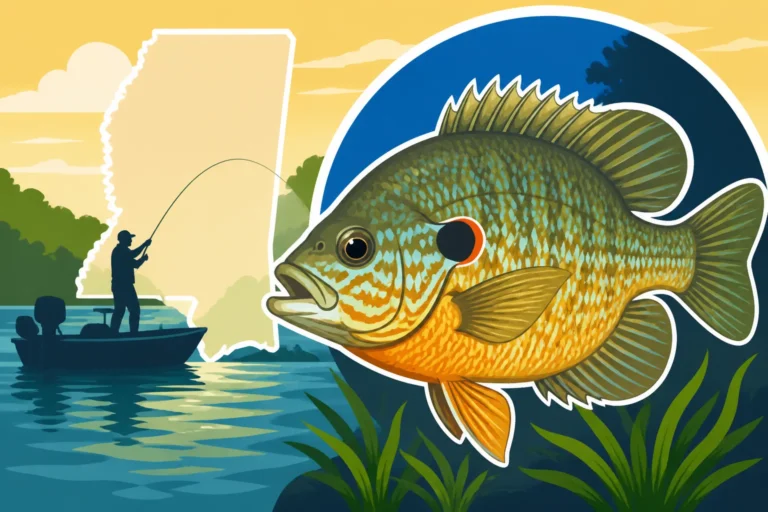
Ah, the bluegill! If there's one fish that epitomizes panfishing in Mississippi, it's this little dynamo. Instantly recognizable and incredibly widespread, bluegill (often called "bream," "sunny," or "coppernose") are a staple for every angler, from seasoned veterans to excited youngsters on their very first outing. Their aggressive bite, vibrant colors, and willingness to cooperate make them an absolute joy to target.
Identifying the Bluegill
Bluegill are typically deep-bodied, somewhat flattened fish with a small mouth. Their coloration can vary quite a bit depending on their habitat and diet, but they generally sport an olive-green back that fades into a yellowish-orange or even bluish belly. Look for several vertical bars along their sides, which are more prominent in some individuals. The most distinctive feature, and how they get their name, is the dark blue-black "ear flap" or operculum flap that extends from the gill cover. You'll often see a dark spot at the base of their dorsal fin too. While typically caught in the 6- to 9-inch range, larger "bull" bluegill can reach over a pound and put up a truly impressive fight on light tackle. When you're trying to figure out if you've got a bluegill, that dark ear flap is usually the dead giveaway.
Bluegill Habitats and Behavior
Bluegill are incredibly adaptable and can be found in virtually all freshwater bodies across Mississippi, from small farm ponds to massive reservoirs like Ross Barnett Reservoir Fishing Guide or Sardis Lake Fishing Guide. They prefer clear, warm water with plenty of submerged vegetation, brush piles, fallen timber, and docks, which provide both cover from predators and ambush points for their prey. You'll often find them schooling around these structures, especially during their spawning season when males aggressively guard their nests.
During the warmer months, bluegill tend to hang out in shallower waters, especially early mornings and late evenings. As the sun climbs high, they'll retreat to slightly deeper cover. In cooler months, they'll move to deeper pockets and suspend near structure. They are primarily insect eaters, munching on aquatic insects, larvae, and small crustaceans, but they'll also take small minnows, snails, and even bits of plant matter. Their diet flexibility is part of why they're so eager to bite a wide variety of baits.
Top Fishing Strategies for Bluegill
Catching bluegill is about as straightforward and rewarding as fishing gets. The beauty is you don't need fancy gear. A simple cane pole or an ultralight spinning rod and reel combo loaded with light line (4-6 lb test) is perfect. For bait, live worms (red wigglers are fantastic!), crickets, or small pieces of corn are usually irresistible. If you prefer artificials, tiny jigs (1/32 or 1/64 oz) tipped with a small plastic grub or feather can be incredibly effective, especially when fished under a small bobber. You can find a fantastic selection of these small jigs and fishing accessories on Amazon, making it easy to stock up before your next trip.
When targeting bluegill, focus on areas with cover: lily pads, weed beds, submerged logs, and around boat docks. Cast your bait near these structures and let it sink slowly. A bobber is your best friend here, as it tells you when a bluegill is nibbling. During the spawn, typically in late spring and early summer, bluegill congregate in shallow, sandy areas, creating "beds" – circular depressions in the bottom. You can often see these beds, and fishing them can lead to fast and furious action! Remember to check out Bream and Bluegill Fishing in Mississippi for even more detailed tips.
Redear Sunfish: The Shellcracker's Secret
Next up, we have the redear sunfish, affectionately known as the "shellcracker" across the South. These guys are a bit more elusive than their bluegill cousins but offer a truly rewarding catch for those who seek them out. Named for their distinctive red or orange margin on the opercular flap, they are celebrated for their strong fighting ability and exceptional size.
Distinctive Features of the Redear Sunfish
Redear sunfish share a similar body shape to bluegill – deep and compressed – but they can grow significantly larger, often reaching over a pound and occasionally exceeding two pounds, making them a true trophy panfish. Their coloration is usually olive to yellowish-green, with a lighter, often white or yellowish belly. Unlike bluegill, they typically lack the distinct vertical bars. The key identifying feature is that bright red or orange margin around the posterior edge of their opercular flap (the "ear"). Males tend to have a more vibrant red, while females might show a paler orange or even yellow. Their mouths are small, set low on the head, which is perfectly adapted for their unique diet.
Preferred Habitats and Unique Diet
Shellcrackers prefer clean, clear water, much like bluegill, but they often gravitate towards slightly deeper areas. You'll find them around drop-offs, submerged timber, stump fields, and along the edges of weed beds in lakes, ponds, and slow-moving rivers. They are less prone to schooling in large numbers like bluegill, often found in smaller groups.
What truly sets redear sunfish apart is their diet. They are aptly named "shellcrackers" because their primary food source consists of snails, mussels, and other bottom-dwelling invertebrates. They have specialized pharyngeal teeth in their throats that allow them to crush the shells of these creatures. This unique dietary preference means that conventional panfish baits like crickets might not always be the most effective. Understanding their menu is key to successful shellcracker fishing.
Targeting Shellcrackers with the Right Approach
Because of their shell-cracking diet, the best baits for redear sunfish are usually those that mimic their natural food. Small worms, especially red wigglers or nightcrawlers, are highly effective. Crickets can work, but worms often outperform them. You might even find success with small pieces of shrimp or even corn. The key is to fish your bait directly on the bottom, or very close to it.
A Carolina rig or a slip-sinker rig, which allows the bait to sit naturally on the bottom while the line runs freely through the weight, is often very productive. Use a small hook (size 6 or 8) and a light leader. Look for shellcrackers in similar spots to bluegill – near submerged structure, weed lines, and transitions in depth – but be prepared to fish a little deeper, especially during the heat of the day. Patience is a virtue when targeting shellcrackers, but the reward of a big, hard-fighting fish is well worth the effort. For more specific advice, check out Redear Sunfish Shellcracker Fishing in Mississippi.
Crappie Cousins: White and Black Crappie Distinctions
Now we venture into the world of crappie, the darling of many a Mississippi angler. These prolific panfish are legendary for their schooling habits and incredible table quality. In Mississippi, we are blessed with both white crappie and black crappie, and while they share many similarities, knowing the differences can sometimes help you tailor your approach. Often called "sac-au-lait" or "papermouths," crappie are a top target for anglers year-round.
White Crappie Deep Dive
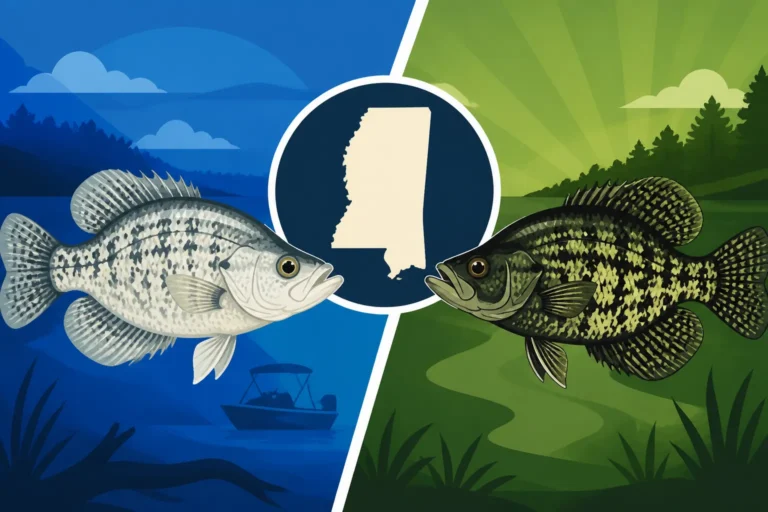
The white crappie is perhaps the more common of the two species in many of Mississippi's larger reservoirs and rivers, thriving in murkier, more turbid waters. They have a silvery body with distinct dark vertical bars or bands along their sides, which helps to differentiate them from their black crappie cousins. Another key identifier is their dorsal fin (the fin on their back) which usually has 6 spines.
White crappie tend to prefer slightly more open water than black crappie, often schooling in deeper channels, around submerged timber, or suspending over brush piles and ledges. They are aggressive feeders, primarily preying on minnows, small baitfish, and aquatic insects. These crappie are known for their strong runs when hooked, making them a thrilling catch on light tackle. Many of us chase them on major lakes like Grenada Lake Fishing Guide and Sardis Lake Fishing Guide.
Black Crappie Characteristics
Black crappie, while similar in body shape to white crappie, have a few key distinguishing features. Their coloration is generally darker, with an irregular pattern of black spots and speckles scattered across their silvery-green or golden sides, rather than distinct vertical bars. The most reliable way to tell them apart, however, is by counting the spines on their dorsal fin. Black crappie typically have 7 or 8 dorsal spines.
Black crappie tend to prefer clearer water with more vegetation than white crappie. You'll often find them tucked into lily pads, weed beds, and dense brush. They are also known for being a bit more structure-oriented. Like white crappie, they are predatory, feeding on minnows, insects, and small crustaceans. While they might not grow quite as large on average as some white crappie, they still provide fantastic sport and excellent eating. Understanding these subtle differences is key to identifying your catch, and you can learn more about this in White Crappie vs Black Crappie: How to Tell Them Apart.
Mastering Crappie Fishing Techniques
Crappie fishing is an art form for many Mississippi anglers, and there are countless techniques that prove successful. The most popular methods usually involve live minnows or small jigs. A simple bobber rig with a minnow fished near submerged cover is deadly. For jigs, small marabou jigs, tube jigs, or soft plastic grubs in colors like chartreuse, white, or black are often irresistible. You can find a huge variety of crappie jigs and soft plastics online at retailers like Amazon, ensuring you have the right bait for any water condition.
When targeting crappie, whether white or black, focus on structure. Brush piles, standing timber, dock pilings, and bridge supports are all prime real estate. In colder months, crappie will often move to deeper holes and suspend. In spring, they migrate to shallower waters to spawn, making them easier to locate. Trolling with multiple rods and jigs or minnows is also a very popular and effective method on large reservoirs. Don't forget to check out Crappie Fishing Techniques for Mississippi Lakes and Best Bait for Crappie in Mississippi for a treasure trove of tips!
Other Delightful Dabs: Green, Warmouth, and Longear Sunfish
While bluegill, redear, and crappie get most of the spotlight, Mississippi's waters are home to several other fantastic panfish that deserve our attention. These species might not be as widely targeted, but they offer unique challenges and just as much fun, especially for anglers looking to diversify their catch. They're often overlooked but can provide some surprising action!
Green Sunfish Fun
The green sunfish is a hardy, feisty little fish often found in smaller ponds, creeks, and slower-moving streams, sometimes tolerating less-than-pristine water conditions better than other sunfish. They are easily identified by their chunkier, more robust body compared to bluegill, a larger mouth that extends back to the eye, and iridescent green or blue-green speckles on their sides. They also have a dark opercular flap, usually with a pale or orange margin.
Green sunfish are aggressive eaters and will readily strike at almost any small bait or lure. Worms, crickets, small spinners, and tiny crankbaits are all fair game. They're often the first fish to bite in a new pond and are fantastic for kids due to their eagerness. While they don't grow very large, usually topping out around 6-8 inches, their willingness to bite makes them a constant source of entertainment. They may not be the prettiest, but they're always up for a fight!
Warmouth Wonders
The warmouth, sometimes called "goggle-eye" or "redeye," is another fascinating panfish found in Mississippi. These sunfish have a more bass-like appearance, with a stockier body, a larger mouth (extending beyond the front of the eye), and a more mottled, dark olive to brown coloration. Their eyes are often noticeably red, giving them a slightly menacing look, and they typically have several dark streaks radiating from the eye.
Warmouth prefer swampy, heavily vegetated areas, slow-moving backwaters, and muddy bottom lakes or ponds. They are ambush predators, often hiding in dense cover like lily pads or submerged brush, waiting to pounce on unsuspecting prey. Live worms, crickets, and small minnows are excellent baits. They also respond well to small jigs and spinnerbaits. If you're fishing a weedy backwater, specifically targeting largemouth bass, don't be surprised if a hungry warmouth takes your offering instead! They're a tough-fighting fish for their size.
Longear Sunfish Charm
The longear sunfish is arguably one of the most beautiful panfish found in Mississippi, though often smaller than bluegill. As their name suggests, their most prominent feature is an exceptionally long, flexible opercular flap (the "ear flap"), often edged with red or orange, which can sometimes extend far back towards their tail. Their bodies are vibrant, covered in iridescent spots and wavy lines of blue and orange, especially in breeding males.
Longear sunfish typically inhabit clear, rocky streams and rivers, but can also be found in clear lakes and ponds. They prefer shallow areas with moderate currents and plenty of rocks or vegetation for cover. Due to their smaller size, ultra-light tackle and tiny baits are key. Small worms, crickets, and even microscopic artificial flies can entice them. While they might not fill your cooler, catching a brilliantly colored longear is a true aesthetic pleasure for any angler. These small gems are often overlooked but offer a splash of vibrant beauty to any catch. You can often find them in clear streams that feed into larger bodies of water.
Comparing Mississippi's Favorite Panfish
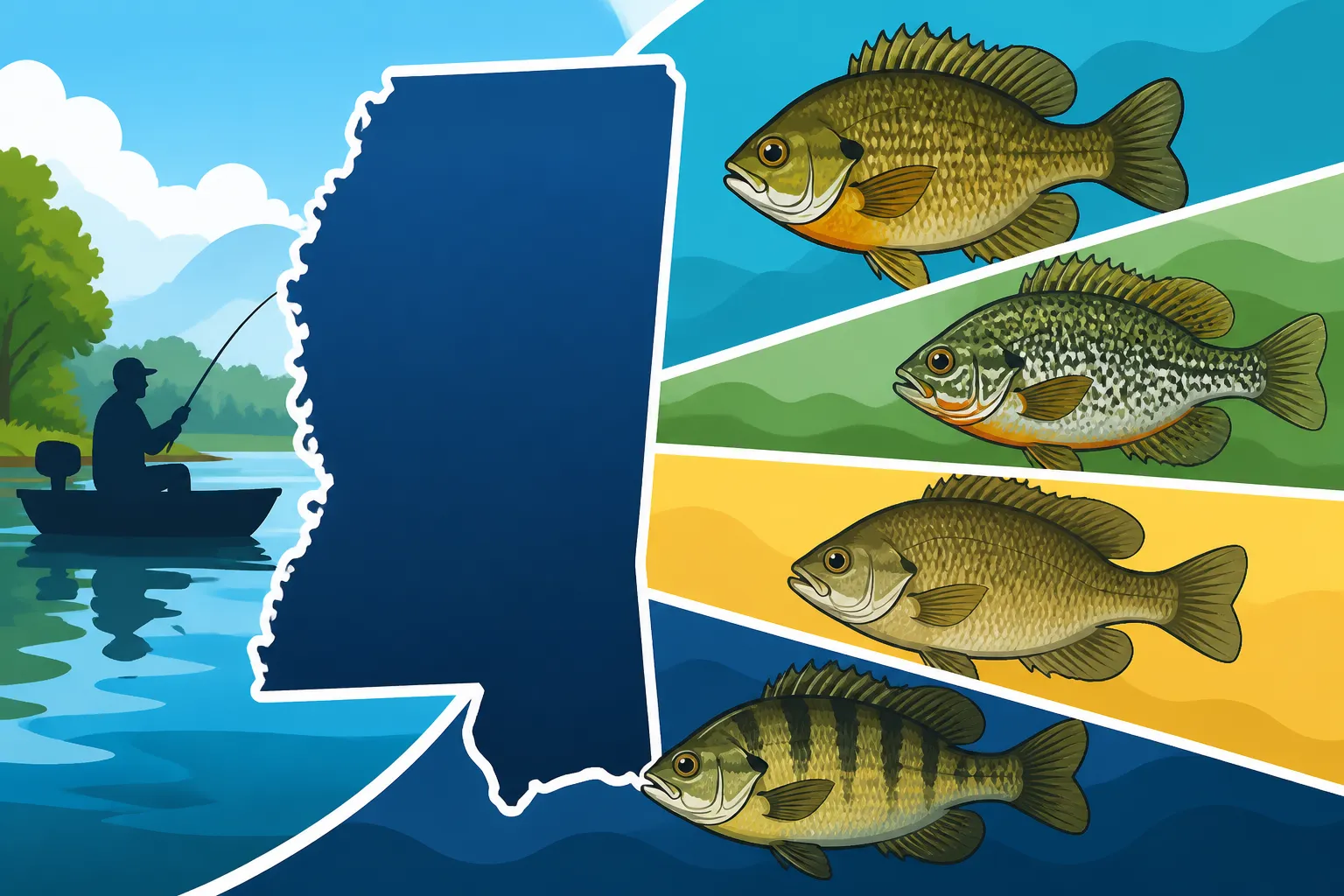
To help keep these various species straight, here's a quick comparison of the panfish we've discussed. This table highlights their main identifying features and common habitats, making it easier to recognize your next catch.
| Species | Key Identifying Feature | Common Size Range | Preferred Habitat | Primary Diet |
|---|---|---|---|---|
| Bluegill | Dark blue-black "ear flap"; dark spot on dorsal fin | 6-9 inches | Clear water, vegetation, brush piles, docks | Insects, larvae, minnows |
| Redear Sunfish | Red/orange margin on ear flap; no vertical bars | 8-12+ inches | Clearer, deeper water, submerged structure | Snails, mussels, worms |
| White Crappie | 6 dorsal spines; distinct vertical dark bars | 8-14+ inches | Murkier water, open channels, submerged timber | Minnows, baitfish, insects |
| Black Crappie | 7-8 dorsal spines; irregular black speckles | 7-12 inches | Clearer water, dense vegetation, brush piles | Minnows, insects |
| Green Sunfish | Large mouth (to eye); robust body; iridescent green/blue | 4-8 inches | Small ponds, creeks, slow streams, some turbidity | Insects, small fish, worms |
| Warmouth | Bass-like body; large mouth (past eye); red eye; mottled | 5-9 inches | Heavily vegetated, swampy backwaters | Insects, minnows |
| Longear Sunfish | Very long ear flap; vibrant blue/orange wavy lines | 3-6 inches | Clear, rocky streams, moderate current | Insects, larvae |
Knowing these differences will certainly enhance your fishing experience and help you identify the fish that are biting!
The Joy and Importance of Panfishing in Mississippi
Panfishing in Mississippi is more than just a hobby; it’s a cultural cornerstone, a tradition passed down through generations. Whether you're chasing the "sac-au-lait" in the springtime or bagging a mess of bream for a family fish fry, these adaptable and abundant fish provide endless opportunities for recreation and connection with nature. It’s accessible, affordable, and incredibly rewarding.
Remember, responsible fishing practices are key to ensuring healthy panfish populations for years to come. Always check Mississippi Fishing Regulations Explained for current creel and size limits, as these can vary by species and location. And don't forget that most anglers, regardless of age, will need a license, so be sure to pick one up. You can learn all about it in Mississippi Fishing License Guide or even how to get one quickly online. Do Kids Need a Fishing License in Mississippi? is also a great resource for families planning an outing.
So, grab your pole, bait your hook, and head out to your favorite Mississippi fishing spot. There's a whole world of panfish waiting to give you a tug on the line, and with this guide, you're now equipped to know exactly what kind of pan-sized treasure you've found!
Disclaimer
This article is for general informational purposes only and does not constitute professional advice. Laws, prices and regulations vary by location and change over time. Consult a qualified professional for guidance on your specific situation.