Age of a 10-Pound Largemouth Bass
There’s a certain magic to the idea of landing a truly monstrous largemouth bass, especially here in Mississippi. We all dream of that ten-pound lunker, the kind that makes your reel scream and your heart pound. But beyond the immediate thrill, have you ever stopped to wonder just how old that magnificent fish might be? It’s a common question that swirls around campfires and bait shops, often met with guesses and speculation. This guide aims to pull back the curtain on the lifespan of these aquatic giants, helping you understand the incredible journey a largemouth bass takes to reach that elusive double-digit weight in our Mississippi waters.
The Quest for a 10-Pounder: Why Size Matters
For many anglers, the pursuit of a genuinely large bass isn't just about the fight; it's about the challenge, the dedication, and the understanding of an apex predator. A 10-pound largemouth bass in Mississippi isn't just a fish; it's a testament to a healthy ecosystem, a prime habitat, and a bit of luck.
The Allure of Trophy Bass
There's an undeniable draw to catching a trophy bass. It's the kind of fish that defines a season, or even a lifetime, for many dedicated anglers. Imagine the story you could tell, holding up that magnificent 10-pounder caught right here in Mississippi! It's not just bragging rights; it's a deep sense of accomplishment, a culmination of hours spent on the water, honing techniques, and understanding the nuances of bass behavior. These big fish are often the wariest, the most experienced, and the most challenging to entice, making their capture all the more rewarding. Landing one often feels like solving a complex puzzle, requiring the right bait, the perfect presentation, and a healthy dose of patience.
Here in the Magnolia State, our diverse waters, from the sprawling Ross Barnett Reservoir Fishing Guide to the cypress-laden Lake Washington Fishing Guide, hold the potential for such giants. Every cast holds the promise of that unforgettable strike, that sudden, powerful tug that signals you've hooked something truly special. The chase itself, the continuous learning and adapting, is what keeps many of us coming back, year after year, in search of that ultimate trophy.
Factors Influencing Bass Growth in Mississippi
So, what makes a bass grow big enough to hit that 10-pound mark? It's a complex recipe, but several key ingredients come into play, especially in a state like Mississippi. First and foremost, forage availability is paramount. A bass needs a consistent and abundant supply of high-protein food to grow rapidly. Think about all those gizzard shad, threadfin shad, bluegill, and even smaller crappie swimming around. Lakes with thriving baitfish populations offer a buffet for growing bass. If a bass has to expend too much energy chasing scarce food, its growth will be stunted.
Secondly, water temperature plays a huge role. Mississippi's generally warm climate means a longer growing season for bass compared to more northern states. Warmer water increases their metabolism, allowing them to digest food faster and grow continuously for more months out of the year. However, extremely hot water can also stress fish, so there's a sweet spot. Habitat quality is another critical factor. Lakes with plenty of submerged timber, grass beds, and structure provide not only ambush points for feeding bass but also shelter from predators and ideal spawning grounds. Healthy habitats mean healthy fish. You can find more about what they like to eat in Largemouth Bass Diet and Feeding Habits.
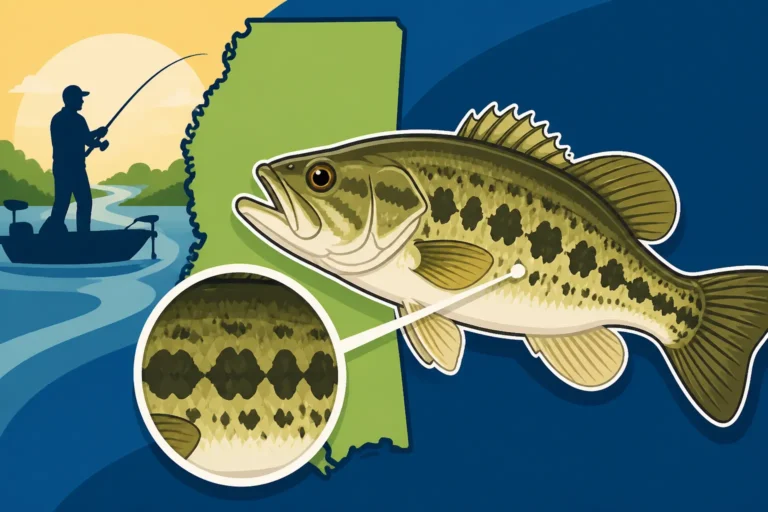
Finally, genetics cannot be overlooked. Mississippi is fortunate to have a strong presence of Florida-strain largemouth bass, either naturally or through stocking programs. These fish are genetically predisposed to grow larger than their Northern-strain counterparts. While not every Florida-strain bass will hit 10 pounds, their genetic blueprint gives them a head start on achieving truly impressive sizes. This blend of abundant food, warm climate, good habitat, and superior genetics creates the perfect storm for growing massive bass in Mississippi.
Unraveling the Age: How Biologists "Read" a Fish
Ever wondered how scientists figure out how old a fish is without asking for its birth certificate? It's pretty fascinating, and it involves looking at natural growth rings, much like counting rings on a tree.
The Science Behind Aging Largemouth Bass
Biologists have several clever methods to determine the age of a largemouth bass, and they're surprisingly accurate. The most common and reliable methods involve examining bony structures like otoliths (small ear bones) or scales. Think of these like natural diaries that record the fish's life story.
With otoliths, once removed from the fish, they are typically sectioned, polished, and viewed under a microscope. Each year, as the fish grows, it lays down a new ring of calcium carbonate on the otolith, much like a tree adds a new growth ring. These rings, called annuli, represent a year of life. The spacing between the rings can even tell biologists about periods of rapid growth (wider spacing) or slower growth (narrower spacing), often correlating with seasons.
Scales are another frequently used method, especially for non-lethal aging. When examined under magnification, bass scales show concentric rings called circuli. During periods of faster growth (like spring and summer), these rings are widely spaced. During slower growth (like winter), they are much closer together, forming a distinct "annulus" or year mark. While scales are easier to collect and don't require sacrificing the fish, otoliths are generally considered more accurate, especially for older fish where scale annuli can become harder to distinguish. This scientific detective work helps us understand population dynamics and tailor management strategies for healthy fisheries.
Growth Rates vs. Maximum Age Potential
It's crucial to understand that a largemouth bass's growth isn't a steady, linear progression. They grow incredibly fast when they're young, especially if food is plentiful. Think of a teenager shooting up several inches in a year – bass do something similar in their early life. This initial burst of growth allows them to quickly become effective predators and avoid being prey themselves. However, as they get older and larger, their growth rate naturally slows down. They still grow, but at a much more modest pace, putting on ounces or maybe a pound a year rather than multiple pounds.
The maximum age potential for a largemouth bass is another interesting aspect. While some bass in northern climates might live longer due to slower metabolisms in colder water, they often don't reach the massive sizes seen in the South because their growing seasons are much shorter. In warmer climes like Mississippi, bass can live up to 10-15 years, and sometimes even a bit longer, under ideal conditions. However, many trophy bass are caught before they reach their absolute maximum lifespan. The combination of sustained, optimal growth conditions over many years is what allows a bass to achieve that coveted 10-pound mark. It's a balance between growing quickly enough in its early years and surviving long enough to continue that growth into its later years.
Estimating the Age of a 10-Pound Mississippi Largemouth
So, you’ve hooked that lunker, weighed it, taken your photos, and gently released it. Now the burning question: how many candles would be on its birthday cake?
General Age Ranges for Trophy Bass
Pinpointing the exact age of a 10-pound largemouth bass without a biologist's tools is impossible, but we can certainly give you a strong estimate based on typical growth rates observed in Mississippi waters. Generally, a largemouth bass needs quite a few years to reach that impressive double-digit weight. You're likely looking at a fish that is at least 5 to 8 years old, with many trophy-sized bass falling into the 7 to 10-year-old range, or even older.
Consider this: A young bass might grow several pounds in its first two or three years if conditions are perfect. But as it gets bigger, that growth slows. To go from, say, 7 pounds to 10 pounds might take another 2-3 years of consistent feeding and favorable conditions. Factors like an abundance of readily available forage (like the shad common in our reservoirs), consistent warm temperatures, and low fishing pressure on larger fish all contribute to faster growth and longer lifespans for these giants. Think of it as a marathon, not a sprint. These fish have survived multiple spawning seasons, evaded countless lures, and consistently found enough food to pack on the pounds. This is why a 10-pounder is such a monumental catch and why protecting these older, larger fish is so important for the fishery's future.
Regional Nuances Within Mississippi
Mississippi is a big state, and while the general principles of bass growth apply everywhere, there can be subtle but important regional differences that influence how quickly a bass reaches that 10-pound mark. For example, lakes known for producing trophy bass, like Okhissa Lake Bass Fishing Report or parts of Ross Barnett Reservoir Fishing Guide, often have specific characteristics. Okhissa Lake, a relatively younger lake with specific stocking programs, has been known to produce large bass due to its robust forage base and habitat management. Its clear waters and ample structure provide an excellent environment for bass to thrive.
In contrast, older, more established reservoirs like Grenada Lake Fishing Guide or Sardis Lake Fishing Guide might have different forage dynamics or pressures. While these lakes are phenomenal for crappie, they also hold strong bass populations, but the growth rates might vary based on the specific conditions of a given year, such as water levels or shad populations. A lake with a consistently abundant and easily accessible food source, combined with excellent water quality and minimal stress from overfishing, will invariably allow bass to grow larger and older more reliably. Even within a single lake, different sections can have varying levels of food and habitat, leading to faster growth in certain areas. Understanding these local nuances can sometimes be the key to finding those truly exceptional fish.
Here's a simplified look at how various conditions might impact the journey to a 10-pound bass:
| Factor | Impact on Growth Rate | Typical Age for 10-lb Bass (Estimate) | Notes |
|---|---|---|---|
| Abundant Forage | Faster | 5-7 years | Consistent food supply is key. |
| Scarce Forage | Slower | 8-10+ years | Fish expend more energy to find food. |
| Warm Water | Faster | 5-8 years | Longer growing seasons in Mississippi. |
| Cooler Water | Slower | 8-10+ years | Shorter active feeding periods. |
| Florida Strain | Faster/Larger Potential | 5-8 years | Genetically predisposed to larger sizes. |
| Northern Strain | Slower/Smaller Potential | 8-10+ years | Less common for 10-pounders in MS. |
| Healthy Habitat | Consistent | 6-9 years | Provides shelter, ambush points, and spawning areas. |
| Poor Habitat | Stunted | Rarely reaches 10 lbs | Lack of cover, food sources, and spawning success. |
When you're out on the water, whether you're using a fancy fish finder or just a simple rod and reel, remembering these factors can help you understand the potential of the waters you're fishing. You can find quality fishing gear, from scales to specialized lures for bigger bass, on platforms like Amazon, helping you document and pursue these giants.
Conservation and the Future of Trophy Bass Fishing
Catching a 10-pound largemouth bass is an incredible achievement, but the story doesn't end when you land the fish. How we treat these magnificent creatures after the catch profoundly impacts the future of trophy bass fishing in Mississippi.
Catch and Release for Older Fish
The concept of "catch and release" has become a cornerstone of responsible angling, and it's especially vital when it comes to trophy-sized largemouth bass in Mississippi. Why? Because those big, 10-pound lunkers aren't just impressive; they are the prime breeders, the genetic backbone of our future bass populations. These older, larger fish have proven their ability to survive, grow, and reproduce successfully. When they spawn, they pass on those desirable genes for size, vigor, and survival instincts to the next generation. Removing too many of these trophy fish from the ecosystem can diminish the overall quality and potential of a fishery over time.
Many anglers view catching a trophy as the ultimate goal, and once that goal is achieved, the greatest respect we can show the fish is to release it safely back into its environment. This allows it to continue its role in the ecosystem, potentially growing even larger and certainly contributing to future spawns. Think about the impact: one released 10-pound female bass could produce tens of thousands of eggs, ensuring a vibrant fishery for years to come. It's a cycle of respect and sustainability that benefits everyone who loves Largemouth Bass Fishing in Mississippi. While some might keep smaller, abundant fish for a meal, the giants are often considered too valuable to take out of the water permanently.
Responsible Angling Practices
Beyond the decision to release, how we handle a fish, especially a large one, in those precious moments after the catch is critical to its survival. A trophy bass that swims away strongly has a much better chance of thriving. Here are some key responsible angling practices:
Firstly, minimize fight time by using appropriate tackle. Don't try to land a 10-pound bass on ultralight gear if you can avoid it. A prolonged fight can exhaust the fish, making it more vulnerable to stress, injury, and predators after release. Secondly, handle the fish gently and quickly. Wet your hands before touching the fish to protect its protective slime coat. Avoid squeezing its belly or gills. If possible, keep the fish in the water while unhooking it. If you must lift it for a photo, support its weight horizontally, ideally with one hand under its belly and the other gripping its lower jaw (if using a lip gripper, ensure it's a good quality one you might find on Amazon and only use it for brief support, not swinging the fish).
Thirdly, use proper de-hooking tools. Long-nose pliers or a dedicated de-hooker can make removing hooks much easier and quicker, reducing damage to the fish. If a fish is deeply hooked and removing the hook would cause excessive damage, it's often better to cut the line as close to the hook as possible; the hook will often rust away. Finally, allow for proper recovery. After unhooking, gently hold the bass upright in the water, facing into any current, until it regains its strength and can swim away on its own. Don't just toss it back in; nurse it back to health. These simple practices ensure that the next angler, or even you, might have the chance to catch that same magnificent fish again. This kind of mindful angling ensures that the thrill of catching a Trophy Bass in Mississippi Waters remains a possibility for generations to come.
Disclaimer
This article is for general informational purposes only and does not constitute professional advice. Laws, prices and regulations vary by location and change over time. Consult a qualified professional for guidance on your specific situation.