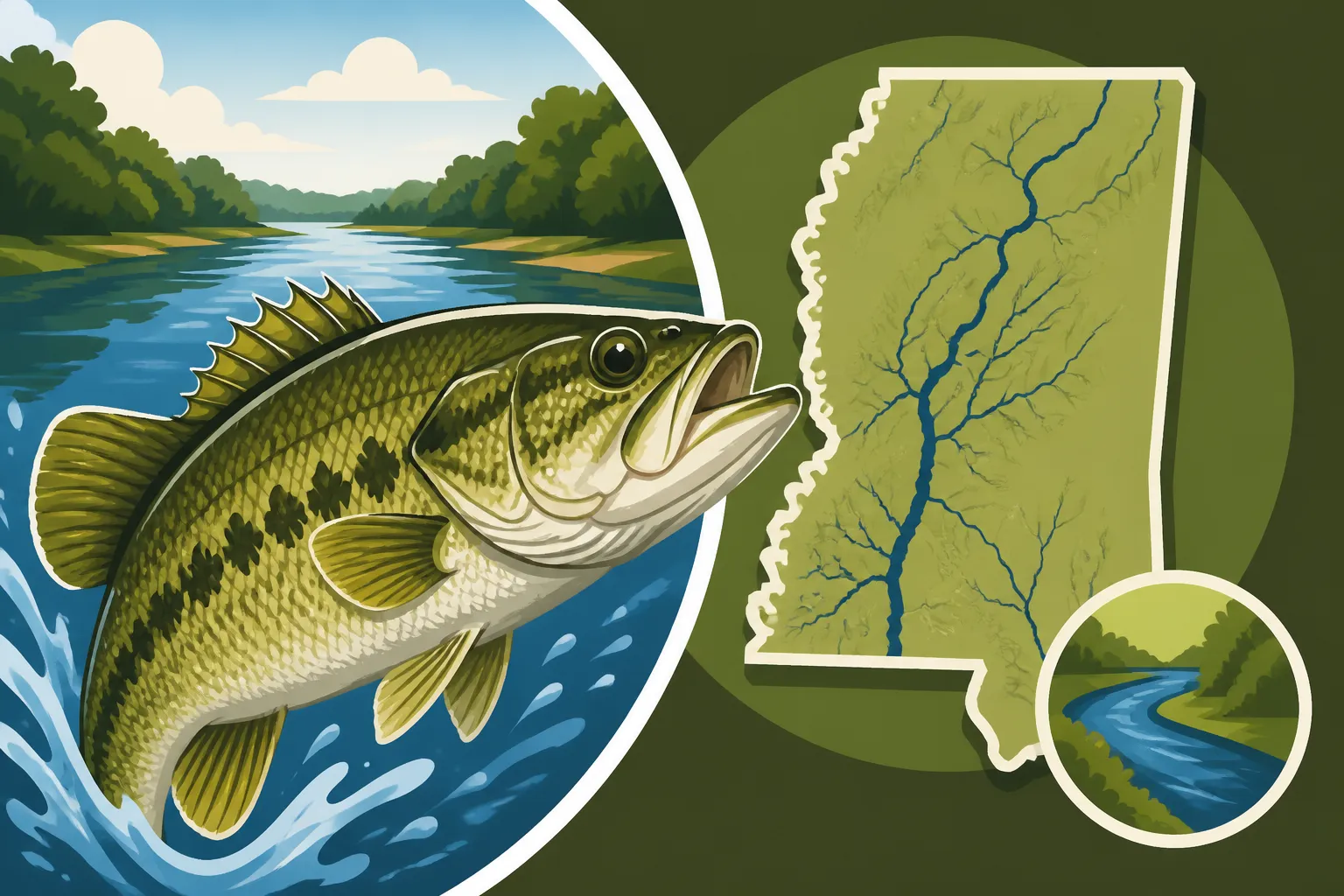
Spotted Bass Identification and Range
There's nothing quite like the thrill of feeling a strong tug on your line, setting the hook, and battling a feisty bass to the boat or bank. But once you land it, a common head-scratcher for many Mississippi anglers is figuring out exactly which kind of bass it is. Is it a largemouth, a smallmouth, or that often-misidentified third cousin, the spotted bass? This guide is here to help you confidently identify spotted bass and understand where these dynamic fish make their homes across our beautiful state.
Why Identification Matters for Mississippi Anglers
It might seem like a minor detail, but knowing precisely what fish you’ve caught, especially within the bass family, can make a significant difference in your fishing experience. It's not just about bragging rights (though that's certainly part of the fun!); it ties into regulations, personal goals, and even the larger picture of conservation. Getting it right helps everyone.
Understanding Fishing Regulations and Limits
Mississippi has specific regulations for different bass species, and sometimes those rules can vary. For example, while largemouth bass might have a statewide size and creel limit, certain lakes or river systems could have special regulations that target a particular species. You wouldn't want to accidentally keep a fish that's out of season or under the legal size for its species simply because you misidentified it. Ignorance of the law is never an excuse, and a quick glance at your catch, knowing the tell-tale signs, can save you from a potential fine or, worse, impacting the local fish population negatively. Knowing your bass is key to staying compliant and ethical on the water. It’s always a good idea to refresh your memory of the Mississippi Fishing Regulations Explained before heading out.
Personal Records and Angler Achievement
Every angler dreams of a personal best, and many aspire to catch state record fish. But how can you truly know you've broken your personal record for a spotted bass if you can't confidently distinguish it from a largemouth? Many anglers track their catches by species, eager to improve their skills and target specific types of fish. Imagine landing what you think is a giant largemouth, only to find out later it was actually a spotted bass, a species for which you already hold a much larger personal record. Accurate identification allows you to set clear goals, celebrate true achievements, and maintain an honest log of your fishing prowess. It adds another layer of satisfaction to every successful outing.
Contributing to Conservation Efforts
Beyond personal accolades, precise fish identification plays a vital role in the broader conservation landscape. State wildlife agencies, like the Mississippi Department of Wildlife, Fisheries, and Parks (MDWFP), rely on accurate data to manage fish populations effectively. When anglers correctly identify and report their catches (especially in creel surveys or through programs like the Mississippi State Record Fish List), it helps biologists understand the health, distribution, and population trends of different species. If everyone reports a spotted bass as a largemouth, it skews the data, potentially leading to incorrect management decisions. By being a knowledgeable angler, you're a partner in conservation, helping to ensure healthy fisheries for future generations.
Key Physical Characteristics of Spotted Bass
Spotted bass, or Micropterus punctulatus, are often mistaken for largemouth bass, and it's easy to see why. They share many similarities, but once you know what to look for, their unique characteristics become quite clear. Pay close attention to these details, and you'll be identifying them like a pro in no time.
Distinctive Jaw and Mouth Structure
One of the most reliable ways to distinguish a spotted bass from a largemouth is by examining its jaw. When you close the mouth of a spotted bass, the corner of its jaw (the maxilla) will not extend beyond the back of its eye. On the other hand, a largemouth bass's jaw typically extends noticeably beyond the back of its eye. This difference, though subtle at first glance, is a consistent and fundamental identifying marker. It's a classic case of paying attention to the small details that make all the difference. Many anglers find it helpful to gently close the fish's mouth to get a clearer view of this particular feature.
Lateral Line and Body Markings
The lateral line of a spotted bass is usually quite prominent, featuring a series of dark, diamond-shaped blotches or spots that run horizontally along its side. Below this lateral line, the spotted bass often has rows of distinct dark spots, which are the source of its name. These spots are usually much more pronounced and spread across the belly area compared to a largemouth bass, which might have some mottling but rarely such distinct rows of spots on its lower flanks. Think of it as a speckled underbelly! The overall coloration can vary from light green to almost black depending on the water clarity and habitat, but those distinct rows of spots are a consistent clue.
Scales and Fin Features
Look closely at the scales on the spotted bass. Specifically, check the area just behind the maxilla (that jawbone we just talked about) and below the eye. Spotted bass will have small, fine scales covering this cheek patch, whereas largemouth bass usually have larger, more uniform scales throughout this area. Additionally, the dorsal fin of a spotted bass is typically continuous, meaning there isn't a deep, noticeable notch separating the spiny front portion from the soft-rayed back portion, as you'd often find on a largemouth. It's a smoother transition. When you are looking for these nuances, even a simple guide from Amazon on fish identification can be really helpful.
Comparing Spotted Bass to Other Mississippi Bass Species
The world of black bass can be a bit confusing, especially in Mississippi where you have multiple species swimming in the same waters. Knowing the differences isn't just academic; it helps you appreciate the unique qualities of each catch. Let's break down how the spotted bass stands apart from its more famous cousins.
Spotted Bass vs. Largemouth Bass
This is perhaps the most common identification challenge. We've touched on the jawline and the distinct rows of spots on the lower flanks of the spotted bass. To reiterate, a largemouth's jaw extends beyond the eye, while a spotted bass's jaw does not. Furthermore, the largemouth typically has a more jagged, broken lateral line pattern, often appearing as a dark, irregular stripe, rather than the cleaner diamond-shaped blotches of the spotted bass. The largemouth also tends to have a deeper body profile, giving it a more "football-like" appearance, especially when mature. Spotted bass are generally more slender. Remember the dorsal fin characteristic too: the largemouth has a deep notch, almost appearing as two separate fins, while the spotted bass has a continuous, less-notched fin. Understanding these differences is crucial, especially when you're fishing waters known for both, like parts of the Ross Barnett Reservoir Fishing Guide.
Spotted Bass vs. Smallmouth Bass
While smallmouth bass are less common in many parts of Mississippi, primarily preferring cooler, clearer, rockier rivers and reservoirs in the northern parts of the state, it's still good to know the distinction. The smallmouth bass is typically bronze or golden-brown, with vertical bars or stripes along its sides, rather than the horizontal spots or blotches of a spotted bass. Its jaw also does not extend past the eye, similar to the spotted bass, but the smallmouth lacks the distinctive rows of spots on its belly. Smallmouth also tend to have red eyes, a feature not typically seen in spotted or largemouth bass. If you're fishing in areas where smallmouth are present, like parts of the Tennessee-Tombigbee Waterway, these distinctions become even more important. Learning about Smallmouth Bass Fishing in Mississippi can provide even more insight.
Hybrid Bass Considerations
Sometimes, nature, or even human intervention through stocking, can throw a curveball with hybrid bass. While a true "spotted bass hybrid" with largemouth is not a commonly recognized or stocked fish in Mississippi, anglers can encounter other hybrids like the striped bass x white bass cross, often called a "hybrid striped bass" or "Wiper." These fish look distinctly different from black bass species, typically having interrupted horizontal stripes along their silver bodies. However, in certain unique situations, genetic mixing can occur within bass species, sometimes making identification incredibly tricky. If you ever catch a bass that just doesn't seem to fit the mold, it might be an unusual specimen. When in doubt, it’s best to photograph the fish from multiple angles and consult with MDWFP experts or seasoned local anglers.
Here’s a quick comparison table to help differentiate the black bass species you might encounter in Mississippi:
| Feature | Spotted Bass | Largemouth Bass | Smallmouth Bass |
|---|---|---|---|
| Jaw | Does not extend beyond the back of the eye | Extends beyond the back of the eye | Does not extend beyond the back of the eye |
| Body Markings | Prominent rows of dark spots below lateral line | Irregular, often broken lateral stripe | Vertical bars/stripes, no spots on lower flanks |
| Dorsal Fin | Continuous, shallow notch | Deep notch, almost separated fins | Continuous, shallow notch |
| Cheek Scales | Small, fine scales | Larger, uniform scales | Small, fine scales |
| Body Shape | More slender, football-shaped | Deeper body, more "football" | Very streamlined, torpedo-shaped |
| Eye Color | Typically dark | Typically dark | Often reddish |
| General Color | Greenish-brown with dark spots | Greenish-black with dark stripe | Bronze to golden-brown with dark bars |
Natural Range and Habitat in Mississippi
Spotted bass are not found everywhere in Mississippi, but where they do exist, they can be quite prolific and offer fantastic fishing opportunities. Understanding their preferred habitats can significantly increase your chances of finding them.
Typical Water Bodies and Structures
Unlike largemouth bass, which often prefer shallow, weedy cover, spotted bass have a stronger affinity for deeper, clearer waters with rocky bottoms, gravel, and submerged timber. They thrive in flowing water systems like rivers and streams but are also found in many of Mississippi's larger reservoirs, especially those with good current or deeper rock structures. Think of them as the bass that loves a good current and solid underwater real estate. You’ll often find them congregating around rocky points, ledges, bluff walls, and the current breaks associated with river channels or dam tailwaters. They are not as prone to hiding in dense submerged vegetation as their largemouth cousins.
Regional Distribution Across the State
In Mississippi, spotted bass are particularly prevalent in the northern and central parts of the state, especially in the larger reservoirs and river systems. Lakes like Pickwick Lake, the Tennessee-Tombigbee Waterway, and portions of the Mississippi River and its tributaries are known strongholds for spotted bass. They can also be found in systems like the Pearl River and Pascagoula River. While you might occasionally find them elsewhere, their populations are generally more robust and widespread in these flowing or rock-dominated systems. They are less common in the shallow, oxbow lakes or heavily vegetated farm ponds where largemouth typically dominate. Knowing the Best Fishing Spots in Mississippi can help you narrow down where to target them.
Preferred Depths and Cover
Spotted bass, true to their love of structure and current, will often hold deeper than largemouth bass, especially during warmer months or when strong current is present. They'll hug rock piles, channel swings, and the downstream sides of current breaks, waiting to ambush baitfish. While they aren't strictly deep-water fish, they are much more comfortable in 15-30 feet of water than many largemouth. When it comes to cover, they prefer hard structures like rocks, boulders, ledges, and submerged timber. They'll also use bridge pilings, rip-rap banks, and even main lake humps. Their preference for these deeper, harder structures means they can be a bit more predictable to locate with good electronics. If you're looking for Deep Water Crappie Fishing Techniques, many of the same principles for finding structure apply to spotted bass.
Factors Affecting Spotted Bass Populations and Distribution
The health and presence of spotted bass populations are influenced by a complex interplay of environmental factors and human management efforts. Understanding these can give you a better appreciation for these fish and the challenges they face.
Environmental Conditions and Water Quality
Spotted bass, while adaptable, generally prefer waters with good to excellent quality. They thrive in systems with moderate to strong currents and ample oxygen. Factors like excessive sedimentation, which can fill in their preferred rocky spawning and foraging areas, can negatively impact their populations. Changes in water temperature, especially prolonged periods of extreme heat or cold, can also affect their feeding patterns, spawning success, and overall health. Pollution runoff from agricultural or urban areas, which degrades water quality and introduces harmful chemicals, can also suppress spotted bass numbers. A healthy ecosystem is paramount for a thriving spotted bass fishery. It's why efforts to maintain good Mississippi Freshwater Fishing Rules and water quality standards are so important.
Stocking Programs and Management Efforts
State agencies, like the MDWFP, actively manage fish populations through various programs, including stocking. While largemouth bass are more frequently stocked across a wider array of waters, spotted bass are also part of specific management plans. Stocking might occur to introduce a species to a new, suitable water body, to bolster declining natural populations, or to create a more diverse fishery. These efforts often involve careful research to ensure the stocked fish are genetically appropriate and the habitat can sustain them. Management also includes setting appropriate creel and size limits, as discussed earlier, to prevent overfishing and allow fish to reach maturity and spawn. This science-driven approach helps balance angler opportunity with conservation needs.
Competition with Other Species
Spotted bass share their habitat with a variety of other fish, including their bass cousins, as well as crappie, catfish, and various forage fish. This can lead to competition for food resources and spawning grounds. In some cases, spotted bass can even hybridize with smallmouth bass, particularly in border waters where both species coexist. This hybridization can sometimes dilute the genetic integrity of pure strains. In reservoirs where largemouth bass are abundant, spotted bass might be outcompeted for certain food sources or prime territories, pushing them into their preferred deeper, rockier domains. Understanding this dynamic helps explain why you find different bass species in different parts of the same lake or river. This interaction between species is a fascinating aspect of Mississippi Freshwater Fish Species Guide.
Tips for Targeting Spotted Bass Once Identified
Now that you're a pro at identifying spotted bass, you're probably eager to go out and catch some! Their distinct preferences for habitat and feeding behavior mean that certain techniques and lures will be more effective than others.
Preferred Baits and Lures
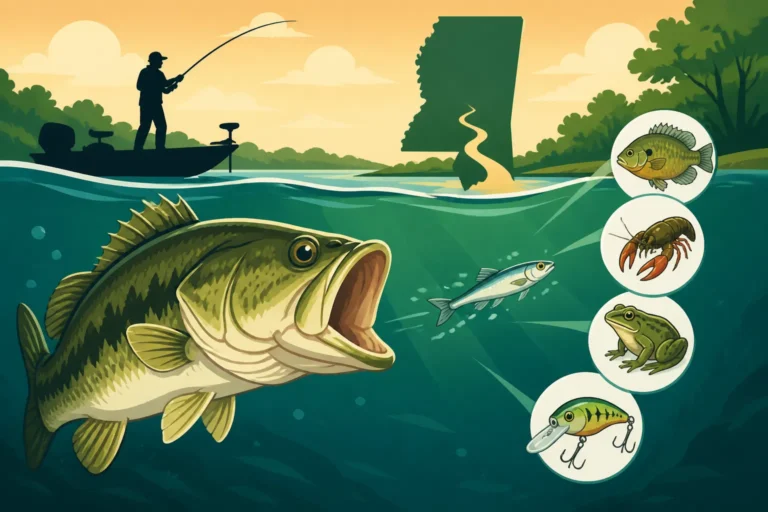
Spotted bass are opportunistic feeders, but they do have a penchant for certain presentations. Since they often reside deeper and prefer hard structure, jig-style baits are incredibly effective. Small swimbaits, either on jig heads or as trailers, can also be deadly, mimicking the baitfish they prey upon. Finesse techniques, such as drop-shot rigs, shaky heads, or Ned rigs, are excellent choices when fish are finicky or holding tight to structure. Crankbaits that dive to appropriate depths and can deflect off rocks are also great search baits. Don't forget small spinnerbaits or buzzbaits fished around current breaks, especially during low light. For live bait, minnows or small crawfish are often irresistible. You can find a fantastic array of these specific lures and tackle on Amazon, making it easy to gear up for your next trip.
Fishing Techniques for Spotted Bass
Given their preference for rocky, deep, and current-laden areas, precision casting and boat positioning are crucial. When targeting spotted bass in rivers, look for current seams, eddies behind boulders, and points where the current slows. In reservoirs, focus on main lake points, bluff walls, deep humps, and submerged timber on ledges. Use your electronics to locate these structures and any baitfish or fish arches nearby. A common tactic is to fan cast an area with a crankbait or swimbait, then slow down and pick it apart with a jig or a shaky head once you locate fish. Vertical jigging directly over identified structure can also be highly productive. For more general advice, checking out Bass Fishing Techniques for Mississippi Anglers will give you a solid foundation.
Seasonal Considerations for Spotted Bass
Just like other bass species, spotted bass behavior changes with the seasons. In spring, as water temperatures rise, they'll move shallower to spawn, often on gravel or rocky bottoms. This is a great time to target them with shallow crankbaits or even topwater lures early in the morning. During the hot summer, they retreat to deeper, cooler water, often suspending over ledges or hugging bottom structures, making deep-diving crankbaits, jigs, and drop-shot rigs effective. Fall sees them chasing baitfish, often schooling up and feeding aggressively, which can be fantastic for throwing crankbaits and swimbaits into feeding frenzies. In winter, they'll typically hold tight to deep structure, making slow presentations with jigs or spoons the best bet. Being mindful of the Mississippi Fishing Seasons Calendar will definitely help you adjust your approach.
Disclaimer
This article is for general informational purposes only and does not constitute professional advice. Laws, prices and regulations vary by location and change over time. Consult a qualified professional for guidance on your specific situation.