How to Fish Lily Pads for Bass
We’ve all been there: staring out at a beautiful stretch of water, maybe on Ross Barnett Reservoir or one of our gorgeous state park lakes, and seeing those inviting green blankets of lily pads. They look like prime bass territory, don't they? But then you cast, get immediately snagged, pull up a mess of weeds, and quickly get frustrated. It feels like an impenetrable fortress where your lure goes to die. If you’ve struggled to figure out how to effectively fish these incredible habitats for bass, you're in the right place. This guide will help you understand why bass gravitate to lily pads and, more importantly, how to confidently cast into them and pull out some awesome fish.
Understanding Why Bass Love Lily Pads
Lily pads aren't just pretty floating greenery; they're a complex and dynamic ecosystem that provides everything a bass needs to thrive. Think of them as underwater apartment complexes with built-in hunting grounds, air conditioning, and a constant food delivery service. Once you understand the "why" behind bass loving these areas, you'll be much better equipped to find them.
The Perfect Ambush Point
Imagine being a stealthy hunter, waiting for your prey to swim by. Lily pads offer bass an unparalleled advantage in this regard. The broad leaves create a dense canopy, casting shadows and breaking up the visual line of sight. This makes it incredibly difficult for smaller fish, frogs, or insects to spot a lurking bass until it's too late. Bass will often position themselves just under the edge of a pad, or nestled deep within a dense mat, ready to dart out with incredible speed. It’s a classic predator-prey scenario playing out right under the surface, and knowing this helps you anticipate where they’ll be waiting.
When you're fishing these spots, consider approaching them from the perspective of the bass. Where would you hide if you were a bass waiting to ambush a meal? Look for points where the pads thin out into open water, small pockets within a large mat, or areas where the pads meet submerged timber. These are all prime ambush locations that bass will exploit. The thicker the cover, often the more confident a bass feels about holding tight and waiting for an easy meal.
Shelter from the Sun and Predators
Mississippi summers, as we all know, can get downright scorching. Just like us, bass seek relief from the intense sun, and lily pads provide that natural shade. The dense overhead cover acts like a giant umbrella, keeping the water underneath cooler and more comfortable for bass during the hottest parts of the day. This isn't just about comfort; it's about survival. Extreme heat can stress fish, so they'll seek out these cooler pockets to conserve energy.
Beyond the sun, lily pads offer a significant layer of protection from aerial predators like ospreys and eagles, as well as larger fish. A bass tucked deep into a pad field feels much safer than one swimming exposed in open water. This sense of security allows them to be less wary and more focused on feeding, making them potentially more willing to strike your lure. It’s why you'll often find bigger, more established bass in these dense, protective havens.
A Buffet of Bugs and Baitfish
If you've ever spent time observing a lily pad field, you know it's teeming with life. Dragonflies hover, frogs leap from pad to pad, and countless insects crawl along the stems and leaves. Below the surface, the dense network of roots and stems creates a perfect habitat for small baitfish like minnows and shad, as well as various aquatic invertebrates. This means lily pads are a constant source of food for bass. Largemouth Bass Diet and Feeding Habits include a wide array of these creatures.
From the bass's perspective, it's a constantly refilling pantry. They don't have to expend much energy hunting; meals are always close by, either falling from the pads above or swimming through the maze below. This rich food source, combined with the shade and protection, makes lily pad fields irresistible to bass, turning them into high-percentage fishing spots throughout much of the year, especially from spring through fall. Understanding this natural cycle helps you choose the right baits that mimic what the bass are already eating.
Essential Gear for Fishing Lily Pads
Fishing lily pads successfully isn't just about technique; it's also about having the right tools for the job. You can't bring a knife to a gunfight, and you can't bring ultralight tackle to a dense lily pad field. The unique challenges of this environment demand specialized gear that can handle the heavy cover and the powerful strikes of a bass determined to stay buried in the vegetation.
Rods, Reels, and Line: The Right Setup
When you're dealing with thick lily pads, you need equipment that can muscle a bass out of that heavy cover. This isn't the time for finesse fishing.
- Rods: Think heavy action, fast tip rods. A heavy action rod gives you the backbone to turn a big bass's head and pull it out of the pads before it can dig in. A fast tip still allows for accurate casting and feeling those subtle bites. Many anglers prefer rods in the 7’ to 7’6” range for flipping and pitching into dense mats, which gives you leverage. Look for rods specifically designed for flipping, pitching, or even frogging. Brands like Lew's offer excellent options for heavy cover fishing that can be found on Amazon.
- Reels: A sturdy baitcasting reel is almost a necessity. You need a reel with a strong drag system and a high gear ratio. The high gear ratio (7.1:1 or higher) helps you quickly pick up slack line and get a fish moving before it has a chance to wrap itself around a pad stem. Smooth operation and a comfortable retrieve are also important for repeated casts.
- Line: This is perhaps the most critical component for lily pad fishing. Forget fluorocarbon or monofilament for directly in the pads; you need braided line. Braided line has almost no stretch, incredible strength, and exceptional abrasion resistance, which is crucial for cutting through or sliding over tough vegetation. Opt for heavy braid, typically 50 to 65-pound test, or even heavier if you're punching really dense mats. This robust line will allow you to apply serious pressure and winch bass out of the thick stuff without snapping. Choosing the Right Rod and Reel for Mississippi Fishing is a good general guide, but for pads, you must go heavy.
Lures and Baits Built for the Green Stuff
The type of lures you use in lily pads needs to be weedless, snag-resistant, and able to penetrate or glide over the heavy cover.
- Soft Plastic Frogs: These are absolute classics for lily pads. They're designed to walk or pop right over the top of the pads without snagging. Bass see them as easy prey hopping across their watery roof. Cast them onto the pads, let them sit for a moment, then twitch them, retrieve them, and pause. The key is to wait a beat or two after a bass blows up on your frog before setting the hook, allowing the bass to fully inhale the bait. You can find a huge variety of excellent soft plastic frogs on Amazon, including hollow-bodied and solid-bodied options.
- Punching Baits/Jigs: For really thick, matted lily pads, "punching" or "flipping" jigs and weighted soft plastics are incredibly effective. These often consist of a heavy tungsten weight (1/2 oz to 1.5 oz, sometimes heavier) Texas-rigged with a creature bait, beaver-style bait, or a compact plastic worm. The heavy weight helps the lure "punch" through the dense mat to get down to where the bass are hiding underneath. Look for a strong, sharp hook that won't bend under pressure. Best Lures for Largemouth Bass would certainly feature these.
- Buzzbaits and Spinnerbaits (Around the Edges): While not ideal for in the thickest pads, buzzbaits and spinnerbaits can be deadly when fished along the outer edges of a lily pad field or through sparser sections. The flash and vibration can draw bass out from under the cover. Choose models with a good weed guard to minimize hang-ups. These are great for covering water and finding active fish that are willing to chase.
- Weightless Worms/Flukes (In Pockets): If you find open pockets within a pad field, a weightless Texas-rigged worm or fluke can be incredibly effective. These soft plastics have a more natural, subtle fall and can entice wary bass that might shy away from more aggressive presentations. The key is to pitch them into the open holes and let them slowly sink, mimicking a dying baitfish or insect.
Proven Techniques for Targeting Bass in Lily Pads
Now that you've got the right gear, it's time to talk about how to actually get those bass out of their leafy hideouts. Fishing lily pads isn't a one-size-fits-all approach; different situations and pad densities call for different tactics. Patience, precision, and knowing when to switch things up are your best friends.
Punching and Flipping the Pads
When you encounter those really thick, dense mats of lily pads, punching and flipping are your go-to techniques. This is where your heavy rod, reel, and braid truly shine.
- Flipping: This is a short-range technique where you swing your lure (often a weighted creature bait or jig) underhand, allowing it to gently pendulum into open pockets or along the edges of the pads. The idea is to make a quiet entry, mimicking something naturally falling into the water. Once it penetrates, let it sink to the bottom, give it a few gentle bounces, and then retrieve it. The bites are often subtle, feeling like a slight "thump" or just a sudden heaviness on the line. Being able to feel these light bites is crucial, so stay focused!
- Punching: This is for the most impenetrable stuff. You'll use a heavy tungsten weight (often 1 oz or more) with a compact soft plastic bait Texas-rigged on a sturdy hook. The goal is to literally "punch" through the dense canopy of pads. You'll make a short, lobbing cast directly over a thick mat, let the heavy weight pull the bait through, and watch for your line to jump or twitch as it falls. Once it's through, work it slowly, hopping it on the bottom for a few seconds before retrieving and re-punching another spot. Bass under these mats are often larger and more aggressive, making this a truly exciting technique. You'll need to develop a quick hookset and be ready to muscle the fish out immediately. How to Fish a Texas Rig for Bass is a foundational skill for this technique.
Topwater Action Over and Around the Mats
There's nothing quite like a bass blowing up on a topwater lure, and lily pads offer some of the most heart-stopping surface strikes. This is where those soft plastic frogs truly excel.
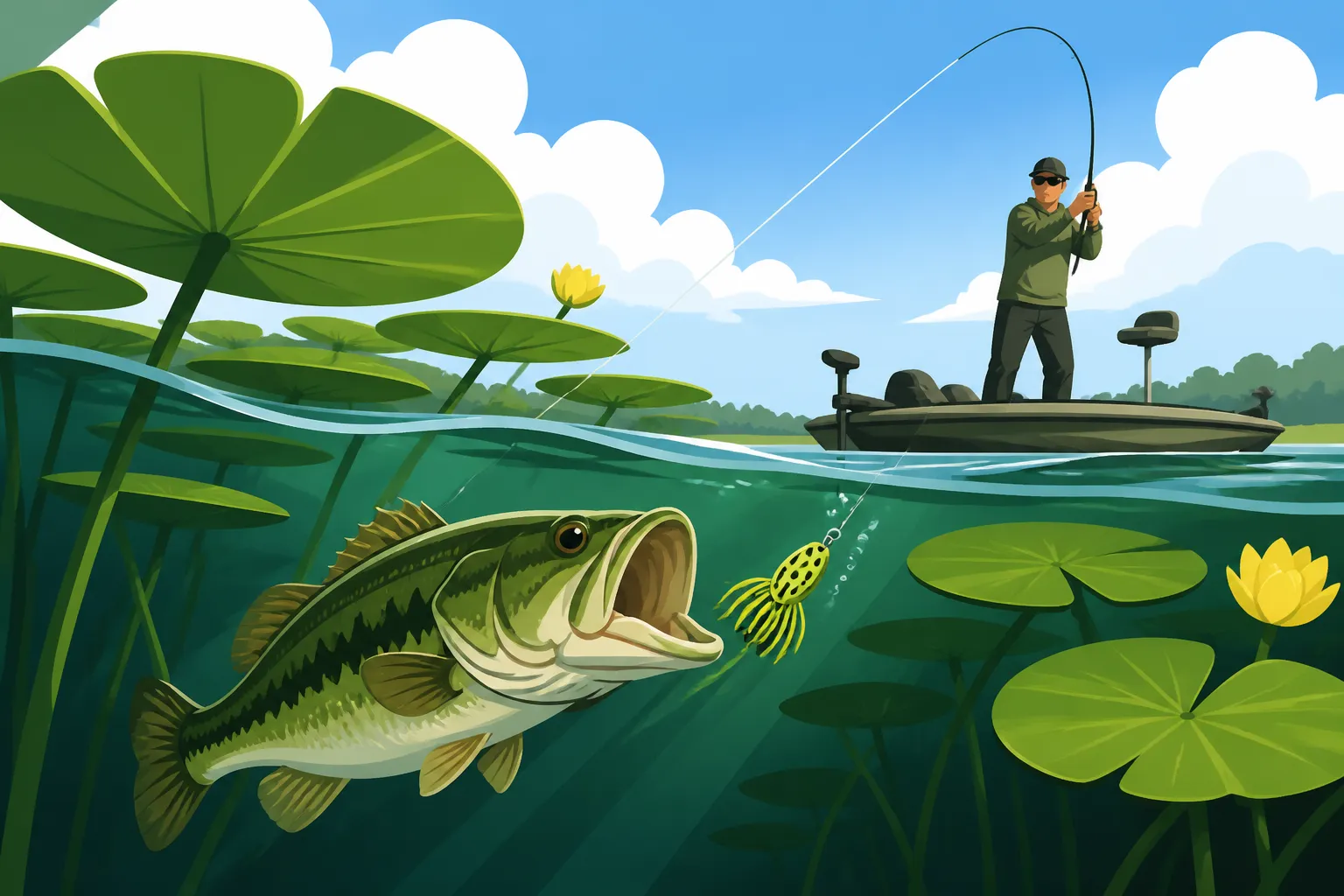
- Frog Fishing: Cast your frog directly onto the pads, even into the densest areas. Let it sit for a few seconds, mimicking a frog that has just landed. Then, twitch it gently, making it walk or hop across the pads. Vary your retrieve speed and pauses. Sometimes bass want a slow, methodical retrieve; other times, they prefer a fast, erratic walk. The key is to generate that explosive strike. When a bass hits, resist the urge to set the hook immediately. Count to "two Mississippi" (get it?) to give the bass time to fully engulf the bait before a strong, sweeping hookset. This technique is incredibly fun and effective, especially during low-light conditions like early mornings, late evenings, or even on cloudy days. Topwater Bass Fishing Tips are especially relevant here.
- Buzzbaits and Prop Baits on the Edges: For the less dense areas or along the defined edges of the pad field, buzzbaits and prop baits can be fantastic. These lures create a lot of commotion on the surface, mimicking struggling baitfish or insects. Fish them quickly, keeping them on top, especially where the pads meet open water or a creek channel. The aggressive surface disturbance can draw bass out from under the pads that might not be willing to chase a slower-moving frog.
Working the Edges and Pockets
Not all bass are buried deep in the thickest mats. Many will patrol the edges, waiting for opportunities, or hold in the small, open pockets within the pad field. These areas are often easier to fish and can be incredibly productive.
- Targeting the Seams: The transition zones where lily pads meet open water, submerged grass, or even a hard bottom are often prime ambush points. Bass will stage along these "seams" and dart out to grab passing prey. Spinnerbaits, chatterbaits, or shallow-diving crankbaits can be very effective when retrieved parallel to these edges. You want a lure that can deflect off the occasional pad stem without getting hung up.
- Isolated Pockets and Holes: Look for any open water within the pad field, no matter how small. These pockets are often created by boat traffic, natural erosion, or deeper spots. Bass will frequently hold in these openings. Pitch a weightless Texas-rigged worm, a soft plastic jerkbait, or even a small jig into these pockets and let it slowly fall. The idea is to present a subtle, easy meal that the bass don't have to work hard for. Sometimes, a well-placed jig with a weed guard can also be effective in these holes, allowing you to thoroughly probe the small areas. How to Find Bass Around Submerged Timber principles of seeking isolated cover apply here.
Common Challenges and How to Overcome Them
Fishing lily pads, while incredibly rewarding, isn't without its unique set of challenges. It can be a frustrating experience if you're not prepared. From constant snags to finding the right productive patches, there are definitely hurdles to overcome, but with the right approach, you can turn those frustrations into triumphs.
Dealing with Snags and Hang-ups
The most common frustration when fishing lily pads is undoubtedly getting snagged. It happens to everyone, but there are ways to minimize it and deal with it when it does occur.
- Use Weedless Lures: As mentioned, this is paramount. Hollow-bodied frogs, Texas-rigged soft plastics, and jigs with sturdy weed guards are designed for this environment. Avoid treble hooks directly in the pads if at all possible, unless you're fishing very sparse edges.
- Heavy Line: We talked about braided line. Its strength not only helps land fish but also allows you to often pull your lure free from minor snags. A strong tug with heavy braid can sometimes cut through a lily pad stem or pull the lure free from a stubborn weed clump.
- Retrieve Angle and Speed: Experiment with how you retrieve your lure. Sometimes a faster retrieve keeps your bait riding higher and prevents it from sinking into the dense vegetation below. Other times, a slow, deliberate approach over the top or a careful drop into an opening is needed. Pay attention to how your lure is interacting with the pads. If you feel it digging in, adjust your speed or angle immediately.
- "Pop" Your Lure Free: If you get a light snag, try snapping your rod tip sharply to "pop" the lure free. This often works better than a steady pull. If it's a hard snag, maintaining steady pressure and trying to pull in different directions might eventually work. Sometimes, you just have to break it off and re-tie, which is why carrying plenty of extra lures and terminal tackle is a must.
Reading the Pad Field and Finding Productive Areas
Not all lily pad fields are created equal. Some patches hold more bass than others, and learning to "read" the water and identify these high-percentage areas is a skill that comes with experience.
- Look for Variances: Uniform, unbroken mats are less productive than areas with natural breaks, pockets, points, or channels running through them. Bass are often drawn to these irregularities, as they offer better ambush points and easier access in and out of the cover. A point of pads extending into open water, for example, is a classic bass magnet.
- Depth Changes: If possible, use your fish finder (if in a boat) to identify any depth changes within or around the pad field. Bass will often relate to submerged structure or drop-offs, even within dense vegetation. The pads might just be overhead cover for bass holding on a subtle underwater contour.
- Proximity to Other Cover: Lily pads that are close to other types of cover, such as submerged timber, rock piles, or a boat dock, can be even more productive. These "combination" cover areas offer bass multiple options for shelter and feeding, often concentrating fish in a smaller area. Best Structure to Fish for Bass in a Reservoir principles are applicable even within pads.
- Active Signs: Look for any signs of activity – a frog jumping, a baitfish schooling, or even a subtle swirl on the surface. These are clues that the area is holding life and could be a good place to start casting. Sometimes, you’ll even see a bass bust through the pads chasing prey!
The Importance of Stealth and Presentation
Bass, especially those living in shallow, dense cover like lily pads, can be surprisingly wary. Your approach and how you present your lure can make a huge difference in your success.
- Quiet Approach: Avoid slamming tackle boxes, stomping in your boat, or making loud noises. Bass can feel vibrations in the water, and a noisy approach can send them scurrying deeper into the pads or spook them entirely. If fishing from a kayak or canoe, paddle quietly. If in a larger boat, use your trolling motor sparingly and smoothly.
- Accurate Casting: Precision is key. You want to land your lure exactly where you want it – in that small pocket, on the edge of a mat, or just past a prime ambush point. Sloppy casts that splash down loudly or repeatedly snag on unintended pads can put bass on high alert. Practice your pitching and flipping to ensure your lure enters the water softly and accurately.
- Vary Your Retrieve: Don't get stuck in a rut with one retrieve speed or action. Some days, bass want an aggressive, fast retrieve; other days, a slow, subtle twitch is all it takes. Experiment until you find what triggers bites. Watch your line for any unusual movement during the retrieve, as bites can sometimes be very light.
- Observe and Learn: Pay attention to where you get bites and how the bass react. Did they hit the lure as soon as it landed? Did they chase it from deep within the pads? Did they prefer a long pause? Every cast and every strike (or lack thereof) provides valuable information that can help you adjust your technique and increase your success rate for the rest of your trip. Don't be afraid to try different lures or colors if one isn't working.
Fishing lily pads for bass can be some of the most exciting and rewarding fishing you'll ever do in Mississippi. With the right gear, a good understanding of bass behavior, and a few proven techniques, you'll be punching and frogging your way to bigger bass in no time. So, next time you see those green mats, don't shy away – embrace the challenge! It's an incredible habitat, and it holds some incredible fish.
Disclaimer
This article is for general informational purposes only and does not constitute professional advice. Laws, prices and regulations vary by location and change over time. Consult a qualified professional for guidance on your specific situation.