How to Catch Bass at Night
When the Mississippi sun beats down with relentless intensity, many anglers find themselves struggling to entice a bite from even the most aggressive bass. The midday heat can send these coveted game fish deep into cover, making them lethargic and frustratingly difficult to locate. But what if there was a way to bypass these challenges, to find bass that are more active, less wary, and often, significantly larger? That's exactly what night fishing for bass in Mississippi offers, transforming a challenging daytime pursuit into an exhilarating nocturnal adventure that this guide will help you master.
Why Night Fishing for Bass in Mississippi is a Game Changer
Night fishing for bass isn't just a quirky alternative to daytime angling; it's a strategic move that can dramatically increase your success, especially during the sweltering Mississippi summers. There's a whole different world under the moonlight, and once you understand it, you'll wonder why you ever limited yourself to fishing only when the sun was high.
Escaping the Daytime Heat and Crowds
Let's be honest, fishing in Mississippi during July and August can be brutal. The sun relentlessly bakes the water, raising surface temperatures and often driving both anglers and fish to exhaustion. You're constantly wiping sweat, guzzling water, and battling the glare, while the bass are hunkered down, trying to stay cool in the deepest, shadiest spots they can find. Not to mention the boat traffic – weekends can feel like a highway out on popular lakes like Ross Barnett Reservoir or Sardis Lake, with pleasure boaters and jet skiers churning up the water and spooking fish.
But as soon as that sun dips below the horizon, everything changes. A blessed coolness descends, often dropping temperatures by 10-20 degrees, making it far more comfortable to be on the water. The boat ramps empty out, the wake-making pleasure craft disappear, and you're left with a tranquil, peaceful environment. This cooler, quieter setting isn't just better for you; it's a huge relief for the bass too, drawing them out from their daytime hideouts and putting them on the prowl. It’s like the lake sighs in relief, and so will you.
Bass Behavior Under the Moon
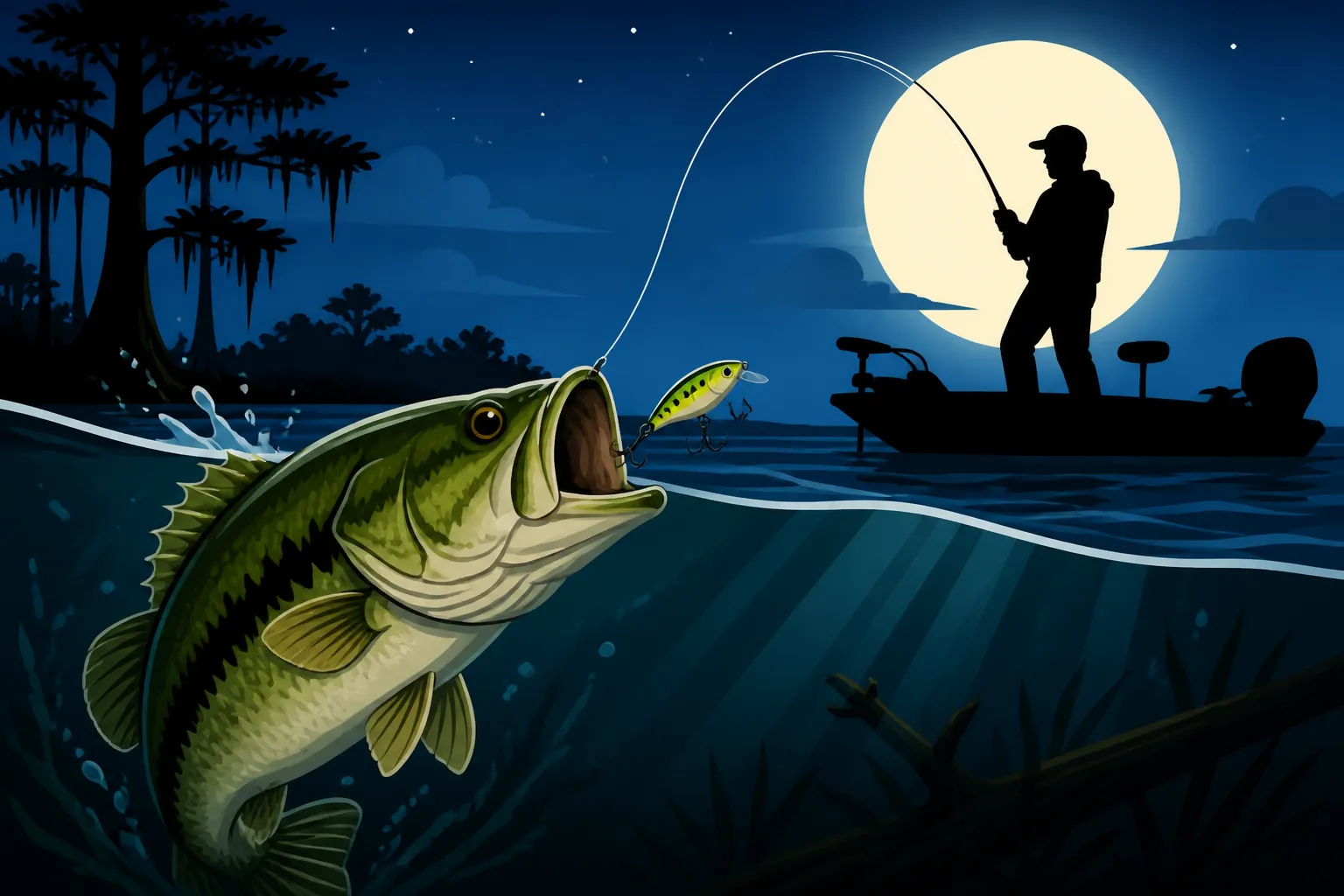
The real magic of night fishing lies in the dramatic shift in bass behavior. Just like many other predators, largemouth bass are opportunistic hunters, and low-light conditions often play right into their strengths. As darkness falls, their keen sense of lateral line vibration, hearing, and low-light vision become paramount, giving them an advantage over their prey. They become less inhibited and more aggressive, venturing out from dense cover they might hug tightly during the day.
Think of it this way: during the day, bass are more cautious. The bright light allows their prey to spot them easily, and they themselves are more vulnerable to larger predators or even skilled anglers. At night, that wariness diminishes. They know they can ambush unsuspecting baitfish more effectively, often chasing them into the shallows or against structures. This shift in aggression means they're more likely to strike a well-presented lure, sometimes with a ferocity you might not experience during the day. This is especially true in clearer waters where bass are even more light-sensitive.
Tapping into New Opportunities
One of the most exciting aspects of night fishing is the potential to catch bigger bass. The lunker bass, the real giants, are often the smartest and most reclusive. They're the ones that have learned to avoid daytime pressure and bright conditions, preferring to do their serious feeding under the cloak of darkness. When you're out there at night, you're fishing for a different class of fish, ones that are actively hunting and often less pressured by conventional angling methods.
This opens up new fishing opportunities on waters you might already know well. Areas that are dead during the day might come alive at night. Points, shallow flats, and even boat docks can become prime feeding grounds as bass move up to forage. It's a chance to see your favorite fishing spots in a completely new light – or rather, in the dark – and discover hidden patterns that only reveal themselves after sunset. On a huge body of water like the Mississippi River, or even a smaller, well-known spot like Lake Washington, these nocturnal patterns can be surprisingly consistent once you figure them out.
Essential Gear for Night Bass Fishing in Mississippi
Preparing for a night fishing trip requires a bit more thought than just grabbing your rod and a tackle box. Safety, visibility, and effective fish detection become even more critical when you're operating in the dark. Having the right gear isn't just about catching fish; it's about making sure your experience is safe and enjoyable.
Lighting Your Way Safely
Safety is paramount when you're out on the water after dark. The first thing you'll need, beyond your boat's navigation lights, is a reliable personal light source. A good quality headlamp is absolutely non-negotiable. Look for one that offers both a white light for general illumination and a red light setting. The red light is crucial because it helps preserve your night vision, allowing your eyes to adjust to the darkness without being completely reset every time you need to tie a knot or locate a lure. Imagine fumbling with a line in complete darkness, then blinding yourself with a bright white light just to see. That's a quick way to frustration. Many experienced night anglers carry a spare headlamp, just in case, or a powerful spotlight to scan the water for hazards like submerged logs or buoys.
If you're in a boat, make sure your vessel's navigation lights are fully functional and properly displayed according to US Coast Guard regulations. These lights are not just for your visibility; they allow other boaters to see you, which is critical in the absence of natural light. If you're bank fishing, even a small lantern or a second headlamp can make a world of difference in keeping your area well-lit and safe. Remember, understanding the local water rules, such as those outlined in the Mississippi Boat Fishing Regulations, is vital for a safe outing.
Rods, Reels, and Line Choices
When it comes to your fishing setup, sensitivity becomes even more crucial at night. You won't have the visual cues of your line jumping or a rod tip twitching as clearly as you would during the day. You'll rely heavily on feel. Therefore, a sensitive rod is key. Many anglers prefer a medium-heavy power rod with a fast or extra-fast action. This combination allows for powerful hooksets while still transmitting subtle bumps and bites directly to your hand. Graphite rods, in particular, excel in sensitivity.
For reels, smooth operation and a reliable drag system are essential. Whether you prefer spinning or baitcasting reels, make sure they cast smoothly and effortlessly. You'll be making a lot of casts, and a reel that snags or spools improperly will quickly become a nuisance in the dark. For lines, fluorocarbon is a popular choice for its low visibility (though less critical at night) and, more importantly, its exceptional sensitivity. It transmits vibrations incredibly well, helping you feel those faint bites. Braided line can also be a good option for its strength and zero stretch, but you might want to pair it with a fluorocarbon leader for abrasion resistance and to manage potential visibility issues if you're fishing in very clear water. You can find a wide range of sensitive rods, reels, and high-quality lines on Amazon, often with detailed reviews to help you pick the perfect setup for your needs. For a deeper dive into selecting the right gear, check out our guide on Choosing the Right Rod and Reel for Mississippi Fishing.
Terminal Tackle and Accessories
Beyond the basics, a few specific accessories can significantly enhance your night fishing experience. One item that many dedicated night anglers swear by is a black light. When paired with fluorescent fishing line (typically monofilament), a black light illuminates your line, making it glow vividly against the dark background. This allows you to visually detect subtle bites you might otherwise miss by feel alone, as even a slight twitch or slackening of the line becomes obvious.
A large, dark-colored landing net is also a must-have. Landing a thrashing bass in the dark can be tricky, and a net provides a much safer way to secure your catch without hooks flying around. Pliers for hook removal, a good pair of line cutters, and a measuring board are also important. Keep your tackle organized in a well-laid-out tackle box or bag that you know intimately, so you can find what you need without fumbling or spilling everything in the dark. Brands like Plano offer excellent tackle storage solutions readily available on Amazon. Finally, consider bringing some bug spray – Mississippi nights can be buggy – and a small towel to keep your hands clean and dry.
Top Lures and Techniques for Night Bass in Mississippi
Night fishing isn't just about being in the dark; it's about understanding how bass perceive their world when sight is limited and relying on other senses. Your lure selection and presentation become incredibly important, focusing on elements that appeal to a bass's lateral line and auditory perception.
Dark Baits for Dark Nights
It might seem counterintuitive, but dark-colored lures are often the most effective at night. Against the dim backdrop of the moonlit sky or the dark water, a black, dark blue, or junebug (dark purple/black) lure creates a distinct silhouette that bass can easily detect. This contrast is what they key in on, much like how a sniper might use camouflage to blend in during the day, a dark lure stands out to a nocturnal predator.
Here are some of the most effective dark-colored lures and how to fish them:
- Jigs: A black and blue jig with a matching trailer (like a chunk or creature bait) is a classic for a reason. Its compact profile and subtle action are irresistible to bass. Fish jigs slowly, dragging them along the bottom, hopping them over structure, or swimming them just above the bottom. The slower presentation gives bass time to locate the lure. You might even find success with a football jig in deeper areas of places like Pickwick Lake or Grenada Lake.
- Spinnerbaits: Look for spinnerbaits with large, thumping blades (Colorado or Indiana blades are excellent for creating maximum vibration) and dark-colored skirts. The vibration is key here, as bass can feel the blade displacement in the water from a good distance. Slowly retrieve the spinnerbait, keeping it just above potential cover. The flash from the blades, even minimal, can also catch their attention.
- Buzzbaits: For aggressive topwater action, a black buzzbait can be absolutely dynamite, especially during the early hours of darkness or on overcast nights. The loud squeaking and churning on the surface act as a dinner bell. Cast it to likely ambush points near grass lines or docks and retrieve it just fast enough to keep it on top. The explosive strikes will definitely get your heart pumping!
- Worms and Creature Baits: Texas-rigged or Carolina-rigged soft plastics in dark colors like junebug, black, or blue flake are fantastic for slow, methodical fishing around cover. Senkos, plastic worms, and creature baits (like Brush Hogs or Speed Craws) can be deadly when pitched into brush piles, under docks, or along weed edges. The key is a very slow retrieve, allowing the subtle movements of the bait to entice a strike. For more ideas on what lures to use, check out our comprehensive guide on Best Lures for Largemouth Bass.
Sound and Vibration are Key
Since visual cues are limited at night, bass rely heavily on their lateral line system – a sensory organ that detects changes in water pressure and vibrations – to locate prey. This means lures that produce strong sound or vibration become incredibly effective. Don't be afraid to make some noise!
Consider lipless crankbaits that have internal rattles. These can be retrieved steadily through different depths, emitting a constant vibration and sound that bass can home in on. Similarly, a ChatterBait, with its unique bladed jig design, creates a distinctive thumping vibration that bass can't ignore. When fishing these, try different retrieval speeds, but often, a slower, more deliberate retrieve gives the bass ample time to track the lure and commit to a strike. Sometimes, adding a small weight to a soft plastic to increase its thud when it hits the bottom can also make a difference.
Targeting Key Nighttime Structures
Just like during the day, understanding where bass position themselves is crucial. However, their nighttime haunts can differ significantly. When the sun goes down, bass often push shallower, moving to ambush points they might avoid in bright light.
- Shallow Water Ambush Points: Look for classic shallow water cover such as boat docks, lily pad fields, sparse grass lines, and fallen timber. Bass will often patrol these areas, waiting to ambush baitfish that have moved up to feed. Cast your dark lures around the pilings of docks, the edges of lily pads, and into the pockets of submerged grass. The shadows cast by docks, even at night, can be prime real estate. If you're near Ross Barnett Reservoir, Pelahatchie Bay can be particularly productive at night with its abundant shallow cover.
- Bridge Pilings and Riprap: Bridges that span rivers or lakes, especially those with lights nearby, can be incredible nighttime hotspots. The lights attract baitfish, which in turn attract bass. Cast jigs or spinnerbaits to the shadow lines created by the pilings and retrieve them slowly. Riprap banks, often found along causeways or dam faces, are also excellent. Crawfish and baitfish hide in the rocks, and bass will cruise these areas after dark. For more on finding prime bass spots, our guide on the Best Structure to Fish for Bass in a Reservoir offers valuable insights. Also, knowing How to Fish Grass Beds for Bass will be a huge advantage.
- Deep Water Humps and Ledges: On larger reservoirs, don't completely abandon deeper structure. Bass will still relate to humps, ledges, and creek channels, especially those leading into shallower feeding flats. While they might move shallower to feed, some bass will hold on these deeper transitions. Use jigs or deep-diving crankbaits to probe these areas.
Safety and Practical Tips for a Successful Night Out
Night fishing is a unique experience, and a little extra preparation goes a long way in ensuring it's not only productive but also safe and enjoyable. The unfamiliarity of darkness can amplify common fishing challenges, so thinking ahead is key.
Navigating in the Dark
One of the biggest hurdles for night fishing, especially if you're boating, is navigation. It's absolutely critical to know the body of water you're fishing like the back of your hand during daylight hours before you attempt it at night. Every stump, every shallow flat, every submerged hazard that you easily avoided by sight during the day becomes a potential danger in the dark.
Always have a reliable GPS unit or a mapping app on your phone (like Navionics or C-MAP) that you're familiar with. Mark your entry and exit points, as well as any known hazards. Go slow, much slower than you would during the day. Take your time, rely on your electronics, and use a powerful spotlight to scan the water ahead for floating debris or unseen obstacles. Before you even leave the dock, tell someone your float plan – where you're going, when you expect to be back – just in case of an emergency. Remember, an ounce of prevention is worth a pound of cure, especially on dark waters.
Noise Control and Stealth
Bass, especially bigger ones, are incredibly sensitive to vibrations and sounds. This sensitivity is heightened at night when the overall environment is quieter. Avoid making loud noises in your boat, such as dropping tackle boxes, banging oars, or slamming livewell lids. Even talking loudly can transmit vibrations through the hull and into the water, potentially spooking fish.
Approach your fishing spots quietly, using your trolling motor instead of your outboard whenever possible. If you're bank fishing, walk softly and avoid stomping. Cast smoothly and avoid big splashes when your lure hits the water. The goal is to be as stealthy as possible, allowing your lures to be the only "intruder" the bass detect. Learning How to Pattern Bass on a New Lake applies doubly at night, as observing subtle changes in bite location due to noise or movement is key.
Weather Considerations
While night fishing helps you escape the heat, you still need to pay close attention to the weather forecast. A clear, calm night is ideal. However, pop-up thunderstorms can be dangerous, and high winds can make boat control and casting extremely difficult, if not unsafe. Always check the forecast before heading out, and if there's any doubt, err on the side of caution.
Even on clear nights, temperatures can drop significantly in Mississippi, especially in the spring and fall. Dress in layers, bringing extra clothing that you can put on or take off as needed. A sudden cold front can also dramatically affect bass behavior, making them more lethargic, so understanding how to adapt your techniques, as detailed in our Fishing After a Cold Front guide, is beneficial. While this article focuses on bass, similar principles apply to other species; for example, understanding How Rain Affects Crappie Fishing can offer general insights into how weather impacts all fish behavior.
Handling Your Catch
Catching a feisty bass in the dark is thrilling, but handling it safely for both you and the fish requires care. Always have your landing net readily accessible. This minimizes the risk of a hook tearing loose and embedding itself in you or your boat, and it reduces stress on the fish. Once landed, use your headlamp (preferably on a low-intensity white light or red light setting) to carefully remove the hook with pliers.
If you plan to release the fish, do so quickly and gently. Support its weight horizontally and allow it to swim off on its own. If you're keeping fish in a livewell, ensure it's well-aerated. The cooler night temperatures are generally better for fish, but good oxygenation is still vital. Have your measuring board ready if you're adhering to specific size limits, as outlined in the Mississippi Fishing Regulations Explained.
Ultimately, night fishing for bass in Mississippi offers an incredible opportunity to experience your favorite pastime in a whole new way. It's cooler, quieter, and can be incredibly rewarding, especially if you're targeting those elusive trophy-sized fish. With the right gear, a thoughtful approach to lure selection, and a strong emphasis on safety, you'll find that chasing bass under the stars quickly becomes one of your most cherished fishing adventures.
| Lure Type | Best Colors | Key Feature | Retrieval Speed | Target Depth |
|---|---|---|---|---|
| Jig (Football/Flipping) | Black, Blue, Purple | Subtle Profile, Trailer Action | Slow, Bottom-Bouncing | Deep to Shallow |
| Spinnerbait | Black, Junebug | Thumping Vibration, Flash | Slow, Steady | Mid-Depth to Shallow |
| Buzzbait | Black, White | Loud Surface Commotion | Fast, Topwater | Surface |
| Worms/Creature Baits | Junebug, Black/Blue | Lifelike Movement, Scent | Slow, Drag/Hop | Bottom, Cover |
| Lipless Crankbait | Dark Chroma, Black | Aggressive Rattle, Vibration | Moderate | Mid-Depth |
| Deep Diving Crankbait | Dark Shad, Crawfish | Deep Dive, Vibration | Moderate | Deep |
Disclaimer
Please note that fishing regulations, conditions, and best practices can change. Always consult the latest official guidelines from the Mississippi Department of Wildlife, Fisheries, and Parks (MDWFP) before planning any fishing trip. This guide is for informational purposes only and should not replace official safety instructions or local regulations.