Choosing the Right Rod and Reel for Mississippi Fishing
Walking into a tackle shop, or even just browsing online, can feel like stepping into a foreign country when you're trying to pick out a fishing rod and reel. There's a bewildering array of lengths, powers, actions, gear ratios, and drag systems, and it's enough to make any angler, especially a newcomer to Mississippi's diverse waters, feel completely lost. But don't you worry! This guide is here to cut through the confusion and help you confidently choose the perfect rod and reel setup to tackle everything from the crappie in Grenada Lake to the redfish on the Mississippi Gulf Coast.
Understanding the Basics: Rod and Reel Types
Before we dive into the nitty-gritty, let's get a handle on the main types of rod and reel combinations you'll encounter. Each has its own strengths and weaknesses, making them suitable for different fishing styles and target species common in Mississippi. Choosing the right one upfront can make all the difference in your fishing success and enjoyment.
Spinning Combos: The Versatile Workhorses
Spinning rod and reel setups are, without a doubt, the most popular choice for anglers of all skill levels, and for good reason. They're incredibly user-friendly, forgiving of casting errors, and versatile enough to handle a wide range of fishing situations. The reel sits underneath the rod, and the line spools off a fixed spool, making it super easy to cast light lures or baits without much fuss. If you're just starting your fishing journey in Mississippi, a spinning combo is often the best place to begin.
These setups shine when you're using lighter lines and baits, such as small jigs for crappie on Sardis Lake or live minnows for bream in a local pond. They offer excellent sensitivity for feeling subtle bites and can be very accurate for short to medium casts. Many anglers even experienced ones, keep a spinning rod handy for specific techniques where finesse is key. You can find a huge variety of spinning combos, from budget-friendly beginner kits perfect for a weekend trip to high-performance models designed for serious tournament anglers.
Baitcasting Setups: Precision and Power
For those looking to step up their game, especially in the world of bass fishing, baitcasting rod and reel setups are often the next logical progression. These reels sit on top of the rod, and the line spools off a revolving spool, which means they require a bit more practice and a delicate thumb to prevent frustrating "bird's nests" or backlashes. However, once you master the technique, baitcasters offer unparalleled control, accuracy, and power, making them a favorite for targeting larger, harder-fighting fish.
Baitcasting gear truly excels when you're throwing heavier lures, chunking big swimbaits for trophy largemouth bass on Ross Barnett Reservoir, or pitching jigs into dense cover. The revolving spool design allows for much heavier line and can handle stronger drag pressures, giving you more leverage during a fight. Many specialized techniques, particularly in bass fishing, are best performed with a baitcasting setup, allowing for quicker, more precise presentations and stronger hooksets.
Fly Fishing Gear: A Niche, Rewarding Experience
While perhaps not the first thing that comes to mind for Mississippi fishing, fly fishing offers a unique and incredibly rewarding experience, especially for certain species. Unlike conventional fishing, where the weight of the lure carries the line, in fly fishing, it's the weight of the specialized fly line itself that propels the nearly weightless fly through the air. This requires a completely different casting motion and skill set, often described as an art form.
In Mississippi, fly fishing isn't typically for bass or catfish, though some intrepid anglers might try it. It truly shines when targeting panfish like bluegill and redear sunfish in smaller streams, ponds, or even the slower sections of larger rivers. Imagine the delicate presentation of a tiny popper to a hungry bream – it's incredibly satisfying. While the initial learning curve can be steep, the sheer joy and connection to nature that fly fishing provides make it a worthwhile pursuit for many anglers seeking a different kind of challenge.
Matching Your Gear to Mississippi's Waters and Species
Mississippi is a state blessed with an incredible variety of fishing environments, from vast freshwater reservoirs to intricate coastal estuaries. The gear you choose should directly reflect where you plan to fish and what species you're hoping to catch. A rod and reel perfect for a Gulf Coast battle won't be ideal for a quiet afternoon crappie trip on a freshwater lake, and vice-versa.
Freshwater Focus: Lakes, Rivers, and Ponds
Mississippi's freshwater fisheries are legendary. We've got massive reservoirs like Grenada Lake and Sardis Lake, known globally for their crappie, along with sprawling bass havens such as Ross Barnett Reservoir and Lake Washington. Then there are countless smaller state fishing lakes, private ponds, and winding rivers like the Pearl River and Mississippi River, all teeming with fish. For these diverse waters, versatility and durability are key.
For most freshwater situations, especially if you're targeting a mix of species, a medium-light to medium power spinning rod, typically 6 to 7 feet long, paired with a 2500-3000 series spinning reel, will be a fantastic all-around choice. This setup is perfect for throwing small to medium-sized lures, live bait, or soft plastics for bass, crappie, and even smaller catfish. If you're serious about trophy largemouth bass, a medium-heavy baitcasting setup (6'6" to 7'6") with a 6.3:1 or 7.1:1 gear ratio reel is almost a necessity for punching through cover and handling heavier baits. For catfish, especially on the big rivers, you'll want something much heavier – a robust medium-heavy to heavy action rod with a powerful baitcasting or large spinning reel capable of handling heavy lines and big fish. You can find excellent options for all these scenarios, often with good customer reviews, on platforms like Amazon.
Saltwater Demands: Gulf Coast Challenges
Fishing the Mississippi Gulf Coast brings a whole new set of challenges and, consequently, different gear requirements. The corrosive nature of saltwater demands rods and reels built with tougher, more resilient materials to prevent rust and degradation. From inshore marshes to offshore rigs, the fish are often stronger, and the environment is harsher. If you're venturing into saltwater, investing in dedicated saltwater gear is crucial for longevity and performance.
For inshore fishing in the brackish waters of Biloxi Bay or Bay St. Louis, targeting speckled trout and redfish, a 7-foot medium-light to medium power spinning rod with a fast action, paired with a corrosion-resistant 3000-4000 series spinning reel, is a widely recommended choice. This setup offers the casting distance needed for open flats and the backbone to turn a feisty redfish away from oyster beds. For offshore adventures, chasing species like red snapper, cobia, or even shark, you'll need heavy-duty conventional (baitcasting-style, but often larger and geared for deep drops) or robust spinning gear with much higher line capacities and powerful drag systems. Remember, saltwater can be brutal on equipment, so regular rinsing and maintenance are non-negotiable. For more in-depth information, check out our guide on Saltwater Fishing Techniques for the Mississippi Gulf Coast.
Species-Specific Considerations: Bass, Crappie, Catfish
While general setups work, truly maximizing your potential means tailoring your gear to the specific species you're after. Each fish has unique behaviors, habitats, and fighting styles that necessitate different rod and reel characteristics.
For largemouth bass fishing in Mississippi, versatility is important but so is power. Anglers often carry multiple rods. A 7-foot medium-heavy fast action baitcasting rod is a staple for jigs, Texas rigs, and spinnerbaits. If you're throwing big crankbaits, a moderate action rod might be better for better hook penetration without tearing the bait out. For topwater and jerkbaits, a 6'6" to 7' medium fast action spinning rod often provides the necessary finesse. Explore more with our detailed guide on Largemouth Bass Fishing in Mississippi.
When it comes to crappie fishing in Mississippi, it's all about sensitivity and presentation. Long, light action rods are popular for "spider rigging" multiple lines or single-pole jigging. A 6 to 8-foot light or ultralight spinning rod with a fast tip, paired with a small 1000-2000 series reel, is ideal for feeling those subtle crappie bites and handling tiny jigs or minnows. Many serious crappie anglers even use specialized "telescopic" jigging poles that can be 10-14 feet long for reaching distant brush piles. Learn more about specific tactics in our Crappie Fishing Techniques for Mississippi Lakes article.
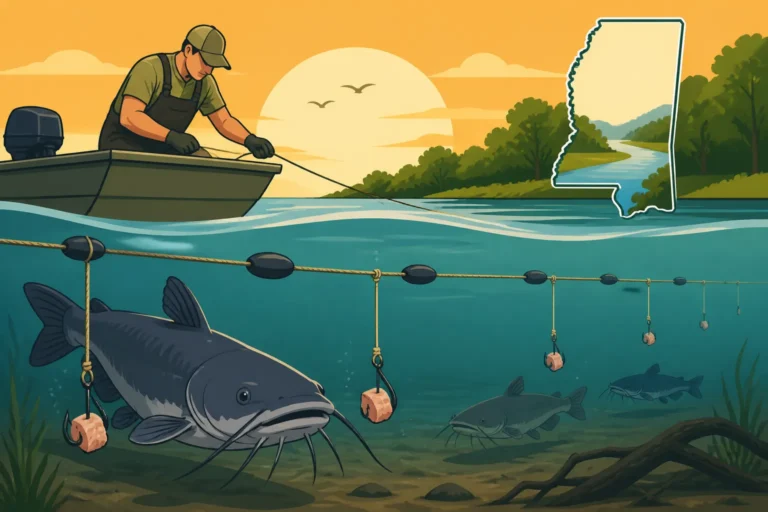
For the mighty catfish of Mississippi, especially the big blues and flatheads in the Mississippi River, you need sheer brute force. Heavy-duty baitcasting setups or large, robust spinning reels are paramount. Look for rods that are 7 to 10 feet long with a heavy power and moderate action, designed to cast heavy weights and baits while absorbing the powerful runs of a big cat. A reel with a strong drag system and high line capacity is non-negotiable. Monofilament lines in the 20-50lb range, or braided lines even heavier, are common. Our guide on Catfish Fishing Techniques offers more insights into tackling these river monsters.
Key Rod Characteristics: Length, Power, and Action
When you're trying to make sense of the labels on a fishing rod, three terms stand out: length, power, and action. Understanding what each means and how they interact is fundamental to selecting a rod that will perform optimally for your chosen fishing methods and conditions. These aren't just arbitrary numbers; they dictate how a rod feels, casts, and performs when you've got a fish on the line.
Rod Length: Reach, Accuracy, and Leverage
The length of a fishing rod, typically measured in feet and inches, has a significant impact on its casting distance, accuracy, and your ability to fight a fish. Longer rods, generally those over 7 feet, provide greater casting distance because they allow for a wider arc during the cast, building up more momentum. This can be a huge advantage when you need to cover a lot of water from the bank or reach distant submerged structure. However, longer rods can be less accurate in close quarters and more cumbersome to maneuver in tight spaces, like dense boat docks or heavy bankside cover.
Shorter rods, usually under 6'6", offer superior accuracy for pinpoint casting, especially when "flipping" or "pitching" lures into specific spots. They also provide more leverage when fighting a fish, making it easier to muscle a stubborn bass out of heavy cover. The trade-off is reduced casting distance. For general-purpose fishing in Mississippi, a rod between 6'6" and 7'6" often hits the sweet spot, offering a good balance of castability, control, and fighting power. Consider a 7-foot rod for much of your fishing on lakes like Ross Barnett Reservoir, or a slightly shorter 6'6" if you're focused on precision casting into tight pockets.
Rod Power: Handling Different Fish Sizes
Rod power, sometimes referred to as "weight," describes how much force it takes to bend the rod. It's a critical factor because it dictates the line weight and lure weight the rod is designed to handle, as well as the size of the fish it can effectively fight. Powers range from ultralight to heavy, with various options in between. Using a rod with the wrong power for your target fish or lures can lead to poor performance, broken lines, or even a broken rod.
- Ultralight (UL): Designed for the smallest fish and lightest lines/lures, perfect for panfish in small ponds or streams. Think tiny jigs for bream.
- Light (L): A step up from ultralight, great for crappie, small trout, and general panfish using light lines and small lures.
- Medium-Light (ML): Very versatile for smaller bass, larger crappie, and general multi-species fishing in freshwater. Often a good choice for finesse techniques.
- Medium (M): The most common and versatile power, capable of handling a wide range of bass techniques, medium-sized catfish, and inshore saltwater species like speckled trout.
- Medium-Heavy (MH): A go-to for serious bass anglers, ideal for heavier lures, pitching, flipping, and battling bigger bass or medium-sized catfish.
- Heavy (H) & Extra Heavy (XH): Reserved for big game fish, like trophy catfish, large striped bass, or offshore saltwater species. Designed to turn powerful fish away from cover.
Rod Action: Sensitivity and Hooksetting
Rod action refers to where on the rod blank it bends when pressure is applied, and how quickly it returns to its straightened position. This characteristic profoundly affects a rod's sensitivity, casting performance, and hook-setting power. It essentially determines how much "feel" you get from your lure and how quickly you can react to a bite.
- Fast Action: A fast action rod bends mostly in the top third or quarter of the blank. This makes them incredibly sensitive, allowing you to feel even the most subtle bites. They also have excellent hook-setting power due to the stiffness in the mid-section, which is great for single-hook lures like jigs and Texas rigs. However, they can sometimes tear hooks out of a fish's mouth if you're not careful, especially with treble hook baits.
- Moderate Action (or Medium Action): A moderate action rod bends closer to the middle of the blank. This gives them a more parabolic bend, which helps to "load up" during a cast, often resulting in longer, smoother casts. They're excellent for baits with treble hooks, like crankbaits or topwater lures, as the more forgiving bend prevents hooks from tearing out. They also absorb the shock of a fighting fish well, reducing pulled hooks.
- Slow Action: A slow action rod bends almost all the way down to the handle. These are typically used for very light line and small fish, like ultralight panfishing or some types of fly fishing. They provide maximum shock absorption but offer less casting distance and hook-setting power.
Choosing the right action is often a personal preference, but generally, fast action rods are favored for sensitivity and heavy cover, while moderate action rods are preferred for reaction baits and open water.
Here’s a quick overview of how rod power and action can match up to common Mississippi fishing scenarios:
| Rod Power | Rod Action | Best For Species (Mississippi) | Typical Lure/Bait Types | Common Fishing Scenarios |
|---|---|---|---|---|
| Ultralight | Fast/Slow | Bream, Crappie (small) | Micro Jigs, Tiny Spinners, Live Bait | Small ponds, clear creeks, finesse panfishing |
| Light | Fast | Crappie, Small Bass, Trout | Small Jigs, Minnows, Light Soft Plastics | Grenada Lake crappie, small lake bass |
| Medium-Light | Fast | Smaller Bass, Crappie, Speckled Trout | Senkos, Small Crankbaits, Poppers | Inshore saltwater, finesse bass, larger crappie |
| Medium | Fast/Moderate | Largemouth Bass, Speckled Trout, Redfish | Spinnerbaits, Worms, Topwater, Cranks | Ross Barnett Reservoir, inshore Gulf Coast fishing |
| Medium-Heavy | Fast | Largemouth Bass (heavy cover), Redfish, Catfish | Jigs, Texas Rigs, Frogs, Heavy Lures | Flipping/Pitching, punching mats, heavy cover bass |
| Heavy | Moderate | Catfish (trophy), Striped Bass, Offshore Fish | Heavy Cut Bait, Large Swimbaits | Mississippi River catfishing, deep water offshore |
Reel Essentials: Size, Gear Ratio, and Drag
Just like rods, reels come with their own set of specifications that are crucial to understand. The reel is the engine of your fishing setup, controlling line management, retrieval speed, and the critical function of battling a fish. Getting the reel right is just as important as the rod.
Reel Size and Line Capacity: Balancing Act
Reel size, especially for spinning reels, is typically indicated by a number (e.g., 1000, 2500, 4000). For baitcasting reels, it's often more about a model series (e.g., 100, 200). This size designation directly relates to the reel's physical dimensions, its retrieve power, and most importantly, its line capacity. Line capacity tells you how much fishing line of a certain diameter the spool can hold. You want enough line to handle long casts and strong runs from a fish without running out.
For freshwater fishing in Mississippi:
- 1000-2000 series spinning reels are perfect for ultralight and light action rods, ideal for crappie and bream, holding plenty of 4-8lb test line.
- 2500-3000 series spinning reels are excellent all-around choices for medium-light to medium power rods, suitable for bass, larger crappie, and light catfish, handling 8-12lb test lines well.
- 4000-5000 series spinning reels start to cross into heavier freshwater and lighter inshore saltwater applications, great for medium-heavy rods targeting bigger bass or medium catfish, with capacity for 10-15lb test or braided equivalents.
- Baitcasting reels are often sized based on the amount of 12-17lb monofilament they can hold. For most bass fishing, a compact baitcaster that holds about 100-120 yards of 12lb mono is standard. For heavier applications or big catfish, larger baitcasters or conventional reels with significantly more capacity are needed.
Remember, using braided line, which has a much smaller diameter for its strength, will allow you to spool on significantly more line than monofilament or fluorocarbon of the same breaking strength. This can be a huge advantage for certain types of fishing, offering increased line capacity and sensitivity. Many anglers consider braided line for Catfish Fishing Techniques or for heavy cover bass fishing.
Gear Ratio: Speed for Retrieval and Presentation
The gear ratio of a reel tells you how many times the spool or rotor turns with one full crank of the handle. This directly translates to your retrieve speed, which is a crucial factor in how you present your lure and fight fish. Gear ratios are expressed as a ratio, like 6.4:1 or 7.1:1. A 6.4:1 ratio means the spool/rotor turns 6.4 times for every one turn of the handle.
- Low Gear Ratios (e.g., 5.1:1 to 5.4:1): These are "power" reels. They retrieve line slower but offer more torque, making them ideal for cranking large, deep-diving crankbaits that create a lot of resistance, or for fighting big, stubborn fish like heavy catfish where brute strength is needed. They provide excellent leverage.
- Medium Gear Ratios (e.g., 6.3:1 to 6.8:1): These are versatile "all-around" ratios, good for a wide range of applications like spinnerbaits, chatterbaits, and general worm/jig fishing. They offer a good balance of speed and power. Many bass anglers start with a reel in this range.
- High Gear Ratios (e.g., 7.1:1 to 8.1:1+): These are "speed" reels. They retrieve line very quickly, which is fantastic for burning baits back to the boat, quickly picking up slack, or rapidly pulling fish out of heavy cover. They are popular for pitching and flipping, topwater fishing, or techniques where you need to make many casts and retrieves quickly. A common choice for Largemouth Bass Fishing in Mississippi when fast presentations are needed.
Choosing the right gear ratio depends entirely on your fishing style and the baits you're using. You might even want different gear ratios for different techniques, which is why many serious anglers have multiple setups.
Drag System: The Unsung Hero of the Fight
The drag system is arguably the most critical component of any fishing reel, yet it's often overlooked by beginners. The drag allows line to be pulled off the spool under controlled tension when a fish pulls hard, preventing the line from breaking. A smooth, consistent drag is paramount for successfully landing strong fish without snapping your line or ripping the hook out of their mouth.
When a fish makes a powerful run, a properly set drag will pay out line smoothly, absorbing the shock and tiring the fish. If your drag is set too tight, the line will break. If it's too loose, the fish will take too much line, potentially reaching cover or simply wearing itself out without you gaining control. Most anglers set their drag to about 25-30% of the line's breaking strength. So, if you're using 10lb test line, you'd set your drag to about 2.5-3lbs of tension.
Modern reels feature various drag materials and designs, with carbon fiber washers often preferred for their smoothness and durability. High-quality reels, even affordable ones found on platforms like Amazon, boast incredibly smooth and reliable drag systems. Always ensure your drag is properly adjusted before you cast, and check it periodically during your fishing trip, as it can loosen or tighten on its own with use.
Building Your First Mississippi Fishing Setup
So, you've got a handle on the different types of rods and reels and their characteristics. Now, how do you put it all together without breaking the bank or getting overwhelmed? Building your first setup for Mississippi fishing can be an exciting journey, and it doesn't have to be complicated.
Budget-Friendly Starter Kits
For beginners, or those just looking for an occasional outing, the easiest and most cost-effective way to get started is often with a pre-matched rod and reel combo. These kits are designed to work together, taking the guesswork out of pairing components. You can find excellent quality combos that are perfectly suitable for catching a wide variety of fish in Mississippi's freshwater lakes and ponds. Look for a medium-light or medium power spinning combo around 6'6" to 7' long with a 2500-series reel. This will be versatile enough for most common species like bass, crappie, and bream.
Brands like Shakespeare, Ugly Stik (a popular choice for durability), and even some house brands from major retailers offer reliable and affordable combos that will get you on the water quickly. You don't need to spend a fortune to catch fish! The most important thing is that the setup feels comfortable in your hands and matches the general type of fishing you plan to do. Many local sporting goods stores in Mississippi, and large online retailers, offer a great selection of these beginner-friendly options. For a more detailed look at getting started, consider our guide on Best Rod and Reel Setup for Beginners.
Upgrading and Customizing Your Gear
As you gain experience and perhaps specialize in certain types of fishing, you'll likely want to upgrade or customize your gear. This is where you might start buying rods and reels separately to perfectly match your specific needs. For example, a dedicated bass angler might invest in a high-end baitcasting reel with a fast gear ratio for pitching jigs, paired with a sensitive, medium-heavy graphite rod. A crappie enthusiast might seek out an extra-long, ultra-light jigging rod to enhance their presentation.
When upgrading, research is key. Read reviews, talk to experienced anglers, and visit local tackle shops to feel the gear in your hands. Consider what aspects of your current setup you want to improve – is it sensitivity, casting distance, power, or smoothness? For example, if you find yourself constantly breaking lines when fighting big catfish, you might need a reel with a more robust drag system and higher line capacity, and a rod with more backbone. Don't forget the importance of your fishing line itself; our articles on Best Fishing Line for Crappie and Best Fishing Line for Catfish can help you select the right type and strength for your upgraded setup.
Essential Accessories and Maintenance Tips
Having the right rod and reel is just one part of the equation. A few essential accessories and consistent maintenance practices will significantly extend the life and performance of your gear, ensuring it's ready for every Mississippi fishing adventure.
Essential Accessories:
- Fishing Line: Always spool your reel with fresh line at the beginning of each season or after several trips, as line can degrade over time. Have spare spools or spools of different line types handy.
- Rod Socks/Covers: These protect your rod guides and blanks from damage when not in use, especially important if you transport multiple rods.
- Reel Grease/Oil: Specialized lubricants are vital for keeping your reel running smoothly.
- Soft Cloths/Towels: For cleaning your gear after each trip.
Maintenance Tips:
- Rinse After Each Use (Especially Saltwater): After every fishing trip, especially if you've been in saltwater, thoroughly rinse your rod and reel with fresh water to remove salt, sand, and grime. Avoid high-pressure sprays directly into the reel.
- Wipe Down and Dry: After rinsing, wipe down your rod and reel with a soft cloth and allow them to air dry completely before storing.
- Lubricate Periodically: Consult your reel's manufacturer guidelines for proper lubrication. Typically, you'll want to add a drop of oil to moving parts and a tiny bit of grease to gears every few months, or more often with heavy use. Don't over-lubricate, as this can attract dirt.
- Inspect Regularly: Check your rod guides for cracks or damage, and your reel for any loose screws or components. Address minor issues before they become major problems.
- Store Properly: Store your rods vertically or horizontally where they won't be bent or damaged. Keep reels in a dry, protected environment.
By taking care of your gear, whether it's an entry-level combo or a high-end custom setup, you'll ensure many years of successful and enjoyable fishing across the great state of Mississippi. Remember, the right tools, combined with proper care, are key to a fulfilling angling experience.
Disclaimer
The information provided in this guide is for general informational purposes only and does not constitute professional advice. Fishing regulations, techniques, and equipment recommendations can vary. Always consult the latest Mississippi Department of Wildlife, Fisheries, and Parks (MDWFP) regulations before fishing and exercise caution and good judgment while on the water.